套利交易

Search documents
经济学家宋清辉:美联储减息或致套利交易 非美元投资势受瞩目
Sou Hu Cai Jing· 2025-09-21 22:27
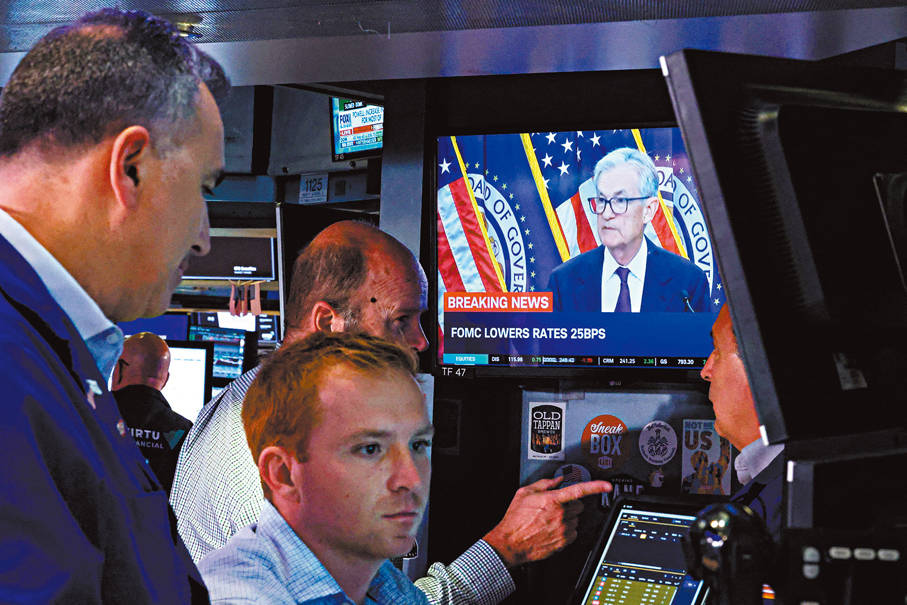
Core Viewpoint - The Federal Reserve's resumption of interest rate cuts is expected to lead to a decrease in dollar interest returns, prompting a shift of global funds from dollar assets to non-dollar assets, particularly in emerging markets with relatively high interest rates and strong economic fundamentals in non-US developed economies [1][3]. Group 1: Federal Reserve Actions - The Federal Reserve is anticipated to cut interest rates two more times this year, which may encourage investors to borrow low-interest dollars and invest in high-interest non-dollar assets [3]. - The Fed's recent 0.25% rate cut marks the beginning of a new easing cycle, with expectations of continued rate cuts in future meetings [3]. Group 2: Investment Opportunities - With the Fed's rate cuts, there is an expectation of increased volatility in risk assets, leading to potential investment opportunities in global equities, certain non-dollar currencies, long-duration high-rated government or corporate bonds, and cyclical commodities [3]. - The reduction in interest rates is likely to boost bond prices, particularly long-term bonds, suggesting an increased allocation to long-duration bonds and high-rated government and corporate bonds [8]. Group 3: Market Sentiment and Asset Allocation - The current economic uncertainty may lead to heightened risk aversion in the market, with a focus on the implications of the Fed's actions on various asset classes [9]. - The dollar is expected to weaken against the euro and pound due to the Fed's faster rate cuts compared to other central banks, with a recommendation to focus on currencies like the euro, Australian dollar, and Norwegian krone [10].

土耳其央行超预期大幅降息 里拉承压风险加剧
智通财经网· 2025-09-11 13:06
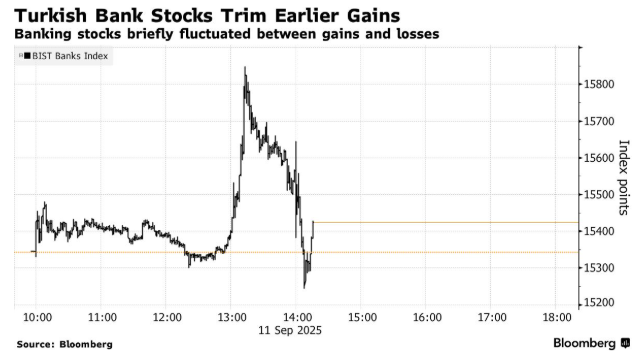
Group 1 - The Turkish central bank significantly lowered interest rates, reducing the one-week repo rate from 43% to 40.5%, exceeding investor expectations by 200 basis points [1] - The overnight lending rate was decreased from 46% to 43.5%, and the overnight borrowing rate from 41.5% to 39% [1] - The central bank's decision reflects a faster pace of easing than many traders anticipated, which may continue to exert pressure on the Turkish lira in the coming months [1] Group 2 - The Turkish lira's exchange rate remained relatively stable at 41.295 lira per US dollar following the interest rate cut [1] - The central bank's statement indicated that while inflation trends are easing, domestic final demand remains weak despite stronger-than-expected GDP growth in the second quarter [1] - The August inflation rate rose to 33%, higher than economists' expectations, prompting major banks like JPMorgan and Morgan Stanley to revise their interest rate cut forecasts [1] Group 3 - The central bank removed the phrase "pursuing the real appreciation of the lira" from its decision document, indicating a shift in its monetary policy framework [5] - The central bank aims to maintain disinflation through "demand, exchange rates, and expectations channels," with potential for slight depreciation of the lira if local assets remain attractive [6] - Analysts suggest that maintaining a faster rate of easing while keeping the lira appreciation standard would be unwise, indicating a potential subtle change in daily currency management [7] Group 4 - Political uncertainty is rising in Turkey, with escalating confrontations between the main opposition party and the judiciary, leading to bond and stock sell-offs [7] - A court case regarding the Republican People's Party (CHP) is set for September 15, which could result in the removal of the party's national leadership and the appointment of a trustee [7]
小众策略迎来高光时刻!可转换套利前7月回报近6%,成对冲基金年度最佳策略之一
智通财经网· 2025-08-27 13:59
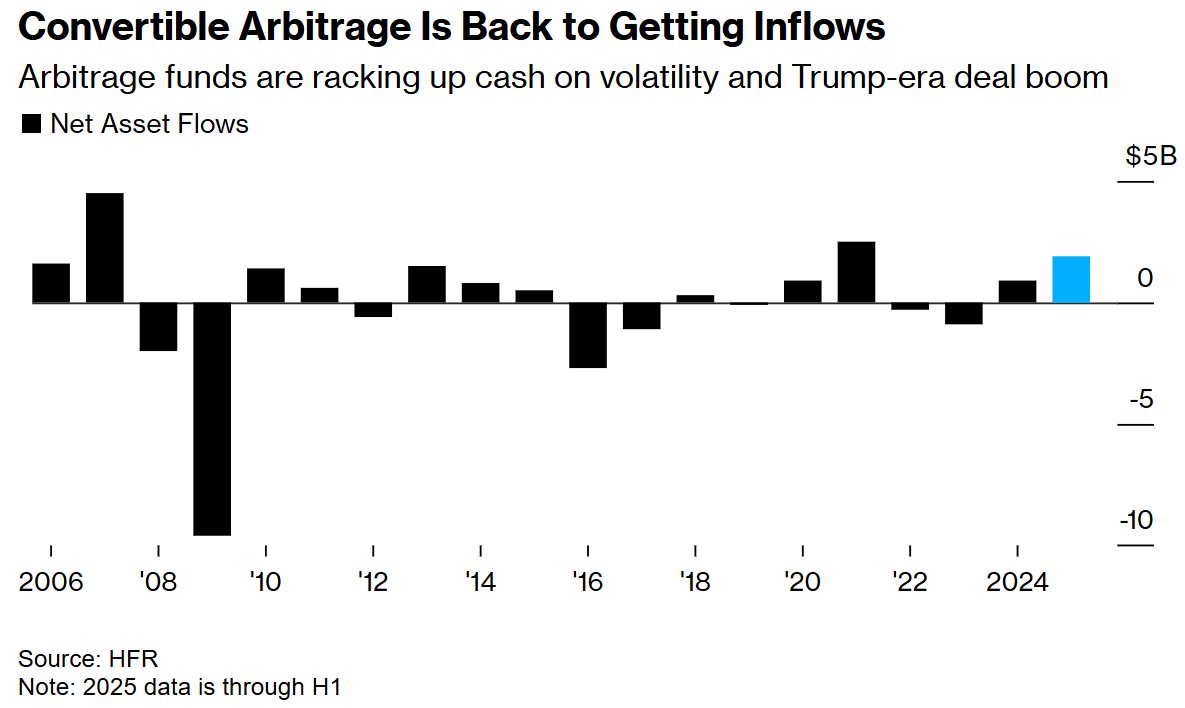
Group 1 - The convertible arbitrage strategy is experiencing a significant rise, with nearly 6% returns achieved by July, making it one of the best-performing hedge fund strategies in the first seven months of the year [1] - The inflow of funds into this strategy is on track for the largest annual increase in 18 years, driven by stable corporate credit quality and increased stock price volatility among smaller companies, including those related to cryptocurrencies [1][4] - The current market environment is described as a "perfect environment" for harvesting returns through convertible bond strategies, combining stable credit conditions with unprecedented high stock volatility [1][4] Group 2 - Convertible bonds are hybrid instruments that can be converted into equity when stock prices reach certain levels, closely tied to stock volatility [4] - The focus on convertible bonds has shifted as the pool of refinancing targets has narrowed, leading investors to pay more attention to the equity option component of convertible bonds [4] - Despite a general decrease in market volatility since April, individual stocks continue to exhibit significant fluctuations, with the median 30-day realized volatility of Russell 3000 index constituents currently over 40, four times the index's own volatility [4][8] Group 3 - The earnings season has intensified market volatility, creating trading opportunities due to sharp stock price reactions to earnings reports [8] - Stable credit conditions provide a "bond floor" stability for trading these instruments, as evidenced by significant price movements in companies like Fluor Corporation and Array Technologies [8] - The issuance of convertible bonds by cryptocurrency-related companies has become particularly attractive for arbitrage trading, with these companies now accounting for nearly 10% of the convertible bond market, up from almost zero a year ago [9] Group 4 - The surge in new convertible bond issuances has contributed to the current market momentum, with approximately $65 billion issued in the U.S. by August 22, surpassing the total for 2023 and marking the fourth-highest amount for this period in over 20 years [9] - The diversity and scale of new issuances have significantly expanded the opportunity set for convertible arbitrage fund managers, allowing them to profit from volatility differences and credit-equity price spreads [9]
A股全年涨幅有望赶上港股
Di Yi Cai Jing· 2025-08-21 03:04
Core Viewpoint - The recent outflow of southbound funds from Hong Kong stocks and the rising HIBOR rates indicate potential shifts in market dynamics, with A-shares possibly catching up to Hong Kong stocks in performance [2][10]. Market Performance - As of August 20, the Hang Seng Index has risen by 25.45% this year, outperforming the Shanghai Composite Index by 12.37%. However, in the past month, the Shanghai Composite Index has increased by nearly 6%, while the Hang Seng Index has only risen by 0.69% [2][11]. - The recent performance of the Hang Seng Index has been under pressure due to rising interest rates and a shift in investor sentiment towards A-shares [10][12]. Interest Rates and Currency Dynamics - The 1-month HIBOR has surged significantly, reaching 2.574% on August 19, marking a rapid increase from previous levels [4][6]. - The Hong Kong Monetary Authority (HKMA) has intervened in the market to stabilize the Hong Kong dollar, buying a total of 104.41 billion HKD in early August, which has led to a reduction in the banking system's liquidity [2][5]. - The HKMA's actions have resulted in a decrease in the banking system's surplus to 537.16 billion HKD, which is expected to further influence HIBOR rates and the Hong Kong dollar's exchange rate [6][7]. Fund Flows and Market Sentiment - Southbound funds have seen a cumulative net inflow exceeding 950 billion HKD this year, indicating strong interest in Hong Kong stocks despite recent market fluctuations [12]. - The sentiment among institutional investors is becoming more cautious, yet the overall bullish trend in the Hong Kong stock market remains intact [12]. Future Outlook - Analysts predict that the Hong Kong dollar may continue to appreciate, potentially moving towards the strong side of the peg at 7.75, especially if the US dollar weakens further [7][8]. - The anticipated interest rate cuts by the Federal Reserve could lead to a more favorable environment for Hong Kong stocks, particularly in cyclical sectors [12].

A股全年涨幅有望赶上港股
第一财经· 2025-08-21 02:53
Core Viewpoint - The recent outflow of southbound funds from Hong Kong stocks and the rising interest rates have raised concerns about the potential for A-shares to catch up with Hong Kong stocks in performance [3][4][5]. Group 1: Market Performance - As of August 20, the Hang Seng Index has risen by 25.45% this year, outperforming the Shanghai Composite Index by 12.37% [3][4]. - In the past month, the Shanghai Composite Index has increased by nearly 6%, while the Hang Seng Index has only risen by 0.69% [3][15]. - The recent performance indicates a shift, with A-shares potentially gaining momentum against Hong Kong stocks [15][16]. Group 2: Currency and Interest Rate Dynamics - The Hong Kong Interbank Offered Rate (HIBOR) surged significantly, with a rise of 56 basis points to 2.574% on August 18-19, marking a three-month high [3][4][7]. - The Hong Kong Monetary Authority (HKMA) intervened in the market to stabilize the Hong Kong dollar, buying a total of 104.41 billion HKD on August 13 and 14 [4][5]. - The HKMA has intervened 12 times since June, absorbing a total of 1,199.7 billion HKD, which is 92.7% of the liquidity injected in early May [4][5]. Group 3: Market Sentiment and Future Outlook - Analysts expect that the Hong Kong dollar may continue to appreciate, with the potential for further increases in interest rates impacting Hong Kong stocks negatively [5][9]. - The sentiment in the market is shifting, with expectations that the A-share bull market will continue, driven by strong trading volumes and favorable government policies [15][16]. - Despite a cautious sentiment among institutions regarding Hong Kong stocks, the overall bull market trend remains intact, with significant net inflows from southbound funds [16].

港元港息急升压制港股 A股全年涨幅有望迎头赶上
Di Yi Cai Jing· 2025-08-20 14:31
Group 1 - Southbound funds experienced a rare net outflow of approximately 14.68 billion HKD on August 20, while the Hang Seng Index rose by 0.17%, significantly underperforming the Shanghai Composite Index's 1.04% increase [1] - As of August 20, the Hang Seng Index has risen 25.45% year-to-date, leading the Shanghai Composite Index by 12.37% [1] - The recent surge in the Hong Kong Interbank Offered Rate (HIBOR) has drawn global investor attention, with the 1-month HIBOR rising sharply to 2.574%, marking a three-month high [1][3] Group 2 - The Hong Kong Monetary Authority (HKMA) intervened in the market to stabilize the Hong Kong dollar, buying a total of 104.41 billion HKD on August 13 and 14 [1] - Since June, the HKMA has intervened 12 times, absorbing a total of 119.97 billion HKD, which is 92.7% of the liquidity injected in early May [1][4] - The recent rise in HIBOR is attributed to the HKMA's actions to manage the exchange rate within the 7.75 to 7.85 range, affecting liquidity and interbank rates [3][4] Group 3 - The recent increase in HIBOR is the second significant rise since May, influenced by both external and internal factors, including the overall weakness of the US dollar [4] - The liquidity in the banking system has decreased to 53.716 billion HKD, which is close to the threshold where significant upward pressure on HIBOR and the Hong Kong dollar exchange rate may occur [4][6] - The market sentiment has shifted, with hedge funds closing their long positions on the US dollar against the Hong Kong dollar, indicating a potential for further appreciation of the Hong Kong dollar [2][6] Group 4 - The performance of the Hong Kong stock market has been under pressure due to rising interest rates and the strong performance of the A-share market, which has gained nearly 6% in the past month compared to the Hang Seng Index's 0.69% [8][9] - Analysts predict that the A-share market may catch up to the performance of the Hong Kong stock market in the latter part of 2025, driven by strong market sentiment and structural differentiation within the market [9][10] - Despite a cautious sentiment among institutions, the overall bull market trend for Hong Kong stocks remains intact, with significant net inflows from southbound funds reaching over 950 billion HKD this year [10][11]
银河期货甲醇日报-20250819
Yin He Qi Huo· 2025-08-19 12:36
Report Summary 1. Report Industry Investment Rating No information provided. 2. Core View of the Report With increasing supply and stable downstream demand, methanol inventories at ports are accumulating rapidly. Against the backdrop of increasing supply, shorting on rallies is the main strategy for methanol trading [5][6]. 3. Summary by Relevant Catalogs Market Review - **Futures Market**: The futures market fluctuated, closing at 2391 (-9/-0.38%) [3]. - **Spot Market**: In production areas, prices range from 2090 to 2230 yuan/ton; in consumption areas, prices range from 2200 to 2320 yuan/ton; at ports, prices range from 2270 to 2310 yuan/ton [3]. Important Information This week (20250818 - 0819), the weekly signing volume (excluding long - term contracts) of methanol sample production enterprises in the Northwest was 28,300 tons (2.83 million tons), a decrease of 7,500 tons (0.75 million tons) from the previous statistical day, a month - on - month decrease of 20.95% [4]. Logic Analysis - **Supply Side**: Coal - producing areas in the Northwest have seen a significant decline in coal mine operating rates, with a rebound in raw coal prices. Methanol production profits are high and stable, and domestic supply is continuously abundant. Import supply is also increasing, with Iran's production recovering [5]. - **Demand Side**: Traditional downstream industries are in the off - season, with a decline in operating rates. MTO device operating rates are rising, but some devices have reduced loads or stopped production. Overall, demand is stable [5]. - **Inventory**: Port inventories are accumulating due to increased imports, while inland enterprise inventories are fluctuating within a narrow range [5]. Trading Strategy - **Single - sided**: Short on rallies, do not chase short positions [6]. - **Arbitrage**: Wait and see [6]. - **Options**: Sell call options [10].
港元重回兑换保证区间中点 受股市资金流入及Hibor大涨推动
Sou Hu Cai Jing· 2025-08-19 03:57
Core Viewpoint - The Hong Kong dollar has strengthened against the US dollar, reaching the midpoint of its trading band for the first time since May, driven by stock market inflows and rising interbank rates [1] Group 1 - The Hong Kong dollar appreciated by 0.3% to 7.7991 against the US dollar on Tuesday [1] - The interest rate differential between Hong Kong and the US has narrowed to its lowest level since May, reducing the attractiveness of shorting the Hong Kong dollar through arbitrage [1] - The 1-month Hibor in Hong Kong surged for the third consecutive trading day, nearly doubling in the past week [1] Group 2 - There has been a recent influx of mainland investors into the Hong Kong stock market [1]
日本将批准发行首个日元计价稳定币
日经中文网· 2025-08-18 02:34
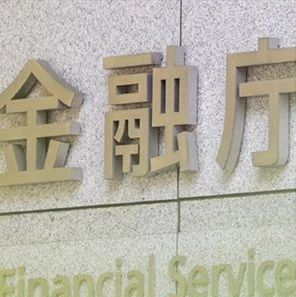
Core Viewpoint - The Japanese Financial Services Agency (JFSA) is set to approve the issuance of a yen-pegged stablecoin named "JPYC" by the fintech company JPYC, aiming for a market size of 1 trillion yen within three years [2][6]. Group 1: Stablecoin Overview - The stablecoin JPYC will be pegged 1:1 to the Japanese yen, with JPYC holding liquid assets such as deposits and government bonds to ensure its value [4]. - The global stablecoin market has expanded to over $250 billion (approximately 37 trillion yen), primarily dominated by dollar-pegged stablecoins [2][6]. Group 2: Market Context and Regulations - The revised Japanese "Funds Settlement Act" defines stablecoins as "currency-denominated assets," distinguishing them from cryptocurrencies and allowing issuance by banks, trust companies, and money transfer businesses [4]. - The U.S. has recently passed the GENIUS Act to enhance the credibility of stablecoins, while Hong Kong has implemented regulations for issuing renminbi-pegged stablecoins [6]. Group 3: Use Cases and Institutional Interest - JPYC can be used for international remittances, corporate payments, and decentralized finance (DeFi) asset management services [6]. - Several institutions, including hedge funds and family offices, are interested in using JPYC for arbitrage trading to capture interest rate differentials [6]. Group 4: Competitive Landscape - The current stablecoin market is largely dominated by Tether's USDT and Circle's USDC, with predictions that the market could reach $3.7 trillion (approximately 540 trillion yen) by 2030 [6]. - Other Japanese companies are also considering issuing stablecoins, indicating a growing interest in this financial instrument within Japan [7].
ATFX:美元重新展现韧性,削弱新兴市场货币吸引力
Sou Hu Cai Jing· 2025-08-14 17:31
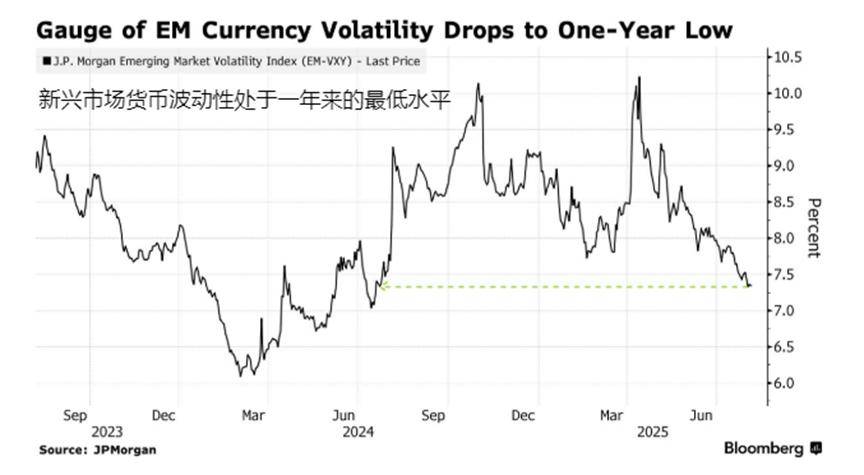
Core Viewpoint - The US dollar index has shown resilience recently, with a 3.4% increase in July, ending a streak of declines, despite a disappointing non-farm payroll report [1] Group 1: Dollar Performance - The Bloomberg Dollar Spot Index rose by 2.7% in July, breaking a six-month downward trend [1] - Emerging market currencies, represented by the MSCI Emerging Markets Currency Index, fell by 1.2% [1] - The Taiwanese dollar has appreciated approximately 9.5% this year, leading Asian currencies, while the South Korean won has risen nearly 6% [1] Group 2: Investor Sentiment - The rebound of the dollar has led some emerging market investors to believe that the dollar will continue to rise in the coming months [1] - Barclays Bank has advised clients to avoid shorting the dollar against other Asian currencies [1] - Fidelity International noted that prolonged high US interest rates reduce the attractiveness of borrowing dollars for arbitrage trading [1] Group 3: Emerging Market Currency Dynamics - The volatility of emerging market currencies is at its lowest in a year, which diminishes demand for Asian currencies in favor of higher-yielding European and Latin American currencies [2] - The average interest rate differential for Asian currencies is negative 1.1%, indicating higher holding costs compared to potential returns from holding dollars [5] - Latin American currencies have a positive interest rate differential of 3.7%, while European and African currencies have a positive differential of 1.1% [5] Group 4: Market Uncertainty - The uncertainty surrounding US tariffs continues to impact the attractiveness of emerging market currencies, despite some agreements reached with major trading partners [6] - The potential for further interest rate cuts by the Federal Reserve remains a key factor influencing the dollar's trajectory [6]