
它经济

Search documents
新消费派 | 萌宠跃上T台:透视“情感刚需”背后的8000亿级“它经济”
Zhong Guo Jin Rong Xin Xi Wang· 2025-10-12 05:52
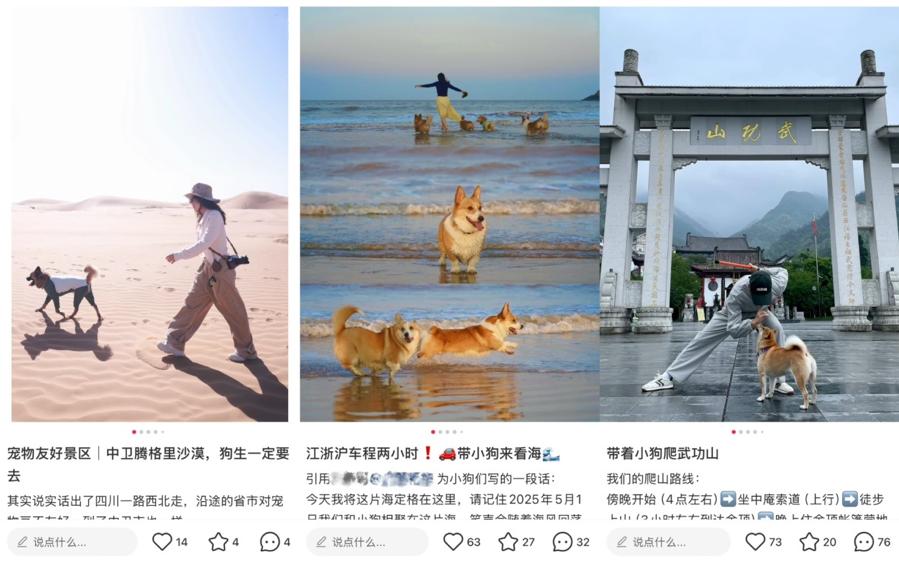
Core Insights - The fifth Shanghai Pet Fashion Week is set to take place from October 31 to November 2, 2023, at the Shanghai International Fashion Center, showcasing a growing trend in the pet economy and the increasing importance of pets in family life [6][12] Group 1: Event Overview - The event will feature a pet model selection process where numerous pets and their owners participate, highlighting the growing popularity of pet fashion and the emotional bond between pets and their owners [4][6] - The event aims to serve as a platform for pet fashion brands and a bridge for traditional industries to engage with the pet sector, with participation from 15 brands across 8 countries [12][13] Group 2: Market Trends - The pet-related business market in China has grown significantly, with a compound annual growth rate of 25.4%, increasing from 97.8 billion yuan in 2015 to 592.8 billion yuan in 2023, and is expected to reach 811.4 billion yuan by 2025 [8][9] - The trend of "bringing pets along" during family outings is becoming more common, with a notable increase in searches for pet-friendly hotels, which have seen an 80% year-on-year growth since the summer of 2025 [8][9] Group 3: Consumer Behavior - Many pet owners view their pets as family members, investing time and resources into their care and experiences, which reflects a shift from basic needs to emotional value [9][10] - Social media engagement around pet travel and experiences has surged, with related topics on platforms like Xiaohongshu reaching hundreds of millions of views [7][8] Group 4: Industry Innovations - Companies are increasingly focusing on creating products and services that cater to the "human-pet friendly" ecosystem, including outdoor gear and pet-friendly vehicle designs [10][12] - The integration of technology in pet care, such as smart products for monitoring pet health and behavior, is being explored to enhance the quality of life for both pets and their owners [10][12]


年订单破10万、加价千元仍爆满,年轻人带“毛孩子”出游成风口
3 6 Ke· 2025-10-08 23:58
Core Insights - The article highlights the growing trend of pet-friendly accommodations and services in the hospitality industry, driven by the increasing number of pet owners who consider their pets as family members [6][12][30] Group 1: Pet-Friendly Accommodation Trends - The search volume for pet-friendly accommodations increased by approximately 60% in Q1 2024 compared to Q4 2023, with a 40% year-on-year growth in bookings for pet-friendly listings [3][4] - During the May Day holiday, searches for pet-friendly hotels surged by 150%, with bookings increasing by 30% [4] - In Moganshan, over 50% of the 800+ homestays have adopted pet-friendly policies, indicating a structural shift in the accommodation market [7][8] Group 2: Economic Impact of Pet-Friendly Services - The pet economy is expanding, with the market expected to reach 4.5 trillion yuan by 2025, reflecting a shift from basic needs to emotional consumption [22][30] - High-end hotel groups like Mandarin Oriental and W Hotels have been early adopters of pet-friendly services, enhancing their offerings to attract pet owners [8][10] - The rise of pet-friendly services is seen as a key strategy for hotels to differentiate themselves in a competitive market [14][21] Group 3: Consumer Demographics and Preferences - Young pet owners, particularly those born in the 90s and 00s, are becoming the primary consumers in the pet industry, showing a willingness to spend on quality and personalized services for their pets [11][12] - Female guests aged 25-35 are the dominant demographic among pet-friendly hotel customers, often being urban professionals willing to invest in their pets [10][12] Group 4: Additional Services and Costs - Pet-friendly accommodations incur additional costs related to cleaning, supplies, and facilities, which can be offset by the willingness of pet owners to pay for enhanced services [16][21] - Hotels often charge extra fees for pet stays, with some high-end hotels charging up to 816.2 yuan per pet per stay, reflecting the premium nature of these services [20][21] Group 5: Emerging Pet-Related Industries - The pet industry is diversifying, with growth in sectors such as pet photography, grooming, and even pet funerals, indicating a comprehensive service ecosystem around pet ownership [24][29] - The demand for pet social events and experiences is rising, with organized activities becoming popular among pet owners [29][30]
宠物月饼火爆中秋,宠物品牌如何抓住新消费需求?
Sou Hu Cai Jing· 2025-10-06 15:41
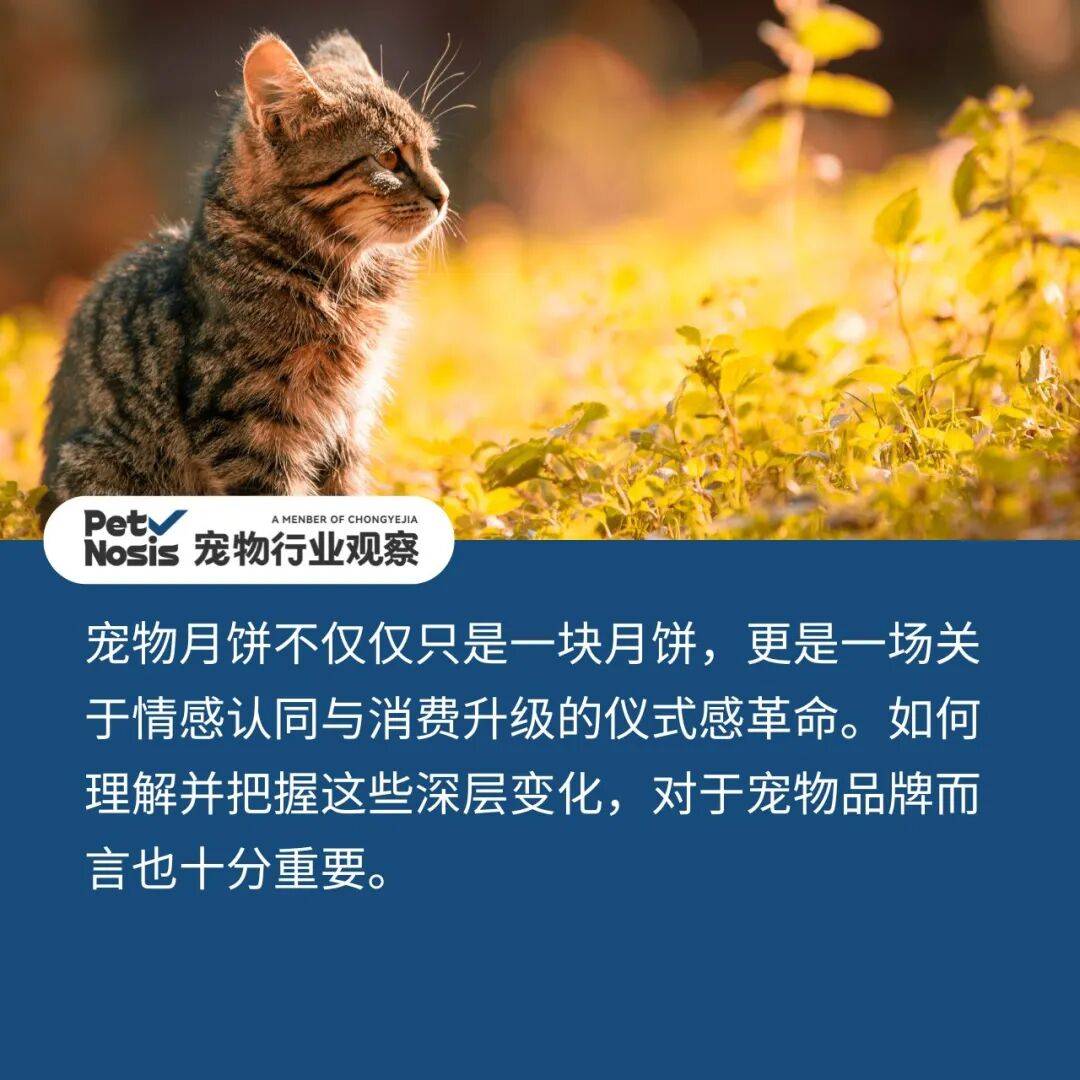
Core Insights - The rising popularity of pet mooncakes during the Mid-Autumn Festival reflects the booming "pet economy" in China, indicating a significant transformation in consumer behavior and market dynamics [4][10]. Group 1: Market Trends - Pet mooncakes have seen a surge in demand, with active search users increasing over 400% in the month leading up to the festival, resulting in daily sales of 3,000 units [2]. - The trend is not limited to e-commerce; pet mooncakes are also appearing in offline supermarkets and retail chains, indicating a broadening market presence [2]. Group 2: Consumer Behavior - The role of pets in households has evolved, leading to a shift in consumption from mere feeding to emotional expression and family rituals, driving demand for anthropomorphized pet products [4][10]. - The new generation of pet owners prioritizes emotional companionship, scientific pet care, and quality of life, which enhances the social aspect of pet mooncake purchases [5]. Group 3: Economic Factors - The rise of e-commerce and social media has facilitated consumption equality, allowing pet owners in lower-tier cities to access the same quality products as those in first-tier cities, thus expanding the market base for pet mooncakes [4][10]. - New-generation consumers value self-expression and shared values, leading to innovative business models that cater to emotional and social needs, which pet mooncakes fulfill [8]. Group 4: Future Outlook - The current trend of pet mooncakes may be a precursor to more diverse and personalized pet products as the pet ownership demographic continues to grow and their purchasing power increases [12]. - The ongoing evolution of the "pet economy" suggests that understanding emotional connections rather than just transactional relationships will be key for brands in developing products and marketing strategies [12].
“它经济”崛起冲刺万亿规模 年轻群体驱动从“喂饱”到“宠好”变革
Zheng Quan Shi Bao Wang· 2025-09-29 11:18
Core Insights - The Chinese pet economy is projected to reach 1.15 trillion yuan by 2028, driven by emotional consumption and innovative pet products [1][5] - The pet ownership demographic is shifting, with younger generations (post-90s and post-00s) making up 66.8% of pet owners, indicating a significant change in consumer behavior and spending patterns [3][5] Market Size and Growth - The pet market for dogs and cats is expected to exceed 300 billion yuan in 2024, with a year-on-year growth of 7.5% [3] - The cat consumption market is growing at a rate of 10.7%, significantly outpacing the dog market's growth of 4.6% [3] Consumer Behavior - Younger pet owners are willing to spend more on their pets than on themselves, with monthly expenses averaging around 500 yuan for cat owners [2] - The average annual cost of pet ownership exceeds 10,000 yuan, with significant spending on grooming and food [2] Industry Trends - The pet economy is evolving from a focus on basic needs to emotional companionship and quality of life, with new service demands emerging [4][5] - High-end pet services, such as luxury hotels and on-demand care, are in high demand, reflecting a shift towards premium offerings [4][5] Product and Service Innovations - There is a notable increase in demand for functional pet food and smart pet products, with growth rates exceeding 100% in certain categories [4][6] - The market is seeing a rise in niche brands that cater to specific consumer needs, moving away from traditional mass-market approaches [5] Future Outlook - The pet economy is expected to grow by 18.3% in 2024, with cross-industry collaborations in areas like tourism and health projected to drive further growth [5] - The trend towards sustainable and eco-friendly products is gaining traction, with biodegradable cat litter and environmentally friendly toys becoming popular [5]
“它经济”持续升温,商业体发力新“支点”
Sou Hu Cai Jing· 2025-09-26 10:11
Core Insights - The "proprietary and specialized" pet services and "emotion-driven" consumption models have emerged as new highlights for business growth, prompting the release of the "Action Plan for Promoting High-Quality Development of the Pet Economy" in Suzhou's Gusu District [1] Group 1: Pet Economy Development - The action plan aims to extend the pet economy from a single consumption scenario to a full-chain industry through policy guidance and market-driven initiatives [1] - The integration of culture, commerce, sports, and tourism is emphasized as a foundation for this development [1] Group 2: Unique Consumer Experiences - The "It Economy" ecosystem created by Yangguanghui includes a three-tier structure: basic facilities for pet interaction, merchant conversion through pet sales and services, and high-level activities focused on social interaction and adoption [3] - Monthly pet sports events attract over 50 families, with more than 30% of them generating additional spending on food, toys, and clothing, leading to an 8% increase in daily sales for the shopping district [3] Group 3: One-Stop Shopping and Tourism - The Dog Road Pet Store in Suzhou offers over 2,000 SKUs, catering to the one-stop shopping needs of pet owners [4] - The introduction of pet-friendly services at the Kimpton Hotel has led to a continuous increase in pet-inclusive bookings, with some holidays experiencing a "one room hard to find" situation for pet rooms [4] Group 4: Enhanced Pet Care Services - The Renheng Warehouse Street features a dedicated area for pets, including facilities for immediate cleaning and grooming, as well as pet-friendly shopping experiences [6] - 90% of the shops in the warehouse street are pet-friendly, enhancing the shopping experience for pet owners and increasing consumer spending [6][7]

单只宠物年消费超两千元!它经济狂飙 宠物殡葬等成新增长点
Nan Fang Du Shi Bao· 2025-09-23 18:46
Core Insights - The "Pet Economy" is rapidly evolving, driven by changing consumer demands from basic pet care to emotional companionship and quality living [1][4] - The pet industry in China is experiencing significant growth, with the pet dog and cat population expected to exceed 124 million by 2024, and the urban pet consumption market projected to reach 300.2 billion yuan, growing at 7.5% [3][4] - The market is shifting from a food-centric model to a more diversified service-oriented approach, including healthcare, grooming, and training, with emerging trends in emotional consumption and technology integration [4][5] Industry Growth - The pet economy is expected to reach a market size of 1.15 trillion yuan by 2028, indicating robust growth potential [3] - The average annual spending per pet is over 2,000 yuan, reflecting a growing willingness among pet owners to invest in their pets' well-being [3] Service Sector Expansion - Services such as pet healthcare, insurance, and specialized diets are becoming key growth areas, particularly in segments like elderly pet care and chronic disease management [4] - The rise of "pet emotional consumption" is leading to increased demand for services like pet photography, funerals, and themed travel, transitioning from niche to mainstream [4] Technology Integration - The global smart pet products market is projected to approach 6 billion USD in 2024, with a compound annual growth rate of 19.5% from 2024 to 2034 [5] - Smart feeding devices and automatic litter boxes are becoming essential for modern pet owners, driven by the "stay-at-home economy" [5] Industry Challenges - The pet industry faces challenges such as a lack of standards, chaotic competition, and insufficient welfare for pets, necessitating the establishment of industry standards and professional talent development [7] - Companies that understand the human-animal bond and innovate to meet emotional needs are likely to emerge as winners in the evolving market [7]
宠物经济成为新消费增长引擎 行业向专业化、精细化、多元化方向发展
Zheng Quan Ri Bao Wang· 2025-09-23 13:40
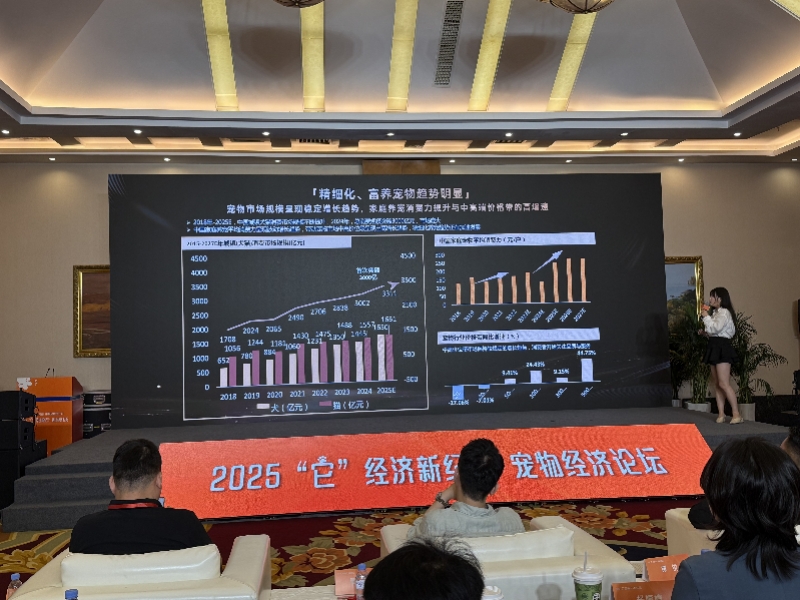
Core Insights - The pet economy is emerging as a significant growth engine in the new consumption sector, driven by emotional consumption and evolving consumer demands [1][2] - The market size of China's pet economy is projected to reach 701.3 billion yuan in 2024, with an 18.3% year-on-year growth, and is expected to grow to 1,150 billion yuan by 2028 [1] - The shift in pet ownership perception from "raising pets" to "pet nurturing" is expanding consumption from basic needs to emotional satisfaction and service-oriented consumption [1] Industry Trends - New market segments such as pet travel, insurance, home services, and smart products are emerging, contributing to the professionalization and diversification of the pet economy [1] - The younger generation, particularly those born in the 1990s and 2000s, is reshaping the industry landscape with more specific demands and emotional connections, challenging traditional brands [2] - The competition in the pet economy is shifting from supply-based to value-based, focusing on product innovation driven by technology and emotional brand connections [3] Brand Development - Brands are increasingly innovating to meet changing consumer demands, with five brands recognized for their excellence in product matrix, R&D, and strategic layout at the forum [3] - Care and Paimo Technology are highlighted for their innovative approaches, showcasing the evolution of traditional brands and the transition to data-driven business models [3] Challenges and Initiatives - Despite the promising outlook, the pet economy faces challenges such as low trust in pet food and supplies, and issues in the pet medical sector [4] - The establishment of the "2025 Pet Trust Consumption Alliance" aims to address these challenges by promoting animal welfare, improving product quality, and ensuring consumer rights [4]
“它经济”消费升级 智能生活开启行业变革
Zhong Guo Jing Ying Bao· 2025-09-22 12:01
Core Insights - The Chinese pet market has surpassed 300 billion yuan and is projected to reach 1.15 trillion yuan by 2028, driven by a shift towards AI and smart technology in pet care [1][3][5] Market Growth - The pet population in urban areas is expected to exceed 124 million by 2024, with a 7.5% growth in the consumption market, reaching 300.2 billion yuan [3] - The average annual spending per pet exceeds 2,000 yuan, with significant growth in the cat market at 10.7% [3] Consumer Trends - The new generation of pet owners prioritizes emotional companionship and quality of life over basic needs, indicating a shift towards high-quality, premium products [3][4] - Consumers are increasingly willing to pay for high-end products, with a notable rise in the demand for smart pet devices and premium services [4][5] Technological Integration - AI is transforming the pet industry across the supply chain, from product development to consumer engagement, with smart pet products seeing a 120% increase in sales [5][6] - The global market for smart pet products is projected to approach 6 billion USD by 2024, with a compound annual growth rate of 19.5% from 2024 to 2034 [5] Industry Innovations - Companies are adopting transparent supply chains and personalized nutrition plans using AI to cater to individual pet needs [6] - The integration of pet services with lifestyle elements, such as pet-friendly hotels and parks, is emerging as a new growth area [6] Market Segmentation - The pet industry is becoming increasingly segmented, with specialized services and products for aging pets and other niche markets [7]

闯出“它经济”新赛道丨每10只小型观赏鹦鹉7只出自商丘
He Nan Ri Bao· 2025-09-13 23:28
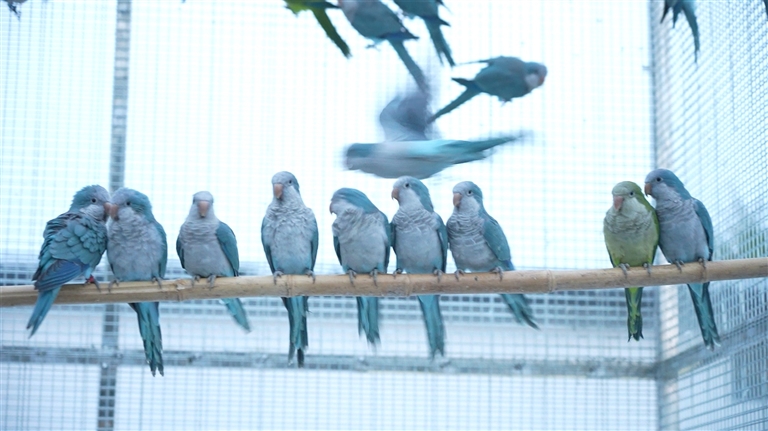
Core Viewpoint - The parrot industry in Shangqiu has rapidly developed into a significant new sector, driven by the increasing popularity of pet ownership, particularly among urban families, with over 70% of small ornamental parrots in China originating from this region [6][8][12]. Industry Overview - The parrot breeding industry in Shangqiu has a history of over 30 years, with nearly 1,000 breeding farms and a stock of over 1 million parrots [12][13]. - Shangqiu is recognized as a major hub for parrot breeding in China, benefiting from favorable climate conditions, a complete industrial chain, and a growing market demand [9][10][16]. Market Dynamics - The topic of "hand-raised parrots" has garnered over 2.15 billion views and nearly 9.69 million discussions on social media platforms, indicating a strong consumer interest [7]. - The parrot breeding market is characterized by a diverse range of species, including budgerigars, lovebirds, and cockatiels, appealing to a younger urban demographic due to lower time and space costs compared to traditional pets like cats and dogs [8][12]. Economic Impact - The parrot industry has created significant employment opportunities, with over 50,000 people engaged in related activities in Shangqiu [16]. - The annual revenue of the parrot breeding sector in Shangqiu is substantial, with some individual breeders earning between 300,000 to 400,000 yuan annually [12][14]. Challenges and Recommendations - Despite its growth, the industry faces challenges such as low added value, lagging brand development, and reliance on imported genetic resources [11]. - Experts suggest enhancing the industry through the development of parrot competitions, establishing high-standard breeding demonstration farms, and improving the professional skills of breeders [11]. Policy Support - Recent policy changes have facilitated the growth of the parrot industry, including the introduction of special identification for artificially bred parrots, which has resolved previous sales difficulties [10][14].
半年报看板 | 产品与渠道双轮驱动,宠物业务成动保行业“第二增长曲线”
Xin Hua Cai Jing· 2025-09-01 13:36
Core Viewpoint - The companion animal business of leading animal health companies in China, such as Hai Zheng Dong Bao, Rui Pu Sheng Wu, and Jin He Sheng Wu, has shown significant growth, driven by product innovation and channel expansion, indicating a shift towards the companion animal market amid the rising "pet economy" [1][2]. Group 1: Company Performance - Rui Pu Sheng Wu's pet business achieved a revenue of 415 million yuan, a year-on-year increase of 17.94%, with the pet supply chain revenue reaching 376 million yuan, up 18.49% [1]. - Hai Zheng Dong Bao's pet business grew over 60%, with expectations that pet business will account for over 50% of its total revenue by 2025 [2]. - Jin He Sheng Wu is actively advancing its pet health business, currently offering 15 pet products, including 8 health products and 1 rabies vaccine [2]. Group 2: Product Innovation - Rui Pu Sheng Wu focuses on technological research and development, holding 115 new veterinary drug registration certificates, including 17 for pet products [3]. - Hai Zheng Dong Bao emphasizes the optimization and upgrading of pet medicines, with products like Xi Bei An being the only compliant compound for cat deworming [3]. - Jin He Sheng Wu has made significant progress in pet vaccine research, recently obtaining a patent for a dual-subunit vaccine for feline infectious respiratory disease and feline panleukopenia [3]. Group 3: Sales Expansion - Rui Pu Sheng Wu has established a nationwide pet medical supply chain service network, reaching 8,400 pet hospitals and 3,500 pet stores, with ongoing expansion into new regional markets [3]. - Hai Zheng Dong Bao is enhancing its online self-operated e-commerce capabilities, achieving over 100 million yuan in sales during the first half of the year, with a significant increase in orders during the "618" shopping festival [3]. - Jin He Sheng Wu is leveraging AI technology to create a digital channel through its pet app "Ai Chong Yi," which integrates service and sales, enhancing user engagement and sales opportunities [4].


