科技—产业—金融良性循环

Search documents
中金公司张一鸣:AI驱动的科技创新将持续带动资本市场活力,全球科技产业成长逻辑依然具备韧性
Xin Lang Zheng Quan· 2025-11-12 04:08
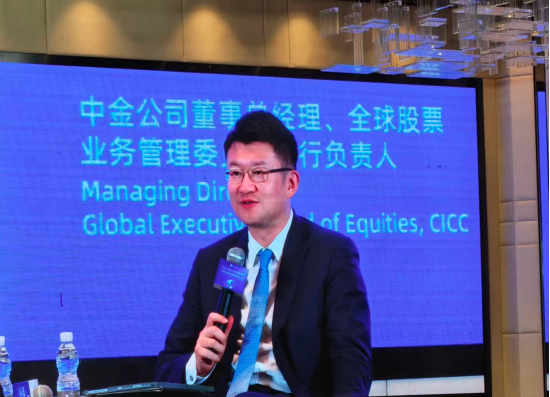
Group 1 - The Shanghai Stock Exchange International Investor Conference was held on November 12, focusing on "Value Leading, Open Empowerment - New Opportunities for International Capital Investment and M&A" [3] - The conference aimed to create a communication platform for foreign institutional investors, regulatory agencies, exchanges, listed companies, and financial institutions, promoting deep integration of international capital with the Chinese capital market [3] - Zhang Yiming from CICC highlighted the successful completion of CATL's Hong Kong IPO in May, raising $5.3 billion, showcasing international investors' recognition of high-quality Chinese technology and production assets [3][4] Group 2 - Zhang emphasized that patient capital is crucial for driving technological innovation, as long-term investments can stabilize market expectations and provide continuous momentum for new productive forces [4] - He outlined three key experiences: leveraging the synergy of investment, banking, and research to support early-stage tech companies; breaking down barriers in financial sub-industries; and ensuring smooth exit mechanisms for long-term capital [4] - Zhang noted that the global tech sector has shown a pattern of "synchronous resonance and alternating peaks," driven by breakthroughs in AI technology, which have led to record capital expenditures by tech giants [4] Group 3 - The future strategy for CICC includes deepening the "bringing in" and "going out" approach, utilizing capital market strengths to support high-quality Chinese enterprises in global expansion and providing ongoing financial support for technological innovation [5]


华润银行首秀高交会 助力“科技—产业—金融”良性循环
2 1 Shi Ji Jing Ji Bao Dao· 2025-11-11 23:16
Core Insights - The 27th China International High-tech Achievements Fair (High-tech Fair) will be held in Shenzhen, showcasing over 5,000 technology companies from more than 30 countries, focusing on cutting-edge fields like artificial intelligence and new energy [2] - China Resources Bank will debut as an independent exhibitor at the fair, promoting its innovation-driven financial brand "Run Chuang Wan" [2][3] - The bank aims to integrate technology, industry, and finance, aligning with national innovation strategies [2][3] Financial Transformation - Traditional banking support for tech companies has evolved from merely providing loans to becoming partners throughout the entire innovation lifecycle [3] - The bank has seen a 332% increase in tech enterprise clients, reaching nearly 2,000, and a 433% growth in tech financial loans, surpassing 25 billion yuan [3][4] Ecosystem Development - "Run Chuang Wan" represents a systematic approach to technology financial services, offering an open ecosystem rather than just a product package [5] - The bank's innovative financing products assess companies based on multiple dimensions, moving away from collateral dependency [5] - Additional services include connecting tech firms with real business scenarios and providing expertise in non-financial challenges [5] Market Engagement - The bank's participation in the High-tech Fair aims to facilitate a virtuous cycle of technology, industry, and finance, enhancing efficient connections between these sectors [9] - The fair will feature international investment negotiation areas, inviting top global investment institutions to foster precise matching in high-tech supply and demand [9] Strategic Positioning - The bank's unique position, backed by a diverse industrial giant, allows it to understand both technology and market needs, acting as a translator and accelerator for tech companies [8] - The ongoing exploration of integrating finance with technology aligns with China's dual goals of becoming a financial and technological powerhouse [10]
发挥新型举国体制优势 更大力度激发企业创新活力
Zheng Quan Shi Bao· 2025-11-09 22:57
Core Viewpoint - Technological innovation is essential for developing new productive forces and is a key element in the current global competition among major powers. The recent strategic deployment in the 14th Five-Year Plan emphasizes accelerating high-level technological self-reliance and innovation [1]. Group 1: Technological Innovation and National Strategy - The 14th Five-Year Plan suggests enhancing original innovation and tackling key core technologies through a new type of national system, focusing on critical areas such as integrated circuits and advanced materials [1][2]. - Experts believe that the new national system can integrate resources across the country, addressing the challenges faced in key technology sectors [2]. Group 2: Financial Support and Innovation Ecosystem - The plan emphasizes the need for a diversified financial service system that aligns with the lifecycle financing needs of technology enterprises, enhancing support for major national technology tasks and small to medium-sized tech firms [3]. - There is a call for financial institutions to develop specialized credit products for technology service organizations, aiming to lower financing thresholds and enhance support for innovation [4]. Group 3: Encouraging Corporate R&D - The plan proposes increasing the tax deduction ratio for corporate R&D expenses and enhancing government procurement of innovative products to stimulate corporate innovation [5]. - Since 2017, the R&D expense deduction ratio has been progressively increased, with certain sectors now eligible for a 120% deduction, directly reducing R&D costs for companies [5]. - Government procurement has significantly supported small and medium enterprises, with contracts exceeding 2.5 trillion yuan in 2023, accounting for 74.4% of total government procurement [5]. Group 4: Resource Integration and Standardization - The plan advocates for the integration of innovation resources, supporting leading enterprises and research institutions in forming innovation alliances to tackle technological challenges and share patents [6]. - It also emphasizes the establishment of industry standards, with the Ministry of Industry and Information Technology leading efforts to create a standardized technical committee to enhance market access for compliant enterprises [6].
国常会:布局一批新领域新赛道场景
Zheng Quan Shi Bao Wang· 2025-11-01 00:41
Core Viewpoint - The Chinese government is focusing on deepening reforms in key areas and expanding institutional openness to enhance high-level foreign trade and investment, aiming to create a more market-oriented and international business environment [1][2]. Group 1: Institutional Openness - The meeting emphasized the need to deepen reforms in key areas to drive high-level foreign openness and improve the openness of the goods market, while optimizing service market access rules and enhancing regulatory systems for factor market openness [2]. - There is a focus on aligning with international high-standard economic and trade rules, actively expanding autonomous openness, and steadily increasing institutional openness in rules, regulations, management, and standards [2][3]. - The government aims to leverage high-level open platforms like free trade zones and ports to explore replicable and scalable reform outcomes, thereby continuously enhancing the effectiveness of institutional openness [2]. Group 2: New Application Scenarios - The meeting called for accelerating the cultivation of new application scenarios and promoting large-scale application of these scenarios, prioritizing new fields and tracks that align with industrial development and major technological challenges [1][4]. - Emphasis was placed on utilizing China's vast market and diverse application scenarios to ensure supply-demand alignment, and to create a complete closed loop from technological breakthroughs to industrial applications [4]. - The government plans to foster more new scenarios through innovative reforms, improve infrastructure and platform development, and strengthen regulatory mechanisms to create a conducive innovation ecosystem [4][5]. Group 3: Technological Innovation - The Ministry of Science and Technology highlighted that technological innovation is crucial for generating new industries, models, and driving new productive forces, which are essential for enhancing overall productivity [4][5]. - The government will accelerate the implementation of major technological projects and strengthen the integration of technological and industrial innovation to produce significant original achievements [5]. - There is a call for promoting a virtuous cycle between technology, industry, and finance, ensuring that financial resources are effectively allocated to technological innovation and industrial sectors [5].
国常会最新部署!
证券时报· 2025-10-31 13:24
Core Viewpoint - The article discusses the recent State Council meeting led by Premier Li Qiang, focusing on deepening key area reforms and expanding institutional openness to promote a higher level of foreign trade and investment [2][4]. Group 1: Institutional Openness - The meeting emphasizes the need to deepen reforms in key areas to drive high-level foreign openness and enhance the openness of the commodity market [4]. - It highlights the importance of aligning with international high-standard economic and trade rules, actively expanding autonomous openness, and steadily increasing institutional openness in rules, regulations, management, and standards [4][5]. - The meeting also stresses leveraging high-level open platforms like free trade zones and ports to explore replicable and promotable reform outcomes, thereby continuously improving the effectiveness of institutional openness [4]. Group 2: New Application Scenarios - The meeting outlines measures to accelerate the cultivation of new application scenarios and promote large-scale application of these scenarios [7]. - It calls for prioritizing the layout of new fields and tracks, high-value small-scale scenarios, and cross-regional comprehensive scenarios, focusing on the connection between supply and demand and addressing major technological challenges [7]. - The article mentions the need for a complete closed loop from technological breakthroughs to industrial applications, supported by infrastructure and regulatory frameworks [7]. Group 3: Technological Innovation and Integration - The article notes that the Ministry of Science and Technology will accelerate the deployment of major technological innovation tasks during the 14th Five-Year Plan period, promoting deep integration of technological and industrial innovation [8]. - It emphasizes the importance of enhancing the supply of high-quality technology and implementing national major technology projects to meet strategic and economic development needs [8]. - The article also highlights the necessity of fostering a virtuous cycle between technology, industry, and finance to efficiently allocate financial resources towards technological innovation and industrial development [8].

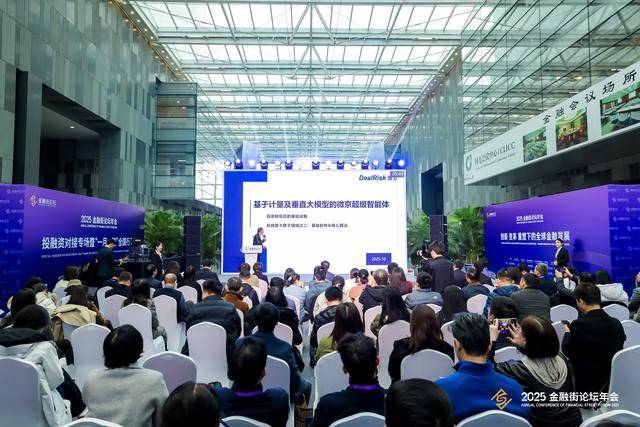
产融共生 向新而行 2025金融街论坛年会投融资对接专场活动圆满举办
Sou Hu Cai Jing· 2025-10-31 10:50
Core Insights - The 2025 Financial Street Forum Annual Meeting focused on "Industry-Finance Symbiosis and New Directions," aiming to build a bridge for investment and financing connections, particularly for specialized and innovative small and medium-sized enterprises (SMEs) [1][3]. Group 1: Support for SMEs - The event showcased multiple practical measures benefiting SMEs, including the first demonstration of a "green channel" for specialized and innovative enterprises transitioning to the New Third Board [3]. - The "China SME Service Network 'Tax and Finance' section" was officially launched to enhance financial and tax management for enterprises [3]. - A comprehensive service list for SMEs in Beijing was introduced, covering policy interpretation, nurturing services, financing and listing, brand promotion, and rights protection, with 22 specific measures [3]. Group 2: Efficient Industry-Finance Connection - The event successfully established a solid bridge for deep communication between capital and industry, focusing on "precise matching" as a core objective [5]. - Over 70 high-quality enterprises, including unicorns and national high-tech enterprises, participated in roadshows, covering key areas such as digital transformation, artificial intelligence, green energy, and future industries [5]. - More than 120 investment institutions, including national and local government funds, participated, creating a complete matching loop of "enterprise display—institution evaluation—intent agreement" [5]. Group 3: Continuous Improvement of Industrial Ecosystem - The event utilized a "thematic sharing + field-specific sessions" model to analyze industry development paths, aiding in the improvement of the industrial ecosystem [7]. - The Financial Street's resource advantages were leveraged to promote deep collaboration between financial institutions, professional service agencies, and SMEs, facilitating short-term capital connections [7]. - The total financing demand from participating enterprises exceeded 7 billion yuan, with on-site investment cooperation intentions exceeding 1 billion yuan, indicating strong interest from investment institutions [7].

十万亿级赛道升级 科技服务业如何良性循环
Bei Jing Shang Bao· 2025-10-30 17:06
Core Insights - The technology service industry in China is experiencing robust growth, with an average annual revenue increase of 12.3% from 2019 to 2023, and the transaction value of technology contracts expected to exceed 6.8 trillion yuan in 2024, achieving the goals set for the 14th Five-Year Plan ahead of schedule [1][3] - Beijing has emerged as a key hub for the technology service industry, with its industrial scale surpassing one trillion yuan in 2024, contributing significantly to the city's economic growth and high-tech industry upgrades [1][4] Industry Development - The Chinese government emphasizes the integration of technological and industrial innovation as a strategic priority, with the technology service industry acting as a bridge to convert research innovations into productive capabilities [3] - During the 14th Five-Year Plan, the government has provided tax incentives to support technology service enterprises, facilitating the incubation and transformation of technological achievements [3] - A comprehensive service system has been established, including three major technology trading platforms, 12 national technology transfer centers, and 15,000 incubation institutions across the country [3][4] Financial Empowerment - Financial institutions are actively exploring ways to empower the technology service industry, with products tailored to different stages of enterprise development, such as "Sci-Tech Easy Loan" and "Talent Loan" [5][6] - The focus is on utilizing data to enhance business support models, with an emphasis on dynamic evaluation of enterprises based on R&D investment and human capital [6] - The total financing scale in the technology sector by a major bank has exceeded 1.7 trillion yuan, showcasing the financial sector's commitment to supporting technological innovation [6] Key Achievements - Five significant outcomes were announced at the forum to address the challenges in converting technological achievements into industrial applications, including the launch of a "Technology Achievement Transformation Zone" on a national cooperation platform [7][8] - The "Jiaoyin Torch Loan 2.0" has supported 5,000 technology enterprises in Beijing with a cumulative credit limit of 8.8 billion yuan, while nationwide support has reached 29,000 enterprises [7] - New standards and collaborative networks have been established to enhance resource integration and service provision within the technology service ecosystem [8]


科技服务业十万亿级赛道升级,“科技、产业、金融”良性循环如何搭建
Bei Jing Shang Bao· 2025-10-30 15:31
Core Insights - The technology service industry in China is experiencing robust growth, with an average annual revenue increase of 12.3% from 2019 to 2023, and the transaction value of technology contracts expected to exceed 6.8 trillion yuan in 2024, achieving the goals set for the 14th Five-Year Plan ahead of schedule [1][3] - Beijing has emerged as a key hub for the technology service industry, with its industrial scale surpassing one trillion yuan in 2024, contributing significantly to the city's economic growth and high-tech industry upgrades [1][4] Industry Development - The Chinese government emphasizes the integration of technological and industrial innovation, positioning the technology service industry as a crucial link for transforming research outcomes into productive capabilities [3] - During the 14th Five-Year Plan, the government has provided tax incentives to support technology service enterprises, facilitating the incubation and transformation of technological achievements [3] - A comprehensive service system has been established, including three major technology trading platforms and over 1.5 million incubation institutions across the country [3] Financial Empowerment - Financial institutions are actively exploring ways to empower the technology service industry, with products tailored to different stages of enterprise development, such as "Sci-Tech Easy Loan" and "Talent Loan" [5][6] - The use of data-driven approaches is being emphasized, allowing for proactive credit assessments based on dynamic business behaviors, enhancing the accessibility of financing for enterprises [6] Key Achievements - The launch of the national industry-finance cooperation platform's "Technology Achievement Transformation Zone" aims to streamline the conversion of technological achievements into practical applications, with over 1.2 trillion yuan in financing facilitated to date [7] - The "Jiaoyin Torch Loan 2.0" has supported 5,000 technology enterprises in Beijing, with a cumulative credit limit of 8.8 billion yuan, demonstrating the effectiveness of targeted financial products [7] - New standards and collaborative networks have been established to enhance resource integration and service provision within the technology service ecosystem [8]

2025金融街论坛|科技服务业十万亿级赛道升级 “科技、产业、金融”良性循环如何搭建
Bei Jing Shang Bao· 2025-10-30 14:51
Core Insights - The technology service industry in China is experiencing robust growth, with an average annual revenue increase of 12.3% from 2019 to 2023, and the transaction value of technology contracts expected to exceed 6.8 trillion yuan in 2024, achieving the goals set for the 14th Five-Year Plan ahead of schedule [1][2] - Beijing has emerged as a key hub for the technology service industry, with its industrial scale surpassing one trillion yuan in 2024, contributing significantly to the city's economic growth and high-tech industry upgrades [1][3] Industry Development - The Chinese government emphasizes the integration of technological and industrial innovation, positioning the technology service industry as a crucial link for transforming research outcomes into productive capabilities [2] - During the 14th Five-Year Plan, the government has provided tax incentives to support technology service enterprises, facilitating the incubation and transformation of technological achievements [2] - A comprehensive service system has been established, including three major technology trading platforms and over 420 key technology transfer institutions, with more than 15,000 incubation organizations across the country [2] Financial Empowerment - Financial institutions are actively exploring ways to empower the technology service industry, with products tailored to different stages of enterprise development, such as "Sci-Tech Innovation Loans" and "Talent Loans" [4][5] - The use of data-driven approaches is being emphasized, allowing for a more nuanced evaluation of enterprises based on dynamic operational behaviors, thereby enhancing financing accessibility [5] Key Achievements - The launch of the national industry-finance cooperation platform's "Technology Achievement Transformation Zone" aims to facilitate the collection and financing of quality projects across various stages of development [7] - The "Jiaoyin Torch Loan 2.0" has supported 5,000 technology enterprises in Beijing, with a cumulative credit limit of 8.8 billion yuan, while nationwide support has reached 29,000 enterprises [7] - New standards and collaborative networks have been established to enhance resource integration and service provision within the technology service ecosystem [8]
2025金融街论坛|科技服务业十万亿级赛道升级,“科技、产业、金融”良性循环如何搭建
Bei Jing Shang Bao· 2025-10-30 14:24
Core Insights - The technology service industry in China has seen an average annual revenue growth of 12.3% from 2019 to 2023, with the transaction value of technology contracts expected to exceed 6.8 trillion yuan in 2024, achieving the goals set in the 14th Five-Year Plan ahead of schedule [1] - Beijing has emerged as a hub for the technology service industry, with its industrial scale surpassing one trillion yuan in 2024 [1] Industry Development - The technology service industry serves as a bridge between technological innovation and industrial application, facilitating the transformation of research outcomes into productive capabilities [8] - The government has implemented supportive policies during the 14th Five-Year Plan, including tax incentives for technology service enterprises, to accelerate the incubation and transformation of technological achievements [8] - A robust service system has been established, comprising three major technology trading platforms, 12 national technology transfer centers, and over 420 key technology transfer institutions [8] Regional Performance - Beijing's technology service sector has developed a "123" growth model, contributing 20% of the national revenue with only 10% of the enterprise count, and over 30% of the profits [9] - In 2024, the number of large-scale technology service enterprises in Beijing reached over 3,900, generating 1.14 trillion yuan in revenue, with a stable contribution of over 8% to the city's GDP [9] Financial Empowerment - Financial institutions are actively exploring ways to empower the technology service industry, with products tailored to different stages of enterprise development, such as "Sci-Tech Innovation Loans" and "Talent Loans" [10][11] - The use of data-driven approaches allows for a more nuanced evaluation of enterprises, focusing on dynamic operational behaviors rather than just static financial data [11] Key Initiatives - The launch of the national industry-finance cooperation platform's "Technology Achievement Transformation Zone" aims to facilitate the collection and financing of quality projects across various stages of development [12] - The "Torch-Jiaoyun Joint Innovation Laboratory" has introduced several financial products to support technology enterprises, with significant credit limits and coverage [12] - New standards and collaborative networks have been established to enhance the integration of resources and services within the technology service ecosystem [13]