
耐心资本

Search documents
新年首场“产投28计划”:6家央企基金入场+量子赛道卡位
Mei Ri Jing Ji Xin Wen· 2026-01-28 15:46
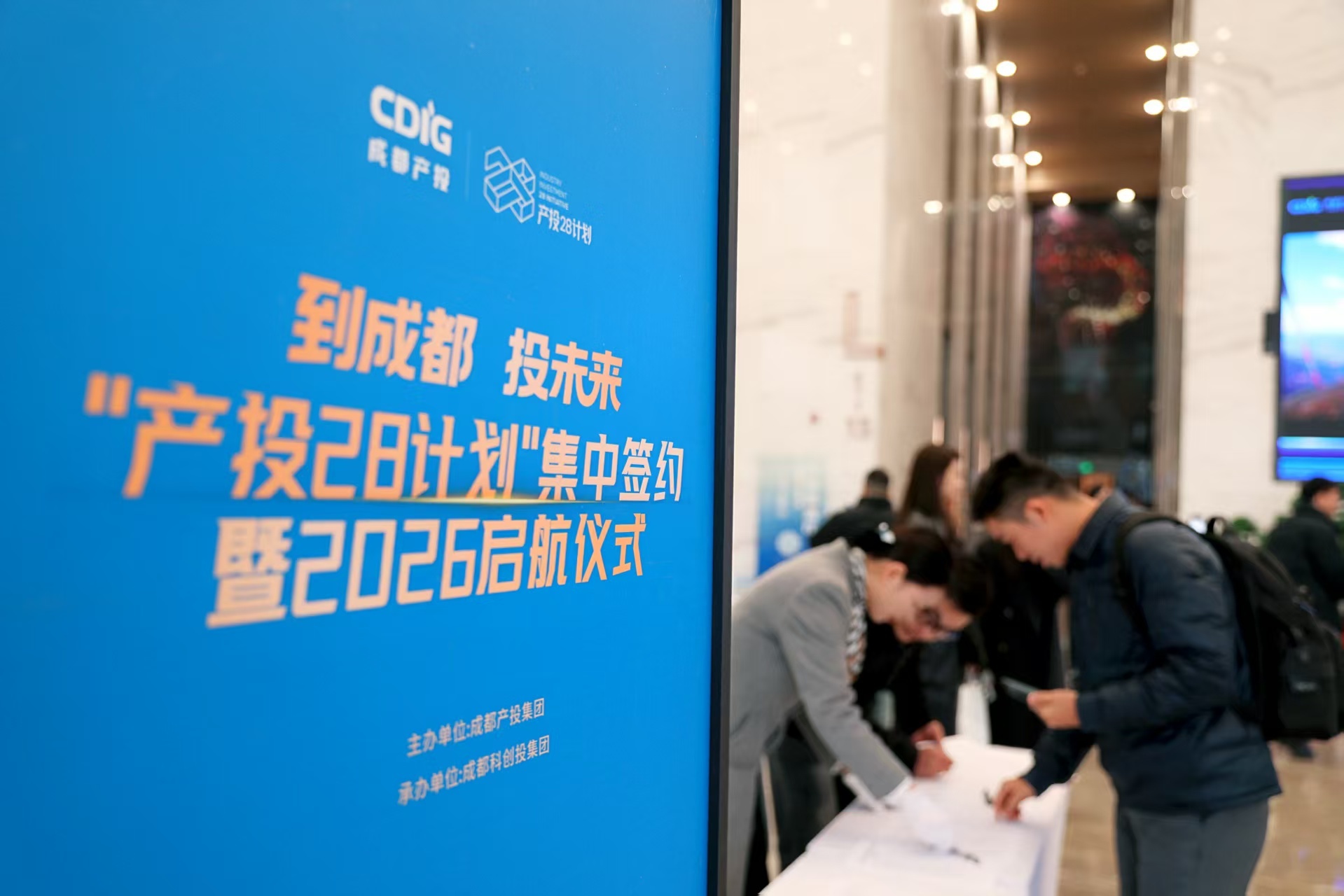
距离立春还有一周,成都"产投人"已率先行动。1月28日至29日,由成都产投集团主办、成都科创投集团承办的"产投28计划"集中签约暨2026启航仪式在成 都举行。活动以"到成都 投未来"为主题,涵盖阶段性成果展示、重点项目签约、链接平台资源发布、量子科技闭门研讨会以及为期两天的多场专场项目路 演。来自政府相关职能部门、头部投资机构、科创企业及智库的代表们齐聚一堂,深度探讨并见证未来产业的成都路径。 作为2026年"产投28计划"的开篇之作,本次活动呈现出三大核心亮点:一是百余日成果集中落地,12家硬科技企业集中签约,总金额达6.75亿元;二是引入 6大央企基金,构建起强力的"央地基金矩阵";三是前沿赛道深度研判,通过量子科技闭门会与垂直赛道路演,实现对未来产业趋势判断的精准赋能。 实际上,过去一年,成都产投集团硕果累累:成功培育市值超7000亿元的国产CPU巨头海光信息,并获得超1200亿元回报;"产投28计划"已呈现出"参与 热、质量高、影响广"的良好势头,全国项目征集数已突破300个,其中超50%来自北上广深。时间回到去年10月,"产投28计划"首批15个前沿项目签约,总 投资近5亿元;紧接着,去年11月、 ...

今日视点:以资本之“韧”筑科技之“基”
Zheng Quan Ri Bao· 2026-01-27 23:08
奔赴科技创新的"星辰大海",离不开资本打造的"舟楫"。硬科技的研发是一场没有终点的长跑,需要能 够与之匹配、共历风雨的"长钱"。 纵观近期实现重大突破的硬核技术,无不带有高投入、高风险、长周期的显著特征。核心技术的攻关, 需要"十年磨一剑"的久久为功。 ■ 贾 丽 科技向"新",需聚链成群。创新不能仅是头部企业的独角戏。建议链主、龙头企业主动发挥资本撬动作 用,将技术需求以"揭榜挂帅"等形式向中小微科技企业发布,提供合作机会。这种"大手拉小手"的模 式,一方面能让资本精准流向产业链的薄弱环节;另一方面也能让初创企业在早期就获得确定的订单和 应用场景,大幅降低技术市场化的风险。 日前,由天府绛溪实验室微光中心与四川新先达测控技术有限公司联合研发的全链路信号与系统仿真软 件纽西蒙正式发布,标志着我国在构建自主工业软件生态上迈出关键一步。 此外,针对那些尚处于"无人区"的前沿技术,资本、科研机构以及企业可以合力探索"风险实验室",比 如由投资机构提供主要经费,科研团队以技术入股,约定技术转化共享。 产业一线也有众多突破性成果涌现:在材料领域,不论是极致薄的"手撕钢"还是支撑大国重器的"核电 钢",工业极限不断刷新; ...
险资探索服务硬科技新模式
Zhong Guo Zheng Quan Bao· 2026-01-27 20:57
● 本报记者 薛瑾 步入2026年,保险资金积极探索服务科创企业的新思路、新方法,加大对前沿领域与新兴产业的支持力 度,展现出加快向"耐心资本+创新保单"双轮驱动模式演进的态势。 业内人士表示,在资金端,险资不断丰富"工具箱",通过股、债、基、另类等工具,为集成电路、人工 智能、生物医药等赛道注入"耐心资本",构建起全周期投融资支持体系。在产品端,科技保险持续迭 代,正在重新定义在培育新质生产力过程中的价值,保障链条从研发拓展至产业化全流程,针对人形机 器人、商业航天、低空经济、生成式AI等前沿场景,提供定制化"创新保单",延展共保体机制,为企业 创新提供关键的风险"减震器"。 投新投未来 当前,在政策引导下,险资通过"直接+间接"方式覆盖科创企业投资,形成了包括股、债、基、另类等 工具在内的多元化投资布局,(下转A02版) (上接A01版)覆盖了人工智能、半导体、高端制造、新材料、新能源等诸多领域。业内人士表示,通 过多元工具矩阵,险资基本构建起从种子期、初创期、成长期到成熟期的全周期投融资支持体系。 头部险资机构已率先在投资新质生产力方面进行了全方位深度布局。 "不能再用旧瓶装新酒。"新华资产相关负责人表 ...
以资本之“韧”筑科技之“基”
Zheng Quan Ri Bao· 2026-01-27 16:25
Group 1 - The core viewpoint of the articles emphasizes the importance of nurturing "patient capital" to support hard technology research and development, highlighting the need for long-term investment strategies that align with the high-risk, high-reward nature of technological innovation [1][2][3] - The recent launch of the "Nuximon" software marks a significant step in building an independent industrial software ecosystem in China, showcasing advancements in various fields such as materials and technology applications [1] - The article discusses the necessity for investment institutions to develop a multi-track due diligence system that includes industry experts, ensuring that capital is effectively aligned with the technological needs of the industry [2] Group 2 - It is suggested that leading companies should actively leverage their capital to support smaller tech firms, creating opportunities for collaboration and reducing market risks for innovative technologies [2] - The concept of "risk laboratories" is introduced, where capital, research institutions, and enterprises can collaborate to explore cutting-edge technologies, sharing the burden of funding and the benefits of technology commercialization [2] - The articles stress that there are no shortcuts in the journey of technological innovation, advocating for a steadfast commitment to deep investment in core technologies and the transformation of industrial models and ecosystems [3]
南京,2000亿产业基金集群来了
FOFWEEKLY· 2026-01-27 10:07
Core Viewpoint - The article highlights the emergence of a 200 billion yuan "patient capital" initiative in Nanjing, which is leading the national primary market and aims to foster high-quality development through a structured industrial fund cluster [2][3][5]. Group 1: Nanjing's Industrial Fund Initiatives - Nanjing's government has introduced 42 policy measures across nine areas to support advanced manufacturing, focusing on building an industrial fund cluster exceeding 200 billion yuan [5]. - The "4+N" industrial fund cluster aims to establish a mother fund for key industries, allowing for direct investments or investments through special purpose vehicles (SPVs), with individual project investments capped at 100 million yuan [5][6]. - As of January, the "4+N" industrial fund cluster has established 52 funds with a total scale exceeding 1.3 trillion yuan [7]. Group 2: Jiangsu's Broader Capital Strategy - Jiangsu province is developing a clear and distinctive strategic emerging industry fund cluster, with a total scale of 500 billion yuan for the provincial mother fund and 506 billion yuan for the first batch of 14 specialized industry funds [8]. - The provincial mother fund focuses on early-stage, small-scale, long-term investments in hard technology, allowing for a higher tolerance for losses in angel investments [8]. Group 3: Regional Capital Dynamics - The article emphasizes that the Yangtze River Delta region is at the forefront of the primary market recovery, with a surge in the establishment of industrial funds and increased fundraising activity [11]. - Various mother funds have been launched in the region, including social security funds and central enterprise mother funds, with Jiangsu leading in investment frequency by 2025 [12]. - Zhejiang province is also actively preparing a 100 billion yuan future industry fund and has introduced several large-scale fund clusters to support technological innovation and high-quality development [13]. Group 4: Collaborative Efforts in the Yangtze River Delta - The establishment of a 1 trillion yuan national venture capital guidance fund in the Yangtze River Delta signifies a significant collaborative effort among regional state-owned assets from Shanghai, Jiangsu, Anhui, and Zhejiang [14]. - This fund is expected to enhance resource collaboration across the region, reinforcing the Yangtze River Delta's position as a core driver of China's venture capital industry [14]. Group 5: Conclusion on Market Trends - The article concludes that the warming of the primary market and the influx of capital into the Yangtze River Delta region are indicative of a new development cycle, driven by technological innovation and policy incentives [16].

资本市场将迎上升期!专访李扬:中国金融体系提质正当时
券商中国· 2026-01-26 01:19
今年甫一开年,央行就出台一系列政策组合拳,并表明"年内降准降息还有一定空间。" "时机值得玩味。"在近期举办的"固本·拓新"2026债券市场年度论坛上,中国社会科学院学部委员、国家金融 与发展实验室理事长李扬接受券商中国记者专访时表示,央行此举旨在提振信心,表明其始终站在第一线。他 还提到,中国金融体系正迎来一个提高质量的重要时机。 李扬同时兼任中国资本市场学会学术委员会主任委员。他认为,中国资本市场将迎来一个小的上升阶段,并强 调改革的关键在于落实,尤其是投融资综合改革、上市公司现金分红、集体诉讼等保护中小投资者的基础制 度。 中国金融体系迎来提质关键期 券商中国记者: 央行前不久推出了一系列政策组合拳,应如何理解这背后的战略意图和影响? 李扬: 从去年年底的中央经济工作会议,到今年年初的中央政治局会议,都强调要继续实施更加积极的财政 政策和适度宽松的货币政策,央行显然是在落实这一系列战略安排。不过,央行在年初就推出这些政策,时机 值得玩味。这旨在从一开始就提振市场信心,表明央行始终站在第一线。 券商中国记者: 央行也提到年内降准降息仍有空间,那可能是什么时机,以及决策层会考量哪些条件? 李扬: 时间难说, ...

千亿长钱滚滚来!社保科创基金开年加速布局
Sou Hu Cai Jing· 2026-01-24 04:04
Core Viewpoint - The Social Security Science and Technology Innovation Fund is expanding its operations, with several provincial funds completing registration and moving into the investment phase, reflecting a beneficial exploration of the synergy between preserving the value of social security funds and promoting technological innovation [1][2]. Group 1: Fund Establishment and Scale - The Social Security Science and Technology Innovation Fund, initiated by the National Social Security Fund Council, began establishing specialized funds for technological innovation in early 2023, with a total initial scale of approximately 160 billion yuan [2]. - As of January 13, the Sichuan Social Security Science and Technology Innovation Equity Investment Fund has completed registration, with similar funds in Zhejiang, Jiangsu, Fujian, and other provinces also registered [1][2]. Group 2: Investment Strategy and Structure - The funds utilize an innovative investment model combining "Social Security Fund + Local State-owned Assets + Bank AIC," differing from previous models that relied solely on the Social Security Fund [3]. - The funds are structured with a dual-layer management approach, enhancing decision-making and supervision while ensuring effective project investment and risk diversification [3]. Group 3: Performance and Impact - The Zhongguancun Independent Innovation Special Fund has achieved significant results, with 40% of invested companies receiving national science and technology awards and a total leveraged investment exceeding 240 billion yuan [4]. - The focus of provincial funds is aligned with national strategies and local industrial advantages, targeting sectors such as new-generation information technology, high-end equipment, new materials, and biomedicine [3]. Group 4: Future Directions and Recommendations - The Zhejiang provincial government aims to establish a market-oriented operation mechanism for the Social Security Science and Technology Innovation Fund by 2026, indicating a push for broader implementation [5]. - Experts suggest developing an evaluation framework that aligns with the lifecycle of technological innovation, incorporating non-financial metrics to reflect the true value of patient capital [5].
2026保险业前瞻:“报行合一”有望带动行业费用率改善
2 1 Shi Ji Jing Ji Bao Dao· 2026-01-23 14:37
Core Viewpoint - The 2026 regulatory work meeting of the National Financial Regulatory Administration established the financial regulatory tone for the "14th Five-Year Plan" period, emphasizing the continuous promotion of "reporting and operation integration" in the insurance industry and the adjustment of predetermined interest rates [1] Group 1: Trends in the Insurance Industry - The insurance industry is expected to exhibit three core trends in 2026: low upper limits on predetermined interest rates for traditional insurance, the rise of dividend insurance as a market mainstream due to its "fixed income + floating" characteristics, and the strategic position of insurance funds as "patient capital" [1] - Dividend insurance is gaining popularity as it effectively balances the risk of interest margin losses for insurance companies and the inflation resistance needs of customers, with a current predetermined interest rate research value of 1.89% [2][3] - The sales of dividend insurance are closely linked to investment yield rates and competing product yields, with the decline in bank deposit rates making dividend insurance more attractive to residents [4] Group 2: Reporting and Operation Integration - The "reporting and operation integration" initiative has been implemented in the auto insurance sector and is now being extended to non-auto insurance areas, which is expected to fundamentally change the industry's cost competition model [5][6] - This integration is anticipated to improve industry expense ratios, reduce overall operating costs, and enhance insurance companies' ability to price risks accurately [7] - The competition in the bancassurance channel is expected to shift from a focus on fees and products to a competition based on professional capabilities and comprehensive services [8] Group 3: Strategic Investment Directions - The meeting highlighted the importance of cultivating "patient capital" to support the development of new productive forces, with insurance funds being well-suited for long-term, stable funding support [9] - Infrastructure and real estate, along with private equity, are expected to become key areas for alternative investments by insurance funds, aligning with their investment characteristics [10] - Insurance companies are encouraged to increase their equity investment in strategic emerging industries, focusing on sectors like 5G, artificial intelligence, healthcare, and new consumption, which are seen as having significant growth potential [11]
地方两会|十四届北京市政协委员陶匡淳:建立耐心资本护航青年科创
Zhong Guo Jing Ying Bao· 2026-01-23 07:20
Core Viewpoint - The article emphasizes the importance of cultivating a long-term capital ecosystem led by "patient capital" to support youth innovation in Beijing, aligning with the city's goal of becoming a national technology innovation center [1][2]. Group 1: Policy Framework and Long-term Capital Ecosystem - Beijing has implemented measures to establish a growth mechanism for future industry investments, laying a solid policy foundation for the development of patient capital [1][2]. - The city aims to optimize capital empowerment mechanisms and foster a long-term investment culture to unleash the potential of youth innovation [2]. Group 2: Mechanisms for Supporting Youth Innovation - A proposed mechanism includes the introduction of guidelines for government-led funds to participate in venture agreements, focusing on long-term investments in six key future industries [3]. - The suggestion includes eliminating short-term performance metrics in fund assessments and providing management fee subsidies for projects with investment periods exceeding five years [3]. Group 3: Investment Culture Transformation - The article advocates for a shift in investment logic from a financial-focused approach to a strategic cultivation model, encouraging funds to adopt milestone-based agreements linked to technological breakthroughs [4]. - It suggests that companies signing agreements without buyback or forced exit clauses should receive positive incentives during IPO reviews [4]. Group 4: Risks Associated with Venture Agreements - The article identifies hidden risks associated with venture agreements, including compliance risks, liquidity pressures, control risks, and insufficient policy alignment, which hinder the IPO process for youth innovation companies [5]. - It highlights that over 30% of companies in review may retain exit paths through hidden mechanisms despite appearing to terminate venture clauses [5]. Group 5: Recommendations for Risk Management - Recommendations include the accounting profession initiating a "compliance health support plan" for startups, providing comprehensive professional support to manage venture agreement risks [6]. - Suggested actions involve developing a liquidity warning system, conducting health checks on venture agreements, and offering training programs to strengthen compliance foundations for youth entrepreneurs [6].
多策驱动 政府投资基金从规模扩张迈向提质增效
Zheng Quan Ri Bao· 2026-01-22 16:12
Core Viewpoint - The introduction of the "Guiding Opinions" and subsequent policies aims to enhance the quality and effectiveness of government investment funds in China, focusing on market-oriented, legal, and professional development [1][2]. Group 1: Policy Framework - The "Guiding Opinions" set a clear direction for government investment funds, emphasizing a market-oriented and professional approach [1]. - The "Work Method" and "Management Method" provide a roadmap for fund allocation and evaluation, promoting refined management practices [1]. - The policies aim to align government investment funds with national strategies, optimizing resource allocation and supporting industrial upgrades [1][2]. Group 2: Investment Trends - The total subscription scale of fiscal and state-owned investment platforms reached 1.03 trillion yuan, a year-on-year increase of 21.7% [2]. - Local government investment funds are shifting from a broad-based approach to a focus on quality and efficiency, with a decrease in the number of new funds established [2][3]. - The active establishment of national-level guiding funds, such as the National Artificial Intelligence Industry Investment Fund with a capital of 600.6 billion yuan, reflects a growing trend towards strategic investment [3]. Group 3: Management and Evaluation - The introduction of a "provincial government investment fund key investment area list" aims to encourage localized investment strategies, reducing homogeneity in fund allocation [5][6]. - The "Management Method" includes a secondary indicator for assessing the alignment of fund investments with local priorities, enhancing accountability [5][6]. - The focus on differentiated and specialized development paths is intended to mitigate the issues of repetitive investments and resource misallocation [5][6]. Group 4: Challenges and Solutions - The government investment funds face challenges related to high-risk, long-term investments, necessitating the establishment of error tolerance and incentive mechanisms to encourage investment [7][8]. - Current error tolerance mechanisms are often vague, requiring clearer guidelines and integration with regulatory frameworks to alleviate concerns among fund managers [7][8]. - The need for diversified and market-oriented exit strategies is critical for the sustainable operation of government investment funds, with suggestions for flexible exit mechanisms [9].