逆向投资

Search documents
I’m an Investment Manager: 4 Timeless Lessons I’ve Learned From Warren Buffett
Yahoo Finance· 2025-11-17 19:02
Core Insights - Warren Buffett's investment philosophies have led to significant success, with a net worth of approximately $155 billion through Berkshire Hathaway [1] Group 1: Investment Philosophy - Buffett emphasizes an owner mindset in investing, encouraging investors to rely on their own reasoning rather than popular trends [4] - The importance of recognizing personal strengths as an investor is highlighted, suggesting that investors should focus on their strengths when selecting businesses and management to partner with [5] - Investors are advised to "tune out the noise" from headlines and daily stock movements, as these distractions do not reflect the underlying businesses [6] Group 2: Diversification and Company Structure - Berkshire Hathaway is noted for its diverse holdings across various industries, making it a strong investment choice [6] - Understanding Berkshire's history, culture, and operational structure is essential for grasping its investment potential, as it operates across multiple revenue streams including insurance, railroads, energy, and retail [7] - The company controls 189 subsidiaries and possesses significant liquidity, allowing for strategic investments and interest earnings [8]
国海富兰克林基金总经理徐荔蓉:中国资产全球再定价把握港股长期投资机遇
Shang Hai Zheng Quan Bao· 2025-11-16 14:02
国海富兰克林基金总经理徐荔蓉: 中国资产全球再定价 把握港股长期投资机遇 ◎记者 王彭 今年以来,港股市场表现亮眼,恒生指数、恒生国企指数和恒生科技指数均实现显著上涨,在全球主要 市场中排名靠前。近日,国海富兰克林基金总经理兼投资总监徐荔蓉在接受上证报记者采访时表示,港 股市场正处在估值修复、流动性改善和盈利增长三重因素驱动的上行通道中。对于投资者而言,通过合 理的资产配置,并使用"主动+被动"的工具,或能更好把握这轮中国资产全球再定价的历史性机遇。 港股估值修复尚未结束 关于港股本轮上涨,徐荔蓉分析称,这是估值洼地修复、流动性结构质变、盈利改善三重因素叠加的结 果。这三者并非孤立存在,而是相互强化:资金流入推动估值修复,估值修复为企业融资和发展创造更 好条件,而盈利改善又有望进一步吸引资金流入。 "站在当前时点,我依然对港股市场保持乐观。这轮行情并非简单的反弹,而是中国资产在全球再定价 过程中的一个重要阶段。"徐荔蓉称。 在"定价误差"中寻找机会 徐荔蓉还特别强调了"逆向投资"策略在港股市场的作用。他表示,港股作为一个典型的离岸市场,其走 势经常受到海外流动性、国际政治关系、美元汇率波动等外部因素影响,这导 ...
你抛美债,我抛中债!外资开始大量减持中国债,很多资金流向美方?
Sou Hu Cai Jing· 2025-11-14 07:27
Core Viewpoint - Recent data indicates that foreign capital is significantly reducing its holdings in Chinese bonds, with a notable decline attributed to rising U.S. Treasury yields and currency fluctuations, which may impact China's financial market [1][3][4]. Group 1: Foreign Capital Reduction - As of October 2025, foreign institutions held 29,765 billion yuan in Chinese bonds, a decrease of 2,843 billion yuan or 8.7% since the beginning of the year, marking the longest net outflow in five years [1]. - The yield on 10-year U.S. Treasury bonds reached 4.8%, compared to approximately 2.6% for Chinese bonds, creating a 2.2 percentage point yield advantage that attracts international capital [1][3]. - Approximately 62% of surveyed international investors indicated that currency fluctuations are a primary factor in their decision to adjust their holdings in Chinese bonds [3][4]. Group 2: Global Monetary Policy and Economic Factors - The divergence in monetary policy, with the U.S. maintaining a stringent stance while China has implemented three interest rate cuts in 2025, has widened the interest rate differential, further encouraging capital flow to the U.S. [4]. - China's GDP growth slowed to 4.6% year-on-year in Q3 2025, which, while still higher than many global economies, has led to cautious sentiment among foreign investors regarding Chinese bonds [4]. Group 3: Impact on Financial Markets - Foreign holdings of Chinese bonds accounted for approximately 2.1% of the total bond market as of October 2025, down from a peak of 3.5% in 2023, suggesting that while the outflow has some impact, it is unlikely to cause severe disruption [6]. - The outflow of capital may exert some pressure on the renminbi, but China's foreign exchange reserves stood at $3.24 trillion as of September 2025, providing a solid foundation to manage currency fluctuations [6]. Group 4: Long-term Outlook - The internationalization of China's bond market is increasing, with Chinese bonds included in major international indices, which may provide a more stable source of foreign investment in the long run [7]. - A survey of 50 major asset management firms revealed that about 67% believe the proportion of Chinese bonds in their global asset allocation will increase over the next five years [7].

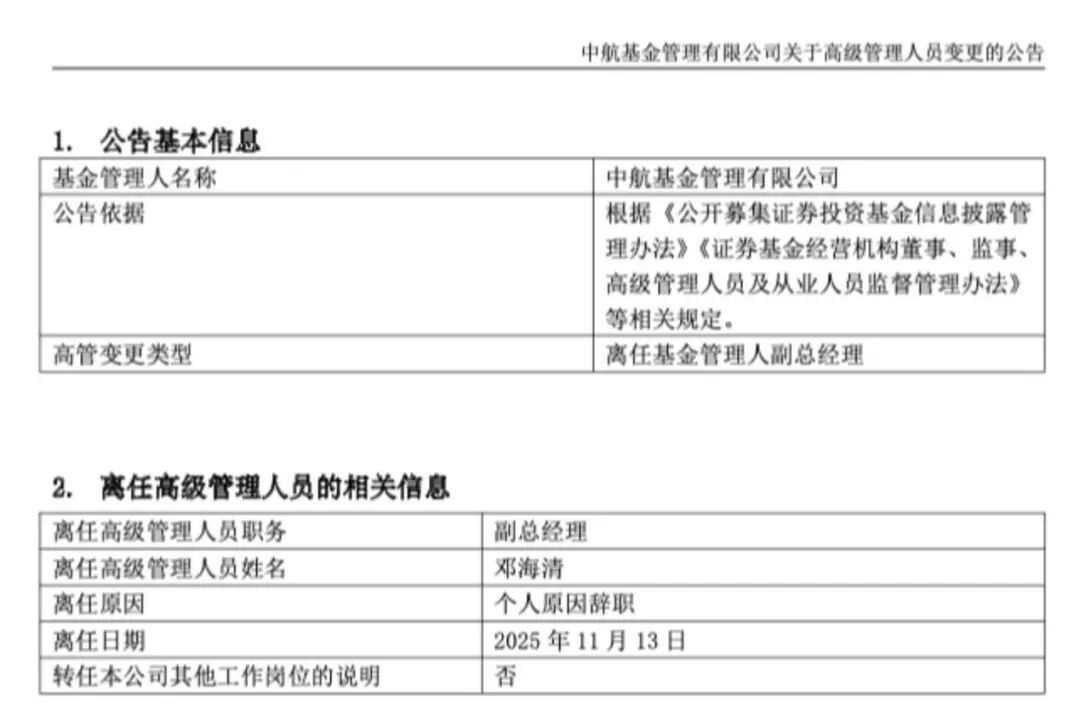
中航基金副总经理、首席投资官邓海清离任
Zhong Guo Ji Jin Bao· 2025-11-13 22:32
Core Viewpoint - Renowned economist Deng Haiqing has officially resigned as the Deputy General Manager of AVIC Fund due to personal reasons, marking a significant leadership change in the company [1][3]. Company Overview - AVIC Fund, established in 2016, is controlled by AVIC Group, with AVIC Securities holding 55% and Beijing Shougang Fund holding 45% [8]. - As of the end of Q3 this year, AVIC Fund has a public fund management scale exceeding 60 billion yuan, with over 30 funds under management [8]. Leadership Changes - Deng Haiqing joined AVIC Fund in December 2020 as Chief Investment Officer and was promoted to Deputy General Manager in December 2021 [5]. - His departure follows a series of management changes within the company, including the resignation of the General Manager and Chief Supervisor earlier this year [10]. Investment Strategy and Performance - AVIC Fund has focused on a differentiated development path, particularly in public REITs and bond funds, achieving notable innovation in product offerings [8]. - The company has established multiple public REITs related to green energy, photovoltaic, and logistics, as well as ESG-themed bond products [8]. - In equity investments, AVIC Fund has performed exceptionally well, with equity fund returns reaching 99.06% in the first three quarters of this year, ranking second in the industry [9].
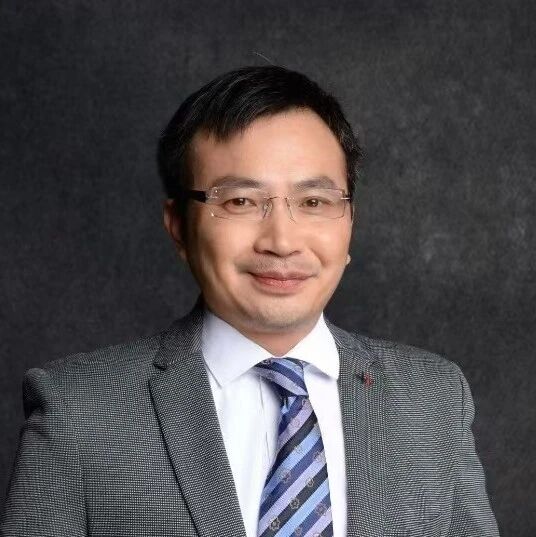
官宣!知名经济学家,离任
中国基金报· 2025-11-13 15:19
Core Viewpoint - The departure of Deng Haiqing, a prominent economist and the Vice General Manager of AVIC Fund, is a significant event for the company, which has been focusing on differentiated development and product innovation in recent years [2][4]. Company Overview - AVIC Fund was established in 2016 and is controlled by AVIC Group, with AVIC Securities holding 55% and Beijing Shougang Fund holding 45% [13]. - As of the end of Q3 2023, AVIC Fund manages over 60 billion yuan in assets, with more than 30 funds under management [13][14]. Management Changes - Deng Haiqing officially announced his resignation as Vice General Manager on November 13, 2025, due to personal reasons and will not take on any other roles within the company [4][7]. - Deng joined AVIC Fund in December 2020 as Chief Investment Officer and was promoted to Vice General Manager in December 2021 [8]. - The company has experienced frequent changes in senior management, including the resignation of the General Manager and Chief Supervisor in July 2024 [15][16]. Investment Strategy and Performance - AVIC Fund has been focusing on specialized development, particularly in public REITs and bond funds, achieving notable differentiation in these areas [12][14]. - The company has established multiple public REITs covering various asset types, including green energy and logistics, and has seen significant performance in equity investments, with a 99.06% return in the first three quarters of 2023, ranking second in the industry [14].
认定AI泡沫 “大空头”伯里果断清算Scion基金
智通财经网· 2025-11-13 14:14
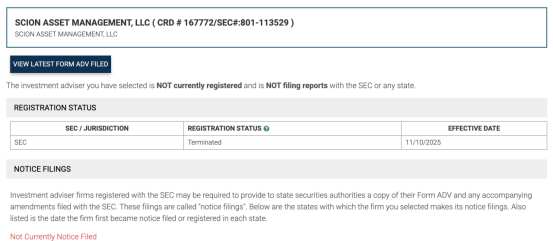
Core Insights - Michael Burry, known for predicting the 2008 financial crisis, is exiting asset management, with his firm Scion Asset Management LLC officially terminating its registration as of November 10, 2025 [1][5] - Burry plans to liquidate his funds and return capital to investors by the end of the year, citing a significant divergence between market valuations and his assessments [1][5] - His recent actions and statements indicate a belief that the market is overvalued and lacks rationality, particularly regarding large tech companies and AI valuations [5][6] Company Actions - Scion Asset Management managed $155 million in assets as of March and has been viewed as a barometer for detecting bubble risks [5] - Burry has established short positions against AI-related stocks like Nvidia and Palantir, reflecting his cautious stance on the AI-driven market rally [5][6] - The firm’s termination and Burry's decision to return capital signal a retreat from what he perceives as a fundamentally manipulated market [5][8] Market Context - Burry's exit highlights the challenges faced by short-sellers in a market characterized by optimism towards the tech sector and retail investor enthusiasm [7] - The recent performance of AI-related stocks has significantly contributed to the S&P 500's gains, with reports indicating that these stocks accounted for 75% of the index's increase since November 2022 [8] - Burry's actions may symbolize a protest against speculative trends in the market, as he adheres to a value-driven investment philosophy [8][9] Future Outlook - It remains uncertain where Burry will direct his investments post-liquidation, with speculation suggesting a shift towards family office or private investment strategies [8] - Burry's upcoming announcement on November 25 may provide insights into his future investment direction [6][8]
后巴菲特时代,我们还能学什么?
Jing Ji Guan Cha Bao· 2025-11-13 11:31
Core Insights - The traditional value investing approach championed by Warren Buffett is facing scrutiny in the context of modern economic dynamics and technological advancements [2][4] - Buffett's retirement marks the end of an era, prompting a reassessment of value investing principles in light of the evolving market landscape [2][3] Group 1: Transition in Leadership - Buffett's announcement to step back from writing the annual shareholder letter and speaking at the shareholder meeting signifies a significant transition for Berkshire Hathaway [2] - The passing of Charlie Munger and Buffett's retirement within two years has accelerated the market's adaptation to a Berkshire without its legendary figures [2][3] - The transition to Greg Abel as the successor is designed to provide investors and the new leader with a longer adjustment period [2][3] Group 2: Investment Strategy Evolution - Investors must prepare for a potential shift in Berkshire's investment logic under Abel, who has already shown a more diversified portfolio and shorter holding periods [3][5] - Berkshire Hathaway currently holds over $200 billion in cash reserves, a historic high, but faces challenges in finding quality investment opportunities [3][5] - The company's recent performance has lagged behind the S&P 500, highlighting strategic difficulties and the need for adaptation [3][5] Group 3: Value Investing in a New Era - The rise of technology as a key driver of economic growth necessitates a reevaluation of traditional value investing, which has primarily focused on established sectors [4][5] - Value investing must evolve to incorporate new elements, actively adapting to high valuation norms and technology-led growth [5] - The legacy of Buffett emphasizes the importance of understanding intrinsic value while also expanding the ability to assess technology companies [5][6] Group 4: Lasting Wisdom and Legacy - Buffett's retirement does not signify the end of value investing but rather a transformation and passing of core wisdom to future generations [6] - The principles of reading, critical thinking, and risk assessment remain relevant regardless of technological changes [5][6]

公募50研选池 | 图览2025年10月基金报告
Sou Hu Cai Jing· 2025-11-13 09:16
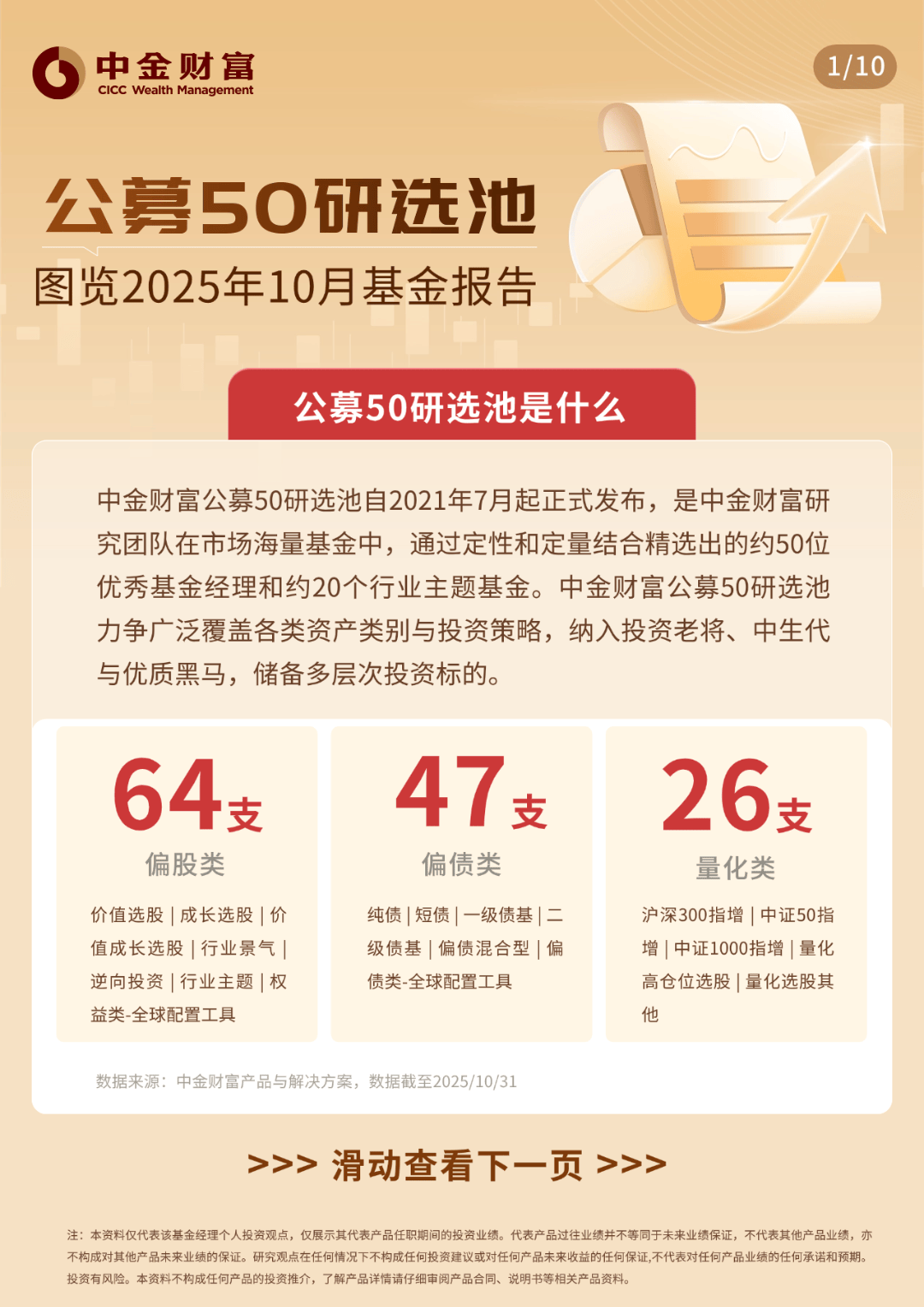
Group 1 - The core concept of the report is the establishment of the CICC Wealth Public Fund 50 Selection Pool, which aims to identify approximately 50 outstanding fund managers and around 20 industry-themed funds through a combination of qualitative and quantitative analysis since its launch in July 2021 [2][65] - The selection pool covers various asset classes and investment strategies, including value stock selection, growth stock selection, and industry themes, aiming to provide a diversified investment approach [2] Group 2 - The performance of the Public Fund 50 Selection Pool (equity category) has consistently generated positive alpha, outperforming the average performance of mixed equity funds and ordinary stock funds since its inception [7][65] - The average performance of the Public Fund 50 Selection Pool (equity category) over the past three years is 38.7%, compared to 31.0% for the CSI 300 Index [8][9] - As of the end of October, the year-to-date average return for the Public Fund 50 Selection Pool (equity category) is 29.4%, outperforming the average return of other equity funds [13][14] Group 3 - In October, the market experienced a rotation in style, with traditional defensive assets outperforming previously leading growth sectors, indicating a shift towards value stock selection [18] - The industry theme performance showed a rotation, with previously strong sectors like pharmaceuticals and technology experiencing pullbacks, while cyclical sectors began to see opportunities [24] Group 4 - The top 10 fund managers in the Public Fund 50 Selection Pool achieved an average performance of 67.4% year-to-date, with notable performances from managers focusing on sectors such as coal, non-ferrous metals, and energy [30][33] - The report highlights specific fund managers' strategies, such as focusing on innovative pharmaceuticals and AI-driven technology sectors, indicating a strong belief in the growth potential of these areas [45][51][61] Group 5 - The performance of the Public Fund 50 Selection Pool (debt category) has been influenced by rising risk aversion and declining long-term interest rates, with pure debt funds performing better in the current market environment [37] - The report suggests that for investors seeking stable returns, the value of debt market allocations is increasing, particularly in mixed debt funds and primary and secondary debt funds [37][39]
Top 3 oversold stocks ripe for a strong comeback in 2026
Invezz· 2025-11-10 19:35
Core Insights - US stocks experienced significant declines last week due to weak economic data and concerns over tech sector valuations, impacting investor sentiment and creating potential opportunities for contrarian investors in oversold stocks [1] Economic Data - Weak economic indicators contributed to the downturn in US stocks, signaling potential challenges in the broader economy [1] Tech Sector Concerns - Valuation concerns in the technology sector have heightened, leading to increased volatility and uncertainty among investors [1] Investment Opportunities - The current market conditions may present opportunities for contrarian investors to capitalize on stocks that have seen substantial declines, particularly in the tech sector [1]


再访韩冬,听他复盘“好公司+多策略”的实践
聪明投资者· 2025-11-10 07:03
Core Insights - The article emphasizes the importance of selecting high-quality companies as the foundation for investment strategies, with a focus on long-term value creation and risk management [4][7][28] - The investment approach involves a multi-strategy framework that includes non-consensus stock selection, cross-market allocation, and the use of derivative tools to manage volatility [3][5][30] Group 1: Investment Philosophy - The core investment philosophy revolves around identifying "good companies" as the primary filter for stock selection, which is believed to contribute significantly to market value growth over the long term [4][7] - The investment strategy is flexible, allowing for experimentation with new ideas while maintaining a focus on high-quality assets [7][8] - The emphasis is placed on maintaining a stable emotional state and a long-term perspective when making investment decisions, which helps in navigating market volatility [5][24] Group 2: Market Analysis and Strategy - The analysis of market conditions indicates a preference for stocks with limited downside potential, particularly in uncertain market environments [17][20] - The investment strategy includes a focus on companies with high return on equity (ROE) or return on invested capital (ROIC), ensuring that selected companies can sustain profitability over time [8][9] - The approach to cross-market investment remains consistent, with a unified standard for identifying quality companies across different markets [10][12] Group 3: Risk Management - A robust risk management framework is established, which includes diversifying across markets and sectors to mitigate systemic risks [33] - The use of derivative tools is highlighted as a method to optimize volatility and enhance the risk-return profile of the investment portfolio [33] - The strategy also involves adjusting portfolio positions based on market conditions, focusing on minimizing drawdowns while maximizing potential returns [16][19] Group 4: Future Outlook - The key market variables to watch in the next 12 months include the emergence of an economic bottom, which could signal a shift in market dynamics and investment opportunities [35] - The impact of AI on traditional business models is discussed, with a belief that AI will not only enhance efficiency but also reshape demand and market dynamics [36][37] - The potential for new consumption trends and innovative pharmaceuticals is acknowledged, with a cautious but optimistic outlook on their long-term growth prospects [39][41]