
金融黑灰产

Search documents
起底金融黑灰产新套路:虚假退保、助贷广告渗透社交平台
Di Yi Cai Jing· 2025-09-23 12:09
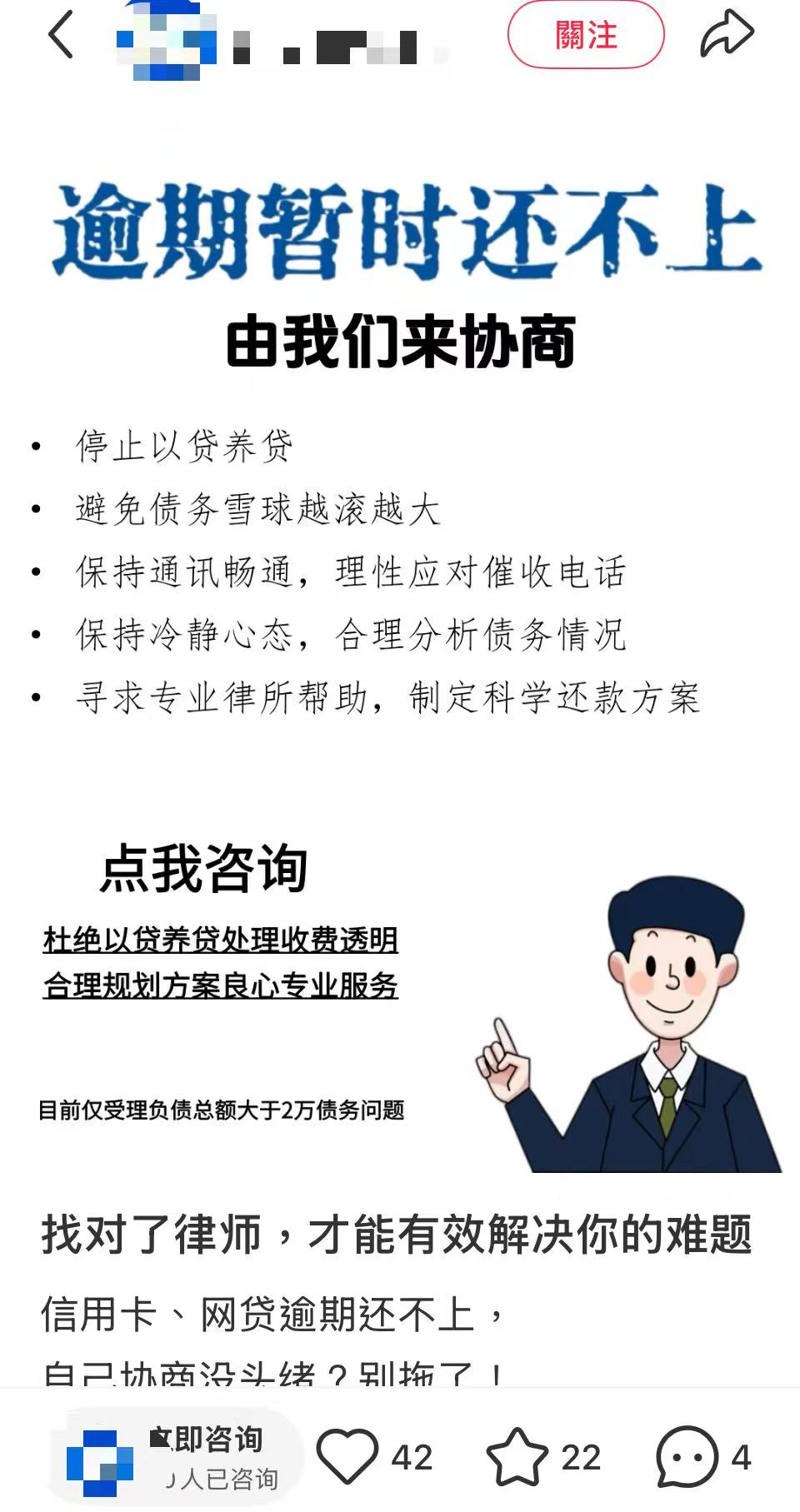
Core Viewpoint - The article highlights the ongoing issue of fraudulent financial advertisements on social media platforms, particularly focusing on the rise of "agent insurance cancellation" and "credit loans" scams, which pose significant risks to consumer rights and financial stability [1][10]. Group 1: Regulatory Concerns - Regulatory bodies have repeatedly warned about the prevalence of fraudulent activities in the financial sector, emphasizing the need for strict enforcement against intermediary institutions and online channels engaging in illegal practices [1][12]. - The financial regulatory authorities have pointed out that some insurance cancellation agents exploit consumer grievances for profit, undermining both consumer rights and market stability [1][12]. - Despite multiple warnings from regulators over the past two years, the issues persist, with platforms like Xiaohongshu becoming new breeding grounds for financial scams [1][10]. Group 2: Mechanisms of Fraud - On Xiaohongshu, users can find numerous posts disguised as "experience sharing" that promote insurance cancellation and loan assistance, often written in a relatable tone to evoke emotional responses and anxiety [2][3]. - The operational model of these scams typically involves creating a narrative of personal hardship, leading users to believe in the availability of solutions through private messaging or WeChat [2][3]. - Users are often misled into paying high service fees or are directed to unlicensed financial institutions, resulting in significant financial losses [2][3][8]. Group 3: User Experiences - A consumer shared an experience where they were promised maximum recovery of losses through an agent, only to end up paying nearly 10,000 yuan in fees, which was much higher than expected [3][8]. - Many posts on Xiaohongshu provide misleading information about debt negotiation and repayment extensions, often leading users to believe that their debts can be easily managed or erased [4][8]. - Complaints on various platforms indicate that users frequently pay fees for services that are never rendered, with ongoing harassment from debt collectors [8]. Group 4: Platform Responses and Challenges - Xiaohongshu has announced the establishment of a financial content governance team to combat fraudulent financial advertisements through manual reviews and algorithmic detection [10]. - The challenge lies in the sophisticated methods employed by scammers to evade detection, as fraudulent content often appears legitimate at first glance but reveals its true nature during user interactions [10]. - The dual presence of legitimate financial information and fraudulent content on platforms like Xiaohongshu poses significant reputational and compliance risks, especially in a tightening regulatory environment [10][11]. Group 5: Future Directions - Industry experts suggest that Xiaohongshu should invest in user education and content transparency, potentially collaborating with licensed institutions to enhance investor education and reduce the space for fraudulent activities [11]. - The ongoing demand for insurance cancellation and loan assistance services in the legitimate market indicates that as long as these needs are unmet, fraudulent entities will continue to find ways to infiltrate [11].

打击金融“黑灰产”首次披露案例 “职业背贷人”“代理退保”浮现
Zhong Guo Jing Ying Bao· 2025-09-22 14:20
Core Viewpoint - The article highlights the prevalence of illegal financial activities, particularly in the form of "proxy insurance cancellation" and "fake loan applications," which exploit vulnerable individuals seeking financial relief [1][2][3]. Group 1: Illegal Financial Activities - Social media platforms are being used to promote illegal services such as "proxy insurance cancellation" and "credit repair," which are often fronts for financial crime [1]. - Individuals like Lin and Ma have been identified as orchestrators of illegal schemes, encouraging clients to pursue unwarranted insurance refunds and charging high commissions of 20%-30% on the total premiums [2]. - A case involving Ning and others illustrates the fraudulent practice of creating fake down payment certificates to secure loans for individuals lacking repayment capability, resulting in a total fraud of over 7.38 million yuan [3]. Group 2: Regulatory Response - The Financial Regulatory Bureau and the Ministry of Public Security are intensifying efforts to combat illegal financial activities, emphasizing the need for strict penalties against those disguising illegal profits as "proxy rights protection" [3]. - The article notes that these illegal activities disrupt normal complaint channels and mislead policyholders, necessitating a robust regulatory response [3]. Group 3: Recommendations for Financial Institutions - Legal experts suggest that financial institutions should enhance their processes and risk warning systems to prevent exploitation by illegal financial entities [4][5]. - Institutions are advised to improve due diligence on intermediaries and develop risk models that include scenarios like "professional debtors" and "fake insurance cancellations" [5]. - Consumer education is crucial, as scammers increasingly use relatable and social media-driven tactics to lure victims into fraudulent schemes [5][6].
只需贡献征信就可轻松获高额酬劳?起底“职业背债人”陷阱
Nan Fang Du Shi Bao· 2025-09-18 10:15
Core Viewpoint - The recent focus on combating financial black and gray industries during the "Financial Education Promotion Week" highlights the emergence of "professional debtors" and the associated risks of loan fraud and credit card scams [2][5][10] Group 1: Financial Fraud Cases - The first batch of typical cases released by the financial regulatory authorities includes a loan fraud case involving "professional debtors," where a total of 7.38 million yuan was fraudulently obtained [4][5] - The main perpetrator, Ning, was sentenced to 16 years in prison and fined 800,000 yuan for his involvement in the fraudulent activities [4][5] - The fraudulent activities involved fabricating down payment certificates and inflating property prices to deceive banks into issuing loans [4][5] Group 2: Characteristics of "Professional Debtors" - "Professional debtors" are individuals who are lured by illegal loan intermediaries with promises of quick wealth and no repayment obligations [6][8] - The scams typically involve false advertising, such as claims of high returns without repayment and the need to only contribute credit information [8][9] - Fraudulent materials, including fake employment and income certificates, are used to misrepresent individuals as qualified loan applicants [8][9] Group 3: Regulatory Response and Consumer Protection - The financial regulatory authorities have issued warnings to consumers to avoid falling into the "professional debtor" trap [8][10] - There is a concerted effort from regulatory bodies to combat financial black and gray industries, with a focus on loan fraud and illegal insurance practices [10][11] - Financial institutions are also taking proactive measures, including reward mechanisms for reporting illegal activities related to insurance and loans [10][13]

恶意投诉,一门大生意
Hu Xiu· 2025-09-16 10:02
出品 | 妙投APP 作者 | 董必政 那你可要注意了。 退保意味着,你此前几年交的保费几乎退还不了多少到你的账户。 你想让保险公司多退你点。 你的需求,催生了一个黑灰产生意——代理维权。 "他们就是纯骗,真的是太猖狂了,我已经报警了",王芳(化名)愤怒地说。 (图片来源:当事人提供) 王芳本想帮老公退掉保险,在互联网平台上找到了可以"高额退保"的代理维权机构。最后,不仅事情没有办成,还被骗了1500元。 编辑 | 关雪菁 头图 | AI制图 如果你交了几年保险金,突然不想续保。 "他们拉了一个群里面有7个人,有所谓的法务、退保老师",王芳告诉妙投。 妙投一琢磨,7个人,1500元他们够分吗?一人赚200? 由此,妙投开始使劲琢磨,结果发现代理维权这个黑灰产,了不起,成体系,用流量漏斗精准筛选到了王芳这样的人群,并做了非常有效地转化。 据虎嗅妙投向业内人士了解,黑灰产在抖音平台一年的广告投放费用就超过60亿元,60亿占整个北京金融机构投放总额的10%左右。 不仅舍得花钱,黑灰产机构还训练有素,有组织、有体系、有打法,还狼性。 那么,代理维权这个黑灰产又是如何运作的呢? 一、公司化运营 2024年10月,马上消 ...
金融监管总局揭 “黑灰产”黑幕!涉及信贷诈骗与代理退保丨金融普及教育专题
清华金融评论· 2025-09-16 09:28
Core Viewpoint - The article emphasizes the importance of combating illegal financial activities, particularly in the loan and insurance sectors, to protect financial rights and promote a healthy financial ecosystem [3][6][10]. Group 1: Case Studies - Case 1 involves a loan fraud scheme where the accused, Ning, and accomplices defrauded banks by creating fake loan applications and inflated property prices, resulting in a total fraud amount of over 7.38 million yuan [4][5]. - The court sentenced Ning to 16 years in prison and imposed fines totaling 800,000 yuan for loan and credit card fraud, highlighting the severe penalties for such financial crimes [5]. - The case illustrates the organized nature of financial fraud, where illegal loan intermediaries play a crucial role in orchestrating these schemes, necessitating a comprehensive crackdown on such activities [6][10]. Group 2: Legal Actions and Implications - The second case involves extortion under the guise of "insurance policy cancellation," where the accused, Lin and Ma, induced policyholders to withdraw funds by fabricating claims of insurance company violations, leading to losses of 2.1762 million yuan for the insurance companies [8][9]. - The court found Lin and Ma guilty of extortion, sentencing Lin to 11 years and Ma to 10 years in prison, emphasizing the legal consequences of exploiting financial systems for personal gain [9]. - This case underscores the need for strict enforcement against fraudulent practices disguised as legitimate financial services, as they disrupt market order and mislead consumers [10].

深圳8家金融机构集体“官宣”:披露信贷业务第三方合作机构
2 1 Shi Ji Jing Ji Bao Dao· 2025-09-16 08:54
Group 1 - The first batch of 8 banking financial institutions in Shenzhen has publicly announced a list of third-party cooperation agencies for credit business, which includes major banks such as Industrial and Commercial Bank of China, Agricultural Bank of China, and China Bank [1] - The third-party agencies primarily cover three categories: marketing and customer acquisition, guarantee and credit enhancement, and collection services [1] - Financial institutions will continuously update the list based on business developments and encourage customers to verify the legitimacy of any third-party claims [1] Group 2 - The public disclosure of the third-party cooperation agency list is an effort to implement regulatory requirements, protect financial consumers' rights, and combat illegal loan intermediaries [2] - Illegal loan intermediaries have been a significant issue in the financial sector, with instances of companies falsely claiming partnerships with banks to attract customers [2] - Common tactics used by illegal loan intermediaries include impersonating legitimate financial institutions, offering low-interest rates, and making false service promises, which can lead to consumer financial losses and data breaches [2] Group 3 - Regulatory authorities have intensified efforts to combat financial "black and gray industries," focusing on illegal loan intermediaries and related financial crimes [3] - A new regulation from the National Financial Supervision Administration mandates that commercial banks manage and disclose lists of platform operators and credit enhancement service providers, effective October 1 [3] - The regulation prohibits banks from collaborating with institutions not on the approved list for internet lending services [3]






两部门重拳打击金融“黑灰产” 信贷诈骗与恶意退保遭严惩
2 1 Shi Ji Jing Ji Bao Dao· 2025-09-16 04:17
21世纪经济报道 见习记者冯紫彤 记者郭聪聪 9月15日,金融监管总局、公安部联合发布第一批金融领域"黑灰产"违法犯罪典型案例,集中曝光了宁 某等人包装"职业背债人"实施贷款诈骗、信用卡诈骗案和林某某、马某某等人以"代理退保"名义实施敲 诈勒索案。 据21世纪经济报道记者了解,今年以来,国家对金融黑灰产的打击持续加码。2025年3月15日,金融监 管部门与公安部门联手开展了为期六个月的打击黑灰产专项行动。同月28日,两部门共同发布《关于加 强银行业保险业涉嫌犯罪案件移送工作的规定》,推动金融犯罪案件移送进入规范化、制度化新阶段。 此次典型案例发布,不仅揭开了金融黑灰产的套路链条,更彰显了两部门深化行政执法与刑事司法衔 接、重拳打击金融违法犯罪的坚定决心。 另查明,宁某的犯罪行为不止于骗贷。2019年起,宁某还以同样的 "包装" 手段,对张某某等11人进行 包装,并申领信用卡。前述信用卡由宁某实际控制并使用。截至案发,尚未归还本金合计575万余元。 2023年6月,公安机关对该案立案侦查。2025年3月,法院作出判决。经法院审理,以贷款诈骗罪判处被 告人宁某有期徒刑十一年,并处罚金五十万元;以信用卡诈骗罪判处被 ...
金融“黑灰产”首批典型案例公布,包装“职业背债人”骗贷案在列
Bei Jing Shang Bao· 2025-09-15 09:59
Core Viewpoint - The financial regulatory authorities and the police in China are intensifying efforts to combat illegal financial activities, particularly focusing on loan and credit card fraud schemes involving illegal loan intermediaries [1][2]. Group 1: Case Details - A case involving Ning and others was highlighted, where they engaged in loan fraud and credit card fraud by creating "professional debtors" and falsifying documents to secure loans [1]. - From July 2019 to May 2020, the defendants defrauded a total of over 7.38 million yuan through fraudulent loans and credit card applications, with 5.75 million yuan in principal still outstanding at the time of the incident [1][2]. Group 2: Legal Consequences - In March 2025, the court sentenced Ning to 16 years in prison and imposed fines totaling 800,000 yuan for loan and credit card fraud [2]. - Other defendants received varying sentences ranging from 3 to 11.5 years, along with fines, indicating a structured approach to sentencing based on the severity of involvement in the crimes [2]. Group 3: Industry Impact - The rise of illegal loan intermediaries has led to significant economic losses and has disrupted the financial management order in the country, posing a threat to national financial security [2]. - The criminal activities are characterized by a systematic approach, with intermediaries playing a crucial role in orchestrating fraud, which has serious social implications and necessitates legal action [2][3]. Group 4: Handling of Offenders - The authorities emphasize a tiered approach to handling offenders based on their level of involvement, advocating for harsher penalties for key players while considering leniency for those with lesser roles who cooperate with investigations [3].
4起刑事立案!银行出手了
Zhong Guo Jing Ying Bao· 2025-09-10 11:28
Core Viewpoint - The article discusses the rampant illegal activities related to credit cards, such as "anti-collection," "agent rights protection," and "credit repair," which have formed a significant illegal industry chain disrupting financial order and harming consumer rights. The banking industry is actively combating these issues through technology, police collaboration, and industry cooperation [3][4][5]. Group 1: Nature of Financial "Black and Gray Industry" - The financial "black and gray industry" refers to illegal activities surrounding credit cards and loans, including false agent complaints and fraudulent credit repair [4]. - These organizations often use online platforms to promote false advertisements, enticing consumers to hire them for resolving disputes with banks, charging high fees, and sometimes committing secondary fraud by stealing personal information [4][5]. - Research indicates that nearly 70% of malicious complaints against credit card businesses are suspected to be orchestrated by "black and gray" organizations [4]. Group 2: Impact on Banking Sector - The "black and gray industry" has led to an increase in non-performing loans and heightened difficulty in post-loan management for banks, as they interfere with normal collection processes [5]. - Malicious complaints and distortion of facts by these organizations damage the reputation of banks, leading to negative public perception and long-term impacts on normal business operations [5]. Group 3: Regulatory and Industry Response - In March 2025, the Ministry of Public Security and the National Financial Regulatory Administration launched a special crackdown on the financial "black and gray industry," emphasizing the need to break significant cases and punish offenders [5][6]. - Various financial regulatory agencies across provinces have issued risk warnings to consumers about scams related to "debt clearance" and "agent rights protection," urging them to resolve financial disputes through legitimate channels [5]. Group 4: Technological Empowerment in Combatting Illegal Activities - Banks are enhancing their digital capabilities to combat the "black and gray industry," employing big data and artificial intelligence to identify suspicious behaviors [6][7]. - For instance, Ping An Bank has established a "1+N" system for combating illegal activities, utilizing a smart risk control system for precise identification and monitoring of financial crimes [7][8]. - The collaboration between banks and law enforcement has led to significant breakthroughs, with Ping An Bank reporting 20 criminal cases and 28 administrative penalties since the establishment of its special task force [6][7]. Group 5: Future Directions and Challenges - The banking sector is expected to continue strengthening technological empowerment to combat the "black and gray industry," including refining risk models and enhancing collaboration with law enforcement [8][9]. - Industry experts highlight the need for clearer regulatory definitions regarding illegal agent rights protection and the establishment of dedicated prosecutorial offices for financial crimes [9].


《2025证券行业恶意代理维权治理研究报告》重磅发布
Mei Ri Jing Ji Xin Wen· 2025-08-29 11:49
Core Viewpoint - The Chinese financial industry is facing significant challenges in 2025, particularly from malicious agency rights protection groups that disrupt market order and harm investor rights [1][2][3]. Group 1: Industry Challenges - The expansion of Central Huijin's securities companies to eight highlights the ongoing consolidation in the securities industry, yet it is overshadowed by the rise of malicious rights protection groups [1]. - Malicious agency rights protection groups exploit investor vulnerabilities, using illegal methods to obtain sensitive information and create false complaints, leading to significant financial losses for institutions [2][3]. - The amount of refunds in the securities investment consulting industry has surged from 1.348 billion in 2021 to 3.2 billion in 2024, with malicious complaints accounting for an increasing share of these refunds [2]. Group 2: Research Report Insights - The "2025 Securities Industry Malicious Agency Rights Protection Governance Research Report" reveals the operational models and evolution of these malicious groups, detailing their transition from phone harassment to sophisticated AI-driven tactics [4][5]. - The report outlines a four-stage evolution of malicious agency rights protection, culminating in a hybrid model that utilizes advanced technology for more covert operations [4][5]. - It emphasizes the need for a comprehensive governance framework that integrates legal, regulatory, industry, and public efforts to combat these threats effectively [7][8]. Group 3: Recommendations for Governance - The report suggests a multi-dimensional governance system, advocating for enhanced legal frameworks to increase penalties for illegal activities and improve regulatory coordination [7][8]. - It recommends the establishment of an industry blacklist database and risk identification systems to facilitate information sharing and targeted actions against malicious groups [8]. - Public education on financial safety is crucial to empower investors and reduce the incidence of malicious rights protection activities [8][10]. Group 4: Future Outlook - The report stresses the importance of collaboration among securities consulting firms, regulatory bodies, and the judiciary to create a robust defense against malicious activities [9][11]. - It calls for a proactive approach from investors to enhance their risk awareness and contribute to the industry's governance efforts [10][11]. - The overall goal is to foster a healthier and more stable environment for the securities industry, ensuring its sustainable development amidst rising challenges [9][11].