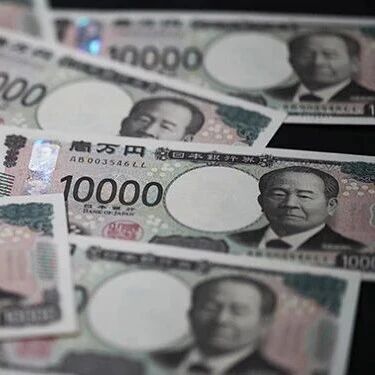
高市交易

Search documents
突发!“黑天鹅”
Zhong Guo Ji Jin Bao· 2025-10-10 13:22
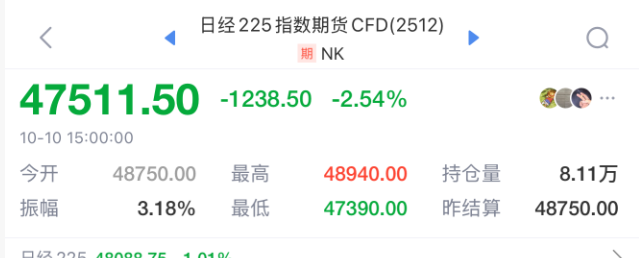
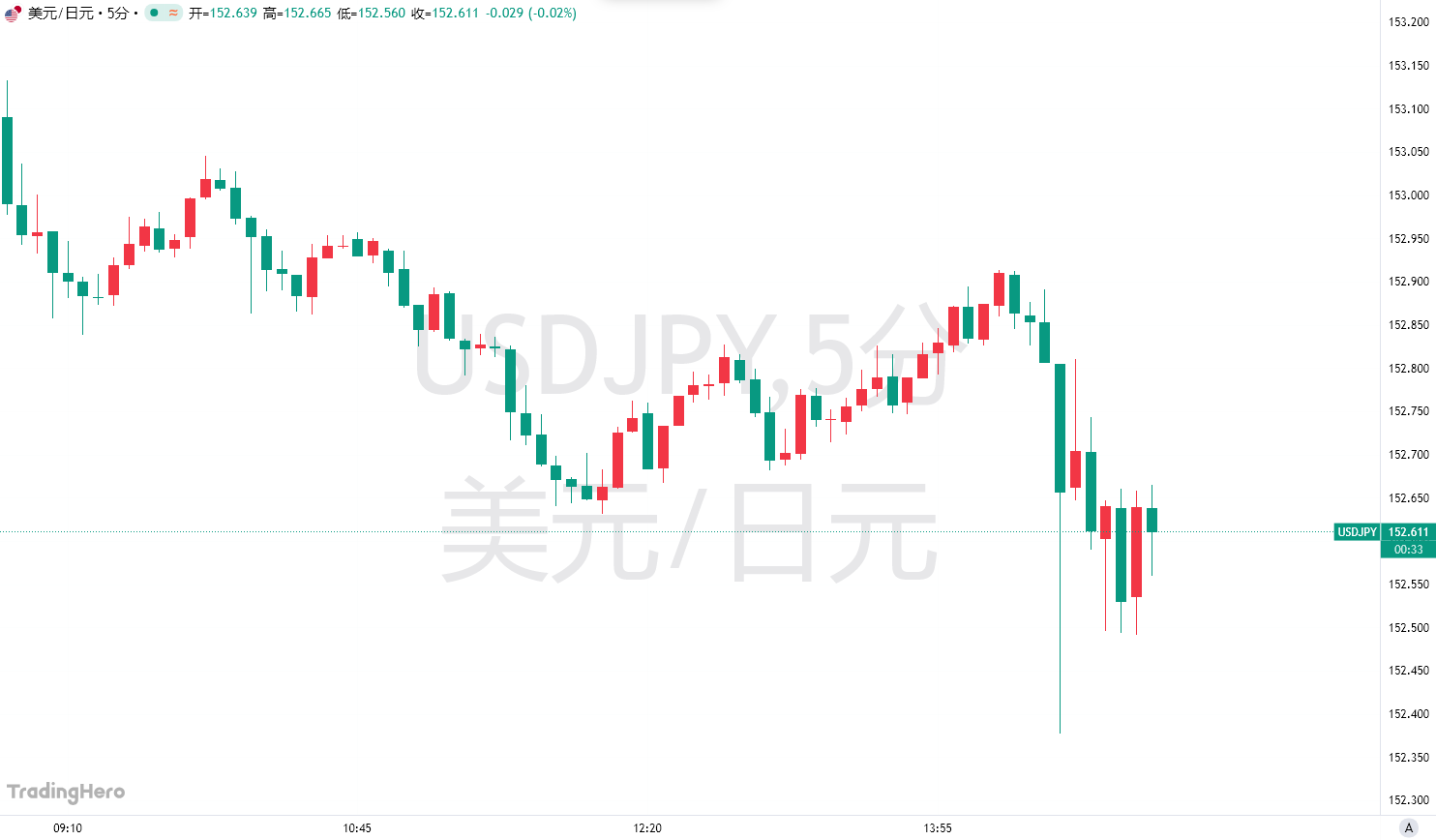
Core Viewpoint - The sudden dissolution of the ruling coalition in Japan, with the Komeito party withdrawing from the alliance led by the Liberal Democratic Party (LDP), poses significant uncertainty for the political landscape and the potential appointment of Sanna Takai as Japan's first female Prime Minister [1][2]. Political Landscape - The Komeito party's exit from the coalition may disrupt the process of appointing Sanna Takai as Prime Minister, especially as the National Diet is set to hold a vote for the next Prime Minister on October 15 [1]. - The LDP and Komeito together hold 215 seats in the House of Representatives, which is below the majority threshold of 233 seats. If Komeito withdraws, the LDP will have 191 seats but will still remain the largest party [1]. Market Reactions - Following the announcement of Komeito's withdrawal, the Nikkei index futures dropped over 1200 points, reflecting a decline of more than 2% [2]. - The initial reaction in the foreign exchange market saw the yen strengthen to 152.36 before retreating, stabilizing around 152.8 later in the day [4]. Economic Implications - Analysts suggest that investors are becoming cautious about the risks of a short-term political vacuum and delays in policy execution. The previous expectations of economic stimulus from Takai's policies may lead to a reversal of the "sell yen, buy stocks" trend that emerged after her election victory [6]. - If the opposition parties present a unified candidate instead of Takai, the gains in the USD/JPY exchange rate driven by the "Takai trade" could be fully reversed. However, the market has not yet fully priced in the risk of Takai not becoming Prime Minister [6]. Stock Market Outlook - The uncertainty introduced by Komeito's exit is expected to exert pressure on the Japanese stock market. The LDP may be forced to make concessions, potentially weakening Takai's economic policies [7]. - The Nikkei index could retreat to around 40,000 points, as the market adjusts to the new political landscape and the expectations surrounding Takai's policies diminish [7].

突发!“黑天鹅”
中国基金报· 2025-10-10 13:15
Core Viewpoint - The sudden breakup of the ruling coalition in Japan, with the Komeito party withdrawing from the alliance led by the Liberal Democratic Party (LDP), poses significant uncertainty for the political landscape and the potential ascension of Sanae Takaichi as Japan's first female Prime Minister [2][5]. Political Developments - The Komeito party's representative, Tetsuo Saito, stated that the LDP failed to provide adequate responses regarding political funding issues [3]. - If the Komeito party's withdrawal is confirmed, it would end a political alliance that has lasted since 1999, just days before the Prime Minister nomination vote scheduled for October 15 [5]. - Takaichi, who won the LDP leadership election on October 4, is seen as a proponent of "Abenomics" and advocates for loose monetary policy, fiscal spending, and structural reforms [5]. Market Reactions - Following the news, the Nikkei index futures dropped over 1200 points, a decline exceeding 2% [6]. - The initial reaction in the foreign exchange market saw the yen rise to 152.36 before retreating, stabilizing around 152.8 later [6]. Investor Sentiment - Analysts indicate that investors are becoming cautious about the risks of a short-term political vacuum and delays in policy execution [8]. - The previous expectations of economic boosts from Takaichi's policies may lead to a reversal of the "buy stocks, sell yen" strategy that emerged after her election victory [8]. - If the opposition parties present a unified candidate instead of Takaichi, the gains in the USD/JPY exchange rate driven by her election could be fully reversed [8]. Future Outlook - The uncertainty introduced by the Komeito's exit may pressure the Japanese stock market, with the Nikkei index potentially retreating to around 40,000 points [9]. - Even if the LDP forms alliances with other parties, achieving a majority in both houses remains challenging, significantly reducing the likelihood of Takaichi's economic policies being implemented [9]. - The active trading strategy surrounding Takaichi's election is expected to unwind as market participants reassess the political landscape [9].

日本执政联盟瓦解致“高市交易”逆转!策略师预警:日元或反弹 日股恐遭抛售
智通财经网· 2025-10-10 09:13
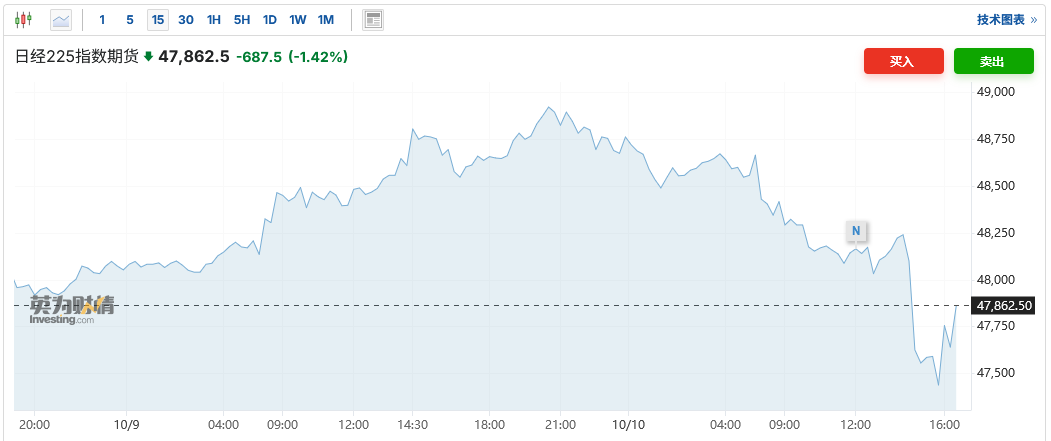
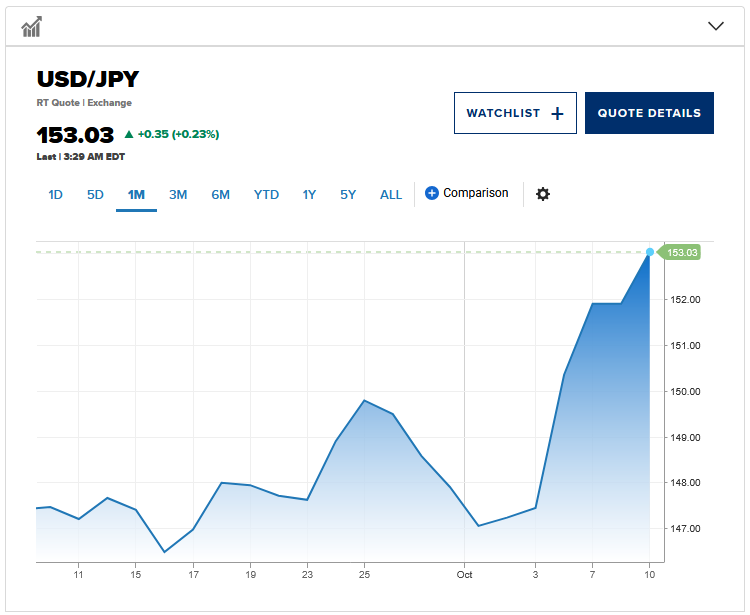
Group 1 - The Komeito party, led by Tetsuo Saito, has expressed intentions to break away from the ruling coalition with the Liberal Democratic Party (LDP), signaling a significant political shift in Japan [1][2] - The failure of Saito and LDP's new president, Sanae Takaichi, to reach an agreement on party funding rules has led to Komeito's decision not to support Takaichi in the upcoming prime minister election [1] - Despite losing Komeito's support, Takaichi is still likely to become the next prime minister due to the LDP's majority in both houses of the Japanese parliament, although this coalition's dissolution introduces considerable uncertainty into Japan's political and legislative agenda [1][2] Group 2 - The breakdown of the LDP-Komeito coalition has reversed the so-called "Takaichi trade," with the Nikkei 225 futures index falling by 1.42% and the yen strengthening, leading to a 0.25% drop in the USD/JPY exchange rate to 152.69 [2] - Analysts suggest that the previous expectations of monetary easing under Takaichi's leadership may be tempered due to the loss of Komeito's support, potentially leading to a rebound in the yen to around 151.60 or 151 [4] - The new political uncertainty is expected to pressure the Japanese stock market, with potential policy concessions from the LDP that could weaken Takaichi's economic policy influence [4]
历史性巨变!公明党宣布退出执政联盟,日本首相争夺战再生悬念!
Jin Shi Shu Ju· 2025-10-10 07:32
Core Viewpoint - The Komeito party's decision to exit the ruling coalition led by the Liberal Democratic Party (LDP) marks a historic shift in Japanese politics, potentially complicating the path for newly elected LDP president Sanae Takaichi to become the next Prime Minister [1][3]. Group 1: Political Implications - Komeito leader Tetsuo Saito informed Takaichi of the party's decision to end a 26-year partnership, stating that Komeito will not support Takaichi's bid for Prime Minister in the upcoming parliamentary vote [3]. - The dissolution of the coalition will significantly impact Takaichi's chances of securing the Prime Minister position, as Komeito holds 45 seats in the National Diet, while the LDP has 296 out of 713 total seats [4]. - The loss of Komeito as an ally may lead to substantial political uncertainty for Takaichi, despite the possibility of winning the parliamentary vote due to the ongoing fragmentation of opposition parties [5]. Group 2: Market Reactions - Following the announcement of Komeito's exit, the USD/JPY exchange rate experienced a short-term drop of nearly 40 points, although it has since recovered [1]. - Takaichi's election as LDP president has reduced market expectations for a near-term interest rate hike by the Bank of Japan, contributing to a rise in the stock market and a weakening of the yen [5]. - The exit of Komeito could disrupt the so-called "Takaichi trade," which has been driven by investor optimism regarding fiscal stimulus [5].
高市版“安倍经济学”:刺激加码,日元走弱会否重演旧局?
智通财经网· 2025-10-09 08:04
Core Viewpoint - The election of Sanae Takaichi as the new president of Japan's ruling Liberal Democratic Party is expected to lead to significant fiscal stimulus and loose monetary policy, resulting in a market phenomenon referred to as "Takaichi trading" [1][4]. Economic Policy Implications - Takaichi is seen as a proponent of "Abenomics," advocating for loose monetary policy, active fiscal spending, and structural reforms [5]. - The USD/JPY exchange rate has crossed the psychologically significant level of 150, which may prompt the Japanese government to intervene in the foreign exchange market due to rising import costs [5][6]. Market Reactions - Following Takaichi's victory, the Nikkei 225 index reached a historical high, and the USD/JPY exchange rate rose above 150 [1][4]. - The yen has depreciated since Takaichi's election, reducing its year-to-date appreciation to 2.77% [4]. Potential U.S. Relations Impact - Concerns arise that the yen's depreciation could reignite criticism from former President Trump regarding Japan's trade practices, as he has previously accused Japan of manipulating its currency [4][5]. - Analysts suggest that Takaichi may act cautiously in economic policy to maintain good relations with the U.S. [6]. Inflation Concerns - Input inflation due to a weaker yen could become a political issue for the ruling party, as it may increase the cost of living for Japanese households [6][7]. - The current inflation rate in Japan has exceeded the Bank of Japan's target of 2% for three consecutive years, with the latest figure reaching 2.7% in August [7]. Future Monetary Policy Expectations - Analysts predict that the Bank of Japan may raise interest rates in December and again in mid-2026, despite Takaichi's opposition to rate hikes [7]. - A stronger yen may be necessary to curb inflation and improve public purchasing power, which is a significant concern for the ruling party [7].
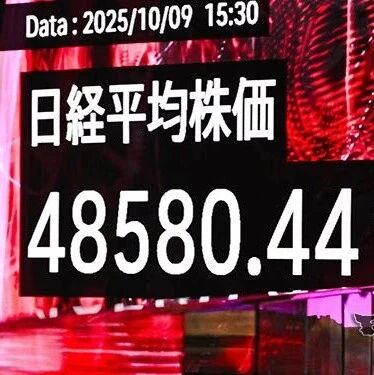
日经平均股指再创新高,报收4万8580点
日经中文网· 2025-10-09 08:00
Core Viewpoint - The Nikkei average index reached a historic high of 48,580.44 points on October 9, driven primarily by SoftBank Group's acquisition of a Swiss large-scale electric company's robotics business, marking its entry into the AI robotics development competition [2][4]. Group 1 - On October 9, the Nikkei average index rose by 845.45 points, or 1.77%, compared to the previous trading day, setting a new historical record [2]. - The market had previously shown signs of a pullback on October 8, with concerns about a potential slowdown in the upward momentum, but it demonstrated strong resilience [4]. - The 200-day moving average divergence exceeded the overheating threshold of 20%, reaching 21%, indicating a sustained overheat state in the market [4]. Group 2 - The appointment of high-profile political figures, such as the new president of the Liberal Democratic Party, has fueled expectations for proactive fiscal policies and monetary easing, contributing to the so-called "high market trading" that has driven stock price increases [4]. - The interplay between "high market trading" and the "AI boom" has been identified as the dual driving forces behind stock price increases, suggesting that even in an overheated market, stock price growth is likely to continue [5].

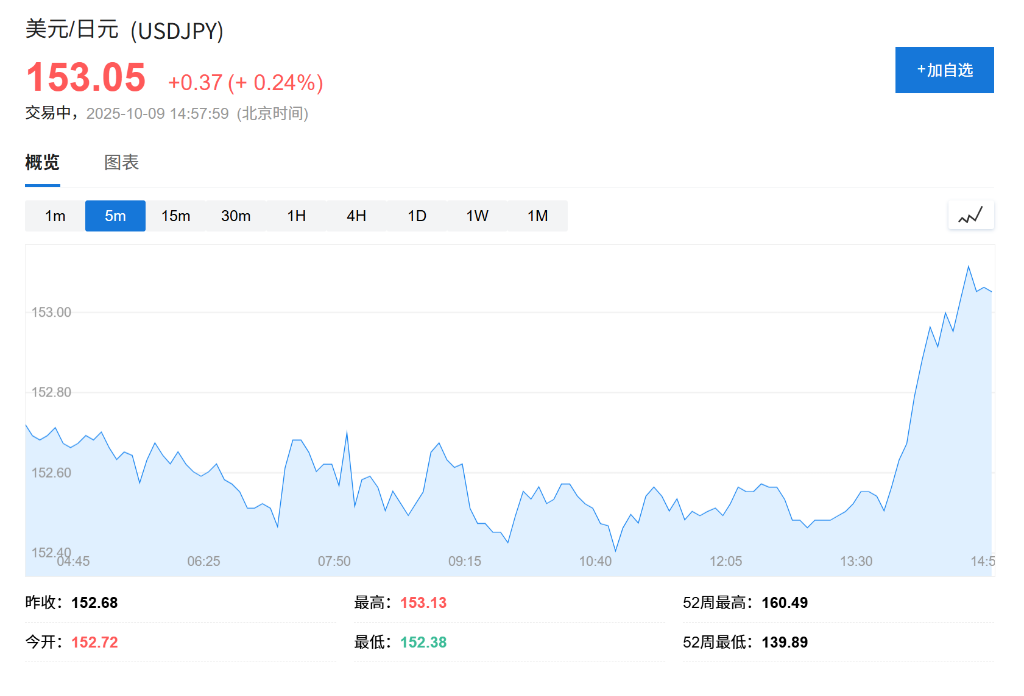
日元汇率跌破153,“新安倍经济学”预期下,美日汇率冲突重燃?
Hua Er Jie Jian Wen· 2025-10-09 07:41
Core Viewpoint - The economic policy stance of Japan's new Prime Minister, Sanae Takaichi, has sparked market expectations for a "new Abenomics," leading to the yen's exchange rate falling below the 153 mark, reigniting disputes over currency policy between the US and Japan [1][3]. Group 1: Currency Exchange Rate Movements - The USD/JPY exchange rate rose to 153, marking a 0.2% increase, the first time since February that it has reached this level, which is considered politically and psychologically sensitive [1]. - The yen's depreciation has been linked to concerns over rising import costs, which could exacerbate household living cost pressures [1][4]. - The yen had previously appreciated about 6% to 147.44 before Takaichi's election, but has since weakened to around 152, narrowing its year-to-date gain to 2.77% [4]. Group 2: Historical Context and Political Implications - The current yen depreciation has revived discussions reminiscent of former President Trump's accusations of Japan "manipulating" its currency for unfair trade advantages [3][5]. - Analysts suggest that Takaichi may adopt a cautious approach to economic policy to avoid straining relations with the US, despite the volatility in the market [3][5]. - Concerns about import inflation are expected to prevent Takaichi from implementing policies that would further weaken the yen, indicating a need for a more realistic policy stance [4][7]. Group 3: Inflation and Economic Policy Challenges - Japan's inflation rate has exceeded the Bank of Japan's 2% target for over three years, with an overall inflation rate of 2.7% reported in August [7]. - Experts believe that interest rate hikes will be necessary to curb inflation, with market pressures likely forcing Takaichi to accept potential rate increases by the Bank of Japan in the near future [7]. - The loss of purchasing power among the public is identified as a primary reason for the ruling party's unpopularity, highlighting the political stakes involved in managing inflation and currency value [7].
“高市交易”还能坚持多久?特朗普要求纠正日元,日美关系面临挑战
Jin Shi Shu Ju· 2025-10-09 07:38
对于日本官员而言,150的重要关口在心理和政治上都十分敏感。此前,日本官员曾警告或干预货币市 场,因为日元跌破该点位会增加进口成本,加剧家庭的生活成本危机。 日元疲软也再次唤起了特朗普最喜欢的老调重弹:日本以牺牲美国为代价,从低估的货币中获益。 如今,随着安倍的"门徒"——高市早苗即将执掌全球第四大经济体,同样的担忧可能再次浮出水面。 高市早苗被普遍认为是"安倍经济学"的拥护者,该经济策略主张宽松货币政策、财政支出和结构性改 革。在去年执政的自民党总裁选举中,她批评了日本央行加息并增强日元的计划。 市场对此做出了反应,出现了所谓的"高市交易",将日经225指数推向历史新高,美元兑日元汇率升破 150大关。 多年来,美国总统特朗普一直指责日本从事"不公平贸易行为",这一批评可以追溯到他还是房地产大亨 的时候。 上周五,特朗普再次点名日本,声称东京通过削弱日元以获取不公平的贸易优势。"我曾打电话给日本 领导人,告诉他们不能继续贬值货币,"他说。 然而,分析师表示,高市早苗可能会在经济政策上谨慎行事,以避免与华盛顿关系紧张。 据报道,时任日本首相石破茂在日本国会表示,日本并未推行所谓的"货币贬值政策",包括已故的安 ...
中信证券:国庆期间海外市场波动来自“高市交易” 短期内日股在“高市交易”中仍有不错表现
Sou Hu Cai Jing· 2025-10-09 00:33
中信证券研报指出,我国国庆假期期间降息交易仍是海外市场主线,市场对美联储降息预期无明显变 化,美股和美元指数小幅上涨、美债小幅波动、金价再创新高。美国政府如期停摆,9月非农就业数据 延期发布,9月ISM-PMI和"小非农"ADP共同显示美国经济继续温和降温的趋势。我们延续此前观点, 预计美联储将在10月和12月的议息会议上分别再次降息25bps。当地时间10月4日,高市早苗当选日本自 民党总裁,预计她将于10月15日左右接任日本首相。高市的政策主张为"负责任的扩张性财政政策+谨 慎加息",市场对应出现日股上涨、日债曲线陡峭化和日元贬值的"高市交易"。我们延续此前观点,预 计日银今年四季度可能加息25bps。10月7日,日本30Y国债拍卖结果显示目前市场对高市早苗可能会执 行的"宽财政"担忧尚且有限。我们预计,在此情形下,短期内日股在"高市交易"中仍有不错表现。 ...

日元约8个月来再次贬值至152
日经中文网· 2025-10-08 07:32
资料图 由于市场担忧日本自民党总裁高市早苗重视的积极财政与宽松货币政策,投资者持续卖出日 元,出现了所谓的"高市交易" …… 在10月7日的纽约外汇市场上,日元对美元汇率一度跌至1美元兑152日元区间,这是自2月中 旬以来约8个月来首次触及该水平。由于市场担忧日本自民党总裁高市早苗重视的积极财政与 宽松货币政策,投资者持续卖出日元,出现了所谓的"高市交易"。 在日元兑欧元的汇率方面,日元更创下历史新低。一度触及1欧元兑177.10日元区间,为 1999年欧元诞生以来的日元贬值、欧元升值水平。 高市的经济智囊之一、前内阁官房参与本田悦朗6日接受彭博社采访时表示:"如果日元兑美 元超过150日元,或许就稍有些过头了"。受此言论影响,7日日元一度回升至150日元区间, 但进入纽约交易时段后,日元卖盘再次占据主导。 推动日元持续贬值的背景,是市场普遍认为日本的宽松金融环境仍将持续。本田在采访中也 显示出认识称,日本银行(央行)在10月29日至30日召开的货币政策会议上"要加息恐怕很 难"。 高市早在去年的自民党总裁选举中就曾表示:"现在加息是愚蠢的",以此牵制日银的尽快加 息。她在10月4日的发言中再次强调:"(对金 ...