
半导体

Search documents
超级独角兽潮涌IPO
IPO日报· 2026-01-01 08:56
Core Viewpoint - The global IPO market is expected to experience a significant resurgence in 2026, driven by policy incentives and the emergence of super unicorns, particularly in sectors like AI, semiconductors, and satellite internet [1][4][5]. Group 1: Global IPO Market Outlook - Predictions indicate that the global IPO fundraising total in 2026 could surpass the previous peak of $594 billion in 2021, with major exchanges like Hong Kong and the US vying for the top spot [1][4]. - Deloitte forecasts around 160 new listings on the Hong Kong Stock Exchange (HKEX) in 2026, raising at least HKD 300 billion (approximately $38 billion) [4]. - Renaissance Capital anticipates the US IPO market will see 200-230 new listings, with fundraising between $40 billion and $60 billion, marking a potential record year for the US market [5]. Group 2: Super Unicorns and Major IPOs - Notable super unicorns like SpaceX and OpenAI are expected to lead the IPO wave, with SpaceX aiming to raise over $30 billion, potentially setting a record for the largest IPO ever [11][12]. - OpenAI is also a strong contender for the top fundraising spot, with plans to raise at least $60 billion, following a valuation of $500 billion after a $41 billion equity financing in 2025 [12][15]. - Other significant players include ByteDance, Reliance Jio, and various AI and fintech companies, all of which are expected to contribute to a concentrated "head effect" in the IPO market [13][16]. Group 3: Regional Insights - The Indian IPO market is projected to raise up to $25 billion in 2026, reflecting a 14% increase from 2025, with several major listings anticipated [6][7]. - The A-share market in China is expected to see a steady increase in IPOs, with estimates of 130-150 new listings and a total fundraising of approximately CNY 136 billion (around $19.2 billion) [6][21]. - The London Stock Exchange is expected to rebound in 2026, aided by changes in tax regulations and the potential for large-scale listings [7]. Group 4: Industry Trends and Focus Areas - The 2026 IPO landscape will be characterized by a focus on high-quality, profitable companies, particularly in technology sectors such as AI, fintech, and aerospace [18][19]. - The Chinese market is expected to lead in R&D investment in strategic emerging industries, further solidifying its position in global tech innovation [19][26]. - The IPO pipeline is expected to be robust, with a significant number of companies waiting for approval, indicating a healthy market environment for new listings [27][28].


见证历史!重磅榜单,刚刚发布
Zhong Guo Ji Jin Bao· 2026-01-01 07:17
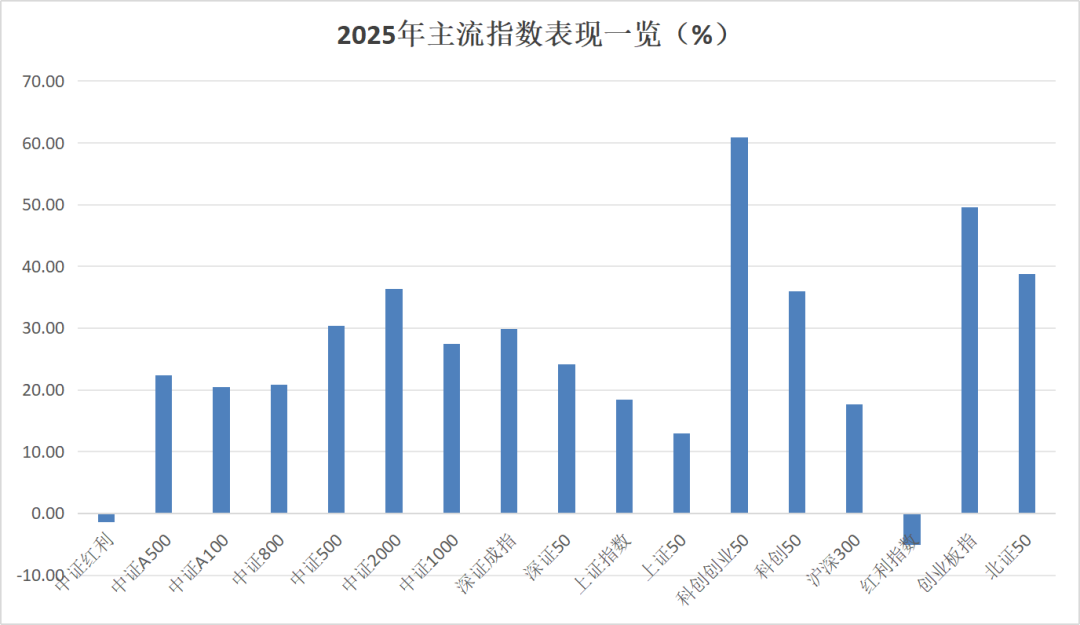
Core Viewpoint - The A-share market experienced a significant bull market in 2025, leading to an overall recovery in equity fund performance, with a net value growth rate of 28.73% for equity funds, marking a historical record for the industry [1][6]. Group 1: Market Performance - Major indices performed well in 2025, with the Shanghai Composite Index, Shenzhen Component Index, and CSI 300 Index increasing by 18.41%, 29.87%, and 17.66% respectively, while the STAR Market 50 Index surged by 60.86% [2][6]. - The overall performance of equity funds was notably strong, with active equity funds achieving a net value growth rate of 31.91% [7][8]. Group 2: Sector Performance - The non-ferrous metals sector was the best-performing industry in 2025, with a growth rate of 94.73%, followed by the communication sector at 84.75% [4][5]. - Other sectors such as electronics, comprehensive, power equipment, and machinery also saw growth rates exceeding 40%, while coal and food & beverage sectors experienced declines of over 5% [4][5]. Group 3: Fund Performance - The top-performing fund, Yongying Technology Select Fund, achieved a remarkable 233.29% net value growth, marking the highest annual performance record in 17 years [4][9]. - A total of 75 funds achieved "doubling" status in 2025, with notable contributions from fund managers who effectively captured market opportunities in AI, innovative pharmaceuticals, and semiconductors [8][11]. Group 4: Future Outlook - Looking ahead to 2026, industry experts anticipate a shift towards growth-driven strategies, with a focus on sectors that can deliver substantial earnings growth, particularly in technology and cyclical assets [23][24]. - The market is expected to transition from liquidity-driven growth to profit-driven growth, with significant opportunities in TMT (Technology, Media, and Telecommunications), manufacturing, and consumer sectors [23][24].
见证历史!重磅榜单,刚刚发布
中国基金报· 2026-01-01 03:45
Core Viewpoint - The public fund industry in China achieved a remarkable performance in 2025, with equity funds recording an average net value growth rate of 28.73%, marking a significant recovery in the market, particularly in sectors like AI, innovative pharmaceuticals, chips, and non-ferrous metals [1][8][9]. Group 1: Market Performance - The A-share market experienced a bull market in 2025, with major indices such as the Shanghai Composite Index, Shenzhen Component Index, and CSI 300 Index rising by 18.41%, 29.87%, and 17.66% respectively [1][8]. - The STAR Market 50 Index saw an impressive increase of 60.86% in 2025, indicating strong performance in the technology sector [1]. - The overall performance of equity funds was significantly better than the Shanghai Composite Index, with active equity funds achieving an average net value growth rate of 31.91% [8][9]. Group 2: Sector Performance - The non-ferrous metals sector was the best-performing industry in 2025, with a growth rate of 94.73%, followed by the communication sector at 84.75% [5][6]. - Other sectors such as electronics, comprehensive, power equipment, and machinery also saw growth rates exceeding 40%, while coal and food & beverage sectors experienced declines of over 5% [5][6][7]. Group 3: Fund Performance - The top-performing fund, Yongying Technology Selected Fund, achieved a net value growth of 233.29%, setting a new historical record for public funds [3][12]. - A total of 75 funds were classified as "doubling funds," indicating a strong performance across various fund managers, with notable contributions from E Fund [11][15]. - The average growth rate for ordinary stock funds was 32.53%, with the top 50 funds achieving over 60% growth [17][19]. Group 4: Future Outlook - The market outlook for 2026 is optimistic, with expectations of an overall improvement in A-share company earnings, driven by growth stocks and cyclical assets [29][30]. - Investment opportunities are anticipated in manufacturing, AI applications, and consumer sectors, with a focus on companies that can demonstrate price elasticity and growth potential [30][31].

谷歌等:2026年“全球视野”十大核心资产揭晓,季度调整
Sou Hu Cai Jing· 2025-12-31 23:29
Core Insights - The "Top Ten Core Assets" list for 2026 has been revealed, featuring companies like Google, selected by millions of members from over 70 countries [1] - These core assets cover critical areas such as AI computing power, semiconductors, energy transition, and global trade, aligning with the trends of human civilization evolution [1] - To adapt to the complex macro environment and capture market opportunities more flexibly and accurately, the list of core assets will undergo quarterly adjustments [1]
2026年格隆汇“全球视野”十大核心资产名单重磅揭晓!
Xin Lang Cai Jing· 2025-12-31 16:59
格隆汇1月1日|2026年格隆汇"全球视野"十大核心资产重磅揭晓,谷歌等入选。该名单由格隆汇分布在 全球70多个国家的数千万会员票选得出(如下图)。这十大核心资产精准覆盖AI算力、半导体、能源转 型、全球贸易等关键领域,深度契合人类文明进化趋势。为应对更为复杂的宏观环境,更灵活、更精准 的捕捉市场机会,十大核心资产将进行"季度调整"。 ...

公募总规模首次突破37万亿元,ETF年内增长超2万亿元
Hua Xia Shi Bao· 2025-12-31 16:39
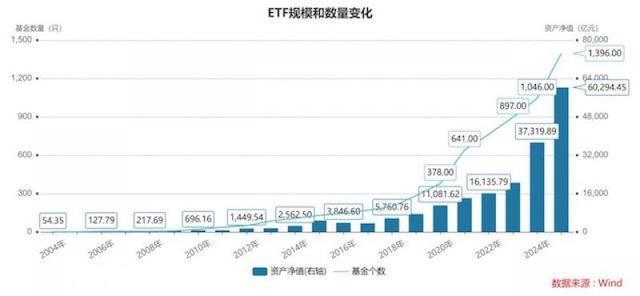
Core Viewpoint - The public fund market in China has reached a significant milestone, surpassing 37 trillion yuan in total assets, driven by strong growth in the ETF market and a continuous upward trend in public fund sizes over the past eight months [2][3][7]. Group 1: Public Fund Market Growth - As of November 2025, the total net asset value of public funds in China reached 37.02 trillion yuan, marking a historic breakthrough [3]. - The public fund market has shown a consistent upward trend, crossing key thresholds of 34 trillion, 35 trillion, and 36 trillion yuan throughout the year [3]. - The dominant segment within the public fund market is the money market fund, which holds 15.19 trillion yuan, followed by bond funds at 10.52 trillion yuan [4][5]. Group 2: ETF Market Expansion - The ETF market has experienced explosive growth, with the number of products reaching 1,391 and total assets surpassing 6 trillion yuan by the end of 2025, representing a year-on-year increase of 32.98% in product count and 61.66% in total assets [7][8]. - The growth of the ETF market has significantly outpaced the overall public fund market, with an increase of approximately 2.3 trillion yuan in 2025 alone [7]. - Since its inception in 2004, the ETF market has evolved from a nascent stage to a crucial component of the capital market, particularly accelerating since 2020 [7]. Group 3: Future Investment Trends - Looking ahead to 2026, artificial intelligence is anticipated to be a central theme in the market, with expectations of a "structural bull" market in A-shares [9][10]. - Key investment opportunities are expected in sectors such as autonomous driving, AI applications, and non-ferrous metals, while traditional sectors like consumer goods and liquor require close monitoring of policy changes [10][11]. - Analysts suggest that the semiconductor sector remains promising, driven by ongoing demand for AI-related chips and advancements in technology [10][11].
2025券商IPO业务收官:行业集中度高企,头部券商优势更加凸显
中国基金报· 2025-12-31 16:10
Core Viewpoint - The competition landscape for IPO underwriting in the A-share market has solidified, with leading brokerages maintaining a stronghold while smaller firms carve out niches in specific segments [1] Group 1: IPO Underwriting Landscape - The top five brokerages accounted for approximately 50% of the total IPO underwriting in 2025, indicating a high concentration in the industry [1] - The leading brokerages in IPO underwriting for 2025 are Guotai Junan (19), CITIC Securities (17), CITIC Jianou (12), China Merchants Securities (10), and Huatai United (9) [1] Group 2: Science and Innovation Board - The Science and Innovation Board (STAR Market) raised a total of 633.71 billion yuan, nearly half of the total IPO fundraising for the year, highlighting its significance for financing technology and emerging industries [2] - CITIC Securities led the STAR Market with an underwriting scale of 168.95 billion yuan, capturing a market share of 44.64% [2] - Notable projects such as Moore Threads contributed significantly to CITIC Securities' underwriting scale, while Huatai United's project with Muxi Co. accounted for 92% of its STAR Market underwriting [2] Group 3: Growth in Other Markets - In the Growth Enterprise Market (GEM), Guotai Junan and China Merchants Securities showed a strong advantage, followed closely by CITIC Securities, Shenwan Hongyuan, and CICC [4] - The top five brokerages for GEM IPO underwriting in 2025 were Guotai Junan (6), China Merchants Securities (4), CITIC Securities (3), Shenwan Hongyuan (3), and CICC (2) [4] Group 4: North Exchange Market - The North Exchange Market continued to focus on serving innovative small and medium-sized enterprises, with the top five brokerages being China Merchants Securities, Huatai United, Dongfang Securities, Guotou Securities, and Guojin Securities [6] Group 5: Regulatory Environment - The China Securities Association's evaluation of securities firms' investment banking quality in 2025 showed that 12 firms received an A rating, with five firms maintaining this rating for two consecutive years, indicating stable business quality management [7] - The shift of over half of last year's A-rated firms to B or C ratings reflects the dynamic optimization of the evaluation system and the ongoing trend of strict regulation and compliance in the securities industry [7] Group 6: Outlook for 2026 - The IPO market is expected to remain active in 2026, with a steady growth pace and structural optimization, particularly in the dual innovation sector [9] - Hard technology companies in fields such as semiconductors, artificial intelligence, quantum computing, commercial aerospace, and biomedicine are anticipated to increase their presence in the capital market [9] - The competition among brokerages is expected to intensify, with a focus on serving technological innovation and industrial upgrades, as well as the evolving competitive landscape between leading firms and niche players [9]


2025,A股收官!全年总市值增加超25万亿元,这股成涨幅之王
券商中国· 2025-12-31 14:38
Core Viewpoint - The A-share market experienced significant growth in 2025, with major indices showing impressive gains and a total market capitalization increase of 25.30 trillion yuan, reflecting a robust performance driven by high-tech industries and emerging sectors [2][3][5]. Market Performance - The major indices for 2025 recorded the following gains: - Sci-Tech 100: +54.63% - ChiNext Index: +49.57% - Shenzhen Component Index: +29.87% - Shanghai Composite Index: +18.41% [4][6]. - The total market capitalization of A-shares reached 118.91 trillion yuan, up from 93.61 trillion yuan at the beginning of the year, marking a 27.03% increase [5][6]. Sector Contributions - High-tech industries contributed significantly to the market capitalization increase, with the information technology, materials, and industrial sectors accounting for over 60% of the total market value growth [6]. - The electronics, instruments, and components sector saw its market capitalization rise from 5.26 trillion yuan to 8.82 trillion yuan, an increase of 3.55 trillion yuan, making it the sector with the highest market value growth [6]. Individual Stock Performance - The stock with the highest increase in 2025 was Shangwei New Materials, which surged by 1820.29%, earning the title of "King of Gains" for the year [6]. - Other notable performers included Tianpu Co., which rose by 1645.35%, and *ST Yushun, which increased by 719.38% [6]. Future Market Outlook - Institutions are optimistic about the market's performance in 2026, with expectations of a "slow bull" market and continued upward momentum [7][8]. - Analysts predict that the overall performance of listed companies will improve, supported by favorable economic policies and liquidity conditions [8][9]. - The technology sector is expected to remain a key focus, with ongoing trends in AI and other high-tech industries driving growth [9].



鑫元基金年度展望:创科双指领涨超40%,2026市场主线看这里!
Xin Lang Cai Jing· 2025-12-31 14:37
Core Viewpoint - The A-share market in 2025 experienced a clear slow bull trend, driven by policy support and ample liquidity, with major indices showing significant gains [1][2][18]. Market Performance - By the end of 2025, the Shanghai Composite Index rose by 18.41%, the Shenzhen Component Index increased by 29.87%, the ChiNext Index surged by 49.57%, and the Sci-Tech Innovation Board Index recorded a 46.30% increase [1][2][18]. - The bond market exhibited an N-shaped fluctuation, with the 10-year government bond yield operating within the range of 1.6% to 1.9% throughout the year [1][2][18]. Market Drivers - The rise in the A-share market was primarily driven by valuation recovery and capital influx, with the overall valuation at historical lows and favorable policies leading to significant revaluation [2][18]. - Ample liquidity from a loose domestic monetary policy and relatively low market interest rates enhanced the attractiveness of equity assets, with long-term funds such as public funds and insurance capital accelerating their market entry [2][18]. Sector Performance - The A-share market in 2025 displayed notable structural differentiation, with technology growth sectors like AI, semiconductors, new energy vehicles, and robotics leading the market, benefiting from strong policy support and high industry prosperity [2][19]. - Traditional cyclical and value sectors, such as banking and coal, lagged behind due to weak fundamentals or valuation pressures, resulting in limited gains and occasional adjustments [2][19]. Outlook for 2026 - The A-share market is expected to continue its upward trajectory, transitioning from valuation-driven to profit-driven growth, focusing on fundamental improvements and verification of economic prosperity [3][20]. - The market style is anticipated to shift from a growth-dominant approach to a more balanced one, with opportunities for both growth and value styles, leading to potential frequent rotations and differentiation [3][20]. Industry Configuration - The industry configuration in 2026 is likely to present a "blooming" scenario, with the technology innovation sector, particularly the AI industry chain, remaining a star performer [3][20]. - High-end manufacturing and new energy sectors are identified as crucial engines for economic growth, benefiting from national strategies and global supply chain restructuring [4][20]. Investment Strategy - Investment strategies should align with national strategic directions and policy guidance, balancing short-term performance realization with long-term growth potential, and dynamically adjusting industry allocation ratios to navigate complex market environments [5][21].
2025券商IPO业务收官 头部券商优势更加凸显
Zhong Guo Zheng Quan Bao· 2025-12-31 12:42
中证报中证网讯(记者 赵中昊)伴随着蘅东光、新广益成功登陆资本市场,2025年A股IPO收官,券商 IPO竞争格局落定。总体看,头部券商稳固领先,中小券商细分赛道突围。从核心业务指标来看,行业 集中度高企态势持续,Wind数据显示,前5名券商合计承销IPO项目64家,占全市场承销家数约五成。 券商差异化竞争格局日益凸显。Wind数据显示,双创板块是IPO支持科技与新兴产业融资的核心载体, 合计募资633.71亿元(按发行日口径,下同),占全年IPO募资总额近一半,成为券商必争之地。其 中,科创板依旧呈现头部集中态势,中信证券以168.95亿元承销规模、44.64%的市场份额领跑所有券 商。明星科技企业的标杆拉动效应再度彰显,其中摩尔线程单项目即为中信证券贡献近72亿元承销规 模;华泰联合承销的沐曦股份项目规模近42亿元,占其科创板承销业务总规模的92%。 据Wind数据,北交所持续深化服务创新型中小企业的核心定位,承销排名前五的券商依次为招商证 券、华泰联合、东方证券、国投证券、国金证券。 近日,中国证券业协会2025年证券公司投行业务质量评价结果公布,12家券商获得A类评价,较去年增 加1家。其中,国泰海通 ...