
耐心资本

Search documents
投资对赌协议:创业者的“卖身契”
Sou Hu Cai Jing· 2025-06-29 22:12
Core Viewpoint - The article discusses the increasing prevalence of "earn-out" agreements in China's venture capital landscape, highlighting the risks and consequences for entrepreneurs who fail to meet these targets, leading to significant financial burdens and potential bankruptcy [1][3][10]. Group 1: Current Market Trends - The case of Smartisan Technology's 15 million yuan loan dispute exemplifies the challenges faced by companies under earn-out agreements, with a ruling requiring repayment of principal plus interest at a rate of 6% [3]. - In 2023, several companies aiming for IPOs, such as Baishen Pharmaceutical and Youxun Medical, have triggered buyback clauses due to unmet targets, reflecting a broader trend in the market where 90% of private equity funds in China include such clauses [3][10]. - The contrast in earn-out agreement usage is stark, with China at 90% compared to only 2% in Silicon Valley, indicating a fundamental difference in venture capital ecosystems [3]. Group 2: Government and Institutional Responses - The Central Political Bureau of the Communist Party of China has introduced the concept of "patient capital," urging state-owned enterprises to lead by example in fostering a more sustainable investment environment [4][5]. - Various state-owned enterprises in cities like Shanghai and Beijing are taking steps to lower return requirements and extend fund durations, signaling a shift towards more supportive investment practices [5]. Group 3: Entrepreneurial Challenges - Entrepreneurs are increasingly finding themselves in precarious situations due to the pressure of earn-out agreements, with notable cases of founders facing severe consequences for failing to meet financial targets [6][10]. - The urgency to meet IPO deadlines is palpable, with approximately 130,000 investment projects and over 10,000 companies currently facing exit challenges [9]. - The article highlights the case of ADC, which achieved a remarkable IPO in Hong Kong but is burdened by significant losses and stringent earn-out conditions that could lead to high-interest buybacks if targets are not met [10]. Group 4: Market Dynamics and Future Outlook - The article notes a growing trend of companies turning to the Hong Kong stock market as a last resort for IPOs, with the market experiencing a resurgence in fundraising activities [10]. - The private equity secondary market is becoming increasingly active, with a notable rise in old stock transactions, indicating a shift in how liquidity crises are managed [12][14]. - The ongoing tension between short-term profit motives and long-term value creation is underscored, with the potential for a new path emerging through government-backed initiatives aimed at reducing the reliance on earn-out agreements [20].



遵循创新规律培育耐心资本
Jing Ji Ri Bao· 2025-06-28 21:56
Core Viewpoint - The recent Lujiazui Forum emphasized the importance of "technological innovation," "industrial innovation," "financial services," and "funding support" as key elements for enhancing national strength and fostering innovation-driven development [1][2]. Group 1: Innovation and Funding - Innovation is crucial for improving comprehensive national strength and has become a focal point for global competition, with advancements in AI, biotechnology, and quantum technology [1]. - A multi-layered technology financial service system has been established in China, including bank credit, bond markets, and stock markets, to support innovation [2]. - The introduction of a "technology board" in the bond market and the establishment of a growth layer in the Sci-Tech Innovation Board are part of efforts to create a funding mechanism that aligns with innovation's inherent rules [2]. Group 2: Roles of Financial Support - Financial support must act as a "patience runner" for innovation, requiring long-term stable capital rather than short-term funding [2][3]. - A conducive environment for innovation should be created, including a tolerance for failure and mechanisms to encourage investment despite risks [3]. - A comprehensive funding support system is necessary throughout the innovation lifecycle, from early-stage venture capital to later-stage bank credit and capital market support [3]. Group 3: Building a Positive Cycle - A well-adapted funding system that resonates with the rhythm of innovation can create a virtuous cycle among technology, industry, and finance, aiding economic stability and growth [3].
“耐心资本”迎来密集收获期
Xin Hua Ri Bao· 2025-06-26 23:31
Group 1 - Suzhou Huazhi Jie Telecommunications Co., Ltd. officially listed on the Shanghai Stock Exchange on June 20, marking the third company supported by Kunshan Chuangkong Fund Group to go public this year and the seventh new domestic and foreign listed company in Suzhou [1] - The company has developed a combination of 32 underlying technologies in the lithium battery power tools and consumer electronics sectors, projecting a revenue of 1.23 billion yuan and a net profit of 154 million yuan in 2024 [1] - The successful listing of Huazhi Jie exemplifies the capital empowerment of enterprises by Chuangkong Fund Group, which established a 1 billion yuan Yida Science and Technology Innovation Fund in August 2022, with Huazhi Jie being the first investment project [1] Group 2 - In March, Wengke Nano (Suzhou) Co., Ltd. also listed on the Sci-Tech Innovation Board, becoming the 700th domestic listed company in the province and the 113th on the Sci-Tech Innovation Board, with a compound annual growth rate of 58% in revenue over the past three years [2] - The investment logic of Chuangkong Group focuses on high-end equipment, new materials, biomedicine, and the Internet of Things, targeting "specialized, refined, distinctive, and innovative" enterprises with "gazelle potential" or "little giant" characteristics [2] - The fund group's operational model is continuously optimized, with the successful launch of the "Brand Co-construction + Platform Operation" 2.0 cooperation model in 2024, aiming to enhance investment efficiency and local service capabilities [2] Group 3 - The Kunshan Chuangkong Group has become a core engine driving regional industrial innovation, completing the establishment of five funds with a total scale exceeding 9.1 billion yuan from January to May [3] - The group has injected nearly 70 million yuan into three key projects, providing "capital lifeblood" to upstream and downstream enterprises in the industrial chain [3] - The total scale of the Chuangkong Fund Group has surpassed 70 billion yuan, supporting the growth of over 480 enterprises, demonstrating the effectiveness of local state-owned financial platforms in promoting high-quality regional development [3]
基石资本合伙人杨胜君:投资AI产业需要更成熟的“耐心资本”心态
Shang Hai Zheng Quan Bao· 2025-06-26 18:47
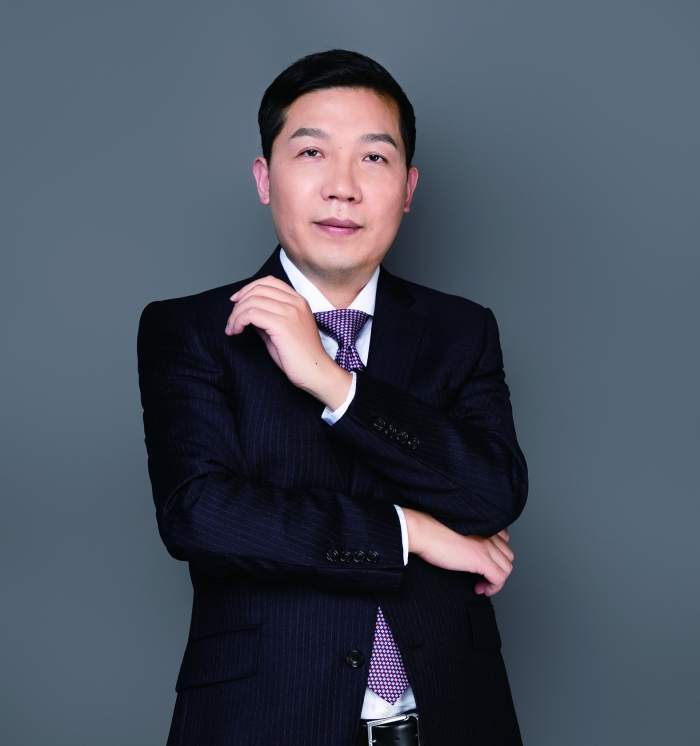
杨胜君 ◎记者 常佩琦 作为扎根深圳的机构,基石资本深度参与当地AI产业的布局。杨胜君表示,深圳是AI产业化的"天然沃 土",主要有三大优势:一是有完整产业链与丰富应用场景;二是科研力量雄厚,海外人才创业与科研 转化活跃;三是政策环境开放,例如自动驾驶上路政策、数据处理规则等都走在全国前列。 不过,在杨胜君看来,政策仍有进一步优化空间。他建议:首先,AI产业周期长,地方政府可考虑进 一步延长政府引导基金周期;其次,对早期项目的失败风险给予更高容忍度,避免只看短期回报的考核 机制;最后,招引链主企业,吸引全球顶尖AI企业或研发中心,带动生态繁荣。 "优质AI企业通过持续研发投入和穿越技术周期才能跑出来。"近日,专注AI投资多年的基石资本合伙人 杨胜君在接受上海证券报记者专访时建议,资本市场应以更成熟的"耐心资本"心态,容忍科技企业必要 的投入期和亏损期,避免短期业绩压力阻碍长期价值创造。 在杨胜君看来,当前AI企业面临着一些共性挑战:首先,这类企业早期发展慢、投入大,极度依赖长 期、耐心的资金支持。其次,个别企业的"跟风""内卷"特性易导致新兴领域过早陷入同质化竞争和资源 浪费。 杨胜君认为,我国在电信设备、新 ...
南财观察|“水大鱼大”,前海引“四大资本”赋能实体经济
2 1 Shi Ji Jing Ji Bao Dao· 2025-06-26 02:41
Core Viewpoint - The establishment of a financial high-level open corridor in the Guangdong Free Trade Zone is aimed at supporting the high-quality development of the real economy through financial openness and innovation [1][2]. Group 1: Financial Development in Qianhai - Qianhai is positioned as a crucial link between Hong Kong and the mainland, focusing on attracting international capital and supporting enterprises to list in Hong Kong [2][3]. - Over the past decade, Qianhai has attracted a total of $38.2 billion in foreign investment, accounting for 67% of the Guangdong Free Trade Zone's total [2]. - The number of customs-registered enterprises in Qianhai has increased to over 11,000, a growth of 5.7 times since its establishment [2]. Group 2: Capital Market and Listing Support - Qianhai aims to become a nurturing base for companies planning to list in Hong Kong, leveraging Hong Kong's international legal and regulatory framework alongside Shenzhen's industrial advantages [3][4]. - In the first half of this year, the Hong Kong Stock Exchange led global IPO financing with 40 new listings raising HK$102.1 billion [4]. - By 2025, the Hong Kong market is expected to see 80 new listings, with a total financing amount projected to reach HK$200 billion [4]. Group 3: Financial Infrastructure and Cross-Border Finance - The Qianhai Equity Exchange Center is designed to facilitate enterprises in listing in Hong Kong, with a focus on enhancing the listing nurturing mechanism [5]. - Qianhai has established six cross-border financial brands, including cross-border RMB loans and dual-currency bond issuance, to attract international capital [5]. - As of the end of 2024, Qianhai's FT accounts have surpassed ¥1 trillion in cross-border receipts and payments [5]. Group 4: Support for Small and Medium Enterprises - The development of "patient capital" and "bold capital" is emphasized to improve the financing environment for small and medium-sized enterprises and technology companies [6][7]. - The "Technology Startup Pass" credit product has served over 3,200 enterprises, with 80% being early-stage tech companies, providing loans totaling ¥3.8 billion at a low interest rate of 3.45% [6]. - The first private equity fund management license for insurance capital has been issued in Qianhai, with an initial fund size of ¥30 billion [7]. Group 5: Supply Chain Finance - Qianhai is recognized as a major hub for supply chain finance, aiming to support the transformation of the manufacturing sector and promote inclusive finance [9][10]. - The region has launched the first national action plan to promote the development of the factoring industry, establishing itself as a model for supply chain finance innovation [9]. - By May 2025, Shenzhen is expected to have 11,000 specialized small and medium enterprises, providing a strong market for supply chain financing [10].
注重投融资相协调 引导长钱向“新”集聚
Zhong Guo Zheng Quan Bao· 2025-06-25 20:56
Group 1 - The core viewpoint emphasizes the importance of enriching the categories of STAR Market ETFs and derivatives to enhance market functions and provide diversified investment options and effective risk management tools for investors [1][4]. - The "STAR Market Opinions" propose to include STAR Market ETFs in the fund advisory configuration range, aiming to guide long-term capital towards new productive forces and improve fund utilization efficiency through professional management [2][3]. - The rapid expansion of STAR Market broad-based ETFs has effectively directed social funds towards the development of new productive forces, with the total scale exceeding 200 billion [3]. Group 2 - The introduction of more STAR Market ETF options and futures will provide additional risk management tools for medium to long-term capital, responding to the growing demand for risk management as investment scales increase [4]. - The China Securities Regulatory Commission (CSRC) has announced that starting from October 9, qualified foreign investors will be allowed to participate in on-site ETF options trading, aimed at hedging [4]. - The CSRC is also supporting the establishment of specialized technology companies in Shanghai to enhance asset management services, thereby improving investment and risk management capabilities for various investment institutions [4]. Group 3 - There is a strong push to cultivate and expand patient capital in the capital market ecosystem, which requires creating a more attractive and competitive market system and product service matrix [5][6]. - The involvement of social security funds, insurance funds, and industrial capital in private equity investment is expected to increase, thereby enhancing financial support for technological innovation [6]. - Regulatory adjustments are being made to optimize mechanisms for fund share transfers and encourage long-term and value investments from insurance funds [6].
金融政策加码消费赛道 引导社会资本加大对服务消费重点领域投资
Shang Hai Zheng Quan Bao· 2025-06-25 18:45
Group 1 - The People's Bank of China and six other departments issued guidelines to support consumption, signaling strong policy support for investment in the consumption sector [2][3] - The guidelines are expected to optimize investment and exit pathways in the consumption industry, potentially becoming a turning point for capital inflow [2] - The guidelines encourage quality enterprises in the consumption chain to raise funds through public listings and other means, enhancing investor confidence [2][3] Group 2 - The guidelines emphasize attracting social capital to invest in key service consumption areas, promoting long-term and patient capital to meet financing needs [3] - Government investment funds are encouraged to participate in new consumption sectors like health and wellness, cultural tourism, and digital and green consumption [3][4] - The introduction of a risk-sharing mechanism through government funds aims to activate social capital investment in new consumption areas [4] Group 3 - There is a clear signal of recovery in the consumption sector, driven by both policy support and capital reassessment of projects with strong cash flow [5] - Investors are shifting focus towards essential consumer goods and technology-enabled consumption, favoring companies with healthy profitability and robust supply chains [5] - The case of Banou International Holdings highlights the importance of supply chain integrity and product quality in achieving success in the competitive market [5] Group 4 - The popularity of outdoor sports and consumer technology is creating new investment opportunities, particularly in the context of the Jiangsu City Football League [6] - The establishment of the Hangzhou Conference City Fund aims to enhance the sports consumption ecosystem and leverage post-Asian Games market potential [6] - The fund has an initial scale of 100 million yuan, with plans to reach 500 million yuan, focusing on event operations and digital economy sectors [6]
毕马威蔡伟:房地产调整周期长,科技创新领域更需耐心资本
Nan Fang Du Shi Bao· 2025-06-25 09:10
南都讯 6月24日—26日,天津迎来一场国际性盛会——夏季达沃斯论坛。在论坛现场,不仅能看到有着 不同肤色、说着不同国家语言的外宾、专家学者,还能看到高矮不同、用途各异的人形机器人,人机交 织的互动空间将会场科技含量拉满。 论坛期间,毕马威中国经济研究院院长蔡伟在接受南都记者专访时也对"科"含量满满的论坛表示深有感 受。他说:"对科技领域的重视不仅是今年的政策亮点,也将成为未来3-5年长期的战略性政策取向。" 快节奏"去地产"不利于培育新质生产力 中国经济正在加速转型,这在与会嘉宾的探讨中达成共识。而提及经济转型、产业结构调整等,就不得 不谈到中国当前的房地产行业。 对于房地产行业,蔡伟认为,中国经济对房地产行业的依赖度正在降低。但房地产行业作为传统经济增 长动能,对我国经济仍存在系统性重要意义,其调整周期将是一个漫长的过程。 据蔡伟介绍,从市场需求和政策引导来看,房地产未来难以重现过去支柱产业的主导地位,但其在经济 中的基础性作用仍将长期存在,因为房地产直接贡献GDP(国内生产总值)增速,关系社会广泛就业。 不仅如此,房产占家庭实物财富7成以上,也是银行信贷和全社会融资的重要构成。房地产还关系地方 政府财政 ...

更大力度培育耐心资本推动科技与产业创新融合发展
Shang Hai Zheng Quan Bao· 2025-06-24 18:12
Group 1 - The core viewpoint emphasizes the need for cultivating patient capital to bridge the funding gap and cycle mismatch in the integration of technological and industrial innovation [1][2] - The China Securities Regulatory Commission (CSRC) chairman highlighted the importance of long-term capital in supporting the sustainable growth of technology enterprises [1][4] - Private equity funds play a crucial role in nurturing patient capital, as they align with the growth patterns of technology innovation and cover the financing needs throughout the lifecycle of tech companies [1][2] Group 2 - Recent data shows that private equity and venture capital funds have invested in 90% of companies listed on the Sci-Tech Innovation Board and over half of those on the Growth Enterprise Market [2] - As of April 2025, there are nearly 20,000 private fund managers managing over 140,000 funds with a total scale of 20 trillion yuan [2] - The CSRC plans to focus on enhancing the fundraising, investment, management, and exit processes of private equity funds to attract more long-term capital [2][3] Group 3 - The development of technology innovation indices can provide a safety net and value anchor for patient capital by accurately selecting technology assets with long-term growth potential [3] - The introduction of public funds with technology attributes can transform fragmented and short-term market funds into long-term capital supporting technological innovation [3] - Since the launch of the "Eight Measures for the Sci-Tech Innovation Board," multiple technology innovation indices have been released, significantly contributing to attracting incremental capital into the market [3][4] Group 4 - The continuous nurturing of patient capital is essential for the growth of technology and industrial innovation, with expectations for improved policy environments and diversified funding sources [4] - The capital market is anticipated to accelerate the cultivation of patient and long-term capital to support the growth of technology enterprises and the rise of emerging industries [4]
共探上市公司创新生态:全球上市公司30人智库论坛在京举行
Di Yi Cai Jing· 2025-06-23 14:37
Group 1 - The core viewpoint of the forum emphasizes the effective synergy between capital and technology, which is seen as a necessary outcome of deepening capital market reforms [1][6] - Chinese listed companies are recognized as the core engine of China's technological innovation, necessitating the formation of an innovative ecosystem involving enterprises, capital, government, research, supply chains, and media to support this [1][2] - The global technology competition landscape is undergoing reconstruction, with listed companies being the main force in technological innovation, contributing significantly to national R&D efforts [2][3] Group 2 - The importance of governance in achieving environmental and social responsibility goals is highlighted, with a focus on integrating ESG principles into corporate governance [4] - The shift from traditional globalization to a more integrated and clustered industrial model is noted, with China positioned to accelerate manufacturing upgrades and create global industrial clusters [5] - The need for systemic innovation in listed companies is emphasized, requiring a shift from single technological breakthroughs to diversified, multi-factor collaborative innovation [6]