
人工智能(AI)

Search documents
美国附条件解禁英伟达等的AI半导体对华出口
日经中文网· 2026-01-14 06:32
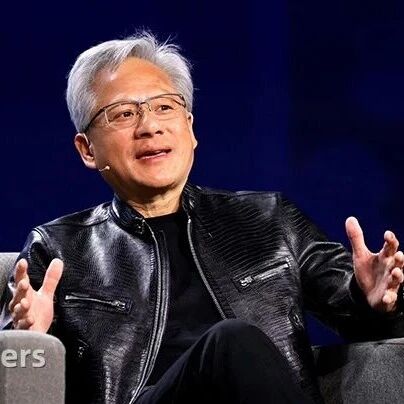
似乎设想主要面向在中国开展业务的西方企业,对总部设在中国大陆和澳门的中国企业的出口仍为"原 则上禁止"。 对象产品为英伟达的H200以及具有同等或更低性能的AI半导体,包括美国超微半导体(AMD)于2024 年发售的AI半导体"MI325X"。 出口仅限"过剩的部分" 对象为英伟达的H200以及具有同等或更低性能的AI半导体,还有AMD的MI325X。似乎设想主要面向 在中国开展业务的西方企业,对总部设在中国大陆和澳门的中国企业的出口仍为"原则上禁止"。还要求 出口企业主要将美国国内剩余的部分用于对华出口…… 围绕此前美国原则上禁止向中国出口的括英伟达的"H200"在内的部分人工智能(AI)半导体,美国商 务部1月13日提出方针称,将调整为对每一笔出口实行逐案审批的许可制度。此举是继美国总统特朗普 于2025年12月宣布允许H200对华出口之后作出的调整,将于15日修改规则。 英伟达CEO黄仁勋(REUTERS) 对中国企业出口维持"原则上禁止" 在13日公布的联邦政府公报方案中,提出了关于AI半导体出口管理的新规则方案。将以获得美国商务 部的许可为前提,允许部分AI半导体对华出口。 即便属于上一代产品,对英 ...


活动邀请 | 中国AI前景展望:点燃经济动能,实现长远增长
彭博Bloomberg· 2026-01-14 06:05
Core Viewpoint - The article discusses the current trends and developments in the industry, highlighting key opportunities and challenges faced by companies in the market. Group 1 - The industry is experiencing significant growth, with a projected increase in market size by 15% over the next five years [1] - Companies are investing heavily in technology to enhance operational efficiency and customer engagement, with a reported investment of $4 billion in digital transformation initiatives [2] - Regulatory changes are impacting the competitive landscape, requiring companies to adapt their strategies to comply with new standards [3] Group 2 - Consumer preferences are shifting towards sustainable and eco-friendly products, prompting companies to innovate their offerings [1] - The rise of e-commerce is reshaping traditional business models, with a 30% increase in online sales reported in the last year [2] - Collaboration between companies and startups is becoming more common, fostering innovation and agility in product development [3]

冰火两重天:美国电价要爆了,中国电价开跌了
Hua Er Jie Jian Wen· 2026-01-14 03:38
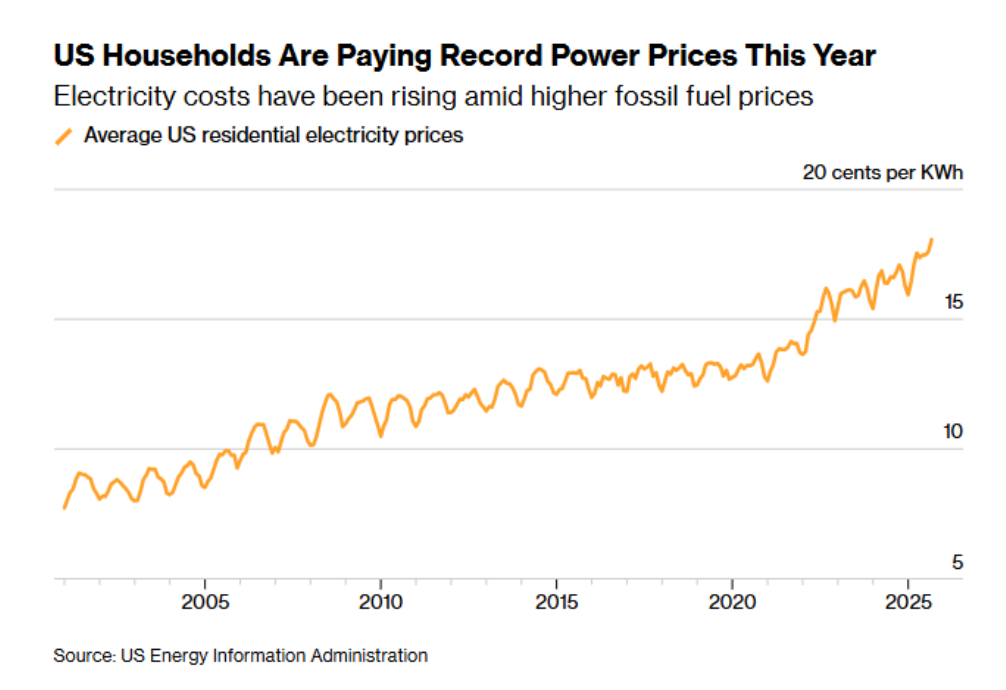
全球电力市场正经历剧烈分化。 在美国,人工智能(AI)与数据中心的爆发式增长将电网推向极限,容量价格触及监管上限,迫使监管层介入干预成本分担;而在中国,随着 可再生能源装机的快速扩张,电价正进入显著的下行通道,工业与商业用电成本面临重估。 近期市场数据显示,美国最大的电网运营商PJM的最新拍卖价格已触及历史高位,若无价格管制,数据中心需求本将令电价再涨60%。对此, 美国当选总统特朗普已明确施压,要求科技巨头为激增的电力需求"自行买单"。这一政治博弈直接加剧了市场对公用事业板块及科技公司运营 成本的担忧。 与此同时,大洋彼岸的中国市场则呈现出截然不同的图景。据美银美林(BofA Global Research)最新发布的研报显示,中国电力价格的下降趋 势正在加剧。2026年1月的代理购电价格同比大幅下跌10%,广东、江苏等核心经济大省的年度电力合约价格均出现明显回落。 美国:AI逼爆电网,特朗普施压科技巨头 美国电力市场的供需矛盾已达到临界点。 华尔街见闻写道,美国最大的电网运营商PJM Interconnection在针对2027/2028年的基础剩余拍卖中,发电容量价格攀升至333.40美元/兆瓦日 (M ...
高市解散众议院将如何影响日本股汇债?
日经中文网· 2026-01-14 03:28
Market Overview - On January 13, the Japanese stock market experienced a significant rise, with the Nikkei average index surpassing 53,000 points, driven by expectations of a potential election and stable governance under Prime Minister Fumio Kishida [2][4] - The Japanese yen depreciated to approximately 159 yen against the US dollar, marking a low not seen in over a year and a half, while long-term interest rates reached their highest level in 27 years [2][5] Stock Market Outlook - Analysts predict that if the ruling Liberal Democratic Party (LDP) wins the upcoming election, the Nikkei average could stabilize between 50,000 and 55,000 points, with potential for further growth to 60,000 points in the next fiscal year [3][4] - Historical trends indicate that the Japanese stock market tends to rise before elections, with the Nikkei average showing consistent gains in the lead-up to voting days from 1963 to 2021 [4] Currency and Bond Market Insights - The yen is expected to weaken further, with forecasts suggesting it could reach 150 to 160 yen per dollar, prompting concerns about potential currency intervention by the government if it approaches 160 yen [3][6] - Long-term interest rates are anticipated to rise by 0.1% to 0.2% if the House of Representatives is dissolved and elections are called, potentially reaching 2.5% if new economic measures are introduced [3][6] Economic Policy Expectations - The market is optimistic about the ruling party's ability to implement fiscal expansion policies, which could lead to further economic stimulus measures [4][5] - Key sectors such as shipbuilding and artificial intelligence are identified as priority investment areas, with companies like Mitsubishi Heavy Industries seeing stock price increases [4]
“三农”新使命 保险新作为 从中央农村工作会议看保险业服务“三农”新要求
Jin Rong Shi Bao· 2026-01-14 02:05
Core Insights - The central theme of the news is the strategic deployment of agricultural policies and insurance to enhance food security and support rural development in China, particularly in the context of the 14th Five-Year Plan and the upcoming 15th Five-Year Plan [1][2]. Group 1: Agricultural Policy and Strategic Focus - The Central Rural Work Conference has outlined key tasks for 2026, including enhancing grain production capacity, improving disaster prevention capabilities, and establishing mechanisms to prevent poverty [1]. - The insurance industry is expected to play a crucial role in supporting these agricultural initiatives, reflecting a significant shift in its responsibilities [1]. Group 2: Role of Agricultural Insurance - Agricultural insurance has become an essential part of China's modern agricultural risk management system, providing risk coverage to 800 million households during the 14th Five-Year Plan [2]. - The implementation of comprehensive cost insurance for major grains has achieved nationwide coverage, significantly increasing the average insurance amount per acre [2]. Group 3: Technological Integration in Agricultural Insurance - The integration of technology, such as AI, big data, and blockchain, is transforming agricultural insurance services and risk management, enhancing efficiency and transparency [4][5]. - Innovative products like weather index insurance and high-standard farmland quality insurance are being developed to address various agricultural risks [3][4]. Group 4: Challenges and Recommendations for Agricultural Insurance - Despite progress, agricultural insurance faces challenges such as imprecise premium rates and a lack of standardized regulations, which hinder its effectiveness [7][8]. - Recommendations include establishing a robust service network for agricultural insurance and developing unified technical standards for underwriting and claims processes [8].
期货市场高质量发展进一步迈出坚实步伐
Jin Rong Shi Bao· 2026-01-14 01:19
Core Insights - The Chinese futures market maintained a steady operational trend in 2025, with significant growth in trading volume and value, indicating a robust performance in serving the real economy [1][2]. Trading Volume and Value - In December 2025, the national futures market recorded a trading volume of 9.51 billion contracts and a trading value of 90.81 trillion yuan, representing year-on-year increases of 45.17% and 58.55% respectively [1]. - The total trading volume for the year reached 90.74 billion contracts and a total trading value of 766.25 trillion yuan, with year-on-year growth of 17.4% and 23.74% [3]. Exchange Performance - Shanghai Futures Exchange (SHFE) had a trading volume of approximately 23.35 billion contracts and a trading value of about 259 trillion yuan, with year-on-year increases of 3.31% and 27.86% [3]. - Zhengzhou Commodity Exchange (ZCE) reported a trading volume of around 31.38 billion contracts and a trading value of approximately 88.96 trillion yuan, with year-on-year growth of 20.26% and 4.47% [3]. - Dalian Commodity Exchange (DCE) had a trading volume of about 26.07 billion contracts and a trading value of around 102.77 trillion yuan, with year-on-year increases of 14.94% and 4.49% [3]. - China Financial Futures Exchange (CFFEX) recorded a trading volume of approximately 3.04 billion contracts and a trading value of about 255.19 trillion yuan, with year-on-year growth of 19.94% and 33.66% [3]. - Guangzhou Futures Exchange (GFEX) saw a trading volume of about 5.34 billion contracts and a trading value of approximately 31.60 trillion yuan, with year-on-year increases of 171.62% and 190.27% [3]. Product Highlights - The top three products by trading value across exchanges included silver, gold, and copper at SHFE; PTA, caustic soda, and glass at ZCE; coking coal, palm oil, and soybean meal at DCE; and lithium carbonate, polysilicon, and platinum at GFEX [4]. - The top three products by trading volume included silver, rebar, and silver options at SHFE; glass, PTA, and methanol at ZCE; soybean meal, PVC, and coking coal at DCE; and lithium carbonate, lithium carbonate options, and industrial silicon futures at GFEX [4]. Market Dynamics - The futures market's total funds and client equity surpassed 2 trillion yuan in 2025, marking a historical high, with total funds reaching approximately 2.02 trillion yuan, a 24% increase from the end of 2024 [9]. - The number of A-share listed companies engaging in hedging activities increased by 18.6% in 2025, with 1,782 companies publishing related announcements [9]. New Product Launches - In 2025, 18 new futures and options products were introduced, focusing on non-ferrous metals, energy chemicals, and precious metals, enhancing risk management across the industry [7][8]. - New products included futures for casting aluminum alloy, pure benzene, and propylene, which address gaps in risk management tools for the petrochemical sector [8]. Future Outlook - Analysts predict that the futures market will continue to grow in 2026, with new products like coking coal options expected to expand the market's service capabilities [10].
美国批准英伟达H200卖给中国,但有条件
Guan Cha Zhe Wang· 2026-01-14 00:32
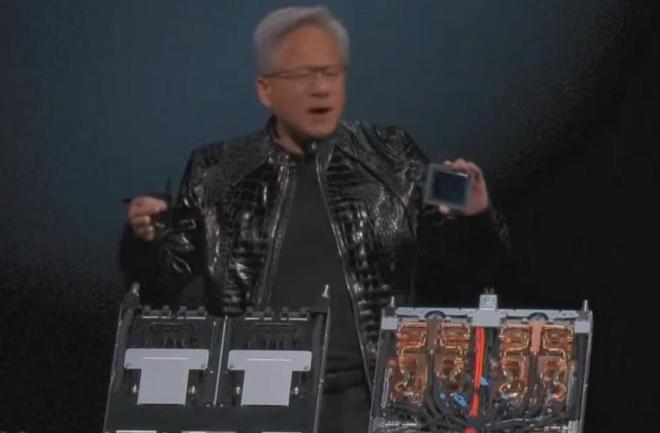
【文/观察者网 齐倩】 当地时间1月13日,美国特朗普政府正式批准英伟达对华出口H200人工智能(AI)芯片。 根据美国商务部发布声明,商务部下属机构工业与安全局(BIS)正在修订对某些半导体向中国出口的 许可审查政策——从推定拒绝改为逐案审查。 彭博社称,这一规定是落实美国总统特朗普上个月决定允许英伟达等芯片制造商向中国销售先进AI芯 片的关键一步。当时,特朗普提出一个条件:美国政府需获得25%的分成。 在最新声明中,美国商务部再次针对英伟达H200等芯片设置了出口限制:其一,该芯片在美国市场上 商业可用;其二,出口商需证明,美国有足够的该产品供应,且接收方已展示"充分的安保程序"。 根据法规,芯片将在发货至中国前,由第三方测试实验室审查其技术AI能力。 这些公司向中国运送的芯片数量将受到限制,不得超过面向美国市场总产量的50%。同时,公司还必 须"采用严格的'了解你的客户'程序",以防止技术被未经授权使用。 彭博社提到,该措施为英伟达及其竞争对手先进微器件公司(AMD)设定了许可要求,后者正在寻求 在中国销售其MI325X芯片的许可。AMD发言人在声明中表示:"我们遵守所有美国出口管制法律和政 策。" 5 ...
HealthEquity (NasdaqGS:HQY) FY Conference Transcript
2026-01-14 00:02
HealthEquity Conference Call Summary Company Overview - **Company**: HealthEquity - **Industry**: Health Savings Accounts (HSAs) - **Key Metrics**: - Serves over 17 million consumer-directed benefit accounts - Manages over $34 billion in HSA assets - Average member contribution: approximately $1,800 per year - Average member spending on qualified medical care: approximately $1,300 per year - Members have $16.9 billion in HSA cash and $17.5 billion in invested assets, with invested assets growing 29% year over year [3][14] Core Business Insights - HealthEquity operates the leading HSA platform in the U.S., focusing on HSAs as a solution to rising healthcare costs and affordability [3][4] - The company emphasizes the importance of HSAs as a critical financial infrastructure for managing healthcare expenses [5] - Engagement and utilization of HSAs are key to driving member value and improving economic outcomes [8][9] Strategic Initiatives - **Digital Transformation**: HealthEquity is enhancing its platform with a mobile-first strategy and AI-driven service enhancements to improve member engagement and operational efficiency [10][11][38] - **Marketplace Expansion**: The company is expanding its marketplace offerings to connect members with health solutions, thereby creating new revenue streams [15][36] - **Policy Engagement**: HealthEquity is actively involved in policy discussions to expand access to HSAs, which aligns with long-term healthcare affordability [9] Market Dynamics - The U.S. healthcare system is shifting more financial responsibility to individuals, increasing the relevance of HSAs [4][5] - The company is seeing growth in the retail and bronze market segments, with new eligibility bringing participants into the HSA ecosystem [6] - HealthEquity is positioned to benefit from the trend of employers adopting high-deductible health plans, which encourages employees to utilize HSAs [19][20] Financial Guidance - HealthEquity anticipates a revenue growth of approximately 7% at the midpoint for the upcoming year, driven by account growth, increased contributions, and marketplace revenue [22] - The company aims to continue expanding its EBITDA through efficient cost management relative to revenue growth [18] Competitive Landscape - HealthEquity acknowledges competition from retirement firms and other players in the HSA space but believes its extensive partner network and unique value proposition will maintain its market leadership [43][44] - The company is focused on enhancing its service offerings and fraud prevention measures to retain its competitive edge [44][49] Capital Allocation - HealthEquity prioritizes funding its business, pursuing strategic M&A opportunities, and returning capital to shareholders through share repurchases [49][51] - The company has a $600 million share purchase authorization and is actively buying back stock while managing its debt levels [51] Conclusion - HealthEquity is well-positioned to capitalize on the growing importance of HSAs in the U.S. healthcare landscape, with a strong focus on digital engagement, marketplace expansion, and operational efficiency. The company is committed to enhancing member experiences while navigating a competitive and evolving market environment [15][16][52]

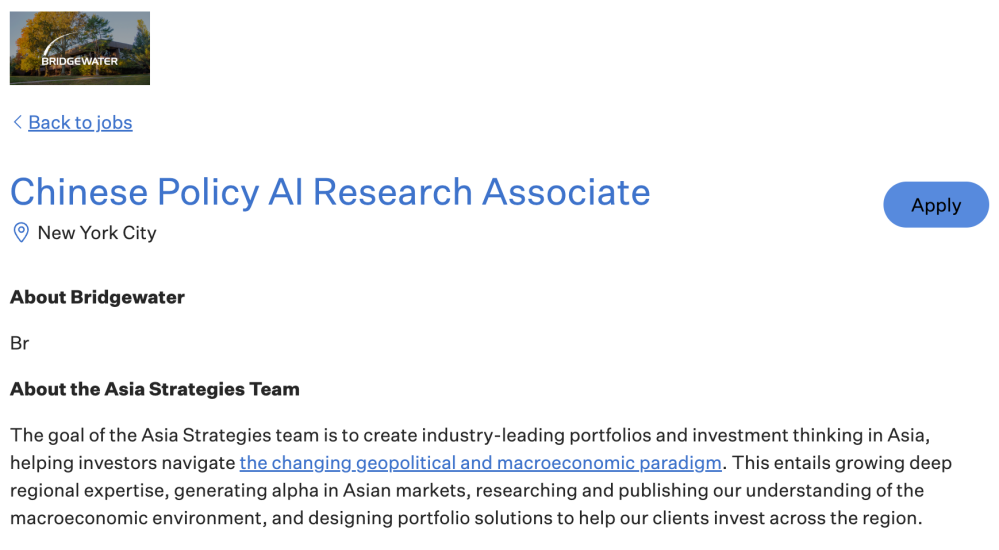
桥水,中国市场新动作
Zhong Guo Zheng Quan Bao· 2026-01-13 23:23
Group 1 - The core focus of the news is Bridgewater's recruitment for a "China Policy AI Research Assistant," indicating a strategic emphasis on integrating AI with macroeconomic research related to China [1][2] - The position aims to enhance Bridgewater's understanding of the Chinese policy environment and its impact on assets and the economy, utilizing AI tools to process Chinese policy documents and data [2][3] - This recruitment is part of Bridgewater's broader strategy to strengthen its Asian strategy team, which seeks to develop leading investment research and strategies in Asia [2][3] Group 2 - The trend of combining subjective research with AI is gaining traction in the investment industry, with Bridgewater exemplifying this shift by integrating AI into its macroeconomic research framework [3][4] - Bridgewater has established an AIA lab focused on using AI and machine learning to generate excess returns, indicating a significant transformation in its talent strategy towards hiring more data scientists [3][4] - Other asset management firms, such as BlackRock, are also adopting AI in their investment strategies, highlighting a broader industry movement towards AI-enhanced active investment approaches [4] Group 3 - Bridgewater's increased focus on Chinese macro policy research may signal a greater emphasis on investment opportunities in the Chinese market by 2026, as indicated by their analysis suggesting a need to diversify away from U.S. assets [5][6] - The firm recommends reducing exposure to U.S. markets while increasing allocations to Asian and emerging markets, which are seen as having lower correlation with U.S. assets and potential for diversification [5] - There is a growing enthusiasm among foreign institutions for Chinese assets, particularly in the technology sector, with significant net inflows into various U.S.-listed Chinese ETFs at the beginning of 2026 [6]
世界银行上调2026全球经济增速预期,强调关税阴影下仍具韧性
Feng Huang Wang· 2026-01-13 23:07
世界银行周二表示,尽管面对贸易紧张局势升级与政策不确定性加剧的局面,但全球经济仍然展现出显 著的韧性,不过全球增长过度集中在发达经济体,整体增长水平依然偏低,难以有效减少极端贫困。 Gill补充称,2025年全球人均GDP较新冠疫情暴发前高出10%,这是过去60年来主要危机后最快的一次 复苏。但他强调,许多发展中国家正在被甩在后面:约四分之一的发展中国家人均收入仍低于2019年水 平,其中以最贫困国家情况最为严峻。 世界银行预计,新兴市场和发展中经济体的整体增速将在2026年放缓至4.0%,低于2025年的4.2%,但 分别较去年6月的预测上调0.2和0.3个百分点。 欧元区方面,世界银行预计,2026年经济增速将从2025年的1.4%放缓至0.9%,主要受到美国关税政策 的拖累;但随着欧洲国防支出增加,2027年增速有望回升至1.2%。 日本方面,2026年经济增速预计将放缓至0.8%,低于2025年的1.3%。2025年的增长部分得益于日本企 业为规避特朗普关税政策而提前向美国出口商品。世界银行表示,消费和投资放缓将使日本在2027年的 GDP增速维持在0.8%不变。 该机构预计,美国GDP增速将在202 ...