
绿色低碳

Search documents
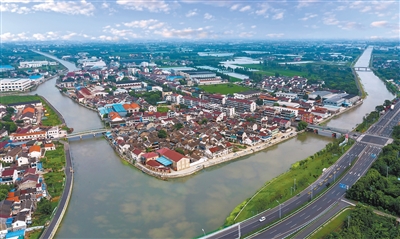
漕桥河交出水清岸绿新答卷(我家门前有条河)
Ren Min Ri Bao· 2025-11-11 22:40
Core Insights - The transformation of the Caoqiao River from a heavily polluted waterway to a clean water source reflects the successful implementation of comprehensive water management strategies in the Taihu Lake region [1][3] - The improvement in water quality has attracted new green and low-carbon industries, enhancing local economic development and providing job opportunities for residents [2][3] Group 1: Water Quality Improvement - The Caoqiao River's water quality improved from a grade V (severely polluted) to a stable grade II (good quality) due to systematic ecological dredging and pollution control measures [2][3] - Continuous efforts over 18 years included the establishment of a sewage network that integrated wastewater from 1.3 million households and over 300 enterprises [2] Group 2: Economic Development - The establishment of new industries along the river, such as the production base of Yibao Company, which has a capacity of 200 million boxes annually, signifies the economic revitalization of the area [2] - The opening of the first phase of the Wenlv project in 2023 is expected to attract over 5 million visitors annually and create thousands of jobs, further integrating economic growth with environmental restoration [2]

中国化工新材料“十五五”发展展望
材料汇· 2025-11-11 14:35
Core Viewpoint - The article emphasizes the significant growth and transformation of China's chemical industry during the "14th Five-Year Plan" period, highlighting the need for high-quality development and innovation in the upcoming "15th Five-Year Plan" to strengthen its global competitiveness and influence [2][9]. Group 1: Overview of the Chemical Industry Development - The chemical industry is a crucial pillar of the national economy, with a steady growth in total output during the "14th Five-Year Plan," achieving a revenue of 14.5 trillion yuan in 2024, a 45% increase from 2020 [2]. - Major chemical products in China, such as ethylene, methanol, and fertilizers, maintain an annual growth rate of approximately 4.6%, with China producing about 42% of the world's major chemical products [3]. - In the 2024 global top 50 chemical companies, 11 Chinese companies are included, generating 2.1 trillion yuan in revenue, which is 1.35 times that of U.S. companies and exceeds the combined revenue of German and Japanese companies [5]. Group 2: Key Strategies for the "15th Five-Year Plan" - The "15th Five-Year Plan" aims to transition from quantity to quality, focusing on six enhancements: upgrading industrial structure, improving innovation capabilities, advancing green and low-carbon development, enhancing smart manufacturing, boosting international cooperation, and promoting high-quality development of chemical parks [9][10]. - The plan emphasizes the need to shift from fuel-driven to material-driven production, optimizing traditional industries and expanding high-end industries [10]. Group 3: Specific Industry Focus Areas - The refining industry is expected to transition from fuel-oriented to raw material-oriented, with a projected revenue of approximately 4.8 trillion yuan in 2024, accounting for 33.1% of the chemical industry [11]. - The ethylene industry will see a capacity of 53.8 million tons per year by 2024, maintaining its global leadership, but the supply growth rate will exceed demand growth [15]. - The aromatics industry, particularly paraxylene (PX), is projected to have a capacity of 43.37 million tons per year in 2024, solidifying China's position as the largest producer and consumer globally [19]. Group 4: Innovation and Technology Development - The chemical industry has made significant technological advancements, with a focus on original and disruptive innovations during the "15th Five-Year Plan," aiming to enhance R&D investment and reduce reliance on foreign technologies [29][30]. - The industry will prioritize breakthroughs in key technologies such as fine and specialty chemicals, biomanufacturing, and new catalytic technologies [30]. Group 5: Environmental and Sustainable Development - The chemical industry has achieved notable progress in pollution reduction and resource recycling, with a water reuse rate of 93% and a significant reduction in energy consumption across various products [32]. - The "15th Five-Year Plan" will focus on systematic carbon reduction strategies, addressing the challenges of high carbon emissions and the need for a comprehensive carbon management system [33]. Group 6: Smart Manufacturing and Digital Transformation - The industry has seen improvements in smart manufacturing, with numerous companies adopting AI and digital technologies to enhance operational efficiency [34]. - The "15th Five-Year Plan" will accelerate the integration of AI in chemical processes and promote the establishment of smart chemical parks [34]. Group 7: International Cooperation and Market Expansion - The chemical industry has strengthened its international cooperation, with foreign investments in China increasing and Chinese companies expanding their global presence [37][38]. - The focus will shift from mere participation in global markets to leading roles in technology sharing and value creation, enhancing China's influence in the global chemical industry [38]. Group 8: High-Quality Development of Chemical Parks - Significant progress has been made in the construction of chemical parks, with a focus on high-quality development and the establishment of world-class industrial clusters [39][40]. - The "15th Five-Year Plan" aims to optimize the spatial layout of the chemical industry, fostering advanced manufacturing clusters and enhancing the overall support role of chemical parks [40].

一倍返投,这支产投母基金招GP | 科促会母基金分会参会机构一周资讯(11.05-11.11)
母基金研究中心· 2025-11-11 08:57
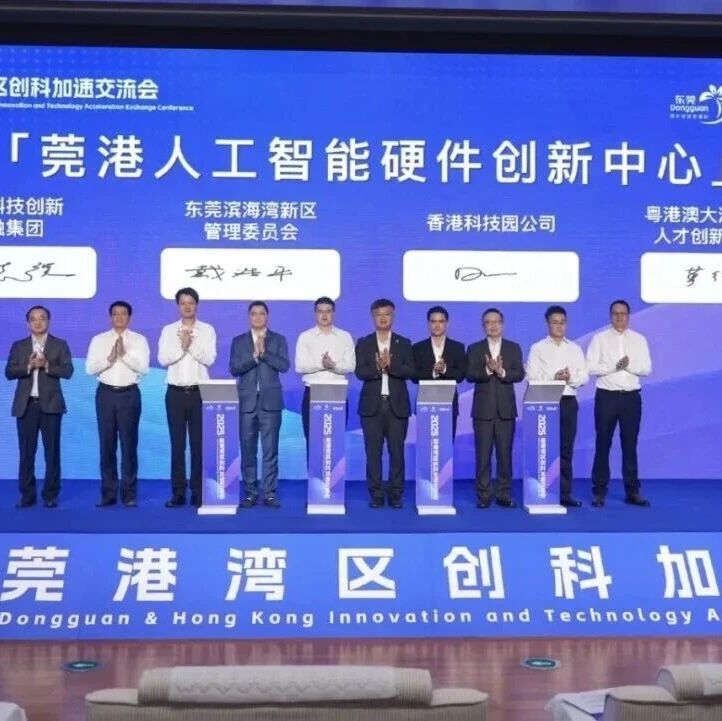
Group 1 - The establishment of the "China International Science and Technology Promotion Association Mother Fund Branch" aims to enhance the role of mother funds in China's capital market and promote the healthy development of the investment industry, particularly the mother fund sector [1][27][29] - The Yancheng Economic and Technological Development Zone's industrial investment mother fund has a scale of 1 billion yuan and focuses on key industries such as automotive, new energy, and digital economy [4][5] - The advanced technology industry fund in Yancheng has a scale of 250 million yuan, targeting investments in digital economy, modern services, and intelligent manufacturing [6] Group 2 - The "Dongguan-Hong Kong Artificial Intelligence Hardware Innovation Center" project has been officially launched, aiming to enhance cooperation between Dongguan and Hong Kong in AI technology [10] - The collaboration between Shaanxi Zhiyuan Lithium New Energy Technology Co., Ltd. and Shaanxi Changfeng Power Co., Ltd. aims to address industry pain points in battery capacity detection [12][13] - Jiangsu Huanghai Jin控 Group has established an academic workstation with Academician Wang Huajun to focus on climate risk assessment and prevention [16][17] Group 3 - Guanzhou Development Zone Fund Group invested in autonomous driving company WeRide, which recently listed on the Hong Kong Stock Exchange with a market value of approximately 24 billion HKD [25] - The National New Fund led a financing round for Wuxi Tailin Energy Technology Co., Ltd., a leading manufacturer of multi-axis centrifugal industrial gas compressors [26] - Zhongtong Cloud Warehouse Technology Co., Ltd. completed nearly 200 million yuan in financing to expand its logistics supply chain services [22]
“这份蓝图让我们看到未来中国新机遇”——在华跨国公司眼中的“十五五”热词
Xin Hua Wang· 2025-11-11 07:53
Group 1 - The "14th Five-Year Plan" emphasizes new quality productivity, artificial intelligence, and new energy, which multinational companies see as opportunities for growth in China [1][2] - Siemens' global executive vice president highlighted that industrial AI will accelerate new quality productivity and drive new industrialization in China [1][2] - Dow Chemical showcased nearly 100 advanced technologies at the China International Import Expo, indicating a strong commitment to the Chinese market and its evolving demands for high-performance materials [2][3] Group 2 - The focus on "green low-carbon" initiatives reflects China's high-quality development strategy, with multinational companies eager to align their core strengths with China's long-term sustainability goals [3][4] - Danfoss has launched several significant projects in China, including a carbon-neutral factory, demonstrating confidence in China's green transition and the potential for business growth [3][4] - The "14th Five-Year Plan" signals a critical period for achieving China's dual carbon goals, presenting strategic opportunities for companies like Danfoss in the green technology sector [4]
商务部:十六项举措拓展绿色贸易
Xin Hua Wang· 2025-11-11 03:31
Core Viewpoint - The Ministry of Commerce has issued the "Implementation Opinions on Expanding Green Trade," focusing on addressing shortcomings in enterprises' green and low-carbon development capabilities, the potential for carbon reduction in logistics, and the inadequacy of supporting systems for green trade development in China [1][2]. Group 1: Key Measures - The 16 specific measures proposed in the Opinions are aimed at actively expanding green trade and promoting trade optimization and upgrading [2]. - The measures include enhancing the green and low-carbon development capabilities of foreign trade enterprises, expanding the import and export of green and low-carbon products and technologies, creating a favorable international environment for green trade, and establishing a robust support system for green trade [2]. Group 2: Green Product Export Performance - Green and low-carbon products have become a new driving force for foreign trade development, with significant export growth in recent years [3]. - For instance, in the first three quarters of this year, the export growth rate of wind turbine units and components exceeded 30%, while photovoltaic products have maintained an export value of over 200 billion for four consecutive years [3]. Group 3: Trade Fair Initiatives - Major trade fairs like the Canton Fair and the China International Import Expo have achieved 100% green power supply and 100% compliance with green standards for special exhibition booths [3][4]. - The Ministry of Commerce has introduced green-related indicators in exhibition statistics to monitor energy consumption and emission reduction more accurately [4]. Group 4: Collaborative Efforts for Green Trade - Various government departments are working together to promote green trade, with the Ministry of Industry and Information Technology planning to cultivate 6,430 national green factories and 491 green industrial parks by the end of 2024 [5]. - The State Administration for Market Regulation is advancing the green product certification system to support the green development of foreign trade enterprises [5]. Group 5: Financial Support for Green Initiatives - The People's Bank of China is promoting the application of green finance and transition finance standards, encouraging financial institutions to provide more support for green service trade enterprises [6]. - This includes lowering financing thresholds and costs for light-asset and green service trade companies, as well as supporting the issuance of green financial products in global markets [6].
千余参赛者低碳穿越杭城 以全民实践传递绿色理念
Hang Zhou Ri Bao· 2025-11-11 03:01
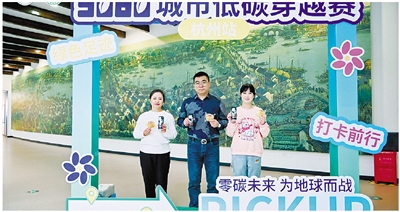
Core Viewpoint - The "3060 Urban Low-Carbon Crossing Race" was held in Zhejiang Province, coinciding with the opening of COP30, promoting low-carbon living and showcasing China's commitment to addressing climate change through public participation [2][3] Group 1: Event Overview - The event featured 1,110 participants who engaged in a city-oriented race using green transportation methods such as subways, buses, and cycling, highlighting the appeal of low-carbon lifestyles [2] - The race included 10 designated check-in points, such as the China Wetland Museum and the Hangzhou Low-Carbon Technology Museum, with interactive activities designed around low-carbon themes [3] Group 2: Engagement and Activities - Participants utilized a new feature on Alipay for electronic check-ins and point accumulation, integrating environmental knowledge and low-carbon concepts into the tasks [3] - The event emphasized recycling and resource circulation, with work badges made from recycled plastic waste and designated recycling points for items like milk cartons and water bottles [3] Group 3: Future Implications - The race aims to continue in more cities, promoting the green low-carbon lifestyle and encouraging public involvement in building a beautiful China [3]
锐财经|16项举措拓展绿色贸易
Ren Min Ri Bao Hai Wai Ban· 2025-11-11 02:56
Core Viewpoint - The Ministry of Commerce has issued the "Implementation Opinions on Expanding Green Trade," focusing on addressing shortcomings in enterprises' green and low-carbon development capabilities, the potential for carbon reduction in logistics, and the inadequacy of supporting systems in China's green trade development [1][2]. Group 1: Key Measures - The 16 specific measures proposed in the Opinions are aimed at actively expanding green trade and promoting trade optimization and upgrading [2]. - The measures include enhancing the green and low-carbon development capabilities of foreign trade enterprises, expanding the import and export of green and low-carbon products and technologies, creating a favorable international environment for green trade, and establishing a robust support system for green trade [2]. - Encouragement for foreign trade enterprises to adopt renewable energy and reduce carbon emissions through equipment upgrades and process modifications is highlighted [2]. Group 2: Green Trade Growth - Green low-carbon products have emerged as a new driving force for foreign trade development, with significant export growth in sectors such as wind power, photovoltaic products, and electric vehicles [3]. - In the first three quarters of this year, exports of wind turbine units and components increased by over 30%, while photovoltaic products have maintained export values exceeding 200 billion yuan for four consecutive years [3]. - Major trade fairs like the Canton Fair and the China International Import Expo have achieved 100% green power supply and green standards for special exhibition booths [3]. Group 3: International Cooperation - China is committed to an open and cooperative approach, focusing on deep participation in global governance of green trade, enhancing the "green content" of high-standard free trade zones, and aligning domestic reforms with international green standards [4]. - The goal is to strengthen and enhance China's capacity to serve global green trade and share low-carbon achievements with the world [4]. Group 4: Collaborative Efforts - The Ministry of Industry and Information Technology plans to cultivate 6,430 national green factories and 491 green industrial parks by the end of 2024, with green factories accounting for over 20% of total output [5]. - The market regulatory authority aims to advance the green product certification system and expand certification from products to entire supply chains [6]. - The People's Bank of China will promote the application of green finance standards and support innovative financing methods for green service trade enterprises [6].
绿色甲醇:能源化工减碳“热题”
Zhong Guo Hua Gong Bao· 2025-11-11 02:51
"绿色甲醇减碳优势明显,应用场景不断拓展,已在全球范围内形成热点。"10月29日,在上海举行的 2025石油和化工产业循环经济发展会议暨第三届上海化学工业区绿色低碳发展会议上,中国海油 (600938)集团能源经济研究院咨询评估中心副主任、石油化工咨询室主任田广武在"再生材料及生物 制造专场论坛"主题报告中就"绿色甲醇产业发展态势及探索"做出以上判断。 他介绍说,由于欧盟绿色低碳政策的驱动,全球绿色甲醇投资保持较高的热度。全球在建及规划建设绿 色甲醇项目主要集中在中国地区,占比达75.6%。 "绿色甲醇作为战略性新兴产业,其未来发展将会呈现生产—物流—加注—终端共建应用生态圈的趋 势,从而实现可再生物质/绿电—绿氢—绿色燃料产业有效联通。"田广武表示,仅从目前甲醇产能上分 析,截至2024年5月,全球甲醇行业协会(MI)跟踪了152个可再生甲醇项目,总产能约90万吨/年;预 计到2029年,全球总产能可达到2420万吨/年。甲醇双燃料船舶新造船订单已超300个,另有100多艘现 有船舶计划将改造为甲醇双燃料动力系统。 在此背景下,黄宁介绍了国内绿色甲醇项目的利好。2025年7月,上海电气(601727)吉林洮 ...
从“东方之约”到“世界机遇”:高水平开放的进博实践
Xin Hua She· 2025-11-11 02:34
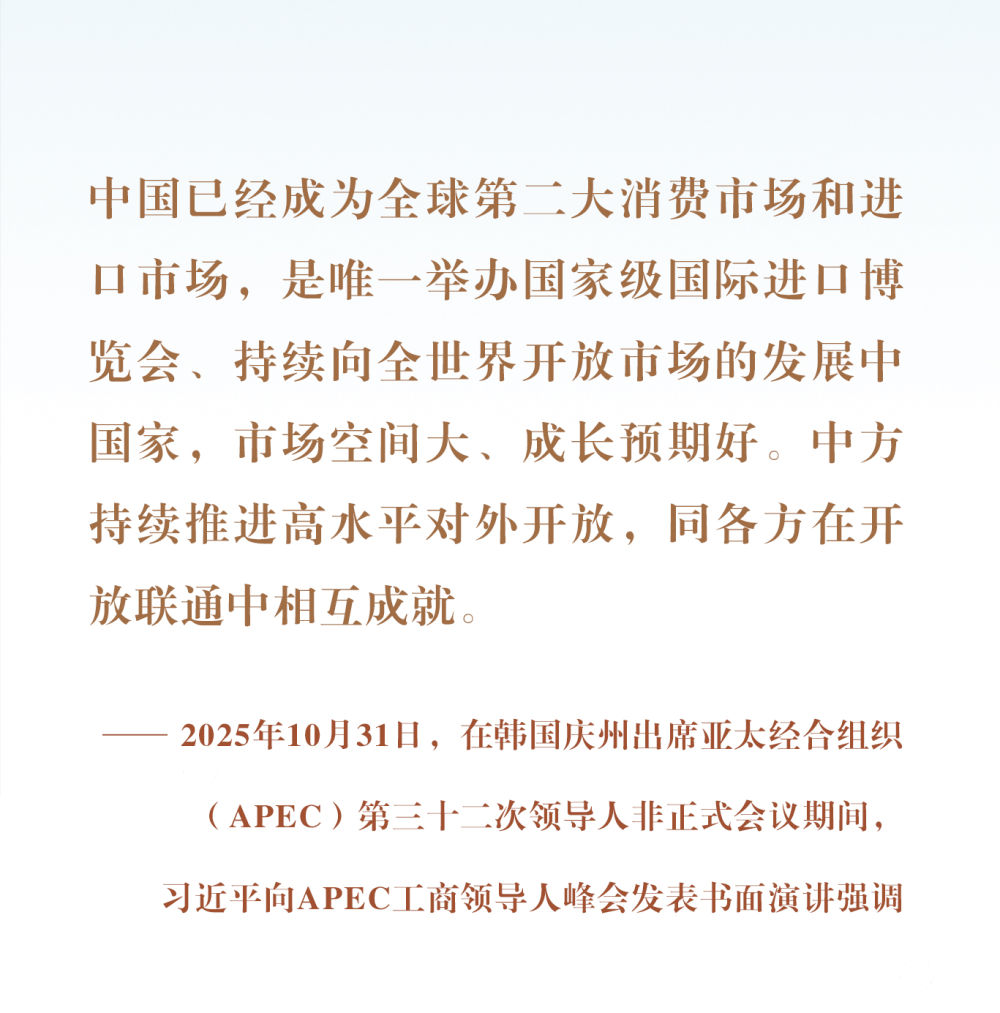
Core Points - The 8th China International Import Expo (CIIE) is being held in Shanghai from November 5 to 10, showcasing a record scale and serving as a platform for high-level opening and global cooperation [2][15] - China has become the world's second-largest consumer and import market, emphasizing its commitment to high-level opening and market expansion [3][8] - The CIIE aims to provide new opportunities for global cooperation and economic growth, enhancing China's role as a major market for international trade [4][38] Group 1: Event Overview - The CIIE features participation from 155 countries, regions, and international organizations, with over 4,108 foreign enterprises exhibiting across an exhibition area exceeding 430,000 square meters [15] - The event includes 290 Fortune 500 companies and industry leaders, with approximately 450,000 registered attendees [15] - The expo has seen a significant increase in participation from developing countries, with a 23.1% rise in exhibitors from Belt and Road Initiative countries [42] Group 2: Economic Impact - The CIIE serves as a platform for international procurement, investment promotion, cultural exchange, and open cooperation, injecting confidence and momentum into the global economy [13][38] - The event has facilitated the participation of 170 companies and 27 institutions as "full attendance" exhibitors over the past eight years, reflecting China's commitment to high-level opening [17] - The expo has also created opportunities for small and medium-sized enterprises (SMEs) to enter the Chinese market through initiatives like the "cross-border e-commerce selection platform" [44] Group 3: Innovation and Technology - The CIIE is recognized as a global launchpad for new products and technologies, with 461 new products, technologies, and services showcased, including advancements in low-altitude economy and artificial intelligence [29][31] - The event features a dedicated innovation incubation area aimed at helping global startups explore the Chinese market [33] - Notable technological exhibits include electric vertical takeoff and landing aircraft and humanoid robots, highlighting the diverse future of mobility and innovation [35][37] Group 4: Cultural Exchange - The CIIE not only serves as a trade platform but also as a venue for cultural and ideological exchange, exemplified by events like the dual-city exhibition between Chongqing and Düsseldorf [23] - The expo has expanded its focus on sustainable development, particularly for global southern countries, promoting inclusive growth and resilience [40][42] - The event has also provided a space for showcasing cultural products, such as Ethiopian coffee, enhancing cultural ties between participating nations [42]
“十五五”经济社会发展主要目标解读丨稳步提升全要素生产率
Jing Ji Ri Bao· 2025-11-11 01:55
Group 1 - The core objective of the 15th Five-Year Plan is to steadily improve total factor productivity (TFP) as a key goal for economic and social development [1][2] - TFP reflects the efficiency of all inputs in producing output and is a measure of economic development quality, technological innovation capability, and the integration of technology and economy [1][4] - The Chinese government emphasizes the importance of TFP in achieving high-quality development and modernizing the economic system [2][3] Group 2 - The continuous and stable growth of the economy relies on the steady improvement of TFP, especially in the context of complex internal and external environments [3][4] - To achieve the goal of modernizing socialism by 2035, TFP growth needs to reach an average annual rate of around 2% [3] - Key drivers for TFP growth include technological advancements and improved resource allocation efficiency, which are essential for fostering new productive forces [3][6] Group 3 - Enhancing TFP is crucial for promoting sustainable economic growth without significantly increasing capital and labor inputs [4][6] - China has favorable conditions for improving TFP, including a large-scale manufacturing sector and significant opportunities for technological and model innovation [6][7] - The integration of digitalization and green development can create new growth points for TFP and release structural dividends [6][7] Group 4 - Innovation is essential for improving TFP, which includes both technological innovation and the innovative allocation of production factors [7] - Comprehensive reforms are necessary to eliminate barriers to the development of new productive forces and facilitate the efficient flow of quality resources [7]