
能源转型

Search documents
【能源广角】能源转型迎来“光热时刻”
Sou Hu Cai Jing· 2025-12-31 22:37
Core Viewpoint - The Chinese government aims to promote the large-scale development of solar thermal power, targeting a total installed capacity of approximately 15 million kilowatts by 2030, with electricity costs comparable to coal power [2][3]. Group 1: Importance of Solar Thermal Power - Solar thermal power acts as a stabilizer and regulator for the power grid, providing continuous and stable electricity even during nighttime or cloudy days, which is crucial as wind and solar power generation increases [3]. - It serves as a new engine for industrial chain upgrades, involving high-end manufacturing sectors such as precision machinery and high-temperature materials, thereby enhancing China's competitiveness in the global renewable energy industry [3]. - China has successfully mastered mainstream solar thermal technologies, with the cost of power generation dropping from approximately 0.6 yuan per kilowatt-hour to a competitive level, establishing a foundation for large-scale development [3][4]. Group 2: Addressing Challenges - The initial investment for solar thermal power is high, and the market competitiveness is weak; policies aim to reduce costs through large-scale deployment and the establishment of supportive energy stations, potentially increasing installed capacity by nearly 3 million kilowatts annually [4]. - The reliance on imported core technologies and materials contributes to high project costs; policies encourage domestic production and performance optimization of key equipment to enhance efficiency and longevity [5]. - The integration of solar thermal power into the electricity system requires finding optimal positions within multi-energy complementary bases, addressing concerns from grid companies regarding scheduling and pricing [5]. Group 3: Future Trends - By 2030, solar thermal power is expected to integrate with other energy sources, such as photovoltaic and wind power, enhancing overall system value [6]. - The industry will shift towards diverse and refined technological routes, focusing on operational efficiency and cost reduction rather than merely increasing installed capacity [6]. - Solar thermal power companies will evolve from merely providing electricity to offering comprehensive energy services, including peak regulation and backup power, becoming essential components of the new energy system [6].

2026年格隆汇“全球视野”十大核心资产名单重磅揭晓!
Xin Lang Cai Jing· 2025-12-31 16:59
格隆汇1月1日|2026年格隆汇"全球视野"十大核心资产重磅揭晓,谷歌等入选。该名单由格隆汇分布在 全球70多个国家的数千万会员票选得出(如下图)。这十大核心资产精准覆盖AI算力、半导体、能源转 型、全球贸易等关键领域,深度契合人类文明进化趋势。为应对更为复杂的宏观环境,更灵活、更精准 的捕捉市场机会,十大核心资产将进行"季度调整"。 ...

数据与智能共舞:中国能源变革的全球探索之路
Sou Hu Cai Jing· 2025-12-31 16:10
当台风"竹节草"裹挟狂风暴雨侵袭浙江沿海时,国网嘉兴供电公司的调控员在人工智能虚拟总指揮长"启航"的协 助下,30分钟内便完成了以往需数小时的故障信息梳理与处置方案制定;在内蒙古的茫茫草原上,AI算法提前24 小时精准预测出风电场的发电量波动,让电网调度提前做好应对准备;深海油气平台上,智能监测系统通过数据 分析实时排查设备隐患,将传统巡检的风险系数大幅降低……这些场景并非科幻电影的片段,而是中国能源行业 借助大数据与人工智能技术实现转型升级的真实写照。 在全球能源转型加速推进的今天,传统能源秩序正被悄然重构。从"资源主导"到"数据驱动",从"人力运维"到"智 能调控",能源行业的变革逻辑正在发生根本性转变。中国作为全球能源生产与消费大国,凭借庞大的能源基础设 施、丰富的应用场景和持续的技术创新,在能源大数据与人工智能融合应用领域走出了一条独具特色的发展道 路,不仅为自身能源高质量发展注入强劲动力,也为全球能源转型提供了新的思路与借鉴。 一、时代必然:能源转型与智能技术的双向奔赴 进入21世纪以来,全球能源格局面临着双重挑战:一方面,传统化石能源的过度依赖导致环境问题日益突出,碳 中和成为各国共同的发展目标; ...

2026年天然气价格如何展望
2025-12-31 16:02
Summary of Key Points from Conference Call Industry Overview - The conference call primarily discusses the global LNG (Liquefied Natural Gas) market and its dynamics, particularly focusing on the years 2025 and 2026, with specific emphasis on the performance of the Chinese market and the impact of geopolitical factors on energy supply and demand. Core Insights and Arguments Global LNG Market Trends - In 2025, the global LNG market exhibited a strong performance in Europe, with imports increasing by 26% to 119 million tons, primarily sourced from the United States. In contrast, demand from China and other Asian countries remained weak, with China's apparent gas consumption growing only 1.5% to approximately 436 billion cubic meters [1][4]. - The overall LNG supply growth in 2025 was driven by the United States, which saw its LNG exports surpass 100 million tons for the first time, marking a year-on-year increase of over 30%. This was largely due to the commissioning of major projects like VG's Black Liquor Gas [1][10]. - The global LNG long-term contract signing volume significantly increased in 2025, rising by 27% to over 80 million tons, indicating a positive outlook for future gas demand and heightened focus on energy security [1][11]. Price Projections - For 2026, the global natural gas market is expected to enter a period of oversupply, leading to a downward trend in prices. New LNG production capacity is projected to exceed 51 million tons, with half of this increase coming from the United States. The average price for Northeast Asia's JKM (Japan Korea Marker) is anticipated to range between $9.5 and $11.5 per million British thermal units (MMBTU) [1][15]. China's Natural Gas Market - China's natural gas consumption is projected to grow by 3.5% in 2026, reaching 448 billion cubic meters, with significant contributions from urban heating and power generation sectors. The increase in LNG heavy-duty truck ownership is also expected to drive consumption growth [3][17]. - The Chinese LNG import volume is forecasted to decline by 13% in 2025 to 67 million tons, primarily due to trade frictions and industrial policy impacts, alongside a 15% tariff on U.S. LNG imports [1][9]. Geopolitical Influences - The geopolitical landscape, particularly the ongoing tensions in the Middle East, has influenced gas prices, with significant price spikes observed during conflicts, such as the military clashes between Israel and Iran [2][6]. - Europe has shifted from reliance on Russian pipeline gas to importing LNG, with the U.S. becoming the largest supplier, accounting for 60% of European LNG imports [6][7]. Additional Important Insights - The introduction of natural gas futures in China is anticipated to enhance market pricing transparency and flexibility, providing companies with more hedging tools and promoting a healthier energy market [3][31]. - The LNG heavy-duty trucks are gaining traction due to lower fuel costs compared to diesel, with the cost of LNG around 4 to 4.5 yuan per kilogram, significantly cheaper than diesel [19]. - The domestic natural gas pricing mechanism in China is complex, with regulated prices for residential use and market-based pricing for industrial use, leading to significant regional price disparities [25]. Conclusion - The global LNG market is poised for significant changes in the coming years, driven by increased production capacity, geopolitical factors, and evolving demand dynamics, particularly in China and Europe. The anticipated price declines and shifts in supply sources will require stakeholders to adapt to a rapidly changing energy landscape.
政策密集落地将驱动需求释放,中国联塑(02128.HK)业绩弹性与估值修复可期
Ge Long Hui· 2025-12-31 14:52
Core Viewpoint - The 2026 Central Economic Work Conference emphasizes "domestic demand as the main driver" and outlines key tasks that align with the construction materials industry, particularly benefiting the plastic pipe sector, with China Liansu positioned to capture policy dividends [1][3]. Group 1: Policy Implications - The conference highlights "stabilizing investment" as a core strategy to expand domestic demand, with specific measures including increasing central budget investments and promoting urban renewal projects, which will drive demand in the plastic pipe industry [3]. - Urban renewal is identified as a key area for investment, focusing on the renovation of old pipelines and infrastructure, which is expected to create significant demand for plastic pipes [3][4]. - The "14th Five-Year Plan" aims to renovate over 70,000 kilometers of underground pipelines, with an investment requirement exceeding 5 trillion yuan, indicating a long-term demand for plastic pipes [3]. Group 2: Market Opportunities - The construction of urban commercial complexes and public service facilities will generate additional demand for plumbing and fire protection systems, which China Liansu can address through customized solutions [4]. - The rural revitalization strategy is expected to spur demand for irrigation and agricultural infrastructure, further expanding the market for plastic pipes in rural areas [5]. - New infrastructure projects, including 5G base stations and energy transition initiatives, will create new application scenarios for plastic pipes, with China Liansu already positioned to benefit from these developments [6]. Group 3: Competitive Advantages - China Liansu has established a diverse industrial ecosystem covering pipes, building materials, environmental protection, and modern agriculture, with plastic pipes as a core business [8]. - The company operates over 30 production bases across 19 provinces and international markets, supported by a distribution network of over 3,000 independent distributors, enabling rapid market response [8]. - Automation and intelligent production upgrades, along with optimized logistics, have allowed the company to reduce costs significantly, enhancing its competitive edge [8]. Group 4: Market Outlook - The favorable policy environment is expected to improve domestic investment demand, with the plastic pipe and building materials sectors poised to benefit from policy dividends and exhibit high earnings elasticity [9]. - The ongoing recovery in the plastic pipe industry and improvements in China Liansu's performance are driving investor optimism, reflected in the company's rising stock price since 2025 [10]. - As policies are implemented and industry concentration increases, leading companies like China Liansu are expected to capture quality orders, enhancing their return on equity (ROE) and valuation levels [10].

上海电气与中广核集团深化能源产业合作
Sou Hu Cai Jing· 2025-12-31 11:43
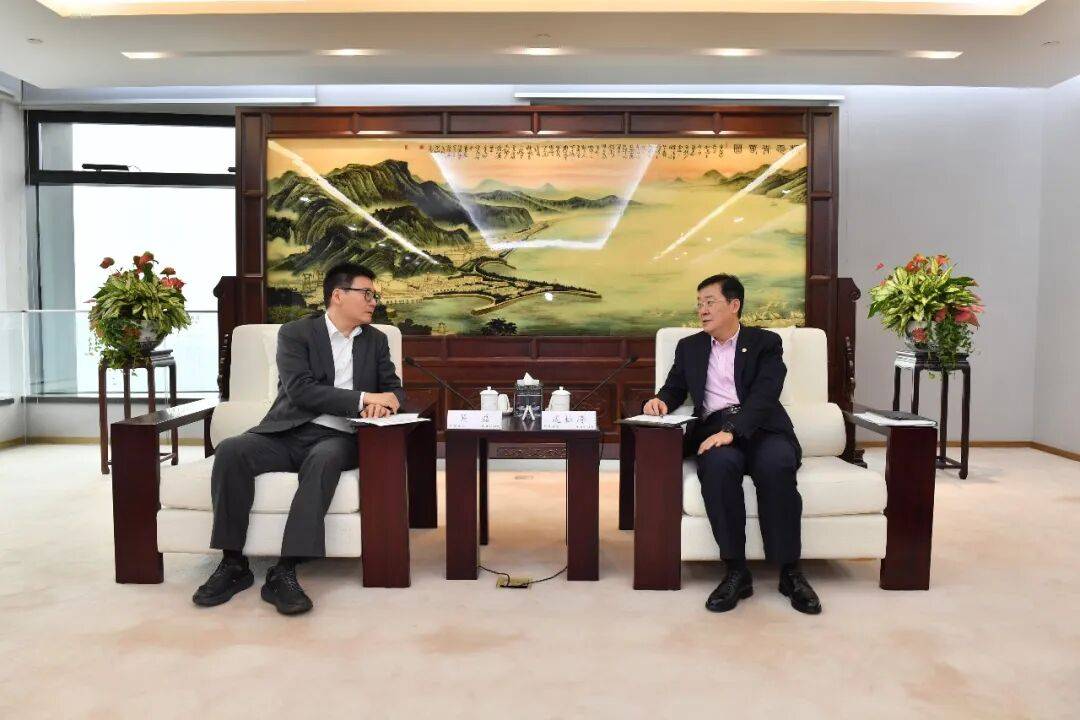
Group 1 - The meeting between Shanghai Electric Group and China General Nuclear Power Group focused on consolidating cooperation, expanding collaboration areas, and enhancing innovation synergy [1][3] - Both companies acknowledged their long-standing strategic partnership and emphasized the importance of their collaboration in advancing China's clean energy sector [3] - The discussion highlighted the need to deepen traditional cooperation in nuclear energy while exploring practical collaboration in solar thermal, wind power, and green hydrogen and ammonia [3] Group 2 - Shanghai Electric aims to support China General Nuclear Power Group in areas such as nuclear safety, technological innovation, and domestic substitution [3] - The companies plan to focus on core technology breakthroughs and deep industrial integration to contribute to the national "dual carbon" strategy and the green transformation of the energy structure [3] - Key executives from both companies participated in the meeting, indicating a strong commitment to ongoing collaboration [4]


全球共赢、共赴新程!——储能联盟2026新年寄语
中关村储能产业技术联盟· 2025-12-31 10:46
政策与标准引领 筑牢产业发展根基 202 5年,我们积极支持国家部委开展新型储能产业发展形势研判、电价机制研究、行业数据统计和国际市场分析等工作;并深度 参与国家"十五五"储能规划研究、储能政策的编制,牵头开展储能容量补偿机制等重点课题,为产业健康发展和政策精准落地提 供了关键支撑;组织制定储能安全、钠离子电池、碳足迹等关键领域团体标准,累计发布3 0项联盟标准,牵头修订北京市地方标 准,积极参与NFPA、UL等储能标准工作,为产业未来发展提供政策与标准支撑;联合2 5家行业龙头企业发布自律实践指南,确 立安全优先、风险可控等核心原则,规范行业竞争秩序。 研究与数据洞察 驱动行业科学决策 202 5年,我们聚焦行业痛点与市场发展机遇,攻坚规模储能价值评估与安全预警关键技术评价等国家重点研发计划、开展多元化 场景潜力分析等十余项专项课题研究,持续推动行业瓶颈突破和价值挖掘;立足行业组织职能,开展覆盖全国20个省份、30余座 城市的全景式产业调研,为行业主管单位把脉产业链全貌,企业科学制定战略布局与发展决策提供可靠依据;定期发布储能产业 研究白皮书及与核心行业数据,其成果已成为行业供需精准匹配与政策制定的重要参考 ...

银河期货碳酸锂年报
Yin He Qi Huo· 2025-12-31 07:42
| 第一部分 | 前言概要 | 2 | | --- | --- | --- | | 【行情回顾】 | | 2 | | 【市场展望】 | | 2 | | 第二部分 | 市场回顾 | 3 | | 第三部分 | 动力增速放缓,储能不负众望 | 3 | | 一、新能源汽车市场增速放缓 | | 4 | | 二、储能经济性带动爆发式增长 | | 7 | | 三、企业思路切换至"保供"模式,可能收紧流通货源 | | 9 | | 第四部分 | 供应弹性仍需时间释放 | 11 | | 一、矿山新投产、爬产和复产增加供应弹性 | | 11 | | 二、冶炼产能仍有扩张,自有矿比例提高 | | 12 | | 第五部分 | 后市展望及策略推荐 | 14 | | 免责声明 | | 15 | 有色板块研发报告 碳酸锂年报 2025 年 12 月 31 日 锂价中枢上移,或有阶段错配 第一部分 前言概要 【行情回顾】 2025 年锂价走势可以年中为界,分为清晰的两半。上半年延续过剩的 一致预期,价格跌至锂辉石的现金成本附近,据称已有海外矿山计划减产, 但还未及做出减产决策,下半年行情就已经启动。三季度动储双轮驱动,叠 加新矿产资源法对采矿 ...
港股25年收官:铜、黄金等有色板块大涨,大金融、半导体、创新药集体活跃
Ge Long Hui· 2025-12-31 07:05
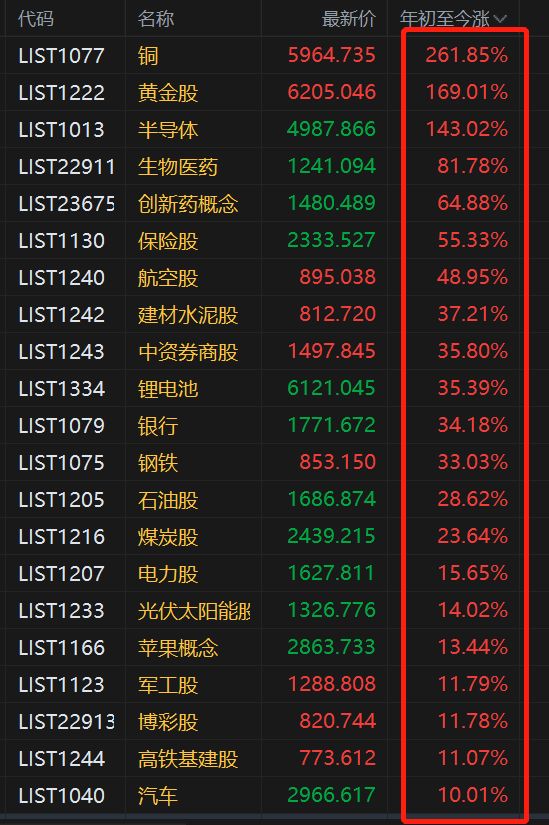
Core Viewpoint - The Hong Kong stock market in 2025 has shown significant performance across various sectors, with the copper sector leading the gains, followed by gold and semiconductors, indicating a strong market response to global re-inflation and geopolitical factors [1] Group 1: Market Performance - The copper sector has seen a remarkable increase of 261.85% year-to-date [2] - Gold stocks have also performed well, with a year-to-date increase of 169.01% [2] - The semiconductor sector has experienced a growth of 143.02% [2] - Other strong performers include biopharmaceuticals (81.78%), innovative drug concepts (64.88%), and insurance stocks (55.33%) [2] Group 2: Market Themes - The strongest theme identified is Resources and Inflation, which includes copper, gold, oil, coal, and steel, reflecting a re-evaluation of the long-term value of resources amid global re-inflation and energy transition [1] - The core theme is Technology and Innovation, represented by semiconductors, innovative concepts, biopharmaceuticals, and lithium batteries, indicating a focus on national industrial upgrades and self-sufficiency [1] - The defensive theme is Financials and Heavy Assets, including insurance, banking, electricity, and infrastructure, which provide stable earnings and high dividend yields amid uncertainty [1]
全球充电桩缺口达1550万个,企查查:国内充电桩相关企业近70万家
Qi Cha Cha· 2025-12-31 07:05
Core Insights - The global demand for charging stations is projected to reach 15.5 million by 2030, with a need for 5.5 million public fast chargers and 10 million public slow chargers, creating a significant market opportunity [1] - The number of domestic charging station-related enterprises in China has reached 681,300, with a continuous growth trend in registrations over the past decade [2] - The majority of charging station-related enterprises are lightweight, with over half having registered capital of less than 2 million yuan, and 33.59% having capital under 1 million yuan [3] - Charging station-related enterprises are primarily concentrated in East China, accounting for 32.77% of the total, followed by South China and Central China at 17.41% and 14.80%, respectively [4] Group 1 - The global energy transition is driving a substantial demand for charging infrastructure, with a projected gap of 15.5 million charging stations by 2030 [1] - The export of new energy vehicles from China is expected to exceed 2.5 million units in 2023, indicating a growing international market for charging solutions [1] Group 2 - The registration of charging station-related enterprises in China has shown a significant increase, with 153,700 new registrations expected in 2024, marking an 11.47% year-on-year growth [2] - In 2021, the registration of such enterprises peaked at 69,400, reflecting a 72.30% increase compared to the previous year [2] Group 3 - The distribution of charging station-related enterprises indicates a concentration in East China, with 32.77% of the total, highlighting regional market dynamics [4] - South China and Central China follow, with 17.41% and 14.80% of enterprises, respectively, suggesting potential regional investment opportunities [4]