科技金融

Search documents
滴灌“专精特新” 善本金融护航
Bei Jing Wan Bao· 2025-12-11 07:20
Core Insights - The article highlights how Zhejiang Merchants Bank's Beijing branch has transformed technology finance into an "ecological project" over five years, integrating a "good" gene into the entire lifecycle of innovative enterprises to provide precise financial support for small and beautiful tech companies [1] Group 1: Financial Solutions for Tech Enterprises - Zhejiang Merchants Bank's Beijing branch has developed a "10+N" financial advisor service system, which includes 10 types of "park loans" covering various financial needs from entry to transformation, along with additional customized services for precise empowerment [2] - The bank has introduced 30 types of financial products tailored to 15 major scenarios, including initial startup, R&D, and IPO, creating a comprehensive "toolbox" for tech enterprises [3] Group 2: Collaborative Ecosystem - The bank's "good financial" philosophy emphasizes a customer-centric approach, building a multi-party collaborative ecosystem involving government, banks, guarantee companies, and investment entities to support tech enterprises [4] - The bank has established a "risk-sharing pool" with local guarantee companies, providing up to 80% risk compensation for early-stage tech companies [5] Group 3: Digital Transformation - By 2025, the bank plans to launch the "Tech Innovation e-Station" digital platform, integrating 12 functions to streamline the loan process, significantly reducing processing time by 60% [6] - The bank aims to enhance service efficiency through a digital inclusive product system, allowing enterprises to complete the entire loan process online with minimal physical interaction [6]

加速、扩面 稳步推动产业升级
Bei Jing Wan Bao· 2025-12-11 06:55
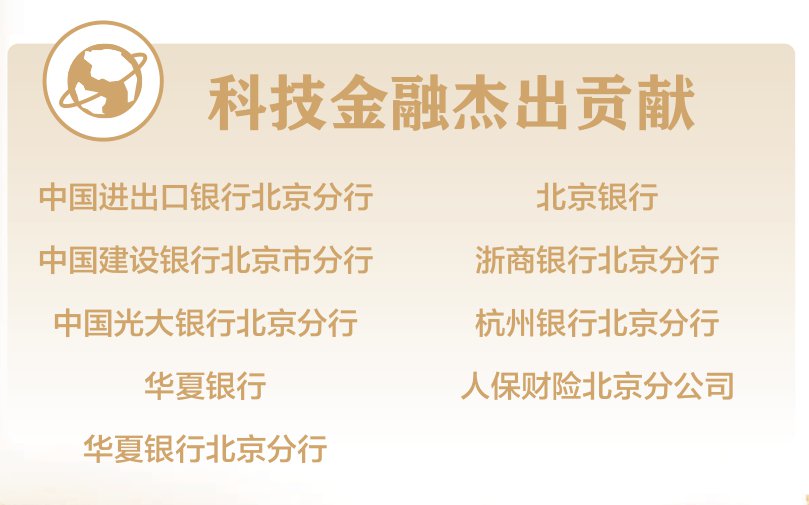
登录新浪财经APP 搜索【信披】查看更多考评等级 全市场科技创新债券累计发行规模约1.5万亿元,资金正加快流向科技创新实体领域;科技部配合中国人民银行设立8000亿 元科技创新和技术改造再贷款,联动实施"创新积分制"和科技创新专项担保计划,向26家银行精准推荐超12万家科技型中小 企业……2025年,科技金融在政策引领与技术革新的双轮驱动下迈入高质量发展的深水区,"科技—产业—金融"的良性循环 加速成型。 针对科技型企业门类多、专业性强的特征,华夏银行持续强化多层次、体系化的科技企业专业研究能力。在总行层面,多部 门协同进行行业趋势研判;联动理财子公司等机构的专业力量,用其更贴近资本市场的分析能力提供专业补充;积极借助外 部智库研究资源,构建全面、立体的科创行业分析框架。同时,该行加大信贷资源投入,给予科技型贷款转移定价优惠,叠 加央行再贷款工具优惠,多标签科技企业优惠力度进一步加大。 将科技金融作为"第一战略"、专精特新作为"一号工程",北京银行通过构建"1+18+N"科技金融专营体系、推出"e投贷"等创 新产品、联动近3000家政府投资基金及VC/PE机构,形成"债权+股权""股债联动"的立体化服务模式, ...

以党的二十届四中全会精神为指引 奋力为中国式现代化贡献中金力量
Jin Rong Shi Bao· 2025-12-11 03:47
Core Viewpoint - The 20th Central Committee's Fourth Plenary Session outlines a grand blueprint for the "15th Five-Year Plan" period, emphasizing the importance of financial work in supporting China's modernization and national rejuvenation efforts [1] Group 1: High-Level Opening and International Cooperation - The company recognizes the need for a capital bridge to facilitate the new domestic and international economic collaboration, positioning itself as a leader in this dual circulation [2] - The company has completed over 3 trillion yuan in overseas equity financing and over 4.2 trillion yuan in offshore bond financing, serving approximately 5,500 overseas institutional clients [2] - The company has introduced nearly 160 billion yuan in foreign capital this year, enhancing international cooperation and promoting efficient cross-border capital flow [2] Group 2: Capital Market Development - The company has actively promoted high-level capital market openness, assisting in the establishment of international consensus and facilitating cross-listings [3] - It has launched a 1 billion yuan investment fund for economic and trade development between China and Portugal, and participated in high-profile economic and financial forums in Japan and Singapore [3] - The company has supported the issuance of the first RMB bond in Central Asia and has been a leader in issuing RMB government bonds in Macau [3] Group 3: Financial Services for the Real Economy - The company is committed to enhancing financial services for the real economy, focusing on five key areas: technology finance, green finance, inclusive finance, pension finance, and digital finance [4][5][6] - It has supported technology innovation projects exceeding 1 trillion yuan and established multiple thematic funds totaling over 36 billion yuan [4] - The company has managed over 180 billion yuan in pension assets and has been recognized for its leadership in social security services [5] Group 4: Strategic Development and Future Goals - The company aims to align its strategy with the national "15th Five-Year Plan," enhancing its role as a leading international investment bank [7][8] - It will focus on serving the real economy, supporting technological innovation, and promoting green transformation [8] - The company plans to strengthen its global presence and act as a bridge for Chinese enterprises going abroad, enhancing its competitiveness in the international financial landscape [8][9] Group 5: Risk Management and Innovation - The company emphasizes the importance of risk management as a lifeline, developing a comprehensive risk management system to ensure stability in the financial market [9] - It aims to foster innovation and improve corporate governance, enhancing internal vitality through optimized incentives and talent development [9]

一线观察|拥挤的科技金融战场,从“价格战”到“价值战”还有多远?
Zheng Quan Shi Bao Wang· 2025-12-11 03:20
Core Viewpoint - The technology finance sector in China is experiencing intense price competition, transforming from a "blue ocean" to a "red ocean," with some areas even becoming a "dead sea" [1] Group 1: Industry Overview - As of the end of Q3 2025, 275,400 technology-based SMEs received loan support, with a loan approval rate of 50.3%, an increase of 2.8 percentage points year-on-year [1] - The loan balance for technology SMEs reached 3.56 trillion yuan, a year-on-year growth of 22.3%, outpacing the growth of all loans by 15.8 percentage points [1] Group 2: Competitive Strategies - Five industry experts suggested various strategies to counteract the price war, including developing syndicate loans, offering non-financial services, and creating a comprehensive service system from a "commercial bank + investment bank + ecosystem" perspective [2] - The consensus among the experts is to focus on "rolling value" rather than "rolling price" [2] Group 3: Case Study - Luch New Materials - Luch New Materials has become a leader in the rubber conveyor belt industry, producing the world's largest and longest tubular belts and holding 100 patents [3][4] - The company collaborates with Ping An Bank, which offers competitive advantages in terms of precision and speed in financing [3][4] Group 4: Financial Support Mechanisms - Ping An Bank provided a comprehensive credit line of 300 million yuan to Luch New Materials, simplifying the approval process under its specialized credit policy for high-tech enterprises [4] - In June 2024, the bank approved a project loan of 175 million yuan to support Luch New Materials' expansion, expected to save approximately 3 million yuan in annual financial costs [4] Group 5: Banking Practices - The case of Luch New Materials illustrates key banking practices, including the need for specialized incentive policies, competitive pricing to lower financing costs, and expedited approval processes tailored to technology enterprises [5][6] - The bank's approach emphasizes the importance of aligning internal resources and enhancing the enthusiasm of frontline staff in serving technology firms [5][6] Group 6: Future Outlook - The expectation is for banks to shift from "rolling price" to "rolling value" in technology finance by 2026, focusing on enhancing service quality and efficiency [7]

一线观察|拥挤的科技金融战场,从“价格战”到“价值战”还有多远?
券商中国· 2025-12-11 03:01
Core Viewpoint - The article discusses the shift in the technology finance sector from a "blue ocean" to a "red ocean," highlighting the intensifying price wars and the need for banks to focus on "value" rather than "price" in their services [1][2]. Group 1: Industry Overview - As of Q3 2025, 275,400 technology SMEs received loan support, with a loan approval rate of 50.3%, an increase of 2.8 percentage points year-on-year. The loan balance for these SMEs reached 3.56 trillion yuan, growing by 22.3%, which is 15.8 percentage points higher than the overall loan growth rate [1]. - The technology finance sector is experiencing significant competition, with banks struggling to maintain profitability amidst price wars [1]. Group 2: Case Study of Luch New Materials - Luch New Materials, a leader in the rubber conveyor belt industry, has developed the world's largest and longest tubular conveyor belt and holds 100 patents, showcasing its innovation and market leadership [2]. - The company has a strong international presence, with over 60% of its sales coming from overseas markets, which creates liquidity pressures due to long production and payment cycles [3]. Group 3: Banking Support and Strategies - Ping An Bank has actively supported Luch New Materials by providing a comprehensive credit line of 30 million yuan and a project loan of 175 million yuan, which helps the company reduce financial costs by approximately 3 million yuan annually [3][4]. - The bank's approach includes creating specialized incentive policies, optimizing assessment indicators, and implementing a fast-track approval process for technology enterprises, which enhances service efficiency and competitiveness [4][5][6]. Group 4: Future Outlook - The article anticipates a shift in the banking sector towards focusing on "value" in technology finance by 2026, emphasizing the need for improved risk management, diverse product offerings, and a supportive ecosystem for non-bank institutions [6][7].

从“深度合作”到“联合授信” 江浙皖探路科技金融新解法
Xin Hua Cai Jing· 2025-12-11 02:34
Group 1 - The core viewpoint emphasizes that technology finance is a key engine for activating innovation and promoting industrial upgrades, with local initiatives addressing issues like short-term cooperation and risk-reward mismatches between banks and enterprises [1] Group 2 - In Anhui, the "Common Growth Plan" was introduced to address the mismatch of credit risk and returns, allowing companies like Anhui Zhongke Haoyin Intelligent Technology Co., Ltd. to secure 8 million yuan in credit loans without collateral, effectively solving their financing difficulties [2][3] - The "Common Growth Plan" has served over 1,500 technology enterprises, with a loan balance exceeding 210 billion yuan, and has led to significant increases in transaction volumes for participating companies [3] Group 3 - In Zhejiang, the "Zheke Joint Loan" initiative was launched to provide financial support through collaboration among multiple banks, addressing the diverse financing needs of companies like Yunshen Technology Co., Ltd. [4][5] - Since its launch, 27 banks in Zhejiang have participated in the "Zheke Joint Loan," providing loans totaling 10.87 billion yuan to 197 enterprises [5] Group 4 - In Jiangsu, the establishment of a local credit platform has helped address financing challenges for small and medium-sized technology enterprises, with over 16 billion pieces of operational data collected to support targeted marketing for financial institutions [6][7] - The "Science and Technology Index Loan" has assisted nearly 6,000 enterprises in obtaining credit worth 265.8 billion yuan, showcasing the effectiveness of the local credit platform model [7] Group 5 - As of the third quarter, Jiangsu has 89,000 technology-based SMEs and 57,000 high-tech enterprises, with a total loan balance of 2.65 trillion yuan for technology enterprises, reflecting a growth of 1,304 enterprises compared to the previous year [8]
精准对接科创企业融资需求
Jin Rong Shi Bao· 2025-12-11 02:34
Group 1 - The core viewpoint emphasizes the importance of technological self-reliance and innovation as a key driver for national development, as outlined in the "14th Five-Year Plan" [1] - China CITIC Financial Assets is committed to supporting key links in the industrial and supply chains, focusing on leading enterprises through comprehensive financial methods such as "equity + debt" and "restructuring + relief" [1] - The company aims to align financial services with the real economy, particularly in the technology sector, demonstrating its responsibility in supporting national strategies [1] Group 2 - Hoshine Silicon Industry, a leader in silicon-based new materials, has maintained its top global position in industrial silicon and organic silicon production capacity through an integrated "coal-electricity-silicon" industrial chain [2] - China CITIC Financial Assets has formed a specialized team to support Hoshine by providing capital and implementing a comprehensive relief plan, helping the company reduce leverage and strengthen its core competitiveness [2] - Tongwei Group, the world's largest polysilicon producer, is also receiving support through market-oriented debt-to-equity swaps to help it navigate industry challenges [2] Group 3 - China CITIC Financial Assets utilizes a range of financial tools, including asset restructuring, debt restructuring, and management restructuring, to address the unique challenges faced by different enterprises [3] - The company provides not only financial support but also management and governance enhancements to help enterprises rebuild value and maintain competitiveness [3] Group 4 - Two projects have been initiated to address the core issues of financing difficulties and high debt levels, focusing on reducing leverage, improving governance, and strengthening core businesses [4] - As financial pressures ease, both Hoshine and Tongwei are able to invest more resources into technology research and process upgrades, leading to significant production and efficiency improvements [4] - Hoshine has achieved a daily production increase and reduced energy consumption, while Tongwei has made technological breakthroughs in advanced fields, enhancing its competitiveness in the global silicon material market [4] Group 5 - China CITIC Financial Assets aims to identify the real needs of technology enterprises during industry cycles and provide sustainable financial solutions that align with policy directions [5] - The company supports the stable development of the silicon-based materials industry, enhancing the self-controllability of the supply chain and exploring viable paths for hard technology enterprises to achieve high-quality development [5] Group 6 - China CITIC Financial Assets is determined to contribute to the national goal of becoming a technology powerhouse, showcasing its commitment to high-level technological self-reliance and the growth of new productive forces [6]


完善服务体系 写好科技金融大文章
Jin Rong Shi Bao· 2025-12-11 02:34
Group 1 - Financial services play an irreplaceable role in supporting technological innovation and industrial transformation, with Xinda Capital focusing on private equity investment to support high-tech enterprises and contribute to the construction of a technology-driven nation [1] - As of September 30, Xinda Capital has served 14 technology companies across various cutting-edge fields, including semiconductors, artificial intelligence, biomedicine, and new materials, showcasing the breadth and depth of technology financial services [1] - Xinda Capital has been actively supporting the semiconductor industry, particularly in wafer manufacturing, by empowering key enterprises like SMIC to overcome advanced process bottlenecks and optimize mature process capacity since 2020 [1] Group 2 - In response to the intensifying global computing power competition, Xinda Capital is strategically investing in chip design to facilitate the transition of domestic chips from "catching up" to "keeping pace" [2] - Investments in companies like Haiguang Information and Shanghai Zhaoxin are aimed at enhancing the development and supply chain systems of core products such as server chips and AI chips, promoting large-scale applications in critical sectors like telecommunications and finance [2] - Xinda Capital is focusing on new materials, supporting breakthroughs in high-temperature alloys and rare earth functional materials to aid in the import substitution of strategic materials for aerospace and high-end equipment manufacturing [2] Group 3 - In the biotechnology sector, Xinda Capital emphasizes green development and technological breakthroughs, supporting companies like Zhongxin Co. to achieve a full industry chain advantage through eco-friendly packaging solutions [3] - The company is also investing in "hard technology" projects and potential enterprises in strategic fields such as semiconductors, intelligent digitalization, and new materials, continuously enhancing the industrial ecosystem [3] - The deep integration of finance and technology is seen as essential for building a modern industrial system and promoting high-quality development, with Xinda Capital committed to expanding its technology financial service system [3]

融入国家战略与地方需求:财通证券章启诚绘就券商金融服务新蓝图
2 1 Shi Ji Jing Ji Bao Dao· 2025-12-10 13:33
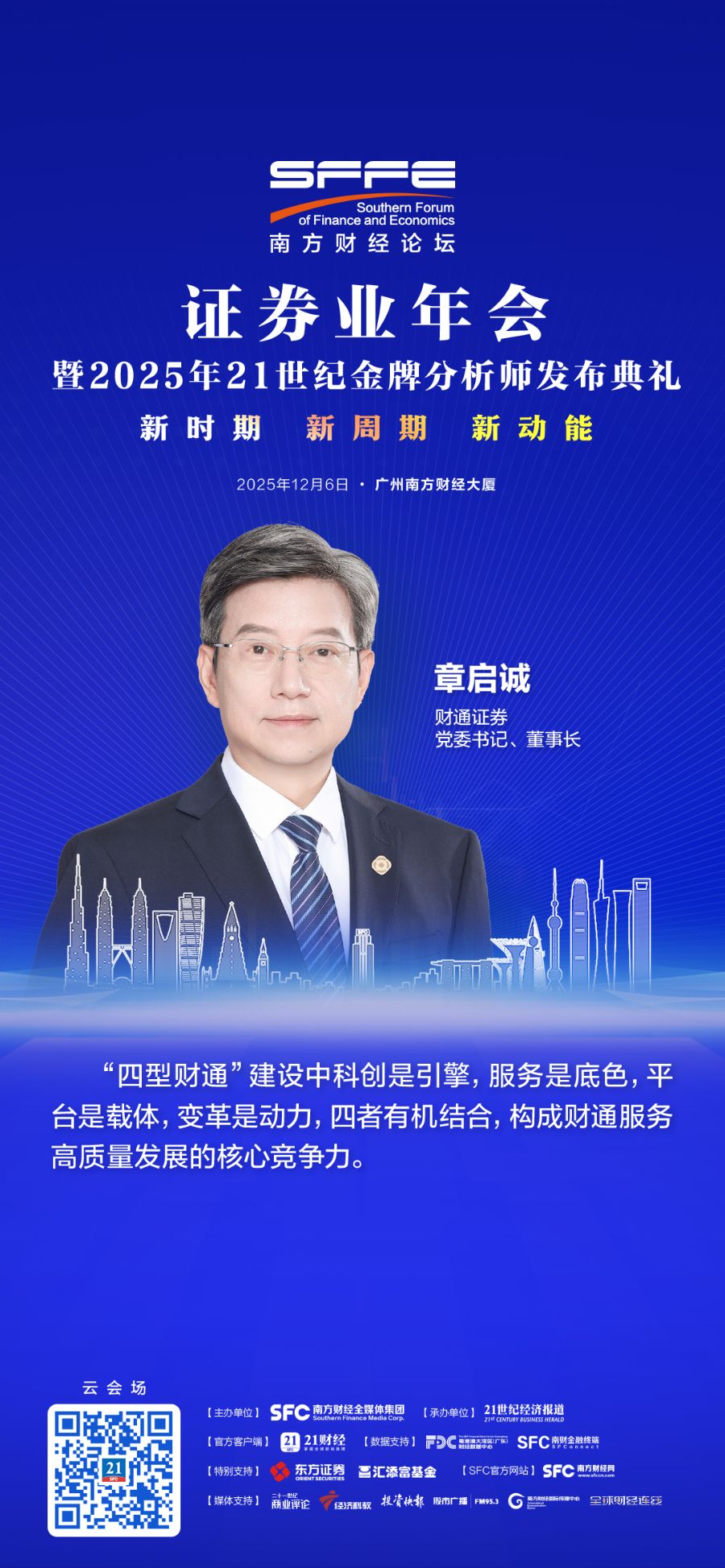
Core Viewpoint - The financial sector is tasked with addressing five major themes, while Zhejiang province focuses on three local financial initiatives, with the "four types of financial services" acting as a bridge between national mission and local responsibility [1] Group 1: Technology Finance - Technology finance is identified as a key driver for cultivating new productive forces, with the government emphasizing comprehensive support for innovation enterprises throughout their lifecycle [6] - Zhejiang is recognized as a hub for digital economy and technological innovation, necessitating precise financial support for numerous high-risk, long-cycle innovation enterprises [6] - The company is developing a "Technology Finance" model, integrating investment banking, investment, and research to provide lifecycle services, having managed over 100 billion yuan in industry funds and facilitated investments in 136 innovation enterprises [6] Group 2: Green Finance - Green finance is crucial for industrial transformation, with a focus on supporting small and medium-sized enterprises in their green transition [7] - The company is creating a "Service-Oriented Finance" model, delivering green financial services directly to enterprises, particularly targeting small and medium-sized businesses [7] - The company has issued 12 green bonds in the past three years, raising over 5.55 billion yuan for various sectors, including renewable energy and environmental protection [7] Group 3: Inclusive Finance - Inclusive finance embodies the commitment to making financial services accessible, addressing issues of financing difficulties and costs [8] - The company is establishing a "Platform Finance" model to connect government, industry, enterprises, and residents, enhancing financial service accessibility [8] - Since 2022, the company has provided 48.063 billion yuan in bond financing to underdeveloped areas, benefiting over 1 million people through financial education initiatives [8] Group 4: Pension Finance - With an aging population, pension finance is highlighted as a critical area, requiring a comprehensive service system to ensure the elderly share in development benefits [9] - The company is developing a "Transformative Finance" model, expanding its pension product offerings, with three pension products issued totaling approximately 250 million yuan [9] - The company is leveraging digital finance technologies to enhance service delivery, establishing an innovative system to support the implementation of the five major financial themes [9] Group 5: Overall Strategy - The integration of technology, service, platform, and transformation is essential for the company's competitive advantage in high-quality financial development [10] - The company aims to serve as a leader in technology finance, a pioneer in green finance, a facilitator in inclusive finance, a guardian in pension finance, and an innovator in digital finance, contributing to the construction of a financial powerhouse and the high-quality development of Zhejiang [10]

40000点,“喜芯厌酒”
Bei Jing Shang Bao· 2025-12-10 12:00
/有何不同/ 2025年10月29日,A股重返4000点,并围绕着4000点展开了一场激烈的拉锯战。暂别几日后,11月,A 股又先后两次突破4000点。 Wind数据显示,A股信息技术板块年内大涨50%,位居行业涨幅榜首位。截至11月20日,科创50指数年 内累计涨幅也超过30%,并于10月9日刷新逾四年来的新高。 经统计,1月2日—11月20日,科创50成分股中,芯原股份、拓荆科技、寒武纪等4股股价累计涨超 100%。其中,备受市场关注的寒武纪自8月以来股价与贵州茅台相互胶着,数次"问鼎"A股股王。 今年9月,证监会主席吴清表示,目前A股科技板块市值占比超过1/4,已明显高于银行、非银金融、房 地产行业市值合计占比。市值前50名公司中科技企业从"十三五"末的18家提升至当前的24家。 以科技板块中较为典型的电子行业为例,经同花顺iFinD统计,2020年末,资本市场共有299家申万一级 行业为"电子"的上市公司,总市值占比为7.45%,在各行业中位列第五。 而历经五年发展,截至今年11月20日,该行业上市公司数量已增至489家,总市值占比则增至11.76%, 跃居各申万一级行业之首。 如果再与2007年的" ...