
绿色低碳转型

Search documents
轻烃芳烃产业以“优”制胜
Zhong Guo Hua Gong Bao· 2025-11-18 02:30
Core Viewpoint - The light hydrocarbon and aromatic industry in China has achieved significant growth, but it faces challenges such as "increased revenue without increased profit" and intense international competition. The industry aims to transition from a focus on scale to a focus on quality during the 14th Five-Year Plan period [1][4]. Group 1: Industry Achievements - The light hydrocarbon and aromatic industry has maintained the world's largest production capacity, with ethylene and paraxylene capacities reaching 54.55 million tons/year and 42.77 million tons/year, accounting for 24.2% and 50.8% of global capacity, respectively [2]. - The self-sufficiency rates for ethylene and paraxylene have improved to 69.1% and 80.2%, respectively, enhancing the security of the supply chain [2]. - The industry has seen continuous optimization in layout, with major refining and chemical integration projects concentrating along coastal bases [2]. - Significant technological innovations have been achieved, including advancements in methanol-to-olefins technology and the domestic production of high-end electronic chemicals [2][3]. Group 2: Environmental and Economic Challenges - The industry has experienced a decline in profitability since 2021, with the "increased revenue without increased profit" issue becoming more pronounced [4]. - The market supply-demand relationship has become imbalanced, leading to severe competition among enterprises and a decline in profit margins [4]. - The industry faces multiple challenges, including uncertainties from global supply chain restructuring, resource constraints, and increasing pressure to meet carbon neutrality goals [4][5]. Group 3: Future Opportunities and Strategies - The rise of new economic sectors, such as the automotive industry and renewable energy, presents significant downstream opportunities for the industry [6]. - The chemical new materials sector is expected to grow at over 7% during the 14th Five-Year Plan, with some products projected to grow by 15% to 20% [6]. - The Ministry of Industry and Information Technology has initiated a program to promote innovation in key fine chemical products, which will support the industry's transition to high-end materials [6][7]. - The industry aims to enhance its competitiveness by focusing on high-end manufacturing and technological innovation, particularly in areas like high-performance materials and low-carbon technologies [8][9].
焕新·突破 商用车盛会共话产业升级之道
Zhong Guo Qi Che Bao Wang· 2025-11-17 08:55
Core Insights - The 2025 China Commercial Vehicle Industry Development and Technology Innovation Conference will be held from November 10 to 12 in Wuhan, focusing on high-quality development and global competitiveness in the commercial vehicle sector [2][3] Group 1: Industry Context - The commercial vehicle industry is crucial for the national economy and faces challenges in embracing new technologies and transforming under a new competitive landscape [3] - Wuhan is highlighted as a key automotive industry base, making significant strides in new energy commercial vehicle technology and intelligent connected vehicle testing [3] Group 2: Strategic Recommendations - Four key recommendations for the commercial vehicle industry include: leveraging green transformation as an engine for development, leading with standards to solidify the industry foundation, innovating commercially to activate new market dynamics, and enhancing global competitiveness through open cooperation [4] Group 3: Policy and Economic Analysis - The development of the commercial vehicle industry is closely linked to macroeconomic trends, industry policies, and regulatory frameworks [5] - Experts provided insights on the global economic landscape and its implications for China's commercial vehicle sector, emphasizing the need for the industry to adapt to changing market demands [5][6] Group 4: Corporate Initiatives - Leading commercial vehicle companies are actively pursuing technological innovation and strategic transformation to shift from scale expansion to quality and efficiency [8] - Companies like Dongfeng Motor Corporation and FAW Jiefang are focusing on new energy and intelligent connected vehicles, emphasizing the importance of technological upgrades and market differentiation [9][10] Group 5: Industry Collaboration - The establishment of the New Energy Heavy Truck Alliance aims to address challenges in the market's transition to new energy solutions, promoting economic and environmental benefits [10] - The conference featured multiple forums and discussions to address current challenges and stimulate innovation within the commercial vehicle industry [10]


“构建新型电力系统 推进绿色低碳转型”主题边会在COP30“中国角”举办
Xin Hua She· 2025-11-17 02:41
Core Viewpoint - The event "Building a New Power System and Promoting Green and Low-Carbon Transition" hosted by the State Grid Corporation of China at COP30 showcased China's efforts in addressing climate change and promoting green low-carbon living, providing a model for energy transition to other countries [1][2]. Group 1: Event Overview - The event marked the first time the State Grid Corporation hosted a "China Corner" side event at the UN Climate Change Conference [1]. - It aimed to demonstrate the measures and achievements of the State Grid Corporation in promoting energy transition and achieving carbon neutrality goals [1][2]. Group 2: Key Speakers and Contributions - Key speakers included Li Gao, Vice Minister of Ecology and Environment, and Liu Zhenmin, China's Special Envoy for Climate Change, who emphasized China's role in global climate governance and its commitment to low-carbon energy technologies [2]. - IRENA Director-General Camila highlighted China's establishment of the world's largest renewable energy system and its ongoing investments in energy infrastructure [2]. Group 3: Discussions and Initiatives - Discussions focused on clean energy policies, new power system construction, and carbon accounting systems [3]. - The "Global Time-of-Use Carbon Factor Brazil Initiative" was launched to promote accurate carbon accounting in electricity supply, enhancing the value of clean energy [3][4]. Group 4: Achievements and Reports - The event released several reports, including the "State Grid Corporation's Service for New Energy Development Report" and the "Carbon Business System Construction Case Collection" [5]. - The initiative aims to create a more precise and transparent carbon accounting system for electricity, facilitating low-carbon choices [4][5]. Group 5: Cultural and Collaborative Aspects - The event included cultural activities showcasing the State Grid's contributions to public welfare and environmental protection in Brazil [6]. - Participants praised China's adaptable transition path and international cooperation, highlighting its relevance for fossil resource-dependent countries [4][6].
推动上市公司成为创新生力军
Zheng Quan Ri Bao· 2025-11-16 23:18
Group 1 - The core viewpoint emphasizes the necessity for companies to embrace technological innovation and digital transformation to enhance operational efficiency, particularly in the context of rapid advancements in AI and other new technologies [1] - In the past five years, the number of listed companies in strategic emerging industries has increased by nearly 1,000, with their proportion rising from 42.6% to 52.3%, indicating a significant shift in the market structure [1] - As of mid-2023, listed companies' R&D investment reached 6.5 trillion yuan, accounting for 21.1% of their operating income, highlighting their role as a driving force for innovation and technology transformation [1] Group 2 - The dividend mechanism for listed companies has been continuously improved, with a projected total dividend payout of 2.4 trillion yuan in 2024 and cumulative dividends of 10.4 trillion yuan by the end of September 2023 [2] - Companies are encouraged to enhance R&D investment and foster deep integration between advanced manufacturing and modern services, promoting innovative fusion models [2] - The importance of good corporate governance is highlighted as a foundation for high-quality development, necessitating the establishment of modern corporate systems and improved decision-making efficiency [3]
全国政协委员尹艳林:推动上市公司成为创新生力军
Zheng Quan Ri Bao· 2025-11-16 17:15
Group 1 - The core viewpoint emphasizes the necessity for companies to embrace technological innovation and digital transformation to enhance operational efficiency, particularly in the context of rapid advancements in AI and other new technologies [1] - The number of listed companies in strategic emerging industries has increased by nearly 1,000 over the past five years, with their proportion rising from 42.6% to 52.3%, indicating a significant shift in the market structure [1] - As of mid-2023, listed companies' R&D investment reached 6.5 trillion yuan, accounting for 21.1% of their operating income, highlighting their role as a driving force for innovation and technology transfer [1] Group 2 - The dividend mechanism for listed companies has been continuously improved, with a projected total dividend payout of 2.4 trillion yuan in 2024 and cumulative dividends of 10.4 trillion yuan by the end of September 2023 [2] - Companies are encouraged to enhance R&D investment and foster deep integration of production and service sectors, promoting innovative fusion models such as "service + manufacturing" and "product + service" [2] - Emphasis is placed on the importance of good corporate governance as a foundation for high-quality development, advocating for improved governance structures and enhanced transparency to protect investor interests [3]
国家统计局答每经问:10月份全国城镇调查失业率为5.1%
Mei Ri Jing Ji Xin Wen· 2025-11-16 13:03
Economic Overview - The urban surveyed unemployment rate in October was 5.1%, a decrease of 0.1 percentage points from the previous month, marking two consecutive months of decline [1] - The unemployment rate for migrant agricultural workers was 4.5%, down 0.2 percentage points from the previous month, significantly lower than the overall urban rate [1] Production and Supply - Agricultural production remains strong, with an increase in autumn grain area and yield, indicating a promising harvest for the year [2] - The industrial added value for large-scale enterprises grew by 4.9% year-on-year in October, with the equipment manufacturing sector seeing an 8% increase, outpacing overall industrial growth [2] - The service sector's production index rose by 4.6% year-on-year, although the growth rate slowed due to a high base effect from the previous year [2] Market Sales - Social retail sales increased by 2.9% year-on-year in October, driven by consumption promotion initiatives and holiday economic activities [3] - Retail sales of communication equipment and cultural office supplies grew by 23.2% and 13.5%, respectively [3] - The Consumer Price Index (CPI) rose by 0.2% year-on-year in October, reversing a 0.3% decline in the previous month [3] High-Tech Manufacturing - The added value of high-tech manufacturing increased by 7.2% year-on-year in October, continuing to outpace overall industrial growth [4] - Exports of high-tech products rose by 7.3% in the first ten months of the year [4] - The production indices for information transmission software and IT services, as well as leasing and business services, grew by 13% and 8.2%, respectively [4] Investment Trends - Investment in high-tech sectors is growing rapidly, with aerospace and equipment manufacturing investment increasing by 19.7% and information services by 32.7% year-on-year [5] - The share of electromechanical products in total exports reached 60.7% in the first ten months, reflecting improved industrial technology strength [5] - The modern service sector's contribution to the tertiary industry reached 16.3%, an increase of 0.8 percentage points from the previous year [5] Emerging Industries - New energy, new materials, and aerospace sectors show significant growth potential, with quantum technology and biomanufacturing expected to become new pillar industries [6]
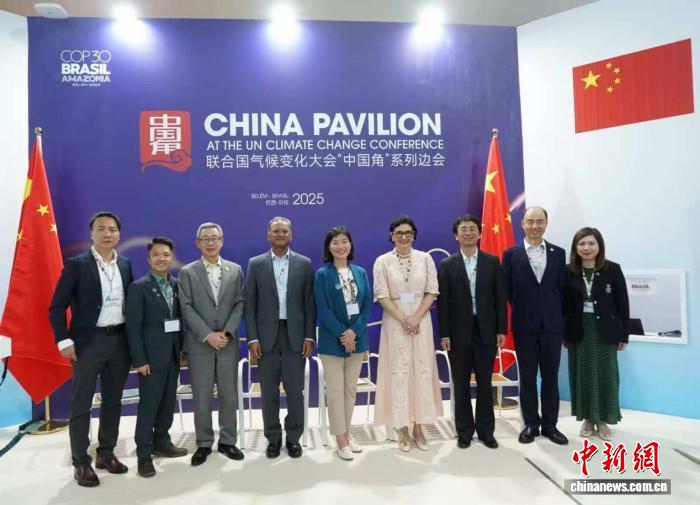
报告称,北京、香港位列全球城市绿色低碳透明度指数前十
Zhong Guo Xin Wen Wang· 2025-11-16 09:38
报告称,北京、香港位列全球城市绿色低碳透明度指数前十 中新网北京11月16日电 《全球城市绿色低碳透明度指数》(CGTI)报告日前在巴西贝伦《联合国气候变 化框架公约》第30次缔约方大会(COP30)"中国角"上发布。评价结果显示,纽约、伦敦、悉尼在绿色低 碳透明度方面得分位居全球典型城市前三位,巴黎、北京、香港紧随其后。 CGTI指数由中国环境科学研究院和公众环境研究中心联合编制,香港地球之友在评估中也承担关键角 色。 评价结果显示,纽约、伦敦、悉尼在绿色低碳透明度方面得分位居全球典型城市前三位,巴黎、北京、 香港紧随其后。纽约的清洁能源仪表板,伦敦的气候风险地图,悉尼基于循环经济理念的城市战略,巴 黎易于理解的气候蓝皮书,北京的空气质量官方预报,香港的固体废物资讯公开,共同构成全球城市绿 色低碳透明度的实践典范。 报告揭示,中国城市在环境质量与污染监管信息公开上实现"跨越式"提升,达到世界先进水平,有效助 力2013年以来中国空气和水环境质量的快速改善,为全球南方城市提供了可借鉴的实践方案。 编辑:陈俊明 广告等商务合作,请点击这里 本文为转载内容,授权事宜请联系原著作权人 中新经纬版权所有,未经书面授权 ...
凝聚行动共识,加速绿色转型
Ren Min Ri Bao· 2025-11-16 05:49
应对气候变化关乎人类共同未来。只有各尽所能,团结协作,才能实现人与自然和谐共生,守护好我们 唯一的地球家园 正在巴西贝伦举行的《联合国气候变化框架公约》第三十次缔约方大会(COP30),承载着各方开 启"加速发展和落实行动的十年"的共同期待。作为大会重要铺垫,贝伦气候峰会达成《贝伦宣言》,呼 吁更公正、更具包容性的气候行动,彰显各方团结应对气候危机的决心。当前,全球气候治理进入关键 阶段,国际社会亟须凝聚合力,以切实行动发出全球绿色低碳转型不可逆转的明确信号。 (一) 贝伦,是通往"地球之肺"亚马孙雨林的门户城市。在此举行《联合国气候变化框架公约》缔约方大会具 有特殊意义——它提醒我们重温10年前各方达成《巴黎协定》的初心。 2015年12月,巴黎气候变化大会上,近200个缔约方达成《巴黎协定》,确立了2020年后以"国家自主贡 献"为主体的国际应对气候变化机制安排,重申了《联合国气候变化框架公约》确立的共同但有区别的 责任原则,成为全球气候治理的重要里程碑。 10年来,从完成实施细则谈判到建立"损失与损害基金",再到198个国家同意"转型脱离化石燃料"、首 次明确能源转型方向……全球气候合作在曲折中前行。法 ...
重庆举办人才创新成果转化应用对接会
Zhong Guo Xin Wen Wang· 2025-11-16 05:27
为开展精准的科技成果供需匹配对接活动,助力技术转移转化和产学研深度融合,重庆市科学技术研究 院还集中发布130余项人才创新成果。 当天,海内外知名院士专家围绕"创新成果转化"主题分享了国际经验与实践案例,在思想碰撞中凝聚共 识;欧洲人工智能研究院、法国图卢兹第三大学、中白工业园等团队展示了多个具有广阔市场前景的创 新创业项目。 会后,主办方还组织与会嘉宾和青年人才前往重庆市科学技术研究院、两江协同创新区、西部(重庆)科 学城等地开展实地考察对接,推动合作意向落地。(完) (文章来源:中国新闻网) 中新网重庆11月16日电 (记者钟旖)重庆国际人才交流大会16日继续在当地举行。其间,人才创新成果转 化应用对接会召开。多项科技合作签约落地、130余项人才创新成果集中发布、海内外知名院士专家展 开交流探讨,助力产学研深度融合。 重庆市科学技术研究院能源效率优化研究中心(下称研究中心)正式揭牌成立。据介绍,研究中心将聚焦 能源效率优化、高端装备制造及产业链协同等关键领域,吸引国内外优秀科研人才和创新团队协同攻 关,通过多尺度协同优化,破解一系列关键技术难题,实现技术突破与成果转化,加快推动重庆能源领 域的绿色低碳转型 ...
凝聚行动共识,加速绿色转型(寰宇平)
Ren Min Ri Bao· 2025-11-15 21:51
Core Viewpoint - The article emphasizes the urgent need for global cooperation to combat climate change, highlighting the significance of the COP30 conference in Brazil and the adoption of the Belem Declaration, which calls for more equitable and inclusive climate actions [1][2]. Group 1: Climate Action and International Cooperation - The Belem Climate Summit serves as a reminder of the commitments made in the Paris Agreement, which established a framework for international climate action based on "nationally determined contributions" [1]. - Global climate cooperation has progressed over the past decade, with significant milestones such as the establishment of the "loss and damage fund" and the agreement to transition away from fossil fuels [2]. - Despite these advancements, there remains a substantial gap between ambition and reality, with increasing extreme weather events and rising greenhouse gas emissions indicating that the climate crisis is not alleviating [2][3]. Group 2: Responsibilities of Developed and Developing Nations - The principle of "common but differentiated responsibilities" is crucial in addressing climate change, with developed countries bearing historical and legal obligations to lead in emissions reduction and provide financial support to developing nations [3]. - The voices from the Belem Climate Summit reflect a collective expectation for substantive fairness and climate justice, emphasizing the need for developed countries to take more effective actions [3]. Group 3: Green Transition and Economic Development - The article highlights the necessity of a green low-carbon transition as a global trend, linking climate crisis mitigation with poverty alleviation and economic development [4]. - Countries are encouraged to enhance international cooperation in green technology and industry, ensuring the accessibility and affordability of clean energy technologies [4]. - The focus on national contributions at the Belem conference has seen over 100 countries submit new climate action plans, with notable commitments from China and Brazil to significantly reduce greenhouse gas emissions by 2035 [5]. Group 4: South-South Cooperation and Global Impact - Developing countries are increasingly exploring diverse energy transition models and climate financing solutions, with China achieving significant milestones in renewable energy capacity and emissions reduction [5][6]. - Initiatives like the "Evergreen Tropical Rainforest Fund" and commitments from countries like India to increase non-fossil energy sources demonstrate the proactive stance of global South nations in climate action [5]. - The article underscores that addressing climate change is a shared responsibility, with all nations needing to collaborate for a sustainable future [5][7].