量子计算

Search documents
IBM量子芯片,重磅发布
半导体行业观察· 2025-11-13 01:35
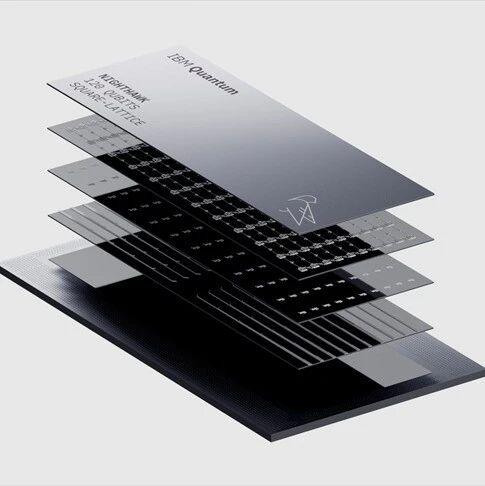
Core Insights - Quantum computing is gaining momentum with significant advancements from both emerging companies and established tech giants like Google, Microsoft, Amazon Web Services, and NVIDIA [2] - IBM is a leading player in the quantum computing space, recently unveiling its Quantum roadmap aimed at building a large-scale, fault-tolerant quantum system called Quantum Starling by 2028 [3][5] Group 1: IBM's Quantum Developments - IBM launched the Nighthawk processor, which will be delivered to users by the end of this year and is expected to play a crucial role in achieving quantum advantage by the end of 2026 [5] - The Nighthawk processor features 120 superconducting qubits connected by 218 tunable couplers, allowing for 30% more complex circuits compared to its predecessor, Quantum Heron, while maintaining a low error rate [8] - IBM's Quantum Loon is described as an experimental processor that includes key components necessary for fault-tolerant quantum computing [7] Group 2: Software and Collaboration - IBM's new quantum software improves the accuracy of circuits with over 100 qubits by 24% and reduces the cost of obtaining precise results by over 100 times [8] - The company collaborates with institutions like Algorithmiq and Flatiron Institute to contribute experimental results to a new open community system for tracking claims of quantum advantage [8] - IBM's partnership with AMD demonstrates that classical computers can use qLDPC (quantum low-density parity-check) codes for real-time error decoding, enhancing the reliability of quantum computations [14] Group 3: Future Roadmap and Innovations - IBM's roadmap includes four generations of Nighthawk processors, with the next generation expected to offer up to 7,500 quantum gates by the end of 2026 and 10,000 gates the following year [11] - By 2028, systems based on Nighthawk are projected to include up to 15,000 two-qubit gates and connect over 1,000 qubits [11] - The advanced 300mm wafer fabrication facility in Albany, New York, is expected to double the development speed of IBM's quantum processors, significantly enhancing qubit connectivity and performance [16]


中美速度惊人,欧盟有人坐不住了
Xin Lang Cai Jing· 2025-11-13 00:26
关于欧盟落后于美国和中国的分析已被广泛接受,这几乎成为流行文化的一部分。最令人担忧的是,欧 盟在一些将定义21世纪的关键技术领域也落后于其他国家:人工智能、半导体和量子计算。这场竞赛实 际上是在北京和华盛顿之间展开的。欧盟扮演着一个非常特殊的角色:努力抗拒。 最近,美国关键技术领域的领军企业之一英伟达的首席执行官黄仁勋发表一份措辞明确的声明:"中国 在人工智能领域只比美国落后几纳秒。"与此同时,一个社交媒体账号借用一个经典"梗",将欧盟比作 一名巴黎咖啡馆的顾客,悠闲地啜饮着咖啡。 来源:参考消息 【今日导读】最近,美国关键技术领域的领军企业之一英伟达的首席执行官黄仁勋发表一份措辞明确的 声明:"中国在人工智能领域只比美国落后几纳秒。"与此同时,一个社交媒体账号借用一个经典"梗", 将欧盟比作一名巴黎咖啡馆的顾客,悠闲地啜饮着咖啡。 这是一种讽刺,但它正渗透到欧洲公众的意识中:欧洲是一个远离争夺科技领导地位的残酷竞争的地 方,而这在美国等一些国家看来则是完全缺乏雄心壮志。奇怪的是,大西洋两岸的人们似乎都认同这种 讽刺:对美国人来说,它反映了欧洲的傲慢和脱离现实,最终会付出高昂代价;而对欧洲人来说,它反 映了一 ...

11月13日早餐 | 储能再迎催化;黄金四连涨
Xuan Gu Bao· 2025-11-13 00:16
Group 1: Market Overview - The U.S. House is set to end a historic government shutdown, leading to a four-day rise in the Dow Jones, which has reached a new high of 48,000 points, while tech stocks have declined again, with the Nasdaq and small-cap stocks lagging for the second consecutive day [1] - The S&P 500 index closed up 0.06%, while the Dow Jones increased by 0.68%, and the Nasdaq fell by 0.26%. The European STOXX 600 index rose by 0.71% [2] Group 2: Company Performance - Nvidia saw a slight increase of 0.33%, while Meta dropped nearly 3%, leading the decline among the tech giants. AMD surged by 9%, leading the S&P 500. Following earnings reports, Circle plummeted by 12%, while Cisco rose over 7% [3] - Foxconn (Hon Hai) reported a 17% year-on-year increase in net profit for Q3, exceeding expectations, with an 11% revenue growth, driven by strong demand for AI servers [5] Group 3: Industry Insights - OPEC has revised its global oil demand forecast, shifting from a "supply shortage" to a "supply surplus" for Q3, resulting in a 4% drop in oil prices [4] - The heavy truck market in China saw sales of 106,200 units in October, a 1% month-on-month increase and a 60% year-on-year increase, marking a seven-month consecutive growth trend [11] - Sulfuric acid prices have surged, currently at 773 RMB/ton, a 111% increase from January 21, 2023, and a 740% increase from May 26, 2023, attributed to a combination of cost pressures and supply-demand imbalances [11] - The PCB industry is expected to reach a global market size of $96.8 billion by 2025, with China contributing over 50% of the output, driven by technological upgrades and expanding applications in AI, 5G, and smart vehicles [13] Group 4: Strategic Developments - Samsung is in discussions with large overseas clients regarding supply volumes for next year and is considering a price increase of over 20% to 30% [6] - AI startup Anthropic plans to invest $50 billion in building data centers in the U.S. [7] - The China Securities Regulatory Commission emphasizes the need to prevent significant market fluctuations [8]





中科院突破!这类迄今最大规模光量子芯片构建成功,铌酸锂薄膜成核心材料之一
Xuan Gu Bao· 2025-11-13 00:10
Group 1 - The lithium niobate crystal has multiple photoelectric effects, strong tunability, stable physical and chemical properties, and a wide optical transmission range, making it widely used in SAW filters, optical modulators, phase modulators, optical isolators, and electro-optic Q-switches [2] - Thin-film lithium niobate materials are becoming an important technological direction due to their higher integration and better performance, with domestic manufacturers having a competitive advantage in the LNOI field [2] - The lithium niobate industry chain includes upstream lithium niobate crystals and thin film materials, electron beam writing, and DUV lithography equipment, as well as midstream thin-film lithium niobate modulator chips and devices, and downstream applications, with domestic manufacturers participating in all segments [2] Group 2 - Guangku Technology focuses on products including lithium niobate modulators and possesses ultra-high-speed optical communication modulator chips and modules, which are core optical devices for long-distance coherent optical transmission and ultra-high-speed data centers [3] - Guoxin Technology has established joint laboratories for quantum chips with well-known companies in the quantum field, including Anhui Wentian Quantum Technology Co., Ltd. and its subsidiary Hefei Silizhen Chip Technology Co., Ltd. [3]


兼顾传统成长与新兴成长 绩优基金经理捕捉轮动行情
Zheng Quan Shi Bao· 2025-11-12 18:42
Group 1 - The stock market has experienced increased volatility since late October, but growth-style assets remain a key focus for capital, influenced by the Federal Reserve's second interest rate cut of the year and China's "14th Five-Year Plan" emphasizing support for emerging technology sectors [1] - The market is characterized by a structural differentiation, with funds shifting towards specific segments like storage and energy, while previously popular sectors like optical modules are in a consolidation phase [1] - The growth style is overall dominant this year, but leading sub-industries vary at different stages, with technology and energy sectors taking turns in leading performance [1] Group 2 - Chen Yunzhong, a mid-career fund manager with nearly 10 years in the securities industry and over 4 years of investment experience, has achieved significant returns, including a 46.82% return in the Guangfa Small Cap Select A fund, surpassing the benchmark by 36 percentage points [2] - His management strategy involves dividing growth tracks into traditional and emerging growth, focusing on sectors with strong certainty and leveraging top companies to capture industry beta and stock alpha [2] - Traditional growth sectors include "new semi-military" areas such as new energy, semiconductors, and military industry, characterized by mature industry development and specific cycles [2] Group 3 - Emerging growth sectors are in the early stages of industrialization, focusing on technologies like embodied intelligence, new storage and computing, satellite internet, quantum computing, and solid-state batteries, which are also highlighted in the national technology plan [3] - Chen Yunzhong emphasizes the need for tactical trading in these volatile assets, successfully timing entry and exit points to capture upward trends while avoiding significant downturns [3] - Current promising growth directions include computing power, storage, edge innovation, brand internationalization, robotics, satellite internet, and solid-state batteries, with a particular focus on domestic cloud service providers expected to increase capital expenditures significantly in the coming months [3]
美股三大股指集体高开,半导体板块领涨
Feng Huang Wang Cai Jing· 2025-11-12 14:44
Group 1: Market Performance - US stock indices opened higher with the Dow up 0.28%, Nasdaq up 0.41%, and S&P 500 up 0.32% [1] - The semiconductor sector led the gains, with AMD rising nearly 7% after projecting a 35% annual revenue growth over the next three to five years and an 80% growth in AI chip business [1] - Global stock performance included Chinese concept stocks, with Huya up over 3% and Miniso up over 2%, while Tencent Music fell over 8% and Baidu dropped over 2% [1] Group 2: Company Announcements - Chevron announced plans to build a large AI-specific power facility in West Texas, expected to be operational by 2027 with a capacity of up to 5,000 megawatts [2] - IBM introduced its most advanced quantum processor, Nighthawk, which features 120 qubits and is set for delivery by the end of 2025 [3] - JPMorgan Chase launched JPM Coin, a deposit token for institutional clients, enabling 24/7 payments on public blockchains [4] - AMD's stock surged after the company projected the AI chip market to reach $1 trillion by 2030, with an expected 35% annual growth in overall business and 60% in data center business over the next three to five years [5] Group 3: Financial Performance - Circle reported third-quarter revenue of $740 million, a 66% year-over-year increase, with net profit of $214 million, up 202% from the previous year [6]
美石油巨头要建巨型AI供电设施 欧洲市场再迎新高时刻|今夜看点
Sou Hu Cai Jing· 2025-11-12 13:45
Market Overview - US stock index futures showed slight gains ahead of a potential end to the longest government shutdown in history, with Nasdaq 100 futures up 0.61%, S&P 500 futures up 0.35%, and Dow futures up 0.24% [1] Company Developments - Hon Hai Precision Industry reported better-than-expected Q3 results and anticipates a "double-digit percentage" increase in AI server shipments for Q4, with a collaboration announcement with OpenAI expected next week [3] - Infineon raised its sales guidance for power solutions aimed at data centers for FY2026 by 50% to €1.5 billion, nearly 2.5 times the FY2025 figure [3] - AMD's stock rose 5% following a strong profit growth forecast, with expectations that the AI chip market will reach $1 trillion by 2030 and an annual growth rate of 60% for its data center business over the next three to five years [12][13] Other Industry News - Chevron announced plans to build a large AI-specific power facility in West Texas, expected to be operational by 2027 with a capacity of up to 5,000 megawatts [6] - IBM launched its most advanced quantum processor, Nighthawk, which features 120 qubits and is expected to be delivered to users by the end of 2025 [9][10] - JPMorgan Chase introduced JPM Coin, a deposit token for institutional clients, enabling 24/7 payments on public blockchains [11] - Circle reported Q3 revenue of $740 million, a 66% year-over-year increase, with net profit rising 202% to $214 million [14]

美股盘前丨三大股指期货齐涨 超威半导体盘前涨超6%
Xin Lang Cai Jing· 2025-11-12 13:24
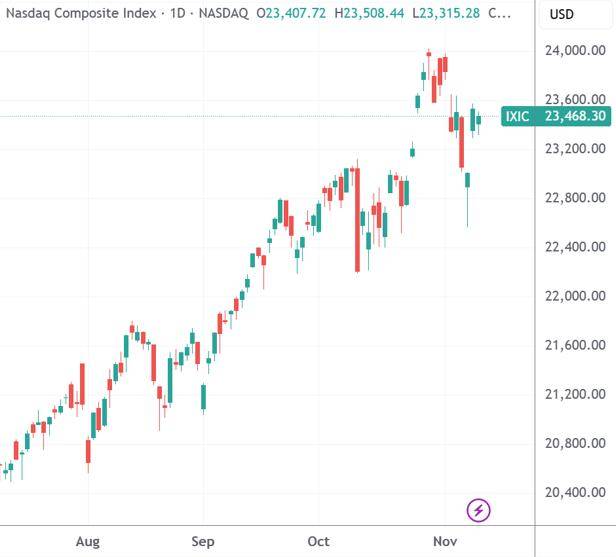
Company News - Tencent Music's stock rose nearly 2% in pre-market trading, with Q3 revenue reaching 8.46 billion yuan, exceeding market expectations [1] - IBM's stock increased over 2% in pre-market trading after the release of its next-generation quantum processor, "Quantum Eagle" [1] - Huya's stock rose nearly 3% in pre-market trading, with Q3 total revenue reaching 1.69 billion yuan, marking the highest level in nearly nine quarters [1] - OpenAI was ruled to have infringed copyright by using lyrics created by a German musician to train its model [1] Market Dynamics - U.S. stock index futures were up, with Dow futures rising 0.22%, S&P 500 futures up 0.32%, and Nasdaq futures increasing 0.55% [1] - European major stock indices showed mixed results, with the UK FTSE 100 index down 0.09%, while France's CAC40 index rose 1.35% and Germany's DAX index increased 1.34% [1] - Semiconductor stocks saw a pre-market rally, with Advanced Micro Devices (AMD) rising over 6%, Micron Technology up over 2%, and Nvidia increasing nearly 2% [1]
美股异动丨IBM盘前涨超2%,发布新一代量子处理器“量子夜鹰”
Ge Long Hui· 2025-11-12 13:09
Core Viewpoint - IBM has announced its most advanced quantum processor, "Quantum Nighthawk," which is expected to enhance quantum computing capabilities significantly [1] Company Summary - IBM's stock rose over 2% in pre-market trading, reaching $320.25 [1] - The "Quantum Nighthawk" processor can support a 30% increase in complexity for quantum circuits compared to previous processors [1] - It is designed to handle operations requiring up to 5,000 dual quantum bit gates [1] - The delivery of the "Nighthawk" processor is anticipated by the end of 2025 [1]
前CIA特工危言耸听:将来都要为中国干活
Guan Cha Zhe Wang· 2025-11-12 03:37
Core Viewpoint - The article discusses the heightened concerns in the U.S. regarding China's advancements in artificial intelligence (AI), emphasizing the narrative of a "Chinese threat" in the tech sector, particularly in AI, as articulated by former CIA officer J. Michael Waller [1][2]. Group 1: U.S. Concerns about China's AI Dominance - Waller claims that if China dominates the AI field, the U.S. will "lose everything," framing this as a matter of national security and civilization [1]. - He argues that China controls the physical elements necessary for AI hardware production and could set global AI standards, leading to a scenario where the U.S. would be subservient to Chinese interests [1]. - Waller paints a dire picture of a future where AI systems, if controlled by China, could dictate American thought processes and decision-making [2]. Group 2: Military Implications of AI - Waller warns that China's advancements in AI could lead to the development of AI-driven strategies and weaponry that could threaten U.S. military capabilities [2]. - He suggests that China could deploy AI-driven drones and autonomous machines against the U.S., further escalating the perceived threat [2]. Group 3: U.S. Policy and Response - The U.S. government has increasingly politicized and weaponized technology and trade issues, implementing export controls aimed at curbing China's AI development [5]. - China's response highlights that such actions disrupt market rules and international trade order, adversely affecting global supply chains and the interests of businesses in both countries [5]. - Analysts express that even moderate advancements by China in AI or quantum computing could trigger significant anxiety in the U.S. and Europe, indicating a fragile confidence in Western technological superiority [5].