多边主义

Search documents
11月13日外交部例行记者会答问汇总
Bei Jing Ri Bao Ke Hu Duan· 2025-11-13 14:47
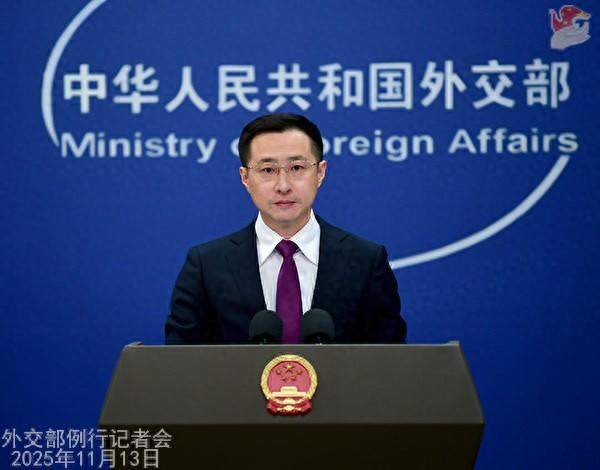
转自:北京日报客户端 11月13日,外交部发言人林剑主持例行记者会。 林剑。图源:外 交部 林剑宣布:应俄罗斯联邦总理米舒斯京邀请,国务院总理李强将于11月17日至18日出席在俄罗斯莫斯科 举行的上海合作组织成员国政府首脑(总理)理事会第二十四次会议。 应赞比亚共和国政府邀请,国务院总理李强将于11月19日至20日对赞比亚进行正式访问。 应南非共和国政府邀请,国务院总理李强将于11月21日至23日出席在南非约翰内斯堡举行的二十国集团 领导人第二十次峰会。 总台国广记者:你刚刚发布了李强总理出席上合组织成员国政府首脑(总理)理事会第二十四次会议的 消息。中方如何评价当前上合组织发展?对此次会议有何期待? 林剑:今年秋天,上海合作组织天津峰会成功举行。成员国领导人就弘扬"上海精神"、推动上合组织发 展与改革达成系列重要共识,引领上合组织进入更加团结、更重协作、更富活力、更有作为的高质量发 展新阶段。习近平主席郑重提出全球治理倡议,得到与会各方欢迎和支持,也得到国际社会广泛认同。 李强总理出席上合组织总理会议,将同各方一道,就落实天津峰会成果、加强组织团结协作、深化地区 经济人文合作深入交换意见。中方相信,本次会议 ...

正加快推进国内核准工作!商务部解读中国—东盟自贸区3.0版升级议定书
Di Yi Cai Jing· 2025-11-13 08:57
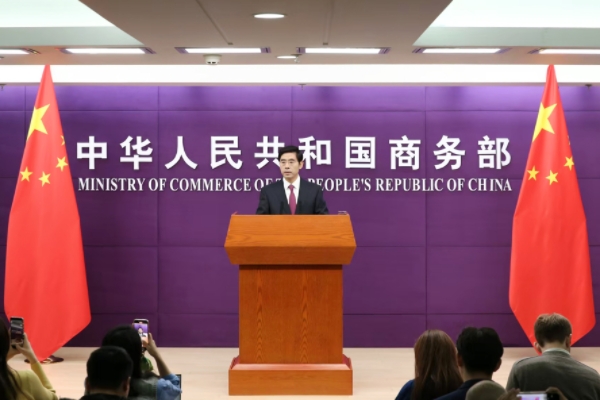
Core Points - The signing of the China-ASEAN Free Trade Area 3.0 Upgrade Protocol is a significant milestone in cooperation, marking an expansion of economic integration into emerging areas such as digital, green, standards, and supply chains [1][3] - The protocol reflects a strong commitment to multilateralism and free trade amidst challenges to the international trade system, establishing a new benchmark for deep economic integration between China and ASEAN [1][3] Group 1: Key Features of the Protocol - The protocol introduces five new areas: digital economy, green economy, supply chain connectivity, competition and consumer protection, and support for small and medium-sized enterprises, showcasing a joint effort to lead international rule-making and promote cooperation in emerging fields [3][4] - It enhances the level of openness by establishing a systematic cooperation framework that includes both traditional areas like trade facilitation and emerging fields such as digital and green economies, injecting new momentum into regional economic growth [3][4] - The protocol aims to promote inclusive development by ensuring fair competition, protecting consumer rights, supporting small and medium enterprises, and enhancing the capacity of least developed countries, allowing all parties to benefit from regional economic growth [4]
专访社科院廖凡:“中国方案”为全球治理提供改革动能与务实样本
2 1 Shi Ji Jing Ji Bao Dao· 2025-11-13 07:59
Core Insights - The current global governance system must transition from a club dominated by a few countries to an effective platform that accommodates and responds to the demands of the "Global South" [1][5] - The systemic dilemma facing global governance is characterized by structural lag, insufficient representation, and weak execution, which are interrelated issues [3][4] - China plays a crucial role in promoting the integration of the Global South and can actively push for reforms in voting rights within international financial institutions [1][5] Global Governance Challenges - The governance system is experiencing a structural lag that fails to address new issues such as digital trade and climate change, leading to outdated rules [3][4] - There is a significant mismatch between the economic power of emerging markets and developing countries and their voting rights in major international financial institutions, resulting in a "representation deficit" [3][4] - Weak execution of global agreements occurs when major powers have conflicting interests, leading to decision paralysis and selective implementation [4] China's Role in Global Governance - China can act as a constructive leader, consensus builder, and reform practitioner in international economic governance [5][6] - The country aims to enhance the representation and decision-making power of the Global South in key institutions like the IMF and World Bank [5][6] - China's initiatives, such as the Global Development Initiative, address pressing challenges faced by developing countries and provide practical pathways for implementing the UN 2030 Agenda [6] Trade Dynamics - The global trade system is at a historical crossroads, facing challenges from rising unilateralism and protectionism, as well as opportunities from digital technology and green transformation [7][8] - China’s commitment to high-level opening up is both a strategic choice for its economic development and a stabilizing force for the multilateral trade system [9][10] - The recent signing of the China-ASEAN Free Trade Area 3.0 upgrade agreement signifies a new phase of high-quality economic relations, focusing on digital and green economies [12][13]
应对全球单边主义、贸易保护主义,中外专家共议全球经贸治理
Sou Hu Cai Jing· 2025-11-13 06:39
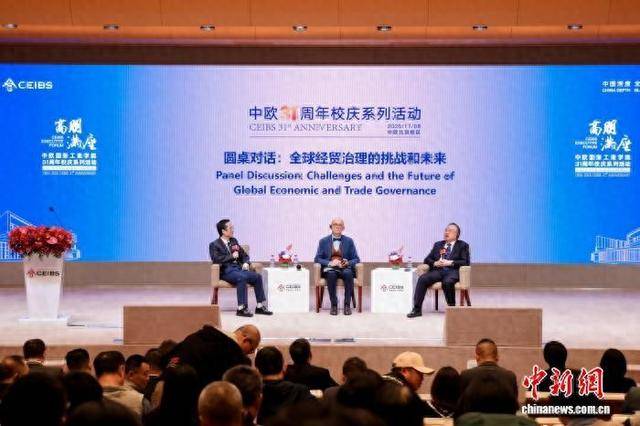
Core Insights - The forum highlighted the challenges and future of global economic governance, emphasizing the need for cooperation amidst rising unilateralism and protectionism [3][4] Group 1: China's Economic Strategy - China is advancing institutional openness to create a win-win cooperation environment, countering the rise of unilateralism and trade protectionism [3] - Recent policies include the implementation of "three negative lists" for cross-border service trade, investment, and market access, promoting consistent management of domestic and foreign capital [3] - The bilateral trade between China and ASEAN grew by 9.6% year-on-year from January to September 2025, indicating deepening economic ties [3] Group 2: Global Trade Dynamics - Pascal Lamy identified three new norms in global trade: the rise of protectionism, the strengthening of preventive measures, and the weaponization of trade [4] - Lamy emphasized the importance of maintaining a multilateral system and fostering flexible international cooperation, particularly between China and the EU on shared concerns like climate change [4] Group 3: WTO and Multilateral Trade System - The WTO remains essential for global trade, and China is committed to multilateralism, advocating for structural reforms to enhance the efficiency of the dispute resolution mechanism [6] - The U.S. has shifted from being a proponent of free trade to a disruptor of the multilateral trade system, impacting global trade dynamics [5] - Lamy suggested that the WTO's effectiveness could be improved by enhancing organizational efficiency and addressing new complex issues [5][6] Group 4: Future Economic Pathways - Lamy recommended that China continue its economic transformation, particularly by boosting consumption, while businesses should enhance supply chain resilience and adaptability [4] - The dual-edged effect of digital technology was discussed, highlighting its role in accelerating service trade growth while also creating new trade barriers due to differing data regulations [4][5]
涂红:以务实行动坚定践行多边主义
Jing Ji Ri Bao· 2025-11-13 00:14
Core Points - The article emphasizes China's commitment to multilateralism and the maintenance of a multilateral trade system, as articulated by President Xi Jinping during the APEC meeting [1][2] - It outlines China's initiatives to foster an open regional economic environment, enhance global supply chain resilience, promote trade digitalization and green transformation, and support inclusive global development [3][4][5] Group 1: Multilateral Trade System - China actively participates in global governance reforms and emphasizes the importance of multilateral platforms such as BRICS, SCO, WTO, and APEC [2] - Xi Jinping's call for countries to practice multilateralism and work towards a shared future reflects China's strategic approach to global trade [2] Group 2: Open Regional Economic Environment - China is committed to high-level institutional openness and aims to create an equitable and inclusive regional economic environment [3] - The implementation of the Regional Comprehensive Economic Partnership (RCEP) has established the world's largest regional free trade area, enhancing trade efficiency and transparency [3] Group 3: Global Supply Chain Resilience - China focuses on enhancing the resilience and security of global supply chains amid ongoing restructuring [4] - Initiatives such as the China-ASEAN Free Trade Area 3.0 and infrastructure projects under the Belt and Road Initiative aim to improve supply chain connectivity [4] Group 4: Trade Digitalization and Green Transformation - China promotes the integration of digital technology into international trade, advocating for a digital trade rule system that facilitates cross-border data flow [5] - The country opposes green trade barriers and emphasizes cooperation in green industries and clean energy technology sharing [5] Group 5: Inclusive Global Development - China is dedicated to human-centered development, assisting developing countries in overcoming infrastructure challenges through initiatives like the Belt and Road Initiative [5] - Policies aimed at enhancing inclusivity in international trade, such as tariff reductions and technology transfer, are part of China's strategy to foster global prosperity [5]
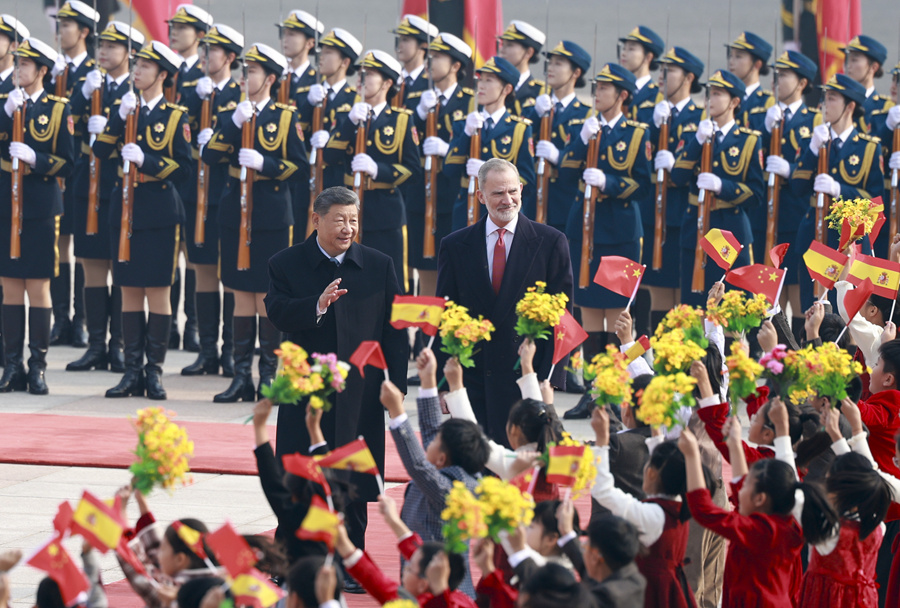
习近平主席会见西班牙国王费利佩六世
Huan Qiu Shi Bao· 2025-11-12 23:24
Group 1: Core Insights - The visit of King Felipe VI of Spain to China from November 10 to 13 marks the first state visit since his ascension and the first by a Spanish monarch in 18 years, highlighting the importance of bilateral relations [2][3] - Xi Jinping emphasized the strategic partnership between China and Spain, aiming to enhance cooperation in various fields including trade, technology, and cultural exchanges [3][4] - The signing of 10 cooperation documents in areas such as trade and education signifies a deepening of economic ties, with Spain positioning itself as a key partner for China in Europe [4][6] Group 2: Economic Cooperation - Spain aims to deepen economic collaboration with China, focusing on sectors like renewable energy, digital economy, and artificial intelligence, while also increasing imports of quality Spanish products [3][5] - The bilateral trade relationship is particularly strong in the pork and pharmaceutical industries, with Spanish pork exports to China increasing by 8% in the first seven months of the year, reaching €700 million [6] - Spanish companies are increasingly investing in China, with around 400 Spanish firms currently operating in the country, and an expected 9,000 Spanish companies exporting to China in 2024 [5][6] Group 3: Cultural and Diplomatic Engagement - Cultural exchanges are a significant aspect of the visit, with activities commemorating Spanish poet Antonio Machado and the importance of cultural institutions like the Confucius Institute and the Cervantes Institute [7][8] - The extension of visa-free policies for Spanish citizens traveling to China is part of broader diplomatic efforts to enhance mutual understanding and cooperation [7][8] - The visit is seen as a strategic move for Spain to maintain its independent foreign policy while navigating the complexities of international relations, particularly in the context of US-China tensions [8]
以务实行动坚定践行多边主义
Jing Ji Ri Bao· 2025-11-12 22:53
Group 1 - The core message emphasizes the importance of multilateralism and the need for collaborative efforts to maintain a stable global trade system, as articulated by President Xi Jinping during the APEC meeting [1][2] - China is actively participating in global governance reforms and advocating for a multilateral trade system, as demonstrated by its initiatives within various international platforms such as BRICS, SCO, WTO, and APEC [2] - The promotion of an open regional economic environment is highlighted, with China focusing on high-level institutional openness and the implementation of the Regional Comprehensive Economic Partnership (RCEP) [3] Group 2 - The resilience and security of global supply chains are prioritized, with China advocating for policy coordination and collaborative solutions to mitigate risks associated with supply chain disruptions [4] - The transformation towards digital and green trade is underscored, with China pushing for the integration of digital technologies in international trade and advocating for sustainable practices [5] - China's commitment to inclusive global development is evident through its initiatives aimed at assisting developing countries and enhancing their economic capabilities [5] Group 3 - Looking ahead, China will host the next APEC meeting in Shenzhen, reinforcing its commitment to multilateralism and collaborative development [6]
应对全球单边主义、贸易保护主义 中外专家共议全球经贸治理
Zhong Guo Xin Wen Wang· 2025-11-12 17:29
Core Viewpoint - The event highlighted the challenges and opportunities in global trade, emphasizing the need for multilateral cooperation amidst rising protectionism and unilateralism [1][2][4]. Group 1: China's Trade Policies - Zhao Jinping outlined China's recent policies aimed at service trade openness, including the implementation of "three negative lists" for cross-border service trade, investment, and market access [1]. - The cooperation between China and ASEAN has deepened, with bilateral trade growing by 9.6% year-on-year from January to September 2025, serving as a stabilizing anchor for China's foreign trade relations [1]. Group 2: Global Trade Dynamics - Pascal Lamy identified three new norms in global trade: the rise of protectionism, the strengthening of preventive measures, and the weaponization of trade [2]. - Lamy emphasized the importance of maintaining a multilateral system and suggested that China and the EU should seek cooperation in areas like climate change and biodiversity [2]. Group 3: WTO and Multilateralism - The discussion highlighted the U.S.'s shift from a proponent of free trade to a disruptor of the multilateral trading system, impacting the WTO's effectiveness [3][4]. - Zhao Jinping reaffirmed China's commitment to multilateralism and the necessity for structural reforms within the WTO to enhance its dispute resolution efficiency [4]. Group 4: Strategic Choices for China - Zhao Jinping proposed that external pressures could lead to greater willingness for regional economic cooperation, advocating for deeper market reforms and proactive multilateral and regional collaboration [5].
社评:中西关系何以成为国际交往“典范”
Huan Qiu Wang· 2025-11-12 16:45
Group 1 - The visit of King Felipe VI of Spain to China marks the first state visit by a Spanish monarch in 18 years, highlighting the importance of Sino-Spanish relations as both countries celebrate the 20th anniversary of their comprehensive strategic partnership [1] - Both leaders emphasized the significance of mutual respect and support in developing bilateral relations, showcasing a model for cooperation between countries with different historical and cultural backgrounds [1][2] - Ten cooperation documents were signed in areas such as trade, technology, and education, injecting new momentum into the steady development of Sino-Spanish relations [1] Group 2 - Spain is currently China's fifth-largest trading partner within the EU, while China has become Spain's largest trading partner outside the EU, indicating a strong economic relationship [2] - Spain's consistent policy towards China reflects its recognition of a multipolar world and its strategic autonomy, as evidenced by its recent contract with Huawei worth €12.3 million [3] - The establishment of a Spanish consulate in Chengdu and the launch of direct flights between Chengdu and Madrid signify deepening trade, tourism, and cultural exchanges between the two nations [3] Group 3 - The healthy development of Sino-Spanish relations holds significance beyond bilateral ties, providing valuable insights for the development of EU-China relations and global progress [4] - The relationship is based on mutual respect and equal benefit, demonstrating that countries can transcend differences in social systems and ideologies through dialogue and cooperation [4]
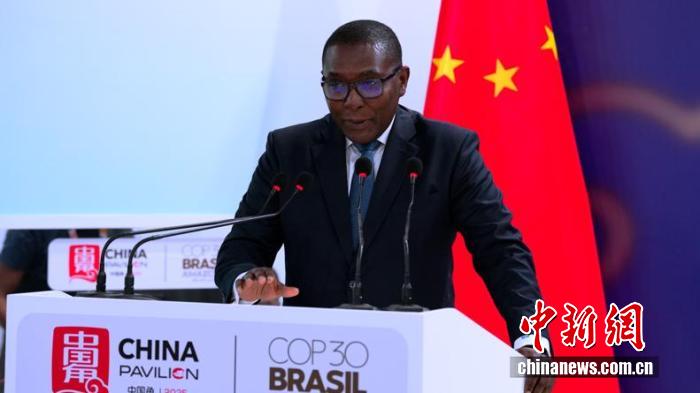
联合国助理秘书长:愿“同舟共济”的精神贯穿未来气候行动
Zhong Guo Xin Wen Wang· 2025-11-12 11:18
Core Viewpoint - The United Nations Assistant Secretary-General Selwin Hart emphasized the importance of multilateralism and China's leadership in addressing climate change during the COP30 conference, highlighting China's achievements in clean energy and ecological civilization [1][3][4]. Group 1: China's Achievements - Hart noted significant improvements in air quality in Beijing over the past fifteen years, attributing this to China's accelerated clean energy revolution [3]. - The transformation in air quality is seen as a reflection of broader changes in energy consumption and environmental policy in China [3]. Group 2: Key Tasks for COP30 - Hart outlined three essential tasks for COP30: 1. Acknowledging and addressing gaps in emissions reduction, financing, and adaptation efforts [4]. 2. Ensuring financial commitments are met to provide certainty for developing countries [4]. 3. Promoting climate justice by prioritizing support for the most vulnerable nations [4]. Group 3: Future Cooperation - Hart expressed confidence in relying on China's leadership for global low-carbon transition, citing its practices in clean energy and green infrastructure as a viable model for other countries [4]. - The concept of "同舟共济" (working together in the same boat) was highlighted as a guiding principle for future climate actions [4].