现代化产业体系

Search documents
年产能最高30万吨!珠江啤酒中山产能扩建升级项目顺利投产
Nan Fang Du Shi Bao· 2025-12-18 13:41
Core Viewpoint - The production launch of the capacity expansion and upgrade project of Zhongshan Zhujiang Beer is a significant step towards enhancing production capacity, technological advancement, and green low-carbon levels, contributing to the high-quality development of the beer industry in Guangdong [1][2][8]. Group 1: Project Overview - The project involves a total investment of 932 million yuan, adding 300,000 tons of brewing capacity and a new can production line with a capacity of 72,000 cans per hour [1]. - The project aims to integrate smart manufacturing and green technology, enhancing the overall production efficiency and sustainability of Zhujiang Beer [2][3]. Group 2: Technological Innovations - The project incorporates approximately 40 advanced technologies and equipment, including intelligent integrated systems and automated storage solutions, to improve production processes from brewing to logistics [2][4]. - A digital management platform will facilitate one-stop digital management, including order issuance, data collection, and intelligent analysis [3][4]. Group 3: Economic Impact - The project is expected to generate an additional annual output value of over 800 million yuan, reinforcing the foundation of the real economy in Zhongshan [5]. - Zhujiang Beer has maintained a high-quality growth trajectory, achieving beer sales of 1.2035 million tons and revenue of 5.073 billion yuan in the first three quarters, with net profit increasing by 17.05% year-on-year [6]. Group 4: Consumer Engagement and Market Strategy - The project enhances consumer experience by providing fresher products and expanding the "beer+" model, which integrates various sectors such as sports, music, and food [7]. - Zhujiang Beer has established over 500 experience stores nationwide, creating a consumer service network that promotes active consumption [7]. Group 5: Strategic Alignment - The project aligns with the "14th Five-Year Plan" for optimizing the industrial structure and enhancing the manufacturing capabilities of Zhujiang Beer, contributing to the broader goals of Guangdong's economic development [6][8].

罗定市人大常委会开展打造百亿贵金属产业集群专题调研
Sou Hu Cai Jing· 2025-12-18 12:55
Core Viewpoint - The article discusses the efforts of Luoding City to develop a modern industrial system with a focus on creating a 10 billion yuan precious metals industry cluster, emphasizing the importance of policy support and collaboration among various stakeholders [1][4]. Group 1: Industry Development - The Luoding City People's Congress organized a special research initiative to promote the establishment of a 10 billion yuan precious metals industry cluster [1]. - The research team visited Guangdong Jinye Precious Metals Co., Ltd. and Guangdong Jinzhenlong Technology Co., Ltd. to understand the current status of the precious metals industry cluster, including supply chain integration and project development [1]. - Discussions during the meeting focused on nurturing and expanding the industry cluster, talent cultivation and recruitment, and optimizing industrial policy support [1]. Group 2: Policy and Support Mechanisms - Relevant departments are urged to recognize the significant role of the precious metals industry in Luoding's modern industrial system and to effectively utilize their functions to create a long-term support mechanism [4]. - The emphasis is placed on targeted efforts to strengthen resource allocation, support leading enterprises, and enhance the integration and collaboration of the precious metals industry chain [4]. - Companies are encouraged to build confidence, seize opportunities, and focus on technological research, product innovation, market expansion, and brand development to enhance their core competitiveness and industry influence [4].

2026年经济目标怎么设定?宏观与微观“温差”成关键考量?
Jing Ji Guan Cha Bao· 2025-12-18 05:12
Group 1 - The central economic work meeting emphasizes the importance of expanding domestic demand as a primary task for the upcoming year [4][5] - There is a notable "temperature difference" between macroeconomic performance and microeconomic sentiment, with macro indicators showing strength while micro experiences remain subdued [1][2] - The "involution" phenomenon in enterprises is linked to this temperature difference, where companies focus on maintaining cash flow stability, leading to increased production but declining profit margins [2] Group 2 - Suggestions for effective consumption support policies include increasing income, ensuring leisure time, improving consumption scenarios, and providing quality products [2] - The central economic work meeting proposes enhancing counter-cyclical and cross-cyclical adjustments, focusing on demand-side short-term adjustments and supply-side structural improvements [3] - Economic growth targets for 2026 are suggested to be set between 4.5% and 5.0%, slightly lower than the previous year's target, aligning with long-term GDP growth trends [4][5] Group 3 - The macroeconomic policy direction is expected to lean towards easing, with one interest rate cut and one reserve requirement ratio reduction anticipated [5] - The construction of a modern industrial system is highlighted as a crucial aspect of cross-cyclical policies, focusing on upgrading traditional industries and fostering emerging sectors [5][6] - There is a call for deeper market-oriented reforms to stimulate microeconomic vitality and establish a unified national market, which is essential for effective policy transmission [6]
2026年经济目标怎么设定?宏观与微观“温差”成关键考量
Jing Ji Guan Cha Wang· 2025-12-18 04:18
Group 1 - The central economic work conference emphasizes "domestic demand as the main driver" for the upcoming year, focusing on building a strong domestic market [1] - There is a growing discussion about the "temperature difference" between macroeconomic performance and microeconomic sentiment, with macro indicators showing strength while micro experiences remain subdued [1][2] - The "involution" phenomenon in enterprises is linked to this temperature difference, where companies prioritize cash flow stability, leading to increased production but declining profit margins [2] Group 2 - Suggestions for boosting consumption include increasing income, ensuring leisure time, improving consumption scenarios, and providing quality products [2] - The central economic work conference proposes enhancing counter-cyclical and cross-cyclical adjustments, with a focus on demand-side policies and structural supply-side improvements [3] - Economic growth targets for 2026 are suggested to be set between 4.5% and 5.0%, slightly lower than the previous year's target, aligning with long-term GDP growth trends [4] Group 3 - The macroeconomic policy direction is expected to lean towards easing, with one interest rate cut and one reserve requirement ratio reduction anticipated [5] - The average economic growth rate during the 14th Five-Year Plan period is projected to be around 4.5%, with 2026 GDP growth expected at 4.8% [6] - A modern industrial system is highlighted as a key focus for cross-cyclical policies, emphasizing the transformation of traditional industries and the development of strategic emerging industries [6]
省政府与省总工会第三十一次联席会议召开
Shan Xi Ri Bao· 2025-12-18 00:42
赵刚强调,要围绕一体推进优势产业巩固、传统产业升级、未来产业培育和现代服务业提质等重点 任务,持续深化产业工人队伍建设改革,着力建设一支与陕西产业发展高度契合的产业工人队伍,助力 构建具有陕西特色的现代化产业体系。要加强领军人才、高技能人才、急需紧缺人才培养,建好用好劳 模和工匠人才创新工作室,动员广大职工积极开展面向生产全过程的技术革新、技术创新、技术攻关、 技术创造,在创新驱动发展中发挥更大作用。要坚持党对工会的全面领导,加强职工思想政治引领,完 善产业工人技能形成、职业发展、待遇水平等方面的政策保障,做好职工维权服务,积极构建和谐劳动 关系。省政府将一如既往支持省总工会依法依章程开展各项工作,进一步健全完善政府与工会联席会议 制度,强化沟通协作和政策保障,共同办好服务广大职工群众的好事实事。 会议研究了完善陕西省企事业单位民主管理工作机制,推动劳模精神、劳动精神、工匠精神走近机 关干部等议题。 省政府秘书长吕来升,省直有关部门负责同志和劳模代表、职工代表参加会议。(记者:孙鹏) 12月17日,省政府与省总工会举行第三十一次联席会议,省长赵刚出席并讲话。省人大常委会副主 任、省总工会主席李晓英就会议议题进 ...
科学理解“保持制造业合理比重”
Jing Ji Ri Bao· 2025-12-18 00:41
Core Viewpoint - The article emphasizes the importance of maintaining a reasonable proportion of manufacturing in the economy, highlighting that it should not be pursued excessively high or allowed to decline too low, but rather should be dynamically tracked and coordinated for effective qualitative and quantitative growth [1][2]. Group 1: Importance of Manufacturing - Manufacturing is a crucial pillar of the national economy, and its reasonable proportion is essential for solidifying the material and technological foundation of China's modernization [1]. - Historical lessons from developed countries show that a premature decline in manufacturing can lead to severe economic and social risks, including decreased economic growth and employment issues [2]. Group 2: Current State and Future Potential - China's manufacturing sector has a strong foundation and significant growth potential, with traditional industries transitioning from cost efficiency to quality and brand advantages, while emerging industries are integrating technological and industrial innovations [3]. - The manufacturing proportion reflects changes in industrial structure and competitiveness, with developed countries facing challenges due to a decline in comparative advantages and investment in manufacturing [3]. Group 3: Structural Adjustments - Maintaining a reasonable manufacturing proportion requires optimizing the industrial structure, enhancing the development of emerging industries, and revitalizing traditional industries [4]. - The transition from old to new growth drivers must be managed carefully, ensuring that investments in new technologies do not neglect the improvement of traditional production factors [4]. Group 4: Enterprise Development - The integration of large, medium, and small enterprises is vital for maintaining a reasonable manufacturing proportion, with a focus on collaboration across different levels of the supply chain [5]. - Regional industrial coupling is important, leveraging local advantages to develop specialized industries and create a complementary spatial development pattern [5]. Group 5: Dynamic Process and Investment - The change in manufacturing proportion is a dynamic process that requires continuous monitoring and strategic adjustments [6]. - Investment in transformation and development is crucial, with a focus on increasing R&D and utilizing new production factors to enhance overall productivity [6]. Group 6: Complete Enterprise Ecosystem - A balanced ecosystem of leading enterprises, component suppliers, and platform companies is necessary to maintain a reasonable manufacturing proportion [7]. - Optimizing industrial spatial layout is essential, with coastal regions focusing on high-tech innovation and central and western regions leveraging resource advantages for industrial growth [7].
投融资改革要走深走稳
Jing Ji Ri Bao· 2025-12-17 23:18
Group 1 - The central economic work conference has identified key tasks for next year's economic work, emphasizing the continuous deepening of comprehensive reforms in capital market investment and financing, marking a clear direction for high-quality development in the capital market as the "14th Five-Year Plan" begins [1] - The focus on capital market reforms for two consecutive years highlights the central government's high regard for the capital market, with an emphasis on moving into deeper reforms that are more core and critical, and paying greater attention to overall stability and coordination [1] - Investment and financing are two sides of the same coin in the capital market, and promoting a dynamic balance between the two has been a significant focus of recent reforms [1] Group 2 - The current high proportion of indirect financing compared to direct financing has not seen substantial change, indicating that the role of "long money and long investment" is still insufficient to meet the needs of high-quality economic development [2] - The establishment of a growth tier on the Sci-Tech Innovation Board and the formal implementation of a third listing standard for the ChiNext have accelerated the capital market's service to technological innovation, allowing many hard-tech and innovative companies to successfully list on the A-share market [2] - The capital market serves not only as a financing platform for companies but also as a competitive arena for survival of the fittest, necessitating an open entry for valuable companies and a streamlined exit mechanism for underperforming firms [2] Group 3 - On the investment side, it is crucial to attract long-term capital while also building a supportive ecosystem, as a market dominated by short-term speculation cannot meet the expectations for wealth preservation and growth [3] - Institutional innovation is needed to optimize the assessment and investment constraints of long-term funds such as insurance and social security funds, thereby expanding the pool of long-term capital [3] - The central economic work conference emphasizes that the reforms on the investment and financing sides should not be isolated but should be coordinated and complementary, requiring a holistic approach in institutional design [3] Group 4 - As reforms in investment and financing deepen and stabilize, a long-term ecosystem will be gradually established, promoting a balance in quantity and continuous improvement in quality within the capital market, which will better support employment stability, enterprise stability, market stability, and expectation stability [3]
政策红利加速产业升级 开放枢纽赋能“链式出海”
Zhong Guo Zheng Quan Bao· 2025-12-17 20:17
12月18日,海南自贸港启动全岛封关运作,迈入"'一线'放开、'二线'管住、岛内自由"的全新阶段。这 不仅意味着约6600个税目商品将享受"零关税",覆盖面从当前的21%大幅跃升至74%,更标志着海南将 从"政策高地"全面转向"产业枢纽"。全岛封关运作后,更加优惠的税收政策、更为宽松的贸易管理以及 更高效精准的监管模式,正在释放巨大制度红利,深刻重塑海南的产业生态,并为中国企业的全球化布 局打造一扇全新的"超级门户"。 ● 本报记者 杨梓岩 制度创新激发动能 全岛封关运作的核心驱动力,在于一套系统性、深层次的制度创新。财政部副部长廖岷表示,海南自贸 港全岛封关运作后,进口"零关税"商品将实行负面清单管理,由进口征税商品目录取代此前的"零关 税"商品正面清单。"零关税"商品范围将由目前的1900个税目扩大至约6600个税目,约占全部商品税目 的74%,比封关前提高了近53个百分点,显著提高了开放的范围和水平。 全岛封关运作之后,享惠主体将基本覆盖全岛有实际进口需求的各类企事业单位、民办非企业单位等。 进口"零关税"商品及其加工制成品不再局限于企业自用,可在享惠主体间自由流通,免于补缴进口税 收,这对延伸岛内产业 ...
封关运作启幕金融活水涌向海南自贸港
Zhong Guo Zheng Quan Bao· 2025-12-17 20:17
Core Viewpoint - The Hainan Free Trade Port has officially commenced its full island closure operations, with financial institutions actively investing and innovating to support its development [1][2]. Financial Institutions' Engagement - Multiple financial institutions, including ICBC Leasing and other banks, have established operations in Hainan, indicating a strong interest in the region [1]. - Strategic cooperation agreements have been signed between Hainan Development Holdings and several major banks to enhance collaboration in credit, transaction settlement, and industrial synergy [1]. Insurance Sector Development - Insurance companies have accelerated the establishment of branches in Hainan, with several new companies opening in recent years, including the first mutual insurance organization in Hainan [2]. - By the end of October 2025, the total assets of Hainan's banking sector are projected to reach 1.96 trillion yuan, a 39.68% increase from the end of 2020, while the insurance sector's total assets are expected to reach 70.48 billion yuan, a 47.99% increase [2]. Innovation in Products and Services - Financial institutions are launching customized financial products tailored to Hainan's key industries, including tourism and high-tech sectors, and are establishing green financing channels [3]. - Insurance companies are introducing unique insurance products to address specific risks associated with the Hainan Free Trade Port, including compensation insurance for shared scientific instruments and comprehensive insurance for innovative talents [3]. Support for Modern Industrial System - Hainan's "14th Five-Year Plan" outlines a vision for developing a modern industrial system characterized by "4+5+3+2" frameworks, with financial resources directed towards key sectors [3][4]. - Financial institutions are encouraged to enhance cross-border financial services and develop customized products that align with Hainan's industrial characteristics [4]. Future Directions - Analysts suggest that financial leasing companies should focus on sectors like aviation and marine engineering, while also exploring opportunities in renewable energy and commercial aerospace [4]. - There is a call for deeper integration of financial technology to improve service efficiency and explore applications of digital currency in cross-border trade [4].
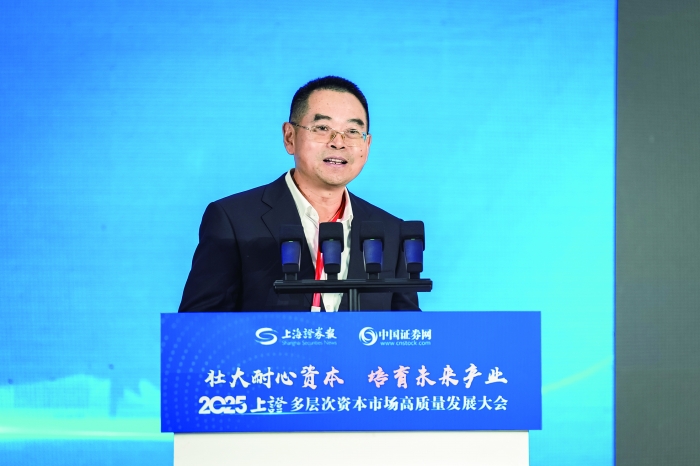
达晨财智董事长刘昼:创业投资行业迎来新使命与新变化
Shang Hai Zheng Quan Bao· 2025-12-17 19:19
Core Viewpoint - Venture capital and private equity are essential components in building a modern industrial system and developing new productive forces in China, as highlighted in the keynote speech at the 2025 Shanghai Multi-level Capital Market High-Quality Development Conference [2] Group 1: New Missions of Venture Capital - The venture capital industry in China has three new missions, with a primary focus on promoting technological self-reliance and seizing competitive advantages in technology and future development [3] - The industry aims to support the modernization of the industrial system and strengthen the foundation of the real economy, as well as develop integrated investment and production models to promote regional coordinated development [4] Group 2: Industry Changes and Trends - The venture capital industry is undergoing a deep adjustment, transitioning into a phase of quality improvement, with a market recovery and renewed confidence observed [5] - In the first three quarters of 2025, 3,501 funds were raised in China's private equity market, an increase of 18.3% year-on-year, with a total fundraising amount of 11,614.35 billion yuan, up 8.0% year-on-year [5] - The number of investment cases reached 8,295, reflecting a 19.8% year-on-year increase, with disclosed investment amounts around 5,407.30 billion yuan, up 9.0% year-on-year [5] - The dominance of state-owned capital limited partners (LPs) is solidifying, with characteristics of patient capital becoming more prominent [5] - Investment in "hard technology" continues to rise, with significant funding directed towards the semiconductor and electronic equipment sectors, exceeding 130 billion yuan [5] - The artificial intelligence sector saw 1,011 financing cases with total investments over 88 billion yuan, marking a 26.0% year-on-year increase [5] - The capital market is gradually shifting towards a new paradigm of high-quality development centered on technological innovation and supported by institutional inclusiveness [5] - A notable positive change is the continued recovery of A-share IPOs, with increased inclusivity for unprofitable technology enterprises [5]