
黑色金属矿采选

Search documents
中钢集团马鞍山矿山研究总院取得用于滑劈型边坡破坏模式的加固支撑方法专利
Sou Hu Cai Jing· 2026-02-17 03:18
Group 1 - The State Intellectual Property Office of China has granted a patent to China Steel Group Ma'anshan Mining Research Institute Co., Ltd. for a method of reinforcing support for sliding-type slope failure modes, with the announcement number CN116497847B and application date of May 2023 [1] - China Steel Group Ma'anshan Mining Research Institute Co., Ltd. was established in 1992, located in Ma'anshan City, and primarily engages in professional technical services, with a registered capital of 3,083.75194 million RMB [1] - The company has made investments in 13 enterprises, participated in 1,955 bidding projects, holds 1 trademark, and has 1,198 patents along with 47 administrative licenses [1] Group 2 - Huawai Metal Mineral Resources Efficient Recycling National Engineering Research Center Co., Ltd. was established in 2006, located in Ma'anshan City, and primarily operates in the black metal mining and selection industry, with a registered capital of 50 million RMB [1] - The company has participated in 30 bidding projects, holds 318 patents, and has 3 administrative licenses [1]
以精准服务全力支持企业扩产增效转型升级
Xin Lang Cai Jing· 2026-02-06 21:59
Group 1 - The core viewpoint of the article emphasizes the importance of enterprise development and innovation in enhancing market competitiveness, as highlighted by the visit of the provincial political consultative conference chairman to various companies [1][2] - Liaoning Jinning Mining Co., Ltd. is working on a 10 million ton iron ore environmental intelligent processing project, focusing on smart production to improve competitiveness in the black metal mining sector [1] - Hilda Automotive Parts (Liaoning) Co., Ltd. holds over 70% market share in automotive interior flocking products and is recognized as a national intellectual property advantage enterprise and provincial high-tech enterprise [1] Group 2 - During the visit, a meeting was held where company leaders discussed challenges related to policy support, industrial chain coordination, and talent cultivation [2] - The chairman emphasized the need for innovation-driven development and encouraged companies to focus on core business areas to enhance their competitive edge [2] - There is a call for government departments to align with enterprise needs, optimize the business environment, and support companies in expanding production and upgrading [2]
政策红利加速产业升级 开放枢纽赋能“链式出海”
Zhong Guo Zheng Quan Bao· 2025-12-17 20:17
Core Insights - Hainan Free Trade Port has initiated full island closure operations, marking a new phase of "first-line opening, second-line control, and internal freedom" with approximately 6,600 tax items enjoying "zero tariffs," increasing coverage from 21% to 74% of all tax items [1] Group 1: Policy Changes and Economic Impact - The core driver of the full island closure operation is a systematic and deep institutional innovation, with the range of "zero tariff" goods expanding from 1,900 to about 6,600 tax items, significantly increasing the level of openness by nearly 53 percentage points [1] - The new policy allows "zero tariff" goods and their processed products to circulate freely among various entities, enhancing industrial competitiveness and forming industrial clusters [2] - The shift from a "specific list of benefits" to "freedom outside the list" greatly reduces institutional transaction costs and operational uncertainties for enterprises [2] Group 2: Industry Development and Collaboration - Hainan's modern industrial system is rapidly taking shape, with the four leading industries—tourism, modern services, high-tech industries, and tropical agriculture—accounting for 67% of GDP, an increase of 13.7 percentage points over five years [3] - The full closure operation facilitates deep collaboration and integration of local industries, allowing companies to extend their business boundaries and value chains [3] - Companies like Haixia Co. are diversifying their business by integrating marine tourism resources with transportation services, contributing to the construction of an international tourism consumption center [3] Group 3: Financial Innovation and Support - Innovative financial products, such as intellectual property supply chain asset-backed securities, have emerged in Hainan, demonstrating deep interaction between finance and the real economy [4] - The financial sector is guiding capital towards key areas, supporting the quality improvement of the real economy, and contributing to the construction of a modern industrial system [4] Group 4: Global Integration and Strategic Positioning - Hainan Free Trade Port serves as a "super hub" for Chinese enterprises, facilitating a transition from "single-point breakthroughs" to "chain-based overseas expansion" [5] - The port's positioning as an international trade transit hub, along with policies for trade liberalization and cross-border capital flow, enhances companies' responsiveness to global demands [5] - Regional cooperation, such as the Zhejiang-Qiong cooperation industrial park, aims to integrate Hainan's policy advantages with other provinces' industrial strengths, further amplifying Hainan's hub value [6]
11月广东CPI同比上涨0.4% 同比涨幅扩大 PPI环比继续上涨
Nan Fang Ri Bao Wang Luo Ban· 2025-12-12 07:56
Group 1: Consumer Price Index (CPI) Analysis - In November, Guangdong's Consumer Price Index (CPI) increased by 0.4% year-on-year, with a month-on-month decrease of 0.4% [1] - The average CPI from January to November showed a decline of 0.2% compared to the same period last year [1] - Food prices rose by 0.3% year-on-year, contributing approximately 0.06 percentage points to the CPI increase [1] - Service prices remained stable with a year-on-year increase of 0.4%, while industrial consumer goods prices rose by 0.2%, a decrease of 0.2 percentage points from October [1] - Notable increases in jewelry prices included gold (up 59.3%), platinum (up 55.1%), and silver (up 10.8%), collectively contributing about 0.24 percentage points to the CPI [1] - Clothing prices increased by 2.3%, while prices for fuel and new energy vehicles decreased by 4.1% and 4.9%, respectively [1] - Energy prices fell by 3.3%, with gasoline prices down 7.6%, impacting the CPI by approximately 0.28 percentage points [1] Group 2: Producer Price Index (PPI) Analysis - In November, Guangdong's Producer Price Index (PPI) decreased by 1.6% year-on-year, with a month-on-month increase of 0.1% [2] - The Industrial Producer Price Index (IPI) saw a year-on-year decline of 2.5% and a month-on-month increase of 0.3% [2] - From January to November, the average PPI fell by 1.5%, while the IPI decreased by 2.9% [2] - Among 38 major industries surveyed, 10 experienced price increases, 25 saw declines, and 3 remained stable, indicating an industry increase rate of 26.3%, which is a 5.2 percentage point increase from October [2] - Prices for production materials decreased by 2.2%, while living materials saw a decline of 0.6%, with the latter's decline remaining stable compared to October [2] - In terms of month-on-month changes, 16 industries increased prices, 14 decreased, and 8 remained stable, maintaining an industry increase rate of 42.1% [2] - The decline in oil prices affected the petrochemical sector, leading to a 0.8% price drop, while the rise in gold prices boosted prices in the cultural and sports goods manufacturing sector by 2.9% [2] - The black metal mining sector saw a price increase of 2.7% due to adjustments in steel production capacity and increased demand, while the black metal smelting and rolling industry rose by 1.5% [2] - The non-ferrous metal smelting and rolling industry experienced a 1.7% price increase due to tight copper supply and rising demand from emerging industries [2] - Electrical machinery and equipment manufacturing prices rose by 0.3% due to increased raw material costs, while computer manufacturing prices increased by 1.6% driven by AI server demand [2]
社保基金三季度重仓17股,锁定高增长潜力股
Huan Qiu Wang· 2025-10-23 03:45
Core Insights - The Social Security Fund actively adjusted its portfolio in Q3, entering 7 new stocks and increasing holdings in 10 stocks, focusing on high-growth potential companies with solid fundamentals [1][3] - By the end of Q3, the Social Security Fund appeared among the top ten shareholders of 33 stocks, with a total holding value of 13.07 billion yuan [1] - The fund maintained its position in 6 stocks, while reducing holdings in 10 stocks, indicating a strategy to optimize its portfolio amid market fluctuations [1] New Investments - The Social Security Fund made its first investments in 7 stocks, including Jinling Mining, Lanke High-tech, and Electric Connection Technology, with Jinling Mining receiving the largest allocation of 8.81 million shares [1] - Most of the newly invested companies showed strong performance, with 6 out of 7 reporting year-on-year profit growth in the first three quarters, and Lanke High-tech successfully turning a profit [1] - The average increase in the stock prices of the newly invested companies since October was 0.28%, with Jinling Mining seeing a cumulative increase of over 10% [1] Increased Holdings - The Social Security Fund increased its holdings in 10 stocks, with Poly Development receiving the largest increase of 19.86 million shares [3] - The fund's stake in Sankeshu and Xinqianglian grew by over 1.3 percentage points, reflecting strong confidence in their future development [3] - Among the 10 companies that received increased investments, 9 reported year-on-year profit growth in the first three quarters, with Xinqianglian turning a profit and achieving over 600 million yuan in net profit, benefiting from industry demand recovery and cost control [3] Investment Strategy - The investment trends of the Social Security Fund in Q3 signal a strong focus on quality growth stocks that represent China's economic transformation and upgrading [3] - The fund adheres to a value investment philosophy, prioritizing companies' profitability and growth potential as key decision-making criteria [3] - As a stabilizing force in the market, the Social Security Fund's holdings provide significant reference value for investors [3]




前7个月我省经济运行总体平稳
Liao Ning Ri Bao· 2025-08-21 01:29
Economic Overview - The overall economic operation of the province is stable from January to July, with a year-on-year industrial added value growth of 3.9% [1] - High-tech manufacturing industry shows a significant growth of 7.8% [1] Industrial Performance - Mining industry increased by 10.9%, while manufacturing and electricity, heat, gas, and water production and supply industries grew by 3.0% and 1.1% respectively [1] - Among 40 major industrial categories, 23 experienced year-on-year growth, representing a growth rate of 57.5% [1] - Notable growth in chemical fiber manufacturing (9.3 times), and double-digit growth in several sectors including pharmaceutical manufacturing and electrical machinery [1] Investment Trends - Manufacturing investment increased by 22.8%, with high-tech manufacturing investment rising by 37.0% [2] - First industry investment decreased by 7.1%, while second industry investment grew by 7.9% [2] - Construction project investment increased by 1.8%, with projects over 100 million yuan growing by 6.0% [2] Consumer Market - Retail sales of consumer goods reached 597.72 billion yuan, with a year-on-year growth of 5.5% [2] - Significant growth in essential goods, with food retail sales increasing by 17.0% and daily necessities by 12.9% [2] - Upgraded products like smartphones and wearable devices saw substantial sales growth, with smartphones increasing by 130% [2] Trade Performance - Total import and export value reached 437.61 billion yuan, with exports growing by 13.6% [3] - Agricultural product exports increased by 9.1%, while steel and electromechanical products also saw growth [3] Price Trends - A slight decline in consumer prices and a decrease in industrial producer prices were noted [4]
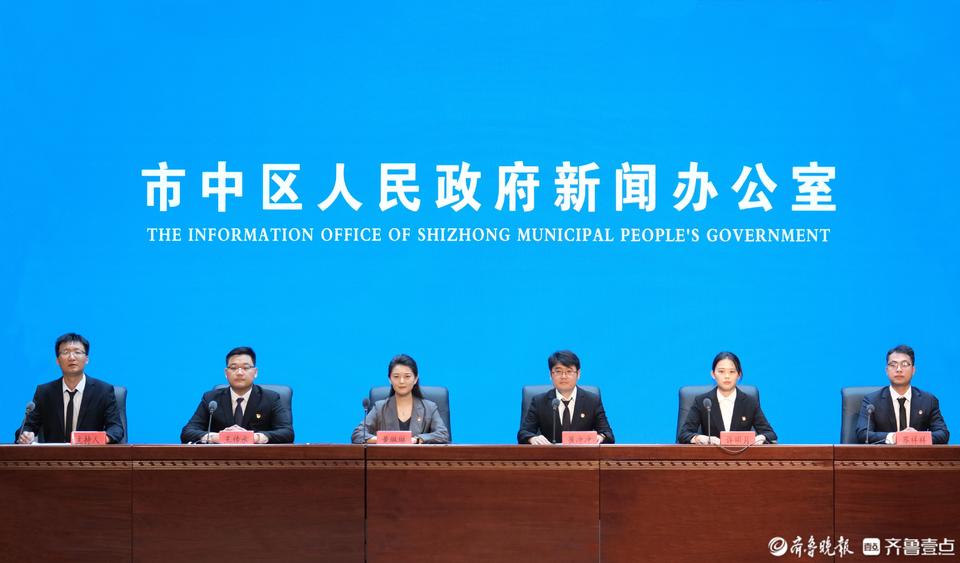
枣庄市市中区今年上半年GDP增速预计6%以上
Qi Lu Wan Bao Wang· 2025-07-17 14:23
Core Viewpoint - The economic performance of Zaozhuang's Shizhong District shows strong growth indicators, with GDP growth of 6.9% in Q1 and an expected GDP growth of over 6% for the first half of the year, indicating a positive economic trajectory [1][3]. Economic Performance - In Q1, the district's GDP grew by 6.9%, ranking first in the city [3]. - Fixed asset investment increased by 8.0% in the first half of the year [3]. - Retail sales of consumer goods grew by 6.7% in the first half [3]. - The service industry saw a revenue of 30.77 billion yuan, a year-on-year increase of 15.0% [3]. - The revenue from ten industries contributing to GDP reached 19.11 billion yuan, with a year-on-year growth of 33.4% [3]. Industry Structure - The ratio of the three industries in Q1 was 2.2:35.2:62.6, indicating a strong service sector [3]. - The first industry grew by 3.5%, reflecting a favorable agricultural production situation [3]. - The second industry's share increased by 1.2 percentage points compared to 2024, showing positive industrial development [3]. - The third industry is transitioning towards modern services, focusing on cultural creativity and technology services [3]. Consumption and Investment Initiatives - The district is actively promoting new consumption scenarios and launching various consumption-boosting activities [4]. - Policies to encourage the replacement of old consumer goods are being continued, with events for automobiles and home appliances planned [4]. - The district aims to secure 17.67 billion yuan in various policy funds to support economic development and improve living standards [4]. - Key projects include the establishment of a national coal storage base and a new energy storage project, enhancing the district's strategic importance [4].
2025年4月物价数据点评:油价拖累,通胀低位运行
Shanghai Securities· 2025-05-15 05:50
Group 1: CPI and PPI Analysis - In April 2025, the Consumer Price Index (CPI) decreased by 0.1% year-on-year, remaining unchanged from the previous month[11] - The CPI increased by 0.1% month-on-month, reversing a previous decline of 0.4%[12] - Energy prices fell by 4.8% year-on-year, with gasoline prices dropping by 10.4%, contributing approximately 0.38 percentage points to the CPI decline[13] - The Producer Price Index (PPI) decreased by 2.7% year-on-year, with the decline widening by 0.2 percentage points compared to the previous month[11] Group 2: Economic Implications and Policy Outlook - The low inflation environment provides room for policy adjustments, with both monetary and fiscal policies expected to be more proactive[4] - The decline in oil prices has led to a decrease in domestic prices across related industries, impacting overall economic stability[4] - The core CPI, excluding food and energy, rose by 0.5%, indicating stable demand despite the overall CPI decline[14] - The report suggests that the current economic conditions allow for a more aggressive macroeconomic policy response to external uncertainties[30] Group 3: Risks and Market Considerations - Potential risks include worsening geopolitical events, changes in international financial conditions, and unexpected shifts in US-China policies[5] - The report emphasizes the importance of monitoring external factors that could impact domestic economic performance and inflation trends[30]