自动驾驶

Search documents
【汽车】特斯拉ModelS/ModelX将停产 | 奔驰140周年各大车企送祝福
Xin Lang Cai Jing· 2026-01-29 12:13
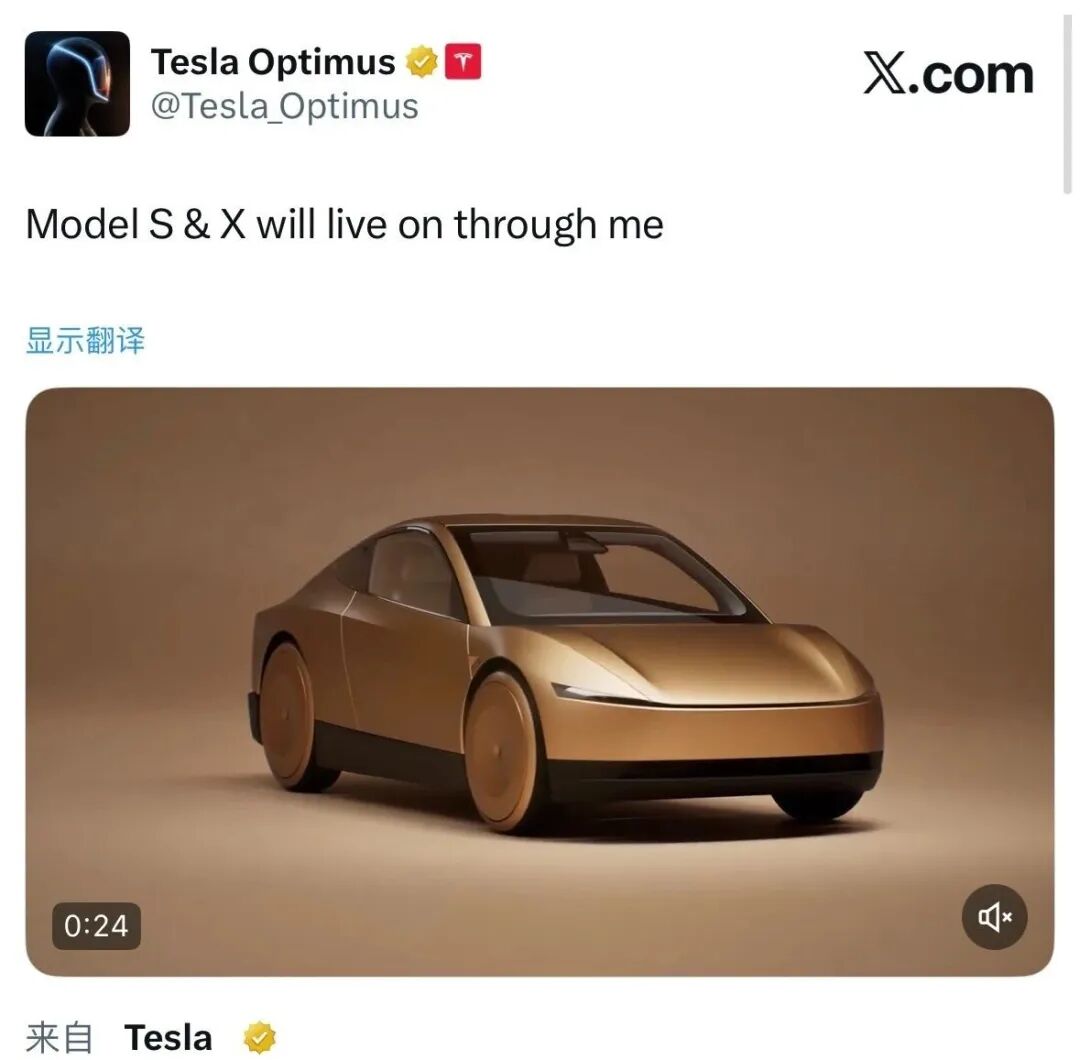
Group 1 - Tesla CEO Elon Musk announced the retirement of Model S and Model X, stating it is time to focus on a future centered around autonomous driving [3][35][31] - Production lines for Model S and Model X at the Fremont factory will be replaced with the Optimus production line, while support for existing owners will continue as long as they use their vehicles [3][35] - Model S was launched in 2012 and is considered the first mainstream electric vehicle, while Model X was introduced in 2015 [5][37] Group 2 - Mercedes-Benz celebrated its 140th anniversary, marking the historical moment when Karl Benz submitted the patent application for the first automobile in 1886 [5][37] - Various automotive companies, including Cadillac, Buick, and NIO, sent congratulatory messages to Mercedes-Benz on social media, highlighting the significance of the milestone in the automotive industry [30][62] - The celebration reflects the long-standing history and innovation within the automotive sector, with Mercedes-Benz recognized as a pioneer [5][39]


理想汽车比谁都现实
Xin Lang Cai Jing· 2026-01-29 12:13
Core Viewpoint - Li Auto is undergoing a strategic recalibration by closing approximately 100 inefficient retail stores while simultaneously investing in AI and robotics, reflecting a dual approach of contraction and expansion in response to market challenges [2][4][12]. Group 1: Retail Strategy and Market Position - In early 2026, Li Auto plans to close around 100 low-efficiency retail stores, which are often located in prime areas of first and second-tier cities, as part of a broader strategy to adapt to changing consumer behaviors [4][27]. - The adjustment is not merely a cost-cutting measure but a strategic realignment following a year of declining performance, as consumers increasingly prefer shopping in multi-level commercial spaces rather than traditional car showrooms [6][29]. - In 2025, Li Auto set an ambitious sales target of 700,000 vehicles, which was later revised down to 640,000, with actual deliveries falling to approximately 406,343 vehicles, resulting in a loss of market leadership to competitors like Leap Motor [7][30]. Group 2: Financial Performance and Challenges - Li Auto's third-quarter revenue for 2025 was reported at 27.4 billion yuan, a year-on-year decline of 36.2%, with a net loss of 624 million yuan, marking the end of 11 consecutive profitable quarters [9][32]. - The decline in performance is attributed to setbacks in the pure electric vehicle market and increased competition from rivals employing aggressive pricing strategies [9][32]. - The company currently operates 548 retail centers, which incurs significant costs, prompting the need for channel optimization to improve overall efficiency [10][33]. Group 3: Future Strategy and AI Investment - Li Auto is shifting its focus towards AI technology and robotics, with plans to develop foundational models, chips, and intelligent systems, aiming to position itself among the top three global players in this field by 2028 [12][37]. - The company has expressed intentions to expand its brand identity from merely creating "mobile homes" to a broader vision encompassing "embodied intelligence," including the development of humanoid robots [14][37]. - Following the announcement of store closures and AI investments, Li Auto's stock rose by 4.9%, indicating positive market reception despite differing opinions among investors regarding the company's long-term competitiveness [16][39]. Group 4: Market Reactions and Analyst Ratings - Analysts are divided on Li Auto's long-term prospects, with optimistic views focusing on the potential of self-developed chips and AI models, while cautious perspectives highlight immediate operational pressures [18][42]. - Some analysts maintain a positive rating, projecting a target price of 100 HKD for the stock, while others have downgraded their ratings due to concerns over short-term challenges, setting a target price of 17.5 USD [18][43].

特斯拉Q4财报解读:灾难性的一季
美股研究社· 2026-01-29 12:09
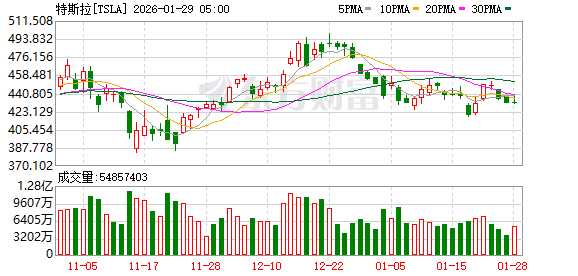
Core Viewpoint - Tesla's recent quarterly earnings report slightly exceeded market expectations, but the actual operational data is underwhelming, leading analysts to conclude that Tesla currently lacks investment value [2][3]. Financial Performance - Revenue and profit metrics slightly surpassed market consensus, but the overall performance is disappointing, with a year-over-year revenue decline in Q4 [3]. - Q4 revenue dropped 11% year-over-year, with a more significant 17% decline quarter-over-quarter, primarily due to weak automotive sales [3][6]. - Adjusted EBITDA margin fell from 16.9% to 16.7%, indicating a continuous decline in profit margins [7]. - Q4 earnings per share (EPS) dropped 60% year-over-year under GAAP, and adjusted EPS fell 17% [7]. Cash Flow and Capital Expenditure - Operating cash flow for Q4 was $3.8 billion, down over 20% year-over-year, while free cash flow decreased by 30% to $1.4 billion [8]. - The projected annual free cash flow is between $5 billion and $6 billion, resulting in a historical free cash flow P/E ratio of approximately 250 times [8][10]. - Despite a year-over-year decrease in capital expenditures, free cash flow still declined, raising concerns about the sustainability of growth plans [9]. Market Position and Valuation - Tesla's automotive revenue is declining while the energy business, which grew 25% year-over-year, is too small to offset the automotive downturn [6][10]. - Analysts believe Tesla is significantly overvalued, with a historical free cash flow P/E ratio of 250 times and a P/E ratio of about 400 times based on the last 12 months' earnings [10]. - The company's future growth is heavily reliant on the autonomous taxi and robotics sectors, where it lags behind competitors like Waymo [10][11]. Analyst Sentiment - Analysts maintain a bearish outlook on Tesla, citing the struggles in its core automotive business and the lack of progress in its future ventures as reasons for skepticism [12].
特斯拉史上首次年营收下滑,将停产Model S/X
21世纪经济报道· 2026-01-29 11:39
Core Viewpoint - Tesla faces unprecedented challenges as it reports its first annual revenue decline in history, with total revenues down 3% year-over-year in 2025, primarily due to a significant drop in automotive revenues and net income [4][6][7]. Financial Performance - Total automotive revenues for 2025 were $69.526 billion, a decrease of 10% from 2024, while total revenues were $94.827 billion, down 3% [6][7]. - Net income attributable to common stockholders (GAAP) fell by 46% to $3.794 billion, with diluted EPS dropping 47% to $1.08 [6][7]. - In Q4 2025, automotive revenue decreased by 11% to $17.693 billion, with vehicle deliveries down 15.61% to 418,200 units [7]. Strategic Shifts - CEO Elon Musk announced a new mission to "create incredible wealth," indicating a shift from being solely an electric vehicle manufacturer to a technology and mobility service company focused on autonomous driving and AI [8][11]. - Tesla plans to invest over $20 billion in 2026 for AI infrastructure and production capacity for Optimus robots and Robotaxi projects [8][11]. Product and Capacity Adjustments - The production of Model S and Model X will be gradually phased out, with the Fremont factory being repurposed for Optimus robot production [8][12]. - The Optimus 3 robot is set to be released soon, with a long-term production goal of 1 million units annually [8][12]. Autonomous Driving and Robotaxi Developments - Tesla has approximately 1.1 million paid users for its Full Self-Driving (FSD) feature, representing a 12% penetration rate among total vehicle sales [9][11]. - The company is transitioning to a subscription model for FSD, which may impact short-term automotive gross margins [11][13]. Vertical Integration and Core Technology Investments - Tesla is prioritizing the development of its AI chips, with plans for a self-built wafer factory to mitigate future supply chain risks [10][11]. - The company has invested in xAI to enhance AI capabilities for managing Robotaxi and Optimus operations [10][11]. Competitive Landscape - Tesla identifies China as its strongest competitor in AI and large-scale manufacturing [14]. - The company believes it uniquely possesses the capabilities to address key challenges in high-performance robotics, real-world AI, and scalable production [14]. Other Product Updates - The Cybertruck maintains its market leadership, with no plans for traditional pickup designs [15]. - The next-generation Roadster is expected to launch in April, promising an extraordinary experience [15].
获易方达重仓22亿,北汽蓝谷(600733.SH)此次有何不同?
Ge Long Hui· 2026-01-29 11:36
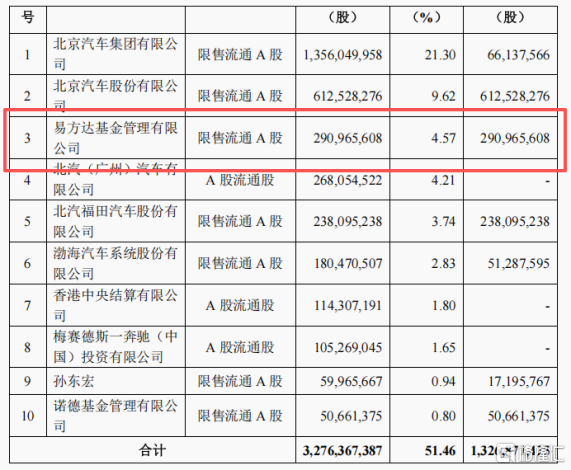
Core Viewpoint - The significant investment of 2.2 billion by E Fund in Beiqi Blue Valley, representing 36.67% of the total fundraising, indicates strong confidence in the company's potential for a turnaround in the competitive new energy vehicle market [1][19]. Group 1: Financial Performance and Growth Potential - Beiqi Blue Valley's projected loss for 2025 is between 4.35 billion to 4.65 billion, with a reduction in loss margin of 33% to 37%, marking the best performance in six years [6]. - The company expects to sell 209,600 vehicles in 2025, a year-on-year increase of 84.06%, with revenue projected to reach approximately 28 billion, reflecting a 93% growth [6]. - The gross margin turned positive for the first time at 1.8% in Q3 2025, breaking the previous cycle of losses [8]. - Operating cash flow turned positive with a net amount of 754 million in the first three quarters of 2025, indicating improved financial health [9]. Group 2: Strategic Positioning and Brand Development - Beiqi Blue Valley is transitioning from a traditional automaker to a tech-driven company with dual brand strategies, focusing on the "Extreme Fox" and "Xiangjie" brands [11]. - The "Extreme Fox" brand targets the mid-to-high-end consumer market, achieving a monthly sales record of over 24,000 units in December 2025, a 103% year-on-year increase [11]. - The "Xiangjie" brand, developed in collaboration with Huawei, aims at the luxury car market, with significant sales growth and recognition [12]. Group 3: Governance and Investment Dynamics - The entry of E Fund is expected to optimize Beiqi Blue Valley's governance structure and enhance operational efficiency, opening up new capital operation possibilities [13]. - The concentration of shareholding in the recent fundraising round, with E Fund alone accounting for 36.67%, reflects a strong commitment and thorough due diligence [18][19]. - E Fund's investment strategy emphasizes long-term growth by aligning with industry leaders, suggesting confidence in Beiqi Blue Valley's future performance [13][19].

年营收首下滑,特斯拉砍掉旗舰车型全力冲刺AI与机器人
Bei Ke Cai Jing· 2026-01-29 11:32
特斯拉2025年的财务数据,堪称"冰火两重天"的典型样本。储能业务的异军突起与全球汽车市场的全面承压,共同勾勒出特斯拉转型前夜的真实图景。 作为营收占比超73%的核心支柱,汽车业务的滑坡成为全年业绩的最大拖累:2025年特斯拉汽车业务收入695.26亿美元,同比下降10%;全年交付量163.61 万辆,同比下滑8.6%,连续第二年下滑;2025年第四季度交付新车41.82万辆,创下2022年第二季度以来的最低值。 当地时间1月28日美股盘后,特斯拉财报披露2025年全年营收948.27亿美元,同比下滑3%,创下公司史上首次年度营收下滑;GAAP(美国一般公认会计原 则)净利润约38亿美元,同比下降约46%,盈利能力下降明显。 从主营业务上看,特斯拉的汽车产品正在被超越,全球纯电销量冠军已被比亚迪摘下。面对新能源汽车产业走向红海竞争,特斯拉首席执行官马斯克将目光 转向AI(人工智能)与机器人。他提到,特斯拉将停产旗舰高端车型Model S/X,押注20亿美元入局AI,改造工厂为机器人提供100万辆/年产能。 这家曾定义电动汽车的公司,正试图加速冲入智能科技领域。马斯克说,"创新总要付出代价,但不创新的代价更大。 ...

特斯拉交出最惨年报后,马斯克将再一次成为“赌徒”
Guan Cha Zhe Wang· 2026-01-29 11:29
Core Insights - Elon Musk continues to take significant risks with Tesla, focusing on AI and robotics despite a decline in the automotive business and a substantial drop in net profit [3][20] - Tesla's market value remains high at $1.35 trillion, supported by investor optimism about future technologies rather than current financial performance [3][20] Financial Performance - Tesla's total revenue for 2025 was $94.83 billion, a 3% decline from $96.77 billion in 2024, marking the first annual revenue drop in the company's history [20] - The automotive revenue for 2025 was $69.53 billion, down 10% from the previous year [20] - Net income for 2025 was $3.794 billion, a 46% decrease compared to the previous year, representing a five-year low [20] Strategic Focus - Tesla plans to invest a record $20 billion in AI through its subsidiary xAI by 2026, significantly increasing from $8.5 billion in 2025 [4][5] - The company is shifting its focus from automotive sales to AI, autonomous driving, and robotics, with the COO stating that the automotive business is no longer the main focus [4][5] - Tesla aims to produce the Cybercab, a vehicle without a steering wheel or pedals, with production expected to start in the first half of the year [10][12] AI and Robotics Development - Tesla's Full Self-Driving (FSD) subscription users reached 1.1 million by the end of 2025, a 38% increase year-over-year [7] - The third-generation Optimus robot is set to be released in Q1, designed for mass production and capable of learning from human behavior [13][15] - Musk believes that Optimus will outperform any competing robots from China, emphasizing Tesla's technological edge in physical AI and dexterity [16][18] Market Position and Challenges - Despite high market valuation, Tesla faces increasing competition, particularly from China in the electric vehicle and robotics sectors [21] - The transition from a hardware-driven company to a physical AI company is seen as a radical shift, with current automotive business growth stagnating and new ventures still in the investment phase [20][21]
彭军回忆小马智行十年圆梦路:从餐桌旁的车库创业,到成为全运会无人驾驶火炬手
Xin Lang Cai Jing· 2026-01-29 11:19
Core Viewpoint - The event "Praise for China's Economy - Entrepreneur Night" highlighted the achievements of Pony.ai, a leader in autonomous driving technology in China, emphasizing its significant contributions to the automotive industry and the future of transportation [1][25]. Group 1: Company Achievements - Pony.ai, founded ten years ago, has successfully launched fully autonomous commercial operations in major Chinese cities, showcasing its commitment to innovation and technology [3][32]. - The company has maintained a focus on the robotaxi model, which is considered high-risk but reflects the dedication and early adoption of new economic opportunities by its founders [5][28]. - The founder, Peng Jun, expressed gratitude for the supportive environment that has allowed Pony.ai to thrive and emphasized the company's vision of making transportation safer, more convenient, and efficient [3][32]. Group 2: Industry Impact - The automotive industry is expected to undergo a significant transformation in the next five years due to advancements in autonomous driving technology, with Pony.ai positioned as a leading player in this evolution [6][29]. - The event featured discussions on how Pony.ai's innovations could lead to a new era in the automotive sector, similar to the assembly line revolution initiated by Ford in the 1940s [6][29]. - The advancements in autonomous driving technology are anticipated to enhance safety and efficiency in transportation, with Pony.ai leveraging multiple sensor technologies for improved environmental perception [20][43].
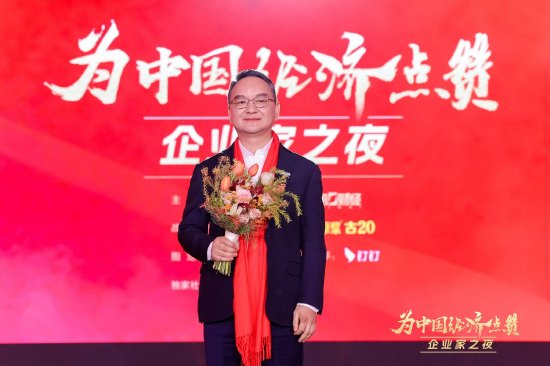
向彭军等企业家致敬,2025企业家之夜举行
Xin Lang Cai Jing· 2026-01-29 11:07
Core Viewpoint - The event "Praise for China's Economy - Entrepreneur Night" highlighted the achievements of Pony.ai, a leader in autonomous driving technology in China, emphasizing its significant contributions to the automotive industry and the future of transportation [1][24]. Group 1: Company Achievements - Pony.ai, founded ten years ago, has successfully launched fully autonomous commercial operations in major Chinese cities over the past two years [8][31]. - The company has maintained a focus on the robotaxi model, which is considered high-risk but reflects the dedication and early entry of entrepreneurs in the new economy [5][27]. - The founder, Peng Jun, expressed gratitude for the supportive environment that has allowed innovative companies like Pony.ai to thrive [31][26]. Group 2: Industry Impact - The next five years are expected to elevate the automotive industry significantly due to advancements in autonomous driving technology, with Pony.ai being recognized as a leading player in this transformation [6][28]. - The event featured discussions on how autonomous driving can enhance safety, convenience, and efficiency in transportation, aligning with the company's vision to make autonomous vehicles a common sight on the roads [31][26]. Group 3: Future Vision - Pony.ai aims to make autonomous driving a reality for everyday users, with aspirations for its vehicles to be widely accessible and visible in urban environments [31][26]. - The company is committed to improving the safety of autonomous driving through advanced technologies, including multi-sensor fusion and real-time monitoring systems [41][19].
特斯拉2025年财报:亚太市场电动车交付量创历史新高
Zhong Guo Xin Wen Wang· 2026-01-29 10:52
Core Insights - Tesla's 2025 annual report reveals a global production of approximately 1.655 million electric vehicles (EVs) and deliveries of 1.636 million EVs, with record high deliveries in the Asia-Pacific market [2] - The Shanghai Gigafactory delivered 851,000 EVs, accounting for over half of Tesla's global deliveries, maintaining its status as the largest export hub [2] - The Model Y remains the best-selling SUV in China for the year [2] - Tesla is evolving into a comprehensive technology company encompassing autonomous driving, humanoid robots, electric vehicles, and sustainable energy [2] - CEO Elon Musk emphasized the potential of AI and robotics to elevate human income and prosperity, moving beyond basic income [2] - Tesla plans to increase investment in humanoid robot design and production lines in 2026 [2] - In energy storage, Tesla's total installed capacity for storage products reached 46.7 GWh in 2025, a year-on-year increase of 48.7%, with Q4 installations at 14.2 GWh, marking record highs for both quarterly and annual figures [2] Group 1 - The Shanghai energy storage super factory officially commenced production in February 2025, with an annual capacity of 10,000 Megapacks and a storage scale of nearly 40 GWh [3] - By the end of 2025, the factory had produced 2,000 Megapacks, with products exported to Europe and Australia [3]