强化学习

Search documents
【重磅深度】AI+汽车智能化系列之十一——以地平线为例,探究第三方智驾供应商核心竞争力
东吴汽车黄细里团队· 2025-05-09 12:01
Core Viewpoint - The company is optimistic about the breakthrough opportunities for leading third-party intelligent driving suppliers, driven by the demand for equal access to intelligent driving and the performance catch-up and mass production validation [2][8]. Group 1: Market Opportunities - Leading third-party intelligent driving suppliers are expected to become the optimal solution for second- and third-tier automakers seeking equal access to intelligent driving, with a potential market share of around 50% of total new car sales [2][8]. - The current trend of intelligent driving is accelerating towards equal access, with a focus on cost reduction in systems, as automakers balance performance and cost in their strategies [2][8]. Group 2: Domestic Chip Comparison - NVIDIA's Orin series chips currently dominate the high-end intelligent driving market, but domestic chip suppliers have made significant progress in performance, mass production validation, and customer acquisition over the past five years [3][39]. - The domestic chip leader, Horizon Robotics, is entering a new cycle of product iteration and business model elevation, leading in the rollout of mid- to high-end intelligent driving chips and algorithms [11][39]. Group 3: Core Value of Third-Party Chip Suppliers - The importance of being a first mover is highlighted, as intelligent driving chips typically require over three years of R&D and manufacturing cycles, necessitating continuous iteration capabilities for cost-performance balance [4][54]. - The design and manufacturing cost perspective indicates that a 7nm intelligent driving chip can achieve cost parity with mature chip procurement at a production volume of 1.5 million units, emphasizing the need for high output and rapid iteration capabilities for self-developed chips [4][57]. Group 4: Algorithm Insights - The "BEV + Transformer" algorithm approach, focusing on "heavy perception, light mapping," has been validated and widely applied, reducing risks for Tier 1 suppliers and allowing them to keep pace with cutting-edge technologies [4][62]. - Horizon Robotics' latest intelligent driving algorithm, HSD, is positioned as a "showcase," balancing performance and efficiency while addressing the challenges of scaling up and out in intelligent driving systems [62][63]. Group 5: Industry Trends - The intelligent driving landscape is expected to see a significant shift towards equal access by 2026, with many domestic automakers planning to adopt domestic chips as their mainstream solution [28][43]. - The competitive landscape among automakers is intensifying, with a focus on high-level intelligent driving capabilities and the need for cost-effective solutions [2][8].


颠覆谷歌搜索API,成本降至88%,阿里开源RL框架ZeroSearch,重新定义AI搜索!
AI科技大本营· 2025-05-09 09:35
Core Insights - Alibaba's Tongyi team has launched ZeroSearch, a generative search engine framework that operates independently without external search interfaces, achieving low-cost and high-performance retrieval capabilities [1][10]. Group 1: ZeroSearch Overview - ZeroSearch allows users to run a 14 billion parameter model on four A100 GPUs for just $70.80, providing search capabilities that can rival or exceed Google [1][16]. - The framework employs a novel reinforcement learning approach to train search capabilities without interacting with real search engines, addressing issues of document quality and high API costs [2][6]. Group 2: Training Methodology - The training process involves lightweight supervised fine-tuning to convert a large model into a retrieval module capable of generating relevant and irrelevant documents based on queries [8]. - A curriculum learning strategy is introduced, gradually lowering document quality to challenge the model's reasoning and retrieval abilities, thus enhancing its search learning path [2][8]. Group 3: Cost Efficiency and Performance - ZeroSearch has demonstrated an 80%-90% reduction in training costs compared to traditional methods, making it a truly low-cost and high-performance solution for AI search training [10][16]. - In various experimental scenarios, ZeroSearch has achieved performance levels that are equal to or better than models trained with real search engines, with a 7 billion parameter model matching Google search quality and a 14 billion parameter version surpassing it [15][16]. Group 4: Open Source and Accessibility - The researchers have made their code, datasets, and pre-trained models publicly available on GitHub and Hugging Face, promoting accessibility for other researchers and companies [16].


拜拜,昂贵的谷歌搜索 API!阿里开源 RL 框架让大模型自给自足、成本直降88%,网友:游戏规则变了
AI前线· 2025-05-09 05:18
Core Viewpoint - Alibaba's new technology "ZeroSearch" significantly reduces the cost and complexity of training AI systems for information retrieval, eliminating the need for expensive commercial search engine APIs [1][2][14]. Summary by Sections Technology Overview - ZeroSearch is a reinforcement learning framework that allows large language models (LLMs) to develop advanced search capabilities through simulation, outperforming models based on real search engines while incurring zero API costs [2][3]. - The technology is compatible with various model series, including Qwen-2.5 and LLaMA-3.2, and does not require a separate supervised preheating phase [2][3]. Performance Metrics - In comprehensive experiments across seven question-answer datasets, ZeroSearch's performance matched or exceeded that of models trained with real search engines [3][5]. - A 3 billion parameter LLM can achieve search capabilities comparable to Google, while a 14 billion parameter module can surpass Google's performance [3][5]. Cost Efficiency - Training using Google search via SerpAPI for approximately 64,000 queries costs around $586.70, while using a 14 billion parameter simulated LLM on four A100 GPUs costs only $70.80, representing an 88% reduction in costs [7][8]. Methodology - ZeroSearch begins with a lightweight supervised fine-tuning process that transforms LLMs into retrieval modules capable of generating relevant and irrelevant documents in response to queries [9][11]. - The system employs a course-based learning deployment mechanism, gradually increasing the difficulty of generated documents to simulate challenging retrieval scenarios [11][12]. Implications for AI Development - ZeroSearch represents a significant shift in AI training methods, enabling AI systems to improve without relying on external tools like search engines [14][15]. - This technology creates a more equitable competitive environment for small AI companies and startups by drastically lowering the entry barrier associated with high API costs [14][15].

文生图进入R1时刻:港中文MMLab发布T2I-R1
机器之心· 2025-05-09 02:47
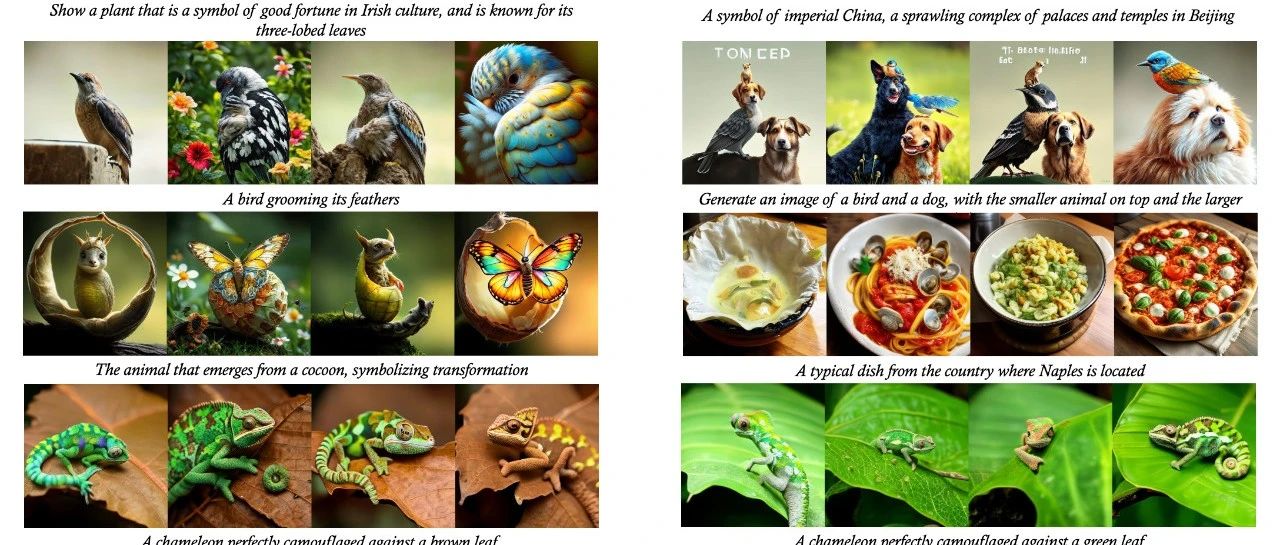
Core Viewpoint - The article discusses the development of T2I-R1, a novel text-to-image generation model that utilizes a dual-level Chain of Thought (CoT) reasoning framework combined with reinforcement learning to enhance image generation quality and alignment with human expectations [1][3][11]. Group 1: Methodology - T2I-R1 employs two distinct levels of CoT reasoning: Semantic-CoT and Token-CoT. Semantic-CoT focuses on the global structure of the image, while Token-CoT deals with the detailed generation of image tokens [6][7]. - The model integrates Semantic-CoT to plan and reason about the image before generation, optimizing the alignment between prompts and generated images [7][8]. - Token-CoT generates image tokens sequentially, ensuring visual coherence and detail in the generated images [7][8]. Group 2: Model Enhancement - T2I-R1 enhances a unified language and vision model (ULM) by incorporating both Semantic-CoT and Token-CoT into a single framework for text-to-image generation [9][11]. - The model uses reinforcement learning to jointly optimize the two levels of CoT, allowing for multiple sets of Semantic-CoT and Token-CoT to be generated for a single image prompt [11][12]. Group 3: Experimental Results - The T2I-R1 model demonstrates improved robustness and alignment with human expectations when generating images based on prompts, particularly in unusual scenarios [13]. - Quantitative results indicate that T2I-R1 outperforms baseline models by 13% and 19% on the T2I-CompBench and WISE benchmarks, respectively, and surpasses previous state-of-the-art models [16].
阶跃星辰姜大昕:多模态目前还没有出现GPT-4时刻
Hu Xiu· 2025-05-08 11:50
Core Viewpoint - The multi-modal model industry has not yet reached a "GPT-4 moment," as the lack of an integrated understanding-generating architecture is a significant bottleneck for development [1][3]. Company Overview - The company, founded by CEO Jiang Daxin in 2023, focuses on multi-modal models and has undergone internal restructuring to form a "generation-understanding" team from previously separate groups [1][2]. - The company currently employs over 400 people, with 80% in technical roles, fostering a collaborative and open work environment [2]. Technological Insights - The understanding-generating integrated architecture is deemed crucial for the evolution of multi-modal models, allowing for pre-training with vast amounts of image and video data [1][3]. - The company emphasizes the importance of multi-modal capabilities for achieving Artificial General Intelligence (AGI), asserting that any shortcomings in this area could delay progress [12][31]. Market Position and Competition - The company has completed a Series B funding round of several hundred million dollars and is one of the few in the "AI six tigers" that has not abandoned pre-training [3][36]. - The competitive landscape is intense, with major players like OpenAI, Google, and Meta releasing numerous new models, highlighting the urgency for innovation [3][4]. Future Directions - The company plans to enhance its models by integrating reasoning capabilities and long-chain thinking, which are essential for solving complex problems [13][18]. - Future developments will focus on achieving a scalable understanding-generating architecture in the visual domain, which is currently a significant challenge [26][28]. Application Strategy - The company adopts a dual strategy of "super models plus super applications," aiming to leverage multi-modal capabilities and reasoning skills in its applications [31][32]. - The focus on intelligent terminal agents is seen as a key area for growth, with the potential to enhance user experience and task completion through better contextual understanding [32][34].
98年清华小伙,如何带着一群草根在机器人马拉松中逆袭?
混沌学园· 2025-05-08 11:08
Core Viewpoint - The article discusses the journey of Songyan Power, a startup in the humanoid robot sector, highlighting its unconventional approach to overcoming challenges in funding, technology, and commercialization, ultimately demonstrating that success can come from grassroots efforts rather than elite backgrounds [1][39]. Funding Survival - The company faced significant funding challenges due to its grassroots team lacking prestigious backgrounds, making it difficult to attract investors in a nascent market [7][8]. - Initial self-funding of 1 million RMB allowed the team to create a demonstrable humanoid robot, which subsequently attracted interest from investors, leading to a seed round of 7.6 million RMB [11][13]. - After securing initial funding, the company quickly progressed from a prototype to a functional robot, raising an additional 25 million RMB shortly thereafter [13]. Technical and Talent Bottlenecks - The company encountered a technical and talent bottleneck after initial successes, leading to a cash burn rate of 3 million RMB per month and a precarious financial situation [15][17]. - Acknowledging the need for a shift in strategy, the company decided to pivot towards deep reinforcement learning, a more advanced algorithmic approach, despite the high demand and low supply of qualified engineers in this field [20][22]. - The company implemented a targeted recruitment strategy to identify and cultivate potential talent, leading to the successful onboarding of engineers who could contribute to the development of advanced humanoid robots [24][25]. Commercialization Challenges - By 2025, the company faced a new challenge in commercialization, lacking personnel with marketing and sales expertise, which hindered its ability to gain market visibility [27][28]. - The company recognized the need for a marketing strategy and initiated a campaign centered around a high-profile demonstration of a backflip, which showcased the robot's capabilities and attracted media attention [30][31]. - Following the successful marketing efforts, the company secured over 1,000 orders for its humanoid robots, marking a significant turnaround in its commercial prospects [34][35]. Key Insights - The company learned that tangible product demonstrations were more effective in overcoming trust barriers with investors than mere business plans [37]. - The importance of identifying and nurturing potential talent rather than solely relying on established experts was emphasized as a critical factor in overcoming technical challenges [37]. - The necessity of integrating marketing and sales strategies into the business model was highlighted as essential for sustainable growth and market presence [37].

国泰海通:具身智能驱动人形机器人商业化落地 算法突破等成行业上涨催化剂
智通财经网· 2025-05-08 07:56
Group 1 - The core viewpoint is that embodied intelligence is the key to the commercialization of humanoid robots, with a market space exceeding one trillion yuan, and the intelligent level of humanoid robots in China is expected to evolve significantly by 2045 [1] - Humanoid robots possess human-like perception, body structure, and movement, making them highly adaptable to human society, with potential applications in manufacturing, social services, and hazardous operations [1] - The market scale for humanoid robots is currently below ten billion yuan, but as intelligent levels progress towards embodied intelligence, the market is expected to expand significantly [1] Group 2 - Multi-modal large models and reinforcement learning are enhancing operational control performance, with significant advancements in communication and computing power to support real-time control [2] - Major companies like NVIDIA and Tesla are integrating multi-modal perception to improve robot interaction and decision-making accuracy, while the development of embodied reasoning models is expected to enhance performance in complex environments [2] - The adoption of pure visual solutions and advanced sensors is anticipated to lower hardware costs and improve perception sensitivity, with EtherCAT emerging as a mainstream communication protocol due to its high real-time performance [2]

突破多模态奖励瓶颈!中科院清华快手联合提出R1-Reward,用强化学习赋予模型长期推理能力
量子位· 2025-05-08 06:58
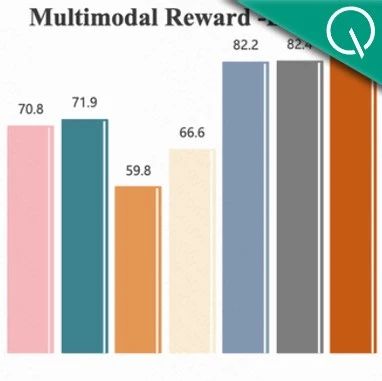
Core Viewpoint - The article discusses the development of the R1-Reward model, which utilizes a stable reinforcement learning algorithm (StableReinforce) to enhance the performance of multi-modal reward models (MRMs) in multi-modal large language models (MLLMs) [1][45]. Group 1: Model Development and Performance - The R1-Reward model achieves a performance improvement of 5%-15% compared to the current state-of-the-art (SOTA) models in existing multi-modal reward model benchmarks [2]. - The model's performance can further increase with more inference sampling, indicating the potential for significant optimization through reinforcement learning [3]. - R1-Reward demonstrates outstanding results on several mainstream multi-modal reward model evaluation benchmarks, significantly surpassing previous best models, with improvements of 8.4% and 14.3% on different leaderboards [11][38]. Group 2: Key Contributions and Innovations - The model provides stable rewards during training and selects better sample results during evaluation, and can also function as an evaluator independently [4]. - The introduction of a "consistency reward" mechanism ensures that the model's analysis aligns with its final answer, promoting logical judgments [11][31]. - The research team collected 200,000 preference data points to construct the R1-Reward-200k dataset for training, employing a progressive difficulty training strategy to enhance model learning [11][34]. Group 3: Algorithm Enhancements - The StableReinforce algorithm addresses the limitations of existing reinforcement learning methods by introducing improvements such as Pre-Clip and Advantage Filter to stabilize training and enhance performance [9][26]. - The Pre-Clip strategy mitigates the impact of large ratio differences during probability calculations, while the Advantage Filter retains only samples within a specified range to avoid extreme values affecting training stability [23][26]. - The model's average output length decreased by approximately 15% after reinforcement learning training, suggesting increased efficiency [44]. Group 4: Future Directions - The article highlights the potential for further exploration in the application of reinforcement learning in reward modeling, including advanced voting strategies for inference and improved training methods to enhance the model's foundational capabilities [45].
仅看视频就能copy人类动作,宇树G1分分钟掌握100+,UC伯克利提出机器人训练新方式
量子位· 2025-05-08 04:04
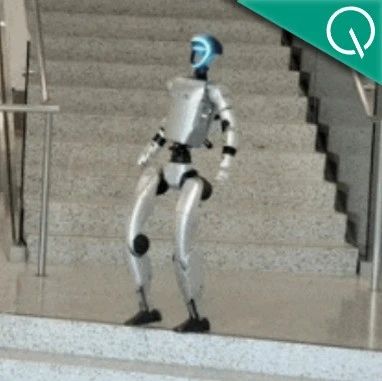
Core Viewpoint - The article discusses the development of a new robotic training system called VideoMimic by a team from UC Berkeley, which allows robots to learn human movements from video without the need for motion capture technology [1][2]. Group 1: VideoMimic System Overview - VideoMimic has successfully enabled the Yushun G1 robot to mimic over 100 human actions [2]. - The core principle of VideoMimic involves extracting pose and point cloud data from videos, training in a simulated environment, and ultimately transferring the learned actions to a physical robot [3][17]. - The system has garnered significant attention online, with comparisons made to characters like Jack Sparrow from "Pirates of the Caribbean" [4]. Group 2: Training Process - The research team collected a dataset of 123 video clips filmed in everyday environments, showcasing various human movement skills and scenarios [5][6]. - The Yushun Go1 robot has been trained to adapt to different terrains and perform actions such as stepping over curbs and descending stairs, demonstrating its ability to maintain balance even when slipping [7][14][16]. Group 3: Technical Workflow - VideoMimic's workflow consists of three main steps: converting video to a simulation environment, training control strategies in simulation, and validating these strategies on real robots [18]. - The first step involves reconstructing human motion and scene geometry from single RGB videos, optimizing for accurate alignment of human movements and scene geometry [19]. - The second step processes the scene point cloud into a lightweight triangular mesh model for efficient collision detection and rendering [21]. Group 4: Strategy Training and Deployment - The training process is divided into four progressive stages, resulting in a robust control strategy that requires only the robot's proprioceptive information and local height maps as input [24]. - The Yushun Go1 robot, equipped with 12 degrees of freedom and various sensors, serves as the physical testing platform for deploying the trained strategies [30][31]. - The deployment involves configuring the robot's PD controller to match the simulation environment and utilizing real-time data from its depth camera and IMU for effective movement [35][39]. Group 5: Research Team - The project features four co-authors, all PhD students at UC Berkeley, with diverse research interests in robotics, computer vision, and machine learning [43][48][52].
梁文锋和杨植麟再“撞车”
创业家· 2025-05-07 09:57
Core Viewpoint - The article discusses the competitive landscape in the AI large model sector, focusing on the advancements and challenges faced by companies DeepSeek and Kimi, as well as the impact of larger players like Alibaba and Baidu on their market positions [2][5][13]. Group 1: Model Developments - DeepSeek launched its new model, DeepSeek-Prover-V2, with a parameter scale of 671 billion, significantly larger than the previous version's 7 billion, resulting in improved efficiency and accuracy in mathematical tasks [3][4]. - The performance of DeepSeek-Prover-V2 in the miniF2F test reached 88.9%, while it solved 49 problems in the PutnamBench test, outperforming Kimi's model, which had an 80.7% pass rate and solved 10 problems [3][4]. - The evolution of DeepSeek's models is synchronized, with a timeline of updates from Prover series models starting in March 2024 to the latest updates in 2025 [8][9]. Group 2: Competitive Landscape - DeepSeek and Kimi are facing increasing competition from major companies like Alibaba and Baidu, which are rapidly advancing their own AI models [5][15]. - Alibaba's new model, Qwen3, is described as a "mixed reasoning model" that outperforms DeepSeek's R1 model despite having only one-third of its parameters [15][16]. - Kimi has seen rapid growth, reaching 20 million monthly active users within a year, but is now being challenged by Tencent's Yuanbao, which has surpassed Kimi in user numbers [14][15]. Group 3: Future Directions - DeepSeek's founder has identified three paths for achieving AGI: mathematics and code, multimodal learning, and natural language [7]. - The upcoming R2 model is anticipated to enhance DeepSeek's capabilities, with expectations of a shorter development cycle compared to the more extensive updates expected for the V4 model [9][10]. - The market is eager for DeepSeek's new models, with speculation about the use of Huawei's Ascend chips for R2, although there are concerns about their robustness for large model development [10][11].