
AI大模型

Search documents
计算机行业12月投资策略展望:国产开源大模型持续迭代,重塑AI竞争格局
BOHAI SECURITIES· 2025-12-04 09:25
Industry Overview - The report highlights the continuous iteration of domestic open-source large models, reshaping the AI competitive landscape, with DeepSeek V3.2 achieving inference capabilities comparable to GPT-5 [1][20][21] - The establishment of a "Space Data Center" in Beijing, with the first computational test satellite "Chengguang No. 1" set to launch, is noted as a significant development in AI computing infrastructure [2][22] Industry Data - In October 2025, the Producer Price Index (PPI) for the computer industry increased by 1.0% month-on-month but decreased by 0.3% year-on-year [5][23] - From January to October 2025, the software industry generated a total revenue of 125,104.00 billion yuan, reflecting a year-on-year growth of 13.2%, with total profits amounting to 15,721.00 billion yuan, up by 7.7% [5][28] - Software exports reached 51.09 billion USD, marking a year-on-year increase of 6.7% [5][28] - The cumulative production of electronic computers from January to October 2025 was 28,750.20 million units, a decrease of 1.2% year-on-year, while the notebook computer export volume in October was 10.29 million units, down by 17.9% [5][24] Company Announcements - Pingao Co., Ltd. announced an investment framework agreement to invest 4 billion yuan in Jiangyuan Technology, acquiring a 15.4182% stake, focusing on AI computing hardware [7][38] - Jiahua Technology is planning a major asset restructuring, intending to acquire a controlling stake in Shudun Information Technology [7][42] Market Review - The report notes a decline of 5.26% in the Shenwan Computer Industry Index from November 1 to November 30, 2025, with all sub-sectors experiencing downturns [9][43] - As of November 28, 2025, the price-to-earnings (P/E) ratio for the Shenwan Computer Industry was 209.42 times, with a valuation premium of 1477.89% relative to the CSI 300 [9][45] Monthly Strategy - The report emphasizes the ongoing iteration of AI large models by leading domestic manufacturers, which is expected to accelerate technological innovation and application deployment [11][50] - Domestic open-source models like DeepSeek, Tongyi Qianwen, and Kimi are narrowing the performance gap with top international closed-source models, potentially gaining a competitive edge due to better cost-performance ratios [11][50] - The report suggests a focus on AI application sectors driven by rapid technological implementation and demand release, recommending attention to leading companies with strong AI technology deployment capabilities [11][50]
理想携手蔡司达成全球战略合作,理想AI眼镜 Livis正式发布
Zheng Quan Shi Bao Wang· 2025-12-04 08:03
Core Viewpoint - Li Auto has officially launched its AI glasses, Livis, which represent a significant advancement in integrating AI technology into everyday user experiences, extending beyond automotive applications [3]. Group 1: Product Features - Livis glasses weigh only 36 grams, addressing the industry's challenge of balancing weight, battery life, and performance while focusing on real user needs [1]. - The glasses feature a 12-megapixel first-person camera with a 105° ultra-wide-angle lens, equipped with EIS electronic stabilization and automatic horizon correction for enhanced photography [1]. - Livis incorporates open-space audio technology, providing a 360-degree surround sound experience, and features a dual magnetic circuit sandwich speaker for clear sound delivery [2][4]. Group 2: AI Integration - Livis is powered by the upgraded Li Auto assistant, utilizing the self-developed MindGPT-4o multimodal model, making it a true AI assistant [4]. - The glasses run on a custom-built embedded operating system, Livis OS, designed to optimize power consumption and ensure smooth operation across various functions like photography, music playback, and voice interaction [4]. Group 3: Strategic Partnerships - Li Auto has formed a global strategic partnership with Zeiss, with Livis being the first product to feature high-quality Zeiss lenses, available in various versions including prescription and photochromic options [3].


A股收评 | 沪指小幅收跌 双创集体反弹!芯片赛道冲锋
智通财经网· 2025-12-04 07:17
Market Overview - The market experienced fluctuations with the ChiNext and STAR Market rebounding, but overall strength was weak, leading to a slight decline in the Shanghai Composite Index [1] - The total market turnover was 1.5 trillion, a decrease of over 100 billion compared to the previous trading day, with over 3,800 stocks declining [1] Sector Performance - The robotics sector saw a strong surge, with stocks like Huawu Co. and Rifa Precision Machinery hitting the daily limit [1] - The commercial aerospace sector was active, with stocks like China Satellite also reaching the daily limit, supported by policies promoting high-quality development in the industry [1] - Semiconductor and chip stocks rose, with companies like Huahong Semiconductor and Zhongwei Technology leading the gains, driven by advancements in AI and domestic production capacity expansions [1] Key Developments - The Trump administration is considering an executive order on robotics technology for next year, which may impact the sector positively [1] - The launch of the T800 humanoid robot by Zhongqing Robotics marks a significant advancement in the robotics field, with sales processes officially starting [1] Investment Insights - Major funds are focusing on sectors such as home appliance components, automotive parts, and specialized equipment, with significant net inflows into stocks like Sanhua Intelligent Controls and Jilun Intelligent [3] - Analysts from招商证券 suggest a bullish outlook for December, recommending investments in cyclical sectors like coal and basic chemicals, as well as high-end manufacturing [9] - 广发证券 indicates that the market is transitioning from large-cap to small-cap stocks, with December and January being favorable for spring market movements [10]
卢伟冰回应核心热点:罗福莉加盟小米,小米AI大模型应用进展超预期
Huan Qiu Wang Zi Xun· 2025-12-04 06:12
关于人才战略,卢伟冰表示,小米始终秉持渴望人才、尊重人才的理念,致力于为优秀人才搭建优质发 展平台,助力创新价值充分释放。值得关注的是,今年10月 arXiv 平台上发表的一篇由小米与北京大学 联合署名的论文中,罗福莉已以通讯作者身份出现。(纯钧) 卢伟冰透露,小米在前几个季度已启动AI领域的压强式投入,目前在AI大模型研发与应用落地方面的 进展远超预期。他强调,小米坚信AI与物理世界的深度融合是智能科技的下一站,将持续聚焦这一核 心方向推进技术创新。 来源:环球网 【环球网科技综合报道】12月4日消息,小米集团合伙人、总裁兼手机部总裁、小米品牌总经理卢伟冰 近日在抖音"答网友问"第12集中,回应了罗福莉加入小米及企业AI新战略相关热点问题,释放出小米在 智能科技领域深耕布局的明确信号。 ...


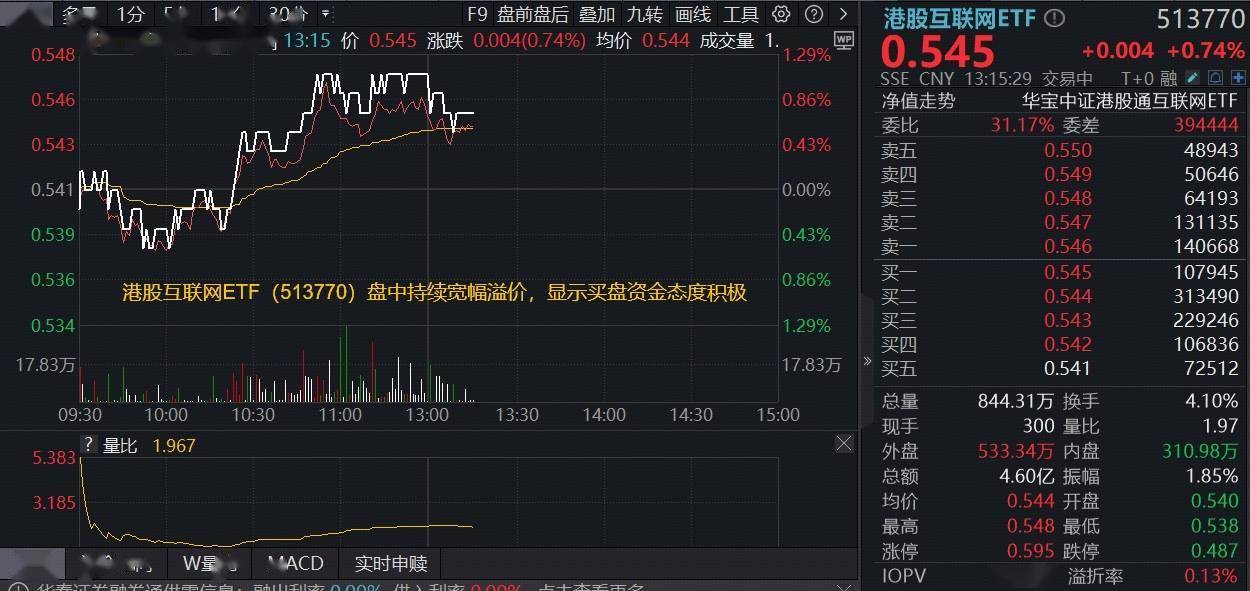
ETF盘中资讯|AI大模型与应用进展超预期,小米涨近3%!百亿港股互联网ETF(513770)溢价上攻,机构:港股AI进入布局期
Sou Hu Cai Jing· 2025-12-04 05:50
Core Viewpoint - The Hong Kong stock market is showing positive momentum, particularly in the AI sector, with major tech stocks experiencing gains, indicating a favorable investment environment [1][2]. Group 1: Market Performance - The Hang Seng Technology Index rose by 0.7%, with notable gains in AI-related stocks such as Xiaomi Group, which increased by nearly 3%, and Bilibili-W, which rose over 2% [1]. - The Hong Kong Internet ETF (513770) saw its price rise by over 1% at one point, reflecting strong buying interest [1][2]. Group 2: Company Insights - Xiaomi Group's President, Lu Weibing, indicated that the company has significantly advanced its AI investments, exceeding internal expectations, although specific details remain undisclosed [2]. - The Hong Kong Internet sector is showing signs of bottoming out, with analysts suggesting that the market is nearing a "bad news fully priced in" state, as previous risks have been largely addressed [2]. Group 3: Investment Opportunities - The Hong Kong stock market serves as a unique bridge connecting Chinese innovation with global capital, featuring several platform-based tech giants and leaders in hard technology [2]. - The Hong Kong Internet ETF (513770) and its associated funds are designed to passively track the CSI Hong Kong Internet Index, which heavily weights leading internet companies like Alibaba-W, Tencent Holdings, and Xiaomi Group, accounting for over 73% of the top ten holdings [2][3]. Group 4: ETF Details - The Hong Kong Internet ETF (513770) has surpassed a scale of 10 billion, with an average daily trading volume exceeding 600 million, providing good liquidity and allowing for T+0 trading without QDII quota restrictions [3]. - The top three holdings in the ETF are Alibaba-W (18.89%), Tencent Holdings (17.01%), and Xiaomi Group-W (10.05%), indicating a strong focus on major players in the internet sector [3].
AI大模型与应用进展超预期
Xin Lang Cai Jing· 2025-12-04 05:38
Core Viewpoint - The Hong Kong stock market shows positive momentum, particularly in the technology sector, driven by rising expectations for interest rate cuts and strong performance from AI-related stocks [1][3]. Group 1: Market Performance - The Hang Seng Technology Index rose by 0.7%, with notable gains from major tech companies such as Xiaomi Group, which increased by nearly 3%, and Bilibili-W, which rose over 2% [1]. - The Hong Kong Internet ETF (513770) experienced a price increase of over 1% at one point, currently up by 0.74%, indicating strong buying interest [1][3]. Group 2: Company Developments - Xiaomi's President, Lu Weibing, announced that the company has significantly advanced its AI initiatives, with developments exceeding internal expectations, although specific details remain undisclosed [3]. - The Hong Kong Internet sector is showing signs of bottoming out, with analysts suggesting that the market is nearing a "bad news fully priced" state, as previous risks have been largely addressed [3]. Group 3: Investment Opportunities - The Hong Kong stock market serves as a unique bridge connecting Chinese innovation with global capital, featuring a range of technology giants deeply embedded in global supply chains, particularly in AI, cloud computing, and semiconductors [3]. - The Hong Kong Internet ETF (513770) and its associated funds are designed to track the CSI Hong Kong Internet Index, which heavily weights leading companies like Alibaba-W, Tencent Holdings, and Xiaomi Group, accounting for over 73% of the top ten holdings [3][4]. - The latest scale of the Hong Kong Internet ETF exceeds 10 billion, with an average daily trading volume of over 600 million, indicating strong liquidity and support for intraday trading [4].
AI大模型与应用进展超预期,小米涨近3%!百亿港股互联网ETF(513770)溢价上攻,机构:港股AI进入布局期
Xin Lang Cai Jing· 2025-12-04 05:35
Core Viewpoint - The Hong Kong stock market shows positive momentum, particularly in the AI sector, with major tech stocks experiencing gains, indicating a favorable investment environment [1][3]. Market Performance - The Hang Seng Technology Index rose by 0.7%, with notable gains in AI-related stocks such as Xiaomi Group, which increased by nearly 3%, and Bilibili-W, which rose over 2% [1][3]. - The Hong Kong Internet ETF (513770) saw its price rise by 0.74%, reflecting strong buying interest and a positive market sentiment [1][7]. Investment Opportunities - The Hong Kong Internet ETF (513770) tracks the CSI Hong Kong Internet Index, which heavily weights leading internet companies like Alibaba-W (18.89%), Tencent Holdings (17.01%), and Xiaomi Group-W (10.05%), collectively representing over 73% of the top ten holdings [3][9]. - The ETF has a market size exceeding 10 billion, with an average daily trading volume of over 600 million, indicating good liquidity and accessibility for investors [3][9]. Sector Analysis - The Hong Kong internet sector is showing signs of bottoming out, with previous risks such as US-China trade tensions and the impact of the "takeout war" on profitability being largely priced in [3][9]. - Companies in the sector are transitioning from a technology investment phase to a value realization phase, particularly in AI, cloud computing, and semiconductor industries [3][9]. Strategic Insights - Investors looking to reduce volatility while maintaining exposure to technology can consider the Hong Kong Large Cap 30 ETF (520560), which combines high-growth tech stocks with stable dividend-paying companies [4][10].
卢伟冰:在AI大模型和应用方面进展远超预期
Xin Lang Cai Jing· 2025-12-04 02:34
Core Viewpoint - Xiaomi is focusing on expanding its automotive business into the challenging European market and is making significant investments in AI technology, with expectations of exceeding previous progress benchmarks [3][7]. Group 1: Automotive Expansion - Xiaomi's first target for its automotive venture is the European market, recognized as the most difficult automotive market globally [3][6]. - The company aims to establish a foothold in Europe before entering other markets, indicating a strategic approach to market entry [3][6]. - Recent visits to Germany have provided valuable insights into the mature automotive industry, which Xiaomi intends to learn from [3][6]. Group 2: AI Strategy - Xiaomi has been making substantial investments in AI over the past few quarters, with advancements in AI models and applications exceeding expectations [7]. - The company believes that the deep integration of AI with the physical world represents the next generation of smart technology [7]. - Xiaomi is actively seeking talented individuals to join its team, emphasizing the importance of providing a supportive development platform for exceptional talent [4][7].
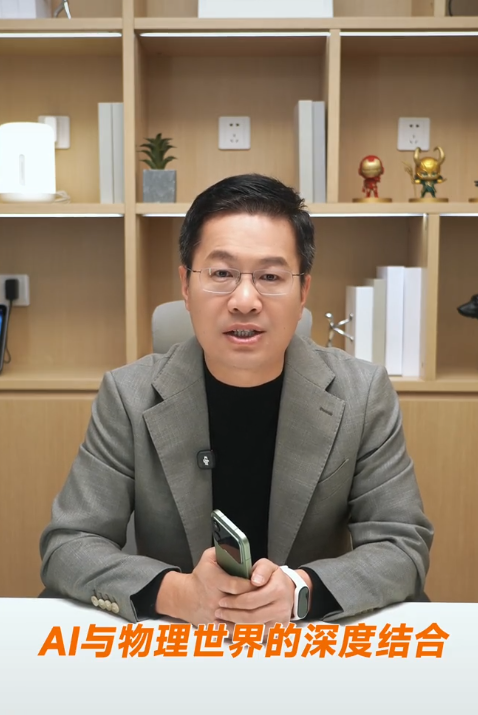
卢伟冰回应罗福莉加入小米
Xin Lang Cai Jing· 2025-12-04 02:34
Core Viewpoint - Xiaomi is focusing on expanding its automotive business into the challenging European market and is making significant investments in AI technology, with expectations of exceeding previous progress benchmarks [3][7]. Group 1: Automotive Expansion - Xiaomi's first target for its automotive expansion is the European market, recognized as the most difficult automotive market globally [3][6]. - The company aims to establish a foothold in Europe before entering other markets, indicating a strategic approach to market entry [3][6]. Group 2: AI Strategy - Xiaomi has been making substantial investments in AI over the past few quarters, with advancements in AI models and applications exceeding expectations [7]. - The company believes that the deep integration of AI with the physical world represents the next generation of smart technology [7]. - Xiaomi is actively seeking talented individuals to join its team, emphasizing the importance of providing a supportive development platform for exceptional talent [4][7].
申万宏源证券晨会报告-20251204
Shenwan Hongyuan Securities· 2025-12-04 00:24
Core Insights - The report highlights that the computer industry is experiencing a significant shift with a focus on three key areas: large models, computing power, and applications, indicating a competitive convergence and accelerated iteration [3][9] - Institutional holdings in the computer sector are at a historical low of 2.4% as of September 30, 2025, suggesting potential for growth in valuations [3][9] - The report anticipates a robust growth trajectory for the computer sector in 2025, characterized by a Q1 peak followed by steady growth [3][9] Summary by Sections Holdings and Valuation - Institutional holdings in the computer industry are at a historical low of 2.4%, indicating room for valuation expansion [3][9] - The PS/PCF valuation metrics suggest that there is still space for growth in the sector [3][9] Fundamental Analysis - A performance inflection point has been observed, with significant profit elasticity and the gradual formation of AI application catalysts [3][9] - The report identifies three major focus areas for 2026: large models, computing power, and applications, all of which are undergoing significant changes [3][9] Model Development - The gap between Chinese and American large models is narrowing, with expectations for further reduction and potential surpassing in certain areas by 2026 [3][9] - Future developments to watch include breakthroughs in long-context limitations, multi-modal and world models, and innovative training methods [3][9] Computing Infrastructure - The report discusses advancements in chip technology, supernodes, and AI infrastructure, indicating a multi-dimensional iteration that is closing the loop between computing power, models, and applications [3][9] - The evolution of chips from merely usable to highly efficient is highlighted, along with improvements in system efficiency through engineering innovations [3][9] AI Software - The software industry is entering an optimal layout window as large model values are being validated across multiple fields [4][9] - A significant number of companies are seeing AI revenue contributions exceeding 10%, marking a technological revolution in the software sector [4][9] - Promising areas for investment include Deep Research, AI programming, multi-modal applications, industry agents, and AI solutions for marketing, office, and finance [4][9]