
中国经济增长

Search documents
GTCFX首席分析师Jameel做客TRT WORLD 解读中美贸易休战与油市走势
Sou Hu Cai Jing· 2025-11-14 09:19
Group 1 - The core viewpoint of the article highlights that the recent US-China trade truce has improved market sentiment, but it is essentially a "temporary ceasefire" rather than a true agreement [3][4] - Jameel Ahmad notes that while the trade truce has led to a temporary easing of US-China relations and boosted market sentiment, uncertainties surrounding Federal Reserve policies and delayed US economic data remain potential risk factors [3][4] - The strong performance of the recent US earnings season, combined with previous interest rate cuts by the Federal Reserve, has supported overall market gains in October, but caution is advised as November approaches with uncertainties regarding further rate cuts and looming government shutdown risks [3][4] Group 2 - In the energy market discussion, Jameel Ahmad indicates that OPEC and its allies have increased global oil supply by approximately 3 million barrels per day since the end of Q1 2025, representing about 3% of total global supply [3][4] - OPEC+ has decided to pause production increases, reflecting a cautious strategy in light of global macroeconomic conditions, extended sanctions on Russia, and expectations for global demand [3][4] - Ahmad predicts that if market conditions change in Q1 2026, OPEC+ may adjust its policy direction, emphasizing the flexibility of OPEC's policies to respond to market dynamics [4]


亮点不断!机构普遍看好2026年中国经济与A股市场
Zheng Quan Ri Bao· 2025-11-11 23:15
Economic Outlook - Multiple institutions predict that China's economic growth will remain stable in 2026, with targets around 5% [2][3] - China International Capital Corporation (CICC) expects a GDP growth of approximately 4.9% in 2026, supported by fiscal expansion and improved local government finances [2][3] - UBS anticipates that domestic economic activities will maintain resilience, with a potential "low at the beginning, high at the end" growth pattern for 2026 [2][3] Policy and Fiscal Measures - CICC forecasts that supply-side policies will focus on enhancing quality consumption while reducing inefficient capacity [3] - Fiscal policies are expected to remain proactive, with local special bonds and ultra-long-term special government bonds increasing in scale [3] - Monetary policy may include two reserve requirement ratio cuts totaling about 100 basis points and one to two interest rate cuts of 10 basis points each [3] A-Share Market Dynamics - The A-share market is transitioning from domestic-focused companies to global multinational corporations, indicating a shift towards a mature market [4] - Earnings for A-shares are projected to recover, with non-financial A-share growth expected to reach around 10% [4] - The market is likely to experience a more balanced style in 2026, driven by cyclical industries approaching supply-demand equilibrium [5] Industry Trends - Key industry themes include the upgrading of traditional manufacturing, the globalization of Chinese enterprises, and the expansion of AI applications [5] - The "new economy" sectors are expected to grow faster than other economic sectors from 2026 to 2030, with their GDP contribution increasing by 3 percentage points by 2030 [3] - The macroeconomic environment and innovation trends are favorable for growth styles, with a potential shift in market dynamics due to past capacity reduction cycles [5]



(第八届进博会)毕马威报告:对未来三年中国经济增长抱有信心的受访中企CEO较去年大增
Zhong Guo Xin Wen Wang· 2025-11-06 06:23
Group 1 - The core finding of the report is that 88% of surveyed Chinese CEOs are confident about China's economic growth over the next three years, representing a significant increase of 17 percentage points compared to last year [1][2] - The report surveyed 114 CEOs across 13 industries, including asset management, automotive, banking, consumer and retail, energy, insurance, life sciences, healthcare, manufacturing, real estate, transportation, technology, and media, to gauge their outlook on economic growth and corporate development [1] - Key supporting factors for CEO confidence include a vast domestic market that provides ample space for consumption and industrial upgrades, a complete and flexible industrial system and infrastructure that fosters innovation and strengthens supply chain resilience, and the continuous release of engineering talent and entrepreneurial spirit that supports technological innovation and the development of new productive forces [1][2] Group 2 - Additional factors bolstering CEO confidence include the advancement of a unified national market and high-level opening-up, which helps eliminate institutional barriers and facilitates domestic and international dual circulation, thereby invigorating various market entities [2] - The improvement of the domestic macro-control system and the expansion of policy tools enable precise and effective support for cyclical and structural policies, significantly aiding in the recovery of domestic demand, supporting technological innovation, and promoting green development, thus providing strong backing for high-quality economic growth [2]
中国经济“三季报”释放哪些积极信号?四季度政策如何精准发力?一文解读→
Yang Shi Wang· 2025-10-21 07:04
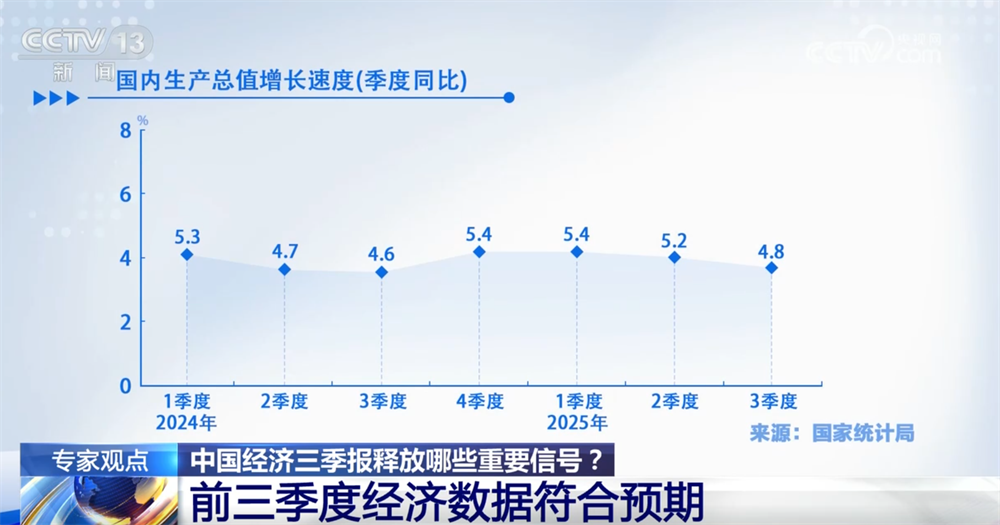
Economic Growth Overview - China's GDP growth for the first three quarters of 2023 is 5.2% year-on-year, with quarterly growth rates of 5.4% in Q1, 5.2% in Q2, and a slowdown to 4.8% in Q3 [1][4] - The economic performance aligns with expectations, influenced by external environmental challenges and the timing of policy implementations [4] Foreign Trade Performance - Despite concerns over foreign trade pressures due to the trade war starting in April, actual data shows a continuation of quarterly growth, with a notable 8.0% increase in September [4][5] - The total import and export volume for goods increased by 1.3% year-on-year, with Q1 growth at 4.5% and Q2 at 6% [5] Export Competitiveness - China's export competitiveness has shown remarkable resilience, particularly in non-U.S. markets, driven by innovation and large-scale production capabilities [7] - The country has effectively countered rising global trade protectionism by promoting trade liberalization, leading to significant expansion in new trade markets [7] Policy Directions for Q4 - The focus for Q4 policy will include maximizing the effectiveness of existing policy tools, targeting key areas of economic weakness, and enhancing market liquidity through monetary policy [7]
锐财经丨经济运行总体平稳稳中有进
Ren Min Ri Bao Hai Wai Ban· 2025-10-21 01:39
Economic Growth - China's GDP grew by 5.2% year-on-year in the first three quarters, ranking among the top major economies [1][2] - The economic increment reached 39,679 billion yuan, an increase of 1,368 billion yuan compared to the previous year [1][2] Employment and Prices - The average urban unemployment rate for the first three quarters was 5.2%, consistent with the first half of the year [4] - The Consumer Price Index (CPI) slightly decreased by 0.1%, while the core CPI, excluding food and energy, rose by 0.6% [4] International Trade - China's foreign trade showed strong resilience, with import and export volumes reaching historical highs, and foreign exchange reserves maintained above 3.3 trillion USD [4][5] - The total value of goods imports and exports increased by 6.0% year-on-year in the third quarter [9] Industrial Development - The proportion of added value from high-tech manufacturing and equipment manufacturing reached 16.7% and 35.9%, respectively [4] - Investment in equipment and tools increased by 14.0% year-on-year, significantly contributing to overall investment growth [6] New Economic Drivers - Industries such as lithium-ion battery manufacturing and electric vehicle production saw substantial growth, with increases of 29.8% and 29.7%, respectively [7] - The production of new energy vehicles and related products also experienced double-digit growth [7] Policy Impact - A series of policies have effectively stabilized the economy and supported long-term development, with consumer spending contributing 53.5% to economic growth [6] - The government has issued 300 billion yuan in special bonds to stimulate consumer demand through programs like "old for new" [6]

经济观察丨中国经济稳定增长护航民生基本盘
Zhong Guo Xin Wen Wang· 2025-10-21 01:39
Economic Growth and Employment - China's GDP grew by 5.2% year-on-year in the first three quarters, accelerating by 0.2 and 0.4 percentage points compared to the previous year and the same period last year respectively, providing a solid foundation for employment and income stability [1] - The average urban unemployment rate from January to September was 5.2%, with quarterly averages of 5.3%, 5.0%, and 5.2%, showing overall stability in the employment situation [1] - Economic growth serves as a "ballast" and "stabilizer" for the job market, encouraging businesses to invest and expand, thus creating more job opportunities [1] Policy Support and Employment Measures - China has implemented targeted support measures for key employment groups, including special subsidies and expanded employment channels, aiming to deliver policy benefits to those in need [2] - The country is actively guiding and supporting the development of industries related to new productive forces, such as high-tech manufacturing, digital economy, and green industries, to create new employment opportunities [2] Resident Income and Consumption - The per capita disposable income of residents reached 32,509 yuan, a nominal increase of 5.1% year-on-year, with a real growth of 5.2% after adjusting for price factors, aligning with economic growth [3] - The ratio of urban to rural residents' disposable income decreased from 2.46 to 2.43, indicating a slight improvement in income distribution [3] - The increase in wage income, net operating income, and net transfer income are the main factors supporting the growth of residents' income [3] Price Trends and Market Signals - The Consumer Price Index (CPI) slightly decreased by 0.1% year-on-year in the first three quarters, while the core CPI, excluding food and energy, rose by 0.6%, indicating the effectiveness of policies aimed at expanding domestic demand and promoting consumption [4] - The Producer Price Index (PPI) fell by 2.8% year-on-year, with a narrower decline of 2.9% in the third quarter compared to the second quarter, reflecting an improvement in domestic market competition and price recovery in certain industries [4]
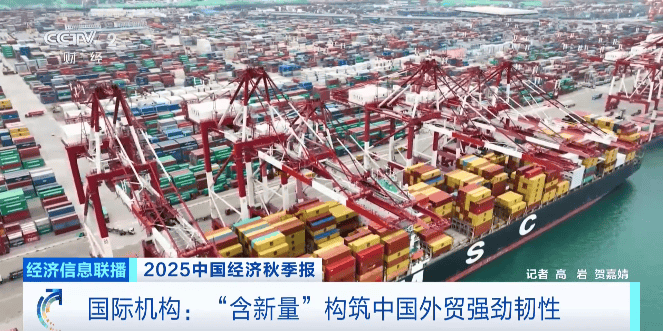
国际机构:“含新量”构筑中国外贸强劲韧性
Sou Hu Cai Jing· 2025-10-20 15:13
Group 1 - China's GDP grew by 5.2% year-on-year in the first three quarters of this year [1] - International institutions noted strong resilience in China's foreign trade despite a challenging external environment [3] - The export structure has upgraded, reflecting a higher "new content" [3] Group 2 - Morgan Stanley's chief economist for China highlighted that more exports are now high-tech capital goods rather than just primary and consumer goods, indicating an improvement in China's industrial competitiveness [5] - China has a strong first-mover advantage in several advanced industries, including next-generation smart driving cars, lithium batteries, humanoid robots, and biopharmaceuticals [5] Group 3 - Institutions believe that China's foreign trade sector is actively expanding markets, providing strong support for export growth and injecting vitality into regional and global economic development [7] - UBS's Asia-Pacific economist noted significant growth in Chinese exports, particularly towards non-U.S. regions, with trade with ASEAN maintaining double-digit growth [9] Group 4 - China's total retail sales of consumer goods reached 36.5877 trillion yuan, growing by 4.5% year-on-year [11] - Experts from international institutions believe that macro policies are driving a robust recovery in the domestic consumption market, showcasing diversification and upgrading trends [11] Group 5 - Invesco's Asia-Pacific global market strategist pointed out that domestic consumption continued to recover in the third quarter due to policies like consumer subsidies and holiday consumption incentives [13] - Emerging consumption trends include live shopping, instant retail, and a growing preference for experiential and digital consumption [13]
格林大华期货-宏观经济专题报告:三季度增长符合预期,预期四季度将获支撑
Ge Lin Qi Huo· 2025-10-20 11:19
Report Industry Investment Rating - Not provided in the content Core Viewpoints - The economic growth rate in Q3 2025 met expectations, but due to the high base caused by policy stimulus in Q4 2024, the growth rate in Q4 2025 may be the lowest of the year. China is expected to achieve an annual economic growth target of around 5% in 2025 [4][22][24]. Summary by Relevant Catalogs GDP - In Q3 2025, China's GDP grew 4.8% year-on-year, in line with market expectations. The Q1 and Q2 growth rates were 5.4% and 5.2% respectively. The Q3 GDP grew 1.1% quarter-on-quarter. The cumulative GDP growth in the first three quarters was 5.2% year-on-year [1][5]. Investment - From January to September, national fixed - asset investment decreased 0.5% year-on-year, against a market expectation of flat growth. In September, fixed - asset investment decreased 0.07% month-on-month, showing an eight - month consecutive decline [2][8]. - From January to September, infrastructure investment (broad sense) grew 3.3% year-on-year, while narrow - sense infrastructure investment grew 1.1% year-on-year. Manufacturing investment grew 4.0% year-on-year, and real estate development investment decreased 13.9% year-on-year [2][8]. - In September, manufacturing investment decreased 1.9% year-on-year, and narrow - sense infrastructure investment decreased 4.6% year-on-year [8]. Real Estate - From January to September, the sales area of new commercial housing decreased 5.5% year-on-year, and the sales volume decreased 7.9% year-on-year. In September, the sales of new commercial housing declined at an accelerated pace [11]. - In September, the prices of second - hand residential properties in 70 large and medium - sized cities continued to decline. The prices in first - tier cities decreased 1.0% month-on-month, and the declines in second - and third - tier cities widened [11]. - In September, the funds available to real estate development enterprises decreased 11.0% year-on-year. The new construction area decreased 15.0% year-on-year, and the completed area increased 0.39% year-on-year [12]. Industry - In September, the added value of large - scale industrial enterprises grew 6.5% year-on-year, exceeding market expectations. The product sales rate was 96.7%, up 0.7 percentage points year-on-year but 2.1 percentage points lower than in September 2019 [3][13]. - In Q3 2025, the capacity utilization rate of large - scale industrial enterprises was 74.6%, the lowest in the same period since 2017, down 0.5 percentage points year-on-year [14]. Foreign Trade - In September, China's exports denominated in US dollars grew 8.3% year-on-year, exceeding expectations. The overall export growth in the first nine months was 6.1%, higher than the same period last year, thanks to export diversification. However, the export growth rate is likely to decline in Q4 due to the high base in Q4 last year [3][15][16]. Consumption - In September, the total retail sales of consumer goods grew 3.0% year-on-year, slightly lower than market expectations. The growth rate of consumer goods sales by限额以上 units in some categories slowed down, mainly due to high base effects and subsidy reductions [4][18]. Employment - In September, the national urban survey unemployment rate was 5.2%, down 0.1 percentage points from the previous month and up 0.1 percentage point from the same month last year [4][21]. Policy and Outlook - The central government has allocated 500 billion yuan from the local government debt balance limit to local governments to support debt resolution and project construction. About 500 billion yuan of new policy - based financial instruments may be issued in Q4 [4][22][24]. - The suspension of 24% ad - valorem tariffs between China and the US is likely to be extended after November 10 [4][24].
潘功胜:继续发挥世界经济主引擎作用;证监会发布《上市公司治理准则》|每周金融评论(2025.10.13-2025.10.19)
清华金融评论· 2025-10-20 10:48
Group 1: Economic Overview - The Chinese economy is showing steady growth and continues to play a major role as a driver of global economic growth, despite facing challenges from geopolitical tensions and technological changes [7][8]. - China's GDP for the first three quarters of 2025 grew by 5.2% year-on-year, with a third-quarter growth rate of 4.8%, indicating resilience amid external pressures and internal transitions [13]. - The recent CPI data shows a year-on-year decrease of 0.3% in October, with a slight month-on-month increase of 0.1%, reflecting low but improving price levels [6][14]. Group 2: Policy and Regulatory Developments - The Ministry of Finance will continue to advance the new local government debt limit for 2026 to support key projects, with an increase of 1,000 billion yuan compared to the previous year [8][9]. - The China Securities Regulatory Commission (CSRC) has revised the Corporate Governance Code for listed companies, effective January 1, 2026, focusing on enhancing the supervision of directors and senior management, and improving incentive mechanisms [9][10]. - The revisions aim to strengthen regulatory constraints on key stakeholders in listed companies, transitioning governance from mere compliance to effective performance enhancement [10][11]. Group 3: International Relations - Recent communications between Chinese and U.S. officials indicate a mutual desire to resolve trade differences through dialogue, which could positively impact bilateral economic relations and market sentiment [11][12].

(经济观察)前三季度中国经济“成绩单”现五大看点
Zhong Guo Xin Wen Wang· 2025-10-20 07:25
Group 1 - China's GDP growth for the first three quarters is 5.2%, showing resilience amid external challenges and ranking among the top major economies globally [3] - The high-tech manufacturing sector's value added increased by 9.6%, with significant contributions from equipment manufacturing and green energy consumption [4] - The total retail sales of consumer goods reached 365.877 billion yuan, growing by 4.5%, with final consumption contributing 53.5% to economic growth [5] Group 2 - The total value of China's goods trade reached 33.61 trillion yuan, marking a 4% year-on-year increase and setting a historical high for the same period [6] - Market activity has improved significantly, with cargo and passenger turnover increasing by 4.8% and 4.4% respectively, and stock trading volume in Shanghai and Shenzhen rising by 106.8% [7] - The government remains optimistic about achieving annual economic targets, supported by ample policy space and tools to address various risks [8]