
创新生态

Search documents
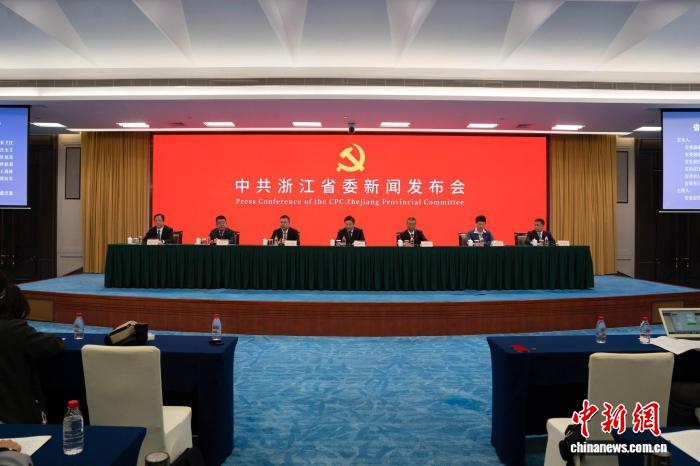
浙江:持续优化营商环境 助企逐浪全球
Zhong Guo Xin Wen Wang· 2025-11-15 12:53
Core Viewpoint - Zhejiang province aims to enhance its market environment by promoting private sector investment and innovation during the "14th Five-Year Plan" period, emphasizing the importance of the private economy as a key driver of growth [1][3]. Group 1: Private Economy and Investment - The private economy is highlighted as Zhejiang's "golden business card," contributing significantly to the province's strength and achieving a "grand slam" in the "China's Top 500 Private Enterprises" list for two consecutive years [1]. - Zhejiang will focus on stimulating private investment by lowering barriers in sectors such as renewable energy, artificial intelligence, and urban renewal, allowing private ownership stakes in key projects to exceed 10% [3]. Group 2: Innovation and Collaboration - The province plans to promote collaborative innovation across the industrial chain, encouraging cooperation between large, medium, and small enterprises to create a robust innovation ecosystem [3]. - Zhejiang will implement a negative list system for market access and deepen reforms for fair competition, aiming to enhance the province's attractiveness and competitiveness [3]. Group 3: Open Economy and Trade - The province is committed to high-level openness, aiming to create an optimal service environment with the lowest costs and highest efficiency during the "14th Five-Year Plan" [3]. - Zhejiang will optimize the flow of goods, capital, personnel, and data to facilitate trade and investment, positioning itself as a high-quality destination for foreign investment [4]. Group 4: Resource and Market Development - The province plans to establish a high-standard hub for bulk commodity resource allocation, enhancing its capabilities in storage, processing, and maritime services [5]. - Zhejiang will deepen reforms in international trade, particularly in Yiwu, to strengthen its position as a global center for digital trade [5].

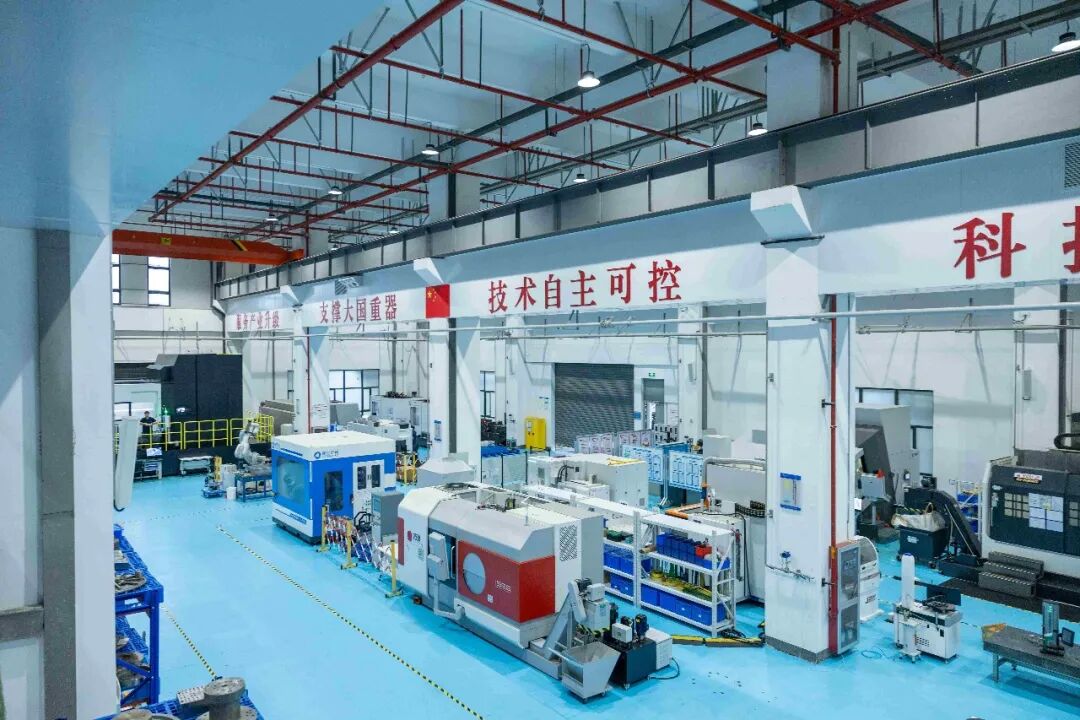
经济学家陈宪:深圳,正大步迈向原始创新策源地
Sou Hu Cai Jing· 2025-11-14 07:38
11月12日,《全球城市产业创新指数报告2025》(以下简称《报告》)在第二十七届高交会上正式发 布。报告显示,东京排名第一、深圳第二,纽约和旧金山分列第三、四位,这四座城市以极其接近的综 合得分构成全球产业创新的"第一梯队"。 作为本次评估的明星城市和报告发布地,深圳的未来发展成为《报告》重点关注议题。 报告首席专家、上海交通大学安泰经济与管理学院教授陈宪在接受记者采访时表示,深圳的奇迹,源于 其市场需求直接牵引技术攻关,形成了快速试错、迭代升级的创新节奏。但报告也发现深圳在创新投 入,尤其是基础研究投入和高端创新平台(如孵化器、加速器)数量上,与顶尖城市仍有差距。 深圳商报·读创客户端记者 刘琼 吴素红 知名经济学家、上海交通大学安泰经济与管理学院教授陈宪 "深圳的卓越表现,代表了中国城市在应用创新和成果产业化上的全球领先水平。" 同时,《报告》建议,深圳应围绕科技创新与产业创新深度融合以及创新生态建设和优化两大核心,在 六个方向上发力。 一是明确差异化战略定位:绘制产业创新地图,聚焦1-2个真正具备优势的核心赛道,避免同质化竞 争。 二是构建"雨林式"创新生态:建立"企业出题、科研解题"的协同机制,完善 ...

刘世锦:需要重视如何形成更多更好的创新生态和增长空间
Xin Lang Cai Jing· 2025-11-13 10:32
Core Viewpoint - The development of new productive forces, particularly in artificial intelligence and humanoid robots, may lead to the replacement of both manual and intellectual labor, presenting challenges for employment and work methods in the future [1] Group 1: Technological Impact - The current technological revolution is characterized by the potential for replacement rather than enhancement of human skills, affecting both physical and cognitive labor [1] - Historical technological advancements have primarily focused on enhancing human capabilities, but the current trend may shift towards substitution [1] Group 2: Societal Implications - The implications of these technological changes extend beyond employment issues to include alterations in work hours, potential increases in vacation time, and the need for basic income plans [1] - If these societal challenges are not addressed, the contradiction between the height and breadth of economic growth may become more pronounced [1] Group 3: Innovation Ecosystem - There is a pressing need to focus on creating a more robust innovation ecosystem and expanding growth opportunities to adapt to these changes [1]
让新质生产力在新型生产关系中持续涌现
Bei Jing Ri Bao Ke Hu Duan· 2025-11-12 01:49
Core Insights - The article emphasizes the vision for the Zhongguancun Science Park to become a world-leading technology hub by 2035, supported by the Ministry of Industry and Information Technology, the Ministry of Science and Technology, and the Beijing municipal government [1] Group 1: Market and Government Collaboration - Zhongguancun has evolved into a testing ground for new production relationships, driven by the transformation of enterprise ownership and the introduction of a market-oriented property rights system [2][3] - The region has successfully transitioned from a planned economy to a market economy, breaking down administrative barriers between technology and other production factors, thus enabling a multi-price discovery system [2][3] Group 2: New Quality Productivity - The fourth technological revolution, centered on electronic information technology, is reshaping productivity structures, with data emerging as an independent production factor [3][4] - Zhongguancun's practices illustrate that platform organizations are not merely physical spaces but act as industry organizers that integrate various resources to drive new economic forms [3][4] Group 3: Integration of Digital and Real Economies - The integration of digital and real economies relies on digital technologies to reconstruct production relationships, making data a new catalyst for activating the real economy [4][5] - This new quality productivity is increasingly dependent on advanced information technologies rather than traditional asset-heavy approaches [4][5] Group 4: Innovative Ecosystem Characteristics - The new production structure in Zhongguancun reflects an innovative ecosystem, characterized by the collaboration of diverse stakeholders, including enterprises, intermediaries, and social organizations [5][6] - The self-organizing nature of this ecosystem allows for dynamic interactions and autonomous decision-making, distinguishing it from traditional industrial production systems [6][7] Group 5: Future Directions - The emergence of new quality productivity in Zhongguancun is attributed to both technological upgrades and changes in production factors and relationships [7] - Moving forward, Zhongguancun aims to strengthen its position in high-level technological self-reliance, continuing to lead in the development of new quality productivity in China [7]
顶尖教授,涌向一个“非主流”城市
3 6 Ke· 2025-11-11 07:52
Core Insights - The article discusses the migration of top scientific talent to Wuxi, China, drawing parallels to historical migrations of scientists to the United States during the 1930s, highlighting Wuxi's emergence as a new hub for innovation and research [2][24]. Group 1: Talent Migration and Research Institutions - A significant number of research teams and professors from top universities are establishing themselves in Wuxi, including institutions like Tsinghua University and Huazhong University of Science and Technology [3][2]. - Wuxi's model of "scientist team control and local state-owned capital participation" has successfully attracted these top talents by allowing scientists to become actual controllers of their enterprises [10][12]. Group 2: Entrepreneurial Challenges and Solutions - Many professors face challenges in commercializing their research due to a lack of entrepreneurial experience and institutional pressures [5][8]. - Wuxi has created a mechanism to address these challenges by allowing scientists to lead their ventures, thus fostering a sense of ownership and responsibility [12][13]. Group 3: Innovation Ecosystem - Wuxi has established a shared pilot testing platform to facilitate the commercialization of scientific research, significantly lowering the barriers for startups and research teams to bring their innovations to market [16][21]. - This platform has attracted top institutions like Shanghai Jiao Tong University, enabling them to conduct pilot tests without the need for heavy capital investment [21][23]. Group 4: Strategic Industry Focus - Wuxi's approach to attracting industries is strategic, focusing on sectors expected to experience explosive growth in the next decade, such as photonic chips and autonomous driving [24][26]. - The establishment of the Wuxi Industrial Innovation Research Institute plays a crucial role in matching technological needs with appropriate research platforms, enhancing the region's innovation capabilities [28][30]. Group 5: Future Implications - Wuxi's innovative ecosystem demonstrates that industrial innovation can thrive outside major cities, emphasizing the importance of creating a conducive environment for scientific and technological advancement [32][35]. - The article suggests that the future competition among cities will hinge on their ability to foster effective innovation ecosystems, with Wuxi serving as a potential model for other regions [35].
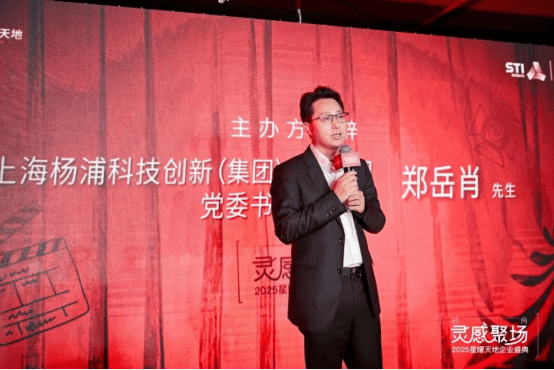
杨浦科创集团郑岳肖:期待更多企业家携手加入大创智
Sou Hu Cai Jing· 2025-11-10 08:43
Core Insights - The 2025 Starry World Enterprise Gala, themed "Turning Point: Inspiration Gathering," was recently held in Shanghai, marking the growth of the Dazhongzhi brand since its inception in 2009 [1][3] - The Dazhongzhi brand has seen continuous enhancement in its brand capability and the "magnetic effect" of its innovation ecosystem has become increasingly significant [1][3] Company Developments - In the past year, Dazhongzhi Park saw the successful listing of Zhida Technology, which became the world's first publicly traded company focused on home electric vehicle charging [3] - The Shanghai Institute of Mathematics and Interdisciplinary Research, led by Qiu Chengdong, has settled in Dazhongzhi, injecting new momentum into innovation [3] - The V Gathering venue has officially launched, attracting a number of high-quality content creators, with the first batch of accounts amassing over 100 million followers [3] Future Initiatives - Dazhongzhi aims to continuously optimize its innovation ecosystem, focusing on key industrial directions to promote high-quality regional development [3] - The "Inspiration 100 Plan" will be initiated by Chuangzhi Tiandi, aiming to collaborate with various innovative forces to create 100 innovative solutions that illuminate the future of cities, focusing on areas such as green futures, smart communities, and cultural innovation [3] Awards and Recognition - The Starry World Enterprise Awards presented six major awards, highlighting companies and teams excelling in innovation [5] - Notable award recipients include: - Digital Practice Model Award: Tianqiang, Zhida, Wanwu Xingsheng - Smart Medical Pioneer Award: Yixuejie, Weiyi, Weile Dental - Cultural Influence Leadership Award: Tianhu, Yuanwanggu, Xiaoyuzhou, Wuyou Media - Innovation Empowerment Special Award: Chuangye Jili, Haitong International Innovation Center, Zhijian Weilai, Fuke China - Most Promising Enterprises: Shunxi Universe, Pansong Assets, Heliti Technology - Annual Outstanding Contribution Enterprises: Diezhi Technology, Dell Technology, Shangmi Technology, Zhongzhi Kechuang, Shengwang [5]
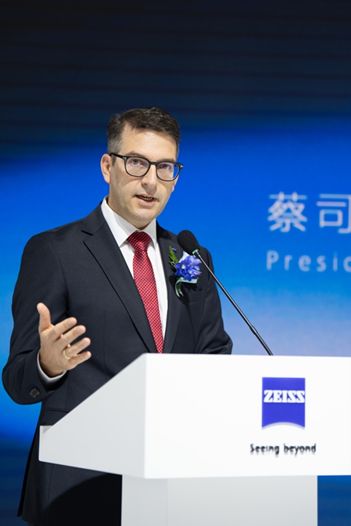
直击进博会 蔡司大中华区总裁兼首席执行官费铭远:不断加大在华投资力度,扩大本土布局
Zhong Guo Jing Ying Bao· 2025-11-09 12:58
Core Insights - Zeiss has been participating in the China International Import Expo (CIIE) for eight consecutive years, marking its 68th year in China, highlighting the significance of the number "8" in Chinese culture [1][2] - The company is increasing its investment and presence in China, launching a comprehensive headquarters project to integrate operations, sales, R&D, production, and supply chain functions [1][5] Investment and Market Strategy - Zeiss views China as an ideal business destination due to its large market, open business environment, favorable policies, abundant talent and resources, and developed supply chain [1][5] - The company has experienced a sixfold revenue growth in the past decade, with over 7,000 employees in China, and has been recognized as a "Top Employer" for six consecutive years [6][6] Innovation and Product Development - At the CIIE, Zeiss showcased over 60 innovative solutions across four business areas: medical technology, consumer optics, industrial quality and research, and semiconductor manufacturing technology [2][4] - Notable product launches included the ARTEVO 750 digital navigation surgical microscope, which features a 21% improvement in optical resolution, and the PENTERO 800 S, the first high-end surgical microscope developed in China [4][5] Collaboration and Local Integration - Zeiss is deepening its integration into the local ecosystem by establishing R&D centers in Shanghai, Suzhou, and Guangzhou, and has obtained 89 patents in China [7][8] - The company is forming strategic partnerships with local firms, such as SF Express and vivo, to enhance its supply chain ecosystem and accelerate innovation [8][8] Future Outlook - The new comprehensive headquarters project is Zeiss's largest single investment in China, aimed at enhancing service capabilities and acting as a global innovation center [6][6] - The company is committed to supporting China's "Healthy China 2030" initiative through its medical and vision care solutions, aligning its technological advantages with China's strategic goals [6][6]
医药医疗专家热议国际化新策略:创新生态至关重要
Di Yi Cai Jing· 2025-11-09 09:13
Core Insights - The article discusses the collaboration between the medical and pharmaceutical industries in China, emphasizing the need for synergy to enhance the industrial landscape as Chinese innovative drugs gain a competitive edge in the global market [1] Group 1: Industry Data and Trends - Since 2025, China has recorded 95 outbound business development (BD) transactions in innovative drugs, with a total transaction value of $89 billion, accounting for 33% of the global market [1] - In 2024, China's medical device import and export total reached $84.55 billion, showing a year-on-year growth of 1.89%, with exports amounting to $48.75 billion, up by 7.3% [1] Group 2: Characteristics of Overseas Collaboration - The characteristics of China's pharmaceutical overseas collaboration include significant transaction scale and quantity, diversification of transaction targets, broad participation from various companies, and complex transaction structures [2] - Notable companies like Heng Rui and emerging firms such as InSilico and CrystalTech are actively involved in these collaborations, indicating a shift towards early-stage partnerships and acquisitions [2] Group 3: Localized Medical Services - The Raffles Medical Group emphasizes the importance of localized medical services, adhering to the "3 P" principles: Patient, Provider, and Payer, which vary across regions like Southeast Asia and mainland China [3] - The diverse population in Southeast Asia leads to different disease spectrums and healthcare needs, necessitating tailored approaches for medical services [3] Group 4: Investment Trends and Innovations - Recent investment trends highlight the significance of AI technology in transforming the pharmaceutical industry, enhancing clinical trial speeds, and replacing some animal testing with organ-on-chip technologies [4] - The article notes that most original innovations emerge from small companies and laboratories, with large multinational corporations (MNCs) often acquiring these innovations to drive their growth [4]

再添9家国家级“小巨人”,长沙经开区铺就“小巨人”成长快车道
Sou Hu Cai Jing· 2025-11-06 15:01
Core Insights - The Ministry of Industry and Information Technology has announced the seventh batch of "specialized, refined, distinctive, and innovative" small giant enterprises, with nine companies from Changsha Economic Development Zone making the list, bringing the total to 35 national-level and 293 provincial-level specialized small giant enterprises in the park [1][2]. Group 1: Growth Strategies - Changsha Economic Development Zone employs a "gradient cultivation + precise support" strategy, establishing a growth system that covers the entire lifecycle of enterprises, helping quality SMEs grow from seedlings to pillars [2][4]. - The zone identifies potential enterprises early and provides continuous support throughout their development stages, ensuring that capable companies can benefit from policy incentives [4]. Group 2: Policy Support - The "1+N" high-quality development policy system was officially launched in 2025, providing a main policy and multiple specialized sub-policies to support enterprise growth, including financial rewards for newly recognized high-tech enterprises and national-level small giants [6]. - Specific measures include a reward of 150,000 yuan for new high-tech enterprises and 300,000 yuan for national-level small giants, along with various subsidies and support for R&D, market expansion, and talent recruitment [6][8]. Group 3: Service Ecosystem - The "I serve enterprises+" initiative has introduced 26 specific measures to enhance services for businesses, focusing on order acquisition, talent gathering, funding integration, administrative procedures, cost reduction, and safety [8]. - Companies like Changsha Tuoou Technology Co., which specializes in aerial work platform control systems, have benefited from these initiatives, achieving significant sales growth and international orders [9]. Group 4: Innovation Ecosystem - The Changsha Economic Development Zone is fostering a vibrant industrial ecosystem where specialized and innovative enterprises are moving from "single-point breakthroughs" to "cluster resonance," enhancing collaborative development within the industry [10]. - Companies such as Hunan Honghui Technology Co. have successfully penetrated high-end markets by leveraging local industrial synergies, showcasing the effectiveness of the park's industrial cluster [10][12]. Group 5: Innovation Platforms - The zone has established a comprehensive innovation system, gathering 344 various technology innovation platforms, including 28 national-level platforms, facilitating smoother technology transfer and collaboration [13]. - The "Star Creation Gathering" innovation system promotes a virtuous cycle where platforms empower enterprises, and enterprises contribute back to the ecosystem, driving high-quality regional economic development [13].
(第八届进博会)从进博看市场动能:持续融入、传递信心
Zhong Guo Xin Wen Wang· 2025-11-06 14:20
Core Insights - The China International Import Expo (CIIE) continues to serve as a significant platform for multinational companies to showcase their products and technologies, reflecting China's commitment to high-quality openness [2][3] Group 1: Confidence in the Market - The CIIE has provided a platform for multinational companies to deeply integrate into the Chinese economy, enhancing their confidence and motivation to invest in China [2] - Companies like Intuitive Surgical have successfully launched products in China, such as the Ion bronchial robot, which was the first of its kind in the Asia-Pacific region [2] Group 2: Industry Growth - Qualcomm has demonstrated its evolution alongside the industry, showcasing advancements from 5G to generative AI and 6G applications at the CIIE [3] - Johnson & Johnson has introduced over 1,000 products at the CIIE, transitioning from pure imports to local production and collaboration with Chinese firms [3] Group 3: Future Cooperation - Ericsson is focusing on differentiated connectivity solutions to meet diverse user needs, leveraging China's complete industrial chain and robust ecosystem [3] - GE Healthcare views China as a critical market for growth and innovation, emphasizing the importance of high-level openness in fostering collaboration with the Chinese healthcare sector [3]