品牌转型

Search documents
亏损14亿,丢失库里!安德玛留不住中国消费者丨BUG
新浪财经· 2025-11-14 08:06
Core Viewpoint - Under Armour's long-term partnership with NBA champion Stephen Curry has ended, leading to the separation of the "Curry Brand" from Under Armour's business structure, which will now focus on its core brand and new UA basketball products [3][5][11]. Financial Performance - Since 2022, Under Armour has experienced three consecutive years of declining revenue and net profit, with the current year showing a loss [4][9]. - In the fiscal year 2025, Under Armour reported revenue of $5.2 billion (approximately 37.5 billion yuan), a year-on-year decrease of 9%, and a net loss of $201 million (approximately 1.44 billion yuan) [16]. - The Asia-Pacific region, including China, contributed over half of Under Armour's revenue, but this market has also seen significant declines, with a 13% drop in revenue [16]. Impact of Curry Brand Separation - The separation from Curry Brand is expected to diminish Under Armour's growth potential, as the brand has been a significant driver of sales [12][18]. - The collaboration with Curry, which began 12 years ago, initially led to substantial revenue growth, particularly after the launch of Curry's signature shoes, which generated $160 million in sales in their first year [6][11]. Market Position and Competition - Under Armour's decline is attributed to several factors, including failed product line expansions and missing out on the athleisure trend, compounded by increased competition from local brands like Anta and Li Ning [15][16]. - In contrast, Anta reported a revenue increase of 13.58% in 2024, reaching 70.8 billion yuan, showcasing stronger growth compared to Under Armour [16]. Consumer Perception - Consumer sentiment towards Under Armour has shifted negatively, with perceptions of declining quality and design, alongside high prices, hindering its appeal in the Chinese market [16][18]. - Following the announcement of the end of the partnership with Curry, there has been a notable "de-mystification" of the brand among consumers [14][18]. Strategic Adjustments - In response to declining performance, Under Armour has initiated several strategic moves in China, including partnerships with national sports teams and significant personnel changes to enhance market strategy [18].



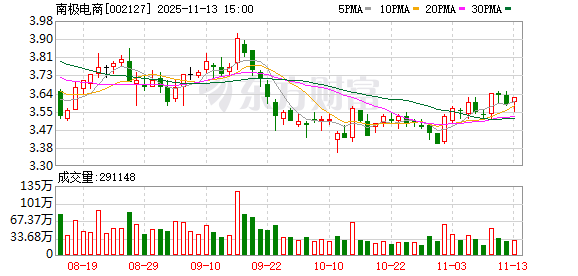
南极电商:公司有望打开后续业务增长空间
Zheng Quan Ri Bao· 2025-11-13 14:09
Core Insights - The company reported an improvement in profits for the third quarter, attributed to the initial results of its business transformation efforts [2] - Revenue growth is driven by continuous optimization and upgrading in channels, supply chain, and branding [2] - The company has optimized its marketing operations, leading to a decrease in marketing expenses compared to the same period last year [2] - As the brand transformation deepens, the company is expected to unlock further business growth opportunities [2]

“山东之光”坦博尔难成下一个波司登
Sou Hu Cai Jing· 2025-11-12 18:56
Core Viewpoint - Tambor, a lesser-known down jacket company, is preparing for an IPO in Hong Kong, aiming to transition from a regional brand to a national player in the outdoor apparel market [1][2][3] Group 1: Company Background - Tambor was established in 1999 in Qingzhou, Shandong, primarily targeting county-level markets with its down jackets [1] - The brand has gained recognition as a "Shandong light" and a childhood memory for many in the region [1] Group 2: Market Position and Performance - Tambor ranks fourth among domestic professional outdoor apparel brands in China [4] - The company's revenue surged from 732 million yuan in 2022 to 1.302 billion yuan in 2024, with a remarkable growth rate of 85% in the first half of 2025, reaching 658 million yuan [4] - Despite this growth, Tambor's revenue is significantly lower than that of its main competitor, Bosideng, which reported revenues of 25.902 billion yuan in 2024 [18] Group 3: Strategic Transformation - The company is transitioning to a "professional outdoor" brand and has revamped its product line to include a "top outdoor series" priced above 3,000 yuan [5][6] - Tambor's marketing strategy includes heavy investments in online channels and collaborations with celebrities to attract younger consumers [8][11] - The brand's online revenue share increased from 30.9% in 2022 to 52.7% in the first half of 2025, indicating a strong shift towards e-commerce [11] Group 4: Challenges and Competition - High marketing expenditures have impacted profitability, with marketing costs rising from 199 million yuan in 2022 to 508 million yuan in 2024, leading to a decline in net profit margin from 11.7% to 8.2% [12][18] - Tambor faces competition from established brands like KAILAS and Decathlon, which have larger market shares and more extensive product offerings [25] - The brand's attempt to penetrate the high-end market has been met with challenges, as evidenced by low sales of its higher-priced products [23][25] Group 5: Future Outlook - Industry experts suggest that Tambor's aspirations for high-end positioning may be unrealistic given its current market base and brand identity [26] - The company is advised to focus on solidifying its presence in the affordable down jacket market rather than pursuing a high-end strategy prematurely [26]

Regis (RGS) - 2026 Q1 - Earnings Call Transcript
2025-11-12 14:32
Financial Data and Key Metrics Changes - For the First Quarter of fiscal 2026, consolidated same-store sales increased by 0.9%, driven by pricing actions and improved execution at the salon level [4] - Adjusted EBITDA for the first fiscal quarter was $8 million, up from $7.6 million a year ago, reflecting a $400,000 improvement [4][14] - Total First Quarter Revenue was $59 million, an increase of 28% or $12.9 million compared to the prior year [11] - GAAP Operating Income increased to $5.9 million, up from $2.1 million in the year-ago quarter [13] - Cash From Operations was $2.3 million, a $3.6 million improvement compared to a use of cash by operations of $1.3 million in the prior year [16][17] Business Line Data and Key Metrics Changes - Same-store sales for Supercuts were up 2.5% for the first fiscal quarter, with loyalty program participation growing from 36% to 40% [4][5] - Adjusted EBITDA for the Company-Owned Salon Segment improved by $1.9 million year-over-year to $1.6 million for the quarter [15] - Adjusted EBITDA for the franchise segment decreased by $1.6 million to $6.4 million, primarily due to lower royalties and fees [15] Market Data and Key Metrics Changes - The company experienced a net decrease of 757 franchise locations compared to the previous year, with approximately 300 related to the Align salons that converted from franchise to company-owned [12] - The performance gap between closed stores and top-performing units was approximately $350,000, indicating strong potential within the system [12] Company Strategy and Development Direction - The company is focused on the holistic transformation of the Supercuts brand and optimizing sales and profitability in its company-owned salon portfolio [3] - Key initiatives include enhancing operational performance, reinforcing brand leadership, and driving technology and digital acceleration across the business [8] - The company is piloting brand-specific initiatives to strengthen performance across its portfolio [8] Management's Comments on Operating Environment and Future Outlook - Management expressed optimism about the progress made in improving profitability and generating positive cash flow [9] - The company anticipates a meaningful increase in unrestricted cash generated from core operations compared to fiscal year 2025 [17] - Management is encouraged by the signals that their actions are taking hold, indicating a positive trajectory for the company [10] Other Important Information - The company has received questions regarding the potential to refinance existing debt, indicating that current economics do not support such a move in the near term [21] - The company expects G&A expenses to be in the range of $40 million-$43 million for the year, including G&A associated with the Align transaction [37] Q&A Session Summary Question: Can you provide more details about pricing actions and their impact on traffic? - Management indicated that franchisees have begun to take further pricing actions based on a competitive pricing survey, with no significant changes in traffic trends observed [23][24] Question: Can you talk about traffic trends at Supercuts and Smart Style? - Management noted improvements in traffic trends at Supercuts, while acknowledging opportunities for improvement at Smart Style [26] Question: Regarding store closures, should we expect a reduction in closures this year? - Management confirmed that closures have reduced by half compared to the previous year, but did not provide specific guidance on future closures [31] Question: Can you provide insight into G&A for this year? - Management expects G&A to be in the range of $40 million-$43 million, including G&A associated with the Align transaction [37] Question: What is the status of the CEO search? - Management anticipates a decision on the CEO search in the coming months, with the interim CEO actively engaged in the process [42]

Regis (RGS) - 2026 Q1 - Earnings Call Transcript
2025-11-12 14:30
Financial Data and Key Metrics Changes - For Q1 fiscal 2026, total revenue was $59 million, an increase of 28% or $12.9 million compared to the prior year, primarily driven by increased revenue from company-owned salons and a same-store sales increase of 0.9% [10][11] - Adjusted EBITDA for the first quarter was $8 million, up from $7.6 million a year ago, reflecting a 4.3% improvement [14] - Operating income increased by 177%, reaching $5.9 million compared to $2.1 million in the year-ago quarter [10][12] - The company generated $2.3 million in positive operating cash flow, a $3.6 million improvement versus last year's first quarter [4][16] Business Line Data and Key Metrics Changes - Same-store sales for Supercuts increased by 2.5% in Q1, with loyalty program participation growing from 36% to 40% [4][5] - Adjusted EBITDA for the franchise segment was $6.4 million, a decrease of $1.6 million compared to the prior year, primarily due to lower royalties and fees [15] - Adjusted EBITDA for the company-owned salon segment improved by $1.9 million year-over-year to $1.6 million, driven by an increased number of company-owned salons [15] Market Data and Key Metrics Changes - The company experienced a net decrease of 757 franchise locations compared to the previous year, with approximately 300 of these related to the Align salons that converted from franchise to company-owned [11] - The performance gap between closed stores and top-performing units was approximately $350,000, indicating strong potential within the system [11] Company Strategy and Development Direction - The company is focused on the holistic transformation of the Supercuts brand and optimizing sales and profitability in its company-owned salon portfolio [3][4] - Key initiatives include enhancing operational performance, reinforcing brand leadership, and driving technology and digital acceleration across the business [7][8] - The company plans to pilot new digital interactions on its website and app to improve guest experience [5] Management's Comments on Operating Environment and Future Outlook - Management expressed optimism about the progress made in improving profitability and generating positive cash flow, indicating a solid start to fiscal 2026 [8][21] - The company anticipates a meaningful increase in unrestricted cash generated from core operations compared to fiscal year 2025, supported by operational strength and a full year of acquired company-owned salon results [17][18] Other Important Information - The company has $25.5 million of available liquidity, including $16.6 million in unrestricted cash and cash equivalents [19] - The board is evaluating prospects for a permanent CEO, with a decision expected in the coming months [40] Q&A Session Summary Question: Can you provide more details about pricing actions and their impact on traffic? - Management indicated that franchisees have begun to take pricing actions based on a competitive pricing survey, with no significant changes in traffic trends observed across the country [22][23] Question: Can you talk about traffic trends at Supercuts and Smart Style? - Management noted improvements in traffic at Supercuts, while acknowledging opportunities for growth in the Smart Style brand [25] Question: Regarding store closures, should we expect a reduction in closures this year? - Management confirmed that closures are expected to be reduced by half compared to previous years, with 54 locations closed in Q1 [30] Question: Can you provide insight into G&A for this year? - Management expects G&A to be in the range of $40 million to $43 million, including G&A associated with the Align transaction [35] Question: What is the status of the CEO search? - Management is currently in an interim role, with the board evaluating prospects and a decision expected in the coming months [40]
星巴克迎来「中国合伙人」之后,还要面临哪些压力? | 声动早咖啡
声动活泼· 2025-11-10 09:04
Core Viewpoint - Starbucks has transitioned from wholly-owned expansion in China to a joint venture model, indicating a strategic shift in response to competitive pressures in the market [3][4]. Group 1: Historical Context and Strategic Decisions - Starbucks entered the Chinese market in 1999 through partnerships with local companies, gradually shifting to a wholly-owned model as the market matured [4]. - The recent deal with Boyu Capital marks a return to a joint venture structure, allowing Starbucks to retain some control while leveraging local expertise [4][5]. - The valuation of Starbucks China at $4 billion has raised concerns among industry experts, who believe it may be too high given the competitive landscape [4]. Group 2: Market Strategy and Expansion Plans - Starbucks adapts its market entry strategy based on local conditions, opting for wholly-owned or majority-controlled models in markets similar to the U.S., while using joint ventures in less familiar territories [5][6]. - The company aims to expand its store count in China to 20,000, indicating an aggressive growth strategy despite the challenges posed by local competitors [6][8]. - The partnership with Boyu Capital is seen as a way to enhance local market penetration and capitalize on Boyu's resources in residential and commercial properties [7]. Group 3: Challenges Ahead - The ambitious target of 20,000 stores may necessitate a shift towards franchising, as managing such a large number of outlets without local partners could be impractical [8][9]. - Expanding into lower-tier cities presents challenges, including limited consumer spending power and competition from lower-priced coffee options [8][10]. - Starbucks faces pressure to localize its menu and supply chain to compete effectively, as its current offerings may not meet the evolving preferences of Chinese consumers [10][11]. Group 4: Operational Adjustments - The company has made recent adjustments to its pricing and product offerings, including limited-time discounts and new beverage options, to remain competitive [10][11]. - There is a need for innovation in product development, particularly in sourcing and flavor profiles, to better align with local tastes and preferences [11].

奔驰全新纯电CLA:用“中国配方”追逐年轻流量
Jing Ji Guan Cha Wang· 2025-11-10 03:24
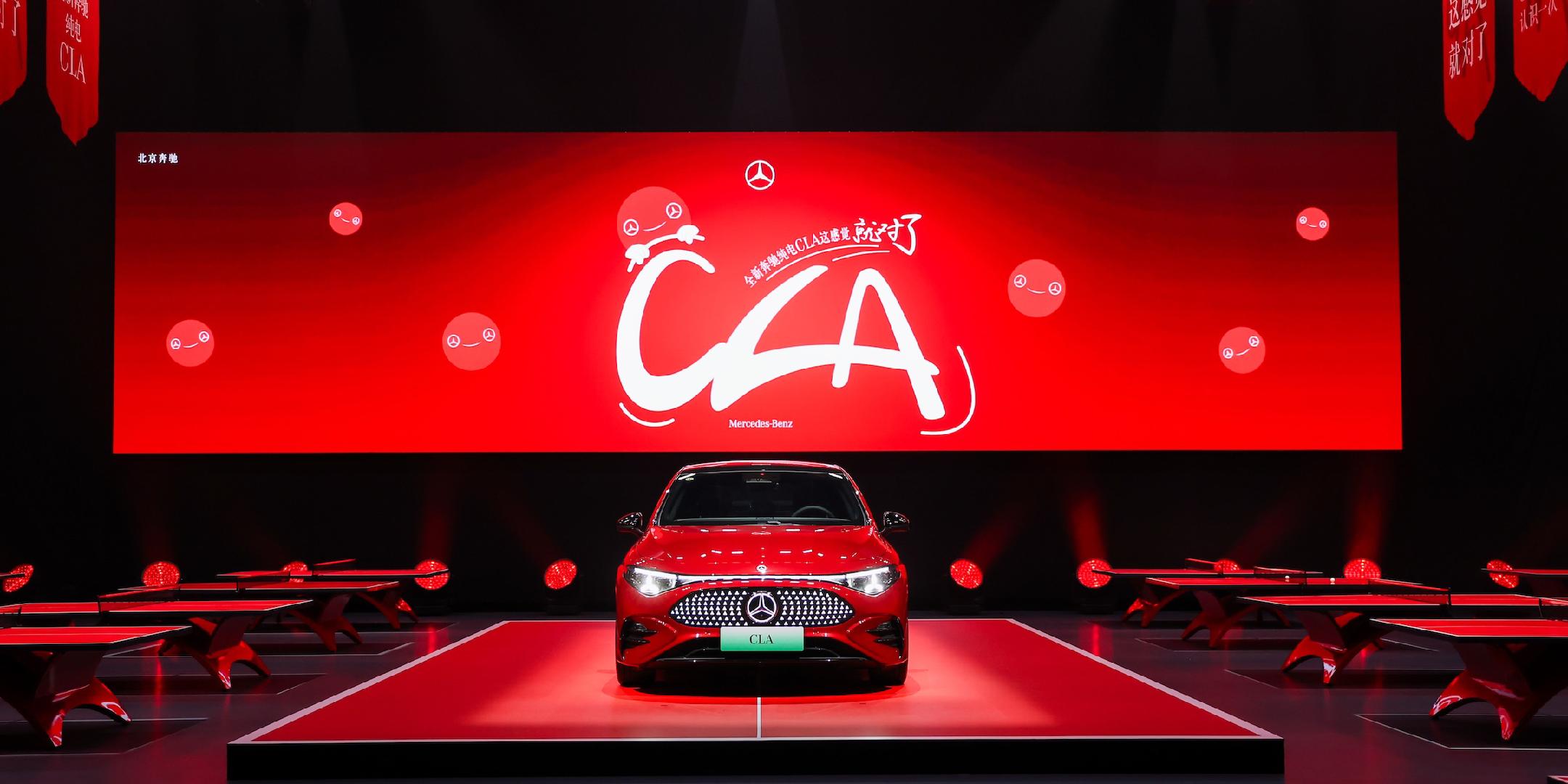
Core Insights - The collaboration between table tennis player Wang Chuqin and Mercedes-Benz for the electric CLA model represents a strategic marketing move aimed at reshaping the brand's value system in China, focusing on technology and premium capabilities [2][3] - The Mercedes-Benz electric CLA is positioned as a core strategic product for the year, with a starting price of 249,000 yuan, which is 10,000 yuan lower than the pre-sale price, and features such as an 800V high-voltage architecture and a range of 866 kilometers [2][3] - Mercedes-Benz aims to narrow the technological gap with local brands by increasing local R&D and collaborating with domestic technology suppliers, a common goal among joint venture brands in the current market [2][3] Product Strength and Differentiation - The electric CLA emphasizes safety with standard features like 11 airbags and a five-star rating in China's electric vehicle fire safety index, along with leading the development of international standards for electromagnetic safety [3] - The marketing strategy includes engaging younger consumers, with the new leadership in the China region and a focus on appealing to the younger demographic through relatable marketing efforts [3][4] - The pricing strategy of the electric CLA, set below 250,000 yuan, is a direct response to the increasing price sensitivity of Chinese consumers and aims to compete in a crowded market alongside models like Tesla Model 3 and Zeekr 007 [4] Market Positioning and Challenges - Mercedes-Benz is adapting to a more localized approach in its marketing and product offerings, acknowledging the diminishing "technology halo" and the need to balance brand premium with cost control [4] - The entry into the competitive segment of electric vehicles means that Mercedes-Benz will face challenges in brand recognition, channel service, and user engagement in the Chinese market [4]
业绩增长、产品涨价:“妈妈包”COACH是如何翻红的?
Sou Hu Cai Jing· 2025-11-08 02:49
Core Insights - COACH, once perceived as an outdated luxury brand, is experiencing a resurgence with significant revenue growth, particularly in the Chinese market [2][3] - The brand's revenue for the first quarter of fiscal year 2026 reached $1.43 billion, a 22% year-over-year increase, with over 2.2 million new global customers, 35% of whom are Gen Z [3][4] Financial Performance - The parent company, TPR, reported total revenue of $1.7 billion for the first quarter, marking a 13% increase year-over-year [2] - COACH's revenue in China was $269.1 million, reflecting a 20% increase year-over-year [2] Brand Strategy - COACH has shifted its focus from excessive promotions and discounts to classic products and brand storytelling, enhancing emotional resonance with consumers [4][6] - The brand has redesigned classic items and introduced over 50 derivative products, successfully engaging consumers on social media [4] Market Positioning - COACH is actively expanding its presence in the Chinese market, with plans to open flagship stores and achieve a "hundred store goal" by the end of the year [5] - The brand is redefining itself as "new luxury" rather than "affordable luxury," appealing to younger consumers who seek self-expression through fashion [7][10] Consumer Insights - Research indicates that modern consumers prioritize self-expression over brand logos, leading to a shift in how luxury is perceived [6][8] - COACH's consumer insights department plays a crucial role in understanding customer preferences and behaviors, informing product design and marketing strategies [12][13] Marketing Approach - The brand has eliminated frequent discount promotions from its marketing narrative, focusing instead on storytelling that connects emotionally with consumers [15][16] - COACH aims to create a unique shopping experience that resonates with diverse consumer segments, tailoring its messaging to different lifestyles and preferences [14][17]

周大福6个月减少611家零售点
第一财经· 2025-11-06 08:54
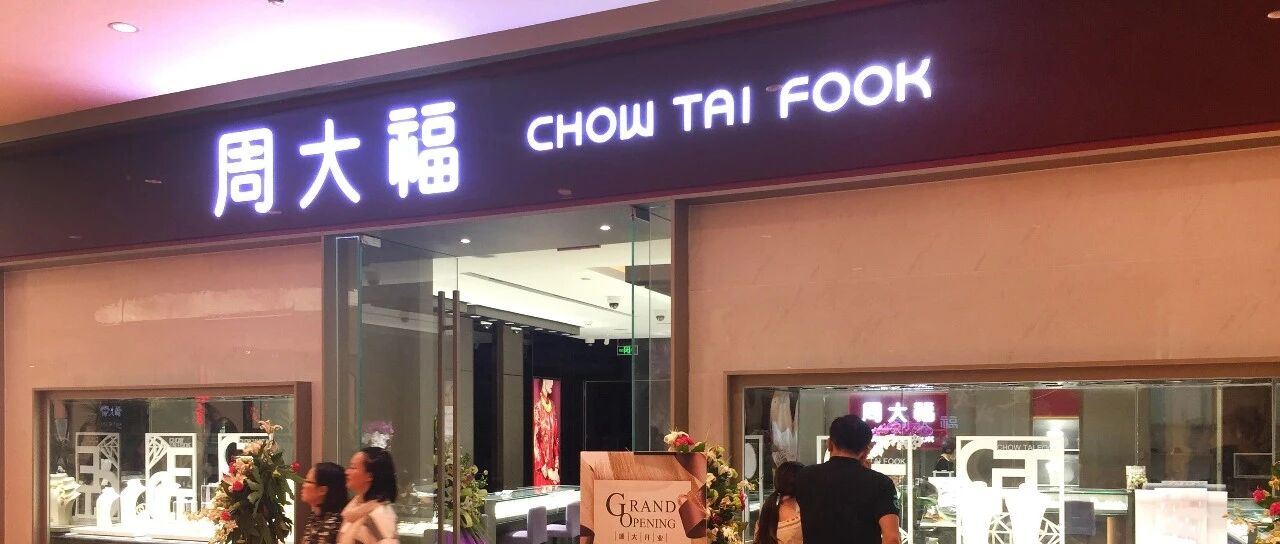
Core Viewpoint - The article discusses the shift of leading gold brands towards e-commerce channels in response to declining terminal sales and the closure of underperforming physical stores [3][4]. Group 1: Company Strategies - Chow Tai Fook reported a reduction in retail points, with a total of 6,041 stores as of September 30, 2025, down from 6,644 in March, indicating a strategic shift towards optimizing store performance [3]. - The company is closing underperforming stores while selectively opening new ones with higher productivity, reflecting a strategic adjustment to enhance overall operational efficiency [4]. - The relationship between leading gold brands and franchisees is characterized as "principal-agent," where the closure of stores primarily involves franchisees, indicating a proactive strategic adjustment by the brand [4]. Group 2: Market Challenges - The decline in foot traffic in first-tier city commercial areas has led to a structural dilemma for gold jewelry stores, where traditional reliance on location-based traffic is no longer effective [4]. - The high volatility of gold prices, combined with weak consumer demand and intensified competition, has pressured the profitability of inefficient stores, prompting franchisees to exit the market [4]. Group 3: E-commerce Growth - The explosive growth of e-commerce channels reflects a "trust migration" among consumers, who are increasingly relying on brand official flagship stores instead of physical stores for high-end gold jewelry purchases [5]. - E-commerce helps gold brands reduce dependence on high-rent physical stores, thereby lowering fixed costs and enhancing inventory turnover and customer repurchase rates through data-driven marketing [5]. - Despite the impressive growth of e-commerce, physical stores remain essential for aspects like trying on products, value retention, and after-sales service, leading brands to pursue an "online-to-offline" integration strategy rather than large-scale store closures [5].
饿了么变淘宝闪购,互联网大厂为何热衷改名?
3 6 Ke· 2025-11-04 23:59
Core Viewpoint - Ele.me has rebranded to Taobao Flash Purchase, marking a strategic shift from an independent food delivery platform to an "instant retail" fulfillment infrastructure, aiming for a "30-minute delivery" goal in collaboration with Taobao [1][12][14] Group 1: Company Strategy - The rebranding to Taobao Flash Purchase is part of a strategic positioning adjustment, integrating Ele.me's services with Taobao's traffic to enhance user experience and operational efficiency [1][14] - Taobao Flash Purchase is currently in a gray testing phase, focusing on instant delivery services for food and daily necessities [1][12] - The name change has generated significant public interest, with the new brand quickly becoming associated with the goal of "everything delivered to your home" [1][12][14] Group 2: Market Performance - Taobao Flash Purchase has achieved a peak daily order volume of 1.2 billion, with a weekly average of 80 million orders, contributing to a 20% increase in daily active users for Taobao [12] - The service has seen a 670% increase in supermarket and convenience store orders during the recent Double 11 shopping festival, with over 70% of cities reporting a more than 200% increase in late-night snack orders [12][14] Group 3: Brand Transition - The rebranding reflects a broader trend in the internet industry where companies change names to signify strategic upgrades, brand transformations, or mergers [3][6] - Historical examples include major companies like Meta (formerly Facebook) and Apple (formerly Apple Computer), which rebranded to reflect their expanded business scopes [6][9] - The name change aims to refresh the brand image and communicate a new narrative to users, although the effectiveness of such changes can vary [3][10][11]