复利

Search documents
理财的意义:让钱为你工作,而不是你一辈子为钱忙
Sou Hu Cai Jing· 2025-10-28 02:17
Core Insights - The article emphasizes that financial literacy is essential for everyone, not just the wealthy, as it provides a sense of financial security in challenging economic times [1] - It highlights the importance of managing money effectively as a foundational step towards financial management and investment [2][4] Group 1: Financial Management Basics - The first step in financial management is understanding where money is spent, which can be achieved through simple budgeting practices [2][4] - Individuals often express confusion about their spending, indicating a lack of financial awareness [3] Group 2: Investment Principles - Investment is characterized by the coexistence of risk and return, and it should not be viewed as gambling but rather as a rational approach to managing risk [6][7] - Asset allocation is crucial, as it determines the safety and return of investments, with a classic saying advising against putting all eggs in one basket [8][9][10] Group 3: The Power of Compounding - Compounding is described as a powerful tool for wealth growth, with examples illustrating how consistent investments can lead to significant financial outcomes over time [12][14] - A suggested asset allocation strategy includes 40% in stable products, 40% in growth products, and 20% in opportunistic investments [13] Group 4: Mindset in Investing - The article stresses that emotional control is vital in investing, as fear and greed can lead to poor decision-making [15] - A long-term perspective is encouraged, with the notion that steady, small gains can be more beneficial than chasing high returns [15] Group 5: Taking Action - The importance of starting financial management early is highlighted, as waiting to accumulate wealth before investing can be counterproductive [16][17] - Small, consistent actions in financial management can lead to significant benefits over time [17] Conclusion - Financial management is framed as a lifestyle choice that empowers individuals to take control of their financial futures, reducing anxiety about unexpected events and fostering a proactive approach to wealth [18] - Continuous learning and disciplined investment strategies are recommended for improving financial judgment and outcomes [19][20]


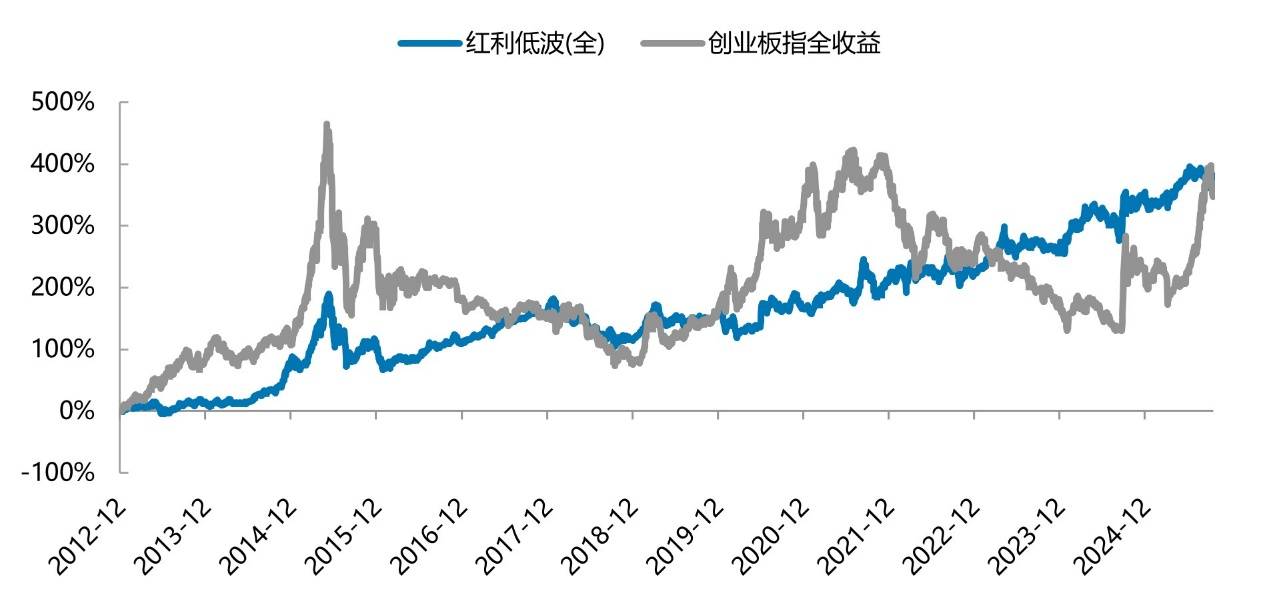
A股一场跨越十三年的“龟兔赛跑”——红利的“慢”与成长的“快”之间,藏着多数人忽略的长期真相
Sou Hu Cai Jing· 2025-10-27 07:17
Core Viewpoint - The article discusses the contrasting investment styles of dividend stocks and growth stocks, highlighting how both have reached similar return levels despite their differing characteristics and market perceptions over the years [1][4]. Group 1: Dividend Stocks - Dividend stocks are often perceived as "slow" and are overlooked in favor of growth stocks, which are associated with rapid innovation and high returns [5][6]. - The characteristics of dividend stocks include a systematic value screening mechanism, a focus on sustainable dividend payments, and a stable performance that is less affected by market volatility [6][9]. - The long-term performance of dividend strategies is attributed to their disciplined approach, emphasizing steady returns and the power of compounding through reinvested dividends [12][13]. Group 2: Growth Stocks - Growth stocks are characterized by their high volatility and the constant shift in narratives, which can lead to significant emotional stress for investors [9][10]. - The allure of growth stocks lies in their potential for rapid returns, but this comes with high risks and uncertainties, making it challenging for investors to maintain their positions during market fluctuations [10][11]. - The article emphasizes that while growth investing can uncover significant opportunities, it requires a strong ability to navigate market changes and withstand emotional pressures [13][14]. Group 3: Investment Philosophy - The article contrasts the investment philosophies of dividend and growth strategies, suggesting that dividend investing may be more suitable for average investors seeking stable returns without the need for precise market timing [12][13]. - It poses a reflective question for investors about their ability to handle volatility and market emotions, suggesting that a dividend strategy may offer a more suitable approach for those who prefer a steady accumulation of wealth [13][14]. - The conclusion emphasizes that in the long-term investment landscape, the choice between being a "shooting star" (growth investor) or a "constant star" (dividend investor) is crucial for achieving sustainable wealth [15][16].
Warren Buffett's Wealth-Building Tips For Upper Class: 'Take Advantage of Compound Interest, Don't Be Captivated By Siren Song of The Market'
Yahoo Finance· 2025-10-26 20:52
Core Insights - Warren Buffett provides wealth-building strategies specifically for the upper class, emphasizing value investing and long-term strategies [1][3] - The upper class, representing about 2% of the U.S. adult population, has a median household income of $256,900, indicating significant financial resources [1] - Buffett warns against impulsive investment decisions influenced by market volatility, advocating for a disciplined approach to investing [2][3] Investment Strategies - Value investing is highlighted as a key strategy, focusing on selecting stocks priced at or below their intrinsic value [1] - The importance of long-term investment is underscored, with Buffett stating that "time is your friend; impulse is your enemy" [2] - Buffett encourages investors to leverage compound interest and avoid being swayed by market trends [2][3] Investor Temperament - Buffett emphasizes that temperament is more crucial than intellect for successful investing, suggesting that emotional intelligence plays a significant role [2][4] - He advises investors to maintain a balanced perspective, neither overly influenced by market trends nor completely against them [3][4] - This focus on temperament is particularly relevant in the context of the widening wealth gap in the U.S. [3]
巴菲特如何在30岁前赚到100万美元
Sou Hu Cai Jing· 2025-10-20 13:53
Core Insights - The article discusses how Warren Buffett accumulated a million-dollar fortune by the age of 30 through systematic application of investment principles learned from his mentor Benjamin Graham and by identifying overlooked opportunities in the market [1][10]. Group 1: Investment Principles - Buffett emphasizes the importance of viewing stocks as ownership in companies and seeking a "margin of safety" in investments [1]. - He advises looking for opportunities in areas that others ignore, such as undervalued companies or assets, rather than following popular stocks [2]. - The article highlights Buffett's early investment strategies, including a notable transaction involving a company with undervalued cocoa bean inventory, which he capitalized on by exchanging shares for cocoa beans [2]. Group 2: Entrepreneurship and Side Hustles - Buffett started his entrepreneurial journey at a young age, selling gum and delivering newspapers, where he optimized his delivery routes for maximum efficiency [3]. - His early ventures, such as the pinball machine business, taught him about passive income and the importance of understanding business operations [4]. - The article suggests that side hustles can accelerate wealth accumulation and provide valuable business skills that traditional employment may not offer [4]. Group 3: Time vs. Money - Buffett believes in making money work for him rather than trading time for money, focusing on investments that yield returns over time [5]. - He stresses the importance of creating systems that allow money to generate income without constant effort, such as real estate or dividend-paying stocks [6]. Group 4: Financial Discipline - Despite earning a high income, Buffett maintained a frugal lifestyle, understanding the concept of opportunity cost and avoiding lifestyle inflation [7]. - The article illustrates how small savings can compound significantly over time, emphasizing the importance of saving and investing wisely [7]. Group 5: Continuous Learning - Buffett dedicates a significant amount of time to reading and learning, which he considers essential for making informed investment decisions [8]. - He advocates for investing in knowledge as the best return on investment, highlighting the importance of skills that cannot be outsourced [9]. - The article concludes that combining these principles—side hustles, frugality, and continuous learning—can lead to greater financial success and opportunities [9][10].
诺奖基金125年不翻车,资产盈利215倍,理财的秘诀藏着3个细节!
Sou Hu Cai Jing· 2025-10-20 10:44
Core Insights - The Nobel Prize Fund has survived for 125 years, demonstrating resilience through wars, economic depressions, and inflation, unlike many short-lived public funds [1] - The initial capital of the fund was approximately 1.7 billion RMB, derived from 31 million Swedish Krona left by Alfred Nobel [3] - As of last year, the fund's assets have grown to 6.8 billion Swedish Krona, with an annualized return of about 4.46% and nearly 8% over the last 50 years, showcasing its stability and growth [5][7] Investment Strategy - Initially conservative, the fund focused on bonds to comply with Nobel's will, which helped it weather significant market downturns during the World Wars [5] - In the 1970s, the fund diversified into stocks, capitalizing on the globalization boom from 1990 to 2020, achieving an annualized return of approximately 8% [7] - The fund employs a multi-asset strategy, investing in stocks, bonds, and commodities to minimize risk through low correlation among assets [10] Performance and Risk Management - The fund's performance from 2019 to 2022 saw an 18% increase with a maximum drawdown of only 2%, contrasting sharply with the S&P 500's 19% gain and 19% drawdown during the same period [10] - The fund's long-term approach emphasizes capital preservation, advising investors to prioritize safety over chasing short-term gains [12][14] Lessons for Investors - The Nobel Prize Fund's success illustrates the importance of patience and a long-term perspective in wealth accumulation, contrasting with the common pitfalls of chasing trends [16][17] - A recommended asset allocation strategy for individual investors includes 50% in savings, 30% in bonds, and 20% in stocks to ensure capital safety before seeking returns [12][14]

“小预算大未来”:中邮基金解析定投如何助力工薪阶层财富积累
Xin Lang Ji Jin· 2025-10-17 09:45
Core Viewpoint - The article emphasizes the importance of regular investment (定投) as a stable financial tool for ordinary workers, highlighting its potential to accumulate wealth over time through disciplined investment practices [1][2][3]. Group 1: Investment Education and Public Awareness - The Beijing Securities Regulatory Bureau and the Beijing Securities Association have initiated a series of activities aimed at promoting high-quality development in public funds, with a focus on educating the public about fund investment [1]. - 中邮基金 is actively involved in investor education, aiming to enhance financial literacy and promote the concept of "new era, new funds, new value" [1][5]. - The initiative seeks to make fund investment accessible to more working-class families, thereby integrating it into their financial planning [1]. Group 2: Benefits of Regular Investment - Regular investment allows individuals to invest small amounts consistently, leveraging the principle of compounding to create significant wealth over time [2][3]. - For instance, a monthly investment of 2000 yuan at an annual return of 5% could accumulate to approximately 800,000 yuan over 20 years, demonstrating the power of disciplined investing [2]. - The strategy of regular investment helps to average out costs and mitigate risks associated with market volatility, making it suitable for ordinary investors [3][5]. Group 3: Psychological and Behavioral Aspects - Many investors tend to stop regular investments during market downturns due to fear, which can lead to missed opportunities for accumulating shares at lower prices [4][5]. - Understanding the principles of regular investment is crucial for maintaining investment discipline and achieving long-term financial goals [5][6]. Group 4: Accessibility and Inclusivity - The development of regular investment reflects the public fund industry's commitment to inclusive finance, allowing ordinary families to participate in capital markets with lower investment thresholds [5][6]. - Many fund products now have a minimum investment requirement as low as 100 yuan, significantly lowering the barrier for young individuals to start their financial planning [5]. Group 5: Future Outlook and Cultural Development - 中邮基金 plans to continue its efforts in investor education, focusing on promoting long-term investment concepts and healthy investment culture through collaborations with communities, enterprises, and schools [6][7]. - The goal is to help more individuals understand the value of long-term investment and achieve stable wealth growth in an uncertain economic environment [6][7].
为什么越理财越有钱?真正的秘密在于钱的方向感
Sou Hu Cai Jing· 2025-10-16 06:27
Core Insights - The essence of financial management is not merely about investment returns but understanding the direction of money [1] - Effective financial management requires a structured approach to money allocation and emotional control [6][8] Group 1: Money Management Principles - The first step in financial management is to allocate money effectively, avoiding the mistake of pooling all funds into a single account [2] - Money should be divided into different accounts: an active account for daily expenses, a safety account for emergency reserves (3 to 6 months), and an investment account to generate returns [7] Group 2: Emotional Control in Finance - Many individuals fail in financial management due to poor emotional control, often reacting to market fluctuations instead of maintaining a steady approach [6] - The ability to manage emotions is crucial for achieving financial freedom [8] Group 3: Resource Optimization - Financial management should focus on optimizing spending efficiency rather than merely seeking to save money [9] - Understanding the value of expenditures is essential; for instance, spending on insurance or investment education can yield greater long-term benefits than unnecessary purchases [9] Group 4: The Power of Compound Interest - Regular investments, even small amounts, can lead to significant wealth accumulation over time due to the power of compound interest [10] - Starting investments early is more beneficial than waiting until one has more money to invest [10] Group 5: Purpose of Financial Management - The ultimate goal of financial management is to achieve peace of mind and a structured life, rather than merely accumulating wealth [11] - Individuals with savings and investment knowledge tend to experience less anxiety and greater confidence in facing the future [11]
月薪一万,为什么还是没钱?——普通人理财的盲区与出路
Sou Hu Cai Jing· 2025-10-14 08:53
Core Insights - The article emphasizes that the issue of financial strain is not due to low income but rather a lack of money management skills and an increase in consumer desires [1][3][4] Group 1: Understanding Financial Management - The first step in financial management is recognizing personal consumption patterns, as many small expenses can lead to significant financial strain over time [1][3] - Financial management is about planning for the future rather than speculative investments; it requires setting clear goals such as buying a house, retirement, or education [3][5] Group 2: Key Principles of Financial Growth - The key to financial success is not merely earning more but ensuring that money appreciates in value, as keeping money in a bank account can lead to depreciation due to inflation [5][6] - Simple investment strategies, such as regular contributions to index funds or low-risk bonds, can help individuals start their financial journey without needing extensive financial knowledge [5][6] Group 3: Discipline in Financial Practices - The most challenging aspect of financial management is maintaining discipline and consistency, similar to a fitness regimen, where long-term commitment leads to noticeable results [5][6] - Financial management is portrayed as a quiet journey rather than a competitive game, where early and consistent action can yield significant benefits over time [5][6] Group 4: The True Meaning of Financial Management - The ultimate goal of financial management is not just wealth accumulation but achieving a sense of freedom and security in life, allowing individuals to face challenges with confidence [6]

金融破段子 | 如果“社保基金”是公募,你买不买?
中泰证券资管· 2025-10-13 11:32
Core Viewpoint - The National Social Security Fund achieved an investment return rate of 8.1% in 2024, with total investment earnings of 218.418 billion RMB, which is competitive compared to many current financial products [2][3]. Investment Performance - The average annual investment return rate since the fund's establishment is 7.39%, indicating strong long-term performance [2][3]. - In 2024, the Shanghai Composite Index, CSI 300, and ChiNext Index had annual increases of 12.67%, 13.23%, and 14.68% respectively, suggesting that many A-share investors may have higher returns than the fund [2]. Historical Performance - The fund has shown resilience during market downturns, with only three years of negative returns in 24 years: 2008 (-6.79%), 2018 (-2.28%), and 2022 (-5.09%) [5]. - The fund's performance in bull markets has been modest, achieving over 10% returns only in four years since 2010, indicating a strategy focused on capital preservation rather than high-risk gains [5]. Compounding Effect - The compounding effect of the fund's average annual return of 7.39% means that an initial investment of 1 million RMB would grow to over 5.5 million RMB in 24 years [7]. - If this return is sustained, the same investment could exceed 11 million RMB in 34 years, highlighting the importance of time in investment growth [7]. Investor Behavior - The frequency of checking investment performance can negatively impact returns, as evidenced by research showing that less frequent monitoring leads to better outcomes [8][10]. - Investors are encouraged to adopt a long-term perspective and manage emotional responses to market fluctuations to enhance investment success [10].

从10万到1000万:真正可行的“复利”实战手册
Sou Hu Cai Jing· 2025-10-12 16:00
Core Concept - The article emphasizes that compound interest is an accessible wealth-building tool for everyone, not just elite investors, and outlines a practical guide for ordinary individuals to leverage it effectively [1]. Step 1: Accumulate Initial Capital - The first step is to save an initial capital of 100,000, which serves as the foundation for compound interest. This requires disciplined spending and consistent saving [3]. - Many individuals lose their initial capital by engaging in high-risk investments, which resets their progress towards compound interest [4]. Step 2: Achieve a 10% Annual Return - A realistic target for ordinary investors is to aim for an annual return of around 10%, as opposed to unrealistic high returns that resemble gambling [6]. - For example, starting with 100,000 at a 10% annual return can grow to 260,000 in 10 years, and with additional annual investments of 50,000, it can approach 1 million [8]. Step 3: Continuous Investment - To reach significant wealth, continuous investment is crucial. Compound interest grows not just from the initial capital but from ongoing contributions [12]. - Suggested investment strategies include index fund investments, quality real estate for rental income and appreciation, and a balanced portfolio of bonds and equities [12]. Step 4: Resist Temptation - The biggest threat to compound interest is the investor's own impatience and the temptation to take unnecessary risks. Long-term commitment is essential for realizing the full benefits of compound interest [15]. - For instance, a 100,000 investment at 10% may only grow to 260,000 in the first decade, but can reach 670,000 in the next ten years, illustrating the exponential growth potential over time [15]. Step 5: Asset Allocation - Achieving a target of 10 million requires diversification across different asset classes to mitigate risks [18]. - A balanced approach includes cash flow assets (like rental properties), growth assets (like index funds), and safety assets (like bank products and bonds) to ensure steady growth even during market fluctuations [20]. Conclusion - The journey from 100,000 to 10 million is a long-term commitment, emphasizing that slow and steady wins the race. The key to wealth accumulation lies in discipline, consistent investment, and a focus on compound interest over time [22].