多资产配置

Search documents
从“多而散”到“少而精!780亿暴增的底层逻辑:爆款频出,五维度观察公募FOF
Sou Hu Cai Jing· 2025-12-11 10:58
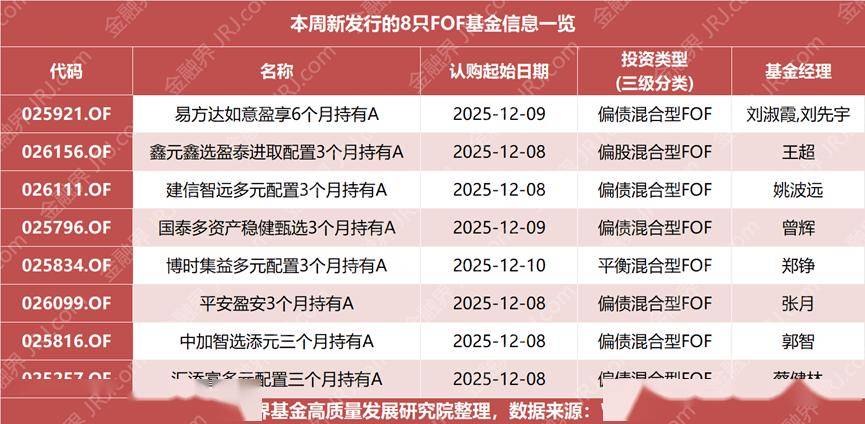
从全年表现看,FOF发行规模与数量实现双攀升。Wind数据显示,截至12月11日,年内成立的FOF数量已超75只,发行总 规模突破780亿元,创下近4年新高。其中,23只FOF发行规模超10亿元,最大单只规模超65亿元,另有3只募集规模超50亿 元,头部产品虹吸效应显著。 维度一,居民理财需求结构性转变,稳健配置需求激增 在存款利率持续下行、银行理财全面净值化背景下,投资者对"低波动、稳收益"资产的配置需求显著提升。FOF作为专业 资产配置工具,通过分散投资于多只公募基金,有效平滑单一资产波动,成为居民财富向权益市场迁移的重要承接载体。 据WIND数据,今年以来全市场FOF产品总规模已超2021年末水平,接近2022年初历史高位,反映出市场对FOF的接受度持 续提升。 维度二,产品结构优化,"少而精"趋势强化,爆款频出 公募FOF发行热潮持续升温,单周发行数据再创新高。本周(12月8日~12月14日)共有8只公募FOF启动募集,发行数量环 比飙升300%,创下2023年5月以来的单周新高,且这已是FOF连续第十周保持"周周有新品"的强劲节奏。 | | | 本周新发行的8只FOF基金信息一览 | | | | - ...

FOF投资需要全能选手
Xin Lang Cai Jing· 2025-12-11 09:09
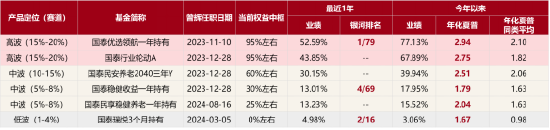
Core Viewpoint - The article highlights the impressive performance and innovative investment strategies of Zeng Hui, a fund manager at Guotai Fund, emphasizing his ability to adapt to the evolving public fund industry and achieve superior returns through a multi-asset approach [7][30][42]. Performance Summary - Guotai Youxuan Linghang One-Year Holding FOF achieved a return of 52.59% over the past year, ranking first among its peers [2][25]. - Guotai Ruiyue Three-Month Holding FOF, with a higher fixed income allocation, recorded a return of 4.98%, placing it second in its category [4][28]. - All managed products have shown outstanding historical performance, with annualized Sharpe ratios exceeding the industry average [5][36]. Investment Philosophy - Zeng Hui believes the public fund industry has entered a new phase, moving from static allocation to dynamic timing and rotation strategies [8][31]. - The role of FOF fund managers has evolved from mere allocators to direct competitors in the market [10][32]. - Zeng emphasizes the need for "all-around" talent development in the industry, moving away from traditional team structures [9][34]. Competitive Landscape - The competition in the FOF space is becoming increasingly fierce, requiring managers to excel in both horizontal dynamic allocation and vertical asset enhancement [13][34]. - Zeng's investment framework is shaped by the competitive environment, pushing him to become a more versatile fund manager [12][34]. Unique Investment Model - Zeng has developed the "Taiji Quantitative Rotation Model," which focuses on extreme market conditions and incorporates macro risk control, industry rotation, and robust risk management [39][40]. - This model aims to adapt to the constantly changing market dynamics, allowing for continuous accumulation and iteration of various algorithmic models [40][41]. Market Context - The current market environment, characterized by rapid restructuring and asset revaluation, highlights the effectiveness of Zeng's investment approach [42]. - The interplay between stock and bond markets is increasingly significant, with the "seesaw" effect becoming more pronounced [41].
一场债券私募的“自救”
Shang Hai Zheng Quan Bao· 2025-12-09 18:54
Core Insights - The recent significant decline in credit bond prices has disrupted the market, leading to substantial weekly losses for many pure bond private equity funds, with some experiencing declines of over 9% [1][2] - The fundamental risks associated with these credit bonds were anticipated by institutions and investors, raising questions about why many private equity funds heavily invested in such bonds [1][2] - The current environment has forced bond private equity managers to seek transformation, exploring macro strategies and multi-asset allocations to adapt to the changing market dynamics [1][5] Market Reaction - On November 25, investor concerns peaked as many private equity funds reported significant net value declines, with pure bond products experiencing a drop of over 3% from November 24 to 28 [2] - The adjustment in credit bonds was triggered by a company disclosing a meeting to discuss bond extension, leading to rapid price adjustments in related bonds [2] - Notably, several well-known bond private equity products saw net value declines exceeding 4% during this period, indicating a broader market impact [2] Industry Challenges - The average yield for medium to long-term pure bond funds has dropped to around 1%, with some funds achieving up to 4% by taking on more credit risk, but future yields are expected to be challenging [3] - The interest in traditional pure fixed-income products has decreased as investors shift towards equity and other asset classes, reflecting a clear trend of marginalization for fixed-income strategies [4] Transformation Strategies - In response to the challenging environment, many bond private equity firms are pivoting towards "fixed income plus" or macro strategies to enhance returns [5] - Some firms have begun to diversify their investment strategies by incorporating equity investments and exploring opportunities in convertible bonds and cross-border investments [5] - The trend indicates that equity assets are becoming a focal point for bond private equity firms as they seek to improve product yield characteristics [5] Market Outlook - The low interest rate environment is expected to persist, making bond investments increasingly difficult, while the stock market may benefit from ongoing capital inflows and positive policy signals [6]
公募FOF投资发展的终局,将是残酷的“四项全能”
聪明投资者· 2025-12-09 03:45
Core Viewpoint - The article emphasizes the evolving landscape of multi-asset investment strategies, highlighting the importance of dynamic asset allocation and risk management in achieving superior returns in the current market environment [4][21][40]. Group 1: Investment Philosophy - The interviewee, Zeng Hui, advocates for a shift from static to dynamic asset allocation, focusing on timing and risk control to enhance returns and manage drawdowns effectively [8][10][11]. - Zeng Hui's investment framework is based on a "Tai Chi" philosophy, emphasizing the importance of identifying extreme market conditions (overbought and oversold) rather than adhering strictly to mean reversion [12][55]. - The approach includes enhancing four underlying asset classes, particularly commodities and international assets, which are seen as essential for public FOF (Fund of Funds) investments [13][80]. Group 2: Performance Metrics - Zeng Hui manages several funds with notable performance, including the Guotai Youxuan Lihang fund, which achieved a return of 52.59% over the past year, ranking first in its category [4][5]. - The Guotai Ruiyue fund, focusing on bonds, reported a return of 4.98%, ranking second in its category, showcasing the effectiveness of Zeng Hui's investment strategies [4][5]. Group 3: Market Trends and Future Outlook - The article discusses the significant changes in the FOF industry, driven by the rise of quantitative strategies and ETFs, which are reshaping traditional investment models [21][22][35]. - Zeng Hui predicts that the future of public FOF will involve a more integrated approach, reducing the layers of management and focusing on dynamic asset allocation to improve investment efficiency [21][35]. - The article highlights the anticipated performance of various asset classes in the coming year, with commodities expected to outperform equities and bonds, particularly gold and silver [99][100][106]. Group 4: Risk Management - Zeng Hui emphasizes the critical role of macro risk management, identifying it as the most significant risk factor in investment, accounting for 40% of the overall risk framework [41][46]. - The investment strategy incorporates a quantitative system to enforce discipline and mitigate human biases, ensuring adherence to risk management protocols [92][97]. - The article outlines the necessity of a robust macroeconomic model that integrates various factors, including fundamental, policy, liquidity, and market sentiment, to guide investment decisions [42][43][46].

【国信金融】2026:银行理财能接力险资入市吗?-银行理财2025年12月月报
Xin Lang Cai Jing· 2025-12-08 01:32
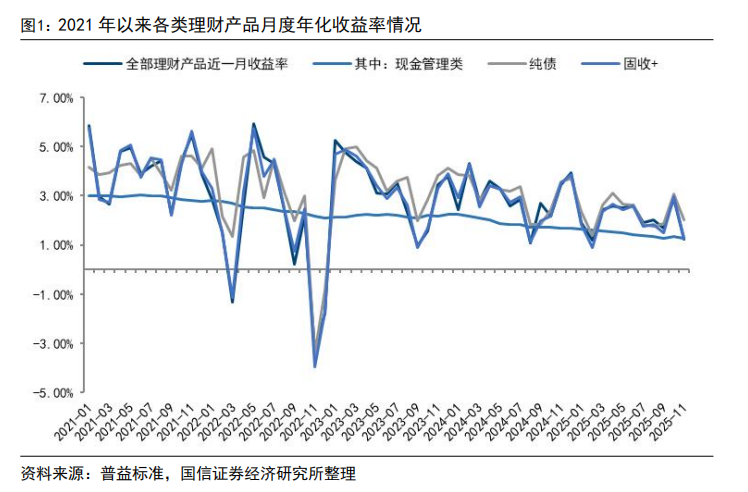
Group 1 - The total scale of wealth management products reached a historical high of approximately 34 trillion yuan in November, with expectations to stabilize around 33 trillion yuan by year-end despite some scale returning to the balance sheet [1][34] - The recent pace of rectification for existing wealth management products has eased, and the impact of recent bond market fluctuations on product net values is considered manageable [1][34] - The consensus within the wealth management industry is that bond returns have narrowed, leading to a shift towards developing "multi-asset" products through increased equity allocations [1][34] Group 2 - The core contradiction facing bank wealth management is the downward trend in the yield center of traditional "fixed income +" strategies, which contrasts with investors' expectations for stable returns [2] - To address this issue and create new revenue growth avenues, leading wealth management firms are expanding into multi-asset and multi-strategy approaches, including complex strategies like quantitative neutral and cross-border assets [2][34] - This trend represents a necessary evolution from a "fund pool-asset pool" model to a genuine asset management approach, enhancing absolute return capabilities and risk-adjusted returns [2][34] Group 3 - Successful implementation of the "multi-asset" strategy depends on matching the risk-return characteristics of wealth management funds with suitable long-term capital [3][35] - The competition among wealth management firms will increasingly focus on their ability to segment clients accurately and design products with appropriate risk structures and investment horizons [3][35] Group 4 - Strengthening collaboration with public funds is essential for wealth management firms to build their investment research capabilities and address existing gaps compared to established public funds [3][36] - A combination of self-built and outsourced models to create an open "basic strategy pool" is a practical approach for wealth management firms [3][36] Group 5 - Optimizing the policy environment is crucial for unlocking the potential of wealth management funds entering the market, as current clients exhibit low-risk preferences [4][36] - Systematic improvements in investor education and regulatory guidance can help enhance the risk tolerance of clients, facilitating greater equity allocations [4][36] Group 6 - By 2026, wealth management funds are expected to increase their equity market allocations, with an estimated annual incremental capital inflow of between 150 billion to 250 billion yuan [6][37] - The entry strategy will primarily involve "fixed income +" and "multi-asset" combinations, utilizing methods like quantitative hedging and high-dividend strategies rather than large-scale issuance of pure equity products [6][37] - The unique requirements of wealth management funds for return certainty and volatility control will drive public funds to develop innovative tools that align with these needs [6][37] Group 7 - In November, the average annualized yield for bank wealth management products fell to 1.23%, a decrease of 165 basis points from the previous month [8][39] - The total scale of wealth management products at the end of November was 31.7 trillion yuan, reflecting a month-on-month increase of 0.1 trillion yuan [11][42] - The initial fundraising scale for newly issued products in November was 271.7 billion yuan, primarily consisting of fixed income products [18][49]
国信证券晨会纪要-20251208
Guoxin Securities· 2025-12-08 00:56
Group 1: Macro and Strategy Insights - The report highlights three key drivers for unlocking service sector growth in China: overseas "input demand," domestic "time-scarce" potential demand, and "innovation demand" arising from industrial upgrades [8][9] - The macroeconomic environment is characterized by a classic cycle dilemma in the service sector, where boosting service demand is seen as dependent on increasing resident income, creating a paradox [8][9] - The report discusses the evolution of anti-involution policies, emphasizing the need for industry self-discipline and administrative guidance to address overcapacity issues in various sectors [9] Group 2: Banking Industry Outlook - The banking industry is projected to experience a decline in net interest margins, with the bottom line estimated at around 1.2% to 1.3% [22][23] - A potential decrease in the Loan Prime Rate (LPR) by 10 basis points could lead to a year-on-year decline in net interest margins by approximately 5 to 8 basis points [23][24] - The report suggests that 2026 will likely mark the end of the current cycle of declining net interest margins, with a focus on quality stocks that are expected to see margin improvements [25] Group 3: Wealth Management and Asset Allocation - The report indicates that the scale of bank wealth management products reached a historical high of nearly 34 trillion yuan in November, with expectations to stabilize around 33 trillion yuan by year-end [26][27] - A shift towards multi-asset strategies is seen as essential for wealth management firms to adapt to declining returns from traditional fixed-income products [27][28] - The report emphasizes the importance of matching the risk-return profile of wealth management funds with investor preferences to successfully implement multi-asset strategies [28][30] Group 4: REITs Market Insights - The report notes a decline in the REITs index by 1.0% for the week ending December 5, 2025, with a year-to-date increase of 1.5% [12][13] - The first city renewal REIT was successfully issued in Beijing, signaling new opportunities in the REITs market [14] - The report highlights the need for regulatory support to enhance the potential for REITs to attract more investment [14][30] Group 5: Overseas Market Overview - The U.S. stock market is showing a concentration in technology, with the S&P 500 and Nasdaq experiencing slight increases [34] - The report indicates a mixed performance across sectors, with notable gains in automotive and semiconductor industries, while utilities and consumer staples faced declines [34][35] - The earnings expectations for the S&P 500 components have been slightly revised upward, reflecting a stable outlook for most industries [35]


银行理财2025年12月月报:2026:银行理财能接力险资入市吗?-20251207
Guoxin Securities· 2025-12-07 12:10
Investment Rating - The report maintains an "Outperform" rating for the banking wealth management industry, indicating expected performance above the market benchmark by over 10% [43]. Core Insights - The banking wealth management sector reached a historical high in scale, with approximately 34 trillion yuan in November, and is expected to stabilize around 33 trillion yuan by year-end [1]. - The industry consensus is shifting towards "multi-asset" products as traditional bond returns narrow, with leading institutions actively exploring diverse strategies beyond simple equity allocations [1][2]. - The successful implementation of multi-asset strategies relies on matching the risk-return characteristics of funds, emphasizing the need for long-term capital and investor education [2]. - Collaboration with public funds is essential for building investment capabilities, as banks cannot economically develop comprehensive research teams independently [3][6]. - Regulatory improvements are crucial for unlocking the potential of wealth management funds in the market, encouraging the development of innovative products that align with investor risk tolerance [6][7]. Summary by Sections Industry Scale and Performance - The wealth management sector's scale reached 31.7 trillion yuan in November, with a slight month-on-month increase [12][13]. - The average annualized yield for banking wealth management products in November was 1.23%, reflecting a decrease of 165 basis points from the previous month [12]. Product Development and Strategy - New product issuance in November totaled 271.7 billion yuan, primarily in fixed-income products, with the average performance benchmark for new products declining to 2.34% [20]. - The majority of maturing products met their performance benchmarks, indicating stability in product performance [31]. Market Trends and Future Outlook - By 2026, it is anticipated that wealth management funds will increasingly allocate to equity markets, with expected annual inflows ranging from 150 billion to 250 billion yuan [7]. - The unique requirements of wealth management funds for yield certainty and volatility control will drive public funds to innovate and develop matching products [7].
基金研究周报:蓝筹护盘,债券基金回调(12.1-12.5)
Wind万得· 2025-12-06 22:48
图 一周摘要 图 市场概况:上周A股市场整体呈现震荡上行态势,主要宽基指数多数收涨,其中创业板指和创业板50表 现亮眼,分别上涨1.86%和2.58%,带动成长板块回暖;上证50、沪深300亦稳步上行,分别上涨 1.09%、1.28%,显示蓝筹与大盘股支撑力较强。但微盘股指数逆势下跌1.23%,反映出市场结构性分化 持续。科创50微跌0.08%,成长风格内部出现一定分化。中证红利指数小幅上涨0.22%,价值风格保持 相对稳健,市场整体呈现"大强小弱、成长分化"的特征。 行业板块:上周万得一级行业指数多数上扬,受益于冬季用电高峰临近与煤价企稳回升,能源以2.1% 的升幅领涨;6G、卫星通信等主题炒作热度降温,通讯服务下跌3.02%,表现垫底。 基金发行:上周合计发行35只,其中股票型基金发行15只,混合型基金发行9只,债券型基金发行6只, FOF型基金发行5只,总发行份额365.89亿份。 基金表现:上周万得全基指数上涨0.46%。其中,万得普通股票型基金指数上涨0.69%,万得偏股混合 型基金指数上涨0.92%,万得债券型基金指数下跌0.05%。 图 一周市场 图 01 全球大类资产回顾 上周全球权益市场整体 ...

私募走向复合,对投资人真的好吗?
雪球· 2025-12-05 07:52
以下文章来源于风云君的研究笔记 ,作者专注于私募研究的 风云君的研究笔记 . 深耕私募行业多年,专注私募基金各个策略以及资产配置,希望能分享给大家更深入、更专业的私募那 些事。 最近头部量化明汯跨界宏观,又一次引爆了市场。 热闹之余,不少投资人也发现,私募走向复合的特征,愈发明显。 何为复合? 简单讲,单一策略走向多策略,单一资产走向多资产。 早期,高净值投资者可投资的渠道比较少,一般就是银行理财、房地产、信托。 银行理财也是当时唯一可信任的渠道,几乎无风险,而且门槛低、听得懂、不需要专业能力,但 收益空间极为有限。 房地产在2000-2010年投资回报还是相当大的,很多人也吃到了这波红利。 信托其实是对房地产行业的间接投资,比较依赖地产的发展,虽然8%-10%的固定收益非常诱 人,但风险也被严重低估。 后来随着地产泡沫破裂、"刚兑"的信托产品开始违约,私募逐步走进他们的视野,之后便成为其 投资的最佳选择。 为什么都会不约而同选择私募? 为什么资产端会发生这样的变化呢? 如果是从机构角度看,风云君认为主要是由于行业内卷日益严重,同质化速度比其他传统市场更 快,单一策略、资产的有效周期也更短。 要知道私募行业是 ...

华夏理财苑志宏:低利率是挑战更是机遇 理财业迎战略转型机遇期
2 1 Shi Ji Jing Ji Bao Dao· 2025-12-03 23:04
11月22日,在"第二十届21世纪金融年会"的财富管理主题论坛上,华夏理财董事长苑志宏发表题为《低利率环境助力银行理财子公司高质量发 展跨越升级》的演讲。他指出,低利率周期已然来临,在给资管行业带来巨大挑战的同时,更是银行理财行业实现战略转型与跨越升级的重要 机遇期。 "如果按照定期存款约170万亿元、平均加权久期1.5年测算,每年到期重定价的定期存款规模要超100万亿元。若有5%腾挪至理财,每年即可 为银行理财带来超5万亿元的增量空间。"苑志宏表示。 同时,银行理财也是"多资产配置时代的受益者"。苑志宏指出,在低利率环境下,债券、非标等固收类资产的投资性价比下降、收益在下降; 而以权益、黄金、商品为代表的多资产投资在兴起,成为市场的主流。"银行理财作为配置型产品,监管赋予的投资范围非常宽广,能够进行 跨市场、跨品种、跨策略的资产配置,并可集成配置公募基金、保险资管、信托等专业资管产品,通过多元化配置提升收益。" 面对机遇,苑志宏结合华夏理财实践,提出推动高质量发展的三大举措。一是进一步加大渠道拓展力度,提升市场渗透率。二是加强投研能力 建设,获取全天候稳健收益。三是增强客户服务能力,提升全方位客户体验。 ( ...