数字主权

Search documents
SAP和OpenAI宣布合作,计划推出"德国版OpenAI"
美股IPO· 2025-09-24 12:52
Core Viewpoint - The collaboration between SAP, OpenAI, and Microsoft aims to launch a "German version of OpenAI" by 2026, specifically designed to provide AI technology services to the German public sector, ensuring data sovereignty and compliance with strict legal standards [3][4][7]. Group 1: Project Overview - The project involves a clear division of responsibilities: SAP will provide enterprise application expertise and sovereign cloud infrastructure, OpenAI will contribute advanced AI technology, and Microsoft will support the Delos Cloud on its Azure platform [3][7]. - The initiative is aligned with Germany's national AI strategy, which aims for AI-driven value creation to reach 10% of GDP by 2030 [3]. Group 2: Investment and Infrastructure - SAP has allocated €20 billion to support the global promotion of its sovereign cloud products, with existing services in 10 regions including the US and Europe [9]. - To support the German AI project, SAP plans to expand its Delos Cloud infrastructure to 4,000 GPUs for AI workloads [10]. Group 3: Market Response and Future Plans - Following the announcement, SAP's stock price rose over 2%, reflecting positive market sentiment towards the company's strategic shift towards generative AI [4]. - SAP is also accelerating its sovereign cloud product layout globally, having launched services in India to meet regulatory demands [8][9].




英媒:英国人工智能计划被“偷心”
Huan Qiu Shi Bao· 2025-09-22 22:43
Group 1 - The UK government signed a significant "Tech Prosperity Agreement" with the US during President Trump's visit, valued at several billion pounds, and announced the creation of "Stargate UK," which is seen as a rare success in UK technology [1] - Nvidia plans to invest £500 million in UK cloud startup Nscale as part of deploying 120,000 Nvidia chips, positioning the UK to have the largest AI computing cluster in Europe [1] - Nscale has partnered with OpenAI and Nvidia to develop the UK version of the "Stargate" project and is collaborating with Microsoft to build the largest AI supercomputer in the UK [1] Group 2 - Nscale, although branded as a "sovereign infrastructure," is controlled by an Australian company, Arkon Energy, which owns all of Nscale's shares as of June this year [2] - The former UK Chief Digital and Data Officer, Bracken, highlighted that the UK has fallen behind in the race for digital sovereignty in the AI era, relying on outsourcing for data, skills, and production capabilities, thus ceding control of this critical technology to monopolistic international platforms [2]
欧盟要新建金融数据共享系统,为何不带Meta苹果谷歌亚马逊玩?
Di Yi Cai Jing· 2025-09-22 11:58
Core Points - The EU is moving to exclude major US tech companies like Meta, Apple, Google, and Amazon from its new financial data-sharing system, which aims to foster the development of consumer-oriented digital financial products [1][4] - This decision is supported by Germany and is seen as a way to enhance European banks' ability to compete against large US tech firms, which are perceived as threats to the traditional banking sector [1][4] - The negotiations for the Financial Data Sharing Framework Regulation (FIDA) are nearing completion, with expectations that large tech companies will face significant setbacks in their lobbying efforts [1][3] Group 1: FIDA Framework - FIDA aims to provide a legal basis for compensated data sharing, emphasizing transparency and non-discriminatory pricing principles to ensure fair revenue distribution [3] - The framework extends "open banking" beyond payment services to include savings, credit, investment, pensions, and insurance, with standardized interfaces and clear consumer control [3] - European financial institutions are advocating for stricter access restrictions to prevent large tech firms from leveraging sensitive financial data, which could reinforce their dominant positions [3][4] Group 2: Regulatory Environment - The EU's stringent digital technology regulations stem from concerns over potential infringements on personal rights and the need to support local businesses in the face of competition from US and Chinese firms [4][6] - The EU aims to establish a "digital sovereignty" that may lead to a fragmented data economy if other countries follow suit, potentially hindering innovation within Europe [6] - Observers note that while strict regulations may protect local markets, they could also impede the EU's global competitiveness and innovation capabilities [6]





错过互联网不能再错过AI,欧盟迎来背水一战
第一财经· 2025-09-17 09:31
Core Viewpoint - The article emphasizes that the European Union (EU) is at a critical juncture in the AI era, needing to enhance its competitiveness to avoid being marginalized in the global technology landscape, similar to its past failures in the internet and mobile sectors [3][5]. Group 1: AI as Future Infrastructure - AI is rapidly becoming a foundational technology comparable to the steam engine, electricity, and computers, reshaping global competition [5]. - The investment gap in AI between the US and EU is significant, with the US private sector investing approximately €62.5 billion in 2023 compared to about €9 billion in the EU and the UK combined [5][6]. - The EU has strong academic foundations in AI research, producing significant innovations and talent, but struggles to translate these into industrial success [5][6]. Group 2: Challenges in Innovation and Market Dynamics - Europe excels in basic research but faces difficulties in commercializing innovations, leading to a situation where many startups remain small and fail to scale [7][8]. - The European venture capital market is conservative and fragmented, with deep tech startups attracting only about €32.5 billion from 2018 to 2022, compared to over €120 billion in the US [9]. - Large European companies are less likely to acquire startups or invest in venture capital, with only about 12% engaging in such activities compared to nearly 40% in the US [9][10]. Group 3: Digital Sovereignty and Infrastructure - The EU is heavily reliant on external cloud services, with 80-90% of cloud services used by European consumers and businesses coming from US companies [11]. - The EU has initiated the "Digital Sovereignty" strategy, including the Euro Stack plan to build a self-sufficient digital infrastructure [12]. - The EU plans to mobilize around €200 billion for AI investments, including the establishment of large-scale AI factories to enhance computational capabilities [13]. Group 4: Recommendations for Improvement - The EU must strengthen its digital infrastructure by investing in cloud computing, data centers, and semiconductor manufacturing to ensure technological sovereignty [15]. - There is a need to create a more supportive financial ecosystem for innovation, encouraging risk-taking and investment in technology startups [16]. - Cultivating a culture that embraces innovation and tolerates failure is essential for fostering a vibrant entrepreneurial environment in Europe [16].

TikTok:有国家撑腰真好
Hu Xiu· 2025-09-17 04:23
Group 1 - The core issue revolves around the U.S. Congress passing a "sell or ban" bill, which has significant implications for TikTok, but a surprising turn of events occurred in Madrid [1] - Chinese Vice Minister of Commerce Li Chenggang announced a preliminary consensus between China and the U.S. on how to address the TikTok issue, agreeing to reduce investment barriers and promote economic cooperation [2][3] - The negotiations highlighted a shift in the U.S. stance, as they abandoned the demand for a forced sale, while China agreed to an innovative solution involving "algorithm authorization + data entrusted operation" [3][5] Group 2 - The negotiations reflect a broader struggle for rule-making power in the digital age between China and the U.S., with China emphasizing that it will not sacrifice principles or corporate interests for an agreement [4][6] - TikTok's rapid rise is attributed to its unique algorithmic recommendation mechanism, which differs from traditional social platforms by focusing on content and user interests rather than social connections [7][8] - TikTok's success is also supported by a balance of "global integration" and "localized operations," allowing it to adapt to various markets while maintaining a unified technical framework [12][16] Group 3 - The platform's ability to capture and lead trends in short video content aligns with modern media consumption habits, making it a multifaceted digital ecosystem that combines entertainment, social interaction, e-commerce, and education [18][20] - The geopolitical context complicates TikTok's global journey, particularly regarding "data sovereignty," which has become a politically charged issue in the digital era [22][24] - The U.S. concerns about TikTok center on data control and the influence of its powerful algorithm, which could shape public opinion and cultural narratives [26][28] Group 4 - China's legal framework, including the "Export Control Law," has positioned TikTok at the intersection of conflicting digital sovereignty claims from both nations, impacting its operational future [31][34] - The involvement of the Chinese government has provided TikTok with a significant advantage in negotiations, as it can leverage national power to protect its interests [33][40] - The future of TikTok is uncertain, with three potential paths: successful implementation of the "entrusted operation model," a scenario of limited cooperation amidst ongoing negotiations, or a complete withdrawal from the U.S. market [44][52] Group 5 - The ideal outcome would see TikTok's U.S. operations managed by a third-party entity, ensuring data security while allowing ByteDance to retain algorithmic control [45][46] - A more likely scenario involves ongoing negotiations with potential restrictions on TikTok's operations in the U.S., leading to a constrained but viable existence [48][50] - The worst-case scenario would result in TikTok's exit from the U.S. market, which would have significant repercussions for users, creators, and investors, marking a potential split in the global internet landscape [56][59]
巴西财长:汇率回落产生积极影响 预期利率将有下降空间
Xin Hua Cai Jing· 2025-09-16 13:52
Core Insights - Brazilian Finance Minister Fernando Haddad highlighted that the current exchange rate has impacted tax revenue positively, with the rate at 5.30 reais per dollar [1] - The minister expressed optimism about the balance between interest rates and exchange rates, suggesting potential for interest rate reductions in the coming months [1] - Economic forecasts indicate that Brazil's annual GDP growth rate could approach 3% by the end of President Lula's term, with unemployment at historical lows and cumulative inflation expected to be the lowest in four years, below 20% [1] - Haddad hopes that Brazil's potential GDP could exceed the current estimate of 2.5%, although no specific targets or pathways were provided [1] - Regarding U.S. tariffs on Brazil, Haddad described these measures as political actions and argued that Brazil should not be treated differently from other South American countries [1] - The government plans to submit a measure to Congress aimed at stimulating investment in data centers, with anticipated tax reforms to reduce investment tax burdens, promoting digital sovereignty at competitive prices [1]
错过互联网不能再错过AI,欧盟迎来背水一战
Di Yi Cai Jing· 2025-09-16 12:54
Core Viewpoint - The European Union (EU) faces a critical moment in the AI sector, recognizing the need to invest heavily in AI to avoid being marginalized in the global technology landscape, similar to its past failures in the internet and smartphone revolutions [1][2][12] Investment and Funding Disparities - In 2023, private sector investment in AI in the US reached approximately €62.5 billion, while the entire EU, including the UK, only managed about €9 billion, highlighting a significant funding gap [2] - Between 2018 and 2022, European deep-tech startups attracted around €32.5 billion in investment, compared to over €120 billion in the US during the same period [4][5] Research and Talent - Europe has a strong academic foundation in AI, producing significant innovations and talent, yet struggles to translate this into industrial success [3] - Approximately 73% of large language models (LLMs) are developed by US companies, with only 15% from China, indicating Europe's minimal presence in this cutting-edge field [3] Challenges in Innovation and Market Dynamics - The EU's capital markets are conservative and fragmented, making it difficult for high-risk innovative projects to secure sustained funding [4][5] - Only about 12% of large European companies have attempted to acquire startups or establish corporate venture funds, compared to nearly 40% in the US [5] Regulatory and Market Structure Issues - The EU's strict regulations on data privacy and antitrust create high compliance costs and barriers to innovation, potentially stifling the growth of nascent AI companies [6][8] - The lack of a unified market within the EU, compounded by diverse languages and regulatory requirements, hampers the scalability of startups [6] Digital Sovereignty and Infrastructure - The EU relies heavily on US cloud services, with 80%-90% of cloud services used by European consumers and businesses coming from American giants [8] - The EU has initiated the "Digital Sovereignty" strategy, including the Euro Stack plan to build a common digital infrastructure and the Invest AI plan to mobilize around €200 billion for AI investment [9][10] Cultural and Structural Reforms Needed - To regain competitiveness, the EU must enhance its digital infrastructure, improve financial ecosystems for tech startups, and foster a culture that embraces innovation and risk-taking [10][11] - The EU's regulatory framework should balance high standards with the need to maintain industry vitality, allowing for innovation to flourish while ensuring compliance [9][12]
中美谈判开始前,美国提了5大问题,希望中方给出答案
Sou Hu Cai Jing· 2025-09-13 07:48
Group 1 - The core issue of the upcoming US-China negotiations revolves around five critical points that the Trump administration has laid out, indicating a potential breakdown of the ceasefire agreement if China does not provide acceptable responses [2][4][19] - The first issue is related to agricultural product purchases and trade deficits, with China reducing its agricultural imports from the US by 18% in the first three quarters of 2025, while increasing its market share from Brazil and Argentina [5][7] - The second issue concerns economic structural reforms, with the US demanding that China stop subsidizing key industries such as new energy, electric vehicles, and semiconductors, which the US views as a means to regain control in global supply chains [9][11] Group 2 - The third point focuses on technology suppression under the guise of national security, with the US seeking concessions from China regarding dual-use technology exports, particularly in relation to cooperation with Russia [11][13] - The fourth issue is the TikTok situation, where the US is pressuring China to allow control over TikTok's operations in the US, which China views as a violation of its digital sovereignty [15][17] - The final point is the anti-money laundering topic, which the US is using to exert pressure on China regarding its financial dealings with Russia, threatening secondary sanctions if Chinese banks continue to facilitate transactions for Russian companies [17][19]

欧洲头条丨欧美数字主权之争加深跨大西洋裂痕
Yang Shi Xin Wen· 2025-09-12 05:02
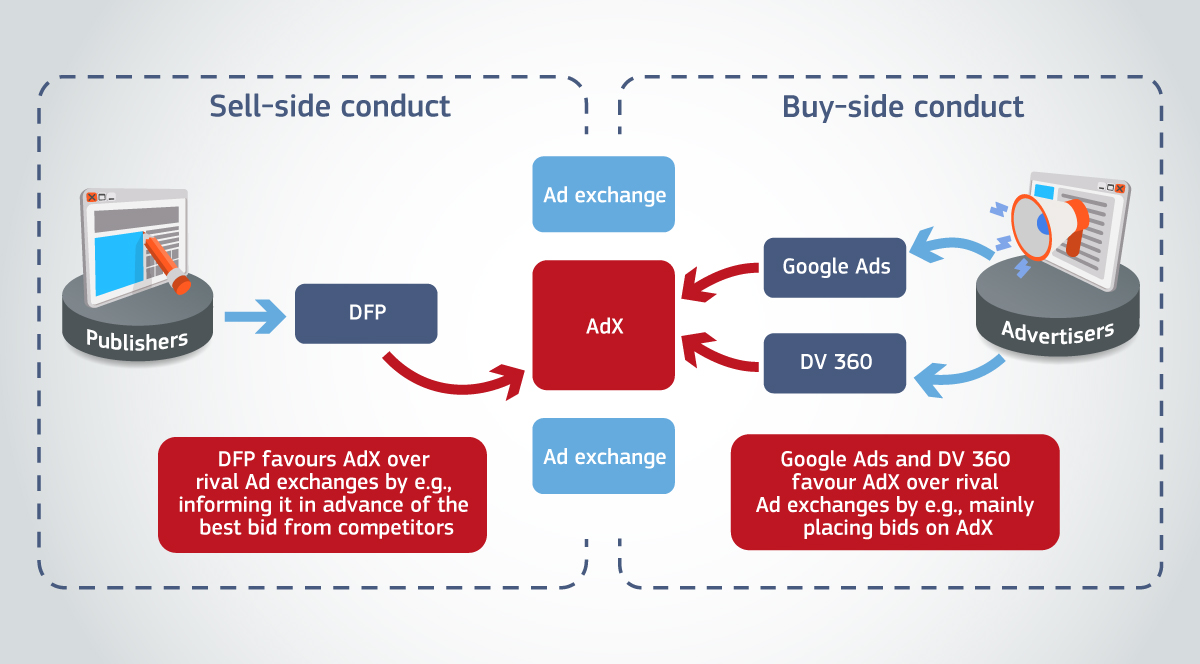
Group 1 - The European Commission, led by President Ursula von der Leyen, remains firm on regulating large US tech companies despite threats from President Trump regarding tariffs, indicating escalating tensions between the US and EU over tech regulation [1][10] - The EU has imposed a record fine of €29.5 billion on Google for violating antitrust regulations in the advertising technology sector, marking the fourth significant penalty against the company [2][3] - The total fines imposed on Google by the EU have reached €9.5 billion, with previous fines for abuses in shopping, Android, and advertising practices [3][7] Group 2 - The EU has demanded that Google propose a viable remedy within 60 days, or face mandatory measures, while Google plans to appeal the decision [7][10] - Trump's administration has expressed strong dissatisfaction with the EU's actions, threatening to initiate a Section 301 investigation into what it deems unfair trade practices by the EU [7][8] - The ongoing conflict highlights a deeper divide in digital regulations, with the EU aiming to assert digital sovereignty and the US tech giants accusing the EU of overreach and discrimination [10][11] Group 3 - The EU's recent decision to impose a fine rather than enforce a forced divestiture of Google's business has sparked internal criticism, with some arguing that fines alone will not change Google's monopolistic behavior [16][17] - The EU faces challenges in balancing external pressures from the US and internal divisions among member states regarding trade interests and regulatory strategies [14][18] - The ongoing battle over digital sovereignty is seen as a critical test of the EU's global governance capabilities and strategic autonomy in the face of US pressure [18]

不服就干!德国通告全球,打响反击第一枪,特朗普彻底失算了
Sou Hu Cai Jing· 2025-09-05 02:25
Group 1 - The global tariff war initiated by the Trump administration has significantly impacted the economic landscape, affecting both developed and developing countries, leading to widespread negotiations with the U.S. [1] - The U.S. announced a 30% punitive tariff on EU imports, marking the third round of tariff escalations, following previous tariffs of 50% on steel and aluminum and 25% on automobiles and parts [3] - Germany's industrial output fell by 3.6% year-on-year, with a 2.1% decrease in employment in the industrial sector, equating to 114,000 jobs lost, indicating a deteriorating industrial environment [6] Group 2 - German officials have expressed strong opposition to U.S. trade policies, with the Vice Chancellor stating that the EU will take reciprocal measures to protect European jobs and businesses if negotiations fail [8] - The EU is considering implementing a "tool against economic coercion," allowing it to impose trade and investment restrictions on countries that engage in economic coercion [8] - The EU's new digital regulations will significantly impact U.S. tech giants, enforcing strict limitations on monopolistic practices and aiming to create a fair competitive environment for smaller businesses [12] Group 3 - The ongoing trade tensions are expected to lead to negative economic growth for Germany in 2023-2024, with forecasts for 2025 being adjusted to zero growth due to U.S. trade policies [15] - Germany's response strategy has shifted to a combination of hard and soft measures, maintaining a strong stance in emerging areas like digital taxes while leaving room for negotiation in traditional trade [18] - The EU is actively pursuing trade agreements with other markets, such as the Southern Common Market and India, to reduce reliance on the U.S., indicating a potential reshaping of global trade dynamics [21]