
种业振兴

Search documents
国投丰乐:回应种业成果及模式问题,称详情可查年报
Xin Lang Cai Jing· 2026-01-13 09:51
Group 1 - The company has been focusing on agricultural revitalization for five years and is questioned about its business model and research achievements [1] - The company secretary acknowledges the inquiry and suggests that details regarding the business model and research outcomes are available in the annual report [1]

“五大行动”夯实根基,广东种业振兴五年交出亮眼成绩单!
Nan Fang Nong Cun Bao· 2026-01-13 06:33
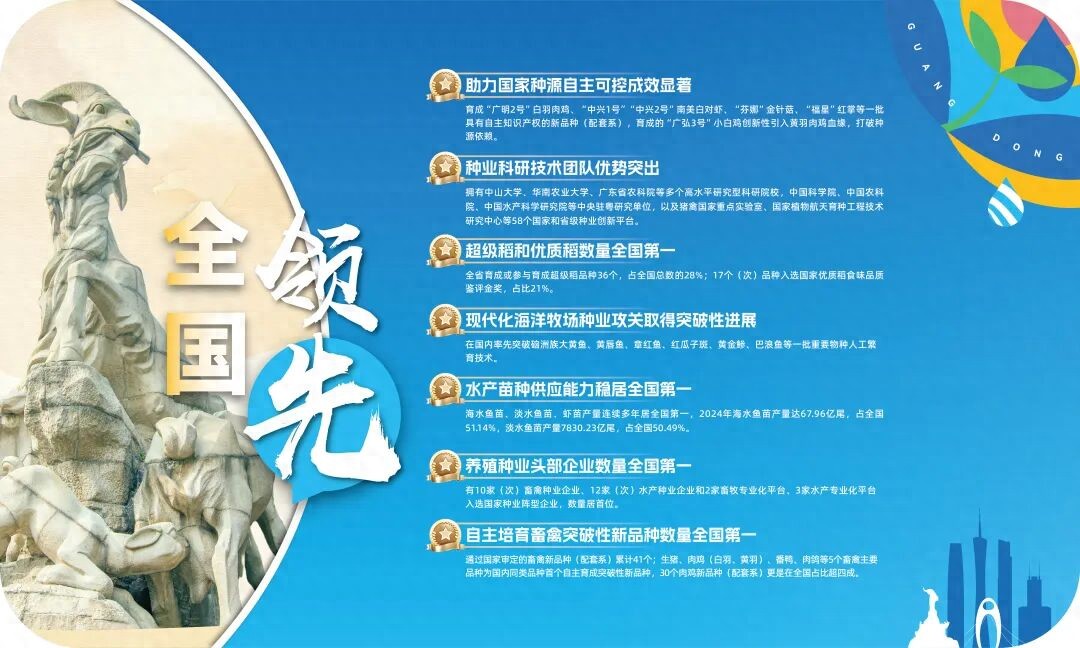
Core Viewpoint - Guangdong's seed industry has made significant progress over the past five years, achieving key milestones in seed resource protection, innovation, enterprise support, and market optimization, contributing to national seed security and agricultural development [10][12][100]. Group 1: Seed Resource Protection - Guangdong has collected and preserved 368,000 agricultural germplasm resources, ranking among the top in the country [15]. - The province has conducted a comprehensive survey of crop, livestock, aquaculture, and agricultural microorganisms, discovering new germplasm resources and achieving a 100% protection rate for local breeds in 35 provincial-level breeding farms [18][21]. - A robust agricultural germplasm resource protection system covering crops, livestock, aquaculture, and microorganisms has been established [22]. Group 2: Innovation in Seed Industry - Guangdong leads national projects in core technology breakthroughs for livestock breeding, contributing to one-third of the national efforts in this area [29]. - The province has developed 36 super rice varieties, accounting for 28% of the national total, and has achieved breakthroughs in breeding new varieties of lychee and banana [31][32]. - Key technological advancements include the development of gene editing techniques to enhance crop resilience and the creation of a digital breeding technology for pigs, breaking foreign monopolies [40][41]. Group 3: Enterprise Support and Development - Guangdong has nurtured 10 leading livestock enterprises and 12 aquaculture enterprises, ranking first and second nationally, respectively [60]. - The province has facilitated significant investments in seed enterprises, with companies like Zhongxin Seed Industry receiving nearly 100 million yuan, showcasing strong growth potential [69]. - A multi-faceted development ecosystem has been established, promoting collaboration between leading enterprises and emerging companies to drive high-quality development in the seed industry [71]. Group 4: Supply and Quality Assurance - Guangdong has built modern breeding bases and established a comprehensive seed supply system, ensuring the safety of agricultural production seeds [76][89]. - The province maintains a seed quality pass rate of over 98%, supported by a robust emergency seed reserve system [100][113]. - Guangdong is a major hub for vegetable seed supply, accounting for over 70% of the national total, enhancing the diversity of urban and rural food supplies [89]. Group 5: Market Environment Optimization - The province has implemented a comprehensive management system for seed varieties, enhancing intellectual property protection and combating illegal activities in the seed market [101][113]. - Guangdong has established a DNA molecular identity database for crops, enabling rapid identification of seed authenticity [116]. - Continuous efforts in regulatory enforcement have maintained a stable market order, fostering an environment conducive to innovation and agricultural production safety [100][113].


新华视点丨东北粮仓守护中国饭碗
Xin Hua Wang· 2026-01-12 07:04
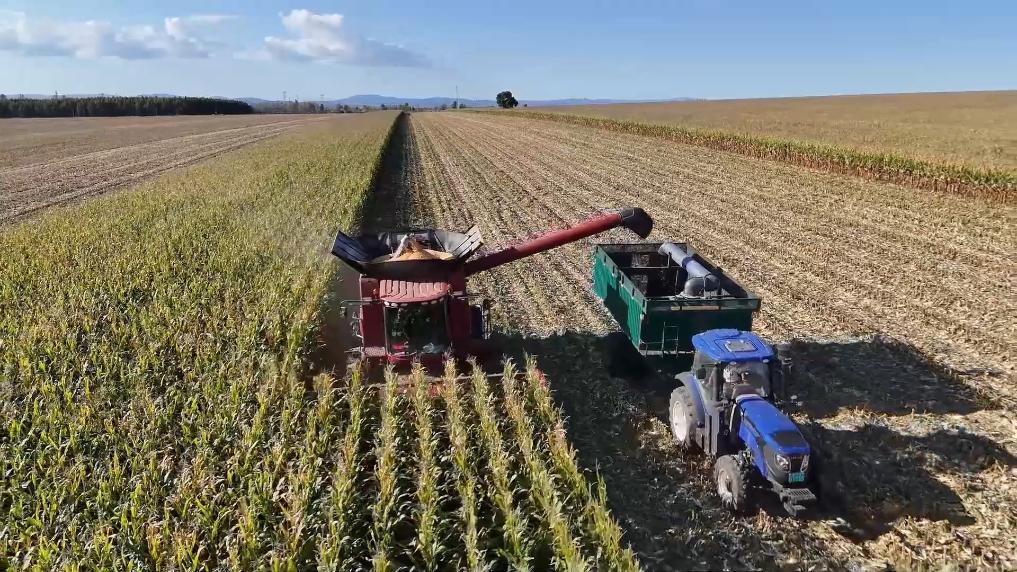
Group 1 - In 2025, Heilongjiang Province achieved a grain production milestone with a total output of 164.006 billion jin, marking the 22nd consecutive year of increased production and maintaining its position as the top grain-producing province in China [1] - The province's grain output increased by 3.97 billion jin, accounting for 23.6% of the national grain increase, which is an improvement of 4.4 percentage points from 2024 [3] - The province emphasizes the dual enhancement of yield and quality, positioning itself as a cornerstone for national food security [1] Group 2 - In Jilin Province, the use of modern agricultural technology, such as intelligent monitoring systems, has transformed traditional farming practices into automated and mechanized operations, significantly aiding in precise fertilizer application and machinery operation [5] - Jilin's strategy includes a focus on seed quality, with a goal for high-quality new varieties to contribute over 45% to grain yield increases [7] - The province has established several breeding innovation platforms to accelerate the development of high-yield and high-quality crop varieties [11] Group 3 - Liaoning Province reported a grain production of 51.556 billion jin in 2025, with a year-on-year growth of 3.1%, the highest increase among major grain-producing provinces [10] - The city of Tieling in Liaoning plays a crucial role, contributing approximately 16% of the province's total grain output [10] - The implementation of high-standard smart farmland and scientific farming practices is key to increasing grain production in Tieling [13] Group 4 - Inner Mongolia's Xing'an League has focused on reducing losses and increasing efficiency as a key measure for food security, promoting various scientific grain storage methods [16] - The region has implemented strategies to improve grain storage quality, including the construction of concentrated storage points and the use of multi-layer storage systems [16]
农林牧渔行业周报:保障措施落地催化牛价上涨,看好牧业景气周期-20260111
SINOLINK SECURITIES· 2026-01-11 13:09
Investment Rating - The report does not explicitly state an investment rating for the agricultural sector, but it implies a cautious outlook on certain segments, particularly in pig farming and poultry [62]. Core Insights - The agricultural sector index has shown a slight increase of 0.98% week-on-week, but it has underperformed compared to major indices like the Shanghai Composite [12][14]. - In the pig farming sector, prices are currently stabilizing at a low level, with expectations of further declines due to weak supply and demand dynamics [21]. - The poultry sector is experiencing pressure on prices, particularly for white feather chickens, while yellow feather chickens are showing signs of recovery due to improved demand [32]. - The beef market is expected to see price increases as it enters the consumption peak season, while dairy prices are stabilizing after a period of decline [40]. - The planting sector is facing tight supply and demand conditions, with potential price increases for corn and soybeans anticipated due to external uncertainties and domestic policy support [43][44]. - The feed and aquaculture sectors are showing stable prices, with certain seafood prices trending upwards [51]. Summary by Sections Pig Farming - As of January 9, the national average price for commodity pigs is 12.63 yuan/kg, with a week-on-week increase of 1.36%. The average weight of pigs at market is 128.54 kg, showing a slight decrease [20][21]. - The sector is expected to face further price declines due to weak demand and supply conditions, with a focus on reducing production capacity amid ongoing losses [21][22]. Poultry Farming - The average price for white feather chickens is 7.64 yuan/kg, reflecting a week-on-week decrease of 1.04%. The profitability of poultry farming is under pressure, but there are signs of improvement for yellow feather chickens due to better demand [30][32]. Livestock - The price of live cattle in Shandong is 26.58 yuan/kg, stable week-on-week but up 14.62% year-on-year. The beef market is expected to strengthen as it enters the peak consumption season [40]. - Dairy prices are stabilizing, with average purchase prices for raw milk at 3.03 yuan/kg, while the industry is still facing significant financial pressure [40]. Planting Sector - Domestic corn prices are at 2250 yuan/ton, with expectations of tight supply conditions leading to potential price increases. The soybean market is also showing upward trends [43][44]. - The planting sector is stabilizing at a low point, with potential improvements expected if there are significant reductions in crop yields [44]. Feed and Aquaculture - Feed prices are stable, with pig feed at 3.34 yuan/kg and poultry feed at 3.45 yuan/kg. Aquaculture prices are also stable, with notable increases in certain seafood products [51].

长春现代农业谱振兴新篇
Xin Lang Cai Jing· 2026-01-11 05:54
Core Insights - Changchun City has prioritized national food security, implementing strategies to enhance grain production capacity, including the "storing grain in the land and technology" approach [4][9] - The city has achieved significant agricultural advancements, with a total grain crop planting area of 23.84 million acres and a comprehensive agricultural mechanization level reaching 96% [2][4] Group 1: Agricultural Development - The area of protective tillage has been maintained at over 13.57 million acres, with high-standard farmland construction covering 1.30 million acres [2][4] - Changchun's black soil area reaches 25.98 million acres, accounting for 95.72% of the cultivated land, emphasizing the importance of black soil in agricultural productivity [9] Group 2: Seed Industry and Innovation - The establishment of the national modern seed industry park in Gongzhuling has led to the development of a seed production base of 105,000 acres, producing approximately 140 million pounds of seeds annually [8] - Changchun is enhancing its seed industry innovation capabilities by building international seed research centers and biological breeding centers [6] Group 3: Agricultural Technology and Practices - The city has implemented various agricultural technologies to improve grain yield, including protective tillage and integrated water and fertilizer management [11] - Changchun is promoting a circular economy in black soil utilization through ecological techniques such as straw return and manure composting [11] Group 4: Brand Development and Market Position - Changchun is focusing on brand development in agriculture, with over 3,000 agricultural product trademarks, including 8 famous Chinese trademarks and 16 geographical indication products [13] - The total grain output in Changchun is projected to increase from 24.73 billion pounds at the beginning of the 14th Five-Year Plan to 25.99 billion pounds in 2024, with expectations to reach 26.5 billion pounds by 2025 [13]
瞭望时评丨让老种子焕发种业振兴新活力
Xin Hua Wang· 2026-01-10 01:10
Core Viewpoint - The article emphasizes the importance of preserving and effectively utilizing traditional seeds, which are crucial for agricultural development and biodiversity, while addressing the challenges posed by modern agricultural practices and the need for innovation in seed utilization [1][2][4]. Group 1: Importance of Traditional Seeds - Traditional seeds, referred to as "old seeds," are vital as they carry the genetic heritage of agricultural civilization and are essential for the revitalization of the seed industry [1]. - The decline of old seeds is attributed to their low germination rates, unstable yields, and inadequate mechanization compatibility, making them less appealing to farmers who prioritize high-yield hybrid varieties [1][2]. Group 2: Current Challenges in Seed Preservation - The third national agricultural germplasm resource survey revealed that 99% of the newly collected germplasm resources are traditional local varieties and wild relatives, highlighting the need for a shift from mere collection to effective utilization [2]. - There is a pressing need to transition from "preservation without use" to "innovative utilization" of old seeds, ensuring they contribute to the seed industry's revitalization [2][3]. Group 3: Strategies for Effective Utilization - Enhancing the identification and evaluation of old seeds is crucial, as many resources remain underutilized due to unclear genetic backgrounds and undiscovered traits [2][3]. - Combining traditional breeding with modern techniques such as molecular marker-assisted selection and gene editing is necessary to eliminate undesirable traits and enhance desirable characteristics in breeding materials [3]. - Establishing a digital sharing platform for germplasm resources is essential to overcome information barriers and facilitate the efficient flow of superior genetic resources to breeding practices [3]. Group 4: Broader Implications - The fate of old seeds is directly linked to food security and biodiversity, necessitating the use of technology to decode their genetic information and institutional support to ensure their vitality [4].
隆平高科:中国种业市场空间广阔,且目前较为分散
Zheng Quan Ri Bao Wang· 2026-01-08 13:13
Group 1 - The core viewpoint of the article highlights the vast potential of the Chinese seed industry market, which is currently fragmented, with different companies focusing on various segments due to differences in business layout and technical expertise [1] - The company, Longping High-Tech (隆平高科), serves as the core listed platform for crop breeding under CITIC Group, emphasizing its strategic position in the industry [1] - Longping High-Tech collaborates closely with research institutions such as the Chinese Academy of Agricultural Sciences and Wuhan University, focusing on key technological breakthroughs in rice, corn, and wheat, as well as the creation of high-quality new germplasm and the industrialization of research outcomes [1] Group 2 - The company has successfully cultivated and promoted a large number of high-yield, high-quality, and stress-resistant varieties, which have been widely adopted across the country, resulting in significant planting benefits [1]

广东种业,奋进有“数”!
Nan Fang Nong Cun Bao· 2026-01-08 07:34
Core Viewpoint - Guangdong is advancing its agricultural technology innovation through the "Yue Qiang Zhong Xin" project, aiming to transform its agricultural sector and establish itself as a global center for seed industry [6][178]. Group 1: Agricultural Resource Protection - Guangdong has established a foundation of 368,000 seed resources, with new collections of 8,437 crop genetic resources [13][14]. - The province has identified three wild rice distribution points and conducted a national survey on aquatic breeding genetic resources [16][17]. - A total of 69,000 resource information entries and 5,652 species have been obtained through a provincial agricultural microbial genetic resource survey [23][24]. Group 2: Seed Industry Innovation - Guangdong leads in the development of domestic seed sources, contributing to one-third of national core technology projects for seed sources [45]. - The province has developed 36 super rice varieties, accounting for 28% of the national total, and has achieved international advanced levels in several breeding results [50][49]. - Guangdong has successfully bred 41 new livestock and poultry varieties, representing 15% of the national total, including the "Guangming No. 2" white feather broiler [61][62]. Group 3: Industry Development and Corporate Support - Guangdong has supported the merger and reorganization of 10 livestock and 12 aquaculture enterprises, leading the nation in the number of selected national seed industry enterprises [106][110]. - The province has established a commercial breeding system, with over 20 units signing deep integration agreements to promote innovation in breeding [119][121]. - The "Yue Qiang Zhong Xin" project has attracted nearly 100 million yuan in investment for seed industry development [126]. Group 4: Market Environment and Regulation - Guangdong has implemented comprehensive management of the seed industry, enhancing intellectual property protection and cracking down on counterfeit products [150][153]. - The seed quality pass rate has consistently remained above 98%, with significant efforts in promoting agricultural plant variety rights [162][168]. - The province has hosted 24 seed industry expos, showcasing over 18,000 crop varieties annually [170][172]. Group 5: Future Outlook - With the ongoing implementation of the "Yue Qiang Zhong Xin" project, Guangdong aims to become a globally influential seed industry center, contributing significantly to China's food security [178][181].
广东种业这五年,奋进有“数”!
Nan Fang Nong Cun Bao· 2026-01-07 07:34
Core Viewpoint - Guangdong is not only China's largest economic province but also a hub for agricultural technology innovation, focusing on the "Yueqiang Seed Core" project to drive an agricultural technology revolution through seed industry revitalization [1] Group 1: Agricultural Resource Protection - Guangdong has established a foundation of 368,000 seed resources, having collected 8,437 new crop germplasm resources and discovered three wild rice distribution points [3] - The province has completed a provincial survey of agricultural microbial germplasm resources, obtaining over 69,000 resource information entries and identifying 5,652 species, including 107 new species [4] Group 2: Seed Industry Innovation - Guangdong leads in seed industry innovation, focusing on breaking monopolies and achieving first-class results, with significant contributions to national projects in pig and chicken breeding [7] - The province has developed 36 super rice varieties, accounting for 28% of the national total, and has produced award-winning rice varieties recognized for their quality [9] Group 3: Aquaculture and Marine Breeding - Guangdong has made significant advancements in marine aquaculture, developing key breeding technologies for species such as golden pomfret and grouper, and utilizing gene editing and artificial intelligence in breeding [10] - The province has established a leading domestic technology system for rice multi-omics analysis and has created a non-GMO banana editing system that extends shelf life by four times [10] Group 4: Enterprise Development and Market Environment - Guangdong has fostered a strong seed industry enterprise ecosystem, with 10 poultry and 12 aquaculture enterprises recognized as national leading enterprises, and has supported mergers and acquisitions to strengthen these companies [11][12] - The province has improved the seed market environment through strict regulatory measures, maintaining a seed quality compliance rate of over 98% and enhancing intellectual property protection [16][17] Group 5: Future Goals and Impact - Guangdong aims to establish itself as a globally influential international seed industry center, contributing significantly to national food security and agricultural self-sufficiency [20]
加力落实种业振兴新举措
Jing Ji Ri Bao· 2026-01-05 22:09
Core Viewpoint - The seed industry is a strategic and foundational core industry for ensuring national food security, currently transitioning from traditional to modern practices and aiming to become a strong player in the global seed market [1][2]. Group 1: Industry Development - The "14th Five-Year Plan" emphasizes the implementation of the seed industry revitalization action, with a roadmap for achieving significant breakthroughs in ten years [1]. - The national seed industry enterprises' total assets are projected to grow by 127% from 2021 to 2024, indicating a strengthening of enterprise competitiveness [2]. - The national seed supply guarantee rate has reached 80%, with over 70% mechanization in rice and corn seed production [2]. Group 2: Technological Innovation - Significant advancements in basic research have led to international leadership in genome analysis of important species, enhancing breeding efficiency through precision breeding techniques [1][2]. - The establishment of a global dynamic monitoring and introduction network for germplasm resources is proposed to enhance resource utilization [3]. Group 3: Market Environment and Regulation - Continuous reforms in the seed variety approval system and intellectual property protection are optimizing the market environment, fostering original innovation [2]. - The implementation of a seed certification system and related technical standards is aimed at promoting industry standardization [2]. Group 4: Challenges and Strategic Recommendations - Despite progress, challenges remain in achieving self-reliance in seed technology and high-quality development, including insufficient resource utilization and low international competitiveness [2]. - Recommendations include constructing a comprehensive innovation system, enhancing base modernization, and improving governance to create a conducive environment for innovation [3][4].