
反垄断

Search documents
李嘉诚,这次嗅到了危险
盐财经· 2025-08-12 10:17
Core Viewpoint - Li Ka-shing, a prominent Chinese businessman, is rapidly divesting his assets in China, leading to a shift in public perception and speculation about his motivations [2][6]. Group 1: Asset Divestment - In July, Li Ka-shing's Cheung Kong Group sold 400 residential units across four projects, marking a significant asset liquidation [3]. - The lowest entry-level property was priced at approximately 400,000 yuan, which is about one-third of the down payment for similar-sized residences in Hong Kong [4]. - By early August, many Cantonese-speaking Hong Kong buyers were reportedly rushing to purchase remaining units, indicating a strong demand despite the market conditions [6]. Group 2: Market Strategy and Historical Context - Historically, Li Ka-shing has been adept at acquiring land during market downturns and selling at peaks, but his current actions during a market low raise questions about his strategy [6][8]. - The case of the South City Hub project in Chengdu exemplifies his strategy of land hoarding and delayed development, where he purchased land in 2004 for over 2.1 billion yuan and later profited significantly from its eventual sale [10][11]. - By 2020, the average residential price for the land he acquired had soared to 24,000 yuan per square meter, yielding substantial profits from his long-term holding strategy [15]. Group 3: Regulatory Environment and Future Implications - The tightening of real estate regulations in China post-2015 has impacted Li Ka-shing's land hoarding tactics, leading to increased scrutiny and penalties for such practices [26]. - The shift in policy indicates a move towards promoting a healthier real estate market, which may challenge the viability of Li's previous investment strategies [27][28]. - The changing landscape suggests that the era of "time for space" strategies may be coming to an end, necessitating a reevaluation of capital operations in the real estate sector [27][28].



行业巨头,IPO终止!
Xin Hua Wang· 2025-08-12 05:48
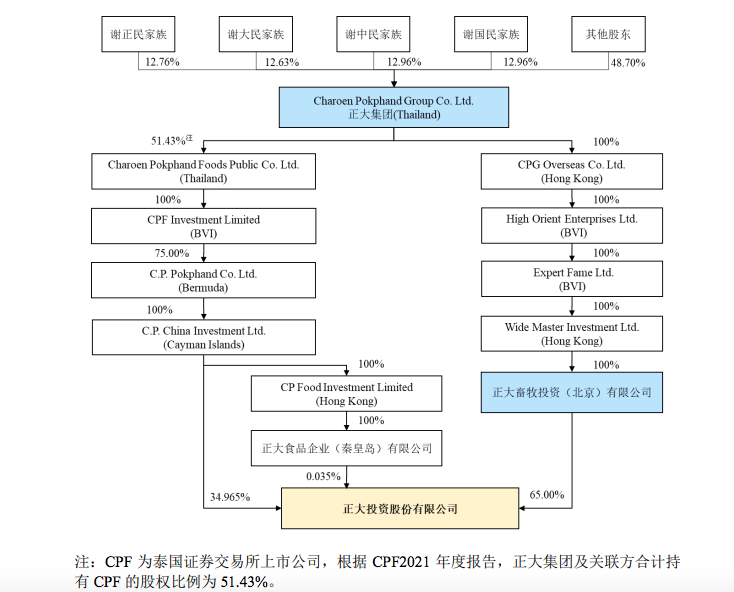
10月8日,上交所官网发布公告称,因公司及保荐人提交撤回申请文件,决定终止对正大投资股份有限 公司首次公开发行股票并在沪市主板上市的审核。 正大集团作为全球最大的农牧业企业集团之一,是改革开放后第一个进入中国大陆的外商企业,率先进 入农牧业和饲料业。 正大集团主要股东为谢正民家族、谢大民家族、谢中民家族和谢国民家族。尽管谢正民、谢大民、谢中 民和谢国民系兄弟关系,但上述四家族之间不存在一致行动关系,不存在任一股东直接或间接持有正大 集团绝对或相对多数股权的情形。 正大投资股份有限公司(简称"正大股份")是国内规模最大的饲料生产商和生猪养殖企业之一。今年3 月2日,正大股份向上交所递交首次公开发行股票并在主板上市招股说明书(申报稿),计划公开发行 不超过5.67亿股,募资150亿元,建设广东湛江生猪产业链项目、湖北咸宁生猪产业链项目等18个项目。 现代化农牧龙头企业 根据招股书,1996年成立时,正大股份主营业务为饲料加工业务。经过近30年的发展,公司已逐步发展 成为一家集饲料研发生产与销售、生猪养殖及屠宰业务为一体的多元化、现代化农牧龙头企业。 正大集团通过正大畜牧投资、卜蜂中国投资以及正大秦皇岛食品间接持股 ...
科技大事件 丨 马斯克炮轰苹果垄断;高通骁龙 8 Elite 2 处理器现身跑分平台
Sou Hu Cai Jing· 2025-08-12 04:30
Group 1: Apple and Legal Issues - Elon Musk accuses Apple of violating antitrust laws by not including X and Grok in the App Store essential category, claiming it prevents AI companies from ranking first [1][3] - Musk's previous criticism of Apple's in-app purchase commission as a "de facto global internet tax" highlights ongoing tensions between him and the company [3] Group 2: Apple Cinemas Trademark Dispute - Apple Inc. has filed a lawsuit against Apple Cinemas for trademark infringement, alleging that the cinema chain is intentionally using the "Apple" name to confuse consumers [5][6] - Apple Cinemas, an independent chain with 14 locations across several states, plans to defend its brand against the lawsuit [6] Group 3: Apple Patent Developments - A new patent application from Apple reveals progress towards a six-sided glass shell for devices, aiming to realize Jony Ive's vision of a "single-piece glass" design [7] - The design includes a touchscreen display that seamlessly integrates with the glass shell, enhancing the visual and tactile experience [7] Group 4: Smartphone Market Insights - Canalys reports a slight decline in global smartphone shipments to 288.9 million units in Q2 2025, with Samsung leading at 57.5 million units shipped [8][11] - In Mainland China, Huawei ranks first in smartphone shipments with an 18% market share, while Apple holds a 15% share [12] Group 5: Children's Smartwatch Market - The Chinese children's smartwatch market saw sales of 8.12 million units in the first half of the year, reflecting an 11.4% year-on-year growth [13][15] - The leading brand, 小天才, holds a 35.3% market share, benefiting from a strong ecosystem combining education and social features [15][16] Group 6: Semiconductor Export Agreements - Reports indicate that NVIDIA and AMD have reached an unprecedented agreement with the U.S. government, agreeing to pay 15% of their sales revenue from China to obtain chip export licenses [19][20] - This arrangement marks a significant shift in export control practices, as companies have not previously agreed to share revenue in exchange for licenses [20]

马斯克威胁起诉苹果后奥特曼“反将一军”,暗示应调查其利用X谋利
Feng Huang Wang· 2025-08-12 03:45
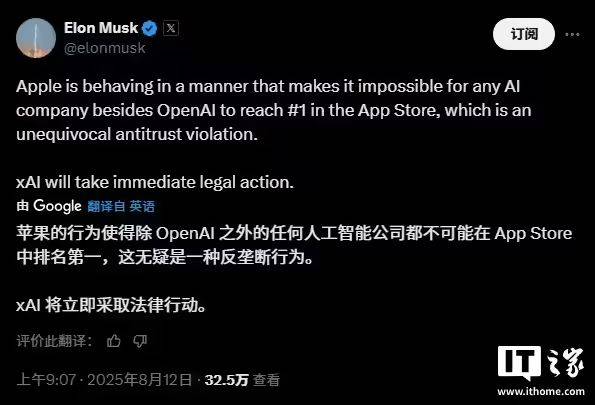
此前,在当地时间8月11日,马斯克在X平台发文称,苹果公司涉嫌通过限制措施,使除OpenAI外的任 何人工智能公司都无法在其应用商店排行榜中登顶,他认为这是"明确的反垄断违规行为"。同时,马斯 克表示,其旗下的xAI公司将立即采取法律行动。 凤凰网科技讯 8月12日,OpenAI CEO奥特曼在X平台转发了"马斯克威胁将对苹果采取法律行动"的发 文,并就此表态,我听说有人指控马斯克通过操纵X来谋取个人及公司利益,并损害其竞争对手,这一 指控令人震惊,希望有人能针对此事展开调查。 ...
抢夺AI时代用户入口!谷歌、微软上演“浏览器之战”
硬AI· 2025-08-12 03:16
Core Viewpoint - The article discusses the ongoing competition between Google and Microsoft in the AI-enhanced browser market, highlighting Google's funding of the Browser Choice Alliance to counter Microsoft's promotion of its Edge browser through its Windows operating system [2][3]. Group 1: AI Competition Landscape - The desktop and laptop computers remain essential tools for work, making them a new battleground for AI competition, with a focus on browser innovation [4][5]. - New players like The Browser Company and Perplexity are emerging in the browser market, with OpenAI reportedly developing its own browser [5]. - Microsoft's recent AI upgrade to Edge, featuring the CoPilot assistant, aims to transform it into a powerful AI interaction center rather than just a web browsing tool [5]. Group 2: Browser Choice Alliance's Actions - The Browser Choice Alliance, which includes Google, Opera, and Vivaldi, is collecting evidence against Microsoft for unfair competition practices [6][7]. - Allegations include Microsoft's use of "dark patterns" to manipulate users into setting Edge as their default browser and unnecessary security warnings when downloading alternative browsers [7][8]. - The alliance aims to raise public awareness in the U.S. and has already lobbied European regulators regarding Microsoft's compliance with competition laws [8]. Group 3: Microsoft's Defense - Microsoft counters the allegations by stating that Google is the dominant player in the browser market, holding a 68% share compared to Edge's 5% [9][10]. - Microsoft emphasizes that Google has previously been found guilty of abusing its market position, suggesting that the complaints from Google may be hypocritical but still valid [10]. - The article suggests that regulatory bodies should focus on Microsoft's influence in shaping consumer behavior in the AI era, advocating for fair competition in the browser market [10].



马斯克:xAI将对苹果采取法律行动
Guo Ji Jin Rong Bao· 2025-08-12 01:30
马斯克表示,苹果的行为使除OpenAI之外的任何AI公司都不可能在App Store上排名第一,这构成了明 显的反垄断违规行为。xAI将立即采取法律行动。 ...
飞猪等五家涉旅平台企业被约谈
Zheng Quan Ri Bao Wang· 2025-08-06 07:43
Core Viewpoint - The Guizhou Provincial Market Supervision Administration has conducted a meeting with five travel platform companies, including Fliggy, to enforce compliance with laws and regulations regarding pricing and anti-monopoly practices, aiming to maintain a fair and orderly market environment [1] Group 1: Regulatory Actions - The meeting addressed potential issues such as "choose one from two" practices, interference in merchant pricing through technical means, contract breaches, price fraud, and price gouging [1] - Companies are required to strictly adhere to relevant laws and regulations, enhance self-discipline, and conduct comprehensive self-inspections to prevent illegal activities [1] Group 2: Future Monitoring and Enforcement - The Guizhou Provincial Market Supervision Administration will closely monitor the competitive landscape of the involved platform companies [1] - Companies that violate regulations or fail to rectify issues will face strict legal consequences, including public exposure of typical cases to deter further violations [1]
北京餐饮协会倡议:坚决抵制“二选一”“独家合作”等排除、限制竞争的垄断行为
Xin Lang Ke Ji· 2025-08-06 03:09
Core Viewpoint - The Beijing Catering Industry Association issued a statement highlighting that "involution" and malicious competition disrupt fair market order, harm consumer rights, squeeze reasonable profit margins for businesses, erode the foundation for sustainable industry development, and hinder overall economic quality improvement [1][2]. Group 1: Call for Fair Competition - The association calls for adherence to fair competition principles, urging businesses to avoid predatory pricing below cost, coercive subsidy arrangements, and manipulative practices like "traffic tilting" and "search downgrading" [2][4]. - It emphasizes the importance of maintaining quality and service standards, prohibiting misleading practices such as false advertising and excessive low-price promotions that could harm consumer interests [2][3]. Group 2: Enhancing Core Competitiveness - Companies are encouraged to abandon short-sighted price competition and focus on sustainable business models that avoid negative profit cycles and quality degradation [4][5]. - The statement advocates for investment in value creation and innovation, utilizing advanced technologies like big data and AI to enhance efficiency and customer service [4][6]. - It stresses the need for differentiated competitive advantages by accurately targeting market needs and enhancing user experience [4][6]. Group 3: Strengthening Self-Regulation - Businesses are urged to conduct regular compliance checks against relevant laws and industry standards to identify and rectify potential risks of unfair competition and price violations [5][6]. - The establishment of robust internal compliance management systems is recommended to prevent systemic risks and ensure transparency in operations [6][7]. Group 4: Collaborative Industry Ecosystem - The association highlights the importance of maintaining symbiotic relationships within the supply chain, advocating for fair trading practices and timely payments to ensure stability [6][7]. - It calls for social responsibility, including fair labor practices and environmental sustainability, to promote rational consumption and reduce resource waste [6][7]. - Participation in industry self-regulation and standard enhancement initiatives is encouraged to elevate overall industry quality and standards [6][7].
科技大事件 丨 苹果回应首次在中国关停直营店;美团承诺绝不下场与商家竞争
Sou Hu Cai Jing· 2025-08-01 11:45
Group 1: Apple Store Closures and Openings - Apple will close its first official retail store in China, the Dalian Century City store, on August 9, 2023, due to multiple retailers leaving the shopping center [1] - The Dalian store opened on October 24, 2015, and is the first Apple Store to shut down in the country [1] - Apple plans to open a new retail store in Shenzhen on August 16, 2023, marking its third store in the city [1] Group 2: Legal Challenges - Apple has issued a strong statement against the U.S. Department of Justice (DOJ) regarding antitrust lawsuits, claiming all 236 allegations are unfounded [2] - The lawsuit threatens the core principles that allow the iPhone to stand out in a competitive market, according to Apple [2] - Apple is expected to engage in a prolonged legal battle, with the potential for a resolution taking several years [2] Group 3: Financial Partnerships - Apple is reportedly in talks with JPMorgan Chase to take over the Apple Card credit card business from Goldman Sachs [3] - Negotiations between Apple and JPMorgan began in early 2022, with recent developments accelerating the process [3] - Although no agreement has been signed yet, Goldman Sachs has hinted at the possibility of ending the partnership before the original contract expiration in 2030 [4] Group 4: Securities Fraud Allegations - Apple faces a new class-action lawsuit related to delays in the upgrade of its Siri digital assistant, which has been postponed to after iOS 18 [5] - The Rosen Law Firm is seeking investors who purchased Apple securities between June 10, 2024, and June 9, 2025, to join the lawsuit [5] Group 5: Real Estate Investments - Apple has signed a deal to acquire the Mathilda campus in Sunnyvale for $365 million, marking its third major real estate transaction in the Bay Area this year [6] - The total investment for office space expansion in the Bay Area over the past three months approaches $882 million [6] - Despite high vacancy rates in the tech industry, Apple continues to expand its office space in the Bay Area [6]

美国上诉法院维持谷歌应用商店垄断裁决
news flash· 2025-08-01 05:42
Core Points - The Ninth Circuit Court of Appeals upheld a lower court's ruling against Google, requiring changes to its Play Store management policies [1] - The ruling stems from a lawsuit filed by Epic Games, which accused Google of anti-competitive practices related to in-app purchases [1] - The jury found that Google violated federal and California antitrust laws by maintaining a monopoly and unreasonably restricting trade [1] Summary by Sections - **Court Ruling** - The Ninth Circuit Court rejected Google's appeal, affirming the jury's decision and the lower court's directives [1] - Google is mandated to alter significant management policies of the Play Store, particularly regarding the operation of other app stores [1] - **Epic Games Lawsuit** - Epic Games initiated the antitrust lawsuit in 2020 after Google removed its game "Fortnite" from the Play Store for bypassing Google's payment system [1] - The lawsuit highlighted Google's 30% commission on in-app purchases as a central issue [1] - **Antitrust Violations** - The jury concluded that Google intentionally acquired and maintained a monopoly, linking the use of the Play Store to its own payment services [1] - A directive was issued by the lower court in 2024 for Google to rectify its Play Store practices to eliminate anti-competitive behavior [1]