
绿色低碳转型

Search documents
(粤港澳全运会)广州多举措打造空气质量“全运蓝”
Zhong Guo Xin Wen Wang· 2025-11-10 07:08
Core Viewpoint - Guangzhou has successfully improved air quality for the 15th National Games, showcasing significant achievements in air pollution control and environmental management [1][3]. Group 1: Air Quality Monitoring and Achievements - On November 9, the air quality in Guangzhou was rated as excellent, with a daily average PM2.5 concentration of 15 micrograms per cubic meter, dropping to 8 micrograms per cubic meter during the opening ceremony [1]. - The "All Games Blue" initiative reflects Guangzhou's commitment to long-term air quality improvement, marking a successful start for the air quality assurance efforts for the 15th National Games [3]. Group 2: Strategic Planning and Implementation - The Guangzhou municipal government has prioritized air quality management as a key opportunity to elevate the city's environmental standards, with comprehensive planning and deployment ahead of the event [3]. - A detailed air quality assurance plan was developed, outlining seven major actions before the event and five supporting measures during the event, integrating these tasks with the city's broader air pollution control efforts [3]. Group 3: Technological Integration and Monitoring - Guangzhou has implemented advanced technologies for precise pollution control, including hyperspectral remote sensing and online monitoring of volatile organic compounds (VOCs), creating a comprehensive monitoring network [4]. - The city has established 20 national control points, 13 provincial control points, and 84 local monitoring stations, along with mobile monitoring stations to ensure thorough coverage around event venues [4][5]. Group 4: Regional Collaboration - A regional collaborative mechanism has been established involving the Guangdong Provincial Environmental Protection Department and cities in the Pearl River Delta, including Hong Kong and Macau, to enhance air quality management [5]. - The collaboration includes real-time information sharing and coordinated responses to air quality issues, fostering a unified approach to environmental protection [5].

环球时报社评:中国电动汽车为何成为气候大会“官方严选”
Bei Jing Ri Bao Ke Hu Duan· 2025-11-10 03:07
Group 1 - The COP30 conference will take place in Belem, Brazil, from November 10 to 21, highlighting China's role in promoting global green and low-carbon transformation [1] - China's electric vehicles were prominently featured at the climate summit, symbolizing its commitment to global climate governance [1] - The presence of electric vehicles and reduced emissions in Belem reflects the integration of green technology into daily life [1] Group 2 - COP30 marks the 10th anniversary of the Paris Agreement and is seen as a critical juncture for climate negotiations, with China recognized as a leading force in climate action [2] - Despite challenges such as geopolitical conflicts and funding issues, China's commitment to reducing emissions has been acknowledged globally, with its clean energy solutions becoming increasingly popular [2] - The decline in clean energy costs has countered the negative impacts of reduced climate financing from developed countries, making Chinese solar panels and batteries the cheapest power sources in many developing nations [2] Group 3 - Over the past decade, China's role in climate governance has evolved significantly, with Western media now recognizing its rapid advancements in clean technology manufacturing [3] - China's approach to climate governance emphasizes practical cooperation without political conditions, fostering equitable and sustainable climate action among developing countries [3] - The "Two Mountains" philosophy, which balances environmental protection with economic development, has become a model for other developing nations [3] Group 4 - While some countries remain cautious about China's electric vehicles, many others are embracing this green wave, emphasizing the need for global cooperation in addressing climate change [4] - The international community is encouraged to work together towards sustainable development, recognizing that no country can address climate challenges in isolation [4]
业界交流生物质气化及高值利用技术
Zhong Guo Hua Gong Bao· 2025-11-10 02:56
Core Viewpoint - The conference on biomass gasification and downstream high-value utilization technologies highlighted the importance of coupling biomass energy with the coal chemical industry as a key measure to implement the national "energy revolution" strategy and promote green and low-carbon transformation in the industrial sector [1] Group 1: Industry Developments - Recent advancements in biomass gasification, catalytic conversion, and green fuel synthesis technologies have provided strong support for building a clean and low-carbon energy system in China [1] - Biomass gasification is recognized as an effective supplement for the clean and efficient utilization of coal, transitioning from laboratory research to industrialization [1] Group 2: Technical Innovations - Experts presented reports on various aspects of biomass gasification technology, low-carbon coupling, catalytic conversion, green fuel certification, and project engineering, showcasing a full chain of innovative achievements from key technological breakthroughs to commercial certification and project implementation [1] - The "Coal Science Furnace" biomass gasification pilot facility demonstrated efficient conversion of various biomass feedstocks and low-carbon operation, based on years of gasification technology accumulation by the China Coal Research Institute [2] Group 3: Future Directions - The China Coal Research Institute plans to accelerate the integration of clean and efficient coal utilization technologies with biomass gasification technologies, aiming to expand pathways for low-carbon products such as green methanol and sustainable aviation fuel [2]
最新公开!GDP70强城市更新:青岛接近天津,东莞24,包头67
Sou Hu Cai Jing· 2025-11-10 02:06
Core Insights - The article highlights the emergence of 70 vibrant cities in China by the third quarter of 2025, showcasing their resilience and innovation in driving economic growth, with Shanghai, Beijing, and Shenzhen leading the rankings [1][3]. Economic Performance - Shanghai leads with a GDP of 40,721.17 billion yuan, reflecting a year-on-year growth of 5.18% [3][8]. - Beijing follows with a GDP of 38,415.9 billion yuan, achieving a growth rate of 5.56% [3][8]. - Shenzhen ranks third with a GDP of 27,896.44 billion yuan and a robust growth rate of 7.57% [3][8]. Notable Cities - Chongqing and Guangzhou are recognized for their significant contributions to regional development, leveraging their geographical and industrial advantages [5]. - Chengdu and Wuhan exhibit strong growth rates of 8.92% and 8.84%, respectively, driven by advanced manufacturing and digital industries [5]. - Qingdao, with a GDP of 13,373.47 billion yuan and a growth rate of 7.86%, is rapidly closing the gap with Tianjin [6][9]. Future Outlook - Qingdao plans to invest 50 billion yuan to focus on green and low-carbon transformation, aiming to become a key city in the Belt and Road Initiative [6]. - Tianjin, with a GDP of 13,416.08 billion yuan, is enhancing its digital economy and smart factory projects, expecting a GDP increase of 5 percentage points [13]. - Dongguan, a global electronics manufacturing hub, aims to exceed 1 trillion yuan in GDP by 2026, driven by strong foreign investment and technological upgrades [14]. Sectoral Contributions - The article emphasizes the importance of advanced manufacturing, digital industries, and green energy in driving the economic resilience of these cities [5][6][14][15]. - The growth of the semiconductor sector in Dongguan and the energy sector in Baotou, which contributes 80% of the global rare earth supply, are highlighted as key drivers of local economies [14][15].
僵局松动了
Xin Lang Cai Jing· 2025-11-10 01:07
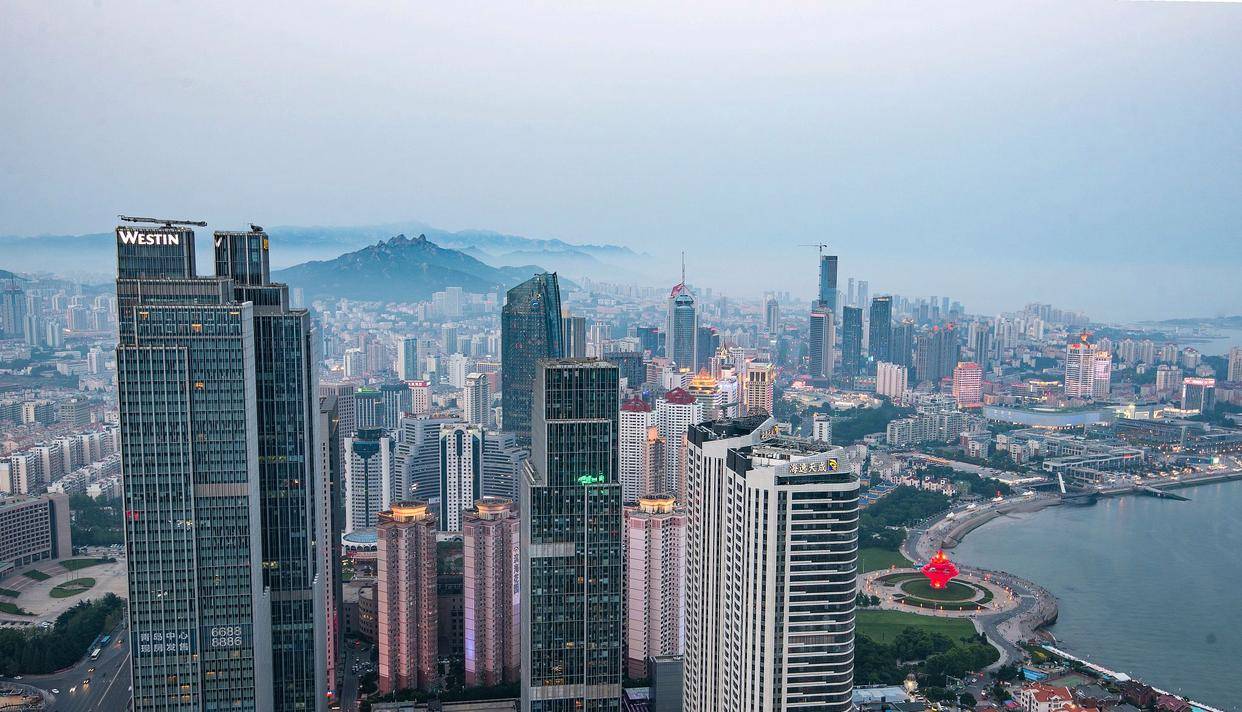
Group 1 - The U.S. stock market experienced significant volatility, with the Nasdaq dropping over 2% before recovering later in the night [3] - The potential resolution of the U.S. government shutdown is a key factor influencing market sentiment, as bipartisan negotiations are underway regarding healthcare funding [4] - The government shutdown has lasted for 40 days, severely impacting various sectors, including food assistance programs affecting over 40 million people and military pay [4] Group 2 - The Federal Reserve's potential decision to expand its balance sheet to meet liquidity demands could provide a positive boost to the market [5] - China's recent white paper on carbon neutrality emphasizes the commitment to green energy transition, which may benefit the renewable energy sector [6] - The release of Kimi's K2 Thinking model, which outperforms major competitors, indicates increasing competition in the AI space, potentially impacting companies like OpenAI [7] - China's issuance of $4 billion in U.S. dollar bonds and €4 billion in euro bonds suggests strong demand for its sovereign debt, which may affect U.S. bond issuance [7] - Significant price increases in NAND flash memory contracts by SanDisk, with a rise of 50%, highlight changes in the supply-demand dynamics within the storage market [7]
华电能源拟投120亿加快绿色转型 提质降本增效“三费”连续下降
Chang Jiang Shang Bao· 2025-11-09 23:36
Core Viewpoint - Huadian Energy, a subsidiary of Huadian Group, is making significant investments to accelerate its green transformation, with a total investment of 120.43 billion yuan for a coal and wind power project in Heilongjiang [1][3][4]. Investment Projects - The investment includes the construction of the Fulaerji Power Plant with two 660,000 kW cogeneration units and a 1.4 million kW wind power project, which consists of six wind power projects [1][3]. - The coal power project will replace six smaller coal-fired units, with a total investment of 59.6 billion yuan, scheduled to start construction in July 2026 and complete by the end of 2028 [3][4]. - The wind power project has a total investment of 60.83 billion yuan and is expected to be operational by 2028 [3][4]. Financial Performance - In the first three quarters of 2025, Huadian Energy reported revenue of approximately 11.8 billion yuan, a year-on-year decrease of 11.25%, and a net profit of 267 million yuan, down about 41% [2]. - The company has been implementing cost reduction measures, with a notable decrease in its operating expenses, referred to as "three fees," which include sales, management, and financial expenses [10][11]. Strategic Transformation - The company is actively pursuing a strategy of "large-scale replacement of small units," which aims to phase out outdated coal power capacity and enhance operational efficiency [6][7]. - Huadian Energy has transitioned from a traditional coal power company to a comprehensive energy enterprise, reducing its reliance on coal and mitigating the impact of coal price fluctuations on its financial performance [9]. Future Outlook - The company plans to continue its investment in integrated renewable energy projects, including 700,000 kW of new energy projects in various locations, which will optimize its asset structure [9]. - Huadian Energy's ongoing efforts in quality improvement and efficiency enhancement are expected to strengthen its competitive position in the energy sector [8][10].

中国海油进博会签约超130亿美元 抗周期韧性凸显前三季盈利逾千亿
Chang Jiang Shang Bao· 2025-11-09 23:27
Core Viewpoint - China National Offshore Oil Corporation (CNOOC) has achieved a record high of over $13 billion in contracts during the 8th China International Import Expo, showcasing its strong global partnerships and commitment to optimizing its procurement structure [2][3]. Group 1: Contract Achievements - CNOOC signed contracts exceeding $13 billion at the 8th China International Import Expo, marking the highest signing amount in the company's history for a single expo [2][3]. - The contracts cover a wide range of products, including crude oil, natural gas, deepwater oil and gas equipment, and advanced technology services, indicating a shift towards integrated cooperation in energy, technology, and equipment [3][5]. Group 2: Financial Performance - For the first three quarters of 2025, CNOOC reported a net profit attributable to shareholders of 101.97 billion yuan, with oil and gas net production increasing by 6.7% year-on-year [5][6]. - The company achieved operating revenue of 312.5 billion yuan, with oil and gas sales revenue reaching 255.48 billion yuan, outperforming the Brent oil price, which fell by 14.56% during the same period [5][6]. Group 3: Production and Exploration - CNOOC's oil and gas net production reached 57.83 million barrels of oil equivalent, with natural gas business growth at 11.6%, highlighting its strategic value as a second growth curve [5][6]. - The company made five new discoveries and successfully evaluated 22 oil and gas structures in the first three quarters, with significant contributions from key oil and gas fields [6][7]. Group 4: Cost Management and Investment - CNOOC maintained a leading cost control level with a major cost of $27.35 per barrel, reflecting effective project management and technological innovation [6][7]. - Capital expenditure was approximately 86 billion yuan, indicating improved investment efficiency and operational precision [6][7]. Group 5: Green Transition and Shareholder Returns - CNOOC is accelerating its transition to green and low-carbon energy, initiating offshore wind power projects and advancing carbon capture, utilization, and storage (CCUS) technology [7]. - The company plans to distribute a cash dividend of 0.73 HKD per share for the mid-2025 period, maintaining a high payout ratio of 45.5% [7].

社评:中国电动汽车为何成为气候大会“官方严选”
Huan Qiu Wang Zi Xun· 2025-11-09 15:44
Group 1 - The COP30 conference, taking place from November 10 to 21 in Belém, Brazil, symbolizes China's significant role in promoting global green and low-carbon economic transformation [1][2] - China's presence at COP30, particularly through the use of Chinese electric vehicles by leaders and representatives, highlights the integration of green technology into daily life in Brazil [1] - The conference marks the 10th anniversary of the Paris Agreement, emphasizing the need for actionable commitments to avoid irreversible climate system breakdowns [2] Group 2 - Over the past decade, China's commitment to emission reduction has become increasingly recognized, with the country being seen as a leading force in global climate governance [2][3] - The decline in climate financing from developed countries is being offset by the decreasing costs of clean energy technologies, particularly solar panels and battery combinations from China [2] - China's "Two Mountains" philosophy, which balances economic development with environmental responsibility, serves as a model for other developing countries in achieving sustainable climate action [3] Group 3 - While some countries remain cautious about Chinese electric vehicles, many others are embracing this green wave, highlighting the importance of global cooperation in addressing climate change [4]
朝闻道20251110
Orient Securities· 2025-11-09 13:16
Market Strategy - The market is currently experiencing a volatile rotation, with a focus on defensive strategies. It is recommended to prioritize defensive tactics while considering low-value recovery opportunities in the mid-term [2][8] - The "dumbbell strategy" is suggested as a foundational approach, balancing between high dividend yield and low volatility sectors, particularly in the traditional Chinese medicine sector [8] Style Strategy - The technology growth sector is under pressure, while cyclical consumer sectors are positioned for defensive layouts. The market is seeing rapid rotation between technology growth and low-value cyclical sectors [3][8] Industry Strategy - The construction materials industry is expected to emerge from its cyclical bottom, supported by the "Construction Materials Industry Stable Growth Work Plan (2025-2026)" which provides clear policy guidance and development momentum. This plan aims to improve supply-demand relationships and restore profitability through systematic measures [4][8] - Structural opportunities in the construction materials sector include traditional leading companies with optimized supply patterns, leaders in green and emerging materials, and pioneers in digital transformation [8] Thematic Strategy - The environmental protection sector is gaining momentum, with potential for long-term driving forces. Recent climate commitments and policy changes signal a significant shift towards green and low-carbon transitions [5][8] - Relevant stocks in the environmental sector include Xuedilong (002658) and Yongqing Environmental Protection (300187), with associated ETFs such as the Environmental ETF (512580) and Carbon Neutrality ETF (159885) [8]
四川民企百强榜发布 营收超千亿元的企业达3家 制造业稳居主力 新兴产业抢占前沿
Si Chuan Ri Bao· 2025-11-09 01:12
Core Insights - The 2025 Sichuan Private Enterprises Top 100 list reflects the resilience and growth of private enterprises in a challenging external environment, with a notable increase in the entry threshold for the list [1][2] - The manufacturing sector remains the dominant force, with 73 out of 100 companies in this category, contributing 80.3% of total revenue [2][4] Development Characteristics - The entry threshold for the 2025 Sichuan Private Enterprises Top 100 is set at 3.945 billion yuan, an increase of nearly 200 million yuan from the previous year [1] - The list shows a fierce competition with 15 new entrants, primarily from emerging sectors like biomedicine, new energy, and new materials, while traditional sectors like home furnishings and food processing saw more companies drop out [1][2] - The manufacturing sector's revenue reached 1.39 trillion yuan, up 11 percentage points from last year, highlighting its critical role in the economy [2] Development Dynamics - Over 50% of the top companies are undergoing digital transformation, with 74 companies implementing green and low-carbon development strategies [4][5] - Technological innovation is identified as a core driver for private enterprises, particularly in the pharmaceutical sector, with companies like Sichuan Baili Tianheng Pharmaceutical achieving a revenue growth of 936.31% [5] Economic Development - Sichuan's private economy has shown a value-added growth of 5.5% year-on-year, reaching 2.72 trillion yuan in the first three quarters of the year [7] - The number of private business entities in Sichuan has increased by 2.9% to 9.132 million [7] - The distribution of top companies spans 16 cities, with Chengdu, Yibin, and Deyang leading in the number of listed enterprises [7] Future Potential - The provincial government plans to introduce more practical measures to support the healthy and high-quality development of the private economy [8]