能源转型

Search documents
从“一叶风车”的转动,看风电产业绿色突围
Xin Lang Cai Jing· 2025-12-25 14:16
Core Insights - The article highlights the rapid development and leadership of China's wind power industry, showcasing its significant contributions to green energy and the ongoing energy transition [1][4]. Group 1: Industry Growth and Capacity - China's wind power installed capacity reached 600 million kilowatts by November 2025, maintaining its position as the world's largest and fastest-growing renewable energy system [1]. - The Hebei region has over 37 million kilowatts of wind power capacity, contributing more than 60 billion kilowatt-hours of electricity this year [1]. - Jiangsu's offshore wind power has grown from 100,000 kilowatts in 2004 to over 12 million kilowatts, establishing a strong green energy supply [1]. Group 2: Technological Advancements - Continuous technological breakthroughs are driving high-quality development in the wind power industry, with a complete and leading industrial chain established [2]. - The localization of wind turbine main bearings has increased from 10% in 2021 to over 60%, significantly reducing reliance on imports [3]. - The average cost of onshore wind power has decreased by over 60%, with current costs being 30% lower than coal power, and construction costs around 4,000 yuan per kilowatt [3]. Group 3: Contribution to Energy Security - The share of wind and solar power in total electricity consumption has risen from 9.7% in 2020 to 18.6% in 2024, with projections nearing 25% in the first half of 2025 [5]. - Wind power is becoming a cornerstone for energy supply, supporting the increase in non-fossil energy consumption [6]. Group 4: Economic and Ecological Impact - Wind power is facilitating industrial transformation, with regions like Zhangjiakou leveraging green electricity for competitive advantages [6]. - The production of green ammonia at the Zero Carbon Hydrogen Industry Park in Chifeng is expected to reduce carbon emissions significantly [7]. - The green electricity trading in Inner Mongolia is projected to reach 4.9 billion kilowatt-hours by 2025, enhancing both ecological and economic benefits [7].
从“一叶风车”的转动 看风电产业绿色突围
Xin Hua She· 2025-12-25 14:00
Core Insights - The article highlights the rapid development and leadership of China's wind power industry, showcasing its significant contributions to green energy generation and the ongoing energy transition [1][2][3] Industry Development - China's wind power installed capacity has reached 600 million kilowatts by November 2025, maintaining its position as the world's largest and fastest-growing renewable energy system [1] - The wind power industry has diversified across regions, with Hebei, Jiangsu, Xinjiang, and Inner Mongolia contributing significantly to green electricity supply [2] Technological Advancements - Domestic companies have made breakthroughs in key components, such as wind turbine main bearings, increasing the localization rate from 10% in 2021 to over 60% [3] - The cost of onshore wind power has decreased by over 60%, with the average cost per kilowatt now around 4,000 yuan, making it 30% cheaper than coal power [3] Energy Contribution - The share of wind and solar power in total electricity consumption has risen from 9.7% in 2020 to 18.6% in 2024, with projections indicating it could approach 25% in the first half of 2025 [5] Industrial Empowerment - Wind power is enabling industrial transformation, with regions like Zhangjiakou leveraging green electricity for data centers and manufacturing, thus reducing electricity costs and enhancing competitiveness [6] Ecological and Economic Benefits - Wind power contributes to ecological protection and regional development, with projects like the green ammonia production facility in Inner Mongolia significantly reducing carbon emissions [7] - The trading of green electricity has expanded, with transactions reaching 4.9 billion kilowatt-hours in 2025, enhancing both ecological and economic benefits [7]
市场最前沿丨从“一叶风车”的转动,看风电产业绿色突围
Xin Hua Wang· 2025-12-25 13:49
Core Insights - The article highlights the rapid development and leadership of China's wind power industry, showcasing its significant contributions to green energy generation and the ongoing energy transition [1][2]. Industry Overview - China's wind power installed capacity has ranked first globally for 15 consecutive years, reaching 600 million kilowatts by November 2025, solidifying its position as a major player in clean energy [1]. - The wind power sector is characterized by a diverse regional development, with significant contributions from areas like Hebei, Jiangsu, Xinjiang, and Inner Mongolia, collectively generating substantial green electricity [2]. Technological Advancements - Continuous technological breakthroughs have been pivotal for the wind power industry's high-quality development, with domestic companies achieving a 60% localization rate for wind turbine main bearings, up from 10% in 2021 [3]. - The cost of onshore wind power has decreased by over 60%, with the average cost per kilowatt now around 4,000 yuan, making it 30% cheaper than coal power [3]. Contribution to Energy Security - Wind power's share in total electricity consumption has steadily increased, from 9.7% in 2020 to 18.6% in 2024, with projections indicating it could approach 25% in the first half of 2025 [5]. - The sector not only supports energy supply but also enhances industrial transformation, as seen in regions like Zhangjiakou and Jiangsu, where green electricity is utilized to reduce costs and improve competitiveness [5]. Environmental and Economic Impact - Wind power plays a crucial role in ecological protection and regional collaborative development, with projects like the green ammonia production facility in Inner Mongolia significantly reducing carbon emissions [6]. - The trading of green electricity has expanded, with transactions reaching 4.9 billion kilowatt-hours in 2025, marking a nearly fourfold increase, thus benefiting both ecological and economic outcomes [6].
中央广播电视总台丨发布2025国内十大财经新闻
国家能源局· 2025-12-25 12:16
Group 1 - The core viewpoint of the article highlights the significant economic developments and policy initiatives in China, projecting a GDP of approximately 140 trillion yuan by 2025, marking a new stage in economic and technological strength during the "14th Five-Year Plan" period [3] - The article emphasizes the launch of the Hainan Free Trade Port, which implements a new model of open trade, indicating a shift towards a more open economic environment [3] - It discusses the rise of new consumption patterns, including emotional consumption and the sports economy, which are seen as new drivers for expanding domestic demand [4] Group 2 - The article notes that the total box office revenue for the film industry has surpassed 50 billion yuan, with Chinese films gaining international recognition, exemplified by "Ne Zha" becoming the global box office champion for animated films [4] - It mentions that the total market capitalization of A-shares has exceeded expectations, with IPO financing exceeding 270 billion Hong Kong dollars, positioning China as a leading destination for international capital [4] - The article highlights that China's total electricity consumption is expected to exceed 10 trillion kilowatt-hours for the first time, with renewable energy generation capacity reaching approximately 60%, showcasing China's leadership in global green development [4]


聚焦2025IEEF | 能源转型与绿色低碳发展
Sou Hu Cai Jing· 2025-12-25 11:10
Core Viewpoint - The global energy transition towards green and low-carbon systems is gaining momentum despite geopolitical challenges, with a clear path emerging for renewable energy development and technological advancements in energy storage, hydrogen, and nuclear energy [3][4]. Group 1: Global Energy Transition - The global average temperature is projected to exceed the 1.5°C threshold set by the Paris Agreement in 2024, with CO2 emissions in the energy sector reaching a record high of 40.8 billion tons [3]. - Renewable energy sources like solar and wind have become the main contributors to new power generation capacity due to technological advancements and cost reductions [3]. - The transition paths vary significantly across countries and regions due to differences in resource endowments, technological capabilities, and development stages [3]. Group 2: China's Energy Strategy - By 2025, China aims to reduce greenhouse gas emissions by 7% to 10% and increase the share of non-fossil energy consumption to over 30% by 2035, with a target of 360 million kilowatts for wind and solar capacity [4]. - China is advancing its "dual carbon" goals, optimizing its energy structure, and enhancing energy efficiency, marking a new era of rapid development for renewable energy [4]. - The core of the green energy transition is a technological revolution, with a focus on integrating coal, oil, natural gas, renewable energy, carbon neutrality, and smart technologies into a cohesive energy system [4]. Group 3: Nuclear Energy Development - China has achieved 100% domestic production of key nuclear power equipment and plans to approve 10 new nuclear power units by 2025, maintaining a steady growth in nuclear capacity [6]. - The country is implementing a three-step strategy for nuclear energy development, focusing on thermal, fast, and fusion reactors, with the goal of commercializing fusion energy by 2050 [6]. Group 4: New Power System - The new power system requires a collaborative approach among generation, grid, load, and storage, aiming for a safe, green, economical, and shared energy future [7]. - The electricity demand in China is expected to grow steadily, reaching 13.5 trillion kilowatt-hours by 2030 [7]. Group 5: Renewable Energy Challenges - The global renewable energy sector is projected to add over 4,600 gigawatts of capacity by 2030, with solar energy accounting for 80% of this growth, but faces challenges in system integration and manufacturing health [8]. - The financial difficulties of renewable energy manufacturers due to falling prices of solar components pose risks to the long-term supply chain [8]. Group 6: Resource Constraints - The transition to wind and solar energy may face significant resource constraints, as the demand for minerals required for renewable energy generation could increase twelvefold by 2060 compared to 2020 levels [11]. - A reevaluation of the reliance on wind and solar energy is necessary, considering the potential role of nuclear energy and fossil fuels combined with carbon capture, utilization, and storage (CCUS) [11]. Group 7: International Cooperation - China has become a significant contributor to global renewable energy development, accounting for over 45% of global wind and solar installations and reducing solar costs by 80% [12]. - The country has mobilized over 177.6 billion yuan in climate funding to support developing countries in their energy transitions [12].
从贵金属到 AI 时代的战略资产:2026,如何迎接白银新高行情?
RockFlow Universe· 2025-12-25 10:31
Group 1 - The core viewpoint of the article is that silver prices are expected to reach new highs in 2025, driven by macro liquidity and industrial demand, indicating a valuation recovery for silver [5][6]. - The decline in real interest rates reduces the holding cost of silver, while the gold-silver ratio returning to 60:1 provides significant upward elasticity for silver prices [9][10]. - Silver's industrial value has been underestimated for a long time, but the global energy transition and the surge in demand for high-performance electronic components in AI data centers are highlighting its strategic importance [6][12]. Group 2 - The macroeconomic factors influencing silver prices include the Federal Reserve's interest rate cuts and the historical relationship between gold and silver prices, which suggests a mean reversion opportunity for silver [9][10]. - The demand for silver is experiencing a structural deficit, with the silver market showing a continuous deficit for four years, evidenced by the outflow of inventories from London and New York [13]. - The photovoltaic industry is a major driver of silver demand, with the consumption of silver in solar panels transitioning from incremental to a rigid support, despite attempts to reduce silver usage [12]. Group 3 - For new investors, there are three main strategies to participate in the silver market: basic allocation through physical ETFs like SLV or PSLV, advanced allocation through mining ETFs like SIL or SILJ, and seeking alpha through quality silver stocks like PAAS, AG, or WPM [17][18][19][20]. - The article emphasizes that silver's unique position as both a financial asset and an industrial commodity makes it susceptible to various influencing factors, including macroeconomic conditions and industrial demand [9][12]. - The conclusion suggests that silver is moving to the forefront of investment opportunities, driven by supply constraints and the recovery of the gold-silver ratio, indicating that silver prices will continue to challenge historical highs [23].

3月19-20日常州!2026锂电关键材料及应用市场高峰论坛
鑫椤锂电· 2025-12-25 07:51
Core Viewpoint - The lithium battery industry is poised for a significant growth cycle in 2026, characterized by strong demand recovery, accelerated global expansion, and disruptive technological advancements, leading to a "spiral rise" in both volume and price [3]. Group 1: Market Predictions - By 2025, global lithium battery production is expected to reach 2250 GWh, with a growth rate of 30% in 2026. The energy storage sector is projected to grow even faster at 48.3%, driven by both domestic and international demand [5]. - There is a notable supply gap in battery cells and various materials, necessitating a focus on ensuring a stable and efficient supply chain to capitalize on this growth opportunity [5]. Group 2: Conference Details - The 2026 Lithium Key Materials and Applications Market Summit will be held on March 19-20, 2026, in Changzhou, Jiangsu, organized by Xinluo Information [4]. - The summit will focus on three core topics: 1. In-depth discussions on cutting-edge technologies and market supply-demand dynamics [5]. 2. Announcement and award ceremony for the "Top 10 Lithium Material Brands of 2025," evaluated based on shipment volume, market share, and customer reputation [6]. 3. B2B procurement matching to connect top battery manufacturers and material suppliers, enhancing resource matching and reducing procurement costs [7]. Group 3: Conference Agenda - The agenda includes various topics such as the analysis of lithium carbonate fundamentals and supply-demand outlook, advancements in solid-state battery key electrolyte materials, and developments in high-performance electrolytes and composite materials [9][10].






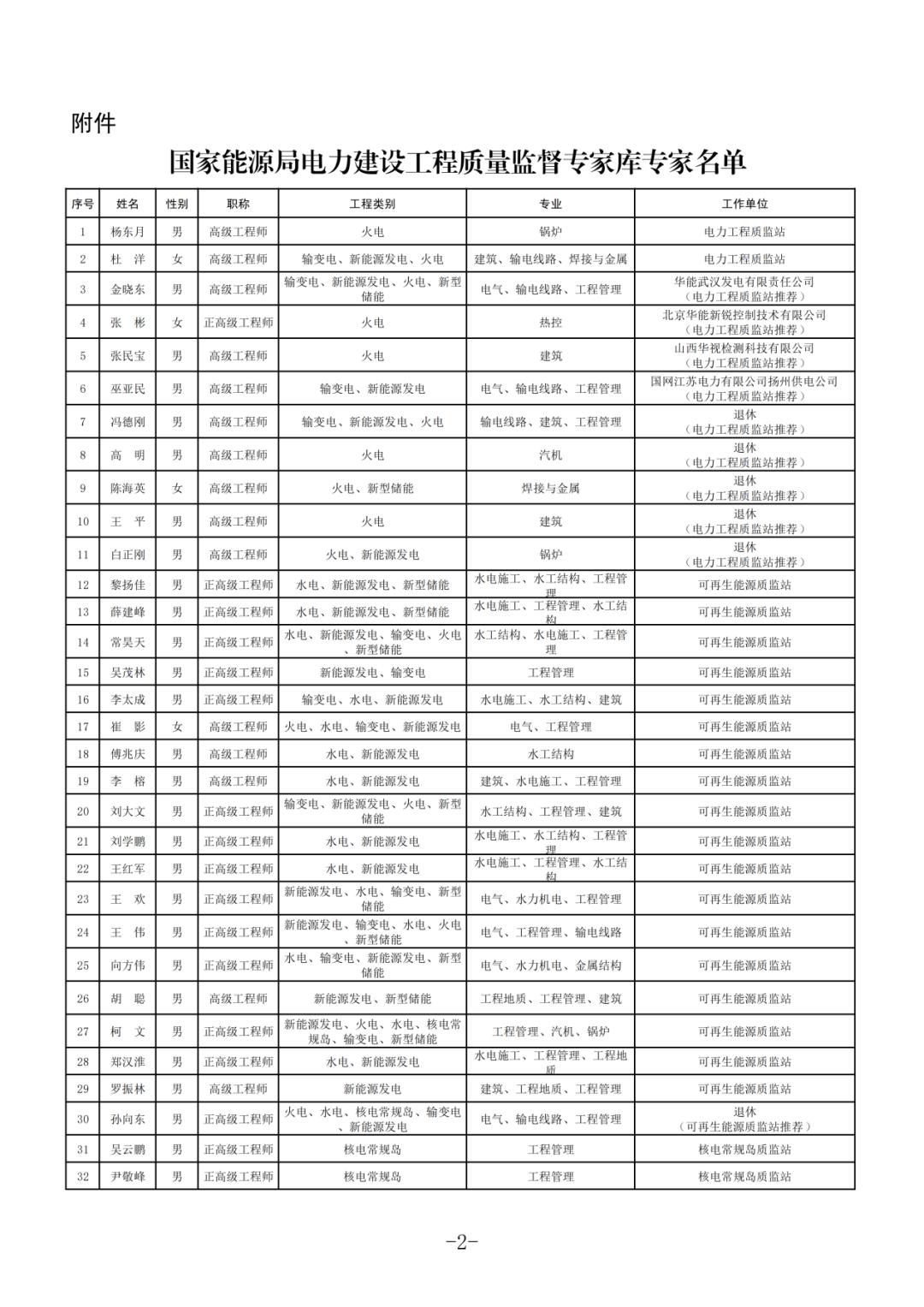
国家能源局公布电力工程质量“裁判团”,164人“国家队”能改变什么
3 6 Ke· 2025-12-25 03:26
Core Viewpoint - The establishment of a quality supervision expert database by the National Energy Administration is a response to the ongoing issues of quality oversight in the wind power sector, highlighting a shift from speed-focused development to quality assurance in China's energy construction system [1][3][7]. Group 1: Penalties and Industry Challenges - In recent cases, wind power projects in Hebei and Yunnan faced penalties totaling 79,000 yuan due to violations of quality supervision regulations, indicating a recurring issue in the industry [1][2]. - The lack of adherence to quality supervision procedures has been identified as a significant problem, with many projects neglecting this critical step, leading to fines and regulatory scrutiny [2][5]. - The rapid development of renewable energy projects has outpaced the establishment of a robust quality supervision system, resulting in a gap between industry growth and regulatory frameworks [2][5]. Group 2: Expert Database and Its Implications - The newly formed expert database consists of 164 professionals, aimed at addressing the quality supervision challenges in power construction projects, with a focus on various engineering categories including renewable energy [3][4]. - The database is designed to ensure dynamic management and regular assessments of experts, enhancing the professional standards and adaptability of the oversight team [4]. - This initiative marks a transition from localized and temporary quality oversight to a more systematic and national approach, fundamentally changing the distribution of authority in engineering quality discussions [4][7]. Group 3: Regulatory Gaps and Future Considerations - Despite the establishment of the expert database, significant regulatory gaps remain, particularly concerning the independence of experts and potential conflicts of interest [5][6]. - Smaller renewable energy projects are at risk of being overlooked in the quality supervision process, as resources tend to be allocated to larger projects, creating a supervision vacuum [5][6]. - The effectiveness of the new quality supervision system will depend on its ability to integrate real-time data management and ensure comprehensive oversight across all project stages [6][8].
2026年大宗商品展望:分化时代,2026 大宗商品如何布局?
Sou Hu Cai Jing· 2025-12-25 02:53
Core Insights - The commodity market in 2025 is characterized as a "structural bull market," with significant annual gains in gold and silver, while oil prices face pressure due to supply-demand dynamics [1] - Goldman Sachs' 2026 Commodity Outlook indicates a trend towards "increasing differentiation" in the commodity market, with overall returns expected to moderate but significant disparities among different commodities [1][2] - Key factors influencing the market include the geopolitical tensions between the US and China, the competition in AI, and dual supply shocks in the energy market [1][2] Commodity Performance - Precious metals, particularly gold and silver, are expected to continue their strong performance into 2026, with gold prices projected to reach $4,900 per ounce and silver between $50-$60 per ounce [3][6] - Industrial metals like copper are forecasted to maintain a strong price trajectory, with potential average prices between $11,400 and $12,075 per ton, driven by demand from technology and energy transitions [6][8] - The oil market is anticipated to face downward pressure, with Goldman Sachs predicting Brent and WTI crude oil prices to average $56 and $52 respectively in 2026, reflecting a supply surplus [8] Economic and Policy Context - The shift from "monetary easing + fiscal tightening" to "fiscal expansion + accelerated de-globalization" has highlighted the value of physical assets, creating structural opportunities in commodities [2] - The expected continuation of a loose monetary policy by the Federal Reserve in 2026 is seen as a catalyst for increased investment in commodities, as it lowers the opportunity cost of holding these assets [2] Market Dynamics - The energy market is expected to experience significant changes due to supply shocks in both oil and LNG, impacting pricing and availability [1][8] - The agricultural market's performance in 2026 is uncertain, with potential impacts from climate anomalies and trade policy changes affecting supply and demand dynamics [8] Strategic Focus - The 2026 commodity market will require a nuanced approach, moving away from a one-size-fits-all investment strategy to focus on structural opportunities influenced by geopolitical and technological factors [10]

晶盛机电20251224
2025-12-25 02:43
Summary of the Conference Call for Jing Sheng Mechanical & Electrical Co., Ltd. Industry and Company Overview - The conference call focused on Jing Sheng Mechanical & Electrical Co., Ltd., particularly its developments in the semiconductor and photovoltaic (PV) equipment sectors [2][4][9]. Key Points and Arguments Semiconductor Equipment Orders - Jing Sheng has semiconductor equipment orders amounting to approximately 3.7 billion yuan, primarily concentrated in the silicon wafer sector [2][4]. - The company has successfully transitioned from 8-inch to 12-inch silicon wafer equipment, resulting in a significant increase in order volume [2][4]. - The company is actively expanding into silicon carbide (SiC) epitaxy and wafer manufacturing, achieving breakthroughs in 12-inch wafer epitaxy equipment, with some customers already validating the technology [2][5]. Silicon Carbide Industry Dynamics - The SiC industry is experiencing positive changes after intense competition, with improved supply-demand relationships and increased technical barriers due to national regulations limiting new capacity expansion [2][6]. - New power applications, including AI, electricity demand, IDC storage, and overseas grid upgrades, are creating market opportunities that will further drive the SiC industry [2][6][11]. Photovoltaic Sector Developments - Jing Sheng has a comprehensive layout in the PV sector, covering long furnaces, cutting equipment, and automation for battery and module production [2][7]. - The company is innovating and iterating products to continuously increase market share, benefiting from the ongoing global energy transition that is driving demand in the PV industry [2][8]. Future Growth Projections - Starting in 2026, semiconductor equipment orders are expected to increase significantly, with the PV sector also poised for market share expansion [2][9]. - The company anticipates a rapid growth phase as its technologies mature and achieve mass production [9]. Silicon Carbide Applications - SiC devices are rapidly replacing IGBTs in new energy vehicles and charging stations due to their energy efficiency [10]. - The cost of SiC substrates and devices has decreased significantly, with the price difference between SiC and silicon-based devices narrowing to below 2 times, enhancing acceptance in the IDC sector [10]. Market Potential for Silicon Carbide - Demand for SiC in IDC and grid storage is expected to exceed that of the new energy vehicle market by 1-2 times in the coming years [11]. - Emerging applications in AR glasses and advanced semiconductor packaging present significant growth potential for SiC materials [11]. Current Status of Photovoltaic Business - Jing Sheng's PV business is currently in a bottoming phase, with industry overcapacity leading to reduced profitability and new order declines [13]. - However, the industry capital expenditure has stabilized, and the company expects its PV equipment performance to bottom out in 2026 [13][14]. New Growth Points - The company is focusing on TOPCon retrofitting equipment and silver reduction technologies, which are expected to be key capital expenditure areas in 2026 [14]. - The market share in PV materials has increased from 40% to over 50%, indicating a positive shift in the industry supply-demand landscape [14]. Other Important Insights - The SiC industry is consolidating, with smaller players struggling to compete, while established companies are solidifying their market positions [6]. - The transition to advanced packaging using SiC is driven by the increasing power requirements of GPUs, necessitating effective thermal management solutions [12].