AI大模型

Search documents
llya 发言评述
小熊跑的快· 2025-12-02 07:12
Core Insights - The industry is transitioning from an era focused on "scaling" to one driven by "fundamental research" in AI development [1][2] - Ilya categorizes AI development into three phases: the Age of Research (2012-2020), the Age of Scaling (2020-2025), and a return to the Age of Research post-2025 [2] - Current AI models are facing limitations in scaling, necessitating a renewed focus on research methodologies similar to those used before 2020 [2][4] Group 1: Phases of AI Development - The Age of Research (2012-2020) was characterized by experimentation with new ideas and architectures, resulting in models like AlexNet, ResNet, and Transformer [2] - The Age of Scaling (2020-2025) introduced a straightforward yet effective approach of using more computational power, data, and larger models for pre-training, leading to significant advancements [2] - The anticipated return to the Age of Research suggests that the effectiveness of scaling is diminishing, prompting a need for innovative breakthroughs [2] Group 2: Critique of Current Approaches - Ilya questions the effectiveness of reinforcement learning and scoring methods, arguing they produce machines with limited generalization capabilities [3] - He emphasizes the importance of value functions in decision-making, likening human emotions to a simple yet effective value function that current large models struggle to replicate [3] - The concept of a new intelligent system capable of self-learning and growth is proposed, envisioning an AI akin to a 15-year-old capable of various tasks [3] Group 3: Industry Trends and Future Directions - Ilya's recent statements align with the industry's recognition of stagnation in large language models, attributed to data limitations [4] - Despite the diminishing returns of scaling, the focus should shift towards inference, with significant revenue projections for pure inference APIs and AI hardware rentals [4] - SSI, the company Ilya is associated with, prioritizes research and alignment, aiming to develop safe superintelligent systems without immediate commercial considerations [4][5]


政策市场双轮驱动,婴童产品“智能化”提速,Babycare等品牌已起跑
Sou Hu Cai Jing· 2025-12-02 07:06
Group 1 - The core viewpoint of the news is that the Chinese government has issued a policy document aimed at enhancing the supply-demand adaptability of consumer goods, particularly focusing on the intelligent development of baby and child products, which is expected to drive structural changes in consumption [1] - The policy document, titled "Implementation Plan for Enhancing the Adaptability of Supply and Demand in Consumer Goods," emphasizes the need for improved supply capabilities in categories such as feeding care, travel equipment, outdoor sports, and educational toys, while accelerating the research and development of environmentally friendly and safe materials [1] - The market has already shown enthusiasm for intelligent baby products, with significant growth reported in AI toy sales on platforms like JD.com, where sales increased over sixfold in the first half of 2025 [1] Group 2 - Leading brands in the baby and child sector, such as Babycare, are rapidly expanding their product offerings in response to favorable policies and market demand, exemplified by the successful launch of the "AI Genius Clown Duck," which achieved sales of over 2 million in its first month [2] - Babycare has invested heavily in intelligent products, launching various items including "smart electric rocking chairs" and "smart milk formula dispensers," positioning itself at the forefront of the industry [4] - The intelligent baby product sector is undergoing transformation, with companies from various industries, including home appliances and education, accelerating their entry into this market, as seen in the strategic partnership between Songyan Power and programming education leader "Programming Cat" [6]

异动盘点1202 | 保险股集体回暖,手机产业链延续昨日上涨;美股加密货币概念股普跌,霸王茶姬涨超6%
贝塔投资智库· 2025-12-02 04:04
Group 1: Insurance Sector - Insurance stocks collectively rebounded, with China Pacific Insurance (02601) up 2.78%, China Property & Casualty Insurance (02328) up 2.27%, China Life Insurance (02628) up 0.37%, and China People’s Insurance (01339) up 1.95%. Reports indicate that several insurance companies have achieved or are close to achieving their sales targets for 2025, shifting focus towards preparations for 2026, with dividend-type life insurance products being the main offerings [1][2]. Group 2: Technology and AI - Bolekang Vision Cloud-B (02592) saw a rise of over 4%, with a cumulative increase of over 80% in the past week. The company announced successful patent applications in Japan and Europe for its core product CBT-009 [1]. - The mobile industry chain continued its upward trend, with AAC Technologies (02018) up 4.37%, BYD Electronics (00285) up 1.72%, and others. This growth is attributed to the collaboration between ByteDance's AI assistant "Doubao" and ZTE, marking a significant step in the integration of AI technology with mobile hardware [1]. Group 3: Gaming and Entertainment - Gaming stocks rose, with MGM China (02282) up 1.45%, Sands China (01928) up 1.4%, and Galaxy Entertainment (00027) up 1.91%. The Macau Gaming Inspection and Coordination Bureau reported that the gross gaming revenue for November was 21.09 billion MOP, a year-on-year increase of 14.4% [2]. Group 4: Automotive Sector - BYD Company (01211) increased by nearly 2%. The company reported sales of 480,186 vehicles in November, a record high for the year. Cumulatively, BYD's sales from January to November reached 4.18 million units, reflecting a year-on-year growth of 11.3% [2]. Group 5: Energy Sector - Oil stocks saw gains, with CNOOC (00883) up 2.05%, PetroChina (00857) up 1.25%, and Sinopec (00386) up 1.57%. OPEC+ countries announced they would maintain their production plans set in early November and suspend any production increases in the first quarter of 2026 to address global oil supply surplus and falling prices [2]. Group 6: Mining and Materials - Zhu Feng Gold (01815) surged over 10%, with a cumulative increase of over 30% in the past four trading days. The company plans to issue 248 million subscription shares at a price of 1.61 HKD per share, raising approximately 397.975 million HKD for exploration and operational funding [3]. - Longpan Technology (02465) rose nearly 4%, with a report from Huatai Securities indicating an expected increase in lithium battery production in December, leading to improved profitability across the lithium battery supply chain [4]. Group 7: Pharmaceuticals - Junsheng Tai Pharmaceutical-B (02511) increased by nearly 4% after announcing positive results from a Phase III trial of HTD1801 for Type 2 diabetes patients, outperforming the comparator drug [4]. - Weisheng Pharmaceutical-B (02561) rose over 3% following news of a strategic partnership with Anke Biological to promote the growth hormone in the Chinese market [4]. Group 8: US Market Highlights - Bawang Tea (CHA.US) rose 6.07%, reporting a global store count of 7,338 and significant growth in overseas GMV [5]. - NetEase (NTES.US) increased by 5% after winning a prestigious science and technology award for a project in collaboration with several institutions [5]. - New energy vehicle stocks in the US saw declines, with Li Auto (LI.US) down 2.45% and Xpeng Motors (XPEV.US) down 2.2%, as both companies reported lower-than-expected vehicle deliveries [6].

港股异动 | 手机产业链延续昨日上涨 字节跳动携手中兴试水AI手机 各家手机厂商已加紧布局
智通财经网· 2025-12-02 02:21
Core Viewpoint - The mobile industry chain continues to rise, driven by the collaboration between AI model developers and mobile hardware manufacturers, marking a significant phase in the integration of AI technology into smartphones [1] Group 1: Stock Performance - AAC Technologies (02018) increased by 5.37%, reaching HKD 40 - BYD Electronics (00285) rose by 2.78%, reaching HKD 34.74 - GoerTek (01415) saw a 2.67% increase, reaching HKD 30.8 - Q Technology (01478) grew by 2.93%, reaching HKD 9.83 [1] Group 2: Industry Developments - On December 1, ByteDance's AI assistant "Doubao" and ZTE announced the launch of a small batch sale of Nubia brand engineering prototypes equipped with Doubao technology [1] - The arrival of the AI smartphone era is seen as a key differentiator in the future consumer electronics market, according to a report by Galaxy Securities [1] - Various manufacturers are releasing AI models and focusing on generative AI smartphones, with domestic brands in China prioritizing this trend to capture a broader market and enhance product value [1]

手机产业链延续昨日上涨 字节跳动携手中兴试水AI手机 各家手机厂商已加紧布局
Zhi Tong Cai Jing· 2025-12-02 02:21
Core Viewpoint - The mobile industry chain continues to rise, driven by the collaboration between AI model developers and mobile hardware manufacturers, marking a significant phase in the integration of AI technology into smartphones [1] Group 1: Market Performance - Companies such as AAC Technologies (02018) saw a stock increase of 5.37%, reaching HKD 40; BYD Electronics (00285) rose by 2.78% to HKD 34.74; GoerTek (01415) increased by 2.67% to HKD 30.8; and Q Technology (01478) gained 2.93%, reaching HKD 9.83 [1] Group 2: Industry Developments - On December 1, ByteDance's AI assistant "Doubao" and ZTE announced the launch of a small batch sale of Nubia brand engineering prototypes equipped with Doubao's mobile assistant technology preview version, indicating a deep cross-industry collaboration [1] - According to a report from Galaxy Securities, the advent of the AI smartphone era signifies that AI will become a key differentiating factor in the future consumer electronics market [1] - Multiple manufacturers have released AI large models, focusing on generative AI smartphones, with domestic brands in China placing significant emphasis on seizing broader market opportunities during this new innovation cycle to enhance product value and solidify brand market position [1]
仕佳光子:借力资本市场强链补链 推动区域光电子产业可持续发展
Zheng Quan Shi Bao· 2025-12-02 00:23
Core Viewpoint - The company, Shijia Photon, is leveraging capital market platforms to enhance its strategic positioning in the semiconductor and optoelectronic information industry while supporting regional sustainable development in the optoelectronic sector, particularly in response to the growing demand for optical modules driven by AI computing power [1][7]. Financial Performance - In Q3 2025, the company achieved a revenue of 568 million yuan, representing a year-on-year growth of 102.50%, and a net profit of 83 million yuan, up 242.52% [2]. - For the year 2024, the company reported a revenue of 1.074 billion yuan, a 42.40% increase year-on-year, and a net profit of 65 million yuan, growing by 236.57% [2]. - In the first half of 2025, revenue reached 993 million yuan, marking a 121.12% increase, while net profit surged to 217 million yuan, reflecting a significant growth of 1712.00% [2]. Strategic Initiatives - The company is focusing on technology breakthroughs, capacity expansion, and industry chain collaboration to strengthen its competitiveness in the optical communication sector [2]. - Shijia Photon has invested in the establishment of a Thai subsidiary and a Singapore subsidiary to enhance its international presence and operational capacity [2][3]. - The company allocated 103 million yuan for R&D in 2024, accounting for 9.63% of its revenue, and 61.42 million yuan in the first half of 2025, which is 6.19% of its revenue [3]. Regional Development Impact - The company is recognized as a "chain master" in the optoelectronic industry in Hebi, actively exploring capital means such as industry funds to strengthen the regional supply chain and attract related enterprises [4]. - Shijia Photon has facilitated the establishment of multiple upstream and downstream enterprises in the optical communication sector in Hebi, contributing to the creation of a cohesive and efficient industrial ecosystem [4]. Industry Growth Opportunities - The demand for optical communication products is rapidly increasing due to the scaling of AI models and computing power, with data centers upgrading from 100G/200G to 400G/800G/1.6T optical interconnects [7]. - The company is aligning its strategies with the provincial goal of building a photonic integrated chip industry base, focusing on industry collaboration, talent development, and technological advancements [7]. Talent and Infrastructure Development - To address talent shortages in the Henan optoelectronic industry, the company suggests implementing equity incentives and employee stock ownership plans to attract high-end technical and management talent [8]. - Local governments are encouraged to initiate or participate in industry investment funds to attract and incubate innovative enterprises, thereby forming a supportive industrial cluster [8].

仕佳光子:借力资本市场强链补链 推动区域光电子产业可持续发展
证券时报· 2025-12-02 00:18
Core Viewpoint - The company, Shijia Photon, has leveraged the capital market to strengthen its position in the semiconductor and optoelectronic information industry while collaborating with local governments and social capital to promote sustainable development in the regional optoelectronic industry [1][11]. Group 1: Financial Performance - In Q3 2025, Shijia Photon achieved a revenue of 568 million yuan, representing a year-on-year growth of 102.50%, and a net profit of 83 million yuan, with a year-on-year increase of 242.52% [4]. - In 2024, the company reported a revenue of 1.074 billion yuan, up 42.40% year-on-year, and a net profit of 65 million yuan, reflecting a year-on-year growth of 236.57% [5]. - In the first half of 2025, Shijia Photon generated a revenue of 993 million yuan, marking a 121.12% increase year-on-year, and a net profit of 217 million yuan, which is a significant year-on-year growth of 1712.00% [5]. Group 2: Strategic Initiatives - The company has focused on technological breakthroughs, capacity expansion, and industry chain collaboration to enhance its competitiveness in the optical communication sector [6]. - Shijia Photon has invested in R&D, with expenditures reaching 103 million yuan in 2024, accounting for 9.63% of its revenue, and 61.42 million yuan in the first half of 2025, representing 6.19% of its revenue [7]. - As of the first half of 2025, the company holds a total of 278 intellectual property rights, including 56 invention patents, showcasing the impact of capital on technological innovation [8]. Group 3: Regional Development Impact - Shijia Photon, as a key player in the optoelectronic industry in Hebi, has utilized capital tools to strengthen the regional supply chain and attract related enterprises, contributing to the establishment of a cohesive and efficient industrial ecosystem [10][11]. - The company has actively explored capital means such as industry funds to invest in upstream and downstream enterprises with technological expertise and innovation potential, enhancing the resilience of the regional supply chain [10]. Group 4: Industry Trends - The demand for optical communication products is rapidly increasing due to the growth of AI and computing power, with data centers upgrading from 100G/200G to 400G/800G/1.6T optical interconnects [13]. - Shijia Photon is aligning its industrial layout with market demand and responding to the strategic goal of building a photonic integrated chip industry base in Henan Province [12][13]. - The company aims to become a global leader in optical chip and device solutions, focusing on innovation and leveraging capital market resources to enhance its role in the construction of the industrial chain and innovation ecosystem [12].

Lafa5上市 曹力:零跑已提前达成今年50万辆销售目标
Xin Jing Bao· 2025-12-01 14:40
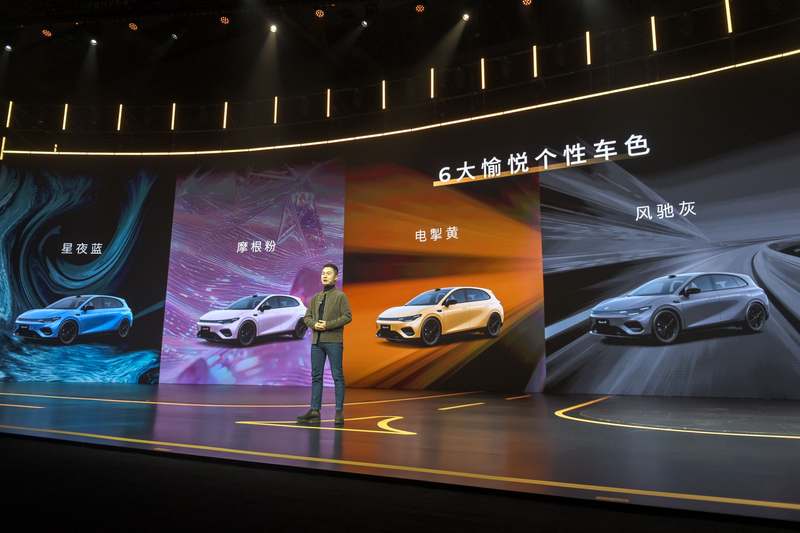
Core Insights - Leap Motor has achieved its annual sales target of 500,000 units ahead of schedule and aims to reach 1 million units by 2026 [3] Group 1: Product Features - The Leap Motor Lafa5 is positioned as a "high-value sports sedan" with a range of 605 kilometers [3] - It is equipped with Qualcomm's 8295P flagship cockpit chip, a 14.6-inch 2.5K HD central control screen, and an 8.8-inch LCD instrument panel [1] - The vehicle features end-to-end assisted driving capabilities with laser radar and is powered by dual AI models, DeepSeek and Tongyi Qianwen [1] Group 2: Pricing and Availability - The Lafa5 is available at a limited-time price range of 92,800 to 116,800 yuan, valid until December 31, 2025 [3]

Lafa5上市,曹力:零跑已提前达成今年50万辆销售目标
Xin Jing Bao· 2025-12-01 14:20
Group 1 - The core message of the article highlights that Leap Motor has achieved its sales target of 500,000 vehicles for the year ahead of schedule and aims to reach an annual sales target of 1 million vehicles by 2026 [1] - The newly launched Leap Motor Lafa5 is positioned as a "high-performance sports coupe" with a range of 605 kilometers and features Qualcomm's 8295P smart cockpit and end-to-end lidar-assisted driving capabilities [1][3] - The introductory price for the Leap Motor Lafa5 is set between 92,800 yuan and 116,800 yuan, valid until December 31, 2025 [1] Group 2 - The Leap Motor Lafa5 is equipped with Qualcomm's 8295P flagship cockpit chip, a 14.6-inch 2.5K high-definition central control screen, and an 8.8-inch liquid crystal instrument panel [3] - The vehicle also incorporates two AI models, DeepSeek and Tongyi Qianwen, enhancing its technological capabilities [3]
字节“豆包手机”刚开卖,吉利系进展也曝光了:首月速成200人团队,挖遍华为小米荣耀
量子位· 2025-12-01 12:13
Core Viewpoint - The collaboration between ByteDance and ZTE on AI smartphones aims to establish a foothold in the AI operating system (AIOS) sector rather than focusing solely on the AI smartphone itself [3][14]. Group 1: ByteDance and ZTE Collaboration - ByteDance has launched its first AI smartphone, priced at 3499 yuan, featuring its self-developed large model Agent service [1]. - The smartphone integrates the Doubao mobile assistant technology, developed in collaboration with phone manufacturers at the operating system level [1]. Group 2: New Entrant - Zhiyue Qianli - A new company named Zhiyue Qianli, established in August 2023, is gaining attention for its focus on the AIOS sector [5][15]. - Zhiyue Qianli is closely related to the Geely group, with key figures such as Hao Jianguo involved in its establishment [6][7]. - The company aims to reshape human-computer interaction and build an ecosystem for the AI terminal era [15]. Group 3: Company Strategy and Development - Zhiyue Qianli plans to develop both AI models and hardware products, including smartphones and XR glasses, distinguishing its approach from ByteDance's focus [16][19]. - The company has rapidly expanded its workforce, reaching nearly 200 employees within its first month, indicating strong recruitment capabilities [23]. - It is actively building capabilities related to AIOS and hardware development, suggesting a comprehensive approach to product development [19][20]. Group 4: Industry Trends and Future Outlook - The relationship between AI and terminals is evolving, with AI terminals becoming a new industry keyword that encompasses hardware, software, and user interaction [25][26]. - AI terminals are expected to extend beyond traditional devices, potentially integrating into smart vehicles as central systems for human-machine collaboration [29]. - The trend indicates a convergence of software and hardware strategies among major players like Huawei and Xiaomi, with ByteDance and Geely also entering the fray [30][32].