
科技自立自强

Search documents
单季净利润同比增长75% 科创板公司三季度业绩重拾升势
Zheng Quan Shi Bao Wang· 2025-11-13 13:33
Core Insights - The overall performance of the Sci-Tech Innovation Board (STAR Market) has shown a significant recovery, with a 75% year-on-year increase in net profit for the third quarter, indicating strong resilience and growth quality among "hard tech" companies [1][3]. Financial Performance - In the first three quarters of 2025, STAR Market companies achieved operating revenue of 1,105.01 billion yuan, a year-on-year increase of 7.9%, and net profit of 49.27 billion yuan, up 8.9% [2]. - Excluding four leading photovoltaic companies, the overall revenue and net profit growth rates for the STAR Market were 14.6% and 30.6%, respectively, indicating an amplified growth momentum [2]. Growth Characteristics - Over 70% of companies on the STAR Market reported revenue growth, and nearly 60% saw net profit increases, with 158 companies experiencing net profit growth exceeding 50% [3]. - The STAR 50 Index companies accounted for 46% of the board's revenue and 50% of net profit, while the STAR 100 Index companies demonstrated high growth elasticity, with revenue and net profit increasing by 12% and 134%, respectively [3]. R&D Investment - The total R&D investment of STAR Market companies reached 119.75 billion yuan, which is 2.4 times the net profit, with a median R&D intensity of 12.4%, leading A-shares in R&D efforts [3]. Sector Performance - The integrated circuit industry saw a 25% year-on-year revenue increase and a 67% net profit increase among 121 related companies, with major players like SMIC and Hua Hong maintaining high capacity utilization [5]. - The artificial intelligence (AI) sector emerged as a new growth pillar, with significant revenue increases in various segments, including a nearly 24-fold increase for Cambrian and a 55% increase for Haiguang Information [6]. - The biopharmaceutical sector reported an 11% revenue increase and a 48% net profit increase, driven by the approval of new drugs and accelerated commercialization [7]. Policy Impact - The ongoing "1+6" reform and the establishment of the Sci-Tech Growth Layer have provided targeted support for unprofitable tech companies, with 35 companies in this layer reporting a 39% revenue increase and a significant reduction in net losses [3].

定了!第五届国际新材料产业大会将于11月20日在蚌埠开幕
Zheng Quan Shi Bao Wang· 2025-11-13 12:40
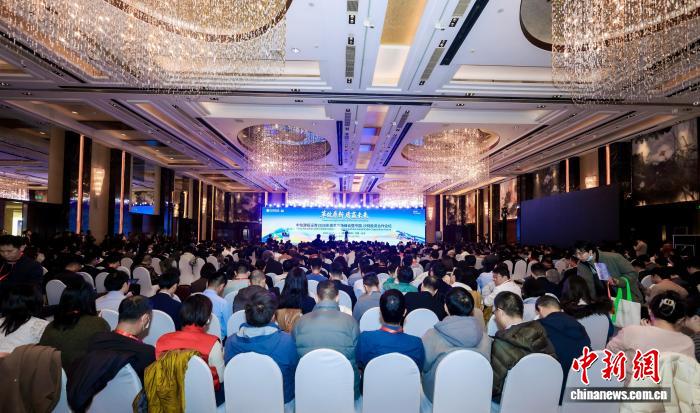
Core Insights - The fifth International New Materials Industry Conference will be held from November 20 to 23 in Bengbu, focusing on key areas such as silicon-based new materials, bio-based new materials, and high-performance composite materials [1][2] - The conference aims to invite leaders from national ministries, industry associations, Fortune 500 companies, and top experts to foster collaboration and innovation in the new materials sector [1][3] Group 1 - The conference has successfully held four previous editions, signing 408 projects with a total investment of 383.909 billion yuan, establishing itself as a significant platform for linking global innovation resources and promoting high-quality development in the new materials industry [1] - Bengbu, the host city, is recognized as an innovation hub for the glass industry, housing 411 new materials companies with an annual output value exceeding 66 billion yuan, forming a collaborative industrial system centered on silicon-based and bio-based new materials [1][2] Group 2 - The conference will feature three main components: opening ceremony activities, thematic activities, and "dual recruitment and dual introduction" industry cooperation activities, aimed at matching industry needs with talent resources [2] - Key highlights of this year's conference include promoting technological self-reliance, supporting national strategies, enhancing international cooperation, and addressing talent shortages in the new materials industry [3]
大科学装置建设全面提速 筑牢科技强国基石
Yang Shi Wang· 2025-11-13 12:38
Core Insights - The development of large scientific facilities is crucial for technological innovation and building a strong scientific nation in China [1][2][3] - The construction of major scientific infrastructure has accelerated during the 14th Five-Year Plan, with a focus on foundational research and achieving high-level technological self-reliance [1][3] Group 1: Major Scientific Projects - The fourth-generation advanced fission nuclear energy system, the thorium molten salt experimental reactor, has achieved thorium-uranium conversion, breaking the reliance on uranium fuel [1] - The world's largest supergravity centrifuge has officially started operations and will provide critical support for disaster prevention and new material research by the end of 2026 [1] - The compact fusion energy experimental device (BEST) in Hefei is under development and is expected to demonstrate nuclear fusion power generation internationally by the end of 2027 [1][3] Group 2: Investment and Growth in Research - Research and development funding has reached a record high of 249.7 billion yuan, increasing over 70% since 2020 [3] - Over 65 large scientific devices are currently under construction or in operation, with national scientific data centers seeing a fivefold increase in data volume compared to the end of the 13th Five-Year Plan [2][3] Group 3: Strategic Goals and Future Plans - The 14th Five-Year Plan emphasizes the need for strategic, forward-looking, and systematic layout of major scientific infrastructure to enhance open sharing and operational efficiency [2][4] - The 15th Five-Year Plan suggests accelerating high-level technological self-reliance and implementing significant national scientific tasks to meet strategic national needs [4]
派驻中管企业纪检监察机构认真学习领会全会精神
Zhong Yang Ji Wei Guo Jia Jian Wei Wang Zhan· 2025-11-13 00:51
Group 1 - The 20th Central Committee emphasizes the importance of enhancing the technological innovation capabilities of state-owned enterprises (SOEs) to achieve high-level self-reliance in technology [1][2] - Central enterprises are identified as key players in the national innovation chain, with a focus on gathering innovation resources and supporting enterprises in leading innovation consortiums [1][2] - The Central Commission for Discipline Inspection (CCDI) is actively engaging with SOEs to ensure compliance with the latest requirements for technological innovation as outlined in the 20th Central Committee's decisions [1][3] Group 2 - China National Offshore Oil Corporation (CNOOC) is under continuous supervision to promote the development of key core technologies and enhance major equipment and technical capabilities [2][3] - The CCDI emphasizes a long-term commitment to supervision in the field of technological innovation, focusing on areas such as oil and gas resource enhancement, deep-water development, and high-end marine equipment manufacturing [2][3] - The National Oil and Gas Pipeline Group is enhancing oversight on key technology research and the transformation of scientific achievements, ensuring that the board fulfills its responsibilities in technological innovation [3][4] Group 3 - The South-to-North Water Diversion Group is implementing a supervision plan for critical research projects, particularly focusing on the challenging geological conditions of the Yangtze River to Han River project [4][5] - The CCDI is guiding the South-to-North Water Diversion Group to strengthen the management of research projects, ensuring that technical talent is involved in decision-making and results transformation [5] - The emphasis is placed on the integration of production and research to ensure high-quality construction of the water diversion project, aligning with national water security and ecological protection goals [5]

安阳钢铁怎么炼成“钢中明珠”
He Nan Ri Bao· 2025-11-12 22:35
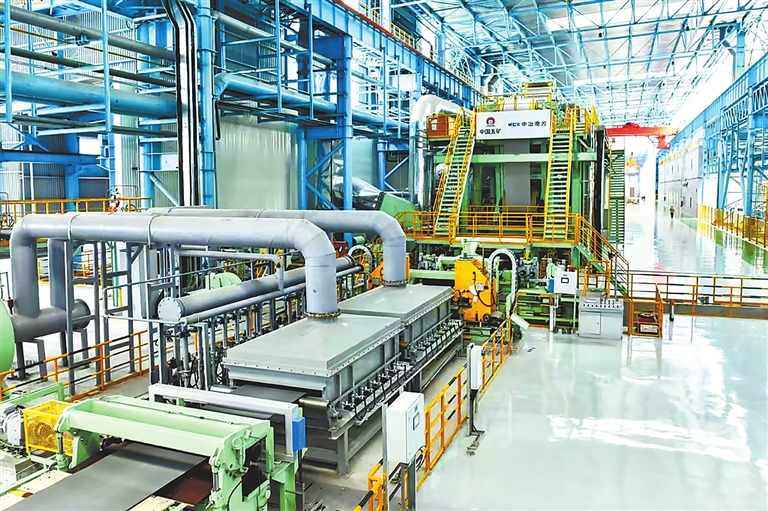
Core Viewpoint - The successful mass production of QG0750.2mm high magnetic orientation silicon steel marks a significant advancement in China's high-end electromagnetic materials sector, positioning the country among the few globally capable of producing this technology [2][3][4] Group 1: Product Characteristics - QG0750.2mm high magnetic orientation silicon steel is described as the "crown jewel" of the steel industry, featuring advantages such as being thinner, having higher magnetic sensitivity, and lower losses [2] - The production process involves over 600 critical control points, ensuring precise control over chemical composition and the arrangement of billions of internal grains [2][3] Group 2: Production Process - The production of this steel type requires meticulous control across more than 20 processes, including hot rolling, normalization, cold rolling, and annealing, with strict temperature and thickness tolerances [3] - The production team has overcome significant technical challenges through collaboration between Anyang Iron and Steel Co., the Henan Advanced Steel Research Institute, and Anyang Southern Electromagnetic New Materials [3][4] Group 3: Industry Impact - The high magnetic orientation silicon steel is crucial for efficient energy transformers, significantly reducing power transmission losses, thus supporting national goals for carbon neutrality and the development of ultra-high voltage power grids [3] - The successful mass production is expected to attract upstream and downstream enterprises to Anyang, fostering a virtuous cycle of technological breakthroughs, capacity enhancement, and industrial clustering, ultimately contributing to a trillion-level electromagnetic new materials industry cluster [4]


科创“试验田”结出产业“丰收果”
Jing Ji Ri Bao· 2025-11-12 22:19
扎根武汉产业创新发展研究院的成果转化"试验田",一批自主创新的成果,正加速成为助推产业发展的 新质生产力。在该院支持下,芯片制造协同设计研究所成立芯片制造—封装—可靠性测试实验室平台, 构建"机理—算法—软件—验证"闭环验证体系,完善自主工业软件开发工具链,提升研发效率。 作为湖北科技体制改革的"试验田",2022年成立的武汉产业创新发展研究院围绕重点产业与赛道,推动 人才、技术、资本高效聚合,正成长为立足湖北、辐射全国的产业创新关键枢纽。 目前,武汉产业创新发展研究院"拨转股"资金投入数亿元,支持超50个硬科技团队。该院还构建起涵盖 7只产业基金、29家专业研究所、64家联合创新中心的创新生态,推动"政产学研金服用"协同发力。 武汉产业创新发展研究院院长李锡玲说:"《建议》突出了科技创新的引领作用,将高水平科技自立自 强摆在国家发展的关键位置。作为一名科技工作者,我更加深刻地认识到责任重大,道路清晰。" 对标"十五五"规划建议宏伟蓝图,李锡玲认为还要在强化创新资源集聚、促进创新要素融合、加快创新 主体催化、扩大创新开放合作等方面持续发力。 加快建成中部地区崛起的重要战略支点,是湖北的使命定位。李锡玲说,武汉 ...
第三季度中国货币政策执行报告发布 金融总量合理增长,融资成本处于低位
Mei Ri Jing Ji Xin Wen· 2025-11-12 14:09
Core Viewpoint - The People's Bank of China (PBOC) has maintained a moderately loose monetary policy in 2023, with significant growth in financial metrics and a focus on optimizing credit structure to support key sectors and economic transformation [1][2]. Financial Metrics - As of September, the total social financing stock and broad money supply (M2) grew by 8.7% and 8.4% year-on-year, respectively, with the RMB loan balance reaching 270.4 trillion yuan [1]. - The net financing of government bonds in 2024 has reached 1.1 trillion yuan, with expectations to exceed 1.2 trillion yuan for the year [1][5]. Credit Structure Optimization - The report indicates a continuous improvement in credit structure, with significant year-on-year growth in technology loans (11.8%), green loans (22.9%), inclusive loans (11.2%), elderly care industry loans (58.2%), and digital economy loans (12.9%), all surpassing the overall loan growth rate [1]. - The trend of "wide credit" is becoming evident, with social financing growth maintaining above 8%, reflecting the shift towards direct financing methods such as corporate bond issuance [2]. Economic Transition - The transition from high-speed growth to high-quality development necessitates a focus on the quality of credit rather than merely increasing loan volumes, as emphasized by the central bank [3]. - The current RMB loan balance stands at 270 trillion yuan, with total social financing stock at 437 trillion yuan, indicating a natural decline in financial growth rates as the economy matures [3]. Policy Coordination - The effective coordination between monetary and fiscal policies has been highlighted, with measures taken to stabilize the financial environment and support government bond issuance [5]. - The collaboration between fiscal departments and the central bank has led to the issuance of special government bonds to enhance bank capital, thereby improving the banks' ability to support the real economy [5]. Support for Key Sectors - The PBOC's structural monetary policy tools have a balance nearing 4 trillion yuan, aimed at incentivizing financial institutions to support national strategies and key economic sectors [8]. - The growth rate of loans in sectors such as elderly care and technology has significantly outpaced overall loan growth, indicating a targeted approach to financing [9].
黄文涛:A股、港股有“新四牛”逻辑
Zhong Guo Xin Wen Wang· 2025-11-12 12:25
Core Viewpoint - The new rise of A-shares and Hong Kong stocks is driven by the "New Four Bulls" logic, which includes capital inflow, technological innovation, institutional reform, and consumption upgrade [1][2]. Group 1: New Four Bulls Logic - Capital inflow is a significant factor driving the market [2]. - Technological innovation is expected to play a crucial role in market dynamics [2]. - Institutional reform is anticipated to enhance market efficiency and attractiveness [2]. - Consumption upgrade reflects the changing consumer behavior and spending patterns [2]. Group 2: Market Outlook - The "New Four Bulls" market trend is expected to gradually unfold along an upward trajectory, with the market center gradually rising, maintaining a "slow bull" pattern through 2026 [2]. - Key investment themes will revolve around technological self-reliance, industrial upgrades, and resource security, with opportunities identified in AI, semiconductors, computers, primary products, precious metals, new energy, high-end manufacturing, humanoid robots, and low-altitude economy [2]. Group 3: Monetary Policy and Economic Environment - The U.S. is projected to be in a rate-cutting cycle over the next two to three years, while China is expected to implement a dual easing of fiscal and monetary policies, creating a favorable external environment [3]. - By 2026, China's monetary policy is anticipated to remain accommodative, with a potential 50 basis point reduction in the reserve requirement ratio and continued interest rate cuts [3]. - The easing monetary policy is expected to positively impact macroeconomic stability and capital markets, supporting growth, employment, and expectations [3]. Group 4: Saudi-China Investment Cooperation - The Saudi stock exchange is focused on deepening capital cooperation opportunities between Saudi Arabia and China, enhancing connectivity [3]. - China's direct investment in Saudi Arabia is rapidly increasing, indicating a growing partnership in both scale and strategic depth [3]. - The Saudi stock exchange has signed memorandums of understanding with Shanghai and Shenzhen exchanges to promote bilateral capital flow [5].

李迅雷专栏 | 把握“十五五”结构性机会,四大配置主线浮现
中泰证券资管· 2025-11-12 11:32
Global Landscape - The strategic interaction and policy choices between China and the US significantly impact global trade, industrial chain layout, and capital flows [4] - China is estimated to account for over 40% of global manufacturing capacity, reinforcing its influence in trade and industry [4] - The debt-driven growth model poses challenges but also reflects China's substantial policy resources and market development potential [4] Chinese Economy - The current economic situation is characterized as "high at the front and low at the back," with a GDP growth rate of 5.2% in the first three quarters, making the annual target achievable [6] - Consumption grew by 4.5%, supported by policies like "old-for-new" exchanges, while investment saw a decline of 0.5% [6] - Exports were a highlight, increasing by 6.1%, particularly strong in emerging markets like Africa and ASEAN [6] "14th Five-Year" Plan Highlights - The plan emphasizes accelerating "technological self-reliance," aiming to build a modern industrial system with advanced manufacturing as its backbone [8] - There is a strong push for consumption and increased social welfare spending, particularly in response to an aging population [8] - The establishment of a nationwide unified market is prioritized, optimizing resource allocation in energy, public services, and data [8] Asset Allocation Strategies - In a low-interest-rate environment, high-dividend assets are highlighted as scarce and valuable, with Hong Kong stocks offering a dividend rate 30% higher than A-shares [11] - Sectors like military, gold, and rare earths are recommended as strategic allocations in response to global geopolitical tensions [11] - Focus on AI technology sectors, including computing power and robotics, is essential as they represent a significant investment opportunity [11] - New consumption trends driven by younger demographics and single-person economies present emerging investment opportunities [11]
A500ETF易方达(159361)成立一周年,机构称市场正为新一轮向上趋势蓄势
Mei Ri Jing Ji Xin Wen· 2025-11-12 06:23
Group 1 - The core viewpoint of the article indicates that the market is preparing for a new upward trend, supported by the resilience shown in the third-quarter reports of listed companies [1] - The A500ETF by E Fund has reached a scale of 23.6 billion yuan after one year, ranking among the top in its category [1] - The "14th Five-Year Plan" emphasizes high-quality development and technological self-reliance, aiming to enhance macroeconomic governance efficiency [1] Group 2 - The expectation of price recovery is clear, with a focus on reducing internal competition in certain sectors [1] - The technology sector is entering a verification phase regarding its trends and performance [1] - The long-term positive trend of the A-share market remains unchanged [1]