AI应用

Search documents
春季行情期间业绩对行业表现的影响
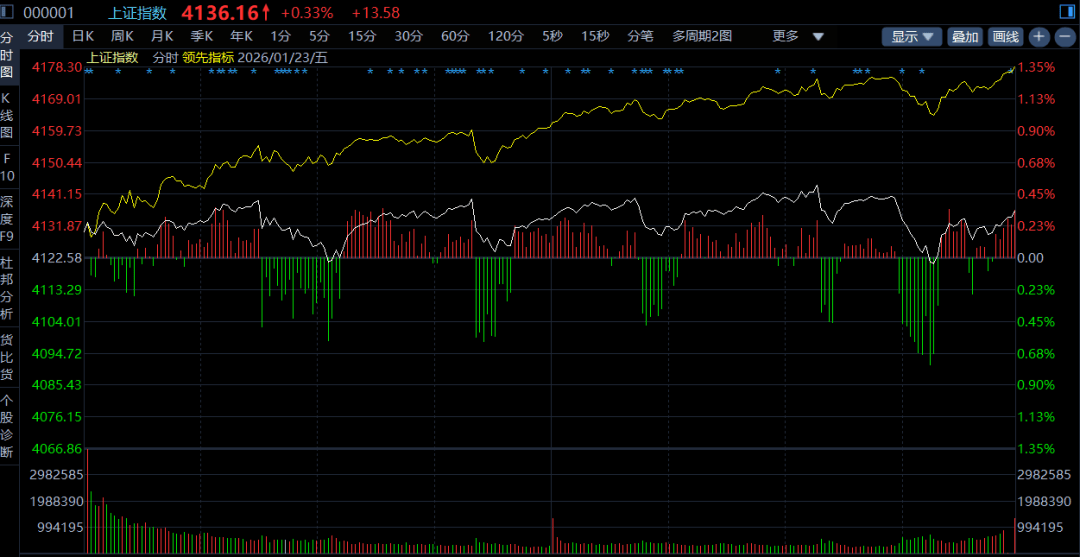
Huajin Securities· 2026-01-25 05:24
Group 1: Performance and Market Trends - The excess returns of high-performing industries are strongly correlated with the rhythm of the spring market, with significant excess returns observed during market uptrends[7] - In the spring market, high-performing industries tend to outperform when mainline industries experience adjustments, driven by high valuations or sentiment[14] - The current leading sectors, commercial aerospace and AI applications, are expected to remain central in the short term, supported by ongoing policy and industry trends[23] Group 2: Economic and Liquidity Conditions - The short-term economy is in a weak recovery trend, with fixed asset investment growth recorded at -3.80% in December, indicating significant drag from the real estate sector[26] - Short-term liquidity remains accommodative, with the central bank increasing market operations, resulting in a cumulative injection of 558.3 billion yuan by January 21[33] - The short-term risk appetite may further increase due to positive policy expectations and limited external risks[26] Group 3: Industry Configuration and Recommendations - Industries such as non-ferrous metals, chemicals, electronics, and automobiles are expected to show relatively high profit growth in 2025, with notable increases in profit forecasts[26] - Current valuations in growing sectors like pharmaceuticals, automobiles, computers, and media are relatively low, suggesting potential for future gains[26] - It is recommended to focus on technology growth and certain cyclical industries, particularly those benefiting from supportive policies and improving fundamentals[26]
大资金连砸几千亿 A股本周为何不跌反涨?一文看懂
Mei Ri Jing Ji Xin Wen· 2026-01-25 03:30
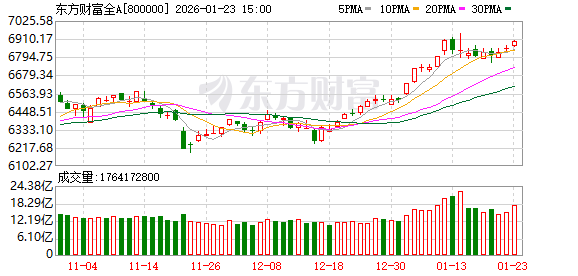
Market Overview - The recent trading week (January 19-23) marked the first complete trading week after regulatory "cooling" signals appeared in the A-share market, with initial panic among investors followed by a recovery towards the end of the week [2] - The market saw significant short-term recovery from Wednesday to Friday, despite initial fears of a downturn [2] Index Performance - The mid and small-cap indices, including the CSI 500, CSI 1000, and CSI 2000, led the gains for the week, reaching new highs [3] - Weekly performance highlights include: - Wind Micro-cap Index: +5.16% (YTD: +12.01%) - CSI 500: +4.34% (YTD: +15.06%) - CSI 2000: +4.04% (YTD: +11.90%) - CSI 1000: +2.89% (YTD: +11.53%) [4] ETF Market Dynamics - Despite the overall market recovery, the CSI 50 and CSI 300 indices continued to decline, with the CSI 50 experiencing a nine-day losing streak [5] - Large-scale outflows from major ETFs were noted, with a total net outflow of 329.6 billion yuan from ten large ETFs during the week, including a significant outflow of 72.4 billion yuan from the Huatai-PB CSI 300 ETF [7][8] - Cumulative outflows from these ETFs exceeded 470 billion yuan over the past two weeks, indicating a substantial shift in investor sentiment [8] Investor Behavior and Market Sentiment - Investors are questioning the reasons behind large funds selling off these ETFs and whether avoiding the weighty stocks in these indices could lead to better investment opportunities in smaller indices like the CSI 500 and CSI 1000 [10][11] - The market sentiment is influenced by recent regulatory actions aimed at cooling down the market and preventing potential risks [10] Arbitrage Opportunities - The limited decline in the market despite significant ETF sell-offs is attributed to the presence of arbitrage funds that quickly buy undervalued ETFs, stabilizing their prices [16] - The process involves large funds selling ETFs, creating a price discount, which is then exploited by arbitrage traders who buy the ETFs and redeem them for the underlying stocks [20] Institutional Investment Trends - Institutional investors dominate the arbitrage trading space due to the high capital requirements for such operations [21] - Insurance funds have been increasing their investments in the equity market, with notable commitments to technology and innovation sectors [25] Future Market Outlook - As the annual performance forecasts of listed companies are set to be disclosed, market speculation is expected to rise, shifting focus from macro liquidity to micro performance verification [27] - Sectors such as dividends, TMT, and power equipment are recommended for investor attention due to their potential for strong performance [27]

U23国足获得亚洲杯亚军;中科宇航完成IPO辅导|21早新闻
2 1 Shi Ji Jing Ji Bao Dao· 2026-01-24 23:21
Macro Economy - The People's Bank of China will continue to promote global financial governance reform and international financial cooperation while stabilizing domestic growth, aiming for a high level of openness in the financial services industry and markets by 2026 [2] - Brazil announced visa exemptions for certain short-term categories for Chinese citizens, leading to a significant increase in tourism-related searches, with cities like Rio de Janeiro, São Paulo, and Brasília seeing over a fivefold increase in search volume compared to the previous week [2] - Monitoring by the National Bureau of Statistics shows that in mid-January 2026, 29 out of 50 important production materials saw price increases, with live pig prices rising by 0.4 yuan per kilogram, a 3.2% increase [2] - The National Internet Information Office is drafting a guideline for the classification and grading of financial information services data, which will be open for public consultation [2] Investment News - The Beijing Stock Exchange has seen a "good start" in new stock markets in 2026, with three companies going to meetings, two listing, and two starting fundraising this week. The total frozen funds for new stocks this year have exceeded 800 billion yuan, with Aisheren setting a historical record [4] - As of January 24, 2026, eight banks in the A-share market have reported positive growth in net profit, with notable trends including steady asset expansion, improved non-performing loan ratios, and increased provisioning efforts [4] - Fund holdings from the fourth quarter of 2025 show a preference for low-risk products, with short-term bond ETFs being the top holdings, while gold ETFs were reduced in favor of gold stock ETFs [4] Company Developments - Commercial aerospace leader CASIC has completed its IPO counseling and entered the acceptance process on January 16 [7] - Apple has initiated a significant price reduction for its new iPhone Air, with a discount of 2,500 yuan, bringing the price down to 5,499 yuan [7] - BYD plans to sell 1.3 million vehicles outside China in 2026, up from 1.05 million in overseas deliveries last year [7] - Innovative pharmaceutical company Huahui Anjian has received approval for its first-in-class drug, a hepatitis D treatment, filling a gap in the domestic market [7] International Dynamics - Finnish Prime Minister Orpo arrived in Beijing for a four-day visit, bringing along executives from over 20 companies in sectors such as machinery, clean energy, and food [8] - A trilateral meeting involving Ukraine, the U.S., and Russia made some progress on military issues but did not reach any agreements on territorial matters [8] - U.S. President Trump announced expectations of gaining sovereignty over areas of Greenland where U.S. military bases are located, claiming negotiations are progressing well [8]
百度文库和网盘合并成新事业群 负责人王颖向李彦宏汇报
Sou Hu Cai Jing· 2026-01-24 10:54
【CNMO科技消息】百度文库、百度网盘重组成新事业群(BG)——个人超级智能事业群组(PSIG personal super intelligence business group)。 据悉,该事业群由百度副总裁、文库事业部和网盘事业部负责人王颖负责,王颖直接向百度董事长兼首 席执行官李彦宏汇报。 此次百度文库、网盘合并成立新事业群,其业务权重无疑是得到进一步提升。调整将有助于充分整合人 才、技术等核心要素,进一步强化百度在AI应用方面的整体协同创新能力。 目前,百度拥有MEG(移动生态事业群组)、ACG(智能云事业群组)、IDG(智能驾驶事业群组) 等事业群组,而百度文库、百度网盘原本都归属于MEG。 ...

策略周报:疫情结束的信号出现了吗?-20260124
Guoxin Securities· 2026-01-24 09:13
Core Conclusions - The report indicates that the recent market has entered a phase of consolidation due to significant redemptions in broad-based ETFs and a slowdown in leveraged capital inflows, leading to liquidity fluctuations [1][12] - Historical signals for the end of spring rallies often include substantial policy tightening, unexpected external shocks, and deteriorating fundamental trends [2][18] - Current policies are aimed at supporting market stability, suggesting that the spring rally is not over, with a balanced allocation strategy recommended, particularly emphasizing technology and AI applications, while also considering cyclical sectors like real estate and consumer services [3][26] Market Trends - Recent changes in liquidity have been noted, with a significant net redemption of over 500 billion yuan in broad-based ETFs since mid-January, including 325.9 billion yuan linked to the CSI 300 index ETF and 81.9 billion yuan linked to the CSI 1000 index ETF [1][17] - The average daily trading volume in the A-share market has decreased from 4 trillion yuan on January 14 to 2.8 trillion yuan, indicating a cooling market sentiment [12][13] Historical Context - The report reviews past instances where spring rallies ended, highlighting that substantial policy tightening is a core reason, with examples from 2007 and 2017 where policy changes led to market downturns [2][18] - External shocks, such as the 2008 subprime mortgage crisis and the 2021 Fed rate hikes, have also historically triggered the end of spring rallies [19][24] - Deteriorating fundamentals, as seen in 2012 and 2023, can lead to market corrections when economic data fails to meet expectations [19][21] Policy Environment - The current policy environment remains supportive, with liquidity still relatively abundant despite recent ETF redemptions, and the adjustment of margin requirements has not led to significant outflows of leveraged capital [3][25] - The report suggests that the ongoing spring rally has room for further development, with the potential for macroeconomic support from upcoming policy measures aimed at stimulating demand [26][27] Sector Focus - The technology sector, particularly driven by AI applications, is identified as a key focus area for investment, with recommendations to pay attention to specific sub-sectors where AI is being implemented [3][28] - Value sectors, including real estate and resource commodities, are also highlighted as having potential investment opportunities, alongside a short-term focus on service consumption [3][28]
AI应用的“妖风”还能吹多久?
投中网· 2026-01-24 07:36
Core Viewpoint - The article discusses the volatility and potential of AI application stocks, highlighting the recent surge and subsequent decline in their prices, emphasizing the need for logical investment rather than speculative trading [4][5][7]. Group 1: AI Application Market Dynamics - The AI application market experienced a significant surge starting January 9, driven by the IPO of MiniMax, which saw a price increase of over 90%, boosting market confidence in AI commercialization [5]. - Following the initial excitement, many AI application companies issued announcements clarifying their limited revenue from AI, leading to a sharp price correction in the sector [7]. - The article suggests that while the AI application sector is currently volatile, it has the potential to create long-term value if investors can identify companies with genuine business models and revenue streams [9]. Group 2: GEO Model in Advertising - The article introduces the GEO (Generative Engine Optimization) model, which allows users to input specific demands and receive optimized product recommendations directly from AI, streamlining the purchasing process [11]. - The GEO market is projected to grow significantly, with estimates of $2.9 billion in China and $11.2 billion globally by 2025, and reaching $24 billion and $100.7 billion by 2030 respectively [13]. - GEO is seen as a transformative force in marketing, shifting the power dynamics towards platforms that can leverage AI models effectively, similar to how Google and Baidu dominated the SEO era [16][17]. Group 3: AI in Healthcare - The AI healthcare sector has shown strong performance, with companies like Hongbo Medicine and Dian Diagnostics seeing stock increases of over 50% year-to-date [28]. - Government policies are increasingly supportive of AI in healthcare, with initiatives aimed at integrating AI into high-end medical equipment and remote healthcare applications [30]. - The article notes that AI healthcare applications are moving from concept to clinical use, with companies like Tempus AI reporting an 83% revenue growth, indicating a positive trend for domestic firms in the sector [31]. Group 4: AI in Financial Technology - The financial technology sector has also seen a rise, with the Financial Technology ETF increasing by over 14% since the beginning of 2026 [46]. - AI is expected to enhance the capabilities of internet financial companies by improving customer engagement and operational efficiency through advanced tools [48]. - However, the article cautions that while AI can improve operational efficiency, it may not fundamentally change the poor business models of many financial IT companies, which face challenges such as high customization costs and fragmented market share [49].

中信证券:算力高景气获Capex与Token需求双轮驱动,AI应用迎价值重估拐点
智通财经网· 2026-01-24 03:48
Core Viewpoint - The pre-calculation power sector is expected to experience continuous growth in 2025 due to ongoing Capex from major CSPs, increasing token demand, and enhanced product capabilities, with structural highlights in AI applications such as AI fintech, AI healthcare, and AI data [1][4] Revenue Side - The pre-calculation power sector is projected to maintain high growth in 2025, driven by sustained Capex from major CSPs and the release of token demand, with notable performance in AI applications across various fields [1][4] Profit Side - Profit growth in the pre-calculation power sector is expected to align with revenue growth in 2025, with some AI application companies showing high profit elasticity, and most previously loss-making companies either narrowing losses or turning profitable, indicating a significant improvement in overall profitability [2] 2026 Investment Outlook - The competition in domestic AI is transitioning from single-card performance to system-level capabilities, with super-node systems becoming crucial for future competition; the development of computing power is highly certain due to ongoing Capex investments and token demand [2] - AI applications are anticipated to reach a turning point, with model capability enhancements and new overseas opportunities, as domestic AI companies accelerate their international market presence [2] - Domestic policies are expected to continue supporting technology in sectors like satellites, healthcare, and consumer markets, marking a significant turning point for domestic AI [2]

百度文库网盘合并为个人超级智能事业群组,王颖任负责人
Xin Lang Cai Jing· 2026-01-24 03:18
新浪科技讯 1月24日上午消息,百度新设个人超级智能事业群组。该事业群组将合并文库和网盘事业 部,由王颖担任组织负责人,直接向CEO汇报。 此次调整将有助于充分整合人才、技术等核心要素,进一步强化百度在AI应用方面的整体协同创新能 力。 新浪科技讯 1月24日上午消息,百度新设个人超级智能事业群组。该事业群组将合并文库和网盘事业 部,由王颖担任组织负责人,直接向CEO汇报。 此次调整将有助于充分整合人才、技术等核心要素,进一步强化百度在AI应用方面的整体协同创新能 力。 据悉,百度文库目前已拥有超18亿权威专业文档,AI月活用户超9700万;百度网盘服务超10亿用户, AI月活用户超8000万。(文猛) 责任编辑:郝欣煜 据悉,百度文库目前已拥有超18亿权威专业文档,AI月活用户超9700万;百度网盘服务超10亿用户, AI月活用户超8000万。(文猛) 责任编辑:郝欣煜 ...
公考培训陷价格战,有机构千元课程0元卖,免住宿、送茶歇
21世纪经济报道· 2026-01-23 16:07
Core Viewpoint - The public examination training industry is experiencing intense competition and price wars, leading to potential market reshaping, despite the sector being in a recognized golden period for at least another decade [1][2][4]. Group 1: Market Dynamics - The number of applicants for the national civil service examination surged from 1.576 million in 2021 to 3.718 million in 2026, surpassing the number of applicants for graduate school exams [2]. - The low pass rate of the civil service exam has resulted in a high demand for long-term, full-time, intensive study programs, which were previously the domain of larger institutions [2][3]. - The decline of major players like Zhonggong Education has led to an influx of teachers into smaller institutions, weakening the barriers to entry in the market [2][3]. Group 2: Pricing Strategies - A public training institution in Shijiazhuang launched an 18-day, 0 yuan learning program, which quickly filled 1,500 spots, indicating a significant shift in pricing strategies within the industry [3]. - The price war continues, with smaller institutions offering courses at significantly lower prices than larger competitors, which could lead to a "chronic death" for those who do not adapt [3][4]. Group 3: AI Integration - Major players in the industry are increasingly adopting AI technologies to enhance their offerings, with companies like Huatu and Zhonggong introducing AI products for interview training and essay grading [5][6]. - AI applications have improved efficiency, allowing for more personalized feedback and increased interaction between students and instructors [6][7]. - The integration of AI is expected to lower costs and streamline processes, potentially transforming the business model of public examination training institutions [7][9]. Group 4: Future Opportunities - The collaboration between leading institutions like Huatu and Fenbi aims to diversify product offerings and enhance resource integration, which could help the industry move beyond its current "involution" state [9][10]. - There is a growing market for employment services related to existing users, with AI tools being developed to enhance workplace skills, indicating a potential new revenue stream for training institutions [10].

老登的哀嚎
Sou Hu Cai Jing· 2026-01-23 16:01
Core Viewpoint - The market is experiencing significant volatility due to the production team's systematic selling of broad-based ETFs, which is closely tied to the movements of the Shanghai Composite Index. This has created a pattern resembling an electrocardiogram, with repeated sell-offs and recoveries as the index fluctuates around a 0.45% threshold [1][3]. Group 1: Market Dynamics - The production team's selling strategy is causing some investors to react with caution, akin to conditioned reflexes, leading to a reluctance to buy when the index rises [3]. - Conversely, some investors are capitalizing on the situation by purchasing at lower prices after the production team's sell-offs, particularly in a strong market environment [3]. - The market has shown strong performance with a trading volume of 4 trillion, and the median index has risen by 0.90%, indicating robust activity despite the production team's interventions [3]. Group 2: Index Performance - Small-cap indices have performed well, while large-cap indices like the Shanghai 50 and CSI 300 have suffered, with the Shanghai 50 experiencing a nine-day decline [4]. - Notable stocks such as Moutai, China Yangtze Power, and China Mobile have been adversely affected, reflecting the broader struggles of the large-cap indices [4]. Group 3: Future Outlook - The production team has reportedly sold off about half of their ETF holdings, raising questions about the sustainability of their selling pressure in the coming weeks [5]. - Potential buyers of the sold ETFs include market makers and insurance companies, who may find value in the higher dividend yields of the depressed large-cap stocks [5]. - Three possible market scenarios are anticipated: continued index growth driven by small-cap stocks, a sideways consolidation leading up to the Lunar New Year, or a downward trend [6][7].