
科技成果转化

Search documents
培育更多海洋科技领军企业
Jing Ji Ri Bao· 2025-07-09 21:48
Core Viewpoint - The recent Central Financial and Economic Commission meeting emphasized the cultivation and development of leading marine technology enterprises and specialized small and medium-sized enterprises, highlighting their crucial role in achieving national strategic goals and promoting high-quality development in the marine industry [1] Group 1: Marine Technology Enterprises - Leading marine technology enterprises are essential components of national strategic technological strength, with clear innovation missions and strong original innovation capabilities [1] - These enterprises play a vital role in breaking through key core technologies and driving technological upgrades in the industrial chain [1] - An innovation consortium was established in July 2024, consisting of 10 leading marine engineering central enterprises, Tsinghua University, and other institutions, aimed at creating a source of original technology and ensuring core technology autonomy [2] Group 2: Technological Advancements and Applications - Marine technology enterprises are emerging in various fields, including deep-sea exploration technology, marine equipment manufacturing, marine information technology, and marine biopharmaceuticals [2] - Companies like BaoTi Co., Ltd. and Zhongke Hai Xun are leading advancements in deep-sea technology, providing critical support for deep-sea equipment and ensuring safety for deep-sea activities [2] Group 3: Policy Support and Ecosystem Development - A series of favorable policies have been introduced to activate the innovation vitality and application capabilities of marine technology enterprises, focusing on the integration of innovation and industrial chains [3] - The government aims to create a conducive policy environment for basic research, encouraging enterprises to invest in key technology research in deep-sea fields [3] - The establishment of a systematic mechanism for the transformation of scientific and technological achievements is emphasized, promoting deep cooperation between marine technology enterprises and academic institutions [4] Group 4: Collaborative Innovation and Ecosystem - The government is encouraged to play a coordinating role in addressing "bottleneck" technology issues within the industrial chain, promoting collaboration among leading enterprises and their upstream and downstream partners [4] - Leading enterprises are urged to take the lead in adopting new technologies and products, fostering a collaborative ecosystem that integrates data sharing, resource consolidation, and value co-creation [4]
有研新材: 有研新材料股份有限公司2025年第三次临时股东大会会议资料
Zheng Quan Zhi Xing· 2025-07-08 08:07
Core Viewpoint - Company plans to transfer lithium sulfide business assets, including patents, proprietary technology, and equipment, through a public listing due to strategic misalignment and lack of management experience in large-scale chemical production [1][2][6] Summary by Sections Transaction Overview - The transaction involves the transfer of lithium sulfide business assets with a minimum listing price not lower than the assessed value of 109.54 million yuan [2][6] - The assessed value of the assets as of April 30, 2025, is 109.54 million yuan, with a significant increase of 107.58 million yuan compared to the book value, resulting in a growth rate of 5,476.85% [2][5] Asset Details - The assets for transfer include two pending patents valued at 1.0782 million yuan, equipment valued at 1.9665 million yuan, and proprietary technology valued at 106.4978 million yuan [2][3] - The production line for lithium sulfide has been established and is capable of small-scale production [2][3] Valuation and Pricing - The valuation was conducted by Zhonglian Asset Appraisal Group using cost and income methods, ensuring a fair and reasonable pricing strategy [3][6] - The company will set the listing price based on the assessed value, ensuring it is not lower than the valuation [6] Impact on the Company - The transfer of high-value patents and proprietary technology is expected to enhance the company's technological innovation capabilities and financial resources for further investment in core business areas [6][7] - The transaction aligns with the company's strategic development plan and is anticipated to positively influence net profit [3][6]

(活力中国调研行)从“书架”到“货架” 解码陕西科技成果落地转化“密码”
Zhong Guo Xin Wen Wang· 2025-07-08 06:04
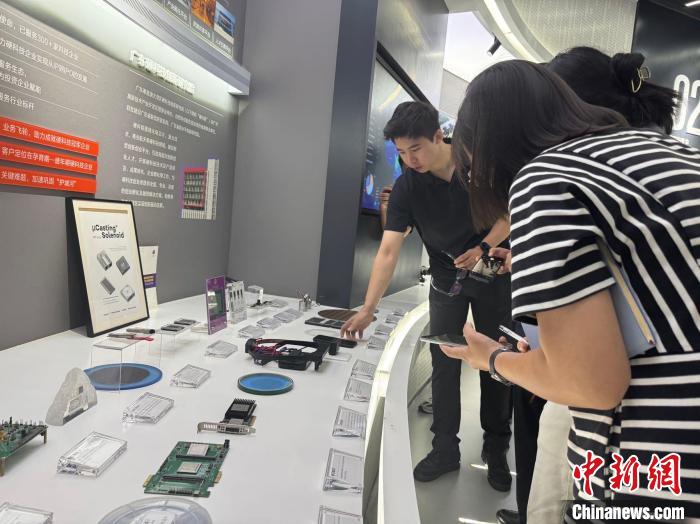
Core Insights - The article discusses the transformation of scientific achievements in Shaanxi from "bookshelves" to "shelves," highlighting the efforts of Xi'an Zhongke Optical Machine Investment Holding Co., Ltd. (West Science Holdings) in commercializing technology [1][7] - West Science Holdings has developed a comprehensive system for technology transfer, integrating technology finance, services, platforms, spaces, and think tanks, facilitating the transition from research to market-ready products [1][3] Company Overview - West Science Holdings has evolved from an asset management company to a specialized platform for technology transfer, serving various innovation entities across China, including regions like Beijing-Tianjin-Hebei and the Greater Bay Area [1][3] - The company has incubated over 550 enterprises with a combined market value exceeding 670 billion RMB, including three listed on the Sci-Tech Innovation Board and 18 unicorns [3][4] Investment Strategy - The company initiated China's first hard technology angel investment fund, "Zhongke Chuangxing," in 2013, focusing on early, small, and long-term investments in hard technology [4][6] - West Science Holdings emphasizes the importance of the "first investment" to catalyze technology transfer, addressing the challenges of long project cycles and high risks in early-stage technology commercialization [3][4] Support Mechanisms - The company has established a "technical manager" team to provide comprehensive support, from technology identification to supply chain management, helping reduce costs and enhance market readiness [4][6] - An example of successful intervention includes assisting Xi'an Qixin Optoelectronics Technology Co., Ltd. in overcoming operational challenges, leading to significant improvements in revenue and market position [6][7] Ecosystem Development - West Science Holdings has created a "rainforest ecosystem" for hard technology innovation, offering a full-service system that includes angel investment, professional team support, and global resource connections [6][7] - The company has achieved a notable investment return, ranking first nationally in comprehensive investment yield indicators in 2023, demonstrating the effectiveness of its long-term investment strategy [6]

0.4倍返投,这家科创母基金招GP
母基金研究中心· 2025-07-07 12:51
Core Viewpoint - The article discusses the establishment of the Hunan Jin Furong Investment Fund and the Changsha Government Guidance Fund to promote technology innovation and attract early-stage investments in Changsha Economic Development Zone [1] Group 1: Fund Structure and Objectives - The Changsha Economic Development Zone has initiated the Changsha Economic Development Science and Technology Innovation Industry Fund to recruit sub-funds, focusing on early-stage investments in technology [1] - The fund aims to stimulate social innovation and adjust financial funding guidance methods, concentrating on early-stage enterprise development through various incentive mechanisms [1] Group 2: Sub-Fund Categories - The sub-funds under the Science and Technology Innovation Fund are categorized into Seed Sub-Funds and Angel Sub-Funds [1] - Seed Sub-Funds will focus on technology transfer projects from universities, research institutes, and early-stage technology companies, with a minimum scale of 30 million yuan [1] - Angel Sub-Funds will target early-stage technology companies, requiring a minimum scale of 50 million yuan, primarily attracting social capital [1] Group 3: Investment and Return Requirements - During the fund's term, sub-funds must return at least 0.4 times the amount contributed by the Science and Technology Innovation Fund, adhering to specific investment stages and return implementation guidelines [2]

中国改革现场|中试平台“朋友圈”扩建指南
Yang Guang Wang· 2025-07-07 08:48
Core Viewpoint - The article discusses the importance of pilot testing platforms in helping small and medium-sized enterprises (SMEs) cross the "valley of death" in technology commercialization, emphasizing their role in transforming scientific research into marketable products [1][12]. Group 1: Pilot Testing Platforms - Pilot testing, or "中试", is a crucial transitional phase that helps new products move from experimental stages to industrial applications, often referred to as the "last mile" of technology commercialization [1][4]. - The Chinese government is actively promoting the establishment of pilot testing platforms, with the Ministry of Industry and Information Technology recently announcing the first batch of 241 key pilot testing platforms across various industries [4][11]. - The success rate of technology commercialization increases significantly with pilot testing, achieving up to 80% success compared to only 30% without it [12]. Group 2: Role of Pilot Testing Platforms - Pilot testing platforms provide essential support for SMEs, including small-batch production, market validation, and critical trial-and-error processes, which are vital for early-stage companies [11][12]. - The platforms help reduce early investment costs and accelerate research and development processes, thereby enhancing efficiency and lowering costs for technology-driven SMEs [11][12]. - The article highlights a specific case of a smart cooking robot developed by a company that utilized a pilot testing platform to refine its product before mass production, demonstrating the practical benefits of such platforms [5][6][11]. Group 3: Expansion Strategies for Pilot Testing Platforms - The article outlines three main strategies for pilot testing platforms to expand their networks: attracting talent, securing funding, and building collaborative platforms [13][18][21]. - Attracting skilled personnel is crucial, as the success of pilot testing platforms relies heavily on having qualified technical managers who understand both technology and business [15][18]. - Funding challenges are addressed through the establishment of pilot testing funds, which encourage investment from larger enterprises and support the growth of quality projects [19][21]. - The creation of a cloud platform for pilot testing services facilitates connections between testing platforms and companies in need of testing services, effectively breaking down information barriers [24][26].

所有难题,根源大多在老大身上
3 6 Ke· 2025-07-07 00:55
Group 1 - The essence of entrepreneurship is the transformation of scientific achievements into knowledge and capability transfer, highlighting the current era as a unique opportunity for entrepreneurs, especially scientists [2][3] - The fundamental purpose of entrepreneurship is to create successful enterprises rather than merely personal development, emphasizing the importance of prioritizing business success over individual growth [4][5] - A mission that transcends profit is crucial for driving a company's success, as it fosters genuine belief among founders and employees, leading to a more cohesive and motivated team [6][7][8] Group 2 - Entrepreneurship is defined as the gathering of high-energy individuals into a cohesive organization that moves in a unified direction, adhering to shared principles and executing effectively [14][15] - Key elements of successful entrepreneurship include a strong mission, vision, framework, and passion, which collectively contribute to the organization's ability to attract talent and achieve its goals [32][36][38] - Meeting genuine customer needs is the most critical factor determining entrepreneurial success, necessitating a clear understanding of the target audience and the value provided by the product or service [40][41][42] Group 3 - Partners in entrepreneurship are not essential but are extremely important, as they ensure continuity and alignment with the company's mission and vision even in the founder's absence [44][45] - Trust and shared mission are vital characteristics of ideal partners, as they facilitate effective collaboration and decision-making within the organization [46][55] - Financial resources serve as a lubricant for business operations, emphasizing the importance of securing funding during favorable conditions to ensure stability and growth [57][59] Group 4 - The leader of a company is its soul, responsible for strategic thinking and direction-setting, which is essential for navigating long-term challenges and opportunities [62][66] - Maintaining a calm mindset is crucial for long-term entrepreneurial success, as entrepreneurship is often a prolonged journey requiring resilience and adaptability [69][73] - Growth is the best form of management, especially in the early stages of a company, where focusing on business development and achieving victories is more important than intricate management practices [74][79] Group 5 - Entrepreneurship acts as an amplifier for personal qualities, highlighting both strengths and weaknesses, and serves as a process of self-improvement alongside business success [81][82]
豫泰“携手” 共建“空+铁+公”跨境物流通道
Sou Hu Cai Jing· 2025-07-04 21:22
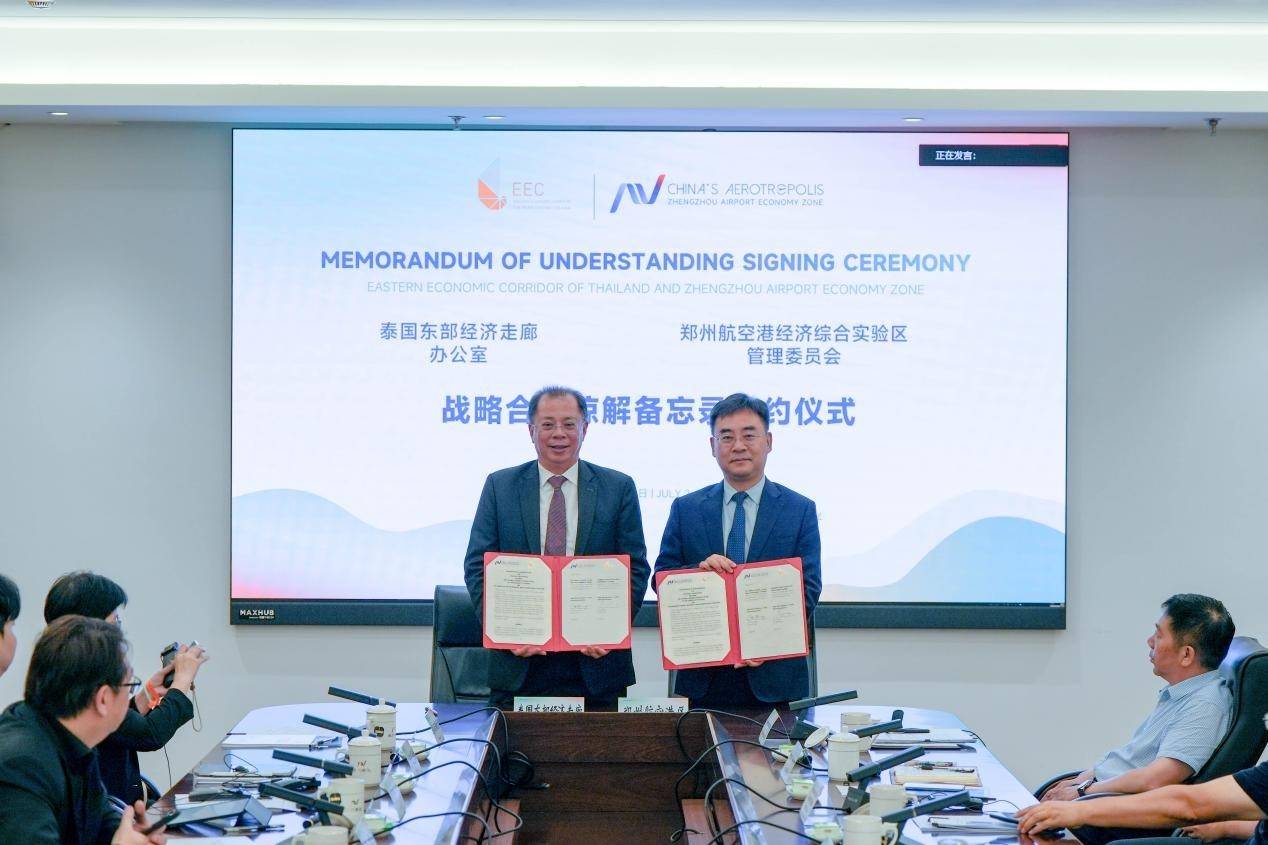
Core Points - The strategic cooperation memorandum was signed between Zhengzhou Airport Economic Zone and Thailand's Eastern Economic Corridor to enhance cross-border logistics and trade [1][3] - The collaboration aims to build an "air + rail + road" logistics channel, facilitating trade in electronic information, new energy vehicles, and biomedicine [1][4] Group 1: Logistics and Trade - The partnership will establish a cross-border logistics channel to improve trade facilitation, focusing on a cargo route between Zhengzhou Airport and U-Tapao Airport [3] - The initiative includes the creation of a logistics data-sharing platform and support for cross-border e-commerce enterprises to set up overseas warehouses [3][4] Group 2: Industry Collaboration - The cooperation will promote deep integration of advanced manufacturing industry chains, creating platforms for communication and investment in sectors like electronic information, battery technology, and new energy [4] - Both parties will enhance talent exchange and technology transfer to foster innovation and development in related industries [4] Group 3: Cultural and Economic Exchange - The partnership is expected to deepen cultural exchanges and economic collaboration, leveraging the similarities in development goals and models between the two regions [4] - The signing of the memorandum is seen as a significant step in expanding cooperation areas and enhancing collaboration depth, especially in light of the 50th anniversary of China-Thailand diplomatic relations [4]
惠州这家企业向香港联交所提交上市申请
Sou Hu Cai Jing· 2025-07-04 13:44
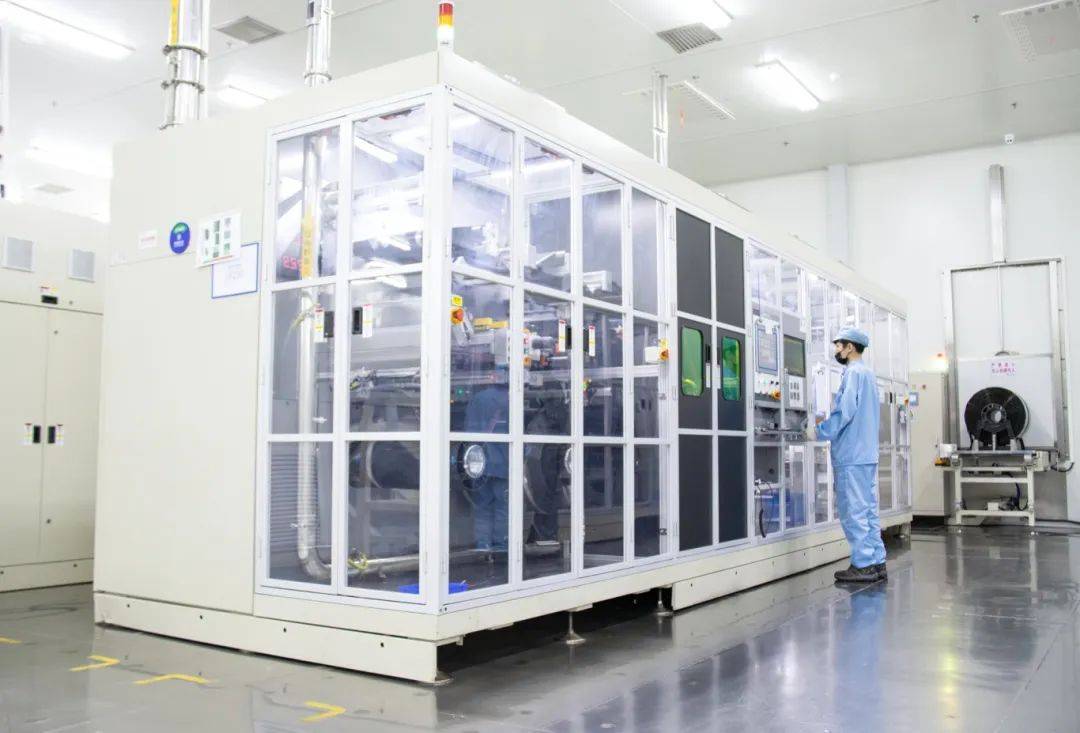
Group 1 - Company Huizhou EVE Energy Co., Ltd. has submitted an application for issuing overseas listed foreign shares (H shares) and listing on the Hong Kong Stock Exchange on June 30, 2025 [1] - EVE Energy is a leading enterprise in the lithium battery industry, established in 2001 and listed on the Shenzhen Stock Exchange in 2009, with a strong global competitive position [3] - The company has core technologies and comprehensive solutions for consumer batteries, power batteries, and energy storage batteries, widely applied in the Internet of Things and energy internet sectors [3] Group 2 - EVE Energy's financial data shows revenues of 36.304 billion yuan, 48.784 billion yuan, and 48.615 billion yuan for the years 2022 to 2024, respectively, with a revenue of 12.796 billion yuan in Q1 2025, representing a year-on-year growth of 37.34% [3] - The Guangdong Huizhou EVE Power Battery Pilot Platform has been selected as one of the first batch of key pilot platforms by the Ministry of Industry and Information Technology, focusing on the new energy intelligent connected vehicle industry [4] - The pilot platform plays a crucial role in the transformation of scientific research achievements into industrial applications, ensuring product quality and feasibility [5] Group 3 - The Ministry of Industry and Information Technology plans to cultivate a batch of provincial and ministerial-level manufacturing pilot platforms by 2027, promoting technological breakthroughs and industrial applications [5] - Huizhou is recognized as an important industrial base for new energy batteries in China, with a complete industrial chain and a cluster of leading enterprises like EVE Energy [5] - In 2024, EVE Energy received the first TÜV SÜD Mark certificate for the new EU battery regulation (EU) 2023/1542 in the power battery field [6]

武汉国资探路“四型资本”,打通从实验室到生产线“高速路”
2 1 Shi Ji Jing Ji Bao Dao· 2025-07-04 07:29
Core Insights - Wuhan is facing challenges in transforming its abundant research outcomes into industrial growth, despite having a high number of patent authorizations and a competitive growth rate in high-tech manufacturing [1][2] - The Wuhan Investment Holding Group is spearheading initiatives to address these challenges through the establishment of a 10 billion yuan innovation and entrepreneurship fund, aimed at facilitating the commercialization of research results [2][3] Group 1: Innovation and Entrepreneurship Initiatives - The "Wuchuang Star Innovation and Entrepreneurship Fund" has been launched with a total scale of 10 billion yuan, focusing on providing early-stage capital and support for university students and faculty [2][3] - The fund aims to address the pain points in the transformation of scientific research outcomes by providing "four types of capital": early, patient, bold, and friendly capital [3][5] - The fund's long duration of 10 years is designed to match the lengthy cycles of technology development and market entry, providing stability for innovators [4][5] Group 2: Structural Challenges in Technology Transfer - Wuhan's technology transfer is hindered by a lack of capable market players, with local SMEs being underdeveloped and lacking in resources [5][6] - The fund aims to alleviate the financial burdens on startups by not imposing strict buyback or performance clauses, allowing entrepreneurs to focus on long-term value creation [5][6] Group 3: Ecosystem Development - The Wuhan Investment Holding Group is building a comprehensive ecosystem that integrates capital, services, and support to facilitate the commercialization of scientific research [6][7] - The "Wuchuang Tong" platform has been established to streamline the process of transforming research outcomes into marketable products, featuring a digital hub for resource matching and incubation services [6][7] - The "Technical Manager Partner Program" has been introduced to enhance the capabilities of intermediaries who can bridge the gap between researchers and market needs [7][8] Group 4: Vision and Future Outlook - The initiatives represent a significant shift towards a more integrated and supportive innovation ecosystem in Wuhan, aiming to reshape the relationship between research and industry [7][8] - The overarching goal is to cultivate a robust environment for technology-driven SMEs and attract market-driven venture capital, creating a virtuous cycle of innovation and investment [8]
杭州科技成果转化有了“助跑团”和“服务包”
Hang Zhou Ri Bao· 2025-07-04 03:22
在杭州,像王鑫这样的科技创业者有很多。他们技术不错,但在转化阶段却面临着招聘难、看不懂 政策、需要各类应用场景训练大模型等问题。如今,他们都拥有了科技成果转化专属"助跑团"和"服务 包"。 日前,杭州市"双十平台""助跑计划"动员会举行。会上,市科技局有关负责人对该计划进行了详细 解读。 如何给空中作业的无人机装上了会思考的"大脑"?来自天目山实验室的王鑫团队解决了这个难题, 研发了目前全球唯一可落地的无人机具身智能产品。这项科技创新来自团队的硬实力,也得益于杭州科 创平台提供的专业服务。 "双十平台"是指之江实验室、良渚实验室等高能级省实验室和省技术创新中心。这些科创平台中, 蕴藏着改变产业格局的"金种子"。 科技成果转化绝非从实验室到市场的简单跳跃。如何让科技创新"种子"在杭州生根发芽,转化为新 质生产力?这正是杭州推行"助跑计划"的核心目标。 "助跑计划"将围绕科技成果的孵化、发掘、培育、对接、落地全过程。力争通过3年努力,实现"双 十平台"引进省级以上领军人才等高层次人才100人,催生高价值发明专利1000项,落地杭州转化科技成 果100项。 同时,市科技局会同市投资促进局牵头构建了"1+3+N"的" ...