
大模型

Search documents
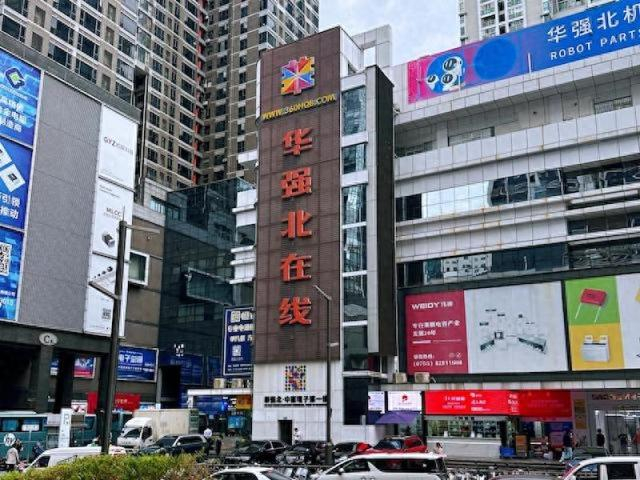
一盒近600万元,堪比一套房!记者实探深圳华强北存储市场,涨价预计将持续至2026年底
Hua Xia Shi Bao· 2026-01-21 11:39
Core Viewpoint - The surge in prices of memory and storage hardware, driven by the explosive growth of AI technology, has led to significant market disruptions, with some products' prices reaching levels comparable to real estate in major cities [2][4]. Group 1: Price Surge and Market Impact - The price of a single 256G DDR5 server memory stick has approached 60,000 yuan, with a box of 100 sticks costing nearly 6 million yuan, equivalent to the price of a house in certain cities [2][4]. - Prices for memory products, including DDR4 and DDR5, have reportedly increased by three to four times over the past two months, with SSD prices also nearly doubling [3][4]. - The consumer market is feeling the impact, with users reporting significant price increases for memory sticks, such as a 16G DDR5 stick rising from 100 yuan to over 600 yuan [3][4]. Group 2: AI Demand and Hardware Requirements - The current surge in server memory prices is attributed to a historic upward cycle in the global server memory market, with DDR5 prices increasing over 300% since September 2025 [4][6]. - AI's demand for hardware has shifted from training to inference, requiring higher memory capacities and bandwidth, which has transformed memory into a critical resource for AI systems [6][10]. - AI servers require 8 to 10 times more memory than standard servers, leading to a prioritization of high-end production for AI applications, while traditional consumer electronics face significant pressure [6][10]. Group 3: Industry Dynamics and Future Outlook - The structural changes in demand are redistributing value and risk across the supply chain, with profits concentrating upstream and risks accumulating downstream [7][10]. - The high prices are creating a divide in the industry, where large AI companies can absorb costs while smaller firms struggle, accelerating internal industry differentiation [7][10]. - The price surge driven by AI demand is expected to continue until the end of 2026, with key indicators for a turning point including inventory turnover rates and advancements in production capabilities [9][10]. Group 4: Strategic Responses and Industry Evolution - Companies are advised to focus on "technical throttling" and "organizational open-source" strategies to mitigate costs, such as optimizing inference efficiency and building shared computing resources [9][10]. - Chinese storage companies like Changxin Storage are positioned to capitalize on the global supply chain shift, aiming to increase production capacity significantly by 2026 [10]. - The memory market is evolving into a critical component of AI infrastructure, with the potential for significant technological and market shifts as companies strive for efficiency and innovation [10].


智联招聘新报告:哪些行业就业好、工资高?
Xin Lang Cai Jing· 2026-01-21 11:18
Core Insights - The job market is experiencing structural changes driven by the development of new productive forces, with significant increases in demand for high-end equipment and modern service industries in Q4 2025 [1][2][4][6][7] Group 1: Job Market Trends - In Q4 2025, the average monthly salary for algorithm engineers is approximately 25,236 yuan, with job demand surging by 110% [2][4] - The demand for drone engineers has increased by nearly 60% year-on-year, with an average monthly salary of about 16,600 yuan [7] - The robotics industry has seen a 60% increase in demand for engineers, with specific roles like robot debugging engineers growing by 64.1% [4][5] Group 2: Sector-Specific Insights - The new generation of information technology is expanding rapidly, with job postings in artificial intelligence increasing by 19% and smart hardware by 11.5% [2][3] - The modern service industry, particularly online life services (O2O), has shown a remarkable growth rate of 62.7% in job postings [1] - The new materials sector has experienced a 28.1% increase in recruitment demand, with high polymer materials engineers earning an average salary of around 16,600 yuan [6] Group 3: Regional Demand - Beijing, Shenzhen, and Hangzhou are the top three cities for talent demand in the new generation of information technology, collectively accounting for over 20% of job postings [3] - Suzhou has emerged as the city with the highest demand for high-end equipment talent, followed by Shenzhen, Shanghai, Tianjin, and Wuxi [5] Group 4: Salary and Skill Requirements - The average monthly salary for robot algorithm positions is 24,426 yuan, with a year-on-year demand increase of 30.7% [2] - Positions in the aerospace sector, such as navigation algorithm engineers, have an average salary of approximately 26,000 yuan, reflecting high demand for skilled professionals [6][7] - The average salary for mechanical engineers and mechanical structure engineers is around 12,784 yuan and 13,729 yuan, respectively, indicating a trend of increasing quality in talent demand [5]
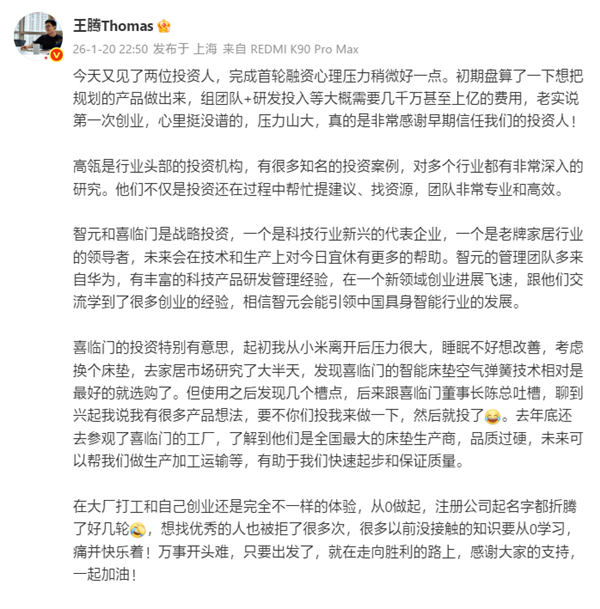
王腾称创业压力山大:更理解雷总的勇气了
Xin Lang Cai Jing· 2026-01-21 10:30
Core Viewpoint - Wang Teng, former general manager of Xiaomi's China marketing and REDMI brand, has successfully established a new company named "Today Yixiu" and completed a seed round financing of several tens of millions, with investors including Hillhouse Capital, Zhiyuan Robotics, and Xilinmen [1][11]. Group 1 - The initial financing has alleviated some psychological pressure for Wang Teng [1][11]. - Wang Teng expressed gratitude towards early investors for their trust in his first entrepreneurial venture, acknowledging the significant pressure he feels [2][12]. - The core team of "Today Yixiu" consists of members from Xiaomi, Huawei, and other tech companies, focusing on developing sleep health-related products [5][15]. Group 2 - Wang Teng indicated that product development is progressing slowly, with a planned product launch event expected in the second half of the year [6][16]. - Initial estimates for product development, team formation, and research investment range from several tens of millions to over one hundred million [6][16]. - The new products are expected to integrate with the Xiaomi ecosystem, potentially including smart pillows, smart headphones, smart wristbands, and multifunctional sensors, which can interact with various Xiaomi smart home devices to enhance sleep quality [7][16].


扎实做好金融“五篇大文章” 招联再次入选人民网建设金融强国创新实践案例
Hua Xia Shi Bao· 2026-01-21 08:55
Core Viewpoint - The recent 2025 People's Finance Forum in Beijing recognized the case submitted by Zhuhai Consumer Finance Co., Ltd. (referred to as "Zhuhai") for its innovative practices in building an AI ecosystem and leading the digital transformation of the industry, marking its second consecutive year of receiving this honor as the only consumer finance institution selected [1][3]. Group 1: Recognition and Achievements - Zhuhai was awarded the "Digital Finance" case in the "2025 Construction of a Financial Power" initiative, following its previous recognition in 2024 for its contributions to "Inclusive Finance" [1][3]. - The continuous recognition of Zhuhai highlights its sustained leadership in comprehensive strength and its significant role in promoting financial services for the real economy, providing important references for the industry's high-quality development [3]. Group 2: Technological Innovations - Zhuhai has adopted cutting-edge technologies such as cloud computing, big data, and machine intelligence to enhance its core capabilities, including IT-driven operations, internet risk control, and intelligent services [4]. - The company launched the industry’s first open-source large model "Zhuhai Zhilv," which has undergone two iterations, resulting in the release of the second-generation model with enhanced capabilities for complex business scenarios [4]. Group 3: Consumer Protection Initiatives - In the consumer protection domain, Zhuhai developed the "Zhuhai Zhilv Consumer Protection Intelligent Agent," establishing a three-tiered prevention system that effectively addresses customer complaints and enhances service quality [5]. - The consumer protection intelligent agent can monitor over 60 scenarios, achieving a 90% first-time resolution rate for issues and identifying over 6,000 fraudulent numbers [5]. Group 4: Inclusive Financial Services - Zhuhai has created a digital "self-service" system characterized by "confidence" and "self-healing" services, significantly improving accessibility and convenience for customers [6]. - The "confidence" service allows 40% of customers to complete self-service authentication and approval outside traditional banking hours, benefiting over 15 million customers through reduced costs and interest [6]. - The "self-healing" service has evolved the traditional post-loan interaction model, serving over 200,000 customers and providing relief to more than 420,000 individuals [6]. Group 5: Future Directions - Zhuhai aims to leverage technological advancements to build a more intelligent, efficient, and secure financial service system, enhancing the precision and adaptability of financial services for the real economy [6]. - The company is committed to playing a significant role in the construction of a financial power, focusing on technological innovation and inclusive service to contribute to the broader financial landscape [6].

萤石网络2025年归母净利同比增长12.43% 深化智能消费类IoT产品研发
Zheng Quan Ri Bao Wang· 2026-01-21 08:48
Group 1 - The core viewpoint of the news is that Hangzhou Yingshi Network Co., Ltd. reported steady growth in its 2025 performance, with total revenue reaching 5.901 billion yuan, a year-on-year increase of 8.44%, and net profit attributable to shareholders increasing by 12.43% to 567 million yuan [1][2][3] - As of the end of 2025, the company's total assets amounted to 907 million yuan, reflecting an 8.55% growth from the beginning of the year, while equity attributable to shareholders increased by 5.40% to 579 million yuan [1] - The company has focused on core advantages, enhancing technology research and development, and advancing the development of smart consumer IoT products and cloud platform services, leading to a steady increase in overall operating performance [1][3] Group 2 - In 2025, the company upgraded its self-developed blue ocean large model in two aspects: foundational algorithm capabilities and specialized vertical scene models, leveraging its IoT technology advantages [2] - The integration of AI, large models, and edge computing is driving the evolution of smart hardware from "single devices" to "scene-based solutions," providing stable growth opportunities in segments like smart video and smart home [2] - The company is expanding its product matrix centered on video vision and AI interaction while also introducing various application scenarios through ecosystem openness, enhancing its core business's scene coverage and monetization potential [3]

国泰海通:智能眼镜产业链有望步入快速成长期 推荐明月镜片(301101.SZ)等
智通财经网· 2026-01-21 07:21
Core Viewpoint - The AI glasses industry is expected to enter a rapid growth phase, driven by technological breakthroughs and new product launches, benefiting companies within the supply chain [1][2]. Group 1: Industry Overview - The AI glasses supply chain is larger and more complex than traditional eyewear, incorporating various electronic components and a wider range of participating manufacturers [2]. - Key players in the AI glasses market include smartphone manufacturers, internet companies, XR firms, traditional eyewear brands, and 3C companies, with XR startups collaborating with traditional eyewear manufacturers [2]. Group 2: Sales Growth - Domestic AI glasses sales are projected to reach 210,000 units by Q3 2025, reflecting a quarter-on-quarter growth of approximately 200%, primarily driven by brands like Xiaomi and Ray-Ban Meta [3]. - Notable product launches include Xiaomi AI glasses, which are expected to surpass total sales of 300,000 units by the end of 2025, and Alibaba's Quark AI glasses, which have seen strong pre-sale demand [3]. - Ray-Ban Meta's global sales are anticipated to reach 1.12 million units by Q3 2025, with a quarter-on-quarter growth of nearly 50% [3].


招联:连续两年入选人民网建设金融强国创新实践案例 树立数字普惠金融新标杆
Zheng Quan Shi Bao Wang· 2026-01-21 07:12
Core Viewpoint - The 2025 People's Finance Forum recognized the "AI Intelligent Ecosystem Construction Leading Industry Digital Transformation" case by Zhuhai Consumer Finance Co., Ltd. as a significant digital finance innovation practice, marking its second consecutive year of recognition as the only consumer finance institution to achieve this honor [1][3]. Group 1: Recognition and Achievements - Zhuhai Consumer Finance has been awarded for its innovative practices in digital finance, highlighting its continuous leadership in the industry [3]. - The company was the only consumer finance institution to be recognized in both 2024 and 2025, showcasing its sustained excellence and contribution to the financial sector [1][3]. Group 2: Technological Innovation - The company has integrated advanced technologies such as cloud computing, big data, and machine intelligence into its operations, enhancing service quality and efficiency [4]. - In 2023, Zhuhai launched the first open-source large model "Zhuhai Smart Deer," which has undergone two iterations, improving its ability to handle complex business scenarios [4]. Group 3: Consumer Protection Initiatives - The "Zhuhai Smart Deer Consumer Protection Intelligent Body" was developed to create a three-tiered consumer protection defense line, significantly improving complaint resolution rates [5]. - The intelligent body can monitor over 60 scenarios, achieving a 90% first-time resolution rate for issues, and has identified over 6,000 fraudulent numbers [5]. Group 4: Inclusive Finance Development - The company has established a digital self-service system characterized by "Confidence" and "Self-healing" services, enhancing accessibility and convenience for customers [6]. - The "Confidence" service allows 40% of customers to complete self-service authentication and approval outside traditional hours, benefiting over 15 million customers [6]. - The "Self-healing" model has evolved customer interactions, serving over 200,000 clients and providing relief to more than 420,000 individuals [6]. Group 5: Future Outlook - Zhuhai aims to leverage technological advancements to build a more intelligent, efficient, and secure financial service system, enhancing the precision and adaptability of financial services to the real economy [6]. - The company is committed to playing a significant role in the construction of a financial powerhouse, focusing on innovation driven by technology and inclusive service for the public [6].
可灵AI MAU突破1200万 日均收入较12月提升约30%
Xin Lang Cai Jing· 2026-01-21 06:41
Core Insights - Kuaishou's video generation model, Keling AI, has surpassed 12 million monthly active users (MAU) as of January 21 [1] - The growth in user base is attributed to intensive product iterations since December and the introduction of features like "motion control" [1] - The number of paying users for the Keling AI app has increased by approximately 350% compared to December 2022, with daily revenue rising by about 30% [1] - According to Sensor Tower, Keling AI ranks first in download volume in the art/design category on Google Play and Apple Store across over 40 countries and regions [1]

研报掘金丨东方证券:维持海康威视“买入”评级,目标价47.52元
Ge Long Hui· 2026-01-21 05:21
Core Viewpoint - Hikvision's profit growth is gradually improving, with the application of large models expanding [1] Financial Performance - In 2025, the company's operating revenue is projected to be 92.52 billion yuan, remaining stable year-on-year [1] - The net profit attributable to shareholders is expected to reach 14.19 billion yuan, representing an 18% year-on-year increase [1] - By Q4 2025, the company is estimated to achieve a net profit of 4.87 billion yuan, reflecting a 26% year-on-year growth [1] Cash Flow and Management - The company has strengthened its accounts receivable management, leading to a significant increase in operating cash flow [1] - This improvement provides a solid foundation for the company's stable operation and sustainable development [1] AI and Industry Applications - The company has developed its own large model, significantly expanding its AI application capabilities [1] - With years of vertical industry focus, the company has built leading industry application capabilities and an efficient AI engineering implementation system, allowing for quick responses to industry demands [1] Market Outlook - Government initiatives since the end of 2024, such as the construction of resilient cities and the "AI+" action plan, are expected to boost demand for Hikvision's video surveillance products [1] - Based on comparable companies' 2026 PE valuation level of 27 times, the target price is set at 47.52 yuan, maintaining a "buy" rating [1]


海康威视接待91家机构调研,包括睿远基金、东财证券、光大证券、国盛证券等
Jin Rong Jie· 2026-01-21 04:30
Core Viewpoint - Hikvision reported a slight increase in revenue and a significant rise in net profit for 2025, indicating strong financial performance despite a flat overall revenue growth [1][2]. Financial Performance - In 2025, Hikvision achieved total revenue of 92.518 billion yuan, a year-on-year growth of 0.02% [1]. - The net profit attributable to shareholders was 14.188 billion yuan, reflecting a year-on-year increase of 18.46% [1]. - The operating cash flow significantly outperformed net profit, and the net profit growth rate exceeded revenue growth [1]. - Accounts receivable and notes have been declining quarterly, with net profit growth rates over the past four quarters being 6.41%, 14.94%, 20.31%, and 25.83%, showing a trend of acceleration [1]. Market Position - Hikvision's stock price was reported at 32.78 yuan, with a 5.27% increase, and a total market capitalization of 300.424 billion yuan [1]. - The company has a rolling price-to-earnings ratio of 21.64, ranking second in the computer equipment industry, which has an average P/E ratio of 50.96 [1]. Business Strategy - The company is focusing on its core business in smart IoT and advancing the application of large models across its product lines [2]. - Organizational changes have been implemented to enhance product planning and marketing capabilities, leading to increased efficiency through digitalization and AI [2]. - The "Smart Quality" management model won the China Quality Award in 2025, and the smart factory was included in the first batch of "Leading Smart Factories" [2]. Segment Performance - Overall revenue remained flat, but innovative and international businesses showed growth, while domestic operations experienced a decline [2]. - Profit growth was primarily driven by an increase in gross margins [2]. - Hikvision's robotics, automotive electronics, and other segments achieved rapid growth, with developing countries accounting for 70% of overseas revenue [2]. Shareholder Information - As of September 30, 2025, Hikvision had 387,222 shareholders, a decrease of 26,711 from the previous count, with an average holding value of 775,800 yuan [2].
