
战略性新兴产业

Search documents
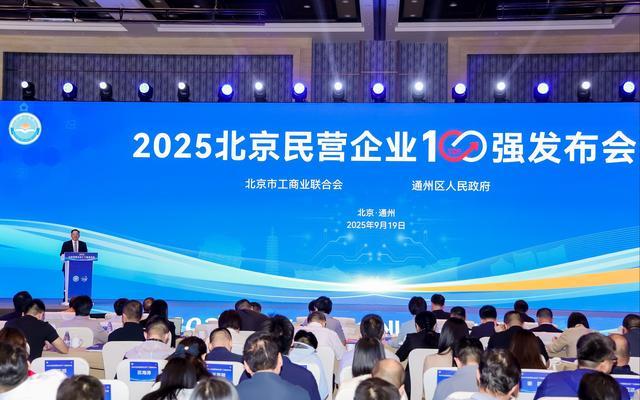
营收总额超5万亿元,2025北京民营企业百强榜单发布
Xin Jing Bao· 2025-09-20 06:01
Core Insights - The 2025 Beijing Private Enterprises Top 100 list was released, highlighting the growth and innovation within the private sector in Beijing [1][3] Group 1: Overall Performance of Private Enterprises - The threshold for entering the top 100 private enterprises exceeded 5 billion yuan, a year-on-year increase of 7.5%, with a cumulative growth of 38.6% over five years [3] - Total revenue of the top 100 enterprises reached 5.26 trillion yuan, a year-on-year increase of 12.27%, with a cumulative growth of 38.8% over five years [3] - Total assets amounted to 15.02 trillion yuan, reflecting a year-on-year growth of 6.6% and a cumulative growth of 183.4% over five years, all reaching historical highs [3] - 68% of the enterprises are concentrated in the digital economy and high-end manufacturing sectors, with 7 companies investing over 10 billion yuan in R&D [3] Group 2: Technology Innovation Sector - The total revenue of the top 100 technology innovation enterprises reached 2.46 trillion yuan, with a year-on-year growth of 33.79% [4] - Total profit amounted to 1360.44 billion yuan, reflecting a year-on-year increase of 20.54% [4] - R&D expenses totaled 1742.69 billion yuan, with an average R&D intensity of 9.47%, indicating a strong focus on self-developed key technologies [4] Group 3: Cultural Industry Sector - Total assets of the top 100 cultural enterprises reached 6804.48 billion yuan, a year-on-year increase of 77.17% [4] - Total revenue was 4200.80 billion yuan, with a year-on-year growth of 37.82%, driven by high-tech service industries [4] - Total profit reached 435.90 billion yuan, reflecting a year-on-year increase of 77.21% [4] Group 4: Specialized and Innovative Enterprises - Total revenue of the top 100 specialized and innovative enterprises reached 755.56 billion yuan, with a net profit of 97.30 billion yuan [4] - 97 enterprises have core technologies developed independently, and 95 are involved in strategic emerging industries [4] - A total of 3579 domestic patents were applied for, with over 72% being invention patents [4] Group 5: Social Responsibility Initiatives - A total of 1475 enterprises participated in the social responsibility survey, with 244 submitting cases for evaluation [5] - 35 enterprises were recognized for their outstanding social responsibility initiatives, contributing to rural revitalization with a total investment of 12.386 billion yuan [5]

以高质量发展降低资源环境代价
Jing Ji Ri Bao· 2025-09-20 01:42
Core Viewpoint - High-quality development is the primary task for building a modern socialist country, emphasizing the need for coordinated advancement of high-quality development and high-level protection to enhance green development momentum and reduce resource and environmental costs [1][2]. Group 1: Economic and Environmental Context - China's rapid economic growth since the reform and opening-up has come at a significant cost to natural resources and the environment, leading to increasing constraints on sustainable development due to resource shortages and environmental degradation [1]. - The country faces high dependence on foreign energy resources, which exposes it to international market price fluctuations and impacts energy supply security [1]. - Severe environmental pollution issues, including air, water, and soil pollution, threaten public health and hinder sustainable economic development [1]. Group 2: Green Transformation and Development - The current phase of economic and social development in China is focused on accelerating green and low-carbon high-quality development, with ecological civilization construction facing unprecedented challenges [2]. - A comprehensive green transformation of the economy and society is necessary, emphasizing the importance of a green development philosophy and mechanisms across all sectors, including planning, investment, and consumption [2]. - The goal is to establish a green, low-carbon, circular economic system that limits economic activities and human behaviors within the capacity of natural resources and ecological environments [2]. Group 3: Industrial Upgrading and New Production Forces - There is a need for comprehensive industrial transformation and upgrading, which includes phasing out outdated production capacity and promoting the green, intelligent, and digital transformation of traditional industries [2]. - Strategic emerging industries, such as energy conservation, high-end equipment manufacturing, and new-generation information technology, are identified as future growth engines due to their low resource consumption and high added value [2]. - The development of new productive forces centered on technological innovation is crucial for leading production method changes and accelerating the upgrade of traditional industries while fostering new industries [3].
青农商行(002958) - 002958青农商行投资者关系管理信息20250918
2025-09-18 10:48
Group 1: Credit Strategy and Focus - The bank will continue to focus on supporting the real economy and rural revitalization, increasing credit investment in agriculture and small micro enterprises [2] - Emphasis on "supporting agriculture and small businesses" as the main strategic positioning, with ongoing adjustments to credit structure to align with financial industry trends [2] Group 2: Services for Small and Micro Enterprises - The bank aims to enhance the quality and efficiency of financial services for small and micro enterprises through systematic measures [2] - Specific initiatives include ensuring a dedicated credit plan for small and micro enterprises, promoting the "Thousand Villages and Ten Thousand Households" initiative, and improving service reach [2][3] Group 3: Risk Management and Innovation - Implementation of a due diligence exemption system and risk tolerance for small micro loans to boost confidence among loan officers [3] - Focus on product innovation and scenario marketing to enhance the accessibility of financial products for small and micro enterprises [3] Group 4: Digital Transformation - The bank is committed to improving digital lending capabilities by developing online credit products and leveraging digital platforms for inclusive finance [3]

【新华解读】国资央企亮“十四五”成绩单 接下来将会怎么干?
Xin Hua Cai Jing· 2025-09-18 07:18
Core Insights - The "14th Five-Year Plan" period has seen significant improvements in the quality and scale of state-owned enterprises (SOEs), with a focus on high-quality development and strategic restructuring [1][2][3] Group 1: Financial Performance - Central enterprises' total assets increased from less than 70 trillion yuan to over 90 trillion yuan, with total profits rising from 1.9 trillion yuan to 2.6 trillion yuan, reflecting annual growth rates of 7.3% and 8.3% respectively [2] - The operating income profit margin improved from 6.2% to 6.7%, and labor productivity per employee increased from 594,000 yuan to 817,000 yuan [2] - The market capitalization of centrally controlled listed companies exceeded 22 trillion yuan, marking a nearly 50% increase since the end of the "13th Five-Year Plan" [3] Group 2: Strategic Focus - The development of strategic emerging industries is deemed essential for optimizing the layout and achieving high-quality development, with cumulative investments in these sectors reaching 8.6 trillion yuan during the "14th Five-Year Plan" [4][5] - Central enterprises are increasingly focusing on innovation-driven growth rather than mere scale expansion, emphasizing quality improvement and effective returns on investment [3][5] Group 3: Future Directions - Moving forward, SOEs will prioritize enhancing core functions and competitiveness through strategic professional restructuring and integration [6][7] - Key areas for future restructuring include strategic emerging industries, critical links in the industrial chain, and traditional industry upgrades [7][8] - The adjustment and optimization of state capital layouts will be a dynamic process, requiring timely adaptations based on asset quality and industry trends [8]
中央企业资产总额已超90万亿元
Bei Jing Qing Nian Bao· 2025-09-18 06:30
Core Viewpoint - The central enterprises in China have significantly improved their quality of development during the "14th Five-Year Plan" period, with substantial growth in assets, revenue, and innovation capabilities, contributing positively to the national economy and social stability [1][2][3]. Financial Performance - The total assets of central enterprises increased from 68.8 trillion yuan at the end of the "13th Five-Year Plan" to 91 trillion yuan by the end of 2024, with an average annual growth rate of 7.3% [2]. - The operating income profit margin improved from 6.2% to 6.7%, and the annual labor productivity per employee rose from 594,000 yuan to 817,000 yuan [2]. - Central enterprises are expected to see an increase in value added and total profits by over 40% and 50%, respectively, compared to the "13th Five-Year Plan" period [2]. Investment in Strategic Industries - Central enterprises have invested a total of 8.6 trillion yuan in strategic emerging industries during the "14th Five-Year Plan," significantly higher than during the "13th Five-Year Plan" [2]. - By 2024, the revenue from strategic emerging industries is projected to exceed 11 trillion yuan, with an 8 percentage point increase in revenue contribution over the past two years [2]. Contribution to National Economy - Central enterprises have paid over 10 trillion yuan in taxes and fees, transferred 1.2 trillion yuan of state-owned equity to social security funds, and are responsible for approximately 80% of crude oil, 70% of natural gas, and 60% of electricity supply [3]. - They have actively supported major national strategies and infrastructure projects, contributing to the development of the Belt and Road Initiative with over 6,000 overseas investment cooperation projects [3]. Innovation and R&D - R&D expenditure of central enterprises has exceeded 1 trillion yuan for three consecutive years, reaching 1.1 trillion yuan last year, with an investment intensity increase from 2.6% to 2.8% [4]. - The proportion of basic research investment is 8.8%, with nearly 100 billion yuan allocated to basic research last year [4]. - Central enterprises have established 474 national-level R&D platforms and 91 key laboratories, accounting for one-sixth of the national total [4]. Organizational Restructuring - During the "14th Five-Year Plan," central enterprises have restructured and optimized their layout, forming 9 new central enterprises and reorganizing 10 others [7]. - The restructuring aims to enhance supply security in strategic mineral resources and improve public service efficiency [7]. Governance and Reform - Central enterprises have made progress in modern corporate governance, with about 97% of eligible subsidiaries establishing boards of directors that delegate authority to management [8]. - Market-oriented reforms in labor, personnel, and distribution systems have been implemented, with over 60% of management compensation linked to performance [8].
“十四五”以来央企战略性新兴产业投资年均增速超20%
Zhong Guo Xin Wen Wang· 2025-09-18 01:59
Group 1 - The central enterprises in China have significantly increased their investment in strategic emerging industries, with an annual growth rate exceeding 20% since the 14th Five-Year Plan began [1][2] - In 2024, the investment in strategic emerging industries by central enterprises is expected to surpass 40% of their total investment, with revenue contribution approaching 30% [1] - Cumulative investment in strategic emerging industries has reached 8.6 trillion yuan, marking a substantial increase compared to the 13th Five-Year Plan, with notable advancements in fields such as integrated circuits, biotechnology, and new energy vehicles [1] Group 2 - In 2024, the revenue from strategic emerging industries for central enterprises is projected to exceed 11 trillion yuan, with an 8 percentage point increase in revenue contribution over the past two years [2] - Central enterprises are actively engaging in supply chain integration and have published nearly 10,000 supply-demand lists to enhance industry cooperation [2] - The establishment of venture capital funds by many central enterprises has led to a total scale nearing 100 billion yuan, facilitating the application of AI technologies in traditional industries [2]
央企深改凸显科技“硬实力”
Bei Jing Shang Bao· 2025-09-18 01:46
Core Insights - The central enterprises have significantly increased their total assets from less than 70 trillion yuan to over 90 trillion yuan during the "14th Five-Year Plan" period, with total profits rising from 1.9 trillion yuan to 2.6 trillion yuan, reflecting annual growth rates of 7.3% and 8.3% respectively [1][2] - The focus on technological innovation has led to R&D expenditures exceeding 1 trillion yuan for three consecutive years, with an increase in R&D intensity from 2.6% to 2.8% [3][5] - The central enterprises have made substantial investments in strategic emerging industries, totaling 8.6 trillion yuan, with significant advancements in fields such as integrated circuits, biotechnology, and new energy vehicles [7][8] Group 1: Financial Performance - Total assets of central enterprises have surpassed 90 trillion yuan, with profits increasing to 2.6 trillion yuan, indicating a strong financial performance [1] - The operating income profit margin has improved from 6.2% to 6.7%, showcasing enhanced efficiency [1] - The market capitalization of centrally controlled listed companies has exceeded 22 trillion yuan, marking a nearly 50% increase since the end of the "13th Five-Year Plan" [2] Group 2: R&D and Innovation - Central enterprises have established 474 national-level R&D platforms and 91 key laboratories, contributing to significant technological advancements [3][4] - The focus on overcoming key core technologies has led to breakthroughs in various fields, including aerospace and manufacturing [5] - The integration of technology and industry has been prioritized, facilitating a smooth transition from research to commercialization [4][8] Group 3: Strategic Development - The central enterprises are focusing on nine strategic emerging industries and six future industries, with a systematic investment approach [7] - The revenue from strategic emerging industries has exceeded 11 trillion yuan, with a notable increase in contribution to overall income [7] - The "AI+" initiative has been launched, with over 800 application scenarios identified, promoting digital transformation and sustainability [7][8]
权威发布·高质量完成“十四五”规划丨国资央企加快塑造新动能新优势
Ren Min Ri Bao· 2025-09-18 01:40
Core Insights - The "14th Five-Year Plan" period has seen significant growth in state-owned enterprises (SOEs), with total assets exceeding 90 trillion yuan and total profits reaching 2.6 trillion yuan, reflecting enhanced strategic support and value elevation [1][3]. Group 1: Stability - The total assets of SOEs increased from 68.8 trillion yuan to 91 trillion yuan, with state-owned capital equity rising from 14.2 trillion yuan to 18.3 trillion yuan, achieving annual growth rates of 7.3% and 6.5% respectively [3]. - Total profits of SOEs rose from 1.9 trillion yuan to 2.6 trillion yuan, with the operating profit margin increasing from 6.2% to 6.7% [3]. - Labor productivity improved significantly, with output per employee increasing from 594,000 yuan to 817,000 yuan [3]. Group 2: Progress - Investment in strategic emerging industries by SOEs has seen an annual growth rate exceeding 20%, with projections indicating that by 2024, such investments will account for over 40% of total investments [5]. - The transformation of traditional industries is accelerating, with over 800 application scenarios developed under the "Artificial Intelligence+" initiative and the establishment of 1,854 smart factories [5]. - Energy consumption per unit of output and carbon emissions per unit of output decreased by 12.8% and 13.9% respectively [5]. Group 3: Quality - The brand value of SOEs has experienced a compound annual growth rate of over 15% over the past three years [6]. - SOEs have contributed approximately 80% of crude oil, 70% of natural gas, and 60% of electricity supply in the country [7]. - SOEs have paid over 10 trillion yuan in taxes and transferred 1.2 trillion yuan of state-owned equity to social security funds during the "14th Five-Year Plan" [7]. Group 4: Innovation - R&D investment by SOEs has consistently exceeded 1 trillion yuan annually for three consecutive years, with an average annual growth rate of 6.5% [8]. - SOEs employ 1.44 million R&D personnel, accounting for one-fifth of the national total, and have established 474 national-level R&D platforms [8][9]. - SOEs have led or participated in 22 major national technology projects, contributing to 60% of key product R&D in the manufacturing sector [8][9]. Group 5: Reform - The restructuring of 10 enterprises into 6 groups and the establishment of 9 new SOEs have optimized the layout of state-owned enterprises [10]. - The management and operational mechanisms of SOEs have been improved, with over 60% of management personnel's variable pay linked to performance [10]. - The State-owned Assets Supervision and Administration Commission (SASAC) has implemented personalized assessments for SOEs, with over 76% of assessment indicators being customized [10].
国资央企加快塑造新动能新优势
Ren Min Ri Bao· 2025-09-18 00:12
Core Viewpoint - The central enterprises in China have significantly improved their quality of development during the "14th Five-Year Plan" period, with substantial increases in total assets, profits, and operational efficiency, while also focusing on strategic emerging industries and innovation [1][3][5]. Group 1: Financial Performance - Total assets of central enterprises increased from 68.8 trillion yuan to 91 trillion yuan, with an average annual growth rate of 7.3% [3]. - Total profits rose from 1.9 trillion yuan to 2.6 trillion yuan, with the operating profit margin increasing from 6.2% to 6.7% [3]. - Labor productivity improved from 594,000 yuan per employee to 817,000 yuan per employee [3]. Group 2: Investment in Emerging Industries - Investment in strategic emerging industries by central enterprises has an average annual growth rate exceeding 20% [5]. - By 2024, investment in strategic emerging industries is expected to account for over 40% of total investment, with revenue from these sectors approaching 30% [5]. Group 3: Innovation and R&D - Central enterprises have maintained R&D expenditures exceeding 1 trillion yuan annually for three consecutive years, with an average annual growth rate of 6.5% [9]. - The number of R&D personnel in central enterprises reached 1.44 million, accounting for one-fifth of the national total [9]. - Central enterprises have established 474 national-level R&D platforms and led 22 major national technology projects during the "14th Five-Year Plan" [10]. Group 4: Corporate Reforms and Governance - The restructuring of 10 enterprises into 6 groups and the establishment of 9 new central enterprises have optimized the layout and structure of state-owned enterprises [11]. - The implementation of modern corporate governance and market-oriented management mechanisms has been enhanced, with over 60% of management compensation linked to performance [11]. Group 5: Contribution to National Economy - Central enterprises have contributed over 10 trillion yuan in taxes and transferred 1.2 trillion yuan of state-owned equity to social security funds during the "14th Five-Year Plan" [8]. - They are responsible for approximately 80% of crude oil, 70% of natural gas, and 60% of electricity supply in China [7].
“十四五”以来中央企业累计上交税费超10万亿元
Ren Min Ri Bao· 2025-09-18 00:12
新动能新优势加快塑造,"十四五"以来,中央企业在战略性新兴产业领域累计投资达8.6万亿元,较"十 三五"时期有了大幅提升。 (责任编辑:朱赫) 记者从国新办新闻发布会获悉:"十四五"以来,中央企业累计上交税费超10万亿元,向社保基金划转国 有股权1.2万亿元,高标准履行社会责任。 "十四五"以来,中央企业科技创新取得了积极进展和重要成效,研发经费年均增长6.5%,已连续3年每 年投入超1万亿元。2024年,中央企业研发经费达1.1万亿元,其中基础研究投入占比达8.8%。 ...