
智能家居

Search documents
200块的音箱,1000亿的生意
远川研究所· 2025-06-04 12:42
Core Viewpoint - The article discusses the evolution and current state of the smart speaker market in China, highlighting how Xiaomi has leveraged its smart speaker to drive significant growth in its IoT business, despite the decline in smart speaker sales [4][6][14]. Group 1: Smart Speaker Market Dynamics - The smart speaker market experienced explosive growth in 2017, with major players like Alibaba, Xiaomi, and Baidu entering the space, but has since seen a sharp decline in sales, with market size halved by 2024 compared to its peak [4][6]. - Xiaomi, despite being the market leader, faces challenges as the overall quality of low-priced smart speakers fails to meet consumer expectations, leading to a stagnation in the smart speaker segment [6][12]. Group 2: IoT Business Growth - Xiaomi's IoT business generated 104.1 billion yuan in revenue in 2024, nearly half of its mobile business revenue of 191.8 billion yuan, and three times that of its automotive business [6][12]. - The integration of smart speakers as a gateway for IoT devices has significantly increased the number of connected devices on Xiaomi's platform, from 150 million in 2018 to 900 million in 2024, driving substantial revenue growth [12][14]. Group 3: Channel Strategy and Retail Expansion - Xiaomi's strategy to enhance its offline presence has been crucial, with the number of retail stores growing from 10,000 in 2021 to 16,000 by March 2023, allowing for better product discovery and sales of IoT products [20][24]. - The shift in retail strategy from high-density coverage to attracting consumers with differentiated product offerings has been pivotal in Xiaomi's success in the IoT space [24][28]. Group 4: Product Development and Consumer Engagement - Xiaomi has adapted its product strategy to include non-essential consumer goods, which are better suited for offline discovery, thus expanding its IoT product line beyond traditional necessities [22][28]. - The company has successfully reduced the cost of IoT modules, making it easier for various home appliances to integrate into the smart home ecosystem, further driving the adoption of IoT products [12][10].



雷军,挺住!
Guan Cha Zhe Wang· 2025-06-04 12:18
Core Viewpoint - Xiaomi has made significant strides in self-developed chip technology, showcasing its "玄戒 O1" chip, positioning itself as the fourth global company capable of designing 3nm SoC chips, following Apple, Qualcomm, and MediaTek [1][28]. Group 1: Xiaomi's Development Journey - Xiaomi's journey in chip development has spanned 11 years since the establishment of Pinecone Electronics, contrasting with Huawei's 22-year timeline [1][28]. - The company has leveraged its manufacturing advantages and internet thinking to disrupt high-value markets dominated by Apple and Samsung, creating a "catalyst effect" in the Chinese tech ecosystem [1][12]. - Xiaomi's approach integrates supply chain resources and fosters close partnerships with suppliers, ensuring product quality and stability [12][13]. Group 2: Market Position and Strategy - Xiaomi's strategy emphasizes high cost-performance, targeting young consumers and ordinary families, while Huawei focuses on the mid-to-high-end market with a premium pricing strategy [20][25]. - The competition between Xiaomi and Huawei is not merely adversarial; both companies contribute to a robust consumer electronics ecosystem that drives innovation and product iteration [25][18]. - Xiaomi's expansion into smart home products and other categories reflects its commitment to building a comprehensive smart ecosystem, with over 1 billion connected IoT devices [19][20]. Group 3: Industry Impact and Future Outlook - The collaboration between Xiaomi and Huawei in supporting suppliers like OFILM Group demonstrates their influence and bargaining power within the supply chain [16][18]. - The evolution of the Chinese consumer electronics industry showcases a shift from OEM and imitation to self-branded products, driven by local market demands [18][30]. - The need for more companies like Xiaomi is emphasized, as they play a crucial role in making technological advancements accessible to the general public [30].

2025年中国超白玻璃行业发展历程、产业链、市场规模、竞争格局及发展趋势研判:超白玻璃市场规模达180亿元,应用领域持续拓展[图]
Chan Ye Xin Xi Wang· 2025-06-04 01:17
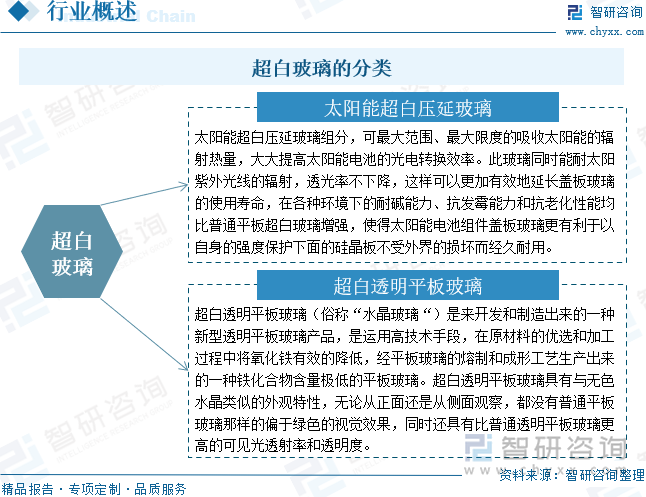
Core Viewpoint - The ultra-white glass industry in China is experiencing rapid growth, driven by urbanization and renovation trends, with a projected market size increase from 5 billion yuan in 2018 to 18 billion yuan by 2024, reflecting a compound annual growth rate of 23.8% [1][16]. Industry Overview - Ultra-white glass, known for its high transparency and light transmittance of over 91.5%, significantly surpasses float glass's 86%, making it ideal for high-end applications in architecture, electronics, luxury vehicles, and solar energy [1][3]. - The industry is characterized by its unique properties, including low self-explosion rates, color consistency, and high visible light transmittance, which enhance its market appeal [5][6]. Industry Development History - The development of ultra-white glass began in the 1950s in developed countries, with significant advancements in production technology occurring in the 1960s and 1970s, leading to increased demand in the 1980s and 1990s due to urbanization and quality building requirements [8]. - The 21st century has seen ultra-white glass expand into high-tech industries, including solar energy and electronics, driven by growing environmental awareness and demand for energy-efficient products [8]. Industry Chain - The ultra-white glass industry chain includes raw material supply, production processing, product sales, and end-use applications, with upstream materials such as soda ash, quartz sand, and limestone being critical [10]. - The downstream applications encompass construction glass, photovoltaic glass, automotive glass, and electronic glass, indicating a comprehensive interdependence within the industry [10]. Market Dynamics - The ultra-white glass market is projected to grow significantly, with the market size expected to reach 18 billion yuan by 2024, driven by technological innovations and policy support [1][16]. - The production of photovoltaic glass, a key application of ultra-white glass, is anticipated to increase from 5.6362 million tons in 2018 to 29.27 million tons by 2024, with a compound annual growth rate of 31.6% [13]. Key Companies - Major players in the ultra-white glass market include China Southern Glass Group, Fuyao Glass, and Flat Glass Group, which are leveraging technological advancements and competitive pricing strategies to capture market share [18][20][22]. - China Southern Glass Group is recognized as a leading brand in energy-saving glass and solar photovoltaic products, with projected revenue of 13.756 billion yuan in 2024 [20]. - Fuyao Glass has successfully localized photovoltaic glass production, achieving quality comparable to international leaders, with projected revenue of 16.816 billion yuan from photovoltaic glass in 2024 [22]. Future Trends - The ultra-white glass industry is expected to deepen its applications in energy-saving and environmentally friendly sectors, particularly in photovoltaic components and passive buildings [25]. - Innovations in smart interactive scenarios are anticipated, with ultra-white glass being integrated into smart home technologies and automotive displays, enhancing user experience and functionality [26].


告别“十年之痒”,美的与小米转向全面较量
财富FORTUNE· 2025-06-03 12:16
Core Viewpoint - The relationship between Midea Group and Xiaomi has shifted from collaboration to competition, marked by Midea's complete divestment of Xiaomi shares worth 1.8 billion yuan in 2024, ending a partnership that began in 2014 [1][2]. Group 1: Strategic Shifts - Midea's Chairman Fang Hongbo stated that entering the home appliance industry now means losing strategically, emphasizing that Midea does not fear Xiaomi's entry [1][3]. - Midea has been gradually reducing its stake in Xiaomi since 2020, coinciding with Xiaomi's rapid growth in the home appliance sector, particularly in air conditioning, which saw over 6.8 million units shipped in 2024, a growth rate exceeding 50% [2][3]. - Xiaomi's strategy includes launching high-end products like the "Mijia Central Air Conditioning Pro," which integrates various smart home devices, enhancing customer retention and increasing average transaction value [2][4]. Group 2: Market Dynamics - Xiaomi's competitive pricing strategy has allowed it to capture market share quickly, with its air conditioning products priced significantly lower than those of Midea and Gree [2][4]. - Midea's response to Xiaomi's market encroachment includes a dual strategy of focusing on both high-end and entry-level products to defend its market position [3][4]. Group 3: Competitive Advantages - Midea's strength lies in its comprehensive supply chain, global presence, and diversified business model, with over 40% of its revenue coming from international markets [4]. - In contrast, Xiaomi's advantages stem from its ecosystem and internet-driven marketing strategies, which have proven effective in driving sales of its home appliances [4][5]. Group 4: Challenges Ahead - Xiaomi faces significant challenges in establishing a robust offline service network, with plans to build 400 large stores by 2025, which still falls short compared to Midea's extensive distribution network [5]. - Analysts highlight Xiaomi's reliance on external suppliers for key components, which may hinder its long-term competitiveness in the home appliance market [5].


2025年第21周:数码家电行业周度市场观察
艾瑞咨询· 2025-06-03 08:21
Group 1: Air Conditioning Industry - Midea and Gree are competing for the title of "number one in the air conditioning industry," with differing data perspectives [1] - In 2024, China's air conditioning sales are projected to reach 189 million units, a growth of 20.9%, indicating increased concentration among leading companies [1] - Xiaomi's online presence in air conditioning is growing, but its offline market remains weak, making it difficult to challenge the dominance of Midea and Gree in the short term [1] - Future competition will focus on smart technology, green initiatives, and globalization, with consumer preferences determining the true "industry leader" [1] Group 2: Robotics Industry in Shenzhen - Shenzhen is establishing the world's first "robot innovation community," leveraging its complete industrial chain and high manufacturing efficiency to drive the robotics industry [2] - The city currently has 51,100 robotics companies, with a projected output value exceeding 200 billion yuan in 2024 and a core component localization rate exceeding 90% [2] - The government is opening 50 fields as testing grounds, creating a closed-loop of "technology verification - scenario feedback - iterative upgrade" to accelerate innovation and application [2] Group 3: Robotaxi and Autonomous Driving - The autonomous driving industry is in a phase of deep integration of technology and capital, with Robotaxi becoming a focal point of competition [4] - Tesla plans to launch fully unmanned services by 2025, with its Full Self-Driving (FSD) system having driven over 1.6 billion miles [4] - The global market for autonomous driving could exceed $2 trillion by 2030, with China focusing on technology export and localized operations to overcome barriers [4] Group 4: AI Agents and Development Challenges - The development of AI agents is being propelled by third-party large model packaging, despite safety and practical demand challenges [5] - Major companies like ByteDance, Baidu, and Alibaba are investing in AI agent products and embracing the MCP mechanism to build ecosystems [5] - There are significant challenges in safety, demand matching, and multi-agent collaboration management, necessitating advancements in technology and risk assessment [5] Group 5: AI Model Evolution - The competition in AI is shifting from pure technical comparisons to systematic capability contests, marking a transition from the "laboratory era" to the "engineering platform era" [6] - The MaaS market in China is expected to reach 9 billion yuan by 2029, with a compound annual growth rate of 66.1% [6] - Major players like Baidu, Alibaba, and Tencent are adjusting strategies to focus on model performance, training efficiency, and user experience [6] Group 6: AI Education Market - Competition in AI education is intensifying, with companies like Yuanfudao and Quark focusing on personalized learning paths and leveraging vast data [10] - The core of the competition lies in combining vertical education expertise with general AI capabilities, emphasizing the transformation of technological advantages into user perception [10] - The rise of educational hardware, such as question-answering software and learning machines, is driving the trend of educational technology integration [10] Group 7: AI Toys Market - The AI toy market is projected to exceed 30 billion yuan in China by 2025 and reach 60 billion USD globally by 2033, with Asia leading the market [11] - AI and embodied intelligence technologies enhance interactivity and emotional connections in toys, with products like ByteDance's "Eye-catching Bag" gaining popularity [11] - High gross margins of over 60% and subscription models are expected to boost profitability, positioning AI toys as potential industry disruptors [11] Group 8: Tencent's Financial Performance - Tencent's total revenue for Q1 2025 reached 180.022 billion yuan, a year-on-year increase of 12.87%, with a gross margin of 55.82% [18] - Net profit grew by 22.01% to 63.129 billion yuan, with significant revenue growth in gaming and video marketing services [18] - Tencent is expanding into new areas while consolidating its core business, indicating a focus on future performance [18] Group 9: Fourth Paradigm's Growth - Fourth Paradigm reported total revenue of 1.077 billion yuan for Q1 2025, a year-on-year increase of 30.1%, with a gross profit margin of 41.2% [19] - The core business, "Prophet AI Platform," generated 805 million yuan, growing by 60.5% and contributing 74.8% to total revenue [19] - The company is deepening its presence in 14 industries and plans to expand into consumer electronics and new energy sectors [19] Group 10: Apple’s AI Strategy - Apple plans to introduce a "dual-core drive" AI model for the Chinese market, collaborating with Baidu and Alibaba to enhance data ecosystem and user experience [20] - This strategy aims to create a closed loop from "product consumption" to "information consumption," addressing local policy requirements and competition [20] - Apple's approach reflects a renewed understanding of the Chinese market's uniqueness, indicating a global adjustment experiment [20]

从财报看:消费与成长的中长期价值机会
2025-06-02 15:44
Summary of Key Points from Conference Call Records Industry or Company Involved - Focus on the **Chinese economy**, **gold and jewelry industry**, **new consumption sectors**, **traditional consumption sectors**, **technology sector**, and **pharmaceutical industry**. Core Insights and Arguments 1. **Economic Environment**: The U.S. tariff policy remains unresolved, leading to increased pressure on Chinese exports and weakened production, investment, and consumption willingness among enterprises. Employment data shows negative growth, further impacting liquidity [1][2][4]. 2. **Industrial Profit Decline**: Domestic industrial profits are at their lowest since 2020, with PMI data hitting new lows, indicating persistent deflationary pressures. Actual financing costs for enterprises have risen, leading to decreased production willingness [1][4]. 3. **Investment Strategy**: A defensive investment strategy is recommended, focusing on trading U.S. recession through gold and gold stocks for certain returns, and increasing positions in growth dividends and innovative pharmaceuticals as domestic fiscal policies strengthen [1][5]. 4. **New Consumption Opportunities**: New consumption sectors such as the silver economy, tourism, pet economy, smart home, animation, and personal care are gaining traction, supported by fiscal stimulus and less correlation with economic cycles [1][6]. 5. **Traditional Consumption Stability**: Traditional sectors like education, dairy, maternal and infant consumption, hospitality, tourism, and medical beauty show stable cash flows and increasing ROE, with dividends expected to rise [1][8]. 6. **Technology Sector Focus**: Key areas in the technology sector include optical chips, smart speakers, new display materials, AI wearable devices, autonomous driving technology, GPUs, and radar. Companies with rising volume and price, along with high valuation tolerance, are of particular interest [3][9]. 7. **Gold and Jewelry Market Outlook**: The gold and jewelry industry is expected to perform well in 2025, with high gold prices increasing consumer acceptance. Companies like Chao Hong Ji are expanding overseas and innovating product lines to enhance consumer demand [15][16]. 8. **Pharmaceutical Sector Insights**: Innovative pharmaceutical companies are highlighted as key investment targets, with a focus on large pharmaceutical firms that are currently undervalued. Companies like Huadong Medicine and Sanofi are noted for their strong growth potential [12][14]. 9. **Gold Supply and Demand Dynamics**: The gold supply is expected to decline in 2025 due to reduced copper-associated gold mining, while demand remains strong, particularly from gold ETFs and central bank purchases [20]. 10. **Small Metals Market Performance**: The small metals market, especially rare earths and antimony, is performing well due to improved pricing and inventory replenishment driven by export controls [21]. Other Important but Possibly Overlooked Content 1. **Market Sentiment**: The uncertainty surrounding trade negotiations is significantly impacting market sentiment and fundamentals, particularly as U.S.-China relations remain tense [2]. 2. **Long-term Growth Potential**: Despite short-term volatility, companies with solid fundamentals, such as those in the insurance and banking sectors, are expected to show strong long-term growth potential [27][28]. 3. **Investment Timing**: Investors are advised to consider buying during short-term adjustments in new consumption sectors to capture long-term value [7][11]. This summary encapsulates the critical insights and recommendations from the conference call records, providing a comprehensive overview of the current market landscape and investment opportunities across various sectors.
申万宏源通信周专题:关注控制器低位修复,激光雷达机器人领域出货亮眼
Shenwan Hongyuan Securities· 2025-06-02 12:11
Investment Rating - The report maintains a positive outlook on the controller sector, indicating a potential for performance and valuation recovery [3][4]. Core Insights - The controller sector has experienced significant overselling, and the fundamentals are showing notable improvement, suggesting a dual recovery in performance and valuation [4][5]. - Historical analysis of key companies in the controller sector, such as Heertai and Tuobang, reveals a high sensitivity of stock performance to earnings and raw material price fluctuations [5][6]. - The report highlights the strong growth potential in the laser radar robotics field, particularly in consumer-grade robots, marking a significant industry shift [14][15]. Summary by Sections Controller Sector Recovery - The controller sector has shown signs of recovery in Q1 2025, with Heertai reporting a revenue of 2.585 billion yuan, a year-on-year increase of 30.44%, and a net profit of 169 million yuan, up 75.41% [9]. - Tuobang also reported a revenue of 2.671 billion yuan, a 15.24% increase, with a net profit of 197 million yuan, reflecting a 12.10% growth [11]. Laser Radar Robotics Growth - Hesai Technology reported a Q1 2025 delivery of nearly 200,000 units, a year-on-year increase of 231%, with a revenue of 530 million yuan, up 46.3% [15][18]. - RoboSense reported a revenue of approximately 330 million yuan in Q1 2025, with a gross profit of 77.01 million yuan, a significant increase of 73.1% [19][21]. Market Trends and Strategic Partnerships - The report notes that Hesai is a key supplier for leading Robotaxi companies, indicating a shift from technology validation to commercial operation in the Robotaxi industry [18]. - RoboSense has secured significant orders in various sectors, including a strategic partnership for 1.2 million units in the lawn mower market, showcasing strong demand across multiple applications [24].


前安克创新创始人创业公司冲刺IPO!智岩科技启动上市辅导
Nan Fang Du Shi Bao· 2025-05-30 10:55
Core Viewpoint - Shenzhen Zhiyan Technology Co., Ltd. has officially initiated its listing guidance with CICC as the advisory institution, showcasing strong growth potential in the smart home industry [2][3]. Company Overview - Zhiyan Technology was established in 2017 and is headquartered in Nanshan District, Shenzhen. The CEO, Wu Wenlong, is one of the founders of Anker Innovations and the former CTO of Anker [2]. - The company focuses on the research and development of smart home products and optimizing the upstream and downstream supply chain, aiming to become a global leader in the smart home sector [2]. Financial Performance - The company achieved a revenue of 422 million yuan in 2019, which increased to 527 million yuan in the first half of 2020, indicating a rapid growth trajectory [4]. - Media reports suggest that Zhiyan Technology's revenue could reach 3 billion yuan in 2023 and exceed 4 billion yuan in 2024 [2][4]. Product Offerings - Zhiyan Technology's product range includes smart ambient lighting and small home appliances, leveraging independent research and high-quality standards to achieve strong sales in multiple global markets [2]. Investment and Funding - Prior to the listing guidance, Zhiyan Technology received investments from several well-known institutions, including a 40 million yuan financial investment from Anker Innovations in 2021, along with participation from Gaoling Capital and Zhongding Capital [3].


潮域展览:2025年智能家居市场调查报告
Sou Hu Cai Jing· 2025-05-29 07:18
Market Overview - The Chinese smart home market is expected to reach a shipment volume of 281 million units by 2025, with a year-on-year growth of 7.8%, and the market size surpassing 1 trillion yuan [1] - The growth is driven by various factors including the "trade-in" policy, which accelerates the upgrade of traditional home appliances towards high-end, intelligent, and personalized products [1] - Government subsidies for elderly-friendly renovations are stimulating demand for related smart home products [1] Technological Innovation - AI models are transforming smart home systems from "passive response" to "active service," with examples like Haier's HomeGPT that can understand complex commands and predict user needs [2] - The adoption of edge computing reduces interaction delays and ensures local processing of privacy data [2] - Multi-modal interaction technologies are lowering operational barriers, enhancing user experience [2] Health and Energy Management - Health management is extending from medical settings to homes, with smart mattresses and non-contact monitoring devices expected to integrate medical-grade sensors in 30% of smart home devices by 2025 [3] - AI is optimizing household microgrid management, potentially reducing energy costs by 15%-20% through dynamic scheduling of appliance usage [3] - The interoperability of smart home products is increasing, with protocols like Matter enabling seamless connections across brands [3] Consumer Behavior and Preferences - In Indonesia, 80.5% of respondents are aware of the "smart home" concept, but only 10.9% actively use smart home products [14] - Convenience, safety, and energy efficiency are the primary motivations for purchasing smart home solutions [14] - There is a growing preference for local brands when prices are comparable, indicating a trend towards supporting domestic products [14] Regulatory Policies and Certification Requirements - In Indonesia, smart home products must comply with national standards (SNI certification) and adhere to import tariffs and data privacy regulations [15] - Vietnam requires CR certification for smart home products to ensure safety and quality [15] - In Russia, products must meet GOST certification standards and comply with data localization laws [15] Competitive Landscape and Key Brands - Local brands like VinSmart in Vietnam and Rubetek in Russia are gaining traction, while international brands such as LG, Samsung, and Bosch are also present in these markets [16] - In Indonesia, popular products include energy-efficient smart air conditioners and lighting systems, with brands like Changhong and Philips Hue leading the market [20]

2025年智能家居市场调查报告-潮域展览
Sou Hu Cai Jing· 2025-05-28 13:17
Market Overview and Growth Trends - Indonesia's market size is expected to reach $556.5 million in 2024 and $873.4 million by 2028, with a CAGR of 11.93%. The penetration rate is projected to be 14.5% in 2024 and 23.2% in 2028, driven by government incentives, increased disposable income, and a focus on eco-friendly lifestyles [1]. - Vietnam's market size is estimated at €301.6 million in 2024, growing to €461 million by 2028, with a CAGR of 11.19%. The penetration rate is expected to be 15.4% in 2024 and 25.7% in 2028, fueled by accelerated urbanization, an expanding middle class, and increased technological awareness [1]. - Russia's market is projected to reach $2.073 billion in 2024 and $3.027 billion by 2028, with a CAGR of 9.93%. The penetration rate is anticipated to be 11.2% in 2024 and 24.2% in 2028, driven by rapid digitalization, high internet penetration (88.2% in 2023), and a focus on energy efficiency and home automation [1]. Consumer Behavior and Preferences - In Indonesia, 80.5% of respondents are aware of the smart home concept, but only 10.9% actually use it. When prices are the same, 64.75% prefer local brands, with convenience, safety, and energy efficiency being the main purchase motivations [2]. - In Vietnam, consumers are inclined to adopt energy-efficient smart home solutions such as smart lighting, smart thermostats, and solar panels due to their focus on eco-friendly lifestyles [3]. - In Russia, consumers prefer smart home devices that offer convenience, energy efficiency, and safety [4]. Regulatory Policies and Certification Requirements - In Indonesia, products must comply with SNI certification and adhere to import tariffs and data privacy regulations [4]. - In Vietnam, smart home products need to obtain CR mark certification to ensure safety and quality [4]. - In Russia, products must meet GOST certification standards and comply with data localization laws, requiring user data to be stored on local servers [4]. Competitive Landscape and Major Brands - In Vietnam, local brand VinSmart has significant influence, and consumers show a strong preference for local brands [5]. - In Russia, local brand Rubetek is active, offering a diverse range of smart home solutions [6]. - International brands such as LG, Samsung, Schneider Electric, and Bosch have a presence in all three markets, providing a wide range of product lines [7]. Hot-selling Products and Sales Channels - In Indonesia, popular products include smart air conditioners, smart lighting systems, smart security devices, smart sockets, smart lamps, and smart cameras. Online sales channels include Tokopedia and Shopee Indonesia, while offline channels include Klik Hiro Optima and Erajaya Active Lifestyle [8]. - In Vietnam, hot-selling products consist of smart lighting and switches, smart security devices, multifunctional smart boxes, smart bulbs, and smart cameras [9]. - In Russia, popular products include smart speakers, smart security systems, smart lighting devices, smart cameras, and smart heating regulators. Online sales channels include Wildberries.ru and Ozon.ru, while offline channels include M.Video and DNS TechnoPoint [10]. Market Entry Strategy Recommendations - Conduct market research to understand consumer needs, competitive landscape, and regulatory policies to develop targeted strategies [11]. - Localize products to align with local languages, cultures, and technical standards, such as supporting local language voice assistants and adapting to local voltage and plug standards [12]. - Seek local distributors, agents, or partners to leverage their channel resources and market experience for faster market penetration [13]. - Utilize e-commerce platforms like Lazada, Shopee (Southeast Asia), and Wildberries (Russia) to promote and sell products, enhancing brand visibility [14]. - Establish a comprehensive after-sales service system to improve customer satisfaction and brand loyalty [15].
