自动驾驶

Search documents
马斯克敲定时间表:特斯拉Cybercab量产在即,冬季测试曝光
Sou Hu Cai Jing· 2026-01-26 09:11
来源:环球网 几乎与此同时,特斯拉分享了Cybercab进行寒冷天气测试的图片。值得注意的是,进行测试的Cybercab 原型车似乎配备了雪地轮胎。 外媒称,这一冬季测试表明,特斯拉正在为Cybercab在美国各种气候条件下的部署做准备。低温、积 雪、冰面和低附着力等因素对自动驾驶系统而言都是极具挑战性的场景。 外媒表示,综合来看,马斯克的生产更新和特斯拉的测试帖子表明,虽然 Cybercab 即将开始生产,但 验证工作仍在积极推进,以确保其在真实环境中的可靠性。 1月26日消息,据Teslarati报道,特斯拉重申,其 Cybercab 的生产将于 4 月开始,同时该公司也在继续 扩大该车型的实际测试。 特斯拉CEO 埃隆·马斯克最近确认了这一时间表。 ...


推理需求超越训练,这种芯片为何成为汽车智能化决胜关键?
Zhong Guo Qi Che Bao Wang· 2026-01-26 08:52
Core Insights - The integration of AI inference chips is becoming crucial for automotive intelligence as autonomous driving approaches [2][10] - The demand for inference chips is expected to significantly increase by 2026 due to the rapid growth of automotive intelligence needs [3] Inference Demand Surge - AI model training has been a key growth driver for the AI chip market, with high-end chips like NVIDIA's H100 and H200 being highly sought after, often resulting in multi-million dollar orders [4] - Inference chips have now surpassed training chips in demand, becoming the new mainstay for data center computing power and smart driving applications, as companies focus on translating large models into practical applications [4][5] Automotive Intelligence Key to Success - Autonomous vehicles are evolving into highly integrated "smart mobile terminals" that require real-time decision-making capabilities, supported by the powerful computing power of inference chips [6] - A Level 4 autonomous vehicle can generate data volumes of several gigabytes per second, necessitating rapid processing and analysis for effective driving decisions [6][7] Performance and Efficiency of Inference Chips - Inference chips are designed for edge computing, allowing for immediate data processing without relying on cloud transmission, which is critical for timely decision-making in autonomous driving [7] - New generation inference chips utilize advanced architectures and manufacturing processes, such as 7nm technology, to provide high performance while significantly reducing energy consumption [8] Customization for Autonomous Driving - Inference chips must be tailored for core tasks in autonomous driving, such as visual recognition and decision control, through customized neural network accelerators to enhance processing efficiency and accuracy [9] Industry Transformation with Inference Chips - Inference chips represent a pivotal point in AI industry development, acting as a bridge from research to market application and playing an essential role in automotive intelligence [10] - Achieving automotive-grade certification is a significant hurdle for inference chips, requiring rigorous environmental testing to ensure reliability and stability throughout the vehicle's lifecycle [10][11] Challenges and Future Outlook - Algorithm adaptation is a key challenge for inference chips in automotive applications, necessitating close collaboration between chip manufacturers and automotive companies to optimize performance [11] - The rise of inference chips marks a new phase in the AI and autonomous driving industry, addressing core issues such as cost, latency, and privacy, and enabling deeper integration of AI technologies into operational contexts [11][12] - As AI technology and automotive hardware converge, the future application prospects for inference chips will expand, with increasing competition among automotive companies to develop more competitive autonomous driving solutions [12]

财报前瞻 | 汽车业务承压,特斯拉(TSLA.US)高估值将由“AI与能源”叙事撑起?
智通财经网· 2026-01-26 08:27
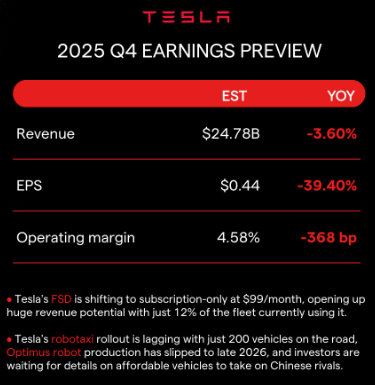
Core Viewpoint - Tesla is a highly controversial and closely watched stock, with polarized investor opinions regarding its future performance and valuation [1] Group 1: Financial Performance - Tesla's Q3 revenue reached a record high of $28.1 billion, with deliveries of 497,099 vehicles, representing a 12% year-over-year increase [1] - Operating expenses surged by 50% year-over-year to $3.4 billion, leading to a contraction in operating margin to 5.8% [2] - Q3 earnings per share (EPS) fell by 31% to $0.50, below market expectations [2] Group 2: Future Projections - Q4 delivery volume is expected to decline to 418,227 vehicles, a 15.6% year-over-year decrease, which may pressure automotive revenue and profit margins [3] - Analysts predict Q4 revenue of $24.78 billion, a 3.6% year-over-year decline, and an EPS of $0.44, down 39.4% [5] - The energy segment is projected to generate $3.66 billion in revenue, a 19.7% increase year-over-year, driven by strong performance in storage solutions [3] Group 3: Strategic Initiatives - Tesla's Full Self-Driving (FSD) technology is transitioning to a subscription model, with a target of 10 million active subscribers, currently at 12% penetration [7] - The company is focusing on the Optimus humanoid robot project, with production timelines pushed to late 2026, which is seen as a critical part of its future strategy [9] - Tesla's energy business is becoming an increasingly important profit driver, with a record deployment of 14.2 GWh in Q4 [3] Group 4: Market Challenges - Tesla faces significant competition, particularly in Europe and China, where it is losing market share to local manufacturers [5] - The company's stock is currently valued at a high P/E ratio of 201, with analysts expressing caution regarding its valuation [12] - The overall electric vehicle market is experiencing a slowdown, contributing to a downward revision in Tesla's sales forecasts for 2025 [10]
任泽平:癌症、渐冻症等绝症有望在5-10年内被攻克
Xin Lang Cai Jing· 2026-01-26 07:36
Group 1: Key Trends in Technology and Industry - The first major trend is the explosion of autonomous driving, which is expected to solve urban traffic congestion, air pollution, and safety issues within the next 1-2 years. A unified driving standard through large models will enable millions of vehicles to reach or exceed the skill level of experienced drivers, representing a trillion-dollar market opportunity [2][14]. - The second trend involves the significant rise of humanoid robots, which will first take over dangerous and repetitive tasks in factories, then transition into homes as companions, and eventually evolve into silicon-based life forms that deeply understand human society [3][15]. - The third trend highlights breakthroughs in life sciences, where AI will dramatically enhance drug development, potentially curing diseases like cancer and ALS within 5-10 years, and extending human lifespan to 120 years [4][16]. - The fourth trend is the anticipated explosion of AI super applications, with AI assistants expected to become personal secretaries for everyone, covering all aspects of daily life, leading to the replacement of over 90% of existing apps [5][17]. - The fifth trend indicates the rise of China's strength in various sectors such as photovoltaics, new energy vehicles, and power batteries, leveraging a strong supply chain and a market of 1.4 billion people for rapid commercialization [6][19]. - The sixth trend is the emergence of a new energy system characterized by "green electricity + energy storage," with China's installed capacity of green electricity surpassing coal, driving a surge in energy storage demand [7][20]. Group 2: Societal and Economic Trends - The seventh trend points to intensified geopolitical competition and a global arms race, with modern warfare evolving towards aerospace, information, and intelligence, focusing on military technology in aerospace and high-end equipment [8][21]. - The eighth trend discusses the revolution in the food industry driven by biotechnology, where mass production of proteins, starches, fruits, and vitamins will replace traditional agriculture, significantly reducing land use and air pollution [9][22]. - The ninth trend indicates the arrival of a post-real estate era, where the housing market will see a bifurcation: property prices in core areas with 20% population inflow may bottom out or even reach new highs, while areas with 80% population outflow will experience prolonged price declines [11][23]. - The tenth trend highlights the acceleration of aging and declining birth rates, with the baby boomer generation entering old age, creating opportunities in the silver economy and health industries, while declining birth rates will boost markets related to pets, single living, emotional well-being, and cost-effectiveness [12][24].
特斯拉和Waymo持续加速Robotaxi业务
CAITONG SECURITIES· 2026-01-26 07:35
Investment Rating - The report maintains an investment rating of "Positive" for the Robotaxi industry [2][10]. Core Insights - The Robotaxi industry is expected to experience rapid growth in the U.S. by 2026, driven by advancements from companies like Tesla and Waymo [6][5]. - Tesla has initiated public operations of its fully autonomous Robotaxi fleet in Austin, with plans for widespread application by the end of 2026 [6]. - Waymo is expanding its operational areas significantly, with plans to increase the number of cities it serves, including Miami and others [6]. Summary by Sections Recent Developments - Tesla's fully autonomous Robotaxi fleet began public service in Austin on January 22, 2026, with gradual increases in vehicle numbers planned [6]. - Waymo has expanded its operational area in Austin from 90 to 140 square miles and is set to launch services in additional cities [6]. Future Projections - By the end of 2026, Robotaxi services are anticipated to be widely adopted across the U.S., influencing related industries domestically [6]. - Tesla's Cybercab is expected to enter production in April 2026, with a projected cost of less than $0.20 per mile for large-scale operations [6]. Investment Recommendations - The report recommends investing in companies such as Ponyo, Horizon Robotics, and XPeng Motors, while also suggesting to monitor other players like Didi Global, Uber, and Cao Cao Mobility [6].
任泽平:自动驾驶将在未来1-2年爆发,大模型可统一驾驶标准
Xin Lang Cai Jing· 2026-01-26 07:30
Group 1: Key Trends in Technology and Industry - The first major trend is the explosion of autonomous driving, which is expected to solve urban traffic congestion, air pollution, and safety issues within the next 1-2 years. A unified driving standard through large models will enable millions of vehicles to reach or exceed the skill level of experienced drivers, representing a trillion-dollar market opportunity [2][14]. - The second trend involves the significant rise of humanoid robots, which will first take over dangerous and repetitive tasks in factories, then transition into homes as companions, and eventually evolve into silicon-based life forms that deeply understand human society [3][15]. - The third trend highlights breakthroughs in life sciences, where AI will dramatically enhance drug development, potentially curing diseases like cancer and ALS within 5-10 years, and extending human lifespan to 120 years [4][16]. - The fourth trend is the anticipated explosion of AI super applications, with AI assistants expected to become personal secretaries for everyone, covering all aspects of daily life, leading to the replacement of over 90% of existing apps [5][17]. - The fifth trend indicates the rise of China's strength in various sectors such as photovoltaics, electric vehicles, and power batteries, leveraging a strong supply chain and a market of 1.4 billion people for rapid commercialization [6][19]. - The sixth trend is the emergence of a new energy system characterized by "green electricity + energy storage," with China's installed capacity of green electricity surpassing coal, driving a surge in energy storage demand [7][20]. Group 2: Societal and Economic Trends - The seventh trend points to intensified geopolitical competition and a global arms race, with modern warfare evolving towards aerospace, information, and intelligence, focusing on aerospace, communication satellites, and high-end equipment [8][21]. - The eighth trend discusses the revolution in the food industry driven by biotechnology, where essential nutrients will be produced on a large scale in factories, significantly reducing land use and air pollution, aiding carbon neutrality and ecological restoration [9][22]. - The ninth trend indicates the arrival of a post-real estate era, where the housing market will see a bifurcation: property prices in core areas with 20% population inflow may bottom out or even reach new highs, while areas with 80% population outflow will experience prolonged price declines [11][23]. - The tenth trend highlights the acceleration of aging and declining birth rates, with the baby boomer generation entering old age, creating opportunities in the silver economy and health industries, while declining birth rates will boost markets related to pets, single living, emotional well-being, and cost-effectiveness [12][24].
任泽平:未来十大新趋势
Xin Lang Cai Jing· 2026-01-26 07:30
Group 1: Key Trends in Technology and Innovation - The first major trend is the explosion of autonomous driving, which is expected to solve urban traffic congestion, air pollution, and safety issues within the next 1-2 years. A unified driving standard through large models will enable millions of vehicles to reach or exceed the skill level of experienced drivers, representing a trillion-dollar market opportunity [2][14]. - The second trend involves the significant rise of humanoid robots, which will first take over dangerous and repetitive tasks in factories, then transition into homes as companions, and eventually evolve into silicon-based life forms that deeply understand human society [3][15]. - The third trend highlights breakthroughs in life sciences, where AI will dramatically enhance drug development, potentially curing diseases like cancer and ALS within 5-10 years, and extending human lifespan to 120 years [4][16]. - The fourth trend is the anticipated explosion of AI super applications, with AI assistants expected to become personal secretaries for everyone, covering all aspects of daily life, leading to the replacement of over 90% of existing apps [5][17]. Group 2: Energy and Environmental Trends - The sixth trend is the emergence of a new energy system characterized by "green electricity + energy storage." China's installed capacity of green electricity (solar and wind) has surpassed that of coal, driving a surge in energy storage demand. Solid-state batteries are becoming mainstream due to their high energy density, long range, and safety, leading to a boom in demand for new energy minerals like copper and lithium [7][20]. - The eighth trend indicates that biotechnology will revolutionize the food industry, with large-scale production of proteins, starches, fruits, and vitamins in factories, replacing traditional agriculture and significantly reducing land use and air pollution, thus aiding carbon neutrality and ecological restoration [9][22]. Group 3: Demographic and Economic Trends - The ninth trend points to the arrival of a post-real estate era, where the housing market will experience a bifurcation. In the long term, real estate prices in core areas, which will see a 20% population inflow, are expected to bottom out and potentially reach new highs in the medium term, while areas with an 80% population outflow will face prolonged price declines [11][23]. - The tenth trend addresses the accelerating aging and declining birth rates, with the baby boomer generation (born between 1962-1976) rapidly aging. This demographic shift will create significant opportunities in the silver economy and health industries, while declining birth rates will drive the rise of pet economies, single-person economies, emotional economies, and cost-effective economies [12][24].
轻舟智航L2/L4智驾方案解析:一段式、VLA和世界模型
自动驾驶之心· 2026-01-26 07:16
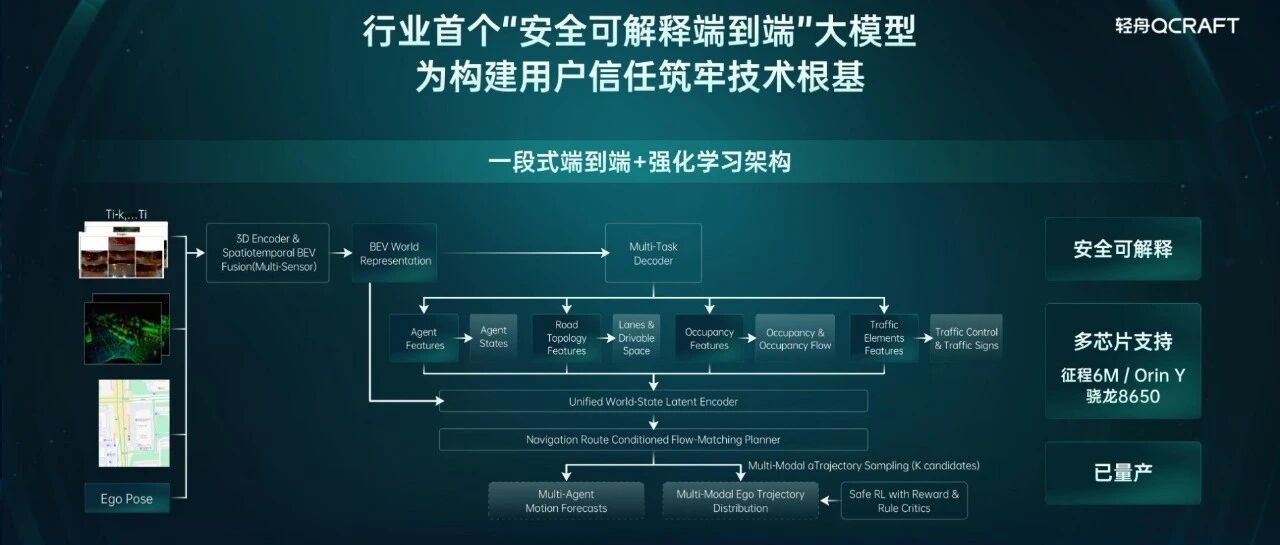
Core Viewpoint - The article discusses the advancements in autonomous driving technology, particularly focusing on the new city NOA solution based on the single journey 6M architecture implemented in the Li Auto L series. It highlights the integration of various algorithms and the overall architecture of the system, emphasizing its potential for real-world applications and safety mechanisms. Group 1: Technical Architecture - The single J6M architecture achieves end-to-end processing with reinforcement learning, showcasing a sophisticated network structure that operates on 128 TOPS computing power [3][5] - The architecture utilizes Safe RL to optimize vehicle trajectory, indicating a focus on safety and reliability in autonomous driving [5] - The input data includes time-sequenced images, Lidar, SD navigation, and vehicle positioning, which are fused to create a global BEV representation [6] Group 2: Algorithmic Innovations - The article mentions the validation of algorithms like DiffusionDrive and Flow Matching by multiple companies, indicating their readiness for mass production [5] - It introduces two recommended algorithms, Diffusion Planner and Flow Planner, with the latter being an improved version developed by a team from Tsinghua University [5] - The Flow-Matching Planner is used to decode vehicle motion predictions and multi-modal vehicle trajectories, enhancing the system's predictive capabilities [7] Group 3: Future Developments - The next-generation autonomous driving model architecture combines VLA with World Model into a unified end-to-end system, suggesting a significant evolution in the technology [11] - The article notes that the VLA system is not merely a demonstration of capabilities but serves as foundational infrastructure for the scalable operation of L4 autonomous systems [12] - The CEO of the company expresses that neither VLA nor the world model will be the ultimate solution for autonomous driving technology, indicating ongoing development and exploration in the field [13]
汽车行业周报:政策托底静待反弹,关注海外电动化
Guoyuan Securities· 2026-01-26 06:24
Investment Rating - The report maintains a "Recommended" investment rating for the automotive industry [6] Core Insights - The automotive market is experiencing significant negative growth, with retail sales of passenger vehicles dropping by 28% year-on-year in the first half of January 2026, and wholesale sales declining by 35% [1][19] - The report emphasizes the need for supportive policies to stimulate market recovery and highlights the potential for growth in the overseas electric vehicle market due to favorable policies in countries like Canada and Germany [3][4] - The report suggests that the domestic market may rebound following the implementation of supportive policies, which could positively impact leading brands [4] Summary by Sections Market Overview - As of January 1-18, 2026, retail sales of passenger vehicles in China reached 679,000 units, a decrease of 28% compared to the same period last year, while wholesale sales totaled 740,000 units, down 35% year-on-year [1][19] - In the same period, retail sales of new energy vehicles were 312,000 units, reflecting a 16% decline year-on-year, and wholesale sales were 348,000 units, down 23% [1][19] Policy Developments - Canada announced plans to import 49,000 electric vehicles from China, significantly reducing tariffs from 100% to 6.1% [3] - Germany introduced a new subsidy program for electric vehicles, offering up to 6,000 euros to families purchasing new electric cars, effective from January 1, 2026 [3][44] - The UK government has launched a substantial subsidy program for electric trucks, with a total budget of 318 million pounds [48] Investment Opportunities - The report highlights the potential for Chinese new energy vehicles to expand into overseas markets, driven by favorable international policies [4] - It suggests that the recovery of the domestic automotive market could benefit leading brands significantly [4]




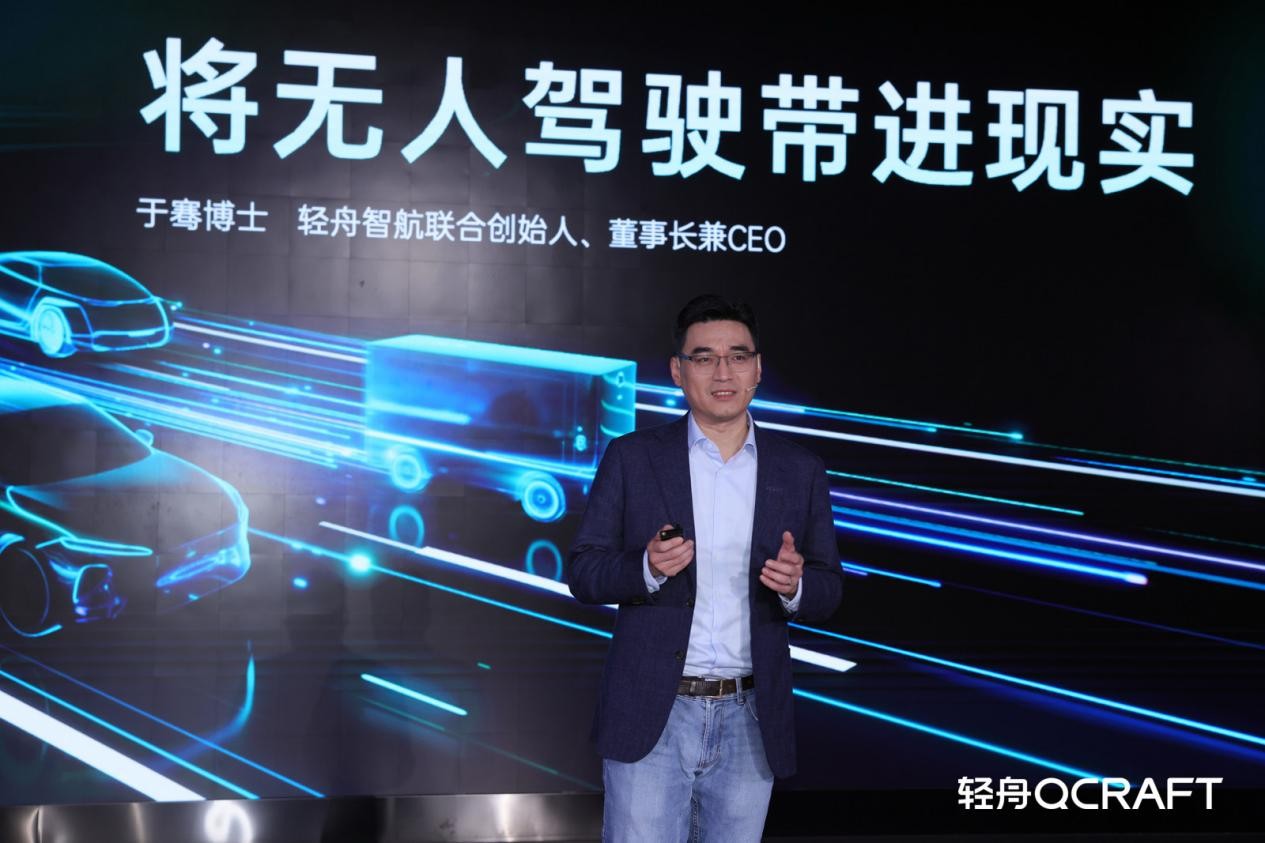
轻舟智航CEO于骞:智驾市场会留存4-5家企业|36氪专访
3 6 Ke· 2026-01-26 05:57
Core Insights - The autonomous driving industry is at a critical transition point, with a shift towards mass production and lower vehicle price segments while also pursuing advanced levels of automation like L3 and L4 [3][4] - The company, Lightyear, has survived previous industry eliminations by making strategic decisions that balance dependence and independence in partnerships with automakers and chip manufacturers [4][5] Company Strategy - Lightyear has transitioned from focusing on L4 capabilities to delivering L2 mass production software, becoming one of the first companies to relieve itself of the "technical burden" associated with L4 [3][4] - The company maintains a close yet independent relationship with automakers and chip manufacturers, allowing it to adapt to various platforms while developing its own algorithms and simulation tools [4][30] Market Position - Lightyear's passenger vehicle assistance systems have surpassed one million units in deployment, with expectations to exceed 50 models by 2026, nearly all featuring urban NOA capabilities [5][6] - The autonomous driving market is expected to retain 4-5 leading companies, similar to the engine or battery industries, rather than consolidating into a monopoly [6][37] Product Development - Lightyear plans to expand its L2 product offerings and increase investments in L4 technologies, including applications in unmanned logistics [6][44] - The company has outlined a product matrix with three tiers: Air, Pro, and Max, targeting various market segments and price points [9][12] Technological Focus - The company emphasizes an end-to-end solution that optimizes resource use for better user experience, avoiding unnecessary complexity in models and hardware [8][23] - Lightyear is exploring advanced technologies like VLA and world models, focusing on enhancing model generalization and virtual training capabilities [12][14] Industry Trends - The penetration rate of autonomous driving is currently below 5% but is projected to rise to 50% in the coming years, driven by the electrification of vehicles [35] - The trend of integrating autonomous driving features into lower-priced vehicles is expected to continue, making advanced safety and convenience features accessible to a broader audience [36]