
低碳转型

Search documents
零碳工厂有“亮点”
Xin Lang Cai Jing· 2025-12-21 22:46
Group 1 - Zhongtian Power Cable Co., Ltd. has established a zero-carbon factory that utilizes a comprehensive green management system, achieving a significant transition from "low-carbon manufacturing" to "zero-carbon operation" [1] - The factory's photovoltaic power station is expected to generate 3.376 million kWh in 2024, accounting for approximately 52% of its total electricity consumption, thereby increasing the share of renewable energy in total energy consumption to over 50% [1] - The factory employs a diversified approach to offset carbon emissions, including purchasing green power certificates and carbon credits, aiming for a carbon reduction of 91 tons through CCER transactions in 2024 [1] Group 2 - Jiangsu Hengtong High Voltage Submarine Cable Co., Ltd. promotes low-carbon transformation through a systematic approach that includes source reduction, process control, and end-of-pipe treatment [2] - The company has implemented over 60 energy-saving technological upgrades, achieving a 5% annual reduction in carbon emissions for the same output over the past five years [2] - A carbon emission management team was established in 2022, and an energy management system will be launched in July 2024 to enable real-time monitoring and data visualization of energy consumption [2] Group 3 - Wanbang Digital Energy Co., Ltd. has built a digital carbon management center that integrates energy consumption tracking, carbon emission accounting, and real-time data collection through smart meters and sensors [3] - The company has achieved a self-reduction of 81.83% in carbon emissions in 2024 through photovoltaic construction, green electricity procurement, and energy-saving technological upgrades, with a goal of 100% carbon offset through carbon credits and green certificates [3] Group 4 - Jiangsu Botuo New Building Materials Co., Ltd. aims to become a zero-carbon factory by optimizing energy structure and resource recycling, having built a 1.6 MW distributed photovoltaic power project expected to generate 1.93 million kWh in 2024 [5] - The company has replaced traditional coal-fired boilers with biomass boilers and developed technologies for recycling waste concrete, achieving 100% waste disposal and zero solid waste emissions [5] - The company actively promotes material innovation by utilizing industrial waste to replace natural raw materials, enhancing the environmental attributes of its products [5] Group 5 - Envision Energy Co., Ltd. launched a green supply chain project in 2022 with three sustainability goals: zero negative corporate social responsibility events, 100% carbon assessment, and 100% green electricity production [6] - The company has provided carbon management training to over 200 core suppliers, helping them identify carbon emission hotspots [6] - Envision aims to achieve 100% green electricity usage among core suppliers by 2028 through enhanced collaboration and innovative models [6]
杭州能源集团2026年要攻坚这些实事
Mei Ri Shang Bao· 2025-12-20 22:19
Core Viewpoint - The transformation of Tianzilin landfill from an urban eyesore to a new scenic spot in Hangzhou is a significant achievement, showcasing advancements in ecological restoration and urban development [1] Group 1: Ecological Restoration - The Tianzilin landfill underwent two phases of ecological remediation, successfully sealing historical waste and completing extensive greening and ecological restoration [1] - The newly transformed Tianzilin will be an important part of the "North Show Scenic Belt," contributing to ecological civilization [1] Group 2: Natural Gas Infrastructure - In 2025, Hangzhou Energy Group will promote the signing of a strategic cooperation framework for the integration of the city's natural gas high-pressure pipeline network, enhancing emergency response and stable gas supply capabilities [1] Group 3: Waste Management and Recycling - The company aims to launch the "Hangzhou Recycling" brand, focusing on the integration of household waste and renewable resources through the construction of "One Station and Four Centers" [1] - This initiative will accelerate the establishment of a sorting system for recyclable materials and a digital management platform, streamlining the entire recycling process from collection to resource recovery [1] Group 4: Future Projects and Innovations - Hangzhou Energy Group will advance the "Hangzhou City Investment Future 500+" Phase II project, establishing an intelligent research and manufacturing base [2] - The company is focusing on low-carbon transformation, particularly in the mass production of specialized vehicles for alcohol-hydrogen electric applications and the development of commercial vehicles like garbage trucks and buses [2] - A joint platform will be formed to tackle solid-state battery technology and to establish a waste battery recycling industry chain [2]
成都两个低碳项目入选全球典型案例
Xin Lang Cai Jing· 2025-12-19 18:23
Core Insights - Two low-carbon projects from Chengdu have been recognized as global exemplary cases in the "2025 Zero Carbon Park Industry Impact Insight Report" published by Shanghai Jiao Tong University and several authoritative institutions [1] Group 1: Project Highlights - Chengdu's Sci-Tech Innovation Ecological Island was selected for its integration of "park city + near-zero carbon park + digital economy," providing replicable practices for similar parks nationwide [1] - China State Construction's Binhu Design Headquarters exemplifies a successful project in low-carbon transformation throughout the building lifecycle, showcasing Tianfu New Area's innovative strength in green construction [1] Group 2: Regional Development - Tianfu New Area has established 8 near-zero carbon pilot projects, including 2 provincial-level near-zero carbon emission parks and 6 near-zero carbon emission communities [1] - The green low-carbon industry in Sichuan Tianfu New Area is accelerating, with a projected scale of 3 billion yuan by 2024, and the introduction of 4 key projects, including the Trina Smart Digital Energy Innovation R&D Center and Huadian Jintai Household Photovoltaic Technology Innovation Center, focusing on nuclear energy, photovoltaics, and smart grid industries [1]
国际石油公司低碳投资“踩刹车”,有何启示?
Xin Lang Cai Jing· 2025-12-19 02:33
Core Viewpoint - Global low-carbon energy investment continues to grow, with the International Energy Agency (IEA) predicting that total clean energy investment will exceed $2.2 trillion by 2025. However, the oil and gas industry's low-carbon investment remains above $30 billion, but its share is declining [1]. Group 1: Investment Trends - International oil companies have been rapidly investing in low-carbon and renewable energy sectors due to government policies, market trends, and shareholder interests. However, they are now facing internal and external pressures that are affecting their low-carbon strategies [2]. - Companies that have diversified quickly over the past five years are experiencing dual pressures of value growth and cash flow stability, leading some to adjust their carbon reduction targets and prioritize short-cycle, high cash flow projects [2][6]. - Despite some companies lowering their carbon reduction goals, overall low-carbon investment by international oil companies has steadily increased since 2020, with European firms leading in investment scale and growth compared to their American counterparts [6][10]. Group 2: Key Investment Areas - The three main focus areas for low-carbon investments by international oil companies are renewable electricity (wind and solar), biofuels, and Carbon Capture, Utilization, and Storage (CCUS), with a total investment of $86.4 billion in these areas over the past decade [7]. - European companies are diversifying their investments across various sectors, while American companies are more focused on CCUS and biofuels. CCUS is viewed as a "certain strategic pillar" for the industry, with many projects underway in Europe and North America [8][9]. - Hydrogen is also a strategic focus, with European companies favoring green hydrogen and American companies leaning towards blue hydrogen, although recent uncertainties have led to a more cautious approach to hydrogen investments [9]. Group 3: Resource Dependency - The transition to green energy is increasing the demand for key mineral resources, with lithium demand expected to grow more than threefold by 2023. This trend highlights the oil and gas industry's growing reliance on mineral resources to support green transitions [10]. - Companies like ExxonMobil are entering the lithium market, with plans to produce lithium materials for over 1 million electric vehicles by 2030, indicating a strategic shift towards securing essential resources for future energy needs [10].


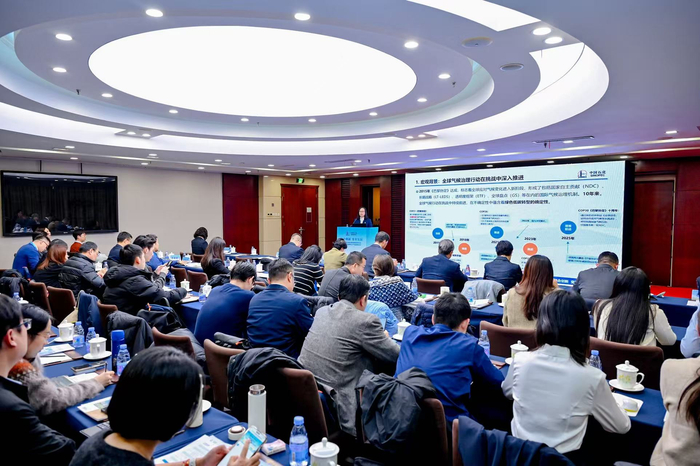
北京加快培育新型储能产业
Zhong Guo Hua Gong Bao· 2025-12-18 03:04
Core Insights - The Beijing Economic-Technological Development Area Management Committee has issued measures to accelerate the cultivation of the future energy industry, focusing on new energy storage, clean energy, low-carbon transition, and fusion energy [1][2] Group 1: Key Focus Areas - The document emphasizes support for four core directions: new energy storage, clean energy, low-carbon transition, and fusion energy, encouraging rapid completion of the full chain incubation from technology maturation to industrialization [1] - Companies are encouraged to utilize multimodal large model technology for R&D in key areas such as new energy storage materials, efficient photovoltaic components, and core components of wind power [1] Group 2: Innovation and Collaboration - Enterprises are urged to lead collaborations with research institutions and universities to deepen industry-academia-research cooperation, focusing on high-standard construction of industry R&D innovation platforms [2] - The initiative includes the establishment of common technology platforms for flexible perovskite battery components, new energy storage safety monitoring, and solid-state battery material research [2] Group 3: Infrastructure and Application - The plan aims to accelerate the large-scale production of core components, particularly in new energy storage (new batteries), advanced hydrogen equipment, and next-generation perovskite photovoltaic key components [2] - The development of a "Future Energy Town" is proposed to create a green and integrated demonstration scene, promoting the application of various advanced low-carbon technologies [2]
巴西政府批准新版国家气候计划
中国能源报· 2025-12-17 11:04
Core Viewpoint - The Brazilian government has approved a new national climate plan to implement the goals of the Paris Agreement and promote a low-carbon transition, providing a clear roadmap for action [1]. Group 1: Emission Reduction Targets - The new plan sets specific emission reduction targets across eight sectors, aiming to reduce greenhouse gas emissions from 2.04 billion tons of CO2 equivalent in 2022 to 1.2 billion tons by 2030, and further down to between 850 million and 1.05 billion tons by 2035 [2]. - The overall goal is to achieve net-zero emissions by 2050, while also emphasizing the need to enhance resilience to climate change [2]. Group 2: Adaptation and Action Plans - The plan includes 16 sectors and thematic action plans for adapting to climate change, covering areas such as public health, tourism, energy, transportation, disaster risk reduction, water resources, food security, and biodiversity, with over 800 specific actions proposed [2]. - The Brazilian government will continuously improve the national climate plan through biennial assessments and systematic revisions every four years to ensure alignment with climate science advancements and international commitments [2].
巴西政府批准新版国家气候计划
Xin Hua Wang· 2025-12-17 09:10
Core Points - The Brazilian government approved a new national climate plan on the 15th, providing a clear roadmap for achieving the goals of the Paris Agreement and promoting a low-carbon transition [1] - The plan aims to reduce greenhouse gas emissions by 59% to 67% from 2005 levels by 2035, with specific targets set for various sectors [1] - The new plan is a systematic update of Brazil's climate governance framework since the first plan was launched in 2008, emphasizing collaboration among government, private sector, and civil society [1] Summary by Sections - **Emission Reduction Goals**: The new plan sets clear emission reduction targets across eight sectors, aiming to decrease greenhouse gas emissions from 2.04 billion tons of CO2 equivalent in 2022 to between 850 million and 1.05 billion tons by 2035 [1] - **Long-term Objectives**: The overall goal is to achieve net-zero emissions by 2050, while also enhancing the capacity to adapt to climate change [1] - **Adaptation Measures**: The plan includes 16 sectors and thematic action plans for climate adaptation, covering areas such as public health, tourism, energy, transportation, disaster risk reduction, water resources, food security, and biodiversity, with over 800 specific actions [2] - **Continuous Improvement**: The Brazilian government will refine the national climate plan through biennial assessments and systematic revisions every four years to align with climate science advancements and international commitments [2]
技术创新让钢企屋顶成为"低碳增值引擎"
Ke Ji Ri Bao· 2025-12-16 08:31
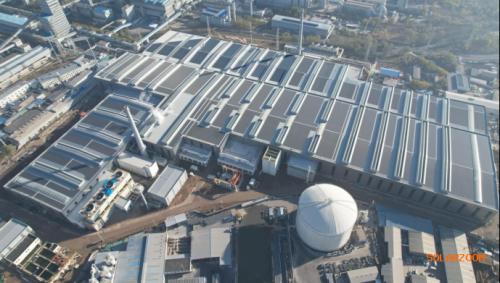
Core Insights - Longi Green Energy collaborates with Sente to integrate photovoltaic technology with building technology, transforming steel factory rooftops into power generation stations, which is crucial for cost reduction and green transformation in the steel industry [1] Group 1: Industry Context - The steel production industry is a high energy-consuming sector, with electricity consumption increasingly impacting operational costs [1] - Longi Sente's BIPV (Building-Integrated Photovoltaics) targets the actual needs of steel production, providing green electricity solutions to unlock spatial value and utilize rooftop resources [1] Group 2: Project Highlights - The Baowu Tai Steel new hot-rolling plant project incorporated Longi Sente's roofing system from the construction phase, integrating photovoltaic components with the roof structure to avoid resource waste, resulting in a carbon reduction of approximately 240,000 tons over the project's lifecycle [1] - The project also achieved significant energy cost savings and established a competitive advantage in carbon asset accumulation, providing an efficient green transformation path for new plants [1] Group 3: Technological Innovations - The Baowu New Steel silicon steel plant's rooftop renovation using Longi Sente's roofing system eliminated leakage issues through non-destructive connection technology, saving maintenance costs and generating an annual electricity output of 55.5 million kilowatt-hours [3] - The curved roofs, previously considered unsuitable for photovoltaic installations, were successfully utilized in projects by Shan Steel Long Steel and Jiangsu Changqiang Steel, achieving lifecycle electricity outputs of 227 million kilowatt-hours and 445 million kilowatt-hours, respectively [5] - Longi Sente's photovoltaic system features a dust prevention design that allows for self-cleaning through rainwater, enhancing electricity generation by 6% compared to traditional photovoltaic products [7]

铁矿石年报:供需关系重构,矿价中枢有望下移
Hua Lian Qi Huo· 2025-12-15 10:00
期货交易咨询业务资格:证监许可【2011】1285号 华联期货铁矿石年报 供需关系重构,矿价中枢有望下移 20251215 作者:曾可 从业资格号:F03118676 0769-22116880 交易咨询号:Z0022773 审核:姜世东,从业资格号:F03126164,交易咨询号:Z0020059 请务必阅读正文后的免责声明。本报告的信息均来自已公开信息,关于信息的准确性与完整性,建议投资者谨慎判断,据此入市,风险自担。 请务必阅读正文后的免责声明。本报告的信息均来自已公开信息,关于信息的准确性与完整性,建议投资者谨慎判断,据此入市,风险自担。 年度观点及策略 请务必阅读正文后的免责声明。本报告的信息均来自已公开信息,关于信息的准确性与完整性,建议投资者谨慎判断,据此入市,风险自担。 年度观点及策略 请务必阅读正文后的免责声明。本报告的信息均来自已公开信息,关于信息的准确性与完整性,建议投资者谨慎判断,据此入市,风险自担。 ◆ 供应:2026年全球铁矿供应将进入大幅增长期,主流矿、非主流矿及国内矿都有新矿山项目即将面临产能投。从四 大矿的产量指引来看,2026年力拓较2025年变动不大,BHP也仅有少量提质 ...
冰轮环境董事长李增群: 构建“技术储备池”应对市场多元化需求
Zheng Quan Ri Bao· 2025-12-12 22:52
Core Insights - The article highlights the transformation of Ice Wheel Environment from a traditional equipment supplier to a comprehensive solution provider in temperature control and energy management, addressing diverse market needs through innovative technologies [1][2]. Company Transformation - Ice Wheel Environment's breakthrough in helium compressors in 2016 marked a significant shift, allowing the company to transition from traditional cold chain services to advanced applications in fields like controlled nuclear fusion and ultra-low temperature research [2]. - The helium compressor, known as the "crown jewel" of the compressor industry, addresses extreme low-temperature challenges, achieving international leading standards while costing about 20% of imported alternatives [2]. Industry Positioning - The company is extending its temperature control capabilities by developing technologies for both ultra-low and high-temperature applications, including industrial heat recovery systems [3]. - Through acquisitions, such as Dunham-Bush and Beijing Huayuan Taimeng Energy Equipment Co., Ice Wheel Environment has completed its temperature control industry chain from low to high temperatures [3]. Market Opportunities - The company is capitalizing on the growing demand for temperature control solutions driven by AI computing and accelerated nuclear power construction, positioning itself in a favorable market environment [4]. - Ice Wheel Environment's products, including liquid cooling systems, are recognized in the National Green Data Center Advanced Applicable Technology Product Directory, indicating their relevance in the evolving data center landscape [4]. Nuclear Power Sector - Dunham-Bush, a subsidiary of Ice Wheel Environment, holds the highest nuclear-grade qualifications and is the only service provider in China covering all areas of nuclear island cooling systems [5]. - The company has serviced over twenty nuclear power plants, showcasing its expertise and commitment to safety in extreme conditions [5]. Strategic Focus - Ice Wheel Environment aims to balance short-term performance with long-term investments in emerging technologies like hydrogen energy and carbon capture, utilization, and storage (CCUS) [6]. - The establishment of a "Central Research Institute" emphasizes the company's commitment to innovation, with a focus on maintaining a minimum R&D investment of 4% across business units [6]. Vision and Commitment - The brand slogan "Let Temperature Have More Temperature" reflects the company's dual focus on technical excellence and humanistic values, aiming to contribute to carbon neutrality goals [7]. - Ice Wheel Environment is dedicated to becoming a standard configuration for carbon neutrality across industries, leveraging nearly 70 years of expertise to navigate the evolving landscape of digital and green technologies [7].
