投资策略

Search documents
转债投资机构行为分析手册
Tianfeng Securities· 2025-08-22 00:42
1. Report Industry Investment Rating No relevant content provided. 2. Core Viewpoints of the Report The report conducts a detailed analysis of the convertible bond investment strategies and preferences of different types of investment institutions, aiming to form a handbook for analyzing the behavior of convertible bond investment institutions. It focuses on an overview and the public fund section, considering the significant differences in investment strategies and information disclosure mechanisms between public funds and non - public funds [1][9]. 3. Summary According to Relevant Catalogs 3.1 Convertible Bond Investment Institutions and Analysis Method Overview - **Investor Structure and Proportion**: As of the end of July 2025, public funds and enterprise annuities are the "main forces" in direct convertible bond investment. Public funds hold a significant proportion, with 35.56% of the face value of Shanghai - listed convertible bonds and 33.31% of the market value of Shenzhen - listed convertible bonds. Enterprise annuities are the second - largest investment institutions, holding 18.41% of Shanghai - listed convertible bonds and 13.23% of Shenzhen - listed convertible bonds. Insurance institutions, securities self - operation also occupy important positions. Other professional institutional investors hold a relatively small proportion [10]. - **Changes in Investor Structure**: Compared with the end of 2021, the "influence" of public funds and insurance institutions has increased, while the proportion of enterprise annuities has decreased. The investment proportions of securities self - operation, private funds, and trust institutions have increased, and the proportion of general institutional investors represented by listed company shareholders has significantly decreased [13]. - **Differences in Investment Strategies**: Different types of professional institutional investors have differences in convertible bond investment restrictions, preferences, and investment strategies. Public funds generally have fewer restrictions on convertible bond ratings and focus on relative returns. Pension funds, insurance institutions, and social security funds have clear rating restrictions and focus on absolute returns [19]. - **Analysis Data Sources**: For public funds, quarterly reports can be used to analyze their convertible bond investment preferences. For other investment institutions, the top ten holders of convertible bonds disclosed in the semi - annual and annual reports of convertible bond issuers provide detailed analysis materials [20]. 3.2 What are the Characteristics of Public Funds' Convertible Bond Investment? 3.2.1 Overview of Public Funds' Convertible Bond Holdings - **Scale and Proportion Changes**: Since Q4 2023, the market value and proportion of convertible bonds held by public funds have been slightly decreasing. The number of public funds investing in convertible bonds has decreased overall, but their participation in the convertible bond market has increased [24]. - **Industry Distribution Preference**: As of Q2 2025, public funds significantly over - allocate convertible bonds in industries such as metals, chemicals, transportation, automobiles, agriculture, forestry, animal husbandry, and banking, and under - allocate those in industries such as petrochemicals, steel, construction decoration, public utilities, environmental protection, and power equipment [29]. - **Price, Valuation, and Rating Preferences**: As of the end of Q2 2025, public funds over - allocate convertible bonds in the 120 - 130 yuan range and above 150 yuan, and AA and AA - rated convertible bonds; they under - allocate other convertible bonds [29]. - **Differences in Sub - investor Structure**: Public funds account for about 30% in the overall convertible bond investor structure, but their influence varies in different industries, price ranges, and rating segments [35]. 3.2.2 Differences in Convertible Bond Holdings among Various Funds - **Differences in Convertible Bond Holdings by Fund Type**: Secondary bond funds, the main force in convertible bond allocation, have significantly reduced their convertible bond holdings since Q3 2023. Convertible bond funds and primary bond funds are important holders. The convertible bond positions of convertible bond funds have reached a historical high, while those of secondary bond funds, primary bond funds, and partial - debt hybrid funds have decreased [44][46]. - **Characteristics of Convertible Bond Funds' Holdings**: In Q2 2025, convertible bond funds increased their holdings in industries such as petrochemicals, public utilities, and communications, and decreased their holdings in upstream energy materials and mid - stream manufacturing industries. They stably over - allocate convertible bonds in the 120 - 130 yuan range and under - allocate those in the 100 - 120 yuan range [48][57]. 3.2.3 Characteristics of Convertible Bond Holdings of High - performing Funds - **Scale and Quantity of Convertible Bond Holdings**: Different high - performing funds have different scales and quantities of convertible bond holdings. For example, Fuguo Jiuli Stable Allocation has a relatively concentrated holding, while Huashang Fengli Enhancement has a large number of holdings but a small average holding per bond [73]. - **Industry, Rating, and Price Preferences**: Different high - performing funds have different preferences in terms of industry, rating, and price. For example, Fuguo Jiuli Stable Allocation prefers convertible bonds in the power equipment, banking, and pharmaceutical industries, while Huashang Fengli Enhancement prefers high - priced and manufacturing - related convertible bonds [74]. 3.3 How to Analyze Non - public Fund Convertible Bond Investments? 3.3.1 Starting from the "Top Ten Holders" of Individual Bonds - **Investor Classification**: Convertible bond investors are divided into 11 major categories and 24 sub - categories based on the names of bondholders. The top ten holders' data accounts for about 40% of the convertible bond market, and public funds, pension products, etc. frequently appear in the list [86][87]. - **Data Representativeness**: The data of the top ten holders is representative for analyzing the convertible bond investment preferences and characteristics of various investors. After excluding the "repurchase pledge special account" and "company - related institutions", the data (referred to as "top ten holders 2") can more objectively present the data conclusions [88][89]. 3.3.2 Preliminary Exploration of Non - public Fund Institutions' Convertible Bond Investments - **Industry Distribution of Convertible Bond Holdings**: As of the end of 2024, "private asset management" institutions hold more convertible bonds in the power equipment industry but less in pro - cyclical industries. "Securities self - operation" has a relatively high proportion of holdings in the steel, non - ferrous metals, and power equipment industries. "Insurance" has a relatively dispersed convertible bond portfolio [97]. - **Rating and Price Distribution of Convertible Bond Holdings**: "Private asset management" and "QFII" have a higher tolerance for low - rated convertible bonds. "Insurance" and "securities self - operation" have a relatively high proportion of AAA - rated convertible bonds. In terms of price, "private asset management" has a high proportion of convertible bonds below 100 yuan, while "insurance", "social security funds", and "QFII" mainly hold convertible bonds in the 110 - 120 yuan range [97][98].
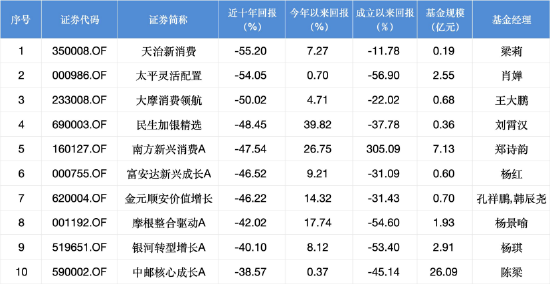
富安达新兴成长A十年亏损46.52%,五任经理未改命,最新规模仅剩0.6亿元
Xin Lang Ji Jin· 2025-08-20 08:57
Core Viewpoint - The A-share market has reached a ten-year high, but many equity funds have failed to capture economic growth, with 154 funds showing negative returns over the past decade, including 91 equity products [1] Group 1: Fund Performance - Among the underperforming funds, the Fuanda Emerging Growth A fund has a ten-year return of -46.52%, ranking sixth in the equity fund decline list [1] - The fund has experienced extreme volatility, achieving significant returns during bull markets (e.g., 70.51% in 2019) but suffering substantial losses in bear markets (e.g., -45.95% in 2022) [5][6] - The fund's worst six-month return was -50.5%, while the best was 60.08%, indicating a poor long-term holding experience [7] Group 2: Relative Performance - In 2024, the fund declined by -12.51%, lagging its benchmark by over 23 percentage points, and in 2023, it fell -23.10%, underperforming the benchmark's -8.88% [7] - The fund has consistently underperformed its benchmark in most years, highlighting challenges in generating excess returns [7] Group 3: Management Issues - The fund has had five managers over ten years, with an average tenure of 2.54 years, and all managers have generally delivered poor performance [7][8] - The only manager with positive returns was Kong Xuebing, who achieved 28.62% during his tenure from 2014 to 2015 [9] Group 4: Portfolio Composition - The fund's second-quarter holdings are heavily concentrated in the technology growth sector, with significant increases in positions for companies like Lexin Technology (up 72.08%) and Fulin Precision (up 75.81%) [9][11] - The fund manager's investment strategy focuses on growth companies in sectors such as optical modules, computers, and consumer electronics, reflecting a preference for growth-oriented investments [12]

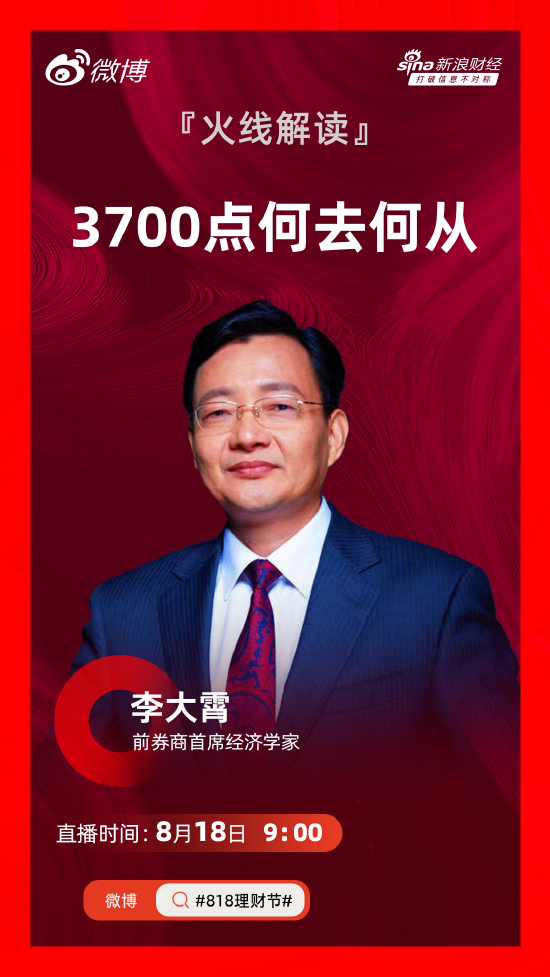
李大霄:投资要像英雄渡海 以坚定的决心和毅力抵御“妖股”诱惑
Xin Lang Zheng Quan· 2025-08-18 03:09
Group 1 - The core viewpoint emphasizes the importance of maintaining a disciplined investment strategy, particularly during a bullish market, and warns against being lured by speculative stocks [1] - The investment advice suggests that investors should focus on buying quality stocks at market lows and remain patient, avoiding the temptation to chase high-flying stocks [1] - The analogy of navigating through a sea of temptations is used to illustrate the need for steadfastness and determination in investment decisions [1] Group 2 - The commentary highlights the rising investor sentiment and questions the potential for market overheating in the future [1] - The recommendation to "sit in a good vehicle" implies that investors should select fundamentally strong stocks to maximize returns [1] - The phrase "not moving like a mountain" suggests that investors should maintain a stable and calm approach rather than reacting impulsively to market fluctuations [1]
上海“马路股市沙龙”又火了
Jing Ji Guan Cha Wang· 2025-08-18 02:24
Core Viewpoint - The stock market in Shanghai is experiencing a vibrant atmosphere, with investors actively discussing strategies and stock performance as the index approaches 3700 points, reflecting a significant recovery and optimism among retail investors [1] Group 1: Market Sentiment - The "stock market salon" on Guangdong Road in Shanghai has a history of over 30 years and has gained popularity, especially after the influence of social media personalities [1] - Retail investors are engaging in lively discussions about market trends and individual stocks, indicating a strong interest in the current market conditions [1] Group 2: Investment Strategies - Some investors have reported successfully recovering their investments after a prolonged wait, highlighting a sense of relief and optimism in the market [1] - There are mentions of specific investment strategies, such as heavy investments in innovative pharmaceuticals, suggesting a focus on sectors with growth potential [1]
汇安基金陆丰连卸两基!五年任内仅调研一次、连续三年踩中“问题公司”
Sou Hu Cai Jing· 2025-08-13 05:30
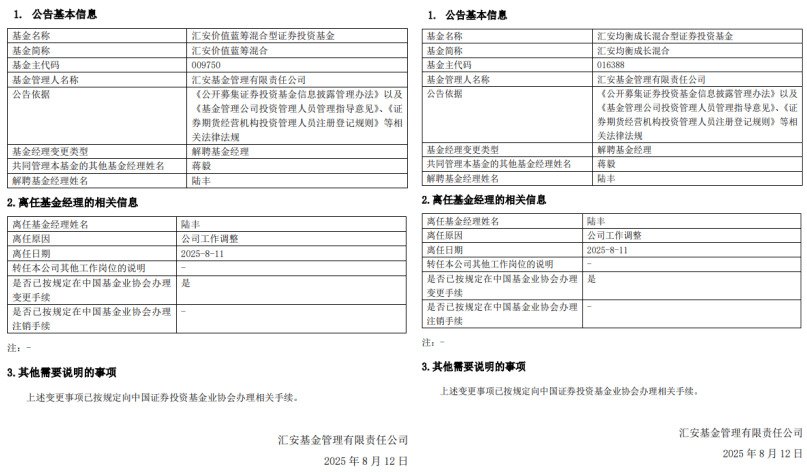
8月12日,汇安基金接连发布两则公告,汇安价值蓝筹混合、汇安均衡成长混合两只产品解聘基金经理陆丰,由蒋毅管理。 | 基金名称 | 汇安价值蓝筹混合型证券投资基金 | | --- | --- | | 基金简称 | 汇安价值蓝筹混合 | | 易金主代码 | 009750 | | 基金管理人名称 | 汇安基金管理有限责任公司 | | 公告依据 | 《公开募集证券投资基金信息披露管理办法》以及 | | | 《基金管理公司投资管理人员管理指导意见》、《证 | | | 券期货经营机构投资管理人员注册登记规则》等相 | | | 关法律法规 | | 基金经理变更类型 | 解聘基金经理 | | 共同管理本基金的其他基金经理姓名 | 蒋毅 | | 解聘基金经理姓名 | 陆丰 | | 基金名称 | 汇安均衡成长混合型证券投资基金 | | --- | --- | | 基金简称 | 汇安均衡成长混合 | | 基金主代码 | 016388 | | 基金管理人名称 | 汇安基金管理有限责任公司 | | 公告传据 | 《公开募集证券投资基金信息按露管理办法》以及 | | | 《基金管理公司投资管理人员管理指导意见》、《证 | | | 券期货 ...
This Magnificent Vanguard ETF Just Hit an All-Time High. Should You Invest Now or Wait?
The Motley Fool· 2025-08-10 16:00
Market Overview - The stock market has experienced significant volatility, entering correction territory and reaching new all-time highs within months, leading to mixed investor sentiment [1][2] - Approximately 35% of investors are optimistic about the next six months, while 43% are pessimistic according to a survey by the American Association of Individual Investors [1] Investment Opportunities - The Vanguard S&P 500 Growth ETF (VOOG) has reached a new all-time high, climbing over 38% since its low in early April [4] - This ETF is considered more resilient to market volatility and is likely to help investors build wealth despite potential downturns or recession risks [5] ETF Composition and Performance - The Vanguard S&P 500 Growth ETF includes only 212 stocks from the S&P 500, focusing on those with the highest growth potential [6] - The ETF has delivered an average annual return of 15.79% over the last 10 years, outperforming the Vanguard S&P 500 ETF, which has an average return of 13.62% [8] Investment Strategy - Investors are advised that timing the market can be less important than remaining invested over the long term, as holding investments can mitigate losses during downturns [9][10] - Historical examples show that holding the Vanguard S&P 500 Growth ETF through market declines can lead to significant total returns, even after substantial drops [11][13] Long-Term Perspective - A long-term investment horizon of at least five to seven years is recommended for minimizing risks associated with market fluctuations [15] - The Vanguard S&P 500 Growth ETF is positioned for long-term growth, emphasizing that time in the market is more valuable than attempting to time market entry [16]

牛市狂欢中,我选择默默离场!
集思录· 2025-08-08 14:28
Core Viewpoint - The article discusses the current bull market and the author's decision to reduce positions, emphasizing the importance of recognizing market peaks and the risks associated with chasing profits at high valuations [1][2][3]. Market Analysis - The current bull market is characterized by a significant increase in margin trading, surpassing 2 trillion, raising concerns about who will buy stocks from new investors [2]. - Historical bull markets show varying durations and returns, with the shortest being a 107% increase from 1664.93 to 3454.02 between November 2008 and July 2009, and the longest being a 513.5% increase from 998 to 6124.04 from June 2005 to October 2007 [2]. - The current market sentiment is compared to the 5.19 market, which also occurred under poor economic conditions, driven by policy, liquidity, and technology narratives [2]. Investment Strategy - The author has adopted a balanced investment strategy, achieving approximately 200% returns in a high-risk account and over 10% in a defensive account, indicating a cautious approach to market fluctuations [3]. - The article emphasizes the importance of realizing profits rather than holding onto paper gains, suggesting that the peak of market greed often coincides with the highest risks [3]. - The author plans to allocate freed-up capital towards new stock subscriptions on the Beijing Stock Exchange, indicating a shift in focus towards new investment opportunities [3]. Market Dynamics - The article posits that bull markets primarily result in wealth transfer, where new entrants often lose money to those who have held positions since market lows [3][5]. - It highlights that the stock market, in the short term, operates as a zero-sum game, where the gains of some come at the expense of others [3]. - Long-term, the stock market is viewed as a positive-sum game, with rising company revenues and profits leading to increased market valuations [4].

债市新时代系列培训-2025场
2025-08-05 15:42
Summary of Key Points from Conference Call Records Industry or Company Involved - The discussion primarily revolves around the **credit market** and **credit risk analysis** in the context of **China's financial environment**. Core Points and Arguments 1. **Reevaluation of Credit Strategies**: The current market environment necessitates a reevaluation of credit strategies, as evidenced by the cases of 中航产融 (AVIC Capital) and 万科 (Vanke), highlighting the importance of in-depth credit risk analysis [2][1]. 2. **Integration of Philosophy in Credit Research**: Credit research should combine practical foundations with philosophical thinking, emphasizing the transformation of qualitative insights into a rational analytical framework [3][6]. 3. **Long-term Investment Focus**: Long-term investors must understand the fundamentals of investment subjects, including macroeconomic impacts and policy changes, to establish a systematic analysis framework that combines quantitative and qualitative assessments [1][7]. 4. **Limitations of Existing Default Models**: Existing default models in the Chinese market are not fully applicable and require adjustments based on practical experiences to enhance predictive accuracy [8][9]. 5. **Role of Credit Ratings**: Credit ratings serve as a relative ranking of a company's debt repayment ability rather than complex default probability calculations, aiding investors in understanding relative risk levels [10][14]. 6. **Dynamic Analysis of Local Government Financing**: When analyzing local government financing, it is crucial to understand the dynamic relationship between central and local governments, employing dialectical thinking to assess various influencing factors [11][4]. 7. **Importance of Liquid Assets**: The evaluation of a company's debt repayment ability must focus on cash flow from operational profits, the coverage of liquid assets over debts, and potential external support [17][26]. 8. **Impact of Monetary Policy on Credit Financing**: Credit bond financing is primarily influenced by monetary policy, necessitating close monitoring of issuance policies and macroeconomic monetary policies [9][1]. 9. **Philosophical Thinking in Credit Research**: The application of philosophical thinking in credit research involves understanding the relationship between practice and theory, and the need for continuous verification of conclusions through empirical data [6][3]. 10. **Historical Context of Default Waves**: The historical context of default waves in China reveals different phases, such as the large-scale defaults from 2015 to 2016 due to overcapacity and the subsequent waves affecting private and state-owned enterprises [23][24]. Other Important but Possibly Overlooked Content 1. **Challenges in Credit Rating Agencies**: Credit rating agencies often lack unified rating principles, and their results may be influenced by client demands, necessitating a deeper understanding of the underlying principles and strategies [22][4]. 2. **External Support Evaluation**: When a company cannot cover its debts through operational profits and liquid assets, external support becomes critical, and its effectiveness must be assessed based on the willingness and capacity of the parent company [29][30]. 3. **Investment Strategy Adaptation**: Investment strategies must adapt to market changes, considering the behavior of competitors and the execution of internal strategies [38][42]. 4. **Risk Assessment in Local Government Projects**: Evaluating the risks associated with local government leveraging for infrastructure projects requires careful consideration of economic structures and income levels to avoid potential pitfalls [79][80]. 5. **Sector-Specific Recovery Potential**: Certain sectors, such as real estate and consumer goods, may be approaching recovery phases, indicating potential investment opportunities despite previous downturns [73][74]. This summary encapsulates the essential insights and recommendations from the conference call, providing a comprehensive overview of the current state and future considerations in the credit market and investment strategies.
沪铜、黄金:有色回调,建议持对应投资策略
Sou Hu Cai Jing· 2025-08-05 14:37
Group 1 - The core viewpoint of the article highlights the strong performance of the US dollar this week, leading to a general pullback in non-ferrous futures, particularly in copper and gold markets [1] - In the copper market, current inventory levels are low, and there are constraints on the supply side, while overall demand remains stable. It is anticipated that copper prices will maintain a volatile trend in the near term [1] - The article suggests that investors should continue to hold a wide spread selling strategy for copper futures [1] Group 2 - In the gold market, there is still a demand for safe-haven assets, and there is a long-term trend of potential weakening in the US dollar [1] - The outlook for gold prices is optimistic in the medium to long term, and investors are advised to maintain a bull spread strategy for gold futures [1]
伯克希尔二季度利润骤降59%,巴菲特接班人还能保持投资神话吗?
Sou Hu Cai Jing· 2025-08-03 23:15
Group 1 - Warren Buffett announced his retirement at the Berkshire Hathaway shareholder meeting in May, with Greg Abel set to become CEO on January 1 next year [2] - Following the retirement announcement, Berkshire Hathaway's stock price has been on a downward trend, with a cumulative decline of nearly 15% since its peak in early May [2] - Berkshire Hathaway's cash reserves remain high at $344.1 billion, despite a slight decrease in the latest financial report, indicating a cautious investment strategy amid concerns over high market valuations [2] Group 2 - In contrast to the overall market performance, Berkshire Hathaway's stock rose over 17% in the first quarter, but it has underperformed in the subsequent quarters as the market began to recover [3] - The company's net profit significantly dropped by 59% in the second quarter, largely due to substantial write-downs related to Kraft Heinz, and there has been no stock buyback plan during the stock price decline [3] - The lack of stock buybacks may be attributed to the stock not being undervalued enough and the introduction of a 1% stock buyback tax under the Inflation Reduction Act, which increases the cost of buybacks [3] Group 3 - Despite the less favorable performance in the second and third quarters, Berkshire Hathaway remains one of the best-performing public companies globally [4] - The transition from Buffett's era to Greg Abel's leadership is anticipated, with limited market knowledge about Abel's management and investment capabilities [4] - There is optimism that Abel, having been rigorously selected by Buffett, will continue the investment legacy established by Buffett [4]