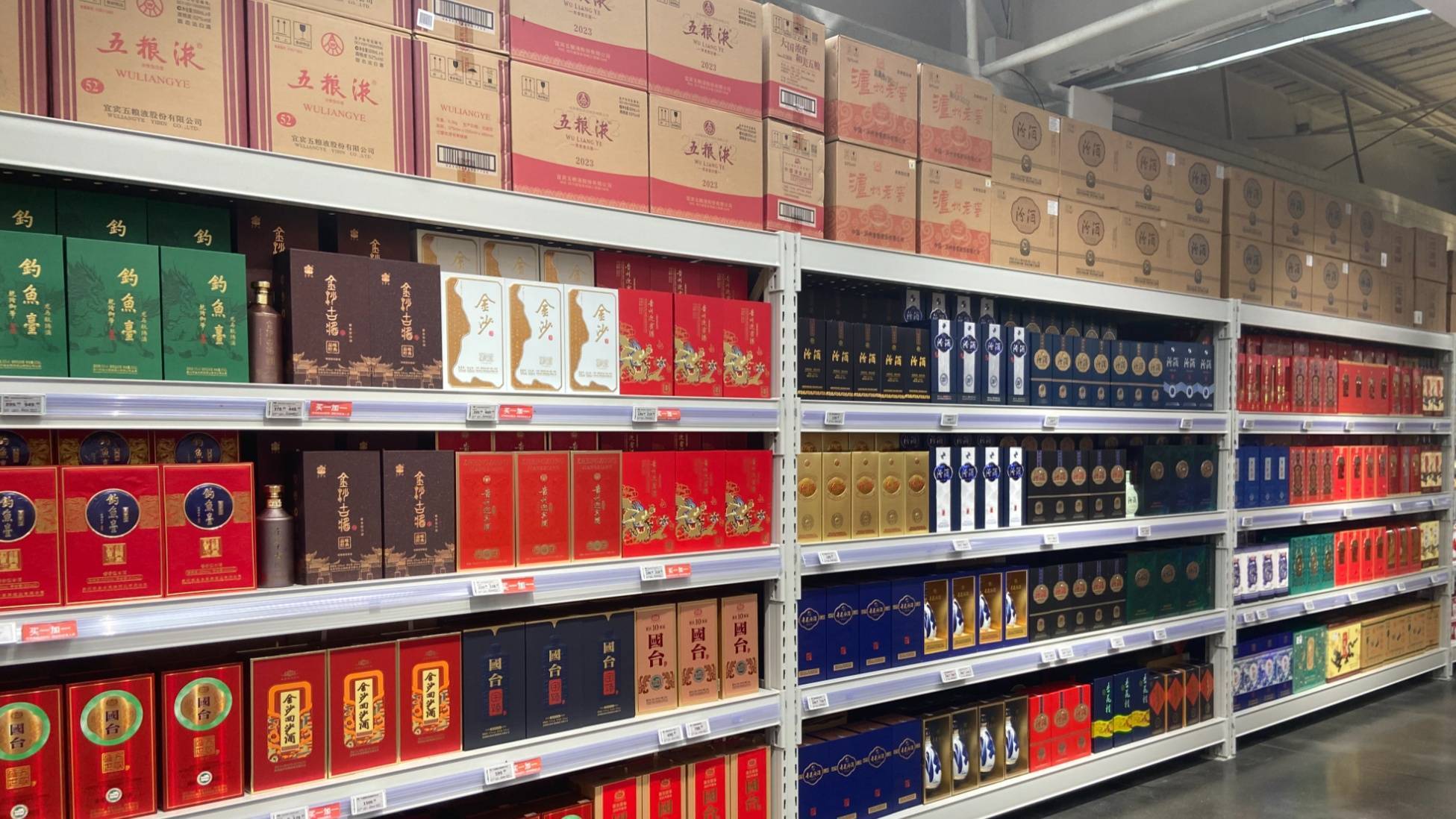
白酒行业深度调整

Search documents
8月酒水销售好转动销反弹 能填第二季度的“坑”吗
Nan Fang Du Shi Bao· 2025-09-18 23:10
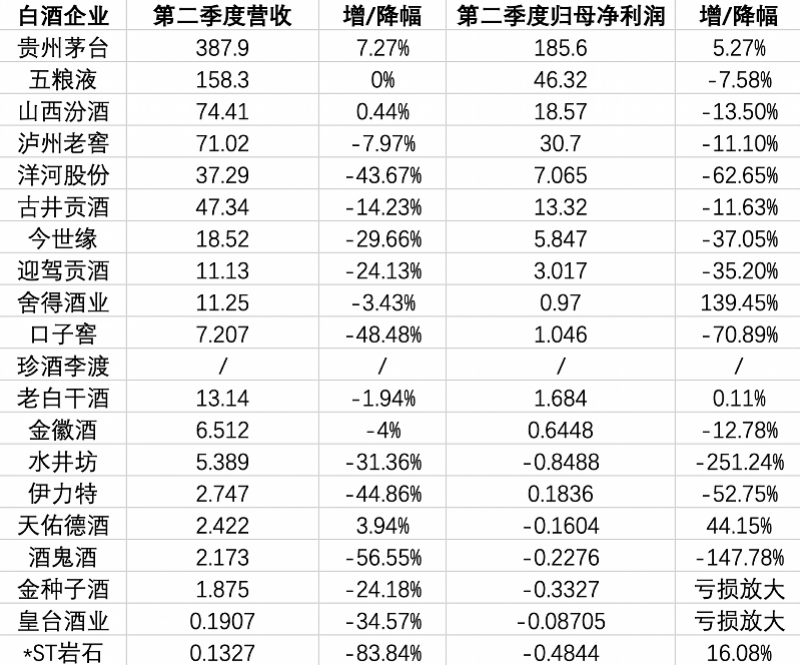
Core Viewpoint - The Chinese liquor industry is experiencing a recovery in sales after a prolonged downturn, driven by seasonal demand and price adjustments, although the overall market remains in a deep adjustment phase [2][9][11]. Group 1: Industry Performance - In the second quarter, the majority of liquor companies reported a decline in both revenue and net profit, with only a few exceptions like Guizhou Moutai and Tianyoude Liquor showing growth [4][6][11]. - The overall performance of the liquor industry reflects a return to normalcy after a period of rapid growth, with the second quarter traditionally being a slow season for sales [7][11]. - The industry is currently facing challenges such as high inventory levels and reduced demand from business receptions, which have significantly impacted sales figures [8][10]. Group 2: Sales Recovery - August saw a notable increase in sales and shipment volumes compared to July, attributed to the upcoming Mid-Autumn and National Day holidays, as well as further price reductions [2][9]. - The recovery in sales is primarily driven by increased consumption during traditional events like graduation and wedding banquets, alongside a rise in demand for mid-range and mass-market products [9][10]. - Despite the sales rebound, the industry is still expected to face challenges in matching last year's performance levels, with many analysts predicting continued declines in overall market demand [11][12]. Group 3: Market Trends and Investor Sentiment - The liquor sector has seen a rebound in stock prices over the past month, with the industry index rising by 12.32% from early August to mid-September [12]. - Analysts suggest that while there is optimism regarding a potential turning point for premium liquor prices, the overall industry sentiment remains cautious due to ongoing adjustments and competitive pressures [13]. - The current market environment is characterized by a focus on inventory clearance and price adjustments, with many companies adopting strategies to manage their sales and distribution channels effectively [10][11].


观酒|旺季来临,白酒销量反弹,能填第二季度的“坑”吗?
Nan Fang Du Shi Bao· 2025-09-17 00:05
Core Viewpoint - The Chinese liquor industry, particularly the baijiu sector, is experiencing signs of recovery after a prolonged period of adjustment, with sales and distribution showing improvement in August due to seasonal demand and price adjustments [1][8]. Industry Performance - After nearly three months of downward adjustment, the baijiu circulation and sales have shown signs of recovery, with a 0.3% month-on-month increase in food and beverage prices in August [1]. - The sales volume and revenue in August significantly increased compared to July, with major companies like Kweichow Moutai reporting a notable rebound in sales [1][8]. - The second quarter of the year saw a deep adjustment phase for the baijiu industry, with 20 listed companies reporting that 13 experienced declines in both revenue and net profit [3][4]. Company Performance - In the second quarter, only Kweichow Moutai and Tianyoude Liquor reported year-on-year revenue growth, while most other companies, including Yanghe and Gujing Gongjiu, faced significant declines [4][5]. - The second quarter is typically a slow season for baijiu companies, but this year, the "off-season effect" returned due to high channel inventory and ineffective sales strategies [6]. - The impact of policy changes, such as the "ban on alcohol" for official receptions, has also contributed to the decline in performance for many companies [6][7]. Market Trends - The baijiu market is currently in a "clearing inventory" phase, with ongoing price reductions leading to increased sales volume, particularly in the mid-range and popular price segments [9]. - Despite the recent sales rebound, the overall market is still expected to decline compared to last year, with analysts predicting a double-digit decrease during the upcoming Mid-Autumn and National Day holidays [9][10]. - The baijiu sector has seen a significant rebound in stock prices over the past month, with the index rising by 12.32% from August 1 to September 16, although it remains below last year's peak [10][12]. Future Outlook - Analysts suggest that the upcoming holiday season may provide a window for price stabilization and potential recovery for premium liquor brands, but the overall industry may still face challenges [11][12]. - The current market sentiment is driven by a combination of low valuations and speculative investments, rather than a genuine recovery in industry health [12].





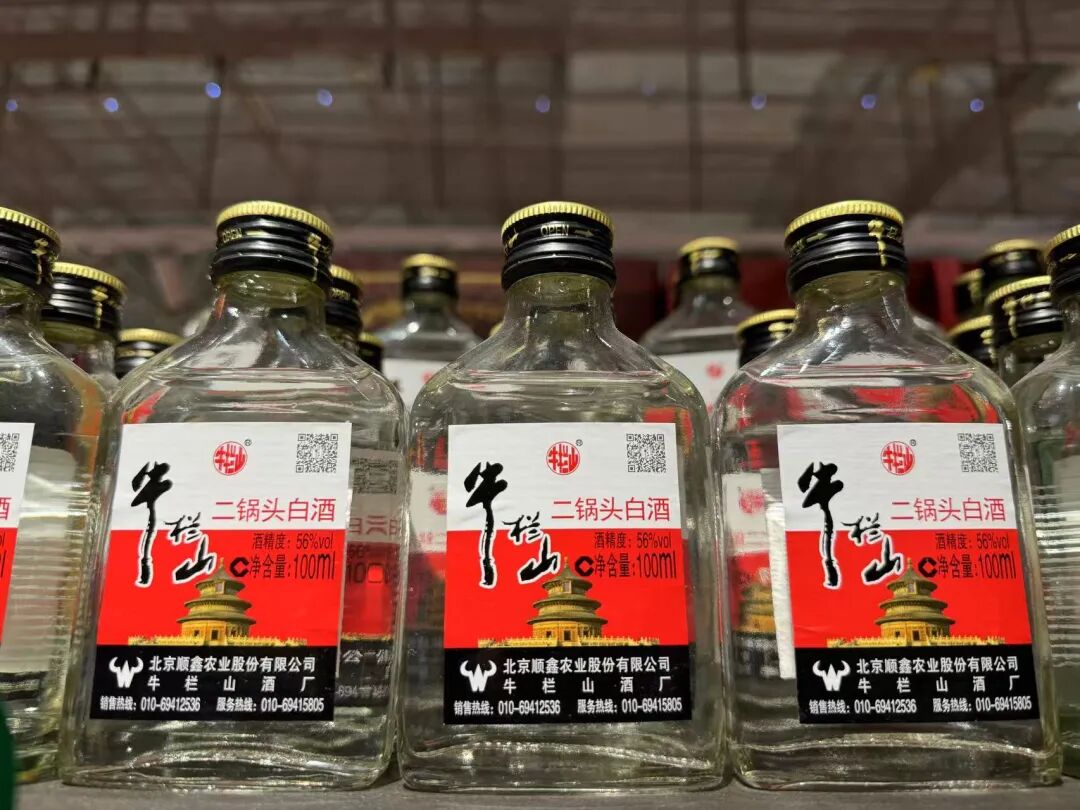
牛栏山二锅头销量萎缩,顺鑫农业净利连降
Guo Ji Jin Rong Bao· 2025-09-15 13:44
Core Viewpoint - Shunxin Agriculture reported a challenging first half of the year, with significant declines in revenue and net profit due to pressures in both its pork and liquor businesses [1][3]. Financial Performance - The company achieved revenue of 4.593 billion yuan and a net profit of 173 million yuan, representing year-on-year declines of 19.24% and 59.09%, respectively [1]. - The liquor business generated approximately 3.606 billion yuan in revenue, down 23.25% from the same period last year, with its revenue share decreasing from 82.61% to 78.51% [4]. Business Segments - The pork business reported revenue of 889 million yuan, remaining stable year-on-year, but accounted for less than 20% of total revenue. The slaughtering segment contributed 782 million yuan, while breeding sales were 107 million yuan [3]. - The gross margin for the pork business fell to 0.01%, a decrease of 2.52 percentage points from the previous year, indicating minimal profit potential [3]. Liquor Business Challenges - The liquor segment faced significant challenges, with sales volumes declining due to a deep adjustment in the industry. The company’s high-end, mid-range, and low-end liquor revenues all fell compared to the previous year [6][7]. - High-end liquor revenue was approximately 529 million yuan, down 12.32%, while mid-range liquor revenue decreased by 21.87% to 498 million yuan, and low-end liquor revenue dropped by 25.41% to 2.578 billion yuan [7][10]. Market Competition - The low-end liquor segment, which accounts for over 70% of Shunxin's liquor revenue, has limited profit margins, with a gross margin of 36.91% compared to 42.12% for mid-range and 69.32% for high-end products [10]. - Increased competition from leading liquor companies launching light bottle products has further eroded Shunxin's market share, with brands like Fenjiu and Luzhou Laojiao actively targeting younger consumers [10][11]. Strategic Initiatives - The company is focusing on product innovation, marketing innovation, and brand expansion, while also enhancing its digital marketing efforts through partnerships with platforms like Alibaba [6]. - Despite these efforts, the effectiveness has not met expectations, as all categories of liquor revenue have fallen short of last year's figures [6].

白酒产品密集推新背后的市场博弈丨封面观酒
Sou Hu Cai Jing· 2025-09-15 08:01
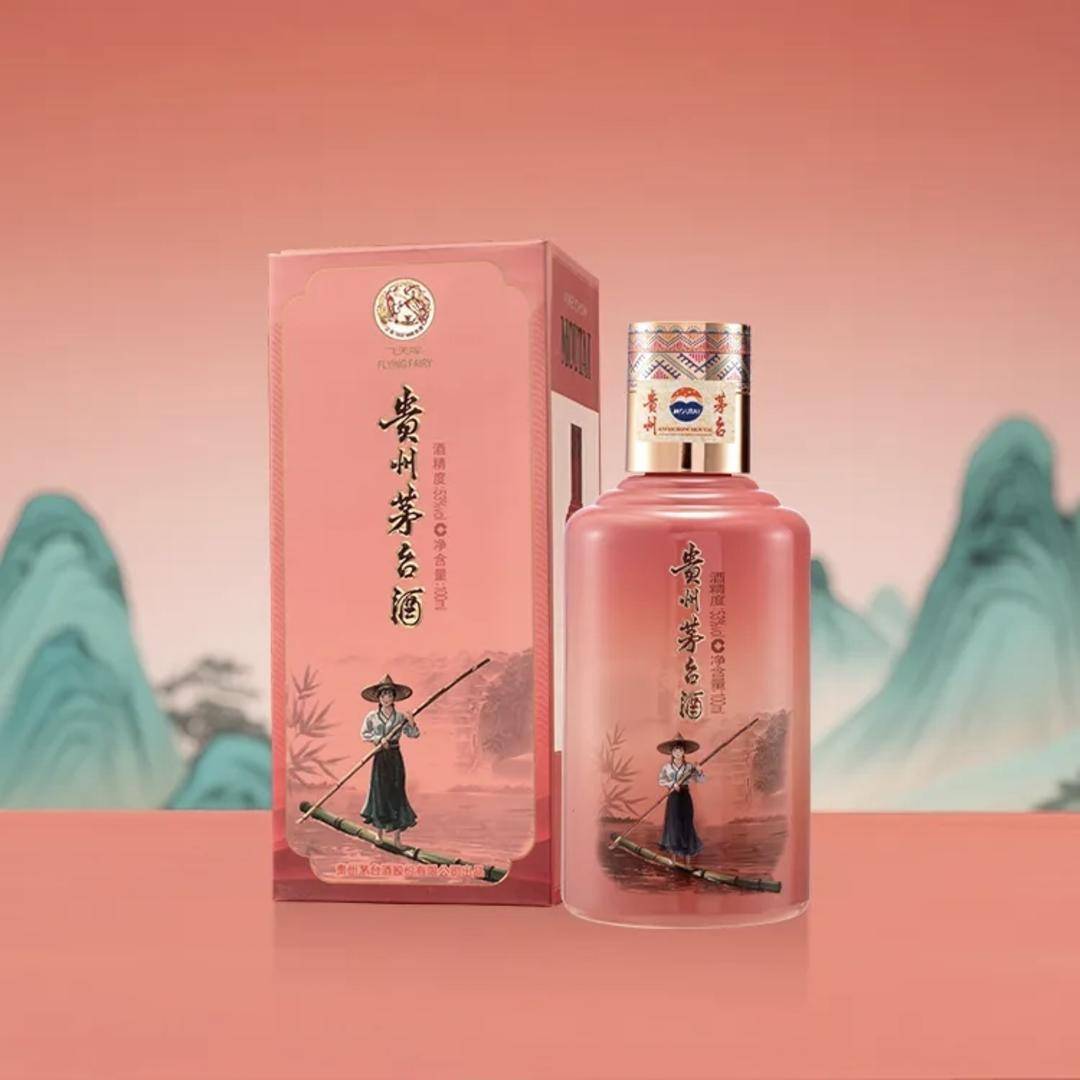
Core Viewpoint - The rapid introduction of new products by liquor companies is a proactive strategy to combat shrinking consumption and intense competition in the existing market [1][10]. Group 1: Product Launches by Guizhou Moutai - Guizhou Moutai has launched over 10 new products in the past two months, marking an unprecedented frequency in the industry [2][4]. - Notable product launches include the Taiyuan Red health wine on August 4, a limited edition commemorative wine on August 8, and the Moutai 1935 premium version on August 25 [4]. - The company has also introduced a series of cultural products and new packaging formats, indicating a strong push for innovation [4][10]. Group 2: Other Brands Following Suit - Other liquor brands have also begun to introduce new products, albeit in smaller quantities, reflecting a rare trend of concentrated innovation across the industry [5][10]. - Brands like Wuliangye and Shanxi Fenjiu have launched new products, including a craft beer and upgraded versions of existing offerings [7][10]. - The trend includes a focus on low-alcohol products and light bottle designs, catering to younger consumers and the mass market [11]. Group 3: Market Dynamics and Strategies - The recent surge in product launches is a response to significant market pressures, including regulatory changes and declining consumer interest [10][11]. - Companies are adopting strategies to stimulate consumer demand through product innovation and enhanced online sales channels [10][11]. - The emphasis on light bottle products and low-alcohol options indicates a shift towards appealing to younger demographics and expanding market reach [11].
22家上市酒企仅6家维持营收利润正增长
Ge Long Hui A P P· 2025-09-12 04:17
Core Viewpoint - The Chinese liquor industry is experiencing a significant downturn, with only 6 out of 22 listed companies reporting positive revenue and profit growth in the first half of the year, indicating a deep adjustment phase for the industry [1] Industry Summary - The liquor industry is undergoing a "triple period overlap" adjustment, facing challenges that have led to a decline in growth rates [1] - Key strategies being adopted by liquor companies include targeting younger consumers and promoting lower-alcohol products to navigate current market difficulties [1] - The three main focal points for the liquor industry in the first half of the year are instant retail, banquet markets, and lower alcohol content [1] Company Summary - Among the 22 listed liquor companies, only 6 maintained positive revenue and profit growth: Kweichow Moutai, Wuliangye, Shanxi Fenjiu, Gujing Gongjiu, Laobaigan, and Jinhui Liquor [1] - The companies that reported growth include both leading brands and regional champions, suggesting that despite increasing industry concentration, there are still structural opportunities available [1]
22家上市酒企仅6家多赚钱了
Xin Lang Cai Jing· 2025-09-12 03:59
Core Insights - The overall growth rate of the liquor industry has declined, with only 6 out of 22 listed liquor companies maintaining positive revenue and profit growth during the first half of the year [1] - The industry is undergoing a deep adjustment phase characterized by three overlapping periods, indicating significant challenges [1] - Companies are actively seeking transformation through youth-oriented and lower-alcohol products to navigate current difficulties [1] Industry Summary - Among the 22 listed liquor companies, only 6 reported positive growth in revenue and profit: Kweichow Moutai, Wuliangye, Shanxi Fenjiu, Gujing Gongjiu, Laobaigan, and Jinhuijiu [1] - The presence of both leading enterprises and regional champions among the companies with positive growth suggests structural opportunities despite increasing industry concentration [1] - Key themes for the liquor industry in the first half of the year include instant retail, banquet markets, and lower alcohol content [1]
“西北酒王”失速!金徽酒省内市场罕见下滑
Guo Ji Jin Rong Bao· 2025-09-11 11:37
Core Viewpoint - The performance of Jinhui Liquor, known as the "King of Northwest Liquor," has significantly declined in its core market, making it difficult for the company to achieve its annual performance targets [1]. Financial Performance - In the first half of 2025, Jinhui Liquor reported revenue of 1.759 billion yuan, a year-on-year increase of 0.31%, and a net profit attributable to shareholders of 298 million yuan, up 1.12%, marking the end of several years of double-digit growth [1]. - The company's revenue in its home market of Gansu province fell to 1.334 billion yuan, a rare decline of 1.11% year-on-year [1]. Market Analysis - In the first quarter, the domestic business of Jinhui Liquor still showed growth with revenue of 857 million yuan, up 1.05%, but this was significantly lower than the 9.48% growth in the external market [2]. - In the second quarter, domestic market revenue dropped to 476 million yuan, a year-on-year decrease of 4.77%, leading to an overall revenue decline of 4.02% to 651 million yuan [2]. Product Segmentation - Jinhui Liquor's products are categorized into three price ranges, with the high-end products (above 300 yuan) generating revenue of 380 million yuan, a year-on-year increase of 21.6% [2][3]. - The mid-range products (100-300 yuan) saw revenue of 969 million yuan, an increase of 8.93%, while low-end products (below 100 yuan) experienced a significant decline of 29.78%, with revenue of 366 million yuan [3]. Industry Context - The overall white liquor industry is facing challenges, with a 5.8% year-on-year decline in production among large-scale enterprises, indicating a deep adjustment period characterized by policy changes, consumption structure transformation, and intense competition [3]. - Jinhui Liquor has set its revenue target for the year at 3.28 billion yuan (an 8.57% increase) and a net profit target of 408 million yuan (a 5.15% increase), requiring over 1.521 billion yuan in revenue in the second half of the year to meet these goals [4].


白酒行业冰与火:珍酒李渡失速与头部酒企的进击
Sou Hu Cai Jing· 2025-09-11 02:03
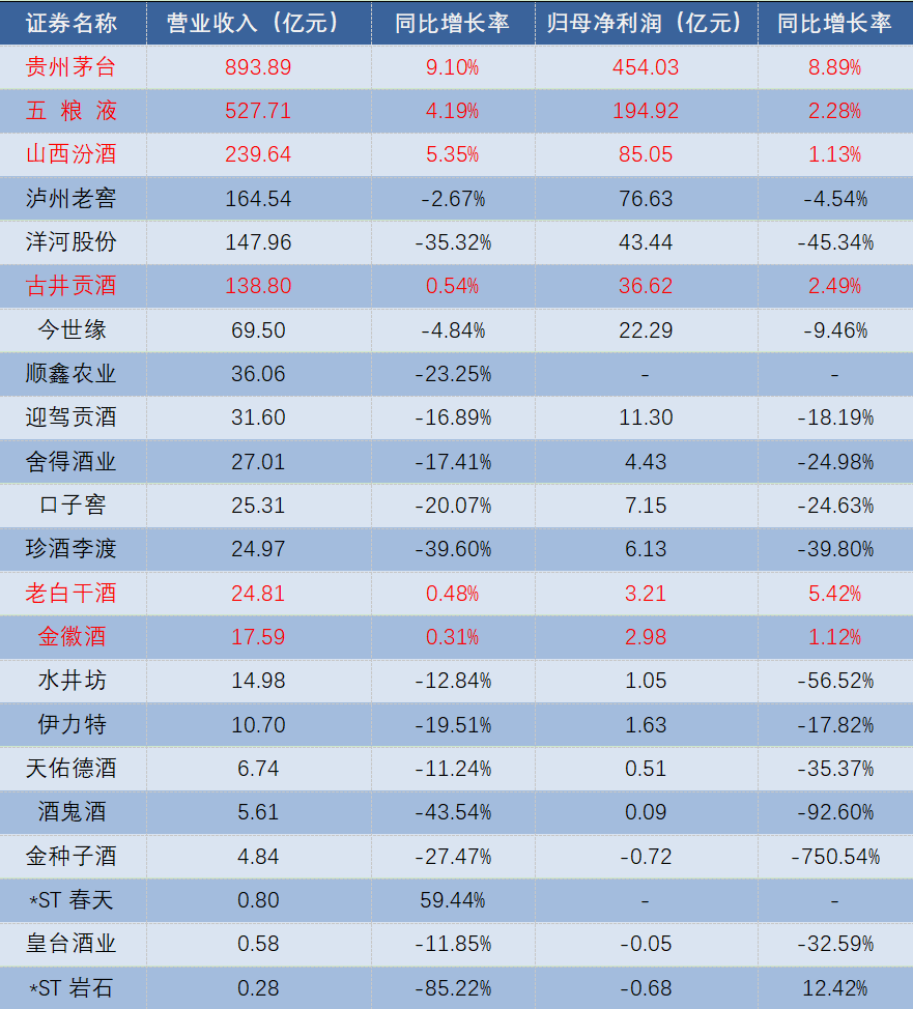
Core Viewpoint - The Chinese liquor industry is experiencing a significant divergence, with leading companies showing growth while others, like Zhenjiu Lidu, face substantial declines in revenue and profit [2][4][5]. Group 1: Financial Performance of Liquor Companies - In the first half of 2025, 22 listed liquor companies reported a total revenue of approximately 242.4 billion yuan and a net profit of about 95.1 billion yuan [4]. - Six companies, including Kweichow Moutai and Wuliangye, achieved both revenue and net profit growth, with Kweichow Moutai reporting revenue of 89.389 billion yuan, up 9.1%, and net profit of 45.403 billion yuan, up 8.9% [2]. - Conversely, Zhenjiu Lidu saw a significant decline, with revenue dropping to 2.497 billion yuan, down 39.6%, and adjusted net profit falling to 613 million yuan, down 39.3% [2][6]. Group 2: Industry Challenges - The liquor industry is undergoing a deep adjustment period characterized by high channel inventory, leading companies to adopt inventory control and price stabilization strategies [3]. - Macro-economic pressures and limited consumption scenarios have reduced consumer purchasing willingness, with liquor sales dropping 15% year-on-year during the 2025 Spring Festival, and mid-to-high-end sales declining by 20% [3]. - Intense competition and price wars among companies, particularly among smaller enterprises, are compressing profit margins and reducing overall profitability in the industry [3][5]. Group 3: Zhenjiu Lidu's Struggles - Zhenjiu Lidu is facing severe challenges, including excessive inventory turnover days at 855, far exceeding the healthy range of 450-700 days [6]. - The company relies heavily on its Zhenjiu brand, with other brands contributing minimally to revenue, and has seen a consistent decline in core product sales over the past four years [6][7]. - The decline in sales reflects weakened product competitiveness and shrinking consumption scenarios, with the company struggling to adapt its product structure and marketing strategies [7]. Group 4: Strategic Responses - Zhenjiu Lidu is attempting to navigate its challenges by launching new products, such as the "Da Zhen·Zhenjiu," priced at 600 yuan, targeting middle-class families and small business owners [8]. - The company is also implementing a "Ten Thousand Merchants Alliance" strategy to expand its dealer network and create a broad channel ecosystem [8]. - Additionally, Zhenjiu Lidu is entering the craft beer market with its "Niu Shi" brand, seeking to establish a second growth curve amid the liquor industry's stagnation [9][10]. Group 5: Market Entry Challenges - The craft beer market is highly competitive, dominated by established players like China Resources and Budweiser, posing significant challenges for new entrants like Zhenjiu Lidu [11]. - Transitioning from liquor to beer requires Zhenjiu Lidu to reconfigure its sales channels, as beer distribution is more diverse and includes restaurants and bars, unlike the traditional liquor sales model [12]. - While seeking new growth avenues is a reasonable strategy, the differences in product, channel, and consumer demographics between liquor and beer present substantial hurdles for successful cross-industry expansion [12].



酒业观察:白酒上半年业绩加剧下滑 “低度化”恐难成破局“良药”
Xin Hua Cai Jing· 2025-09-10 09:40
Core Viewpoint - The white liquor industry is experiencing a significant slowdown, with only 6 out of 22 listed companies reporting positive growth in revenue and net profit, indicating a shift from "volume decline with profit increase" to "volume shrinkage with profit reduction" [1][2]. Group 1: Financial Performance - Among the 22 listed white liquor companies, only 6 achieved positive revenue and net profit growth [1]. - Guizhou Moutai reported a revenue of 89.39 billion with a year-on-year growth rate of 9.10%, and a net profit of 45.40 billion, growing by 8.89% [2]. - Other notable companies include Wuliangye with a revenue of 52.77 billion (4.19% growth) and Shanxi Fenjiu with 23.96 billion (5.35% growth) [2]. Group 2: Inventory and Cash Flow - The industry is facing high inventory levels and cash flow pressures, with over half of the distributors experiencing increased inventory pressure [2][3]. - Guizhou Moutai has an inventory turnover rate of 0.14, indicating a long inventory turnover period of approximately 1265 days [3]. - The overall trend shows a significant increase in inventory turnover days across various companies, reflecting the challenges in managing stock levels [3]. Group 3: Market Trends and Strategies - The industry is shifting from supply-driven growth to demand-driven growth, focusing on product structure optimization and channel efficiency [3]. - Companies are exploring online channels and digital transformation to enhance operational efficiency and sales capabilities [2][3]. - There is a notable trend towards "lower alcohol content" and "younger demographics" in product offerings, although this has raised concerns about homogenization and cultural fit within the industry [2][3].
如何应对行业周期?白酒企业集体转向“三低”市场
Sou Hu Cai Jing· 2025-09-05 10:07
Core Insights - The Chinese liquor industry is undergoing a deep adjustment, with companies shifting their focus towards low-alcohol, low-priced products, and lower-tier markets due to macroeconomic pressures and changing consumer behaviors [1][6]. Group 1: Low-Alcohol Products - Several liquor companies have recently launched low-alcohol products targeting younger consumers, with notable releases including Gujing's 26-degree "Light Gu20," Wuliangye's 29-degree "Wuliangye Yijian Qingxin," and Shede's 29-degree "Shede Zizai" [2]. - The China Alcoholic Drinks Association predicts that the low-alcohol market will exceed 74 billion yuan by 2025, with a compound annual growth rate of 25% [3]. - Companies like Luzhou Laojiao are actively developing lower-alcohol products, with their 38-degree offerings now making up 50% of sales in the Guojiao 1573 series, which has surpassed 20 billion yuan in sales [3]. Group 2: Consumer Trends - The younger demographic, particularly those born in the 1980s and 1990s, along with young women, are emerging as key consumer groups, favoring personalized, low-alcohol, and aesthetically pleasing products for casual social settings [2]. - The shift in consumer preferences emphasizes a move from traditional social drinking to a focus on personal enjoyment and experience [3]. Group 3: Pricing and Market Dynamics - The demand for mid-range products is recovering slowly, while low-priced products are showing resilience, with some even experiencing growth [6]. - Wuliangye reported a production increase of 11.56% and sales growth of 12.75% for its products in the first half of 2025, driven by consumer preference for mid to low-priced options [7]. - The market is seeing a trend where high-end liquor prices are declining, and consumers are increasingly valuing cost-effectiveness, leading to a preference for lower-priced options [9]. Group 4: Market Competition and Strategy - The industry is facing intensified competition as major brands penetrate lower-priced segments, which could squeeze local brands out of their traditional markets [10][11]. - Local liquor companies are responding by launching competitively priced products, with some offering prices 20%-40% lower than similar premium products [11]. - Analysts suggest that local brands should leverage their regional advantages and focus on differentiation rather than competing on price with larger brands [11].