
科产融合

Search documents
天津大学与深圳坪山区携手深化科产融合发展
Zhong Guo Jing Ji Wang· 2025-12-10 07:45
12月6日,由天津大学与深圳市坪山区人民政府联合举办的科产融合座谈会暨合作协议签订仪式在天津 大学深圳学院举办,双方签署战略合作框架协议及相关合作协议。中国工程院院士、天津大学校长柴立 元,天津大学党委常委、副校长王天友,天津大学副校长明东,深圳市坪山区委书记赵嘉等出席签约仪 式。 此外,坪山区专门出台人才配套政策,并引进多所知名中小学及品牌学校,从住房成本、基础教育质 量、生态环境等方面为创新创业人才工作、生活提供更为全面的支持。 据悉,此前天津大学聚焦医疗器械、新型储能、智能网联等关键领域,与坪山辖区比亚迪(002594)、 中金岭南(000060)、中汽研科技等公司在共建技术中心、人才培养、协同攻关、标准与政策研究等方 面建立了深度的合作关系。一批优质成果正在稳步孵化中,为双方战略合作筑牢了实践根基。此次天津 大学与坪山区的战略合作,包括但不限于在共建共享科技创新载体、推进科研成果转化与产业化、开展 科研项目对接与合作交流、开展人才交流与培养等四个方面。 坪山区将充分结合天津大学的学科优势与创新资源以及坪山产业基础优势,有组织地推动天津大学前沿 科研成果与辖区企业技术需求深度匹配,推动双方以共建高水平科 ...
剑指3万亿、明确任务主线,这场会议给武汉“十五五”定调
2 1 Shi Ji Jing Ji Bao Dao· 2025-12-10 00:48
Core Insights - Wuhan aims to achieve a GDP exceeding 3 trillion yuan by 2030, with a focus on building "five centers" to drive economic growth and modernization [1][2] - The "five centers" initiative is a strategic framework established in 2016 to enhance Wuhan's status as a national central city, emphasizing economic, technological, commercial, and international capabilities [2][3] - The city plans to implement seven major actions to transform the "five centers" from a conceptual framework into tangible outcomes, fostering regional economic development [3][4] Economic Goals - By 2030, Wuhan's GDP is projected to surpass 3 trillion yuan, with the urban agglomeration's GDP expected to reach 3.6 trillion yuan by 2024, representing over 60% of the province's total [4][5] - The urban agglomeration's GDP accounted for 59% of Hubei province and 2.66% of the national total in 2022, indicating a steady increase in its economic significance [4][5] Strategic Framework - The "five centers" construction is positioned as the main task for Wuhan during the 14th Five-Year Plan, highlighting its importance for high-quality economic and social development [1][2] - The city aims to integrate its development with national strategies, enhancing its role as a leading hub in the central region of China [2][3] Urban Development Initiatives - Wuhan's urban renewal strategy focuses on "five improvements and four enhancements," targeting urban infrastructure and quality of life [6][7] - The city plans to adopt innovative development models to address challenges in financing, land use, and administrative processes, promoting a comprehensive approach to urban renewal [7][8] Industrial Development - The "five valleys" initiative aims to establish a modern industrial system, integrating advanced manufacturing and modern services to enhance competitiveness [8][9] - The spatial layout of "one city, three corridors, and one belt" is designed to optimize innovation capabilities and foster collaboration across various sectors [10]
四川凉山:“十四五”以来单位规模工业增加值能耗下降31%
Zhong Guo Xin Wen Wang· 2025-11-28 14:16
Core Insights - Since the beginning of the "14th Five-Year Plan," the energy consumption per unit of industrial added value in Liangshan has decreased by 31% [1] - The average annual growth rate of industrial added value in Liangshan from 2021 to 2024 is projected to be 10.6% [1] - The total profit of industrial enterprises in Liangshan has increased from 11.29 billion to 20.87 billion, with an average annual growth of 16.61% [1] Industrial Development - Liangshan has established 6 provincial-level green factories and has become home to the first steel enterprise in Sichuan to complete a full-process ultra-low emission transformation [1] - The industrial added value has successively surpassed 50 billion, 60 billion, and 70 billion, with the proportion of industrial output in GDP rising from 26.9% to 30.8% [1] - The number of large-scale industrial enterprises has reached 459, with 30 "specialized, refined, and innovative" enterprises [2] Technological Innovation - Liangshan has built 3 provincial key laboratories, 3 engineering technology research centers, and 21 enterprise technology centers, effectively breaking through the bottleneck of technology and industrial innovation integration [1] - Several technological achievements, such as 5N-level high-purity titanium and rare earth extraction processes, have reached international leading levels [1] Enterprise Cultivation - The region has added 2 billion-level enterprises and 12 ten-million-level enterprises, bringing the total to 4 and 20 respectively [2] - A total of 56 innovative small and medium-sized enterprises have been cultivated [2] Industrial Cluster Development - Major projects such as the 20,000-ton titanium and titanium alloy melting and forging facility and the 12,500-ton annual cathode copper refining project have accelerated construction or been completed [2] - These projects aim to fill gaps in the industrial chain, improve supply chain weaknesses, and enhance value chain levels [2] Smart and Green Transformation - Liangshan is focusing on high-end, intelligent, and green development, with the world's largest high-purity titanium ingot produced in the region [2] - The aerospace high-end manufacturing industrial park is under construction, and a local pharmaceutical company has ranked among China's top 100 pharmaceutical industries for 14 consecutive years [2] Support for Enterprises - Liangshan has established a high-standard service center for small and medium-sized enterprises, serving over 6,000 enterprises [2] - The region has supported 570 enterprises in enjoying over 17 billion kilowatt-hours of electricity benefits, helping to reduce electricity costs by approximately 2.7 billion [2] - The industrial output value of industrial parks has increased from 59 billion to 92.12 billion, representing a growth of 56.1% [2]
湖南省政府参事、湖南大学经济与贸易学院教授李琳:发挥“空间枢纽”战略叠加效应 长江中游城市群加快打造“第五极”
Mei Ri Jing Ji Xin Wen· 2025-11-25 15:42
Core Viewpoint - The Yangtze River Middle Reaches Urban Agglomeration is designated as a key area for development in the "14th Five-Year Plan," aiming to enhance regional collaboration and become a significant growth pole in central China [1][4]. Group 1: Regional Development Strategy - The "14th Five-Year Plan" emphasizes the need to promote the development of the Yangtze River Middle Reaches Urban Agglomeration, positioning it as a crucial support for high-quality growth in the central region [1][3]. - The urban agglomeration is seen as a "spatial hub" within the national economic framework, connecting various major city clusters and facilitating the flow of resources and collaboration [3][4]. Group 2: Innovation and Industry Development - There are existing challenges in the Yangtze River Middle Reaches Urban Agglomeration, including insufficient foundational research, lack of collaborative innovation efforts, and weak support for resource supply [2][6]. - The region aims to enhance its innovation capabilities by establishing collaborative innovation platforms and focusing on technology-driven industrial development [5][7]. Group 3: Collaborative Mechanisms - The establishment of cross-regional innovation corridors, such as the proposed "Wuhan-Yueyang-Changsha" corridor, is essential for fostering collaboration and integrating technological advancements with industrial growth [5][8]. - The need for more "second transmitters" or provincial sub-centers is highlighted, as cities like Xiangyang and Yichang in Hubei are identified as potential growth drivers that can amplify innovation from central cities [9].
对话李琳:发挥 “空间枢纽”战略叠加效应,长江中游城市群加快打造“第五极”
Mei Ri Jing Ji Xin Wen· 2025-11-24 13:32
Core Viewpoint - The Yangtze River Middle Reaches Urban Agglomeration is positioned as a crucial support for high-quality development in Central China, as highlighted in the recently released "14th Five-Year Plan" suggestions, emphasizing the need for regional collaborative development [1][3]. Group 1: Regional Development Strategy - The Yangtze River Middle Reaches Urban Agglomeration is identified as a "spatial hub" within the national economic landscape, playing a pivotal role in connecting various regions and facilitating the flow of resources [3][4]. - The urban agglomeration's economic output has significantly increased, surpassing 12 trillion yuan, accounting for 9.2% of the national economy, indicating its growing importance [4]. Group 2: Innovation and Industry Development - There are existing challenges in the urban agglomeration regarding innovation, specifically in four areas: insufficient basic research, lack of collaborative efforts, weak results transformation, and inadequate support for resource supply [2][6]. - The integration of science and industry has shown a steady increase, with an annual growth rate of 1.72%, although it still lags behind the Yangtze River Delta [6]. Group 3: Collaborative Innovation Initiatives - The establishment of cross-regional innovation platforms, such as the proposed Wuhan-Yueyang-Changsha innovation corridor, is essential for enhancing collaborative innovation and industry integration [7][9]. - The need for more "second-tier" cities to facilitate the flow of innovation and resources is emphasized, with cities like Xiangyang and Yichang in Hubei showing potential as regional growth drivers [9][10].

专家学者建言长江经济带“十五五”高质量发展:建设成为世界级新质生产力发展带
Zhong Guo Jing Ying Bao· 2025-11-24 08:34
Core Viewpoint - The article emphasizes the importance of promoting high-quality development in the Yangtze River Economic Belt and the central urban agglomeration of the Yangtze River, aligning with national regional coordination strategies and the upcoming 15th Five-Year Plan [1][3]. Group 1: Strategic Development - The 15th Five-Year Plan aims to enhance regional development coordination and promote the growth of regional center cities within the Yangtze River Economic Belt [1]. - The eighth Yangtze River Economic Belt Development Strategy Forum was held in Wuhan, focusing on high-quality urban agglomeration development, providing strategic insights from various experts [1][2]. - The establishment of the "Yangtze River Economic Belt High-Quality Development Think Tank Alliance" aims to support major regional decisions through continuous research and forums [2]. Group 2: Collaborative Mechanisms - The concept of "Four Commons" (joint consultation, ecological governance, comprehensive construction, and shared development) is proposed as a framework for enhancing inter-provincial collaboration in the Yangtze River middle urban agglomeration [3][4]. - The need for a robust collaborative mechanism is highlighted, focusing on policy guidance, market-driven dynamics, and ecological protection to facilitate high-quality development [4]. Group 3: Regional Challenges and Solutions - Current challenges in the Yangtze River middle urban agglomeration include insufficient foundational research, weak collaborative efforts, and inadequate support for resource transformation [4]. - Proposed solutions include strengthening strategic leadership, resource aggregation, industrial radiation, and collaborative organization to achieve high-quality inter-city development [4][5]. Group 4: Learning from Other Regions - The article suggests that the Yangtze River Economic Belt can benefit from international and domestic development experiences, such as the Rhine and Great Lakes regions, to inform its growth strategies [6]. - The integration of ecological, logistics, and innovation chains is recommended to enhance regional collaboration and development [6]. Group 5: Future Urban Development - The article outlines a vision for future urban development in the Yangtze River middle urban agglomeration, focusing on smart logistics, ecological protection, and comprehensive urban planning [8]. - The establishment of a dense water transport network and the promotion of green, intelligent, and inclusive urban ecosystems are emphasized as key objectives for the 15th Five-Year Plan [8].
东台:从“沿海一隅”到“链动全球”
Xin Hua Ri Bao· 2025-11-18 07:19
Group 1: Company Innovations - Dongtai Shimu Special Protective Technology Co., Ltd. utilizes six-axis robots for precision manufacturing, achieving a tolerance of ±0.02 mm, which is about one-third the diameter of a human hair [1] - The company has developed a flexible production line capable of handling over a hundred glove processes, allowing for personalized orders as small as 500 pairs [1] - The company’s own brand "Wonder Grip" has gained significant traction, particularly with a French retail giant, and a newly developed oil-resistant long nitrile glove for the African market has already secured an order of 10,000 pairs [1] Group 2: Semiconductor Industry - Jiangsu Fulehua Semiconductor Technology Co., Ltd. leads the global market in power modules for electric vehicles, with its core components being ceramic substrates bonded to copper foil with micron-level precision [2] - The company has established a research institute focused on third-generation semiconductors, aiming to break international technology monopolies [3] - Fulehua has expanded its production network globally, including a base in Malaysia, marking a significant shift from local to global operations [3] Group 3: Advanced Manufacturing Techniques - Jiangsu Hexin Petroleum Machinery Co., Ltd. is developing a coating production line for drill rods designed for extreme deep-sea conditions, utilizing a new coating technology that withstands high temperatures and corrosive environments [4] - The new Hxt34p coating technology, developed in collaboration with Southwest University, allows for a significant reduction in costs, estimated to save the company nearly 30 million yuan annually while potentially increasing output value by 100 million yuan [4] - The company has become one of only two globally to master this technology, enhancing the lifespan of drilling tools by three times [4] Group 4: Collaborative Innovation - The collaboration between academia and industry in Dongtai has led to the establishment of a network that connects university resources with the needs of local enterprises, facilitating innovation [5] - The Dongtai Technology Bureau has organized over 60 industry-academia-research matchmaking events this year, resulting in the creation of 55 provincial-level new technologies and products [6] - The shift in mindset from passive acceptance of innovation to proactive pursuit of innovation is evident in local companies, such as the partnership between a stainless steel company and Harbin Institute of Technology, which has significantly advanced the company’s capabilities [7]
创新雨林育“苗”成“林”,盐城东台科产融合培育产业新生态
Yang Zi Wan Bao Wang· 2025-11-18 02:19
Core Insights - The article highlights the transformation of innovation in Dongtai, where research and production are deeply integrated, leading to significant advancements in high-quality development [1][3]. Group 1: Ecological Empowerment - Dongtai has established a robust "innovation rainforest" that combines policy support, financial resources, and talent cultivation to foster a conducive environment for both scientific and industrial innovation [3]. - The collaboration between universities and enterprises has resulted in successful technology transfers, exemplified by the development of water-based resin gloves that meet international market demands [5]. Group 2: Digital and Intelligent Foundations - Dongtai is leveraging digitalization and intelligence to enhance traditional manufacturing, significantly improving the efficiency of innovation outcomes [6]. - The implementation of smart factories and interconnected machinery has led to substantial reductions in energy consumption and labor costs, with some companies achieving production efficiency increases of up to 300% [6]. Group 3: Champion Cultivation - Dongtai is nurturing a tiered ecosystem of technology-driven enterprises, from small and medium-sized enterprises to unicorns, through targeted support mechanisms [8]. - The region boasts 23 provincial gazelle enterprises and 218 provincial specialized and innovative enterprises, indicating a thriving environment for innovation and growth [8].

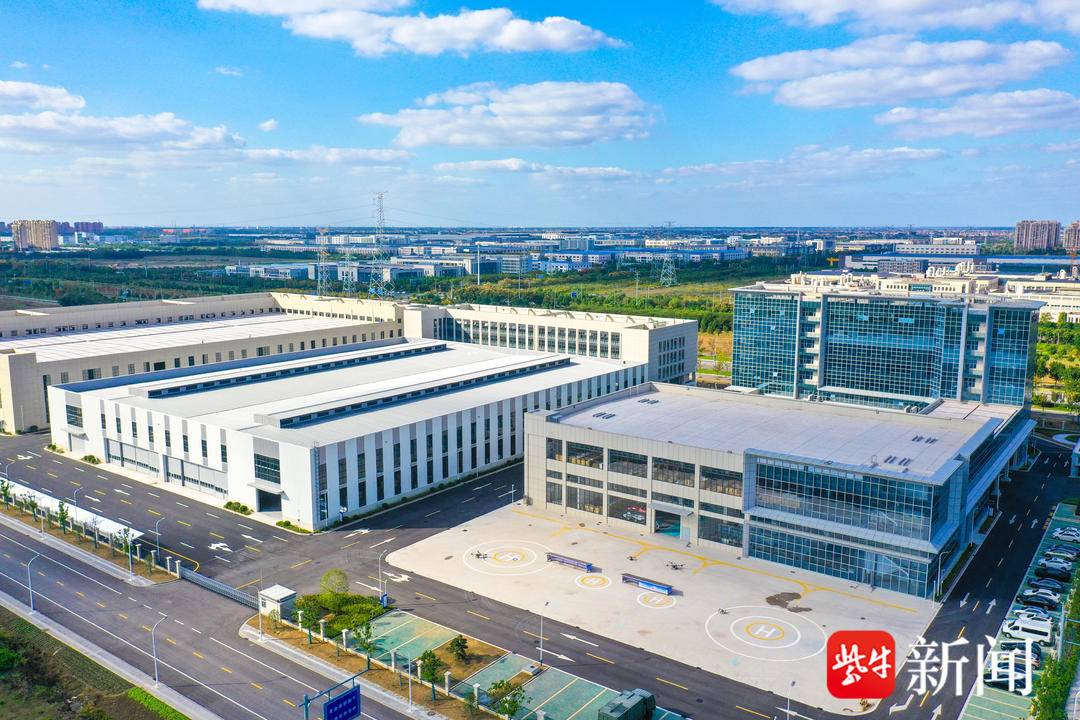
科产融合跑出一批产业“黑马”东台:从“沿海一隅”到“链动全球”
Xin Hua Ri Bao· 2025-11-17 23:50
Core Insights - The article highlights the innovative advancements and competitive edge of companies in the East Tai region, particularly in specialized protective gear and semiconductor technology, showcasing their ability to meet diverse market demands and enhance production efficiency [2][3][4]. Group 1: Company Innovations - Dongtai Shimu Special Protective Technology Co., Ltd. utilizes six-axis robots for precision manufacturing, allowing for a flexible production line capable of handling personalized orders, resulting in increased performance despite external trade pressures [2]. - Jiangsu Fulehua Semiconductor Technology Co., Ltd. leads the global market in power modules for electric vehicles, leveraging advanced manufacturing techniques and a dedicated research institute to break international technology monopolies [3]. - Jiangsu Hexin Petroleum Machinery Co., Ltd. has developed a new coating technology for drill rods that withstands extreme conditions, significantly reducing costs and extending the lifespan of drilling tools, thus enhancing their market position [4]. Group 2: Collaborative Efforts and Ecosystem - The collaboration between academia and industry in Dongtai is exemplified by the involvement of Nanjing University of Posts and Telecommunications, which connects technological resources to meet industry needs, fostering innovation [5]. - The East Tai region has hosted over 60 industry-academia-research matchmaking events this year, resulting in the creation of 55 provincial-level new technologies and products, indicating a proactive approach to innovation [6]. - The transformation of companies from passive to active innovation seekers is evident, as seen in the partnership between a stainless steel company and Harbin Institute of Technology, leading to significant advancements in their capabilities [6].
下好“十五五”科技创新先手棋
Xin Hua Ri Bao· 2025-11-17 23:16
Group 1 - The core viewpoint emphasizes the importance of technological self-reliance and innovation as foundational to national strength and security, with Jiangsu province positioned to lead in this transformation from "following and running" to "original leading" [1] - Jiangsu aims to enhance its innovation ecosystem by establishing a provincial-level technology innovation system, focusing on high-level collaborative innovation across different regions, and guiding localities to develop unique technological strengths [1][2] - The strategy includes strengthening the role of enterprises in innovation, promoting the gathering of talent, capital, and technology at the enterprise level, and encouraging collaboration between high-tech zones and universities to align research activities with industrial needs [1][2] Group 2 - The initiative focuses on addressing key technological challenges through original innovation by integrating national laboratories, research institutions, and leading tech companies to collaboratively tackle critical areas [2] - A talent cultivation strategy is proposed to align educational programs with national and industrial needs, fostering high-level talent in cutting-edge fields like integrated circuits and artificial intelligence [2] - The creation of an open and inclusive innovation environment is prioritized, involving multi-dimensional support from policies, financial mechanisms, and risk management to build a diverse investment system and enhance intellectual property protection [3]