
绿色转型

Search documents
视频丨小泡菜变成大产业 每天400多吨“下饭菜”从这里发往全国
Yang Shi Xin Wen Ke Hu Duan· 2025-12-13 05:39
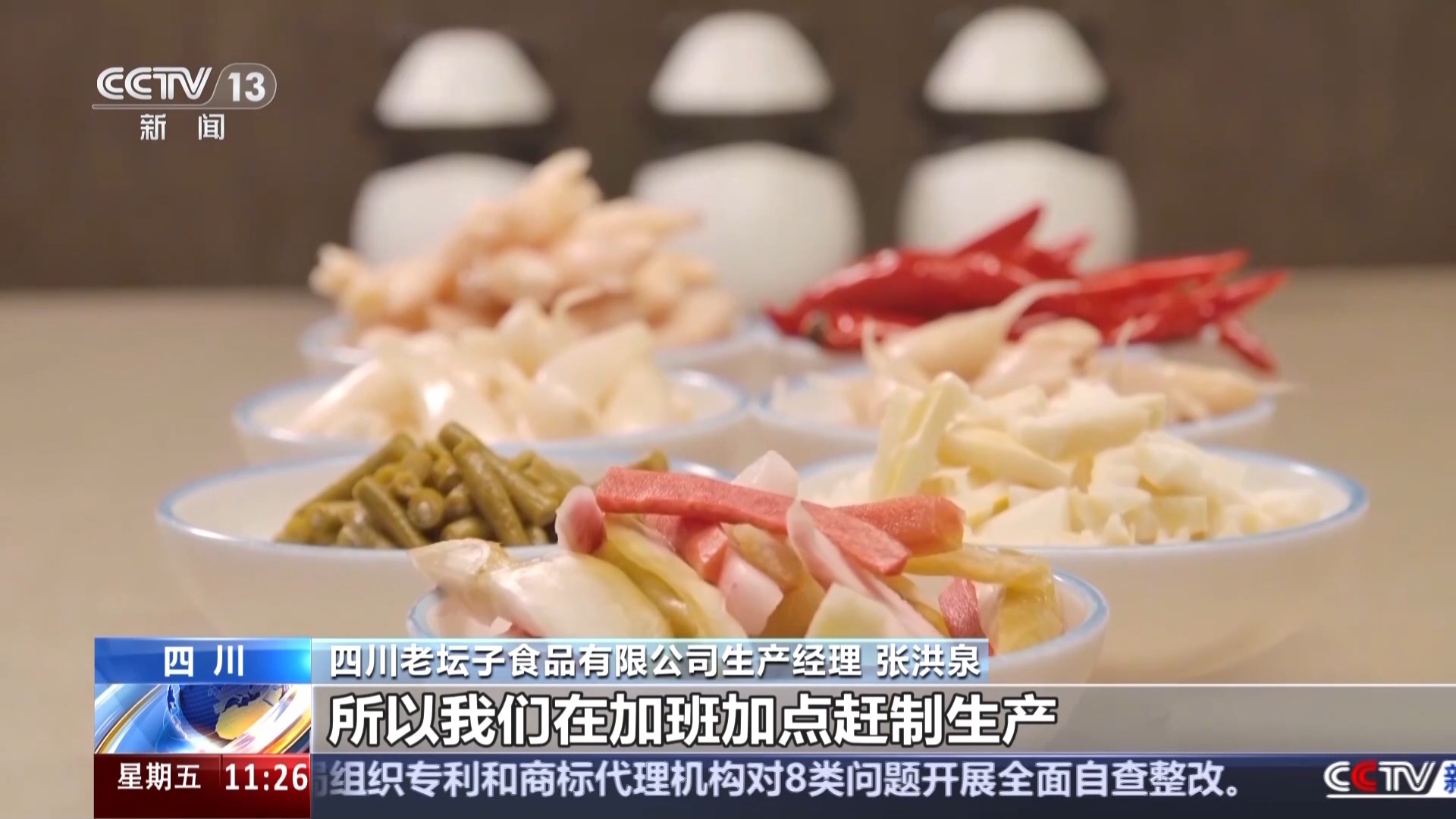
四川老坛子食品有限公司生产经理 张洪泉:年产量大概是2万多吨,其中卖得最好的是青菜,也就是大家通俗说的酸菜。因为春节前需求量很大,我们预估 比现在要多两到三倍的量,所以我们在加班加点地赶制生产。 与过去依赖经验的传统制作不同,如今眉山"中国泡菜城"里生产泡菜全都交给数据把控,经过最近几年的数智化改造,园区基本实现了从菌种筛选到发酵温 控,再到产品生产环节的全程自动化。 记者从农业农村部了解到,"十四五"期间,农业农村部、财政部批准建设的400个现代农业产业园项目,总产值超3万亿元以上,推动越来越多的小特产变成 大产业。四川眉山东坡区国家现代农业产业园是我国重要的泡菜生产基地,被称为"中国泡菜城",每天都有400多吨"下饭菜"从这里发往全国。 眉山"中国泡菜城"管委会经济发展局 文春梅:我们全面推行"智改数转"和全面绿色转型,不仅破解了高盐废水处理难题,还主导制定了泡菜国际标准。通 过"智改数转",我们把科技融入企业的全面发展过程中,减少人工成本,提高生产效率,增强企业的核心力。 0:00 而支撑起每天400多吨泡菜供应的是附近的"稻菜"轮作基地。作为泡菜的绿色原料基地,这里的主要蔬菜品种有10多种,面积18万 ...

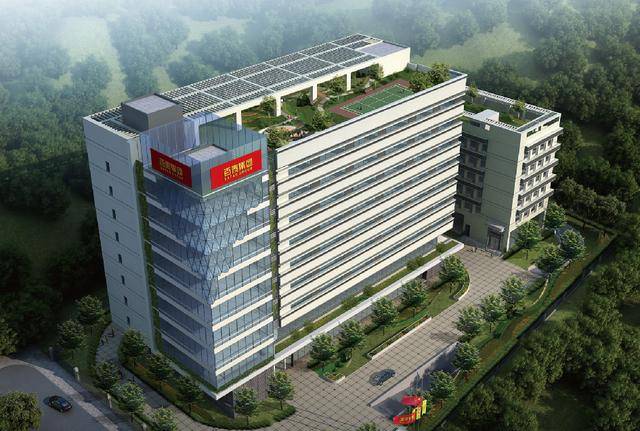
每吨镀金量减少八成废水排放!深圳首创黄金珠宝无氰镀金绿色园区
Sou Hu Cai Jing· 2025-12-12 16:44
Core Viewpoint - The establishment of the cyanide-free gold plating green park in Yantian District marks a significant step towards high-quality development in the traditional gold and jewelry industry, emphasizing ecological sustainability and technological innovation [3][5]. Group 1: Industry Overview - The gold and jewelry industry is a traditional advantage for Shenzhen, with Yantian District being a major processing trade base and the birthplace of this industry in China [3]. - There is a growing market demand for "lightweight, high-craft" gold jewelry, which traditional cyanide plating processes cannot meet due to their toxic and polluting characteristics [3][5]. Group 2: Technological Innovation - The new cyanide-free gold plating technology eliminates the use of toxic cyanide, reduces wastewater and carbon emissions during production, and enhances product hardness and glossiness [1][7]. - The implementation of this technology is expected to reduce wastewater discharge by 80% and carbon emissions by 20% per ton of gold plated, while also decreasing production costs by 30% [7]. Group 3: Policy and Regulatory Environment - The Shenzhen Ecological Environment Bureau is actively working to streamline the approval process for cyanide-free plating technology, addressing the challenges posed by existing environmental regulations [5]. - A new comprehensive service platform is being established to assist companies in reducing financing and operational costs, facilitating a full-process green service system from production to export [5][7]. Group 4: Environmental Impact - The establishment of the cyanide-free gold plating green park reflects a successful collaboration between ecological protection and industrial development, showcasing a model for high-level protection and high-quality development [7].
赵伟:财政货币政策协同发力,聚焦结构性投资机遇
申万宏源宏观· 2025-12-12 16:04
Core Viewpoint - The central economic work conference emphasizes the need to explore economic potential and coordinate policies and reforms, focusing on stabilizing domestic demand and aligning policy direction with current development trends [1][3]. Fiscal Policy - Fiscal policy will continue to adopt a "more proactive" approach, maintaining necessary fiscal deficits, total debt scale, and expenditure levels, while addressing local fiscal difficulties and encouraging local debt management [3]. - The conference highlights the importance of increasing central budget investments and optimizing the use of local government special bonds to enhance investment stability by 2026 [3]. Monetary Policy - Monetary policy aims to promote stable economic growth and reasonable price recovery, indicating potential for future monetary easing through tools like reserve requirement ratio cuts and interest rate reductions [3]. - The integration of existing and new policies will be assessed for consistency with current economic goals, suggesting structural adjustments to outdated policies [3]. Domestic Demand and Investment - The conference underscores the principle of "demand-led growth," focusing on increasing urban and rural residents' income, unleashing service consumption potential, and stabilizing investment [3][4]. - The investment strategy includes increasing central budget investments and precise fiscal support to enhance investment stability in 2026 [3]. Green Development - Green development is prioritized, with a focus on "dual carbon" goals and accelerating the construction of a new energy system, including plans for energy strength and expanding green electricity applications [4]. - The policies are expected to positively impact sectors such as consumption, technology, and new energy, with specific benefits for the new energy industry chain [4]. Market Impact - The conference's policies are expected to have a structural impact on the stock market, favoring sectors related to domestic demand, technology, and green transformation [4]. - The focus on innovation and the establishment of technology hubs in major regions will benefit companies in technology, AI, and high-end manufacturing [4].

龙佰集团引领钛白粉行业迈向“全球价值中心”
Sou Hu Cai Jing· 2025-12-12 15:43
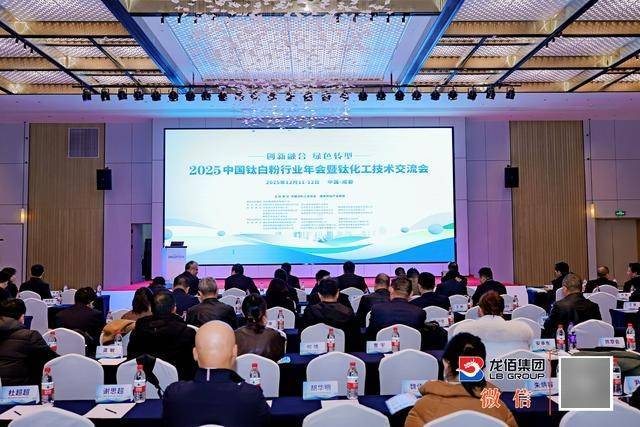
Core Insights - The conference held on December 12, 2025, focused on the theme of "Innovation Integration and Green Transformation," addressing the current trends in industry upgrades and challenges in the titanium dioxide sector [3] - The industry is at a critical transformation period, facing high raw material and environmental costs, supply-demand imbalances, and intense competition, necessitating a shift from "scale growth" to "value enhancement" [5] Group 1 - The industry leader emphasized the need for quality improvement and efficiency enhancement as foundational strategies for development, urging companies to focus on process optimization and product upgrades [5] - A call for collaborative efforts within the industry was made, advocating for a new ecosystem characterized by shared value creation, responsibility, and benefits to address systemic risks [5][6] - The company has initiated a global layout by acquiring overseas chloride process plants and establishing local subsidiaries, transitioning from product output to technology, brand, and standard output [6] Group 2 - The "Low Carbon Longbai" strategy has enabled the company to achieve synergistic growth in ecological and economic benefits, establishing low carbon as a competitive advantage in international markets [8] - The company provides carbon footprint data to downstream customers, positioning carbon neutrality as a core strategy for driving growth and shaping competitive advantages [8] - The conference gathered industry authorities, leading enterprises, and experts to discuss industry operations, technological innovation, and green transformation, further consolidating consensus [8]

蓝图绘就!各省“十五五”规划建议齐向“绿”
Xin Jing Bao· 2025-12-12 12:06
Core Insights - The energy revolution in China is transitioning from strategic blueprints to actionable plans, driven by technological innovation and a nationwide green transformation wave aimed at achieving carbon peak goals during the 14th Five-Year Plan period [1][2] Group 1: Strategic Guidance - The 14th Five-Year Plan emphasizes the construction of a new energy system, increasing the share of renewable energy, and ensuring a reliable transition from fossil fuels, marking the first time "energy power" appears in a five-year plan [2] - The National Energy Administration's guidelines advocate for the integration of coal and renewable energy, promoting clean energy alternatives in coal mining areas and enhancing the coal industry's green transformation [2] Group 2: Provincial Layouts and Innovations - Provinces are tailoring their 14th Five-Year Plans based on local resources and industrial foundations, focusing on building new energy systems and optimizing energy structures [3] - Beijing's plan includes strengthening smart grids and microgrids, enhancing the integration of renewable energy, and increasing the electrification of energy consumption [3] - Shanxi Province is focusing on energy development transformation through technological innovation and exploring new carbon capture and utilization technologies [4] - Hubei Province aims to establish a regional clean energy hub, enhancing the utilization of wind and solar resources and developing a significant clean energy base [4] - Hebei Province prioritizes becoming a "new energy strong province" as part of its ecological civilization goals, aiming for significant improvements in environmental quality [5] Group 3: Collaboration and Regional Synergy - Regional collaboration is a notable feature of the 14th Five-Year energy planning, with provinces exploring cross-regional energy cooperation to optimize resource allocation [7] - The Beijing-Tianjin-Hebei region is working towards energy integration, with plans for green electricity trading and shared energy storage facilities [7] - The Yangtze River middle reaches, led by Hubei's clean energy initiatives, aim to enhance regional grid flexibility and stability, supporting the green development of the Yangtze Economic Belt [7] Group 4: Technological Advancements and Model Exploration - Coal-rich regions are focusing on technological advancements and collaborative models, with Shanxi's exploration of coal utilization technologies serving as a reference for similar regions [8] - The shift from isolated breakthroughs to networked collaboration indicates a systemic approach to energy transition, laying a foundation for national energy security and carbon neutrality goals [8]
全球首台110kV固体蓄热式电注汽锅炉在新疆油田投产
Zhong Guo Xin Wen Wang· 2025-12-12 11:04
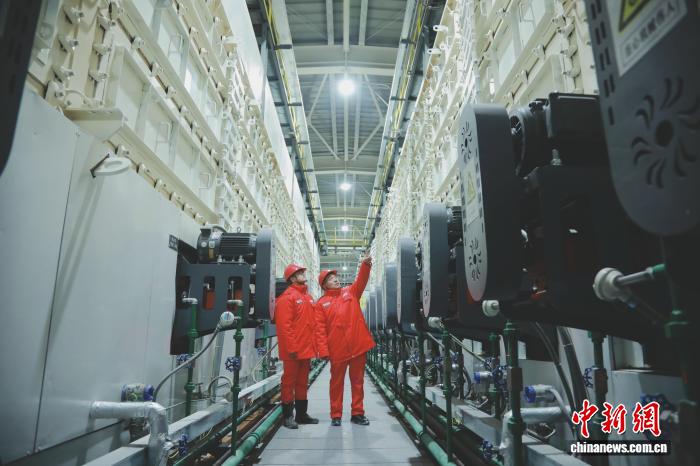
中新网乌鲁木齐12月12日电 (谷胜李沣芮)记者12日从中国石油新疆油田公司(简称"新疆油田公司")获 悉,当日,全球首台110kV固体蓄热式电注汽锅炉在新疆油田公司重油开发公司正式投产,赋能油田绿 色转型。 员工对110kV固体蓄热式电注汽锅炉蒸发段换热器进行巡检。陈琳摄 据新疆油田公司油气田开发首席专家孙新革介绍,传统锅炉能耗高、碳排高,新技术通过"110kV高电 压直入+固体储热+热风循环"核心工艺,产生稳定过热蒸汽,用于稠油开采。预计每年可提供高品质过 热蒸汽16万吨,可替代天然气1300万立方米,相当于每年减少约2.5万吨二氧化碳排放。 稠油开采堪称油田生产的"耗能大户"。数据显示,新疆油田公司稠油产量仅占原油总产量的三成,但天 然气等能源消耗却占总能耗的80%。多年来,新疆油田公司一直在探索"降气耗、消绿电、减碳排"三位 一体的绿色转型新路径。 新疆油田公司重油开发公司总工程师程思南表示,新研发的锅炉如同一个"绿色充电宝",首次成功将绿 电与热力采油结合,每年可新增电力消纳1.2亿千瓦时,推动传统油气开发与新能源深度融合。 孙新革称,该项目不仅是单一设备的突破,更是系统性革新,它验证了"绿电+蓄热 ...

万联证券:中央经济工作会议明确定调 继续聚焦新质生产力发展
Zheng Quan Ri Bao Wang· 2025-12-12 10:50
本报讯 (记者李雯珊)12月10日至11日,中央经济工作会议在北京举行。万联证券首席经济学家龙红亮表示,会议使用 了"很不平凡"四个字来总结今年经济成果,表明对我国2025年经济工作的高度肯定。尤其是在外部及内部环境压力面前,中国 经济顶住压力,在新质生产力、现代化产业升级方面取得了显著进步;同时,重点领域风险化解也取得积极进展。 三是新质生产力仍是会议重点聚焦的发展方向。未来将继续拓展人工智能在全行业中的应用,提升人工智能的渗透率;通 过深入整治"内卷式"竞争,促进产业合理有序竞争;继续推进中国经济向全面绿色转型,成为绿色能源大国强国。 (编辑 张昕) 龙红亮表示,会议明确了明年的经济工作政策方向。 一是将继续实施适度宽松的货币政策,促进经济增长。在当前物价低迷的背景下,会议重点强调物价合理回升的必要性。 二是扩大内需仍然是长期国策。本次会议强调优质商品和服务的供给,2026年将从商品和服务两个方面同时发力,促进消 费。 龙红亮认为,会议同时强调我国经济发展中依然面临老问题、新挑战,但经过努力可以解决,我国经济长期向好的支撑条 件和基本趋势没有改变,表明我国经济优质底色和长期竞争力不变,在发展过程中这些矛盾 ...
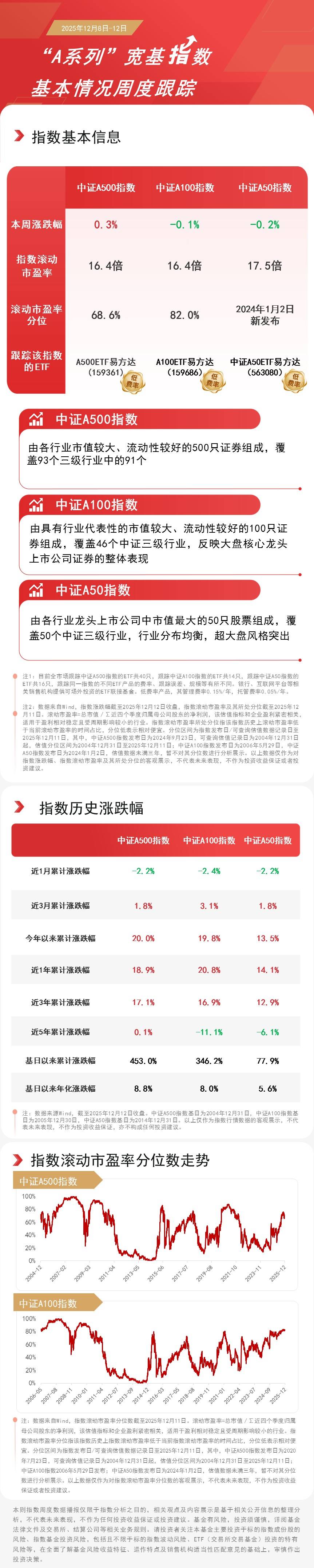
A500ETF易方达(159361)成交火热,今日再获近2.5亿份净申购
Sou Hu Cai Jing· 2025-12-12 10:42
Core Viewpoint - The market is experiencing upward momentum, with the CSI A500 index rising by 0.8% and significant net subscriptions for the A500 ETF, indicating strong investor interest and confidence in the market outlook [1]. Market Performance - The CSI A500 index increased by 0.3% this week, while the CSI A100 and A50 indices decreased by 0.1% and 0.2%, respectively [1][3]. - The A500 ETF (E Fund, 159361) saw a net subscription of nearly 250 million units today, following a previous inflow of 440 million yuan [1]. Economic Outlook - CITIC Securities highlights a focus on addressing the "strong supply and weak demand" contradiction, emphasizing the need for qualitative economic improvement and reasonable quantitative growth [1]. - The expectation is for policies to increasingly prioritize domestic demand, with a focus on enhancing consumption resilience and driving innovation and reform [1]. - The overall economic growth is projected to remain stable through 2026, with continued policy support for high-quality development [1]. Index Characteristics - The CSI A500 index consists of 500 securities with large market capitalization and good liquidity, covering 91 out of 93 sub-industries [4]. - The CSI A100 index includes 100 representative securities, reflecting the performance of major leading companies across 46 sub-industries [4]. - The CSI A50 index is composed of the 50 largest stocks from leading companies, covering 50 sub-industries, with a focus on large-cap stocks [4]. Valuation Metrics - The rolling price-to-earnings (P/E) ratios are 16.4x for the CSI A500 and A100 indices, and 17.5x for the CSI A50 index [3]. - The rolling P/E ratio percentile for the CSI A500 index is at 68.6%, indicating a relatively favorable valuation compared to historical levels [3][5]. Historical Performance - Year-to-date, the CSI A500 index has increased by 20.0%, while the CSI A100 and A50 indices have risen by 19.8% and 13.5%, respectively [7]. - Over the past year, the CSI A500 index has gained 18.9%, compared to 20.8% for the CSI A100 and 14.1% for the CSI A50 [7].
实施城乡居民增收计划、降准降息等工具灵活高效运用、增加普通高中学位……深度解读中央经济工作会议
Mei Ri Jing Ji Xin Wen· 2025-12-12 10:01
Group 1 - The core viewpoint of the Central Economic Work Conference emphasizes the need to fully tap economic potential, combining policy support with reform and innovation, and integrating investment in both physical assets and human capital [2][3] - The fiscal policy will shift from increasing the fiscal deficit rate to maintaining necessary levels of fiscal deficit, total debt, and overall expenditure, while enhancing fiscal management and optimizing expenditure structure [23][24] - The monetary policy will focus on promoting stable economic growth and reasonable price recovery, utilizing various tools such as reserve requirement ratio cuts and interest rate reductions to maintain liquidity [29][30] Group 2 - A plan to increase urban and rural residents' income will be implemented, alongside actions to boost consumption and enhance the supply of quality goods and services [11][22] - The real estate market will be stabilized through targeted measures, including encouraging the acquisition of existing housing for affordable housing purposes and reforming the housing provident fund system [45][48] - The energy sector will focus on developing a new energy system, expanding green electricity applications, and implementing comprehensive waste management actions [51][54] Group 3 - The conference outlines eight key tasks for economic work in the coming year, including prioritizing domestic demand, driving innovation, and enhancing high-quality development [10] - The emphasis on a dual circulation development pattern highlights the importance of domestic markets while maintaining a balanced approach to external trade [19][44] - The need for a robust regulatory framework for emerging technologies, particularly in artificial intelligence, is underscored to ensure safety and ethical standards [35][41]

2025中国上市公司ESG发展报告发布
Zhong Guo Hua Gong Bao· 2025-12-12 07:07
Core Insights - The report indicates that Chinese enterprises are transitioning from "compliance disclosure" to "proactive layout" in their ESG practices, reflecting a deeper and broader engagement in sustainability efforts [2]. Group 1: ESG Development in China - The Chinese ESG ecosystem is maturing, with an improving regulatory framework that supports sustainable development [1]. - China is leading in global sustainable development through significant advancements in non-fossil energy and biodiversity protection initiatives [1]. - The sustainable investment market in China is shifting from a "scale-oriented" approach to one focused on "value creation," with a total scale of ESG public funds reaching 268.29 billion yuan by June 2023 [1]. Group 2: Corporate ESG Practices - Over 70% of companies are expected to disclose carbon reduction measures by 2024, with 38% addressing biodiversity or land resource protection [2]. - Companies have reported a year-on-year decrease in total greenhouse gas emissions and intensity by 11% and 12%, respectively [2]. - More than 27% of companies will achieve 100% employee training coverage, and 75% are focusing on resilient supply chain management [2]. Group 3: Governance and Oversight - Over 70% of companies will establish board or committee oversight for sustainability efforts, with more than 40% integrating ESG factors into risk management and internal control systems [2]. - There is a notable decrease in corporate governance negative events, and employee stock ownership and incentive mechanisms are being more widely adopted [2]. Group 4: Recommendations for ESG Practices - The report suggests six measures to enhance ESG practices, including strengthening policy implementation, building internal mechanisms for sustainable practices, and enhancing local ESG rating functions [3]. - It emphasizes the importance of digital integration to improve governance efficiency and the need for international collaboration to support sustainable development [3].