
产品创新

Search documents
上市首秀后,霸王茶姬能睡个好觉了
虎嗅APP· 2025-06-01 08:55
Core Viewpoint - The article highlights the strong financial performance and growth potential of the tea brand "霸王茶姬" (Chagee) following its recent IPO, despite challenges in the new tea beverage industry and increasing competition in both domestic and overseas markets [1][3][17]. Financial Performance - In the first quarter of 2025, Chagee reported a GMV of 82.3 billion RMB, a year-on-year increase of 38%, total net revenue of 33.9 billion RMB, up 35.4%, and a net profit of 6.77 billion RMB, reflecting a growth of 13.8% [3]. - From 2022 to 2024, Chagee's revenue is projected to grow from 4.92 billion RMB to 124 billion RMB, with net profit increasing from a loss of 48 million RMB to 2.5 billion RMB [3]. - The company maintains a low store closure rate of 1.5%, which is better than many other publicly listed tea brands [3]. Market Strategy - Chagee focuses on high-end urban locations with larger store spaces, maintaining a price range of 15-20 RMB, avoiding both high-end and overly budget-friendly strategies [4]. - The product line is simplified, offering only a few types of tea, which helps in standardizing supply and reducing costs [6]. Supply Chain and Operations - The company employs a supply chain strategy that minimizes inventory turnover days and logistics costs, allowing for efficient operations [6]. - Chagee's operational model is inspired by successful coffee chains, aiming to create a lifestyle and social concept around tea [6]. International Expansion - Chagee has cautiously expanded into overseas markets, particularly in Southeast Asia, with 169 overseas stores as of the first quarter of 2025, including 157 in Malaysia and 10 in Singapore [9]. - The company emphasizes building local teams and understanding market dynamics rather than aggressive expansion [11][12]. Product Innovation - Chagee's product development focuses on consumer preferences, with recent launches like the "轻因" series targeting specific consumer needs, such as reduced caffeine content [14]. - The company has initiated a new consumer feedback system to enhance product offerings based on user input [15]. Industry Context - The new tea beverage market is facing saturation and intense competition, with many brands struggling to maintain growth [17]. - Despite these challenges, Chagee's strong profitability and strategic focus on global expansion and product innovation position it well within the industry [17].


霸王茶姬(CHA.US)公布上市后首份季报 GMV同比增速达38%
智通财经网· 2025-05-30 11:38
Core Insights - Bawang Chaji (CHA.US) has demonstrated strong growth in its first quarterly report post-IPO, with significant increases in GMV and net revenue despite the traditionally slow season for the tea beverage industry [1][2] Financial Performance - As of Q1 2025, Bawang Chaji reported a total GMV of 8.23 billion yuan, a year-on-year increase of 38% - The total net revenue for the quarter reached 3.39 billion yuan, reflecting a year-on-year growth of 35.4% - The net profit for the quarter was 677 million yuan, up 13.8% year-on-year, maintaining a net profit margin of 20% [2][3] Market Expansion - The company has expanded its global store count to 6,681, adding 241 new stores in the quarter, with a total of 6,512 stores in China and 169 overseas [2][3] - Bawang Chaji's overseas market GMV reached 178 million yuan, a year-on-year increase of 85.3%, with 13 new overseas stores opened in the quarter [5][6] Product Innovation - The introduction of seasonal products and the "Light Cause" series has attracted new customers and retained existing ones, with a significant increase in registered members to 192.4 million, a 109.6% year-on-year growth [3][4] - The company has invested heavily in product development, IT services, and talent recruitment, with administrative expenses rising by 62.1% to 352.8 million yuan [8][9] Customer Engagement - Bawang Chaji has initiated a new customer rights system called CHAGEE TOWN, aiming to enhance user engagement and feedback through events like "CHAGEE Tea Talks" [3][4] - The "Night Cleaning Plan" has been implemented to improve operational efficiency and customer satisfaction, allowing employees to leave on time while maintaining service quality [10]
从宁波跨博会看外贸新气象:创新优势凸显 出海模式更多元
Zhong Guo Xin Wen Wang· 2025-05-29 15:55
Core Insights - The 2025 Ningbo Export Cross-Border E-commerce Expo showcases the vitality of China's foreign trade, featuring 2,500 foreign trade factories, 36 cross-border e-commerce platforms, and 190 service enterprises across a 70,000 square meter exhibition area [1] Product Diversity and Innovation - The expo highlights the diverse supply advantages of Chinese export products across five major sectors: home furnishings, pet and baby products, electronics and lighting, hardware tools and automotive supplies, and daily necessities and gifts [2] - Companies are increasingly focusing on customized services to meet the varying cultural and functional demands of different markets, such as the preference for cartoon-themed wooden toys in Japan and Viking-themed products in Europe [2] - The demand for chicken coops has surged in the U.S. due to rising egg prices, with one company reporting a monthly order volume exceeding 10,000 sets [2] Strengthening Competitiveness - Chinese companies are enhancing their competitiveness through product innovation, technology development, and brand building, transitioning from OEM to self-owned brands [3] - The introduction of smart features in home products, such as voice control and bone conduction speakers, reflects a trend towards intelligent and differentiated design in consumer goods [3] Supply Chain Resilience - Companies are adopting diversified strategies, such as establishing overseas warehouses and factories, to enhance resilience against international trade fluctuations [4] - A company reported that its U.S. orders remained stable during tariff increases due to pre-stocked inventory in overseas warehouses [4] - The establishment of a factory in the Philippines has allowed one company to maintain 30% of its production capacity, ensuring stable supply to the U.S. and Canada [4] Global Collaboration and Logistics Innovation - The expo featured a Malaysian factory group showcasing American-style and panel furniture, aiming to provide local design and source production resources for Chinese sellers [5] - The logistics model is evolving, with more businesses utilizing overseas warehouses for efficient inventory management and rapid response to market demands [5] - The presence of international trade merchants at the expo indicates a strong interest in collaboration, with over 30 countries represented [6]
田野股份(832023) - 投资者关系活动记录表
2025-05-29 12:25
证券代码:832023 证券简称:田野股份 公告编号:2025-045 田野创新股份有限公司 投资者关系活动记录表 本公司及董事会全体成员保证公告内容的真实、准确和完整,没有虚假记载、误 导性陈述或者重大遗漏,并对其内容的真实性、准确性和完整性承担个别及连带法律 责任。 □其他 二、 投资者关系活动情况 活动时间:2025 年 5 月 27 日 一、 投资者关系活动类别 □特定对象调研 √业绩说明会 □媒体采访 □现场参观 □新闻发布会 □分析师会议 □路演活动 活动地点:公司通过全景网"投资者关系互动平台"(https://ir.p5w.net) 采用网络 远程的方式召开业绩说明会 参会单位及人员:通过网络方式参加公司 2024 年度业绩说明会的投资者 上市公司接待人员: 公司董事长:姚玖志先生 公司董事、总经理:单丹女士 公司副总经理、董事会秘书:张辉先生 公司副总经理、财务负责人:张雄斌先生 公司保荐代表人:张彦忠先生、薛羽先生 三、 投资者关系活动主要内容 本次业绩说明会通过年报视频解读的方式对公司 2024 年度经营情况进行了介绍。 同时,公司在业绩说明会上与投资者进行了互动交流,并就投资者普遍关注 ...
三连板!“收不了手”的吴彦祖,带火了这家A股公司!
券商中国· 2025-05-28 23:22
以下文章来源于e公司 ,作者证券时报 李小平 e公司 . e公司,证券时报旗下专注上市公司新媒体产品,立志打造A股上市公司资讯第一平台。提供7x24小时上市公司标准化快讯,针对可能影响上市公司股价 的主题概念、行业事件及时采访二次解读,从投资者需求出发,直播上市公司有价值的活动、会议。 在杭州创业英语教学后,影视明星吴彦祖重回熟悉的赛道,成为气泡黄酒"代言人"。与之关联的知名黄酒企业会稽山(601579),最近在资本市场也一样火爆。 黄酒市值一哥易主 会稽山股价飙升的背后,实际是我国千年黄酒的一次创新。公司推出"气泡黄酒",最近在互联网平台上销售火爆。 据了解,今年5月25日,会稽山品牌在抖音平台开启直播活动。其中,会稽山"气泡黄酒"在短短12小时内实现销售额破1000万元,直播间观众超万人,超额完成原计 划三倍备货的目标,直播当日即宣布预售开启。 截至28日记者发稿,会稽山旗舰店在抖音直播间的数据显示,"气泡黄酒"已售超过99万瓶,飙升到"6·18酒水热卖金榜"第一名。 为了这款产品,会稽山也做足了功夫,邀请多位网红达人带货,其中就包括知名影视演员吴彦祖。在短视频电商平台上,吴彦祖举着蓝色灌装的气泡黄酒说道 ...


屹通新材汪志荣:产品创新要比市场需求快两步
Shang Hai Zheng Quan Bao· 2025-05-28 18:10
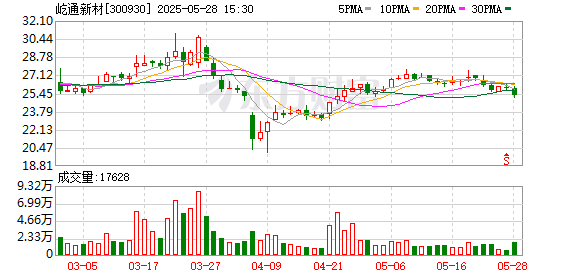
Core Viewpoint - The company, Yitong New Materials, has evolved from a small workshop to a leading player in the metal powder industry, focusing on practical and dedicated efforts to build a competitive edge in various sectors including new energy and clean energy [2][3]. Group 1: Company Development and Strategy - Yitong New Materials specializes in high-quality iron-based powders and has shifted its focus from copper powder to iron powder due to market potential [3]. - The company was established in 2000 and has since developed a strong presence in the iron powder market, becoming a domestic leader in the field [3]. - The company aims to replace imported high-end products by enhancing the performance and technical specifications of its offerings [4]. Group 2: Financial Performance - The company's revenue for 2022, 2023, and 2024 was reported at 387 million, 393 million, and 503 million respectively, with net profits of 91.56 million, 50.51 million, and 50.95 million [4]. Group 3: Innovation and Market Adaptation - The metal powder industry is moving towards high-performance, composite, and functional products, which Yitong New Materials is actively pursuing [5]. - The company has established partnerships with leading domestic battery manufacturers to develop iron powders suitable for lithium iron phosphate batteries [6]. - Yitong New Materials emphasizes the importance of innovation, stating that product development must outpace market demands [6]. Group 4: Research and Development - The company has built several R&D platforms and collaborates with renowned research institutions to enhance its technological capabilities [7]. - Yitong New Materials is expanding its talent pool to support its R&D efforts and aims to be a leader in key raw materials for new energy and large equipment components [9]. Group 5: Future Prospects - The successful trial production of a 125MN free forging hydraulic press marks a significant step for the company, indicating potential growth in the forging sector [8]. - Yitong New Materials plans to leverage its regional advantages to establish a major production base for high-end equipment components in the Yangtze River Delta [8].

西麦食品(002956) - 2025年5月28日投资者关系活动记录表
2025-05-28 09:18
Group 1: Financial Performance - In Q1 2025, the company's revenue and profit growth were primarily driven by traditional e-commerce platforms, which showed higher profitability compared to interest-based platforms [1] - The company reported a stable gross margin in Q1 2025 compared to the same period last year, indicating effective cost management strategies [1] Group 2: Product Development - The company is focusing on continuous product updates in the "oat + compound" category, which has shown significant growth and consumer acceptance [2] - New product lines include health-oriented products and leisure snacks, aiming to enhance the recreational appeal of oat-based foods [2] Group 3: Market Strategy - Online business grew by 17% year-on-year in 2024, while offline business also saw a 14% increase, demonstrating a balanced growth strategy [2] - The company is diversifying its raw material supply chain to mitigate challenges from rising import prices and currency fluctuations [2] Group 4: International Expansion - The company's overseas business is in the exploratory phase, with efforts to participate in international food exhibitions to expand its customer base [2] - Future plans include increasing overseas sales channels and scaling up international market presence [2]
一辆直营车日销八万支雪糕,“雪糕论斤称”带火济南老字号
Qi Lu Wan Bao Wang· 2025-05-28 03:32
Group 1 - The core viewpoint of the article highlights how the traditional ice cream brand Qunkang is adapting to market changes through product innovation and new sales models to find growth in a competitive landscape [1][2]. - Qunkang has introduced a new sales model of selling ice cream by weight at a price of 18 yuan per kilogram, which averages to less than 0.5 yuan per piece, attracting consumers with lower spending thresholds and diverse flavor options [2][3]. - The company has launched 18 new flavors across three series, focusing on health, low sugar, and rich taste to meet consumer demands for variety and quality [4]. Group 2 - Qunkang's production capacity is significant, with the ability to produce approximately 400,000 ice creams daily, and a single mobile ice cream cabinet can sell 80,000 pieces in one day [2][4]. - The company plans to deploy over 100 mobile sales vehicles in high-traffic areas of Jinan to stimulate summer consumption and enhance market coverage [4]. - Qunkang aims to maintain a balance between traditional products and innovation, with plans to introduce premium products in the next three years to target the high-end market while strengthening emotional connections with younger consumers [4][5].
Skyline Champion(SKY) - 2025 Q4 - Earnings Call Transcript
2025-05-27 13:32
Financial Data and Key Metrics Changes - In fiscal year 2025, the company sold over 26,000 homes, a 19% increase year over year, with revenue growth of 23%, totaling $2.5 billion [5] - Fourth quarter net sales increased 11% to $594 million, with homes sold increasing 6% to 6,171 units [9][17] - Consolidated gross profit rose 55% to $152 million, with gross margin expanding by 740 basis points to 25.6% [20] - Net income for the fourth quarter increased by $33 million to $36 million, or earnings of $0.63 per diluted share [22] Business Line Data and Key Metrics Changes - U.S. factory-built housing revenue increased by 10%, with homes sold rising 5% to 5,941 homes [18] - Canadian revenue was $25 million, representing a 22% increase in homes sold, although the average selling price decreased by 9% to $110,600 [20] - Sales to independent retail channels and captive retail stores both increased compared to the prior year [10] Market Data and Key Metrics Changes - The backlog at the end of the year was $343 million, up 9% from the previous year and 10% sequentially [9] - Average backlog lead time was eight weeks, within the target range of four to twelve weeks [9] Company Strategy and Development Direction - The company is focused on expanding retail capabilities and investing in new products and services, including the acquisition of Eisman Homes [6][15] - The strategy includes navigating market uncertainties while maintaining a focus on customer-centric growth and operational efficiency [8][26] - The company aims to leverage regulatory changes to enhance market opportunities for manufactured housing [46] Management's Comments on Operating Environment and Future Outlook - Management noted that demand has been less predictable compared to a normal spring selling season, with a shift towards smaller floor plans [13] - The company anticipates low single-digit revenue growth for Q1 of fiscal 2026, reflecting mixed consumer sentiment and demand [12][25] - Management remains confident in the long-term outlook, emphasizing the need for affordable housing across the U.S. and Canada [25] Other Important Information - The effective tax rate for the quarter was 17.1%, down from 19.2% in the prior year, primarily due to increased tax credits [21] - The company returned $20 million to shareholders through share repurchases and refreshed its $100 million share repurchase authority [24] Q&A Session Summary Question: Can you elaborate on discussions with customers in retail and community markets? - Management noted mixed in-store traffic but an increase in digital leads, indicating more serious buyers in the market [28][29] Question: What is the impact of SG&A increases despite revenue decline? - Management indicated that the increase was due to cyclical industry shows and would not recur as strongly in the first half of the fiscal year [35] Question: How is the company approaching share repurchases? - Management expressed a balanced capital allocation strategy and indicated they would be opportunistic based on share performance [38][40] Question: Were there any shipping issues due to weather conditions? - Management acknowledged slower markets in Texas and parts of the South, impacting shipping and order fulfillment [42] Question: What are the dynamics of manufactured housing and potential share gains? - Management highlighted the importance of customer experience and regulatory changes that could enhance market opportunities [46][48] Question: What is the outlook for gross margins? - Management expects near-term gross margins in the 25% to 26% range but anticipates structural margins to return to 26% to 27% in the long term [56] Question: How will the removal of the permanent chassis requirement impact costs? - Management indicated it would allow for more flexible designs and potentially lower transport costs, enhancing product offerings [59][60] Question: What is the status of FEMA orders? - Management confirmed no orders from FEMA yet but is prepared for future opportunities [97] Question: How is credit availability for chattel loans? - Management reported stable credit availability, with rates still higher than traditional fixed-rate mortgages [98]

德冠新材(001378) - 投资者关系活动记录表
2025-05-27 11:26
Group 1: Financial Performance - In Q1 2025, the company achieved revenue of 354 million CNY, a year-on-year decrease of 3.23% [8] - The net profit attributable to shareholders was 22.11 million CNY, down 15.39% year-on-year, due to insufficient terminal consumer demand and intensified industry competition [8] - The company plans to enhance operational resilience and focus on internal growth to counteract industry cycles [12] Group 2: Product Development and Innovation - The company is focusing on product innovation and management mechanisms to enhance core competitiveness [10] - New products are in mid-batch expansion stages, with applications in consumer electronics, sanitary materials, and instant tea markets [7] - The company aims to optimize product structure and enhance profitability through continuous product iteration and innovation [12] Group 3: Market Expansion Strategies - The company plans to expand market share by targeting specific markets and customizing marketing strategies based on market conditions and customer needs [5] - Current primary markets include South China and East China, with international coverage in East Asia, the Middle East, Latin America, and Southeast Asia [9] - Future plans include exploring new market fields while maintaining a stable operational strategy [9] Group 4: Corporate Governance and Compliance - The company adheres to legal regulations and has established a robust corporate governance structure to prevent corruption [14] - Regular internal audits and compliance training are conducted to ensure adherence to laws and regulations [14] - The company has implemented a whistleblower mechanism to report any misconduct [14] Group 5: Future Outlook and Goals - The 2025 work theme is "Renew and Grow Resiliently," with ten key operational goals aimed at achieving year-on-year growth in all business indicators [12] - The company plans to enhance product quality and increase production efficiency while ensuring safety in operations [12] - The company anticipates a recovery in the domestic consumption market, which will positively impact the BOPP industry [14]