
双碳战略

Search documents
华宝新能深圳落子“新能壹号”:零碳启航,开创绿色能源全场景生态新纪元
Ge Long Hui· 2025-09-30 08:38
Core Viewpoint - The foundation of the "New Energy No. 1" building by Huabao New Energy marks a significant step towards realizing the zero-carbon vision, serving as a model project for the company's strategic focus on a zero-carbon ecosystem and the integration of green concepts into its operations [1][8]. Group 1: Company Development - Since its establishment in 2011, Huabao New Energy has transitioned from outdoor emergency energy solutions to a broader focus on integrating portable storage with household energy needs, launching products like the "Jackery Electric Little Two" and DIY small systems [3][4]. - The company has introduced the world's first XBC aesthetic curved photovoltaic tile, merging clean energy with architectural aesthetics, thus transforming households from energy consumers to producers [3][4]. Group 2: Market Trends - The global portable energy storage market has grown from 0.06 billion yuan in 2016 to 20.81 billion yuan in 2022, with a compound annual growth rate (CAGR) of 130.61%, projected to reach 88.22 billion yuan by 2026 [4]. - The global household energy storage market has increased from 50.7 billion yuan in 2020 to 71.4 billion yuan in 2022, with a CAGR of 12.09%, expected to reach 194.2 billion yuan by 2027 [4]. Group 3: Policy and Strategic Initiatives - The rise of green storage aligns with China's dual carbon strategy, with energy storage being recognized as a strategic emerging industry and included in the 14th Five-Year Plan [5][6]. - Local policies, such as those from the Longhua District in Shenzhen, emphasize the importance of portable and household storage alongside photovoltaic manufacturing, indicating strong regional development signals [6]. Group 4: New Energy No. 1 Building - The "New Energy No. 1" building will serve as an integrated base for research, manufacturing, and office facilities, focusing on the large-scale production of portable and household storage and photovoltaic products [7]. - This project is expected to enhance the company's response to local market demands and create a new strategic foothold in the domestic market, potentially leading to a second growth engine alongside international markets [7][8]. Group 5: Environmental Commitment - The establishment of the "New Energy No. 1" building reflects Huabao New Energy's commitment to connecting corporate goals with global ecological missions, promoting a shift in lifestyle towards mandatory green energy usage [8][9]. - The company has already made significant contributions to green manufacturing, saving approximately 1.25 billion kWh of electricity and reducing carbon emissions by 1.243 million tons as of mid-2023 [9].

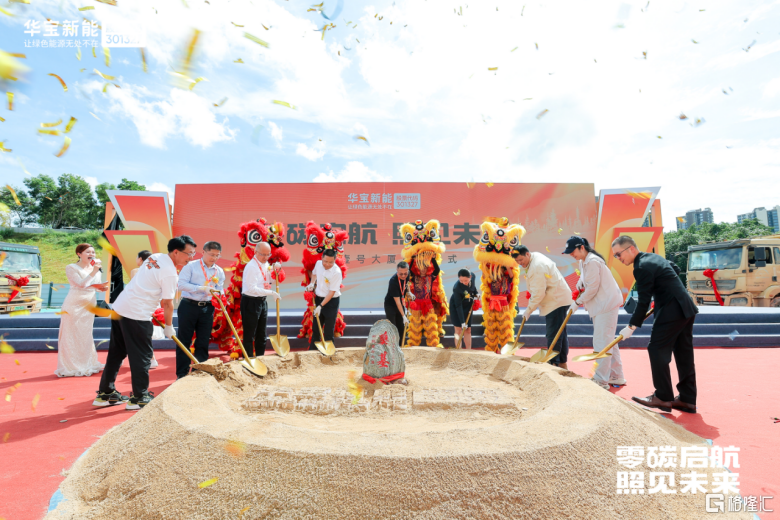
华宝新能(301327.SZ)深圳落子“新能壹号”:零碳启航,开创绿色能源全场景生态新纪元
Ge Long Hui· 2025-09-30 08:36
Core Viewpoint - The foundation of the "New Energy No. 1" building by Huabao New Energy marks a significant step towards realizing the zero-carbon vision, serving as a model project for the company's strategic focus on a zero-carbon ecosystem and the integration of green concepts into its operations [1][5][8] Group 1: Company Development and Strategy - Since its establishment in 2011, Huabao New Energy has evolved from outdoor emergency energy solutions to a comprehensive provider of portable and household energy solutions, establishing a leading position in the portable energy sector [3][4] - The company has introduced innovative products such as the XBC aesthetic curved photovoltaic tile, integrating clean energy with architectural aesthetics, thus transforming households from energy consumers to producers [3][4] - The "New Energy No. 1" building will serve as an integrated base for research, manufacturing, and industry collaboration, enhancing the company's ability to respond to local market demands and accelerating technological transformation [6][7] Group 2: Market Trends and Growth Potential - The global portable energy market has seen substantial growth, with the market size increasing from 0.06 billion in 2016 to 20.81 billion in 2022, reflecting a compound annual growth rate (CAGR) of 130.61%, and is projected to reach 88.22 billion by 2026 [4] - The household energy storage market is also expanding, with a growth from 50.7 billion in 2020 to 71.4 billion in 2022, and an expected CAGR of 21% to reach 194.2 billion by 2027 [4] - The rise of green energy storage aligns with national "dual carbon" strategies, positioning the industry for significant growth as it transitions from niche products to essential household items [5][6] Group 3: Environmental and Social Impact - The "New Energy No. 1" building embodies the company's commitment to green energy and aligns with national strategies, promoting a shift in consumer behavior towards active participation in ecological protection [7][8] - The company has already made measurable contributions to energy savings and carbon reduction, with approximately 1.25 billion kWh saved and a reduction of 1.243 million tons of carbon emissions from solar panel sales [8]
氢能产业发展指数在山西太原发布
Zhong Guo Hua Gong Bao· 2025-09-30 02:34
Core Insights - The Hydrogen Industry Index was introduced to evaluate and measure the development level of the hydrogen industry in specific regions, focusing on five core evaluation dimensions: resource endowment, policy system, industrial chain level, application status, and infrastructure [1] Group 1: Hydrogen Resource Index - Shanxi Province is a significant energy and industrial base in China, with a hydrogen resource index of 678.6, ranking first among major hydrogen development regions [2] - The province's coke production capacity is projected to reach 120 million tons by 2024, enabling a hydrogen production capacity of approximately 120,000 tons from by-product coke oven gas, sufficient to meet the hydrogen demand of over 60,000 hydrogen heavy trucks annually [2] Group 2: Hydrogen Station Construction Index - As of mid-2025, Shanxi Province has established 26 hydrogen refueling stations, exceeding the national average by 12 stations, resulting in a hydrogen station construction index of 262.3, ranking fifth among major hydrogen development regions [2] Group 3: Fuel Cell Vehicle Promotion Index - By mid-2025, Shanxi Province has promoted 1,286 fuel cell vehicles, surpassing the national average by 882 vehicles, with a fuel cell vehicle promotion index of 268.06, ranking seventh among major hydrogen development regions [2] Group 4: Policy Support Index - Shanxi Province has implemented 25 supportive policies for hydrogen industry development, exceeding the national average by 21 policies, leading to a policy support index of 175, ranking seventh among major hydrogen development regions [3] Group 5: Hydrogen Fuel Cell Vehicle Industry Chain Development Index - The number of enterprises in Shanxi's hydrogen fuel cell vehicle industry chain is nearly 50, slightly below the national average of 58, resulting in an industry chain development index of 225.5, ranking seventh among major hydrogen development regions [3] Group 6: Comprehensive Hydrogen Industry Development Index - The comprehensive hydrogen industry development index for Shanxi Province is 365.76, significantly higher than the national average, ranking third among major hydrogen development regions, indicating strong potential for hydrogen industry development [3] Group 7: Local Insights from Lüliang - Lüliang City, as a key energy and raw materials industrial base in Shanxi, has the largest industrial by-product hydrogen capacity in the province, with a comprehensive hydrogen industry development index of 551.49, ranking first in Shanxi [4] - The hydrogen industry development index serves as a crucial tool for evaluating regional hydrogen industry progress and is expected to aid in sustainable and high-quality development aligned with carbon neutrality goals [4]
风拂沙海绿电来!我国最大“沙戈荒”风电光伏基地首个千万千瓦级基地项目全面开工
Zhong Guo Neng Yuan Wang· 2025-09-29 11:55
Core Insights - The construction of the first 10 million kilowatt-level ultra-high voltage external delivery base in the Kubuqi Desert has officially commenced, marking a significant step in China's "14th Five-Year Plan" for the largest "sand-gobi-desert" wind and solar power base [1][4] - The project aims to integrate ecological and energy development, serving as a model for national "sand-gobi-desert" development [1][5] Project Overview - The Kubuqi Desert renewable energy base is a comprehensive energy system that includes wind, solar, thermal, and storage, with a total investment of 98.8 billion yuan [4] - The base will have a planned capacity of 8 million kilowatts of solar power and 4 million kilowatts of wind power, along with 4 million kilowatts of coal power and 500 megawatt-hours of new energy storage [4] - An ±800 kV ultra-high voltage external delivery channel will connect the base to the North China power grid, with a total length of 699 kilometers and a transmission capacity of 8 million kilowatts [4] Environmental Impact - Once operational by the end of 2027, the base is expected to deliver approximately 36 billion kilowatt-hours of electricity annually to the North China power grid, with 60% coming from renewable sources [4] - The project will reduce coal consumption by about 6.4 million tons and cut carbon dioxide emissions by approximately 16 million tons each year, promoting green energy transition in North China [4] Strategic Importance - The construction of the "sand-gobi-desert" wind and solar power base aligns with Inner Mongolia's energy security strategy and supports the national "dual carbon" goals [5] - The project represents a significant step in transforming resource-based regions and enhancing ecological protection while optimizing energy structure [5][7]

【前瞻分析】2025年中国粉末冶金行业市场份额及企业出海情况分析
Sou Hu Cai Jing· 2025-09-29 09:47
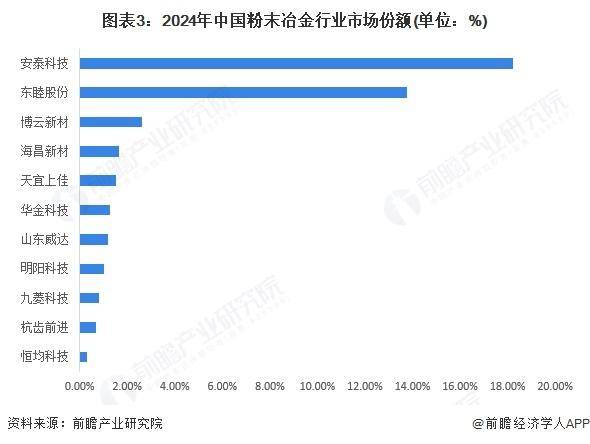
Group 1: Industry Overview - The Chinese powder metallurgy industry is experiencing significant growth, with major players like Antai Technology and Dongmu Co., Ltd. holding substantial market shares of 18.2% and 13.8% respectively in 2023, while other companies have market shares below 4% [2][4]. - The industry is supported by a robust policy framework that has evolved from focusing on technological accumulation to emphasizing high performance and green development, aligning with the dual carbon strategy [6][9]. Group 2: Company Strategies - Antai Technology has enhanced its international marketing capabilities by acquiring Beijing Steel Research Dahui Technology Development Co., Ltd., establishing a fully-owned international trade platform, and promoting digital transformation through an E-marketing platform [5]. - Dongmu Co., Ltd. has built a strong reputation in the powder metallurgy sector, serving high-profile clients in various industries such as automotive and consumer electronics, and has accumulated extensive customer resources [5]. - Hangzhi Qianjin has established a robust sales and service network with over 70 agents across more than 50 countries, utilizing direct export and agency models to reach international markets [5]. - Shandong Weida has formed solid partnerships with global brands and has set up overseas subsidiaries in Vietnam, Mexico, and Singapore, enhancing its global market presence and operational capabilities [5]. Group 3: Regional Development - The East China region, particularly Jiangsu and Zhejiang, focuses on high-end powder metallurgy products for aerospace and electronic information applications, leveraging strong industrial and research foundations [9]. - South China, especially Guangdong, is developing an industrial cluster that emphasizes the entire powder metallurgy supply chain, while actively pursuing international collaborations [9]. - Central China, including Hubei and Hunan, is integrating powder metallurgy technology with key industries like automotive and rail transportation [9]. - The North China region is promoting industrial collaboration within the Beijing-Tianjin-Hebei area, while Northeast China is concentrating on metal powder preparation due to its heavy industrial background [9].


新能源汽车进入市场化新阶段,专家呼吁政策错峰退出 市场平稳过渡
Zhong Guo Qi Che Bao Wang· 2025-09-29 09:12
Core Insights - The market share of new energy vehicles (NEVs) in China has seen significant growth, surpassing 44% in the first half of this year, with passenger vehicles reaching 51.8%, indicating a shift towards mainstream acceptance [2][3] - The NEV industry is entering a new development phase, suggesting a need for policy adjustments to address the transition from old to new energy sources [2][3] Market Performance - Global NEV sales exceeded 10 million units in the first half of the year, with a penetration rate of over 23%, and China contributed 62% of this growth [3] - In August, NEV sales in China reached 1.1 million units, with a penetration rate of 55.3%, marking a historical high [3] - For the first eight months of the year, NEV sales in China totaled 8.088 million units, a 30% year-on-year increase, with a market share of 45.5% [3] Future Projections - NEV sales in China are projected to reach approximately 15.5 million units this year, with a year-on-year growth of about 20% [4] - By the end of this year, NEV market share is expected to exceed 55%, and it may approach or exceed 80% within the next 3-5 years [4] Policy Environment - The Chinese government has implemented various supportive policies for the NEV industry, including tax exemptions and subsidies, which have significantly contributed to market growth [8][9] - The vehicle purchase tax exemption for NEVs has been extended until the end of 2027, with estimated tax exemptions exceeding 520 billion yuan from 2024 to 2027 [9] Industry Dynamics - The NEV supply chain in China has become increasingly complete, with a reported 70% completeness in the electric vehicle industry chain [5] - The call for "equal rights for oil and electricity" is growing, suggesting a need for a fair competitive environment between NEVs and traditional fuel vehicles [10][11] Recommendations for Policy Adjustment - Experts suggest that current policies should be adjusted to enhance market vitality and innovation, including a potential shortening of the tax exemption period for NEVs [11] - There is a recommendation to gradually implement "oil and electricity equality" while ensuring the continued support for NEV development [16][17]

ESG系列研究之十四:金融助力绿色转型征程(一):公募基金绿色投资五年演进与展望
CMS· 2025-09-29 08:44
- The report introduces the concept of "green income ratio" as a core metric to quantify the "greenness" of investments, which measures the proportion of a company's total revenue derived from activities recognized as green by policy documents [51] - The green income ratio is calculated by tagging industry revenues of listed companies based on the "Green Low-Carbon Transition Industry Guidance Catalog (2024 Edition)" issued by the National Development and Reform Commission in February 2024 [51] - The weighted average green income ratio is used to evaluate the average green income proportion corresponding to each unit of investment in the fund pool, calculated by multiplying the green income ratio of constituent stocks by the fund's holding weight and summing them up [58][61] - The fund-attributed green income total is derived by attributing a company's green income to the fund pool based on the proportion of the fund's market value holding to the company's total market value [58][61] - The green fund pool's weighted average green income ratio in 2025H1 was 21.22%, slightly lower than 23.47% at the end of 2024, but significantly higher than the ratios of major indices like CSI 300 (10.43%) and CSI 800 (9.73%) [58][61] - The green fund pool's attributed green income total in 2025H1 was approximately 146 billion yuan, with each unit of net value corresponding to 0.06 yuan of green income, showing a slight decline compared to 2024 but still three times higher than in 2020 [58][61]
上海联交所成立固废资源交易中心:释放工业固废万亿级交易潜力
Xin Hua Cai Jing· 2025-09-29 07:22
Core Viewpoint - The establishment of the Shanghai Solid Waste Resource Trading Center aims to promote the resource utilization of industrial solid waste through market mechanisms, supporting Shanghai's goal of becoming a "waste-free city" and setting a benchmark for solid waste resource utilization in China [1][2]. Group 1: Trading Center Establishment - The Shanghai Solid Waste Resource Trading Center has been newly established, leveraging the trading system and market network of the Shanghai United Assets and Equity Exchange [1]. - The center will provide a comprehensive solution for industrial solid waste, including information release, transaction matching, and supporting services [1]. Group 2: Market Potential and Statistics - As of November 2024, 315 cities in China reported a total of 93.2 billion tons of solid waste generated in 2023, with general industrial solid waste accounting for 40.8% of this total at 38.0 billion tons [1]. - Major types of general industrial solid waste include tailings, fly ash, coal gangue, smelting slag, and furnace slag, which together account for 62.5% of the total generated [1]. Group 3: Policy and Industry Trends - The coal power industry generates over 60 million tons of solid waste annually, with fly ash production growing at a rate of 5% per year [2]. - The construction of "waste-free cities" and fiscal incentives such as immediate VAT refunds and carbon trading revenues are driving the resource transformation of enterprises [2]. Group 4: Collaboration and Future Goals - The Shanghai Trading Group and Huaneng Tendering Co., Ltd. aim to leverage their respective strengths to build and operate the industrial solid waste trading platform, promoting healthy industry development [3]. - The center will facilitate connections between waste-producing and waste-utilizing enterprises through open and fair market operations, optimizing resource allocation [2][3].
易成新能控股股东拟实施战略重组 “资源整合+协同效应”进一步打开成长空间
Quan Jing Wang· 2025-09-29 07:18
Core Viewpoint - The strategic restructuring between China Pingmei Shenma Group and Henan Energy Group is expected to enhance the growth potential of Yicheng New Energy in the new energy and new materials sectors, providing a broader platform for development [1][5]. Group 1: Strategic Restructuring - Yicheng New Energy's controlling shareholder, China Pingmei Shenma Group, is undergoing a strategic restructuring with Henan Energy Group, both controlled by the Henan Provincial State-owned Assets Supervision and Administration Commission [1][2]. - Following the announcement, Yicheng New Energy's stock price surged, with a cumulative increase of 40% over two trading days, reaching a market value of 11.02 billion yuan [1]. Group 2: Industry Position and Synergy - China Pingmei Shenma Group has a diversified industrial layout, including coal, nylon chemicals, and new energy materials, which provides a solid foundation for Yicheng New Energy [2][3]. - The combination of the two energy giants is expected to enhance the entire industrial chain, increasing added value and market competitiveness, particularly in nylon chemicals and silicon-carbon new materials [2]. Group 3: Business Operations and Innovations - Yicheng New Energy focuses on high-end carbon materials and new energy storage, with a complete industrial chain for special ultra-high-power graphite electrodes, making it a leader in the domestic market [3][4]. - The company has established high-level research platforms and collaborates with top universities to enhance its R&D capabilities, aligning with the national "dual carbon" strategy for green and low-carbon development [4][5]. Group 4: Future Outlook - The restructuring is anticipated to provide Yicheng New Energy with more resources and support for its dual main business development in high-end carbon materials and new energy storage [5].

【高端访谈】保持战略定力 应对国际市场变化——访中国钢铁工业协会副秘书长张龙强
Xin Hua Cai Jing· 2025-09-29 03:32
Core Viewpoint - The U.S. steel industry is central to Trump's vision for a new industrial economy, with tariffs imposed to strengthen domestic production and reduce reliance on imports [1] Group 1: Impact on U.S. Steel Industry - The U.S. has increased tariffs on steel and aluminum to 50%, affecting 407 product categories, including steel derivatives [1] - U.S. crude steel production showed a slight increase of 1.5% year-on-year in the first seven months of 2025, but the growth is modest compared to a 2.3% decline the previous year [3] - The average capacity utilization rate for U.S. crude steel reached 76.6%, indicating limited improvement [3] Group 2: Effects on China's Steel Industry - China's steel exports to the U.S. are minimal, with only 89,000 tons expected in 2024, representing 0.8% of China's total steel exports [2] - The potential for steel re-export through countries like Vietnam, South Korea, and Brazil is limited, accounting for only 4.5% of China's total steel exports if all were sourced from China [2] Group 3: Strategic Responses - The domestic steel industry should maintain a strategic approach, resisting panic and focusing on practical responses to tariffs [5] - Encouraging high-end steel and green steel exports through measures like export tax rebates is recommended [5] - The industry should align with national policies to accelerate the transition towards high-end, intelligent, and green steel production [5]