
价值投资

Search documents
“破局者”财通资管:以“变”与“恒”书写权益投资新样本
Mei Ri Jing Ji Xin Wen· 2025-11-06 00:49
Core Viewpoint - The article challenges the perception that brokerage asset management firms lack equity investment capabilities, highlighting that some firms, like Caitong Asset Management, have successfully established themselves in this area through active management and a focus on deep research and value investment [1][3]. Group 1: Company Overview - Caitong Asset Management has a total management scale exceeding 300 billion yuan, with nearly 110 billion yuan in public fund management, maintaining a leading position in the brokerage asset management industry [3]. - The firm has achieved a 156.69% absolute return rate for its equity funds over the past seven years, ranking in the top 20% among fund managers [3]. Group 2: Investment Philosophy and Team Structure - The investment philosophy of Caitong Asset Management is centered around "deep research, value investment, absolute returns, and long-term assessment," which has guided its equity investment strategy since its inception [4]. - The equity research team consists of approximately 40 members, with over 20 dedicated equity researchers, and has grown the scale of its equity public funds from 700 million yuan to over 17 billion yuan [4][5]. Group 3: Research and Investment Strategy - The firm has established a structured approach to integrate research and investment, with clear departmental divisions focusing on public and private equity investments, each led by experienced fund managers [8]. - Caitong Asset Management emphasizes a long-term investment strategy, focusing on fundamental research to uncover intrinsic value, regardless of market fluctuations [13][15]. Group 4: Team Development and Culture - The average experience of equity fund managers and investment managers at Caitong Asset Management exceeds 14 years, with many having backgrounds in absolute return investments [5]. - The firm fosters a culture of openness and shared values, encouraging diverse investment styles while ensuring that all team members receive adequate research support [12].


中期分红队伍壮大 多家行业龙头首次出手
Zheng Quan Shi Bao· 2025-11-05 18:37
Core Viewpoint - The trend of mid-term dividends is expanding among leading companies, signaling strong operational performance and positive industry outlooks [1][2][3]. Group 1: Mid-term Dividends - Industrial leaders like Industrial Bank, Luxshare Precision, China Duty Free Group, and China CRRC have announced their first mid-term dividend plans, reflecting a commitment to shareholder returns [2][3]. - Industrial Bank plans to distribute a cash dividend of 5.65 yuan per 10 shares, totaling 11.957 billion yuan, which represents 30.02% of its net profit attributable to ordinary shareholders for the first half of 2025 [2]. - Luxshare Precision reported a revenue of 220.915 billion yuan for the first three quarters, a year-on-year increase of 24.69%, and plans to distribute a cash dividend of 1.6 yuan per 10 shares, totaling 1.165 billion yuan [2]. Group 2: Overall Dividend Trends - As of October 31, 218 A-share companies have announced profit distribution plans, with a total proposed cash dividend of 46.619 billion yuan, maintaining high levels in both the number of companies and the amount [4]. - A total of 1,033 listed companies have announced cash dividend plans for the first quarter, half-year, and third quarter, an increase of 141 companies compared to the previous year [4]. - Companies like Gree Electric and Wuliangye have proposed significant cash dividends, with Gree planning to distribute 10 yuan per 10 shares, totaling 5.585 billion yuan [4][5]. Group 3: Normalization of Dividends - The trend of mid-term dividends is becoming normalized, with more companies actively returning profits to investors, reflecting a growing awareness of shareholder value [6]. - In 2024, 3,720 companies distributed cash dividends totaling approximately 2.4 trillion yuan, setting a historical record and maintaining over 2 trillion yuan for three consecutive years [6]. - Companies are increasingly committing to annual profit distributions, with some planning to distribute at least 70% of their net profits in cash dividends over the next three years [6]. Group 4: Recommendations for Dividend Policies - Experts suggest optimizing dividend policies with differentiated strategies based on industry and development stages, encouraging mature companies to increase dividend amounts and frequency while allowing innovative firms to reinvest more profits [7].




GTM or FFIV: Which Is the Better Value Stock Right Now?
ZACKS· 2025-11-05 17:41
Core Viewpoint - Investors in the Internet - Software sector should consider ZoomInfo (GTM) and F5 Networks (FFIV) for potential value opportunities, with GTM currently presenting a more favorable outlook [1]. Group 1: Zacks Rank and Analyst Outlook - GTM has a Zacks Rank of 2 (Buy), indicating positive earnings estimate revisions, while FFIV has a Zacks Rank of 5 (Strong Sell), suggesting a less favorable analyst outlook [3]. - The improving analyst outlook for GTM makes it a more attractive option for investors [3]. Group 2: Valuation Metrics - GTM has a forward P/E ratio of 11.63, significantly lower than FFIV's forward P/E of 16.02, indicating GTM may be undervalued [5]. - GTM's PEG ratio is 1.64, while FFIV's PEG ratio is much higher at 5.96, further suggesting GTM's better value proposition [5]. - GTM's P/B ratio stands at 2.43 compared to FFIV's 3.86, reinforcing the notion that GTM is more favorably valued [6]. Group 3: Value Grades - GTM has earned a Value grade of B, while FFIV has received a Value grade of F, highlighting the significant difference in their valuation attractiveness [6]. - The combination of Zacks Rank and Style Scores indicates that GTM is the better option for value investors at this time [6].


讣告 | 深切缅怀混沌创业营 2018 级校友王国斌先生
混沌学园· 2025-11-05 13:42
Core Viewpoint - The article pays tribute to Mr. Wang Guobin, a respected figure in China's capital market, emphasizing his dedication to value investing and his impact on entrepreneurs and investors alike [2][3]. Group 1: Tribute to Wang Guobin - Mr. Wang Guobin passed away on November 3, at the age of 57, after battling illness [1]. - He dedicated over 30 years to the development of China's capital markets, earning respect and trust in the industry through his professional judgment and personal charm [2]. - As an alumnus of the 2018 Chaos Entrepreneurship Camp, he embodied the spirit of truth-seeking, exploration, and altruism [3]. Group 2: Investor and Entrepreneur Relationship - Serious value investors and adventurous entrepreneurs may seem like opposites, but they are interdependent; investors' capital enables entrepreneurs to realize their dreams [5][9]. - The relationship between investors and entrepreneurs is likened to a motorcycle rider trusting the driver; the more confidence in the driver's character and ability, the more attractive the investment [11]. Group 3: Value Investor's Confessions - **Attitude Towards Risk**: To thrive long-term, avoiding excessive leverage is crucial. Many investment failures stem from overconfidence, leading to high leverage and overexpansion [13][15]. - **Focus**: The stock market tends to favor leading companies in niche markets. Diversified companies often receive lower valuations compared to their focused counterparts [18][19]. - **Capital Discipline**: Capital is never free; it comes with costs. Companies should aim for high capital efficiency rather than merely growing or diversifying [21][22]. - **Marshmallow Experiment**: Self-control is vital for success. Those who can delay gratification tend to achieve greater success in life [23][25].

巴菲特“永不过时”的五项基本原则
Sou Hu Cai Jing· 2025-11-05 13:03
Core Insights - Jeremy Miller, a long-term shareholder of Berkshire Hathaway, has studied Warren Buffett's annual letters to shareholders since the 1960s, treating them as an "investment textbook" and has authored a book detailing his findings on Buffett's investment philosophy [1] Group 1: Investment Principles - Principle One: Never Predict the Market Buffett has stated that he does not possess the ability to predict market trends and dismisses those who claim to do so, especially after market movements have occurred [3][5][4] - Principle Two: Invest in "Deep Value" Buffett focuses on "deep value," which refers to companies with strong products and management that are undervalued by the market. He compares a company's actual assets to its market valuation and invests when he identifies a significant undervaluation [6][7] - Principle Three: Take a Long-Term View Buffett emphasizes that short-term results are not a priority, advocating for a minimum five-year performance review of a company. He believes that time can heal poor investments and that successful companies will continue to provide opportunities for reinvestment [12][13] - Principle Four: Relative Performance Matters Buffett asserts that performance should be evaluated relative to appropriate benchmarks, such as major stock indices. He uses these comparisons to assess his investment success or failure [14][15] - Principle Five: The Power of Compounding Buffett highlights the importance of compound returns, illustrating how small variables can lead to significant changes over time, while also cautioning against overlooked costs and taxes that can erode wealth [16]
杨德龙:美国政府“停摆”时间将破纪录加大美国经济陷入衰退的风险
Xin Lang Ji Jin· 2025-11-05 09:50
Group 1 - The U.S. stock market experienced a significant decline, with major indices falling sharply, particularly the Nasdaq, which dropped over 2% [1] - Notable investors, including Michael Burry, have taken large short positions against leading tech stocks, indicating a bearish sentiment in the market [1] - Concerns about high valuation levels in the U.S. stock market have been raised by several Wall Street leaders, predicting potential corrections of 10% to 20% in the next 12 to 24 months [1][2] Group 2 - The ongoing U.S. government shutdown, which is expected to exceed previous records, has heightened fears of an economic recession, impacting investor sentiment [2] - The Federal Reserve has lowered interest rates in response to recession risks, which has contributed to the decline in major stock indices and affected Chinese concept stocks [3] - The technology sector has been a strong performer this year, but profit-taking pressures are increasing as the market adjusts [3] Group 3 - The current market adjustment is viewed as a necessary correction within an ongoing upward trend, rather than an end to the bull market [5] - Investors are encouraged to maintain confidence and patience, focusing on sectors and companies that will benefit from economic transformation [6] - The upcoming closure of Hainan's free trade zone is anticipated to positively impact local economic growth and related listed companies, making it a hot sector in the market [4]
资本热话 | 踏空科技后,这些知名基金经理反思出什么布局计划?
Sou Hu Cai Jing· 2025-11-05 08:31
Core Insights - The article discusses the candid reflections of fund managers in their quarterly reports, highlighting their struggles and strategies in the current market environment, particularly in the technology sector [2][3][4]. Group 1: Market Performance and Fund Manager Reflections - The A-share market has seen a significant "profit-making effect," with 53 funds reporting over 100% net value growth year-to-date, many of which are heavily invested in technology [3]. - Fund managers are openly addressing their performance issues, with some admitting to "missing out" on the tech rally and using their reports to reflect on their trading strategies and market conditions [3][4]. - The concept of a "slow bull" market is introduced, where a few tech leaders drive the market while other stocks lag behind, prompting fund managers to reassess their strategies [3]. Group 2: Investment Strategies and Challenges - Fund managers like Jiao Wei from Yinhua Fund acknowledge the need for a thorough evaluation of their trading strategies during volatile times, emphasizing the importance of long-term effectiveness [3][4]. - The article highlights the challenges faced by fund managers due to large fund sizes, which limit their ability to make quick trades and adapt to market trends [9]. - Managers are encouraged to maintain a rational investment approach, focusing on simple business models and avoiding the pitfalls of market euphoria [11]. Group 3: Future Market Outlook - As the fourth quarter approaches, fund managers are not only reflecting on past performance but also providing forecasts for future market trends and investment strategies [11]. - Concerns are raised about the potential for bubbles in the technology sector, particularly in AI and robotics, with calls for a more cautious and rational approach to investing [12]. - The importance of "anti-involution" policies is emphasized, suggesting that a shift from price competition to value competition is necessary for sustainable growth in the technology sector [13].

泓德基金:“优质治理灵活配置”成立以来累亏26%,多只基金成立至今亏损
Sou Hu Cai Jing· 2025-11-05 01:29
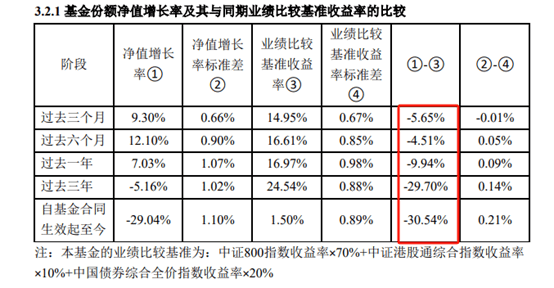
截至11月3日数据显示(下同),泓德优质治理灵活配置成立4年多,仍处于浮亏,净值累计下跌26.95%,同类排名靠后。 尤为引人注意的是,泓德基金旗下多只产品成立以来净值回撤超10%。旗下多只主动权益产品中长期业绩表现较差,泓德基金合规风控是否存在漏洞?投研 是否尽责? 泓德优质治理灵活配置:成立以来跑输业绩基准超20个百分点 泓德优质治理灵活配置成立于2021年3月。基金在严格控制风险的前提下,重点挖掘优质治理型公司的投资机会,力争实现基金资产的长期稳健增值。 基金业绩比较基准为中证800指数收益率*70%+中国债券综合全价指数收益率*20%+中证港股通综合指数收益率*10%。 | 阶段 | 净值增长 | 净值增长 | 业绩比较 | 业绩比较 基准收益 | (1)-(3) | (2)-(4) | | --- | --- | --- | --- | --- | --- | --- | | | 率(1) | 率标准差 | 基准收益 | 率标准差 | | | | | | (2) | 率(3) | (4) | | | | 过去三个月 | 9.30% | 0.66% | 14.95% | 0.67% | -5.65% ...
王国斌:最后的演讲
阿尔法工场研究院· 2025-11-05 00:07
Core Viewpoint - The recent strong performance of Chinese assets is attributed to innovations in fields such as artificial intelligence, which have provided China with a global competitive advantage in high-end manufacturing and frontier sectors [4][33]. Group 1: Company Overview - Wang Guobin, a prominent figure in the investment banking industry, passed away recently, leading to a management change at Quanguo Fund, where he served as the founder and general manager [4][6]. - Wang Guobin was recognized for his extensive experience in both primary and secondary markets, earning him titles such as "first-generation trader" and "entrepreneurial investor" [5][6]. - In 2022, he founded Quanguo Fund, focusing on a long-term investment strategy centered on "Investing in China" [6][7]. Group 2: Investment Philosophy - Wang Guobin's investment philosophy was deeply rooted in value investing, influenced by Confucian principles, emphasizing self-discipline and the importance of managing one's mindset for investment success [10][11][20]. - He believed that a calm inner state is essential for investors, advocating for independent thinking and a serene environment for investment activities [21][23]. Group 3: Company Performance - Since its establishment, Quanguo Fund has attracted several notable fund managers and adopted a boutique strategy, maintaining a limited number of public fund products [28][29]. - As of the third quarter of this year, Quanguo Fund's public fund scale approached 240 billion yuan, despite facing challenges during the initial bear market [29]. - With the recent recovery of the A-share market, the net values of Quanguo Fund's products have reached historical highs [29]. Group 4: Final Insights - In his last public speech, Wang Guobin shared insights on the macroeconomic landscape, highlighting that China's strong asset performance is largely due to innovations in artificial intelligence and other high-tech sectors, which are expected to create new job opportunities despite long-term demographic challenges [33][34].


踏空科技后,这些知名基金经理反思出什么布局计划?
Di Yi Cai Jing· 2025-11-04 12:37
Group 1 - The article highlights the introspective reflections of fund managers in their quarterly reports, showcasing a blend of professional analysis, humor, and future predictions in response to market pressures [1][2][5] - Fund managers are candidly addressing their performance amidst a booming technology sector, with some acknowledging their strategies have not kept pace with market trends, leading to a sense of "missing out" [2][3][4] - The performance of funds has varied significantly, with 53 funds reporting over 100% net value growth year-to-date, particularly those heavily invested in technology [1] Group 2 - Fund managers like Jiao Wei from Yinhua Fund emphasize the importance of evaluating the long-term effectiveness of trading strategies during market fluctuations, suggesting that historical lessons are crucial for future success [2][7] - The article notes that some fund managers, despite underperforming, express a positive outlook on the overall market, indicating a willingness to learn from peers who have benefited from technology investments [3][5] - Concerns are raised about the extreme focus on technology stocks, with warnings of potential bubbles and the need for rational participation in the market [8][9] Group 3 - The article discusses the challenges faced by fund managers in maintaining a balance between risk management and seizing opportunities in a rapidly changing market environment [6][9] - There is a consensus among fund managers that the current market dynamics require a shift from short-term trading to a more sustainable long-term investment approach, emphasizing the importance of fundamental analysis [6][7] - The concept of "anti-involution" is highlighted as essential for the long-term growth of technology stocks, suggesting that a focus on value rather than price competition is necessary for sustainable development [9][10]