全国统一大市场

Search documents
殷德生:构建新发展格局的重要支撑和实践路径
Jing Ji Ri Bao· 2025-11-07 00:31
当前,世界经济增长动能不足,全球发展赤字扩大,贸易保护主义加剧。面对日趋复杂严峻的外部 环境,我国提出的一个重大战略决策就是加快构建以国内大循环为主体、国内国际双循环相互促进的新 发展格局,并在实践中不断增强国内大循环内生动力和可靠性、提升国际循环质量和水平。习近平总书 记在《关于〈中共中央关于制定国民经济和社会发展第十五个五年规划的建议〉的说明》中指出:"外 部环境越是严峻复杂,越要加快构建新发展格局,牢牢把握发展主动权。当前和今后一个时期,要坚持 做强国内大循环,加快形成强大国内经济循环体系,以国内循环的稳定性对冲国际循环的不确定 性。"加快构建新发展格局是以习近平同志为核心的党中央根据我国发展阶段、环境、条件变化,特别 是基于我国比较优势变化,审时度势作出的重大决策,是事关全局的系统性、深层次变革,是立足当 前、着眼长远的战略谋划,需从全局和战略的高度准确把握加快构建新发展格局的战略构想,深刻理解 其重要意义,不断探索其实践路径。 抢抓机遇应对挑战的战略选择 2020年4月,习近平总书记在十九届中央财经委员会第七次会议上阐述对国家中长期经济社会发展 战略若干重大问题的深入思考时,首次提出"构建以国内大循 ...
屈晓东:破除隐性壁垒建设全国统一大市场
Jing Ji Ri Bao· 2025-11-07 00:31
Core Insights - The construction of a unified national market is a significant strategic decision made by the central government to enhance economic quality and efficiency amid global uncertainties [1][2][3] Group 1: Market Construction - The emphasis is on deepening market-oriented reforms and building a high-standard market system to facilitate domestic circulation and support high-quality economic development [1][3] - Significant progress has been made in improving market infrastructure, unifying resource markets, and promoting the circulation of goods and services since the issuance of the central government's opinions on building a unified national market [2][3] Group 2: Barriers and Challenges - Despite progress, local protectionism and market fragmentation remain prevalent, with hidden barriers existing in various dimensions such as laws, policies, and standards [2][3] - Local governments often create "policy lowlands" to support local enterprises, leading to fragmented markets and low-level repetitive construction in industries [2][3] Group 3: Key Requirements for Market Unity - The basic requirements for advancing the construction of a unified national market include five unifications and one openness: unifying market infrastructure, government behavior, regulatory enforcement, resource markets, and expanding openness [3][4][5] - Establishing a unified market rules system is crucial to eliminate local legislative conflicts and standard discrepancies, providing a stable and predictable institutional environment for businesses [4][5] Group 4: Regulatory and Governance Improvements - The government must clarify its functions and responsibilities to prevent the abuse of administrative power and ensure fair competition among all market participants [5][6] - Enhancing market regulation and governance through consistent rules and collaborative enforcement across regions and departments is essential for effective market oversight [5][6] Group 5: Resource Allocation and Efficiency - The reform of factor market allocation is necessary to break down barriers to the free flow of key resources such as land and capital, thereby improving overall efficiency [6] - Establishing a national data trading platform and innovating new methods for resource allocation can help optimize the matching of factors across regions [6]
“十五五”新风口,专访五年规划深度参与者董煜:锚定4大新兴产业和6大未来产业
3 6 Ke· 2025-11-07 00:05
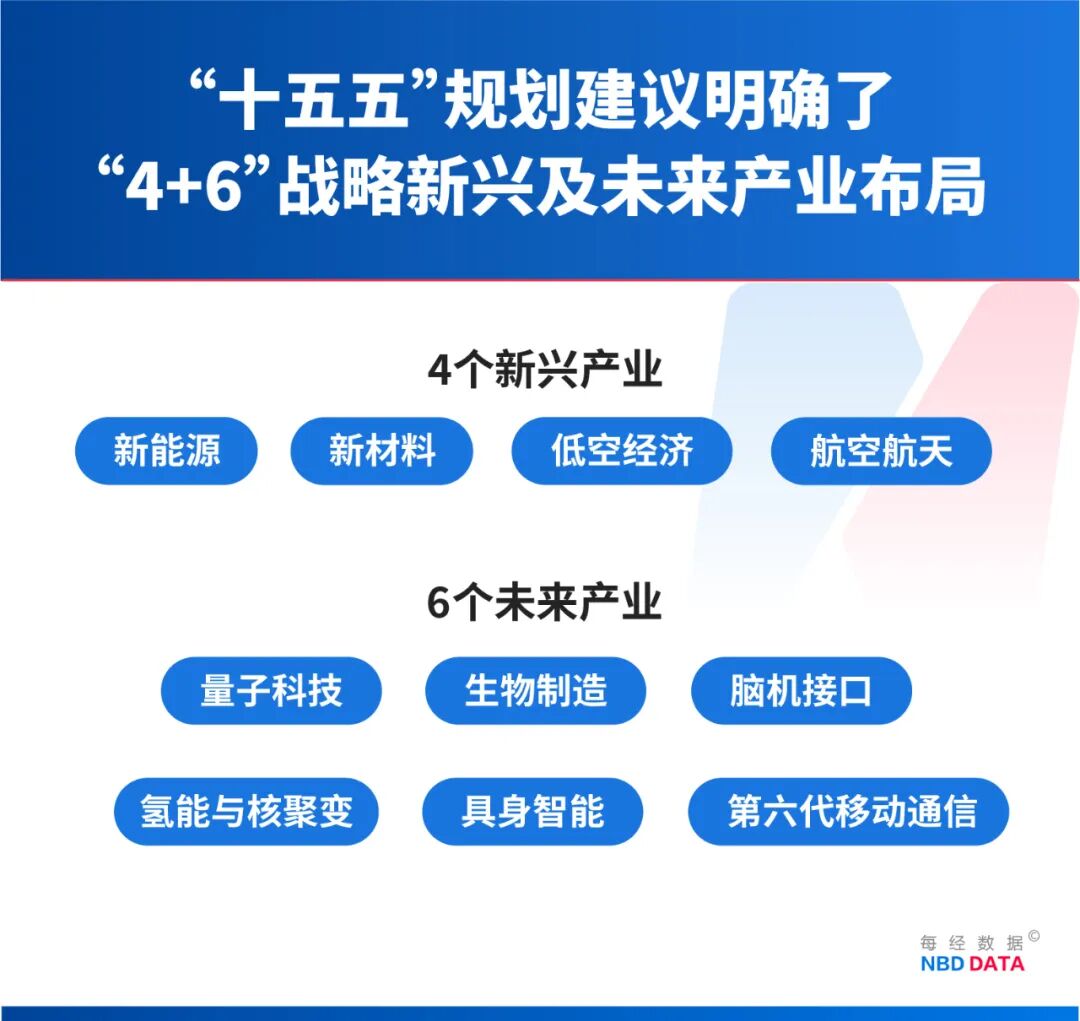
Group 1: Economic and Industrial Development - The "15th Five-Year Plan" emphasizes the construction of a modern industrial system as a foundation for economic modernization, highlighting the importance of strengthening the real economy and core competitiveness in response to external changes [2][4]. - The plan identifies "4+6" strategic emerging and future industries, with four emerging industries (new energy, new materials, low-altitude economy, and aerospace) expected to become pillar industries, while six future industries (quantum technology, biomanufacturing, brain-computer interfaces, hydrogen energy and nuclear fusion, embodied intelligence, and sixth-generation mobile communication) are recognized for their potential growth [7][4]. - The plan aims to enhance traditional industries and foster new and future industries, positioning new quality productivity as a priority for development [4][7]. Group 2: Social and Employment Policies - The plan places significant emphasis on improving people's livelihoods, focusing on three high-quality aspects: full employment, high-quality real estate development, and high-quality population development [11][12]. - It aims to address employment issues by ensuring sufficient job opportunities while enhancing job quality and sustainability, directly impacting household income [11]. - The plan proposes comprehensive support for family planning and child-rearing, aiming to create a family-friendly society and alleviate the burdens of child-rearing, thereby enhancing overall happiness [12]. Group 3: Market and Regulatory Framework - The plan stresses the need to eliminate barriers to building a unified national market, providing clear guidance for market participants and enhancing the efficiency of market operations [13][16]. - It emphasizes the establishment of six foundational market institutions, including property rights protection and market access, to reduce transaction costs and uncertainties in the market [13][16]. - The plan aims to create a favorable market environment by regulating competition and ensuring fair practices among market entities [16].

破除隐性壁垒建设全国统一大市场
Jing Ji Ri Bao· 2025-11-06 22:44
统一政府行为尺度,实现公平公正。明晰政府职能与定位,进一步明确招商引资鼓励和禁止的具体行 为,预防和制止滥用行政权力、限制竞争行为,科学界定不同层级政府的职责范围,推动政府在法定职 责范围内规范高效行使权力。在财税体制方面,理顺中央和地方财政关系,明晰央地事权与支出责任的 划分,完善财政管理体制机制,深化预算管理体制改革。在产业政策方面,坚持竞争中立,确保对所有 经营主体在获取政策支持、享受政府服务、参与市场竞争等方面平等对待,不断打造市场化、法治化、 国际化一流营商环境。 党的二十届四中全会强调,"坚决破除阻碍全国统一大市场建设卡点堵点"。建设全国统一大市场,既是 攻坚战,也是持久战,破除隐性壁垒是其中的重要环节。今年7月,习近平总书记在二十届中央财经委 员会第六次会议上指出,"纵深推进全国统一大市场建设,基本要求是'五统一、一开放'"。包括:统一 市场基础制度、统一市场基础设施、统一政府行为尺度、统一市场监管执法、统一要素资源市场,持续 扩大对内对外开放。在具体实践中,必须把这个基本要求落到实处,清理废除妨碍统一市场和公平竞争 的各种规定和做法,打造覆盖市场运行全链条的制度支撑体系,进一步消除地方保护和市 ...
“十五五”新风口!专访五年规划深度参与者董煜:锚定4大新兴产业和6大未来产业
Sou Hu Cai Jing· 2025-11-06 12:11
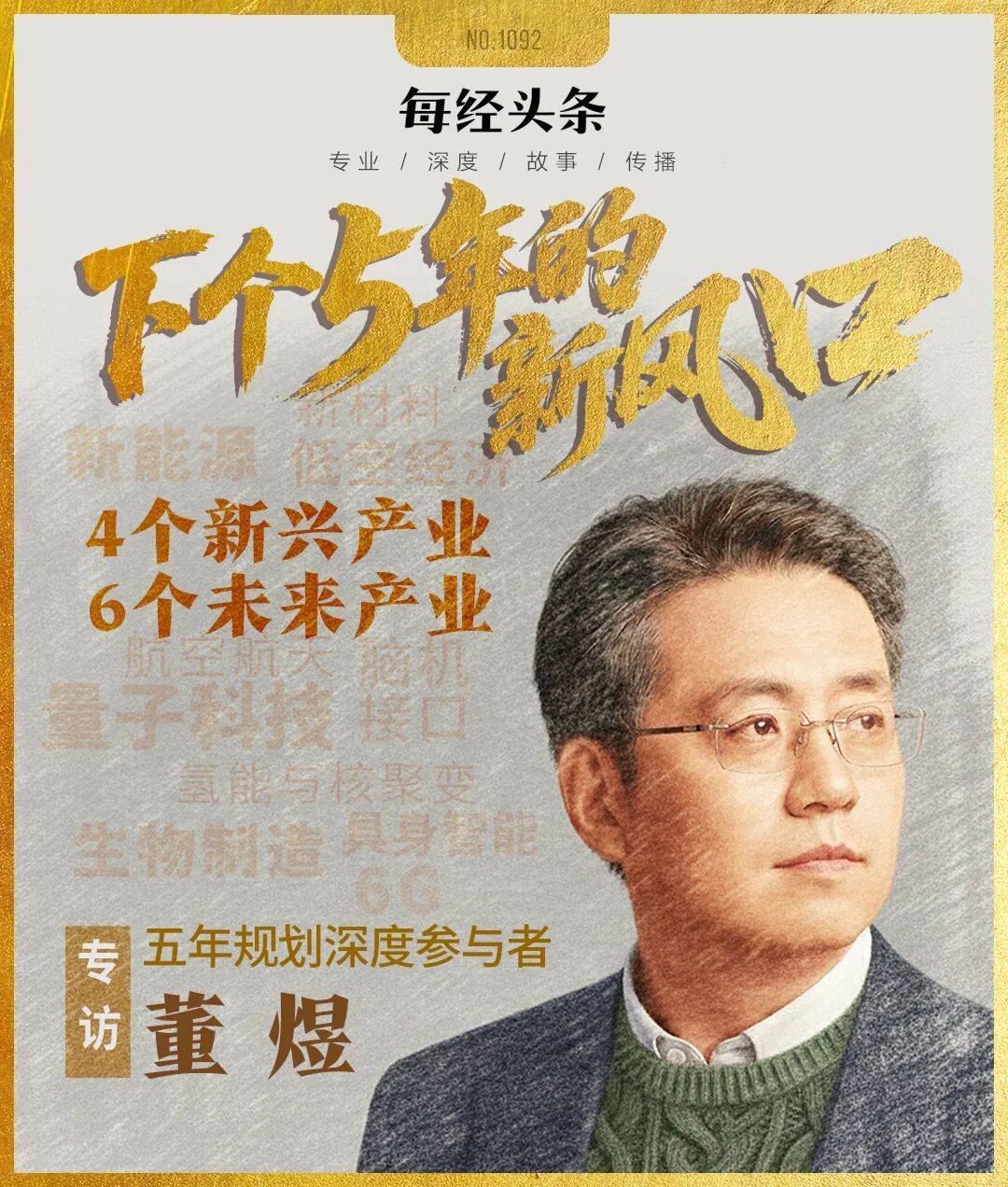
Group 1 - The core idea of the article is the release of the "15th Five-Year Plan" which outlines the guiding principles for China's economic and social development for the next five years, emphasizing the modernization of the industrial system and the strengthening of the real economy [2][19]. - The "15th Five-Year Plan" prioritizes the construction of a modern industrial system as a crucial foundation for China's modernization, highlighting the need to enhance core competitiveness in the face of changing external environments [3][19]. - The plan identifies "4+6" strategic emerging and future industries, including four emerging industries (new energy, new materials, low-altitude economy, and aerospace) and six future industries (quantum technology, biomanufacturing, brain-computer interfaces, hydrogen energy and nuclear fusion, embodied intelligence, and sixth-generation mobile communication) as new growth points for the economy [8][9]. Group 2 - The plan emphasizes the importance of digital economy as a key driver for modern industrial systems, facilitating technological upgrades and structural optimization in the real economy [4]. - The "15th Five-Year Plan" outlines specific tasks to cultivate new productive forces, focusing on optimizing traditional industries and nurturing emerging and future industries, thereby establishing a clear direction for industrial development [5]. - The plan includes measures to support future industries, such as innovative regulatory approaches, venture capital development, and risk-sharing mechanisms to ensure effective funding and support for these high-risk sectors [9][12]. Group 3 - The plan places significant emphasis on improving people's livelihoods, with a focus on high-quality employment, real estate development, and population policies to address demographic challenges [12][13]. - It aims to enhance service consumption by expanding access and encouraging innovation in service sectors, thereby improving the quality of life for citizens [13]. - The plan stresses the need to eliminate barriers to building a unified national market, which is essential for fostering fair competition and enhancing market expectations [14][18].
学习贯彻中共二十届四中全会精神
Ren Min Ri Bao· 2025-11-06 01:25
Group 1 - The core viewpoint emphasizes the importance of high-quality development as a response to the rapidly changing external environment, aiming to advance national strength and rejuvenation [1][2] - The focus is on implementing a comprehensive new development concept and proactive macro policies to boost effective demand and promote a unified national market [1] - There is a strategic emphasis on enhancing new quality productivity, particularly through the integration of artificial intelligence and fostering innovation within enterprises [1] Group 2 - Recommendations include strengthening legal protections for service consumption and optimizing policies to support various service sectors [3][4] - The proposal suggests innovating service consumption scenarios and platforms to align with digital, green, and quality development trends [3] Group 3 - The need for educational reform is highlighted, focusing on a system that integrates general and vocational education to better prepare students for diverse career paths [6][7] - A multi-faceted talent selection mechanism is proposed to enhance fairness and accessibility in education [6] Group 4 - The importance of advancing a unified national market is underscored, with a focus on property rights protection and the cultivation of new quality productivity [8][9] - The activation of data elements is seen as crucial for unleashing the potential of the digital economy [8] Group 5 - Cultural innovation and integration are emphasized, with recommendations for reforming cultural mechanisms to enhance creativity and market efficiency [10][11] - The integration of technology and culture is proposed to enrich cultural offerings and create new consumption scenarios [10] Group 6 - The health sector's development is prioritized, with a call for a shift towards a health-centered service system and improvements in public health emergency response [12][13] - Recommendations include enhancing the distribution of quality medical resources and promoting a balanced healthcare system [12] Group 7 - Environmental quality improvement is highlighted as a key goal, with strategies for addressing climate change and enhancing ecological monitoring [14][15] - The proposal includes promoting green development to meet the evolving expectations of the populace [14] Group 8 - The integration of technology in agriculture is emphasized, with a focus on building a robust agricultural technology innovation system [25][26] - Recommendations include leveraging digital technologies for efficient agricultural management and enhancing farmer participation in technological advancements [26] Group 9 - The role of Hong Kong in facilitating domestic and international economic cycles is recognized, with suggestions for deepening integration with the mainland [27] - The proposal emphasizes the importance of Hong Kong's unique position in supporting national innovation and economic development [27] Group 10 - The need for modern governance in private enterprises is stressed, with a focus on enhancing corporate governance and social responsibility [20][21] - Recommendations include fostering a supportive ecosystem for private enterprises to thrive and contribute to high-quality development [21][22]
深度 | 中国农产品批发市场“四十不惑”:从马路市场到全球枢纽
Nan Fang Nong Cun Bao· 2025-11-05 15:12
Core Viewpoint - The development of China's agricultural product wholesale market over the past 40 years has transformed it from a basic supply system to a crucial pillar for ensuring food security and promoting agricultural modernization, with future directions focusing on supply chain innovation, digital platforms, and international hubs [3][9][13]. Group 1: Historical Development - The agricultural product wholesale market in China has evolved through seven stages: spontaneous emergence (1978-1984), rapid development (1985-1990), overheated development (1991-1995), standardized development (1996-2001), functional enhancement (2002-2008), group development (2009-2015), and supply chain development (2016-present) [20][21]. - The establishment of the Shouguang vegetable wholesale market in 1984 marked a pivotal moment, transitioning from a planned economy to a market-oriented system, addressing severe supply shortages in urban areas [22][24]. - By 2024, the Beijing Xinfadi market is projected to handle a total transaction volume of 15.8 million tons and a transaction value of 130.6 billion yuan [2][3]. Group 2: Current Market Structure - As of now, there are 1,249 agricultural product wholesale markets in China with a transaction scale exceeding 100 million yuan, forming a vast distribution network connecting agricultural production with urban consumption [10][11]. - The agricultural product circulation market size increased from 10.46 trillion yuan in 2014 to 15.73 trillion yuan in 2021, with a compound annual growth rate of 6%, where wholesale markets and agricultural logistics account for nearly 70% of the total [56]. Group 3: Future Directions - The future development of the wholesale market will focus on becoming a supply chain incubation center, a digital platform, and an international distribution hub, requiring collaboration among government, market, and industry associations [13][15]. - The digital transformation is seen as a core competitive advantage, enhancing transaction methods and overall supply chain management efficiency [100]. - The vision is for China's wholesale markets to become significant players in international agricultural product trade, enhancing China's influence in global markets [109][111].


多元资产月报(2025年11月):外部经贸局势缓和,关注季报业绩指引-20251105
Ping An Securities· 2025-11-05 08:34
Macro Economic Background - The domestic economy is showing stable performance with a GDP growth of 5.2% year-on-year for the first three quarters, which is an acceleration compared to the previous year [12] - In September, the industrial added value increased by 6.5% year-on-year, significantly up by 1.3 percentage points from August, with high-tech industries growing by 10.3% [12] - Fixed asset investment saw a cumulative year-on-year decline of 0.5% from January to September, with manufacturing, infrastructure, and real estate investments all experiencing a slowdown [12] - Retail sales in September grew by 3.0% year-on-year, a decrease of 0.4 percentage points from the previous month, but certain categories like furniture and sports equipment maintained double-digit growth [12] - Exports showed resilience with a year-on-year growth of 8.3% in September, supported by high-tech and electromechanical products [12][15] A-Share Market - The A-share market experienced a "first decline then rise" trend in October, with a shift from small-cap growth stocks to large-cap dividend stocks [9] - The outlook for November indicates a clearer mainline consensus in the A-share market, with potential improvements in the capital game structure [9] - The performance of the third-quarter reports is expected to validate the upward trend in the A-share market, particularly led by technology growth [9] Fixed Income Market - In October, the bond market saw a downward trend in interest rates influenced by multiple factors, including the resumption of government bond trading [9] - The outlook for November suggests a bullish trading strategy with a focus on basic data and stock market changes [9] Currency Exchange Rate - The US dollar index is expected to maintain a fluctuating pattern, influenced by the potential for a decline in interest rate expectations [9] - The Chinese yuan is anticipated to appreciate moderately in the short term due to several favorable factors, including a weak dollar index and positive developments in US-China trade negotiations [9] Offshore Markets - US Treasury yields are expected to rise slightly in the short term, while the US stock market is supported by strong earnings and seasonal factors [9] - The Hong Kong stock market is likely to see an increase in risk appetite due to improved external conditions and internal policy adjustments, with a focus on quarterly performance [9] Commodities - Gold prices are expected to remain volatile in the short term, with a long-term upward trend still favored [9] - Oil prices are projected to fluctuate weakly, supported by demand for heating oil during the winter season and a reduction in US commercial crude oil inventories [9]
融入服务全国统一大市场建设 协同推进四省十市高质量发展
Zhong Guo Fa Zhan Wang· 2025-11-05 03:20
Core Viewpoint - The meeting held in Shangqiu from November 5 to 6, 2023, focused on high-quality development in the interprovincial border areas of Jiangsu, Anhui, Shandong, and Henan, emphasizing regional cooperation and multi-field collaborative development [1] Infrastructure Development - The ten cities in the Su-Wan-Lu-Pu interprovincial border area are prioritizing the construction of a modern comprehensive transportation system, including railways, highways, ports, and multi-modal transport [2] - Significant progress has been made in railway network construction, with major projects like the Day-Lan High-Speed Railway completed and others such as the Xuzhou-Heze Railway and Huai-Su-Beng Railway under development [2] - Major breakthroughs in highway network construction include the completion of several expressways and ongoing projects aimed at resolving interprovincial "broken road" issues, enhancing cross-province commuting efficiency [3] Water and Air Transport - New advancements in water and air transport infrastructure include the near completion of a 300,000-ton crude oil terminal in Lianyungang and the expansion of various airports, indicating a significant upgrade in aviation capacity in the Huaihai Economic Zone [4] Multi-Modal Transport System - The development of a multi-modal transport system is being accelerated, with initiatives like the opening of the "Huai Bei-Xuzhou-Qingdao" freight train and the establishment of a national comprehensive freight hub [5] Industrial Development - The interprovincial border area is positioned as a key region for national strategies, with a population of 65 million and a GDP of 4.6 trillion yuan, showcasing its potential for industrial cluster development [6][7] - Various cities are fostering industry clusters, such as the lithium battery industry in Zaozhuang and advanced manufacturing in Shangqiu, supported by significant investments and the establishment of industrial funds [7][8] Technological Innovation - The construction of a technology innovation community is underway, with initiatives to establish technology transfer centers and promote regional technology exchange [9] Park Development - Substantial progress has been made in the establishment of industrial cooperation parks, with the Xu-Huai Industrial Cooperation Park becoming operational and attracting numerous enterprises from the Yangtze River Delta [10] Governance and Market Environment - Efforts to enhance regional governance include the establishment of a digital collaboration alliance and improved market regulation mechanisms, aiming to create a fair competitive environment [11][12]
21社论丨优化区域经济布局,撬动更大内需空间
21世纪经济报道· 2025-11-05 02:09
Group 1 - The article emphasizes the importance of constructing a high-quality regional economic layout and spatial system, highlighting the need for modern governance in mega cities and the integration of urban clusters [1] - It discusses the cultivation of multiple urban clusters and economic cores to create a coordinated development pattern, leveraging innovation, industrial upgrades, and regional collaboration [1][2] - The article outlines the expected addition of 5,500 to 6,000 kilometers of suburban and intercity railways, along with 3,000 kilometers of urban rail transit, to enhance infrastructure connectivity [2] Group 2 - It highlights the systematic promotion of modern governance in mega cities, focusing on urban renewal to optimize living environments and stimulate domestic demand [3] - The article mentions that urban renewal will create new demands for infrastructure upgrades, generating a market space worth trillions of yuan for related industries [3] - It specifies that approximately 600,000 kilometers of various urban pipelines will need to be updated in the next five years, alongside improvements in disaster prevention and new infrastructure investments exceeding one trillion yuan annually [3] Group 3 - The article advocates for a differentiated development approach for small and medium-sized cities, emphasizing unique characteristics and quality improvements [4] - It suggests that small cities near core urban areas can sustain growth by absorbing industrial overflow and achieving commuting integration [5] - The article stresses the need for regional coordinated development as an inherent requirement of Chinese modernization, aiming to optimize productivity layout and enhance domestic market space [5]