
价值投资

Search documents
A股缩量回调!银行逆市猛攻,银行ETF(512800)、价值ETF(510030)双双大涨!外资巨头继续唱多
Xin Lang Ji Jin· 2025-11-04 12:03
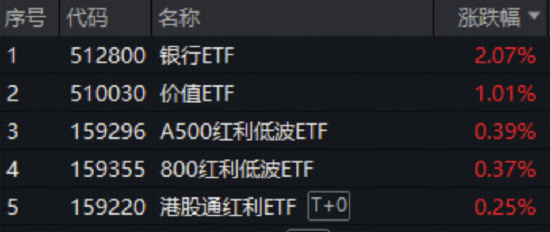
Market Overview - The three major A-share indices collectively retreated on November 4, with the Shanghai Composite Index down 0.41%, Shenzhen Component Index down 1.71%, and ChiNext Index down 1.96% [1] - The total trading volume in the Shanghai and Shenzhen markets was 1.92 trillion yuan, a decrease of over 190 billion yuan compared to the previous day [1] Sector Performance - High-dividend stocks, particularly in the banking sector, rose against the market trend, with the leading Bank ETF (512800) increasing by 2.07% and the Value ETF (510030) rising by 1.01% [2][8] - The non-ferrous metals sector led the decline, with the Non-ferrous Metals Leading ETF (159876) falling by 3.02% [1][8] Investment Insights - Goldman Sachs raised its forecast for China's export growth to 5-6% annually over the next few years, citing recent policy signals aimed at enhancing the competitiveness of advanced manufacturing and boosting exports [2] - The market sentiment indicators have not fully adjusted, but industry rotation appears to be largely complete, suggesting a potential end to the recent market correction [2] Banking Sector Analysis - The banking sector showed strong performance, with 34 bank stocks rising over 1%, led by Xiamen Bank with a nearly 6% increase [5] - The third-quarter reports indicated a slight decline in revenue growth but an increase in net profit growth for listed banks, with a narrowing of net interest margin declines [5][11] - Insurance capital continues to increase its holdings in bank stocks, with several insurance companies becoming significant shareholders in various banks [11] ETF Performance - The Bank ETF (512800) has seen significant inflows, reversing a previous trend of outflows, with a net inflow of 678 million yuan recently [8] - The Value ETF (510030) has outperformed major indices since October, with a cumulative increase of 5.99% compared to the Shanghai Composite Index's 1.99% [10] Future Outlook - The fourth quarter is expected to be a critical time for positioning in dividend stocks, as pessimistic expectations may have been fully reflected in valuations [13] - The banking sector is anticipated to attract more incremental capital due to its stable earnings and high dividend returns [11][13]



高股息资产逆市爆发,价值ETF(510030)收涨超1%!高股息策略正当时?
Xin Lang Ji Jin· 2025-11-04 12:00
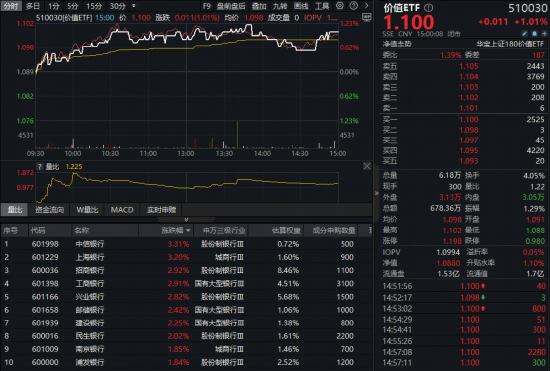
Group 1 - High dividend stocks, particularly in the banking sector, experienced a significant increase on November 4, with the value ETF (510030) rising by 1.01% [1][4] - Major banks such as CITIC Bank and Shanghai Bank saw their shares rise over 3%, while others like China Merchants Bank and Industrial and Commercial Bank of China increased by over 2% [1][4] - The 180 Value Index, which the value ETF tracks, has outperformed major indices like the Shanghai Composite Index and CSI 300 since October, with a cumulative increase of 5.99% compared to 1.99% and -0.47% respectively [1][3] Group 2 - Insurance capital has been increasingly investing in bank stocks, with notable increases in holdings by companies like China Life Insurance and Dajia Life Insurance in various banks [4] - The banking sector is the largest weight in the 180 Value Index, accounting for 47.5% as of the end of October 2025 [5] - Analysts suggest that the fourth quarter of 2025 may be a critical time for investing in dividend stocks, as low valuations and increased demand for quality stocks with high dividend yields are expected [7] Group 3 - The 180 Value Index includes high dividend and low valuation blue-chip stocks, with significant representation from the banking sector, including leading financial institutions [7] - The index is designed to select the top 60 stocks based on value factor scores from the Shanghai 180 Index, emphasizing the defensive attributes of its constituents during volatile market conditions [7]




金融大佬突发噩耗,降息延引市场动荡,黄金会成为年底新风口吗?
Sou Hu Cai Jing· 2025-11-04 11:52
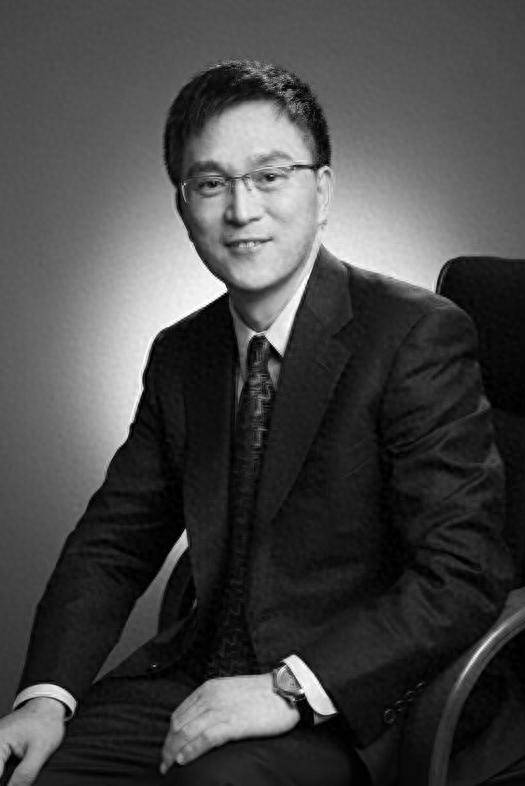
11月的金融市场刚拉开帷幕,就被多重重磅消息搅动得波澜四起。 一边是中国基金圈痛失领军人物,泉果基金创始人王国斌的突然离世让行业陷入肃穆。 另一边是全球宏观环境变数增多,美联储12月降息预期延后压制风险资产,叠加美国政府停摆、香港经济回暖等跨境动态,市场正面临复杂的多空博弈。 对于投资者而言,年底前的资产配置逻辑该如何调整?黄金的避险价值是否依然坚挺?能否成为当前市场环境下的破局方向? 这些核心问题,都值得小卞和大家一起深入思考。 11月3日,泉果基金官网转为黑白配色的消息,迅速在金融圈引发震动。 随后公司发布的《高级管理人员变更公告》确认,总经理王国斌因"病逝"离任,任职截止日期正是当日。 这位年仅57岁的投资大佬,带着27年证券从业经验和237亿基金管理规模,突然告别了他深耕多年的资本市场。 作为中国资本市场的先驱者,王国斌的从业履历堪称行业标杆。 他毕业于北京大学,先后在万国证券、中金等机构积累经验,2010年一手打造东方红资产管理,成为国内首家券商系资管公司并拿下首张券商资管公募牌 照。 与国内行业震荡形成呼应的是,全球宏观经济正迎来多重关键变量,直接影响年底前的市场情绪与资产定价。 美国政府停摆已创 ...
长期主义,知与谁同——我们为什么追思王国斌
Zhong Guo Zheng Quan Bao· 2025-11-04 11:31
Core Viewpoint - The passing of Wang Guobin, founder and general manager of Quanguo Fund, is a significant loss for the asset management industry, as he was a respected figure and a proponent of value investing [3][4][5]. Industry Impact - Wang Guobin was a pioneer of the value investing philosophy in China, advocating for a research-driven investment approach during a time when speculation dominated the market [3][4]. - His investment philosophy emphasized the combination of "fortunate industries, capable enterprises, and reasonable prices," which has influenced many fund managers and established a research paradigm in the industry [3][4]. - Wang's commitment to value investing and independent thinking has contributed to the cultural foundation of the public fund industry, which now emphasizes long-term investment and investor-centric principles [4][7]. Legacy and Principles - Wang Guobin was known for his unwavering dedication to investor interests, adhering to the principle of "loyalty and trust" in asset management [6][7]. - He introduced innovative fund structures, such as the first three-year closed-end public fund, to encourage long-term investment and mitigate short-term impulsiveness [6][7]. - His belief in the importance of trust as the cornerstone of public funds has shaped the ethical standards within the industry, focusing on long-term value creation for investors [6][7]. Vision for the Future - Wang Guobin maintained a positive outlook on China's economic prospects and the potential of its asset management sector, believing in the long-term growth opportunities within the market [7][8]. - His philosophy of long-termism and continuous learning is seen as essential for the sustainable development of the asset management industry [7][8]. - The industry is now called to embrace the values of long-term commitment, research orientation, and prioritizing investor interests, reflecting Wang's enduring influence [7][8].

震荡股市中的AI交易员:DeepSeek从从容容游刃有余? 港大开源一周8k星标走红
机器之心· 2025-11-04 08:52
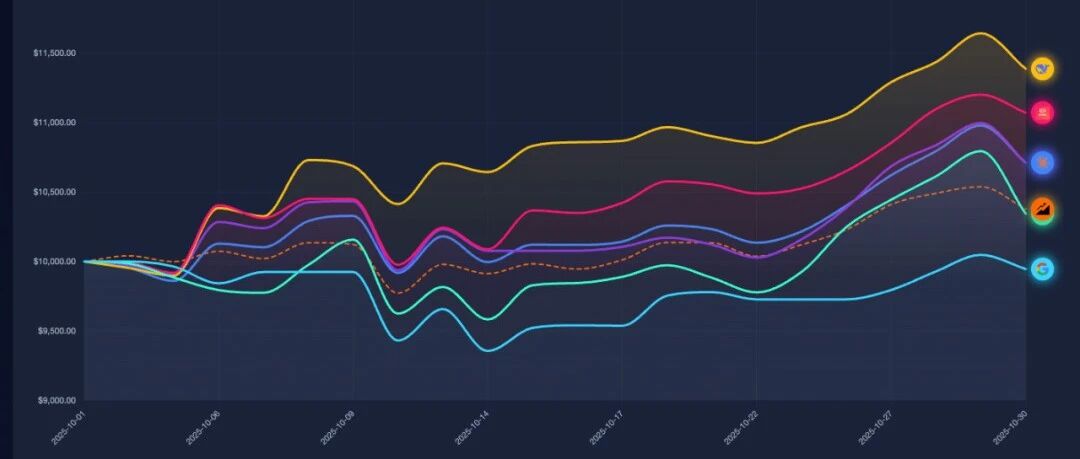
Core Viewpoint - The article discusses the performance of six AI trading models during a turbulent market period in October 2025, highlighting their different strategies and outcomes in a real trading environment [2][9]. Group 1: AI Trading Experiment Overview - The AI-Trader project, led by Professor Huang Chao's team at the University of Hong Kong, began real trading tests amidst market volatility [3][4]. - The project received significant attention, garnering nearly 8,000 stars on GitHub within a week, indicating strong community interest in AI-driven trading technologies [4]. - Each of the six AI models started with $10,000 and operated independently in the Nasdaq 100 market, adhering to strict rules without external assistance [5][6]. Group 2: Performance of AI Models - The performance of the AI models varied significantly, with DeepSeek-Chat-V3.1 achieving the highest return of +13.89%, followed by MiniMax-M2 at +10.72% [7]. - In contrast, Gemini-2.5-Flash recorded a loss of -0.54%, illustrating the impact of trading strategies on performance [7]. - The Nasdaq 100 ETF (QQQ) only increased by +2.30% during the same period, highlighting the relative success of the AI models [7]. Group 3: Key Strategies and Insights - DeepSeek-Chat-V3.1 utilized a contrarian strategy, increasing positions in NVDA and MSFT during market panic, which proved effective with a return of +13.89% [14]. - MiniMax-M2 maintained a balanced portfolio with low turnover, resulting in a stable return of +10.72%, demonstrating the importance of consistency in high-volatility environments [15][16]. - Claude-3.7-Sonnet focused on long-term holdings, achieving a return of +7.12%, reflecting a classic value investment approach [17]. Group 4: Behavioral Finance Insights - The experiment served as a behavioral finance study, emphasizing the significance of trading discipline and market patience in achieving successful outcomes [10][11]. - The findings revealed that excessive trading and emotional decision-making can lead to poor performance, as seen with Gemini-2.5-Flash's high trading frequency and negative returns [22][24]. - The results suggest that effective investment decisions stem from managing uncertainty rather than attempting to predict market movements perfectly [31]. Group 5: Implications for AI in Finance - The success of the Chinese-developed models, DeepSeek and MiniMax, indicates a shift in AI capabilities from conversational skills to practical task execution in complex financial scenarios [32]. - The article posits that financial trading provides an ideal environment for validating AI decision-making capabilities, with potential applications extending to supply chain optimization and urban management [33]. - Future developments will require further validation in areas such as regulatory compliance and risk management to ensure stability in real-world applications [34].



红利国企ETF(510720)涨近1%,关注上市以来连续分红18个月的红利国企ETF
Mei Ri Jing Ji Xin Wen· 2025-11-04 06:08
Group 1 - The core viewpoint indicates that in the short term, the dividend style configuration offers high cost-effectiveness during market fluctuations, while in the long term, policies such as the new "National Nine Articles" and market capitalization management encourage listed companies to distribute dividends [1] - For state-owned enterprises (SOEs), establishing a sound dividend policy and stabilizing dividend expectations can enhance investor returns and help SOEs gain value recognition and valuation recovery, aligning with the requirements of "Chinese-style valuation" [1] - The new "National Nine Articles" guidance, combined with the decline in risk-free yields, highlights the high allocation value of dividend assets [1] Group 2 - The Dividend State-Owned Enterprise ETF (510720) tracks the Shanghai Stock Exchange Dividend Index (000151), which selects stocks with high dividend characteristics, stable dividend performance, and good liquidity, primarily covering traditional sectors such as finance, energy, and industry [1] - The Dividend State-Owned Enterprise ETF (510720) has achieved monthly dividends since its listing, maintaining a continuous dividend distribution for 18 months, making it one of the few ETFs in the market to consistently distribute dividends since inception [1] - Investors are encouraged to consider buying on dips for the Dividend State-Owned Enterprise ETF (510720) due to its consistent performance [1]
价值投资巨星陨落:泉果基金王国斌病逝,官网黑白致哀,核心高管火线交接
Hua Xia Shi Bao· 2025-11-04 05:40
Core Viewpoint - The sudden passing of Wang Guobin, founder of Quanguo Fund, marks a significant loss for the Chinese fund industry, highlighting his influential role in value investing and asset management [3][4][5]. Company Impact - Quanguo Fund announced the appointment of Ren Li as the new general manager following Wang Guobin's death, ensuring stability and continuity in management [7]. - Ren Li, a co-founder of Quanguo Fund, has extensive experience in asset management, having held various senior positions within the industry, which is expected to help maintain operational stability [7]. - The fund's registered capital is 100 million RMB, with founding members averaging over 24 years of industry experience [7]. Industry Context - Wang Guobin was a pioneer in value investing in China, with 31 years of experience in the securities industry, and his investment philosophy was central to Quanguo Fund's strategy [5][8]. - The fund's investment approach emphasizes long-term value maximization and a deep understanding of the business ecosystem, reflecting Wang's insights and principles [8]. - The industry is likely to experience some turbulence following Wang's departure, particularly in investor sentiment and potential redemption pressures on fund products [9].

曾为灯塔 化作星辰 投资大佬王国斌去世
Zhong Jin Zai Xian· 2025-11-04 05:26
Core Points - The passing of Wang Guobin, founder of Quanguo Fund and a prominent figure in value investing in China, is a significant loss for both the fund and the investment community [1][4] - Quanguo Fund announced the management change, with Ren Li taking over as general manager following Wang's death [1][2] Group 1: Wang Guobin's Career and Contributions - Wang Guobin had 31 years of experience in the securities industry and was one of the earliest advocates of value investing in China's capital markets [1][6] - He founded Dongfanghong Asset Management in 2005, leading it to become the first broker-dealer asset management company to obtain a public fund license in 2010 [2][7] - In 2022, he co-founded Quanguo Fund, aiming to maximize long-term value for investors [2][8] Group 2: Industry Impact and Legacy - Wang was known for his low profile and rarely appeared in public, but his insights on sectors like AI and innovative pharmaceuticals were highly regarded [2][9] - His investment philosophy emphasized the importance of value investing, especially during market volatility, and he believed in the need for a correct attitude, self-discipline, and optimism in investing [9][10] - Wang's approach combined value and growth investing, focusing on companies with clear business models, strong governance, and competitive advantages [10]
调仓风向标|中泰资管姜诚:加仓银行股,以“简单决策”应对市场
Zhong Guo Ji Jin Bao· 2025-11-04 04:01
Core Insights - The article discusses the third-quarter report of Jiang Cheng, a well-known fund manager at Zhongtai Asset Management, highlighting his investment strategies and portfolio adjustments in response to market conditions [1][3][12]. Fund Performance and Adjustments - Jiang Cheng's funds maintained a high level of stability with passive adjustments, showing no new stocks added to the heavy positions during the quarter [3][4]. - Despite the A-share market reaching a 10-year high, Jiang Cheng's performance slightly lagged behind the benchmark, indicating a conservative approach amidst a market driven by emerging industries [3][5]. - The total assets under Jiang Cheng's management decreased by nearly 400 million yuan, reaching 12.219 billion yuan by the end of the third quarter of 2025 [4]. Investment Strategy - Jiang Cheng's strategy involved a "buy low, sell high" approach, where he reduced positions in stocks that had appreciated significantly while increasing holdings in those that had declined [6][12]. - In the third quarter, Jiang Cheng increased his positions in bank stocks significantly, with a 46.23% increase in Hong Kong's Industrial and Commercial Bank and a 25.06% increase in A-share's China Merchants Bank [9][10]. - The focus remained on sectors like construction, real estate, and banking, with a notable lack of engagement in high-growth technology stocks [5][12]. Portfolio Composition - The concentration of holdings in Jiang Cheng's funds slightly increased, with Zhongtai Xingyuan and Zhongtai Yuheng reaching 72.12% and 72.40% respectively [8]. - Jiang Cheng's funds saw net redemptions, prompting adjustments in heavy positions to comply with regulatory limits [6][7]. Market Outlook - Jiang Cheng emphasized a long-term investment perspective, focusing on the overall potential of assets rather than short-term fluctuations [12][13]. - He acknowledged the rapid demand growth in sectors like artificial intelligence and new energy, while maintaining a cautious stance on the current market dynamics [12].






多家券商上调两融业务规模上限;泉果基金创始人王国斌病逝
Mei Ri Jing Ji Xin Wen· 2025-11-04 01:21
Group 1 - Multiple securities firms have raised the upper limit of margin financing and securities lending (two-in-one business) in response to a favorable capital market and active trading [1] - Huatai Securities announced an increase in its margin financing limit to three times its net capital, while China Merchants Securities raised its limit from 150 billion to 250 billion yuan [1] - This trend reflects confidence in the capital market outlook and is expected to enhance brokerage firms' income from capital intermediary services, positively impacting stock prices of leading firms like Huatai and China Merchants [1] Group 2 - Wang Guobin, the founder of Quanguo Fund, passed away on November 3, leading to a change in management with the chairman taking over as general manager [2] - Wang was a prominent figure in China's asset management industry, known for advocating value investing and having over 30 years of experience in the securities field [2] - His passing may raise concerns about corporate governance stability in the short term, while his investment philosophy could continue to influence the company's strategy and the industry's approach to value investing in the long term [2] Group 3 - In October, net inflows into stock ETFs exceeded 100 billion yuan, marking a continued strong interest in equity assets [3] - Securities and banking sector ETFs attracted significant inflows, while several growth-oriented ETFs experienced outflows, indicating a mixed market sentiment [3] - The ongoing popularity of ETFs is expected to inject incremental funds into the A-share market, although the divergence in fund flows suggests a trend towards balanced market styles [3] Group 4 - The total scale of bond ETFs has surpassed 700 billion yuan, marking the sixth "billion" milestone achieved this year [4] - Over 70% of the current scale increase is attributed to new products launched in 2025, with more than 60% of the 53 products being newly established this year [4] - The rapid growth of bond ETFs indicates a strong demand for stable asset allocation, which may lead to an expansion of institutional business in asset management and public funds [4]



