AI泡沫

Search documents
科技巨头「偷偷借钱」搞AI,次贷危机魅影重现?
36氪· 2025-11-14 09:07
Core Viewpoint - The article discusses the potential emergence of an "AI bubble" driven by significant debt accumulation among tech companies investing heavily in AI infrastructure, while also highlighting the differences between the current situation and past financial bubbles [4][10][32]. Group 1: Investment and Financing Activities - Meta announced a $600 billion investment in AI data centers and talent recruitment by 2028 [5]. - Meta completed a $30 billion financing through a Special Purpose Vehicle (SPV) for data center construction [6]. - Alphabet plans to issue an additional €3 billion in bonds following a previous €6.75 billion issuance [7]. - As of September 2023, tech companies in the U.S. raised $157 billion in the bond market, a 70% increase year-over-year, with ongoing financing activities for AI infrastructure [9]. Group 2: Debt and Credit Risk - Oracle's Credit Default Swaps (CDS) surged in September, indicating market concerns over its high debt levels related to AI investments [8]. - Oracle's debt-to-equity ratio is significantly higher than other AI giants, with a debt ratio of approximately 85% compared to 25%-45% for companies like Nvidia and Microsoft [18][19]. - The rising CDS rates for Oracle reflect fears that its substantial AI spending could jeopardize financial health, a sentiment that may extend to the broader AI sector [17][21]. Group 3: Market Performance and Valuation - Despite Oracle's high leverage, many leading AI companies continue to show strong profit growth, with Alphabet reporting a 16% year-over-year revenue increase and a 33% rise in net profit [22]. - AI technology is driving productivity growth across various industries, suggesting that current capital investments in AI, while large, remain within a reasonable range [24][25]. - Current valuations of AI giants are lower than those seen during the 2000 internet bubble, with Nvidia at a PE ratio of approximately 56 and Microsoft at 36 [28]. Group 4: Structural Financing and Risk Management - The trend of using SPVs for financing is becoming common among U.S. tech companies to manage debt pressure and maintain credit ratings [37]. - Meta's SPV structure allows it to isolate $30 billion in debt from its balance sheet, improving its financial appearance while still fulfilling obligations through lease payments [36]. - The use of SPVs may also help companies navigate regulatory challenges and reduce compliance costs [38]. Group 5: Indicators of an "AI Bubble" - To assess the potential for an "AI bubble," two quantitative indicators are suggested: the proportion of new funding from loans compared to historical levels and the sustainability of stock price growth rates [40]. - Current debt levels among AI companies are significantly lower than during the internet bubble, indicating a safer debt structure [41]. - While there are signs of a bubble, the market's ability to self-correct is enhanced by modern trading efficiencies compared to the early 2000s [42].



什么情况?做空AI泡沫的大空头,竟然把基金清盘了!这是投降认输出局,还是要死磕到底...
雪球· 2025-11-14 07:57
Group 1 - Michael Burry, a well-known short-seller, has closed his Scion fund, citing disappointment with market valuations and signaling a potential exit from the current market environment [4][5][6] - Burry's recent actions included significant short positions in AI companies like Palantir and Nvidia, which contributed to a decline in U.S. tech stocks [5][6] - He has expressed concerns about an AI bubble, drawing parallels to the 2000 internet bubble, and criticized accounting practices that he believes inflate market valuations [6][10] Group 2 - The closure of Burry's fund has sparked debate among analysts, with some suggesting it reflects a strategic retreat from a market they perceive as mispriced, while others argue it indicates a commitment to continue fighting against the prevailing market trends [10][14] - The fund's dissolution allows Burry to operate without regulatory constraints, potentially positioning him to capitalize on anticipated market volatility without the obligation to disclose his trades [14] - The A-share market experienced a downturn, with the Shanghai Composite Index falling nearly 1% and closing below 4000 points, indicating broader market weakness [16][19]

美国科技股全线大跌,中国AI有泡沫吗?
3 6 Ke· 2025-11-14 07:14
全球AI发展,正在繁荣与泡沫的十字路口。 据统计,亚马逊、微软、谷歌和Meta在2025年的合计投入或将超过3500亿美元。到2026年这一数字将突破4000亿美元。更激进的要属OpenAI,2025年上 半年的营收仅43亿美元,但它却已承诺未来三四年支出万亿美元左右。 不久前,英伟达市值一度冲破5万亿美元大关。同时,英伟达、AMD、甲骨文与OpenAI等巨头之间,形成了一种"你投我、我买你"的封闭资本循环,将估 值层层推高,营造出一场看似永不停歇的AI盛宴。 如此激进的豪赌,不禁让人联想到当年的互联网泡沫。在科技巨头用金融杠杆撬动动辄万亿美元规模的资本投入时,是否会引发产能过剩,加剧能源紧 张,并催生新一轮资产泡沫? 这场AI狂欢,席卷了海量的资源,也引发了市场对泡沫风险的普遍担忧。 因电影《大空头》闻名于世的传奇投资者Michael Burry,突然做空英伟达和Palantir 最近几周,美国科技巨头发行的债券组合,遭到投资者抛售,持续面临承压。软银集团清仓了"AI芯片霸主"英伟达的股票,进一步加深了外界的忧虑。 当太平洋对岸的泡沫被激进吹起时,一个关键问题浮出水面:中国AI是否也陷入了同样的狂热? 合纵 ...

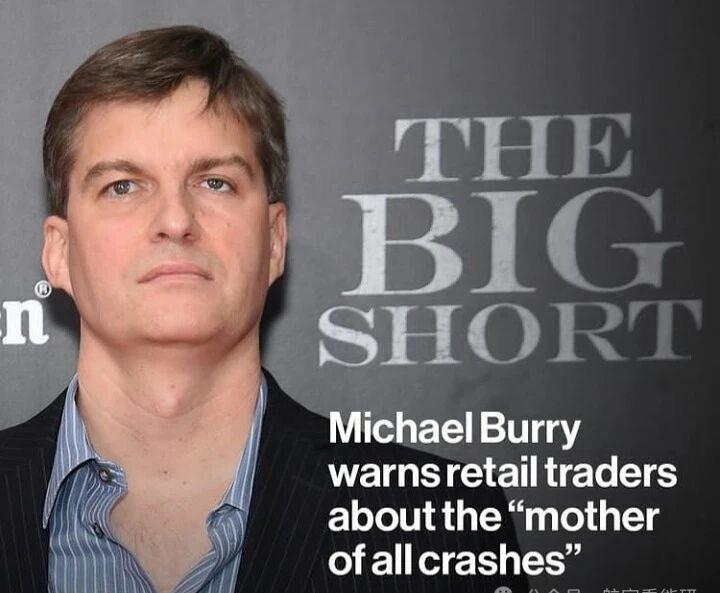
“大空头”贝瑞对AI行情过热敲响警钟
日经中文网· 2025-11-14 03:08
Market Overview - On November 13, the US stock market experienced a decline, with the Dow Jones Industrial Average closing at 47,457 points, down 797 points (1.7%) from the previous trading day. The index had briefly reached a historical high earlier that day before plummeting [2] - The Nasdaq Composite Index, heavily weighted with technology stocks, fell by 2.3%, exceeding the decline of the Dow Jones. The S&P 500 Index also dropped by 1.7%, with IT and consumer goods sectors leading the declines [4] AI Stock Performance - AI-related stocks, which had previously driven the market's upward trend, faced significant sell-offs. Notable declines included Oracle (down 4.1%), Nvidia (down 3.6%), Alphabet (down 2.8%), Amazon (down 2.7%), and Microsoft (down 1.5%). Palantir Technologies and Tesla saw even larger drops of 6.5% and 6.6%, respectively [4] - Concerns about an overheated AI market have been increasingly voiced by market participants, including prominent investor Michael Burry, who has raised doubts about the sustainability of AI-related stock valuations [4][5] Market Sentiment and Comparisons - There are growing comparisons between the current stock price trends and the internet bubble of the early 2000s. The simultaneous decline of the Nasdaq and Dow Jones indices on November 13 mirrors patterns observed during the internet bubble's burst [5] - David Rosenberg, founder of Rosenberg Research, noted that the contrasting movements of the Dow and Nasdaq indices are reminiscent of the internet bubble's collapse [5] - However, there is debate over whether AI stocks are genuinely in a bubble. Goldman Sachs analyst Eric Sheridan pointed out that discussions about bubbles are more prevalent now than in past economic bubbles, suggesting a potential difference in market dynamics [5] Investment Focus - Concerns have been raised about investors' excessive focus on AI, potentially overlooking opportunities in other sectors. Bank of America’s Savita Subramanian warned that this concentration could lead to missed investment opportunities outside of AI-related companies [5]




软银清仓英伟达套现58亿美元 豪赌OpenAI背后的战略转向
Xin Lang Zheng Quan· 2025-11-14 02:27
Core Insights - SoftBank Group has sold all its shares in NVIDIA for $5.83 billion, marking its second exit from the company, and is now focusing on a $30 billion investment in OpenAI, indicating a strategic shift in its approach to the AI industry [1][2][3] Investment Strategy - SoftBank's relationship with NVIDIA has been tumultuous, having initially invested $4 billion in 2017 but selling all shares in 2019 for $7 billion, missing out on NVIDIA's market cap growth from $100 billion to $4 trillion [3] - The recent sale of NVIDIA shares is part of SoftBank's asset monetization strategy, with CFO Yoshimoto stating that the timing of the sale is not indicative of an AI bubble [3][4] Focus on OpenAI - SoftBank's total investment in OpenAI has reached $30 billion, with a recent commitment of $22.5 billion for the second round of financing, reflecting a strong belief in the potential of AI [4] - OpenAI's valuation has surged to over $50 billion, up from $30 billion just months prior, showcasing the rapid growth in the AI sector [4] Financial Pressure - To fund its investments, SoftBank is actively seeking to raise $1.5 to $2 billion in the dollar bond market and €500 million in euro-denominated bonds, highlighting the financial strain from its large-scale investments [5][6] - As of now, SoftBank has raised at least $24 billion through loans and bonds, with a significant bond issuance in April 2023 being one of the largest in Japan's history [5] Market Concerns - There is growing concern in the market regarding a potential AI investment bubble, as evidenced by widening yield spreads on bonds issued by major tech companies [7][8] - Analysts have noted that while there are fears of an AI bubble, the demand for AI infrastructure is expected to outstrip supply until at least 2026, suggesting that the current investment climate may not be purely speculative [7][8] Strategic Realignment - SoftBank is shifting its investment strategy from diversified tech investments to concentrated bets on key AI companies, as evidenced by its recent acquisitions and sales [9][10] - The company is also integrating resources to support its ambitious AI investments, including plans for a $1 trillion AI manufacturing center in Arizona [10][11]

中信证券:财政+货币双宽松 2026美股上行动能延续
智通财经网· 2025-11-14 00:43
Core Viewpoint - The report from CITIC Securities indicates that the U.S. stock market is supported by mid-term elections, policy easing, ample liquidity, and a favorable fundamental outlook for 2026. Despite concerns over high valuations and potential risks from high interest rates, the market remains attractive for investment due to strong growth expectations and the increasing market share of MAG8 companies [1][10]. Macroeconomic Environment - The monetary policy is expected to remain accommodative, with the federal funds rate projected to decline to 3.25%-3.4% by the end of 2026. This is supported by a weakening job market, with 1.1 million layoffs expected in 2025, and the Fed's recent interest rate cuts [2]. - The fiscal policy, particularly the OBBB Act passed in July 2025, is anticipated to create a $3.4 trillion deficit over the next decade, providing significant tax relief for businesses and contributing to fiscal expansion [3]. Market Liquidity - Four key factors are expected to support liquidity in the U.S. stock market: the expansion of dollar-pegged stablecoins, increased corporate buybacks, a shift of funds from money market funds to equities and bonds, and a resurgence in individual investor participation [4]. Fundamental Outlook - The fundamental outlook for the U.S. stock market is bolstered by strong growth in technology and improvements in the policy environment. The S&P 500 is projected to see revenue and earnings growth of 5.2% and 6.6% in 2025, respectively, with expectations for even higher growth in 2026 [6]. AI Bubble Narrative - The narrative surrounding the potential bursting of the "AI bubble" is considered unlikely in the short term, as demand for AI technologies continues to grow, supported by advancements in chip performance and system capabilities [7]. Private Credit Market Risks - Concerns regarding the private credit market have emerged following recent bankruptcies, but the overall default rate remains moderate, and the impact on the banking sector is expected to be manageable [8]. High Interest Rate Environment - The prolonged high interest rate environment poses risks to the real economy and financial system, with potential implications for the stock market if the Federal Reserve fails to respond timely to emerging risks [9]. Stock Market Outlook - The combination of fiscal and monetary easing is expected to support the continuation of a bull market in U.S. stocks in 2026, with a focus on sectors such as technology, manufacturing, energy infrastructure, military, and financial services [10].

科技巨头“偷偷借钱”搞AI,次贷危机魅影重现?
3 6 Ke· 2025-11-14 00:30
Core Viewpoint - Meta plans to invest $600 billion in the U.S. by 2028 for AI data centers and talent recruitment [1] Group 1: Financing and Investment Trends - Meta recently completed an indirect financing of approximately $30 billion through a Special Purpose Vehicle (SPV) for data center construction [2] - Alphabet plans to issue an additional €3 billion in bonds this year, following a previous issuance of €6.75 billion [2] - As of September 2023, tech companies in the U.S. have raised $157 billion in the bond market, a 70% increase year-over-year [2] Group 2: Debt and Credit Risk - Oracle's Credit Default Swaps (CDS) surged in September, indicating market concerns over its high debt levels related to AI infrastructure investments [2][5] - Oracle's debt-to-equity ratio is significantly higher than other AI giants, with a debt ratio of approximately 85% [6][7] - The rising CDS rates for Oracle may not reflect the overall trend for other tech companies, as many maintain lower debt levels [8] Group 3: Company Performance and AI Demand - Major AI companies, including Alphabet, reported strong profit growth, with Alphabet's Q3 revenue at $102.35 billion, a 16% year-over-year increase [9] - Oracle's cloud revenue grew by 25% in Q3, with a net profit increase of 22% [9] - The demand for AI technology is driving productivity growth across various industries, indicating a legitimate market need [9] Group 4: Market Sentiment and Bubble Concerns - Some analysts suggest that the current AI investment climate is not yet in a classic bubble state, contrasting it with the 2000 internet bubble [10][11] - Current valuations of AI companies are significantly lower than those seen during the internet bubble, with Nvidia's PE ratio at approximately 56 times [10] - Concerns about an "AI bubble" are partly influenced by historical experiences from the 2000s, leading to cautious sentiment among investors [11] Group 5: Financing Structures and Regulatory Considerations - The trend of using SPVs for financing is emerging among U.S. tech companies to manage debt pressure and maintain credit ratings [15][16] - Meta's SPV structure allows it to isolate $30 billion in debt from its balance sheet, improving its financial appearance [15] - The use of SPVs may also help companies navigate compliance costs and regulatory challenges [16] Group 6: Indicators of Potential Bubble Formation - Analysts suggest monitoring the proportion of new funding from loans and stock price volatility as indicators of a potential bubble [17] - Current debt levels among AI companies are still below those seen during the internet bubble, indicating a safer debt structure [17] - The market's ability to adjust quickly due to modern trading systems may mitigate the impact of any emerging bubble [18][19]

孙正义,清空英伟达
盐财经· 2025-11-13 15:59
Core Viewpoint - SoftBank Group has completely liquidated its holdings in NVIDIA, cashing out approximately $5.8 billion (around 41.5 billion RMB), leading to a significant drop in NVIDIA's stock price and market capitalization [4][10]. Group 1: SoftBank's Investment Journey - A year ago, Masayoshi Son expressed regret over selling NVIDIA shares, highlighting a missed opportunity [8]. - In 2016, SoftBank acquired ARM for $32 billion and attempted to buy NVIDIA, but the proposal was rejected by NVIDIA's CEO Jensen Huang [9]. - SoftBank initially bought NVIDIA shares in 2017 for $4 billion, becoming one of its largest shareholders, but sold them two years later for $7 billion due to the need to lock in returns [9]. Group 2: Recent Developments and Financial Performance - SoftBank's investment in NVIDIA surged to $3 billion by March 2023, capitalizing on NVIDIA's stock performance, which had increased over tenfold in a year [10][12]. - The decision to sell all NVIDIA shares in October 2023 surprised the market, as it was seen as a strategic exit at a high point [10]. - SoftBank's Vision Fund reported a significant profit, with a net profit of 2.5 trillion yen (approximately $16 billion) in Q2, driven by investments including OpenAI [12]. Group 3: AI Bubble Concerns - There are growing concerns about a potential AI bubble, with significant market corrections anticipated in the near future [5][16]. - Major financial figures, including Jamie Dimon, have warned about the risks associated with inflated asset prices in the AI sector [16]. - The AI investment landscape has seen a surge, with venture capital investments reaching $160 billion in the first three quarters of 2023, raising questions about sustainability [17][18].

大空头,深夜突发!
券商中国· 2025-11-13 14:40
Core Viewpoint - Michael Burry, known for predicting the 2008 financial crisis, has withdrawn his Scion Asset Management from SEC registration, indicating a shift away from traditional investment management and a potential move towards independent platforms for sharing investment insights [1][6]. Group 1: Investment Actions - Burry's actual investment in put options for Palantir was only $9.2 million, contrary to media reports claiming a nominal value of $912 million [3][4]. - The nominal value reported for Burry's put options reflects theoretical exposure based on stock prices, not actual cash outlay [4][5]. - Burry's put options for Palantir correspond to 5 million shares, with a strike price of $50, while the current stock price is $184, indicating a significant market premium [5][6]. Group 2: Market Commentary - Burry has expressed concerns about the current market being in a bubble, likening it to the 2000 internet bubble, and criticized tech companies for manipulating depreciation schedules to obscure investment impacts on profits [7][8]. - His decision to close the fund is interpreted as a response to the disconnect between his market outlook and prevailing market conditions, suggesting a desire to avoid the challenges of a potential market downturn [8].


悄悄关闭旗下基金,大空头Burry辟谣9亿美元做空英伟达和Palantir:一共才花了920万
美股IPO· 2025-11-13 14:29
Core Viewpoint - Michael Burry refuted media claims of a $912 million short position on Nvidia and Palantir, clarifying that his actual investment was only $9.2 million, highlighting a significant misunderstanding in the reporting of notional values versus actual investment amounts [1][3][5]. Group 1: Investment Details - Burry's actual investment involved purchasing 50,000 put options at $1.84 each, totaling approximately $9.2 million, rather than the reported $912 million [5][7]. - The discrepancy arose from the SEC's requirement for institutions to report the notional value of options, which reflects theoretical exposure based on the underlying stock's market value, rather than the actual cash invested [7][8]. Group 2: Market Commentary - Burry expressed concerns about the inflated valuations of AI stocks, specifically naming Nvidia and Palantir, and warned that the market is experiencing an AI bubble reminiscent of the 2000 internet bubble [9][10]. - He criticized these companies for excessive capital expenditures and for artificially inflating profits by extending asset depreciation periods [9][10]. Group 3: Fund Management Changes - Burry's fund, Scion Asset Management, has been quietly deregistered as of November 10, indicating a potential shift in his investment strategy [4][12]. - In a letter to investors, Burry announced the liquidation of the fund and the return of investor capital, citing disappointment with market valuations [12][17]. - Speculation arises that Burry may be moving towards a new independent platform for sharing investment insights, potentially bypassing traditional regulatory frameworks [17][18].